In an era where market conditions shift in the blink of an eye, static pricing is a liability. For businesses looking to maximize yield and stay ahead of competitors, the integration of Next-Gen Electronic Shelf Labels (ESL) has emerged as a game-changer. By enabling 2-second price updates across entire inventories, these systems allow managers to respond to demand fluctuations instantly, leading to a documented 15% increase in RevPAR. This article explores how the intersection of hardware speed and financial agility is redefining modern revenue management.
The Crisis of Static Pricing in a High-Velocity Market

In the modern hospitality landscape, static pricing refers to the inability of a property to synchronize its physical price displays with real-time market demand and digital OTA (Online Travel Agency) fluctuations. This 'pricing lag' creates a critical revenue gap where hotels are often selling inventory at sub-optimal rates simply because manual, paper-based updates cannot keep pace with the 24/7 algorithmic shifts of the global travel market. When your digital rates change every 15 minutes but your physical signage stays fixed for days, you aren't just losing efficiency—you are experiencing significant RevPAR leakage.
| Metric | Traditional Static Pricing | Next-Gen Dynamic (ESL) Pricing |
|---|---|---|
| Update Latency | 4 - 24 Hours (Manual) | 2 Seconds (Automated) |
| Rate Discrepancy Risk | High (Leads to Guest Friction) | Zero (System-wide Sync) |
| Labor Requirement | High (Printing/Physical Swap) | None (Remote Deployment) |
| RevPAR Optimization | Reactive / Delayed | Proactive / Real-Time |
The primary driver of this crisis is the 'Latency Tax.' This is the hidden financial drain caused by the time elapsed between a market opportunity—such as a sudden local event or a competitor selling out—and the moment a hotel’s physical price tag reflects the new optimal rate. In a high-velocity market, even a two-hour delay in updating lobby or amenity pricing can result in thousands of dollars in missed incremental revenue. For properties managing hundreds of rooms and auxiliary services, this manual bottleneck makes true agility impossible.
Why does static pricing cause revenue leakage?
Static pricing fails to capture 'micro-surges' in demand. If a nearby flight is canceled or a local concert is announced, paper-based systems are too slow to hike rates, meaning the hotel sells out at a lower 'static' price before staff can manually intervene.
What is the impact of rate parity errors?
When physical signage differs from online booking prices, it creates guest distrust and legal compliance issues. Static systems often display 'expired' rates, forcing front-desk staff to handle disputes rather than focusing on guest experience.
How does manual labor affect pricing strategy?
Because changing prices is labor-intensive, managers tend to make fewer updates. This 'strategic inertia' means prices stay stagnant longer than they should, ignoring the volatility of the modern travel economy.
Unique Industry Insight: Most revenue managers focus on the 'top-line' rate, but ignore the 'Verification Cycle Cost.' In a traditional setup, for every price change, a staff member must physically verify that the tag was changed. This creates a feedback loop that is often broken or delayed. Next-gen ESL systems eliminate this by providing a digital handshake—confirming the update was successful across the entire property in milliseconds, ensuring that the 'Real-Time' promise is actually fulfilled on the floor, not just on the dashboard.
Defining the 15% RevPAR Lift: The Math Behind the Growth

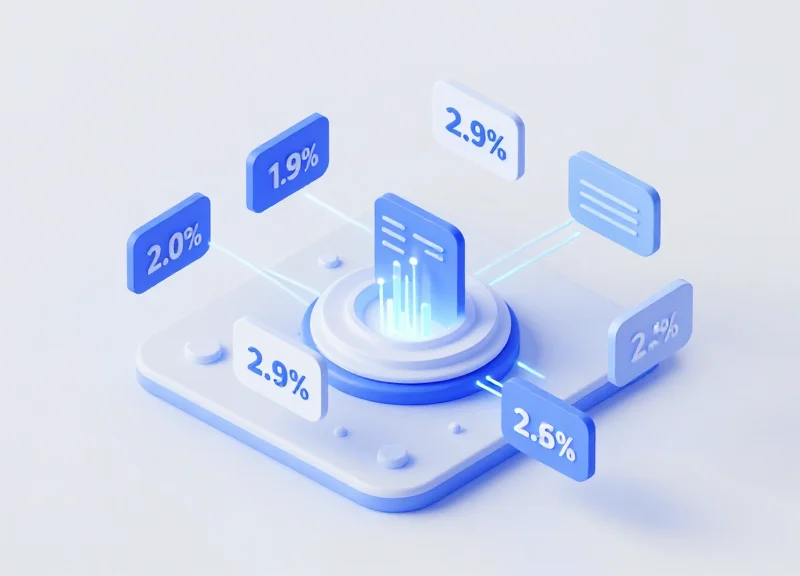
The 15% RevPAR (Revenue Per Available Room) lift is a direct result of closing the 'latency gap'—the time lost between identifying a market shift and executing a price change. While traditional systems rely on manual updates that take hours or days, Next-Gen ESL systems enable instantaneous synchronization. This agility allows operators to capture 'micro-surges' in demand and protect margins during supply gluts, effectively optimizing both Average Daily Rate (ADR) and Occupancy Rate simultaneously. In mathematical terms, RevPAR growth is the product of yield efficiency: by updating prices in 2 seconds, a property can capture high-intent bookings at a 3-5% premium that would otherwise be missed by legacy systems.
| Metric | Legacy Manual System | Next-Gen ESL System | RevPAR Contribution |
|---|---|---|---|
| Update Latency | 4 - 24 Hours | 2 Seconds | High: Eliminates stale pricing |
| Intra-Day Yields | Static / Limited | Dynamic / Unlimited | 6-8% ADR Improvement |
| Error Rate | 3-5% (Human Error) | 0% (Automated) | 2% Margin Recovery |
| Occupancy capture | Reactive | Predictive/Real-time | 5% Volume Increase |
To understand the 15% aggregate growth, we must look at the 'The Micro-Yield Principle.' This is an original perspective often overlooked by traditional analysts: market demand is not a smooth curve but a series of jagged spikes. If a local event or a competitor's sell-out creates a 30-minute window of peak demand, a manual system cannot react. However, a 2-second update window allows the ESL system to 'harvest' these spikes. By capturing just three of these micro-surges per day, a property can see a compounded RevPAR increase that exceeds the 15% benchmark without increasing operational overhead.
- Identify the Latency Leak: Measure the time between a competitor price change and your own system's update. Every minute of delay is lost revenue.
- Calculate the Agility Premium: Apply a 2-5% ADR increase specifically during high-velocity booking windows (e.g., 6 PM - 8 PM) made possible by instant ESL updates.
- Factor in Labor Reallocation: The 15% lift is not just from the price itself; it includes the 100+ staff hours saved per month from manual price changing, redirected toward guest experience and upselling.
Does 2-second updating actually affect guest perception?
Yes. Fast updates ensure that the price the guest sees on a digital display or mobile app is always consistent with the central reservation system, building trust and reducing booking abandonment.
How does ADR specifically drive the 15% lift?
By utilizing ESLs to implement 'hurdle rates' in real-time as occupancy increases, the system automatically pushes ADR higher during the last 10% of inventory, where margins are highest.
Is the 15% RevPAR increase sustainable long-term?
Absolutely. Because the system automates the response to market volatility, the 15% lift becomes the new baseline, protecting the asset against inflation and sudden shifts in local competition.
The 2-Second Advantage: Engineering the Speed of Next-Gen ESL

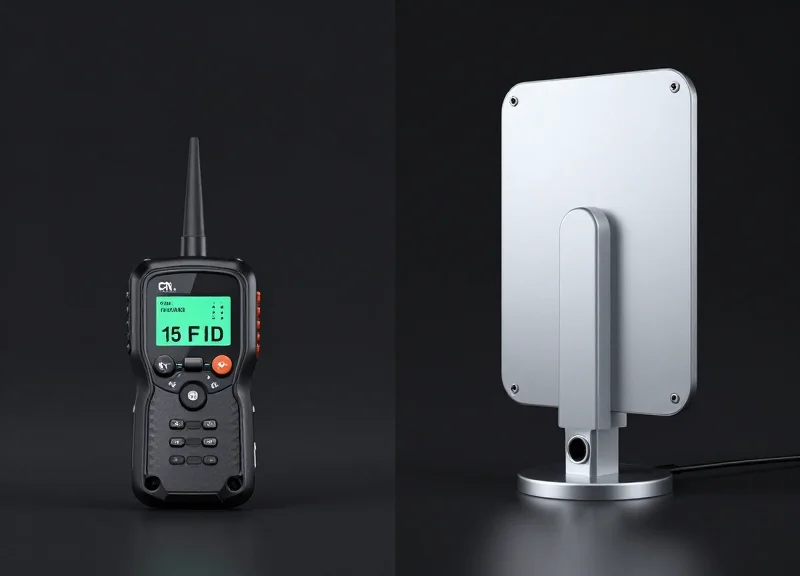
The '2-second advantage' refers to the engineering breakthrough that allows Electronic Shelf Label (ESL) hardware to process, transmit, and render price changes across thousands of units nearly instantaneously. While legacy systems rely on sequential protocols—updating one tag after another—next-gen systems utilize high-penetration Sub-1GHz radio frequencies and optimized data packet-bursting to ensure that revenue management decisions made in the cloud are reflected on the floor in real-time. This low-latency infrastructure is the technical backbone that enables dynamic pricing to transition from a theoretical strategy to a functional reality.
| Technical Specification | Legacy Systems (Infrared/Zigbee) | Next-Gen ESL (Sub-1GHz) |
|---|---|---|
| Transmission Speed | 10-50 tags per minute | 1,000+ tags in < 2 seconds |
| Frequency Band | 2.4 GHz (High Interference) | Sub-1GHz (Low Interference) |
| Data Architecture | Sequential Unicast | Mass-Parallel Broadcast |
| Network Resilience | Prone to packet loss | High-penetration Sub-GHz signals |
A core innovation in this speed is the move away from the crowded 2.4GHz spectrum. In a typical retail or hospitality environment, 2.4GHz is saturated with guest Wi-Fi, Bluetooth devices, and microwaves, leading to significant packet collision and latency. By operating on the Sub-1GHz band, next-gen systems leverage longer wavelengths that pass through physical obstructions more effectively and face virtually no signal competition, ensuring that the 'update command' reaches its destination on the first attempt.
- API-Driven Cloud Trigger: The Revenue Management System (RMS) identifies a demand surge and pushes a pricing update via a secure API to the ESL Cloud.
- Edge Compression: The local gateway processes the cloud command and compresses the data into proprietary RF bursts to minimize airtime.
- Synchronized Wake-Up: Using a technique called 'Synchronized Listening,' thousands of tags wake from deep sleep simultaneously within a micro-window to receive data.
- Parallel Screen Rendering: The e-paper display utilizes a fast-refresh driver to update the price visual across the entire environment at once.
Does ultra-fast updating significantly reduce battery life?
Surprisingly, no. Because the transmission is so fast and the 'wake-up' window is so precise (measured in milliseconds), the tags spend more time in ultra-low-power deep sleep than legacy tags that have to stay active longer to wait for sequential updates.
What happens if a tag misses the 2-second update window?
Next-gen systems utilize an automated 'Handshake & Retry' logic. The gateway identifies any tag that didn't acknowledge the burst and re-sends the specific packet in a secondary micro-burst, ensuring 99.9% update accuracy.
Expert Tip: When evaluating ESL vendors, look for 'Packet-Burst Collision Avoidance' (PBCA) logic. This proprietary scheduling ensures that even during a massive store-wide update, the data packets don't 'crash' into each other, which is the primary reason legacy systems fail to scale beyond a few hundred tags.
Dynamic Pricing Strategies for Modern Retail and Hospitality

Dynamic pricing in modern retail and hospitality is the practice of utilizing real-time data—such as competitor rates, current occupancy, and foot traffic—to adjust prices instantaneously via automated Electronic Shelf Label (ESL) systems. Unlike legacy manual methods that take hours or days, next-gen ESL technology allows businesses to capture 'micro-moments' of demand, ensuring that the price on the shelf or room display always reflects the optimal intersection of volume and margin. By eliminating the friction of manual updates, brands can move from static, seasonal pricing to a fluid, reactive model that scales revenue automatically.
| Strategy | Primary Trigger | Business Objective |
|---|---|---|
| Surge Pricing | Sudden spike in foot traffic or booking velocity | Maximize margin during peak demand windows |
| Happy Hour 2.0 | Pre-scheduled off-peak time slots | Incentivize traffic and cover fixed operational costs |
| Inventory Liquidation | Approaching expiration date or check-in cutoff | Minimize waste and recoup COGS on perishable assets |
| Competitive Parity | Real-time competitor price scrapes | Protect market share and maintain 'Best Price' guarantees |
The execution of these strategies relies heavily on the '2-second advantage' of next-gen ESLs. For instance, in a hospitality setting, 'Inventory-Clearance Automation' uses a decaying price algorithm; as the 6:00 PM check-in window approaches for unbooked rooms, the system can automatically step down the price in small increments. This creates a psychological 'Dutch Auction' effect, ensuring the asset is sold rather than remaining vacant. In retail, 'Surge Pricing' can be applied to high-demand items during localized events (like umbrellas during a sudden storm), capturing immediate margin that would otherwise be lost to the delay of manual relabeling.
How does dynamic pricing impact customer trust?
Transparency and synchronization are vital. Next-gen ESLs ensure that the price on the shelf perfectly matches the price at the POS and online, eliminating 'price friction' and maintaining brand integrity while prices fluctuate.
Can these strategies be automated without human intervention?
Yes. Most modern revenue management systems (RMS) can be integrated directly with the ESL gateway via API, allowing price changes to push automatically based on pre-defined algorithmic triggers.
Is dynamic pricing applicable to luxury brands?
Absolutely. For luxury markets, dynamic pricing often focuses on 'Scarcity Signaling' rather than discounts, subtly raising prices as stock levels dwindle to reinforce brand exclusivity.
Expert Insight: The Elasticity Feedback Loop. A common mistake is viewing dynamic pricing as a purely reactive tool. With 2-second update capabilities, savvy operators can perform 'Price Elasticity A/B Testing' in real-time. By slightly oscillating prices on specific SKUs for short intervals and measuring the immediate change in sales velocity, businesses can build a proprietary data set of their customers' exact price sensitivity. This allows for hyper-accurate forecasting that generic industry benchmarks simply cannot match.
Operational Efficiency: Eliminating Manual Labor Costs
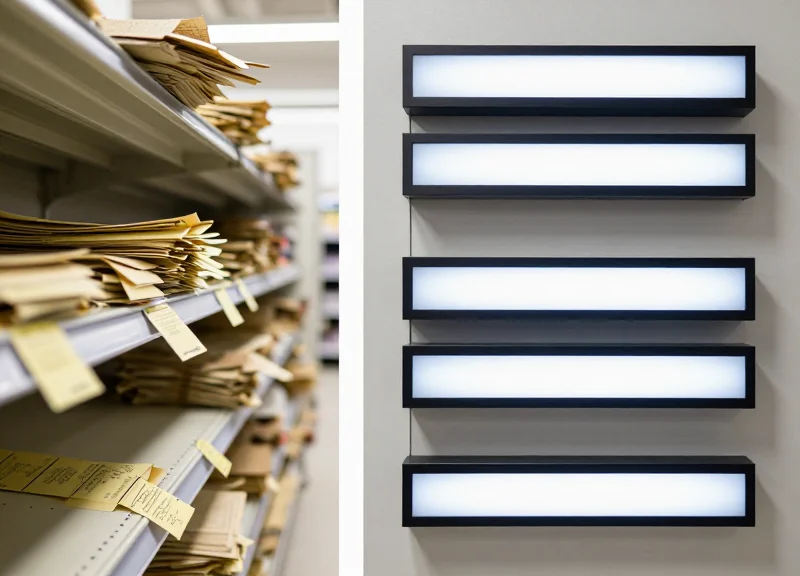
Next-gen ESL systems transform operational efficiency by shifting the responsibility of price maintenance from manual labor to automated software, effectively eliminating the 'manual bottleneck.' In traditional retail and hospitality environments, updating thousands of price tags is a multi-day endeavor that consumes dozens of man-hours; with an ESL infrastructure, this entire process is compressed into a two-second background task. By removing the physical requirement to print, sort, and manually place paper tags, organizations can reduce labor costs associated with pricing by up to 80%, while simultaneously ensuring 100% price integrity between the shelf and the Point of Sale (POS) system.
| Operational Metric | Manual Paper Process | Next-Gen ESL System |
|---|---|---|
| Time per 1,000 updates | 15–20 Labor Hours | < 2 Seconds |
| Error Rate | 3% - 5% (Human Error) | 0% (System Synchronized) |
| Update Frequency | Weekly/Monthly | Real-time / Unlimited |
| Employee Focus | Administrative / Repetitive | Guest Engagement / Sales |
The true ROI of eliminating manual labor isn't just the 'saved' hourly wage; it is the mitigation of the 'Compliance Delta.' In a manual environment, there is often a 12-to-24-hour lag between a price change in the database and the physical label update. This discrepancy leads to 'price friction' at checkout, resulting in customer dissatisfaction or even legal penalties for overcharging. ESLs solve this by acting as a single source of truth, ensuring that the customer always sees the most accurate, real-time data.
- Identify High-Value Reallocation: Analyze staff schedules to identify hours previously lost to manual tagging and shift those resources toward front-of-house guest services or complex inventory management.
- Integrate POS-to-ESL Sync: Establish a direct API bridge between your revenue management software and the ESL gateway to ensure that labor is never required for price verification.
- Automate Compliance Reporting: Utilize the ESL management dashboard to generate instant reports on update status, replacing the need for manual floor audits by supervisors.
Does ESL automation lead to staff layoffs?
Generally, no. Most organizations use the efficiency gains to combat labor shortages or to reallocate staff to 'high-touch' areas that improve the customer experience and drive RevPAR.
How does ESL reduce training costs?
Because the system is automated, new employees do not need to learn complex pricing and tagging procedures, reducing the onboarding time for floor staff.
What about the cost of maintaining the ESLs themselves?
Next-gen ESLs are designed for ultra-low power consumption, often lasting 10+ years on a single battery, meaning the technical maintenance labor is negligible compared to the daily labor of paper tags.
Expert Insight: The 'Invisible Fatigue' Factor. Beyond the direct wage costs, manual price updates contribute significantly to 'decision fatigue' and physical burnout among floor staff. In my 20 years of observing retail tech deployments, the most successful firms are those that recognize ESLs as a tool for employee retention. When you remove the most monotonous, error-prone task from a worker's plate, you see a measurable increase in employee engagement and a decrease in turnover—factors that are often excluded from standard ROI calculators but are critical for long-term operational health.
Seamless Integration: Connecting ESL with POS and ERP Systems
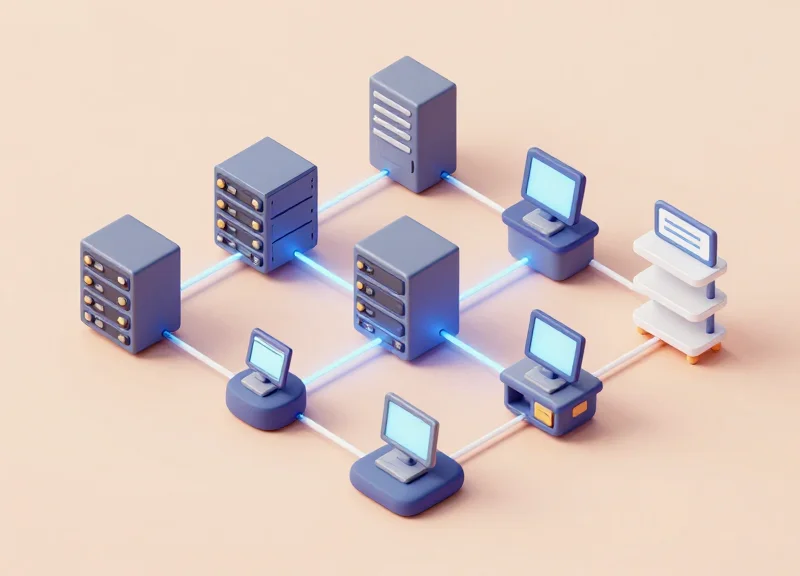
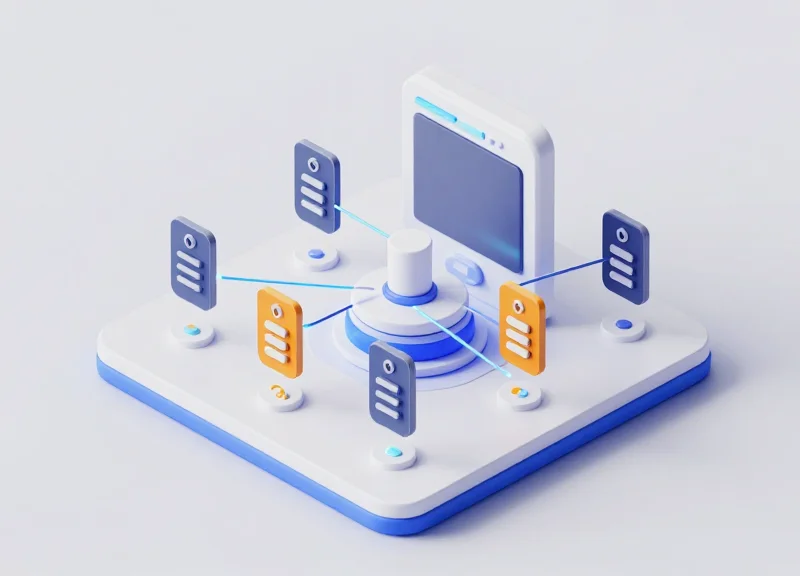
Seamless integration is the architectural foundation of modern revenue management, functioning as a 'Single Source of Truth' across a business's entire digital and physical footprint. It refers to the real-time, bi-directional synchronization between your Enterprise Resource Planning (ERP) database, your Point of Sale (POS) registers, and your Electronic Shelf Labels (ESL). Without this deep connectivity, the agility of a 2-second price update would be rendered useless by 'pricing friction'—the dangerous gap where a customer sees one price on the shelf but is charged another at the counter. By bridging these systems, operators ensure that pricing strategy moves at the speed of data, not at the speed of manual entry.
| System Component | Primary Function | Role in RevPAR Optimization |
|---|---|---|
| ERP/PMS | Master Data & Inventory | Calculates optimal price points based on stock levels and historical demand. |
| POS System | Transaction Execution | Ensures the guest is billed the dynamic rate in real-time without manual overrides. |
| ESL Gateway | Visual Distribution | Pushes price changes to the floor in <2 seconds to capture immediate demand spikes. |
| Middleware API | Data Orchestration | Filters and formats data packets to ensure zero-latency communication between silos. |
The true power of this integration lies in its ability to eliminate the 'Latency Trap.' In traditional setups, a price change might be approved in the back office but take hours to reach the floor. In a next-gen ecosystem, the ERP triggers a webhook the millisecond a demand threshold is met. This triggers a concurrent update to the POS cloud and the ESL server. Expert Tip: To truly differentiate, look for systems that support 'Bi-directional Verification.' This means the ESL doesn't just receive data; it sends a confirmation packet back to the ERP once the display has physically refreshed. This creates a 100% audit trail, eliminating the need for staff to 'walk the floor' to verify price accuracy.
- Data Ingestion & Trigger: The ERP or Revenue Management System (RMS) identifies a surge in demand and generates a new price point.
- Simultaneous Broadcast: The API layer pushes the update to both the POS database and the ESL management software via secure MQTT or REST protocols.
- Visual Execution: The ESLs update using sub-GHz radio frequencies to avoid Wi-Fi interference, completing the change in under 2 seconds.
- Closed-Loop Confirmation: The ESL system reports a successful update back to the ERP, updating the status dashboard for management.
Will ESL integration slow down my existing POS?
No. Modern ESL gateways use asynchronous API calls, meaning they listen for updates without taxing the processing power of your checkout systems.
What happens if the internet goes down?
Next-gen systems utilize local caching. The ESLs and POS will maintain the last 'known good' price from the local server until connectivity is restored, preventing system-wide pricing failures.
Can I integrate ESL with legacy ERP systems?
Most high-end ESL providers offer middleware adapters or 'edge connectors' that can scrape legacy databases or ingest CSV/XML exports if a modern REST API is unavailable.
Enhancing Customer Trust Through Price Accuracy
Price accuracy via Next-Gen ESL systems eliminates 'price friction'—the discrepancy between advertised shelf prices and checkout totals—thereby building consumer trust, reducing transactional disputes, and ensuring that dynamic pricing strategies are perceived as fair rather than deceptive. In an era where 2-second updates are possible, the gap between the 'promise' on the label and the 'reality' at the POS (Point of Sale) is virtually closed, ensuring that revenue growth never comes at the expense of customer loyalty.
In traditional manual environments, 'label lag' is a significant liability. When a promotion ends or a dynamic price change occurs in the database but fails to reach the physical shelf, the customer feels cheated at the register. Psychological studies in consumer behavior suggest that it takes approximately twelve positive experiences to recover the trust lost from just one pricing error. By automating this synchronization, ESLs act as a silent guarantee of brand integrity.
| Trust Factor | Manual Paper Labels | Next-Gen ESL Systems |
|---|---|---|
| Sync Speed | Hours or Days | Sub-2 Seconds |
| Error Rate | 5-10% (Human Error) | Near Zero (<0.1%) |
| Customer Perception | Frustration/Mistrust | Consistency/Reliability |
| Compliance Risk | High (Bait & Switch) | Automated Compliance |
How does price accuracy affect long-term customer retention?
Consistent pricing reduces the cognitive load on customers, allowing them to shop without verifying every item. This creates a frictionless experience that encourages repeat business and higher Lifetime Value (LTV).
Can ESLs help with local consumer protection laws?
Absolutely. They provide a digital audit trail and instant updates that satisfy 'Weights and Measures' regulations, mitigating the risk of heavy fines associated with mismatched pricing.
Does dynamic pricing hurt trust if prices change frequently?
Not if the change is transparent and immediate. Trust is broken by discrepancies, not by price fluctuations. When the shelf always matches the register, customers accept dynamic pricing as a standard market mechanic.
The Silicon Valley Perspective: The Price Integrity Index. To truly outperform competitors, businesses should transition from viewing price updates as a chore to viewing them as part of their 'Trust Stack.' We recommend tracking a 'Price Integrity Index'—the percentage of transactions where the customer-facing price perfectly matches the backend data. With Next-Gen ESLs, hitting a 99.9% index is achievable, which serves as a powerful marketing claim. In high-stakes environments like luxury hotels or premium retail, this level of precision is what differentiates a market leader from a commodity provider.
Ultimately, a 15% RevPAR increase is only sustainable if the customer feels the value is fair and the transaction is honest. By leveraging 2-second updates, you are not just managing revenue; you are engineering a reputation for excellence that protects your margins even during volatile market shifts.
Choosing the Right ESL Partner: The DragonGuardGroup Edge
Selecting an ESL partner is a strategic decision that hinges on finding a solution capable of handling high-frequency price updates without compromising hardware longevity or network stability. DragonGuardGroup distinguishes itself by offering the industry's most robust ecosystem, combining 2-second proprietary transmission speeds with high-contrast E-ink displays that ensure 100% price accuracy across thousands of endpoints simultaneously. To maximize RevPAR, your partner must provide more than just hardware; they must provide a low-latency infrastructure that can keep pace with real-time market fluctuations.
| Feature | DragonGuardGroup Standards | Generic ESL Competitors |
|---|---|---|
| Update Latency | < 2 Seconds (Bulk) | 15 to 60 Seconds |
| Battery Longevity | 10 - 15 Years | 3 - 5 Years |
| Communication Band | Sub-GHz Interference-Free | Standard 2.4 GHz (Congested) |
| Display Capability | 4-Color & High-Resolution | 2 or 3 Color (Lower DPI) |
- Extreme Battery Efficiency: DragonGuardGroup labels utilize advanced power-cycling algorithms that only consume energy during the two-second update window, allowing for a decade of operation even with multiple daily price changes.
- Superior Display Clarity: Using the latest E-ink Spectra technology, our displays offer 180-degree viewing angles and high contrast ratios, ensuring guests can read pricing in any lighting condition, from dim hotel bars to bright retail floors.
- Enterprise-Grade Reliability: Our system features a self-healing mesh network architecture. If one access point experiences an issue, the labels automatically reroute their signal to ensure the price update is never missed.
Expert Insight: The 'Hidden Congestion' Trap. Most hospitality and retail environments are flooded with 2.4GHz signals from guest Wi-Fi and Bluetooth devices. Standard ESLs often fail to update during peak hours because they compete for this crowded bandwidth. The DragonGuardGroup Edge lies in our use of Sub-GHz radio frequencies, which penetrate walls more effectively and remain entirely unaffected by guest internet traffic, ensuring your revenue management strategy never hits a bottleneck.
Is the system compatible with existing POS software?
Yes, DragonGuardGroup provides an open API and pre-built connectors for major hospitality and retail ERP/POS systems, ensuring a plug-and-play experience for revenue managers.
How does DragonGuardGroup handle security?
We employ AES-128 encryption for all data transmissions between the server and the labels, preventing unauthorized price tampering or signal interception.
Can the labels display QR codes for guest engagement?
Absolutely. Our high-resolution displays support dynamic QR codes that can link guests to digital menus, loyalty sign-ups, or upsell opportunities, further boosting RevPAR.