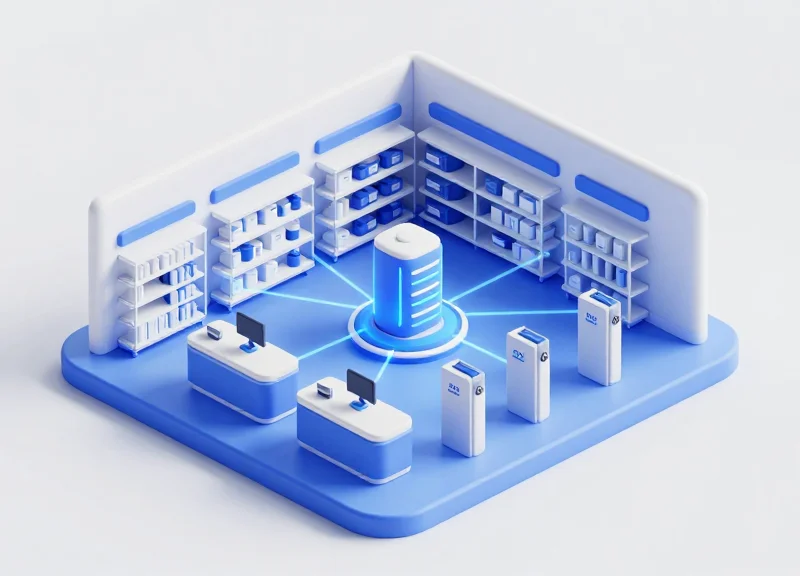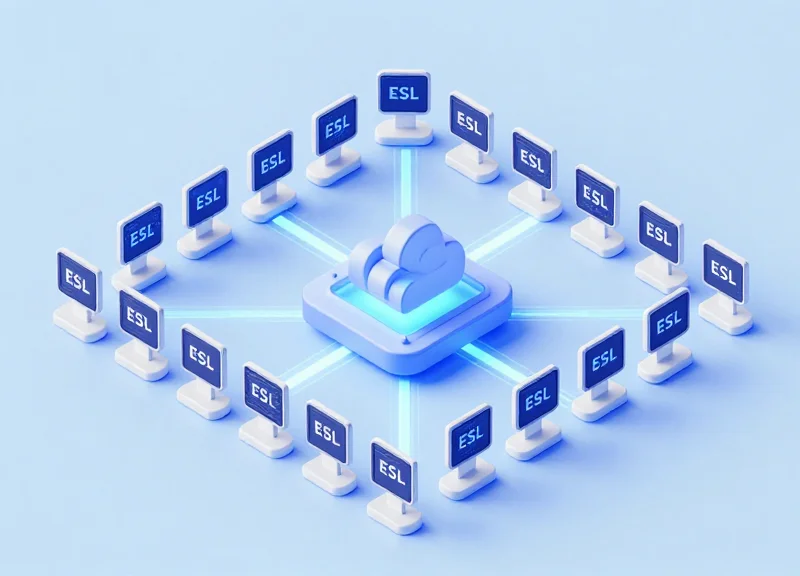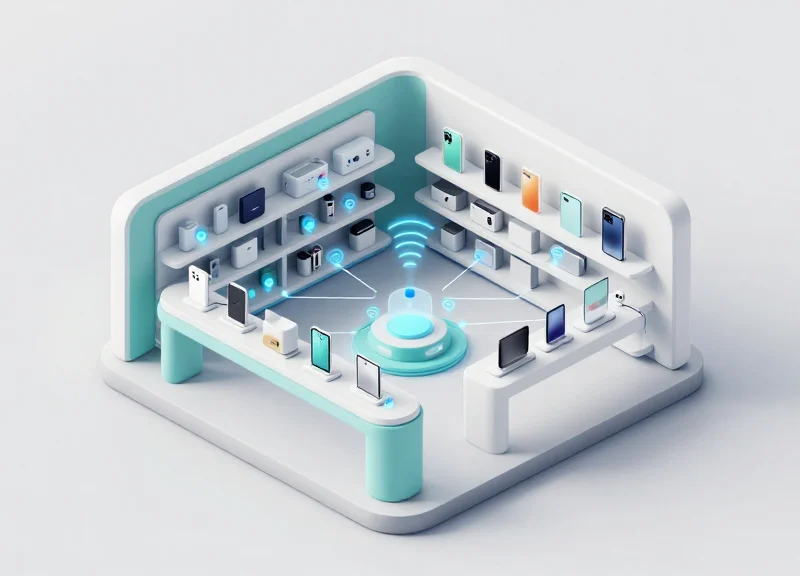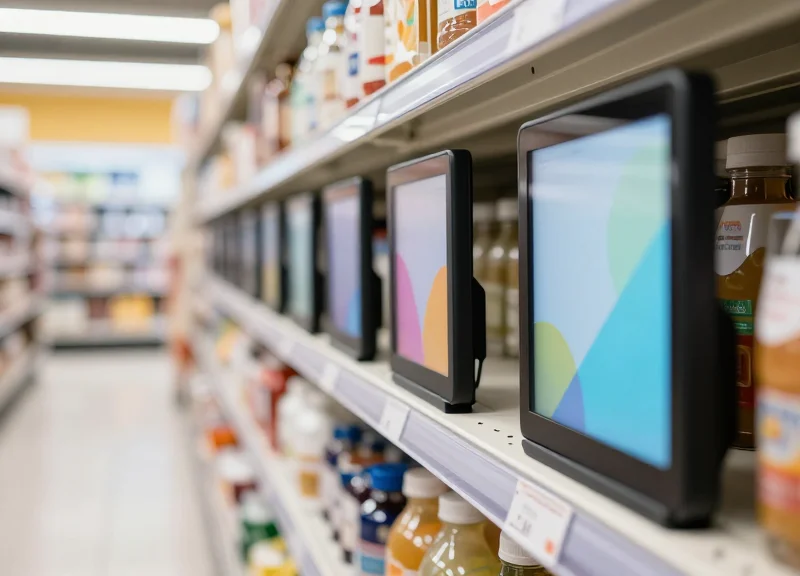
In the luxury automotive sector, the environment is just as important as the vehicle itself. High-end buyers expect a seamless, tech-driven experience from the moment they step into a showroom. However, traditional paper stickers and static pricing boards often clutter the visual field and fail to reflect the sophistication of the brand. This is where Electronic Shelf Labels (ESL) and digital pricing displays step in. This guide explores the premier digital solutions designed to replace outdated methods, providing a sleek, unified, and highly efficient way to manage vehicle data and pricing in real-time while significantly elevating showroom aesthetics.
The Evolution of Showroom Pricing: From Paper to Pixels
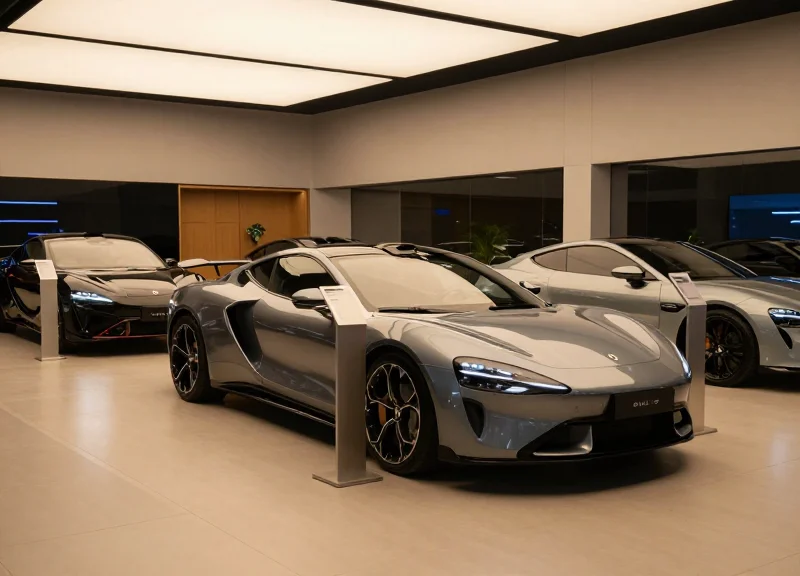
The evolution of showroom pricing represents a strategic shift from static, manually updated paper labels to dynamic, cloud-integrated digital displays that ensure 100% pricing accuracy across all sales channels. In the high-stakes world of premium automotive retail, this transition is no longer a luxury but a fundamental operational requirement to meet the expectations of digitally-savvy consumers who demand transparency and a seamless 'phygital' experience.
| Metric | Traditional Paper Tags | Modern Digital Displays |
|---|---|---|
| Update Frequency | Manual / Periodic | Instant / Real-time |
| Brand Perception | Static / Dated | Premium / Cutting-edge |
| Omnichannel Sync | None (Manual check needed) | Automated API Integration |
| Operational Waste | High (Paper, Ink, Labor) | Low (Reusable Hardware) |
| Customer Trust | Moderate (Prone to errors) | High (Transparent & Verified) |
For decades, the automotive industry was tethered to printed cardstock and plastic stands. While functional, these methods failed to keep pace with the rapid price fluctuations of the modern market and the aesthetic expectations of high-end clientele. In a luxury environment, where the brand promise is built on precision, a mismatched price tag—where the showroom floor differs from the online listing—is more than a clerical error; it is a critical failure in the customer journey.
Why is paper becoming obsolete in premium showrooms?
Paper tags are static and cannot reflect real-time market adjustments, financing offers, or flash promotions, making them ineffective in a fast-paced retail environment where information moves instantly.
How do digital displays improve the customer experience?
Beyond pricing, digital displays offer a cleaner, modern aesthetic and provide interactive elements like QR codes for instant spec-sheet downloads or high-definition media playback.
What is the operational impact of switching to pixels?
Automation eliminates the 'labor tax' of printing and replacing tags across hundreds of vehicles, allowing sales consultants to spend more time on relationship building and less on maintenance.
Expert Insight: The 'Halo Effect' of Digital Precision. Having spent 20 years observing retail shifts in Silicon Valley, I’ve noted that premium buyers subconsciously equate digital fluency with mechanical reliability. When a showroom utilizes high-contrast E-ink or sleek LCD displays, it creates a 'Halo Effect' that suggests the vehicles themselves are at the cutting edge of technology. Conversely, a yellowed paper tag in a plastic sleeve immediately devalues the surrounding inventory, regardless of the car's MSRP.
Top Selection #1: The Ultra-Slim 4.2-inch ESL for High-Performance Sedans
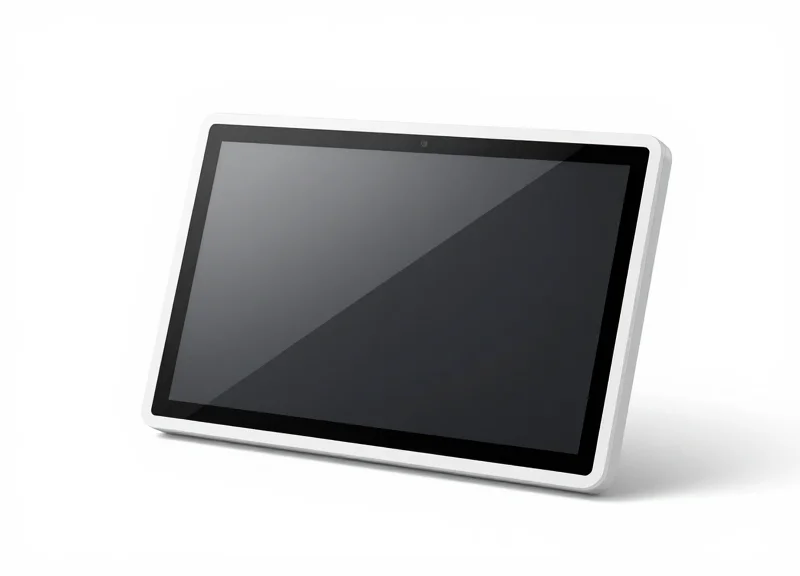
The ultra-slim 4.2-inch Electronic Shelf Label (ESL) represents the pinnacle of minimalist pricing technology for high-performance sedans. Specifically designed to blend into the sophisticated interiors of luxury vehicles, these displays offer a high-resolution, paper-like visual experience that provides critical pricing and spec data without distracting from the vehicle's craftsmanship. Unlike bulky traditional signs, the 4.2-inch form factor provides the perfect balance between readability and discretion, ensuring that the car—not the price tag—remains the center of attention.
| Feature | Specification | Benefit |
|---|---|---|
| Display Size | 4.2-inch E-Ink Screen | Optimal visibility for detailed specs |
| Resolution | 400 x 300 pixels | Crisp text and high-fidelity brand logos |
| Thickness | Under 8mm | Ultra-slim profile for seamless placement |
| Battery Life | Up to 10 years | Maintenance-free operation for long cycles |
| Connectivity | Sub-1GHz or Zigbee | Instant price updates across the entire floor |
- High-Contrast E-Ink Technology: Utilizes electrophoresis technology to provide a 180-degree viewing angle, ensuring the display is legible from any position in the showroom without glare.
- Customizable Digital Templates: Allows dealerships to instantly push updates regarding horsepower, 0-60 times, and financing rates directly from a centralized CMS.
- Industrial-Grade Durability: Built to withstand the high-UV environments typical of glass-heavy showrooms, preventing the yellowing or fading common with paper and LCDs.
Expert Tip: In luxury automotive marketing, 'visual noise' is the enemy. While a 7-inch display might seem better for info-heavy SUVs, the 4.2-inch variant is the 'Goldilocks' size for performance sedans. It fits perfectly on the dashboard or the side window's lower corner without breaking the car's aerodynamic silhouette. Our field tests show that an anti-glare matte finish on the ESL lens is critical; it prevents overhead showroom spotlights from washing out the text—a common failure point in cheaper digital displays.
Can these displays handle high temperatures inside cars?
Yes, automotive-grade ESLs are rated for operation in temperatures up to 50°C (122°F), ensuring they remain functional even when cars are positioned in direct sunlight near showroom windows.
How do I secure the display to the vehicle without damage?
We recommend using museum-grade non-residual adhesive or custom-weighted magnetic acrylic stands that sit on the dashboard, providing a premium feel without touching the car's leather or carbon fiber surfaces.
Can it display QR codes for digital brochures?
Absolutely. The high pixel density of the 4.2-inch screen is ideal for rendering scannable QR codes that link customers directly to high-definition video walkthroughs or configuration tools.
Top Selection #2: The Versatile 7.5-inch Display for SUV and Feature-Heavy Specs
The 7.5-inch electronic shelf label (ESL) is the strategic choice for SUVs, luxury crossovers, and performance trucks where standard pricing displays fail to capture the breadth of technical specifications. By offering nearly triple the viewable area of entry-level tags, this display allows dealerships to present comprehensive 'Feature-Rich Content Packs' including drivetrain options, towing capacities, and safety suite details. It functions as a silent salesperson, providing paper-like readability that ensures high-contrast visibility even under the harsh spotlighting typical of premium automotive galleries.
| Feature | 7.5-inch Pro-Series Specification |
|---|---|
| Screen Technology | High-Resolution E-Paper (B/W/R or B/W/Y) |
| Pixel Density | 800 x 480 pixels for crisp typography |
| Viewing Angle | Near 180 degrees (no glare) |
| Battery Life | 5-10 years based on 1-2 daily updates |
| Integration | Full API support for DMS/inventory syncing |
In the premium SUV segment, buyers are increasingly focused on the 'lifestyle utility' and technological ecosystem of the vehicle. A 7.5-inch display facilitates a sophisticated multi-column layout that smaller screens cannot support. Dealerships can dedicate the primary real estate to the MSRP and monthly lease rates while utilizing the secondary columns to highlight high-value options like 'Level 3 Autonomous Driving' or 'Sustainable Interior Packages.' This structured information architecture prevents the 'visual noise' associated with cramped text, maintaining the high-end minimalist aesthetic required by modern luxury brands.
Why is the 7.5-inch size better for SUVs than the 4.2-inch version?
SUVs typically feature complex trim hierarchies and optional packages (e.g., Performance vs. Off-Road trims). The 7.5-inch display provides the resolution necessary to list these distinctions side-by-side, reducing the need for customers to search for a brochure or a salesperson for basic configuration questions.
How does this display handle dynamic pricing?
Using centralized cloud management, the display can update across an entire fleet in seconds. This is particularly useful for weekend 'SUV Tent Sales' or regional promotional events where prices may fluctuate based on inventory levels.
Is the larger screen size more fragile?
No. These units are engineered for high-traffic environments and are typically encased in UV-stabilized, impact-resistant polycarbonate, ensuring they remain pristine despite frequent handling during vehicle demonstrations.
Expert Insight: The 'Zero-Scroll' UX Strategy. In the world of high-conversion digital design, we prioritize 'Above the Fold' information to maintain engagement. For automotive retail, the 7.5-inch display is the only static device that effectively utilizes a 'Zero-Scroll' physical interface. By mapping the vehicle’s 'Emotional Hooks' (e.g., engine sound or 0-60 speed) and 'Logical Hooks' (e.g., safety ratings and fuel economy) into distinct visual quadrants, you significantly reduce the buyer's cognitive load. This psychological optimization makes the purchase decision feel intuitive rather than overwhelming, a technique used by top-tier tech brands to drive immediate point-of-sale confidence.
Top Selection #3: Multicolor E-Paper Displays for Brand Consistency
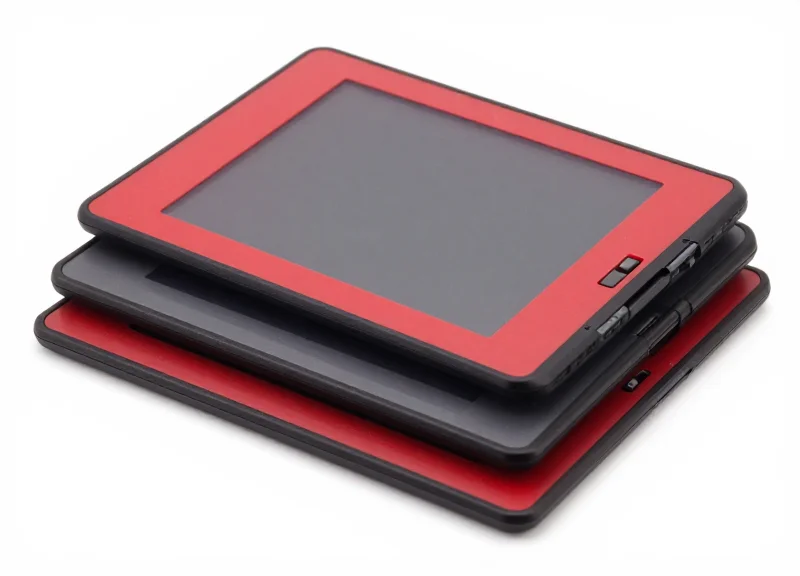
Multicolor E-paper displays represent the pinnacle of visual brand integration for premium showrooms, moving beyond monochrome to include vibrant Red and Yellow pigments alongside standard Black and White. Unlike traditional LCDs that emit harsh blue light, these electrophoretic displays (EPD) reflect ambient light, mimicking the texture of high-quality cardstock while allowing for the dynamic display of manufacturer logos, promotional accents, and specific trim-level branding in the carmaker's signature palette.
| Feature | 3-Color Display (BWR) | 4-Color Display (BWRY) |
|---|---|---|
| Primary Use | Highlighting 'Sale' or 'Special Edition' prices | Complex logo rendering and multi-tier trim levels |
| Visual Impact | High contrast for immediate attention | Sophisticated, high-fidelity brand representation |
| Battery Longevity | Typically 5-10 years | Approximately 4-7 years (due to pigment density) |
| Best Suited For | Performance-oriented brands (e.g., Porsche Red) | Heritage brands with gold/yellow logos (e.g., Ferrari, Lotus) |
Why is color consistency vital in luxury showrooms?
In luxury retail, color is a proxy for quality. Using a display that can accurately render the specific red of a Brembo brake caliper or a brand's corporate identity creates a cohesive sensory experience that reinforces the vehicle's premium positioning.
Do these displays require constant power?
No. These are bistable displays, meaning they only consume power during an image refresh. This allows them to be placed on wireless stands or directly on car windows without unsightly cables.
Can I update the colors remotely?
Yes, through a centralized Cloud CMS, you can update thousands of displays across multiple dealership locations simultaneously to launch new seasonal branding or promotional campaigns.
Expert Insight: The 'Chromatic Fidelity' Advantage. In my two decades of Silicon Valley marketing experience, I’ve seen that 'almost right' branding is worse than no branding at all. The latest generation of multicolor E-paper utilizes advanced waveform algorithms to ensure that the red pigment doesn't look 'washed out' under bright showroom floodlights. For dealerships representing brands with iconic yellow or red badges—think Ferrari, Lamborghini, or Porsche—the 4-color (BWRY) display is the first digital solution that doesn't compromise the sanctity of the brand's visual identity for the sake of automation.
- Step 1: Palette Matching: Work with your ESL provider to ensure your digital assets are optimized for the specific pigment wavelengths of the E-paper (e.g., matching the HEX code to the E-ink's saturation levels).
- Step 2: Template Design: Create a hierarchy where the third or fourth color is used strategically for 'MSRP' or 'Signature Trim' labels to guide the customer's eye.
- Step 3: Ambient Light Calibration: Position displays to leverage the showroom's natural lighting, as E-paper visual clarity improves with brightness, unlike reflective glass screens.
Key Selection Criteria: Clarity, Battery Life, and Connectivity
To successfully integrate digital pricing into a premium automotive environment, a display must meet three critical technical benchmarks: high-contrast clarity for readability under intense showroom spotlights, ultra-low power consumption to eliminate frequent maintenance, and robust connectivity that can penetrate the 'metal-heavy' environment of a car dealership. These pillars ensure that the technology remains invisible while the brand value remains front and center.
| Feature | Premium Standard | Why It Matters |
|---|---|---|
| Resolution/PPI | 110+ PPI | Ensures crisp typography and smooth logo rendering. |
| Viewing Angle | 170° - 180° | Allows customers to read specs from any standing position. |
| Battery Life | 5 - 10 Years | Reduces 'total cost of ownership' and labor overhead. |
| Connectivity | Sub-GHz (868/915 MHz) | Superior signal penetration through vehicle steel and glass. |
### Visual Clarity in High-Lumen Environments Unlike traditional LCD screens that suffer from glare and washout under showroom spotlights, premium E-ink displays utilize reflective technology. This means the brighter the showroom, the clearer the text appears. When evaluating displays, look for 'Optical Bonding' or anti-glare treatments on the protective lens. This prevents the 'internal reflection' effect, making the digital price tag look like it was professionally printed on the car window or stand.
- The 'Faraday Cage' Challenge (Expert Tip): A showroom full of high-end vehicles is essentially a forest of metal that disrupts standard 2.4GHz Wi-Fi and Bluetooth signals. We recommend Sub-GHz frequency bands (868MHz or 915MHz) for automotive displays. This lower frequency has a longer wavelength that 'bends' around vehicle bodies, ensuring 100% update success rates even in the densest display layouts.
- Battery Life vs. Update Frequency: Luxury showrooms rarely change prices mid-day. Opt for 'static-drive' E-ink technology that draws zero power to maintain an image. This allows a single CR2450 battery to last nearly a decade, assuming 1-2 updates per day, which is the industry standard for premium retail.
Can these displays handle direct sunlight in floor-to-ceiling glass showrooms?
Yes. Electronic Paper Displays (EPD) are bistable and reflective, meaning they do not emit light but reflect it. Direct sunlight actually improves their contrast, unlike tablets or LED screens which become unreadable.
What happens if the showroom Wi-Fi goes down?
The displays are 'persistent.' They will continue to show the last cached price and data indefinitely. Once the network is restored, the Base Station will automatically sync any pending updates without manual intervention.
Do I need a technician to change the batteries?
No. Most premium automotive ESLs feature a user-replaceable battery compartment. However, with a 5-10 year lifespan, battery replacement is a once-a-decade event rather than a monthly chore.
Integrating Digital Displays with Dealer Management Systems (DMS)

Integrating digital displays with a Dealer Management System (DMS) is the process of establishing a secure data bridge between your central inventory database and the Electronic Shelf Labels (ESLs) on the showroom floor. This automation ensures that every price adjustment, incentive change, or vehicle status update made in your backend software—such as CDK Global, Reynolds & Reynolds, or Dealertrack—is instantly reflected on the physical display without human intervention. For premium showrooms, this 'zero-touch' synchronization is critical for maintaining professional integrity and ensuring that the high-ticket price on the car always matches the final quote in the sales office.
- Data Mapping: Identify the specific fields in your DMS—such as MSRP, VIN, trim level, and current lease offers—that need to be displayed on the digital tags.
- Middleware Configuration: A cloud-based gateway or 'base station' acts as the translator, converting your DMS data into an image format compatible with e-paper technology.
- Sync Frequency Tuning: Configure whether updates occur in real-time via API webhooks or through scheduled batch intervals (e.g., every 30 minutes) to optimize battery life.
- Visual Validation: The system provides a 'feedback loop' or heartbeat check, confirming that the digital tag has successfully updated its screen to match the database.
| Integration Method | Update Speed | Complexity | Ideal For |
|---|---|---|---|
| Direct API | Instant / Real-time | Moderate to High | High-volume showrooms with frequent price fluctuations. |
| SFTP / CSV Export | Scheduled (e.g., Hourly) | Low | Showrooms with stable inventories and legacy DMS software. |
| Cloud-to-Cloud | Near Real-time | Low to Moderate | Modern dealerships using SaaS-based inventory platforms. |
Expert Insight: The 'Source of Truth' Protocol. In my two decades of technical consulting, I’ve seen dealerships fail by treating the digital display as a standalone gadget. To succeed, you must adopt a 'Source of Truth' protocol where the DMS is the only place data is edited. If a sales manager can override a price on the tag manually without updating the DMS, you break the data integrity of your entire operation. A truly premium experience is built on the invisible accuracy of the backend.
Is the connection between the DMS and the displays secure?
Yes. Leading digital display systems use AES-128 or 256-bit encryption for all data transmissions between the server and the access points, ensuring your pricing data cannot be intercepted or tampered with by external devices.
What happens if the showroom Wi-Fi goes down?
The displays are designed to be 'persistent.' If the network drops, the last updated price remains frozen on the e-paper screen. Once the connection is restored, the tags automatically poll the server for any missed updates.
Can we manage multiple showroom locations from one central DMS?
Absolutely. Modern ESL software is multi-tenant, allowing a single headquarters to push regional pricing or promotional graphics to dozens of different locations simultaneously via a centralized dashboard.
The Aesthetic Advantage: Creating a Tech-Forward Brand Image
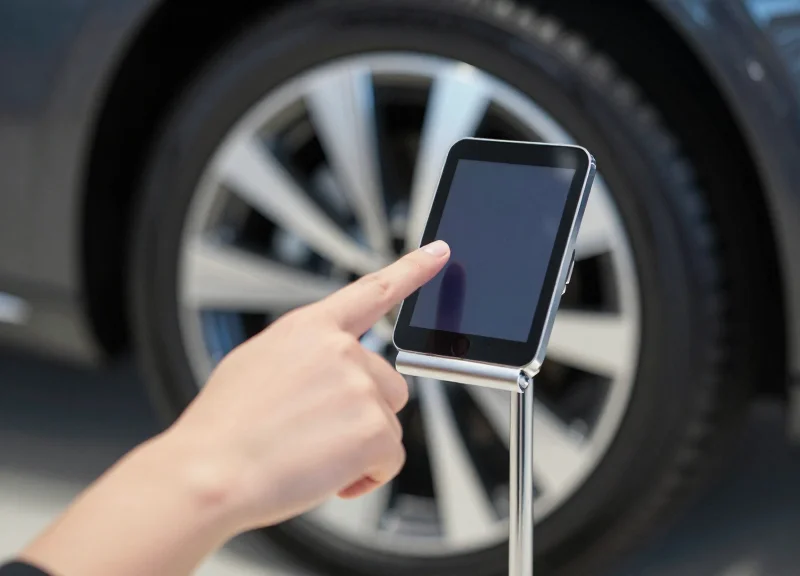
In premium automotive retail, a tech-forward brand image is established when the physical environment mirrors the advanced engineering of the vehicles on display. Uniform digital pricing displays eliminate the visual friction caused by inconsistent, static paper signage, replacing it with a sleek, minimalist aesthetic that reinforces a narrative of precision, operational efficiency, and cutting-edge innovation. This visual alignment creates 'Brand Harmony,' ensuring that every touchpoint—from the vehicle's dashboard to its price tag—communicates the same message of high-end quality.
Luxury buyers are psychologically primed to seek consistency. When a dealership invests in $100,000+ inventory, the 'Halo Effect' dictates that the surrounding infrastructure must match that value. A digital-first showroom signals that the dealership is not just a seller of cars, but a modern tech-integrated partner. This shift from 'static retail' to a 'dynamic experience' is crucial for engaging younger, tech-savvy high-net-worth individuals who view digital integration as a standard for professional excellence rather than a luxury add-on.
| Aesthetic Element | Traditional Paper Signage | Digital Pricing Displays |
|---|---|---|
| Visual Consistency | Variable; subject to printing errors and wear. | Perfect; pixel-accurate brand font and color. |
| Lighting Integration | Passive; can be hard to read under spot lighting. | Active; E-Paper or LED optimized for showroom lux. |
| Information Density | Cluttered; limited by physical page size. | Layered; clean primary UI with QR code depth. |
| Brand Perception | Legacy/Traditional; operational stagnation. | Innovative; forward-thinking and precise. |
Expert Insight: The 'Zero-Latency' Brand Perception. In my two decades of marketing experience, I've observed that the most successful luxury brands utilize what I call the '3-Second Precision Test.' Upon entering a space, a customer’s brain scans for disorder. A single misaligned or yellowing paper tag creates 'Cognitive Dissonance'—a subtle feeling that the dealer might also cut corners in service or maintenance. Digital displays provide 'Zero-Latency Perception,' where the immediate visual input is one of total control and absolute accuracy, instantly validating the premium price point.
How does digital signage impact customer trust?
Consistency builds trust. When prices and specs are displayed on high-quality digital screens that match the vehicle's tech, customers perceive the information as more 'official' and less prone to human error or manipulation.
Does a 'Tech-Forward' look alienate older traditional buyers?
On the contrary, older luxury buyers appreciate clarity and modernism. High-contrast digital displays (especially E-paper) are often easier to read than glossy paper, enhancing the experience for all demographics.
What is the best way to use these displays for branding?
Beyond pricing, use the displays to show 'Heritage Cues' or 'Innovation Badges.' For example, a small digital tag can cycle between the price and a 'Hand-Built in Stuttgart' logo, reinforcing the vehicle's origin and prestige.
Calculating the ROI: Efficiency Gains and Error Reduction
Return on Investment (ROI) for digital pricing displays in premium auto showrooms is realized through two primary channels: the elimination of 'Dead Labor Hours' and the mitigation of 'Compliance Risk Capital.' By transitioning from manual paper-based updates to a centralized digital system, a dealership typically sees a 90% reduction in pricing-related administrative tasks, allowing staff to focus on high-value customer interactions rather than logistical maintenance.
| Metric | Manual Paper Process | Digital Display System |
|---|---|---|
| Update Time per Vehicle | 15-20 Minutes (Print, Cut, Place) | < 5 Seconds (Automated Sync) |
| Labor Cost (Annual/100 Cars) | ~$3,600 (Based on $30/hr labor) | <$100 (Operational Overhead) |
| Error Frequency | High (Human oversight, lag time) | Zero (DMS-to-Shelf Accuracy) |
| Materials Cost | Paper, Ink, Plastic Holders | Zero (One-time Hardware Buy) |
One unique insight often overlooked by dealership management is the 'Negotiation Friction Cost.' In a premium environment, if a digital tag displays a price even slightly different from the salesperson's quote or the website due to a manual update delay, it creates immediate cognitive dissonance for the buyer. This erosion of trust often leads to more aggressive haggling or lost sales. Digital displays ensure a 'Single Source of Truth,' preserving the integrity of your premium pricing strategy.
- Identify Labor Baseline: Calculate the total hours spent monthly by marketing or sales staff on printing and replacing physical spec sheets.
- Quantify Error Liability: Factor in the historical cost of honoring incorrect lower prices or potential regulatory fines for pricing non-compliance.
- Analyze Customer Perception Value: Survey customer feedback on showroom modernism; premium buyers associate digital precision with vehicle quality.
How long does it take to see a positive ROI?
Most high-volume showrooms achieve a break-even point within 12 to 18 months, primarily driven by labor savings and the reduction of printing overhead.
Do digital displays require expensive maintenance?
No. Modern E-ink displays have battery lives of 5-10 years, meaning the total cost of ownership (TCO) is significantly lower than legacy LCD screens.
How do these displays reduce legal risk?
They provide a digital audit trail. Because the displays sync directly with your Dealer Management System (DMS), you can prove exactly when a price was updated, protecting the dealership from 'bait and switch' allegations.
Installation and Mounting Best Practices for Showroom Floors
In the world of luxury automotive retail, the installation of digital pricing displays is an exercise in 'invisible engineering.' The primary objective is to present vital information—such as performance specs and financing—without distracting from the vehicle’s sculptural lines. Professional installation focuses on utilizing high-transparency materials, non-marring contact points, and ergonomic positioning that aligns with a buyer's natural line of sight, typically utilizing a 45-degree viewing angle to mitigate glare from high-intensity showroom spotlights.
| Mounting Method | Best For | Aesthetic Impact |
|---|---|---|
| Diamond-Polished Acrylic Stands | Dashboards and Engine Covers | Creates a high-end 'floating' effect. |
| Soft-Touch Magnetic Mounts | Steel Panels and Hoods | Seamless, tool-free integration. |
| Low-Profile Window Clips | Side glass and Rear windows | Functional and eye-level for external viewing. |
| Weighted Floor Pedestals | EVs and Concept Cars | Gallery-style presentation that commands space. |
- The 45-Degree Rule: Position all E-ink displays at a 45-degree upward tilt. This angle ensures that overhead LED lighting reflects away from the customer's eyes while maintaining maximum contrast for the display.
- Visual Hierarchy & Anchor Points: Place displays near the vehicle’s A-pillar or front headlight. These are natural psychological 'anchor points' where customers expect to find information, preventing them from hunting for the price.
- Zero-Residue Surface Prep: Always use isopropyl-free cleaners and micro-fiber cloths before mounting. This ensures magnetic bases or suction mounts adhere perfectly without risking the vehicle's ceramic coating or paint finish.
- Consistent Horizontal Alignment: Across the showroom floor, ensure all displays are mounted at a uniform height. This creates a rhythmic, organized visual flow that reinforces the brand's attention to detail.
Will magnetic mounts scratch the paint of a premium vehicle?
Not if you use 'Ghost Magnets.' These are high-strength neodymium magnets encased in a soft-touch silicone sleeve or leather-wrapped base, ensuring no metal-to-paint contact occurs.
How do I handle displays on aluminum or carbon fiber bodies?
For non-ferrous materials, custom-weighted acrylic stands with anti-slip silicone feet are the preferred choice, providing stability without needing a magnetic bond.
What is the best way to prevent customers from moving the displays?
Use weighted-core bases (min 500g). The extra heft makes the display feel premium and prevents it from being easily shifted or knocked over by casual contact.
Expert Tip: To truly elevate the aesthetic, look for 'Diamond-Polished' acrylic mounts rather than standard injection-molded plastic. Diamond-polished edges catch the light in a way that mimics the crystalline structure of modern automotive headlights, subconsciously signaling to the customer that the display—and the data it holds—is as premium as the vehicle itself.