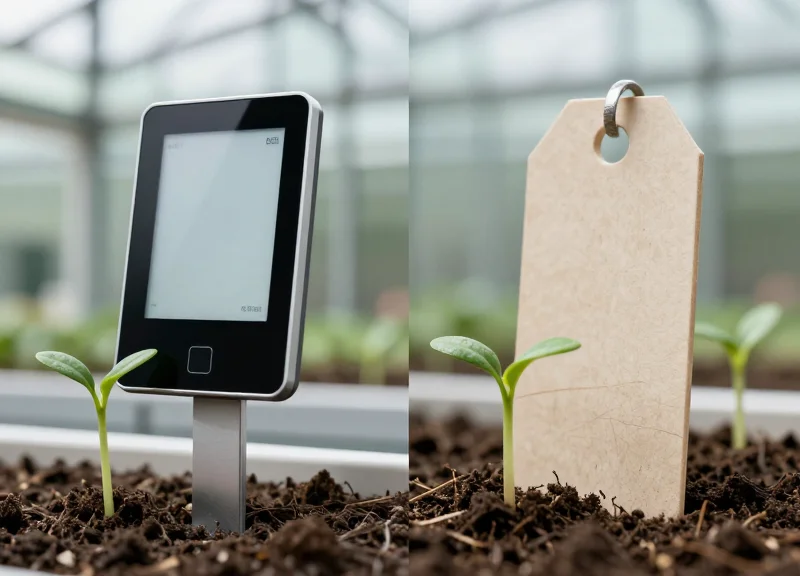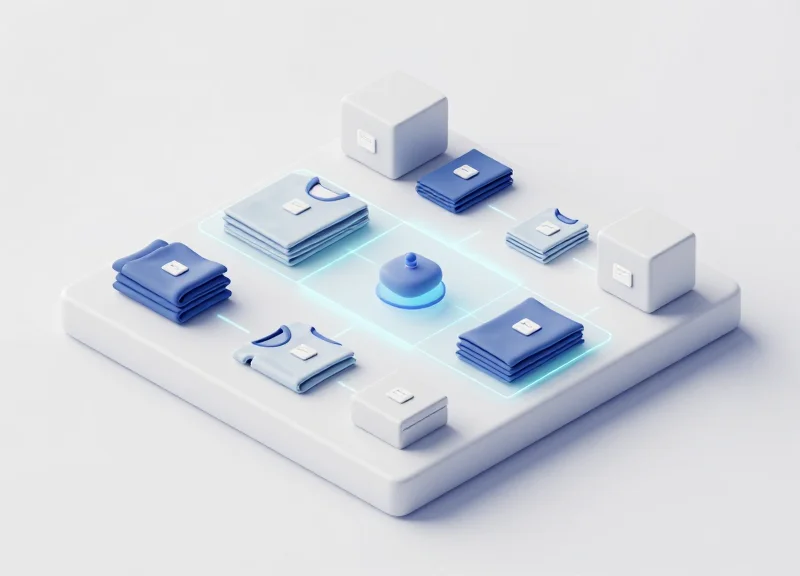
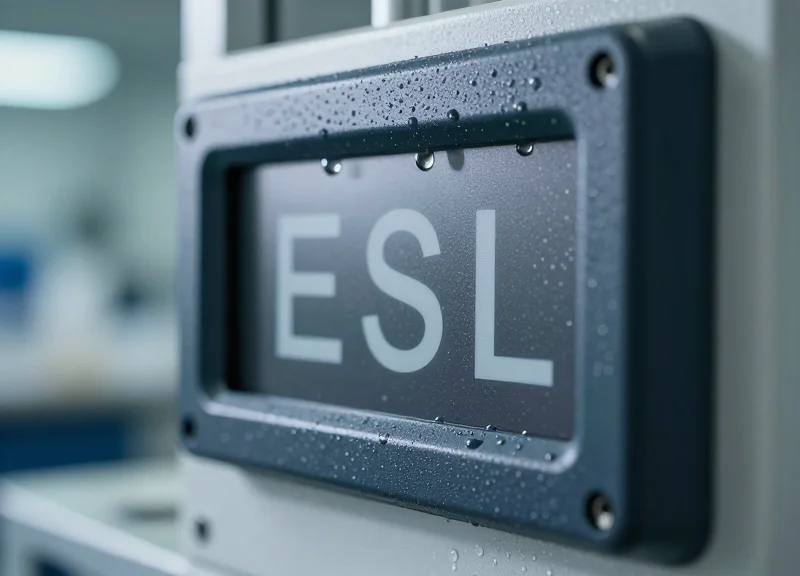
As industrial environments transition toward full-scale digitalization, the reliability of Electronic Shelf Labels (ESLs) is no longer just about battery life or display clarity—it is about survival. In sectors like chemical processing, pharmaceuticals, and heavy-duty food production, standard plastic enclosures fail under the pressure of acidic or alkaline exposure. This technical deep-dive examines the material science behind pH-resistant casings, illustrating why specialized protection is the primary safeguard for your facility's data infrastructure and operational uptime.
The Rise of Industrial ESLs and the Environmental Challenge
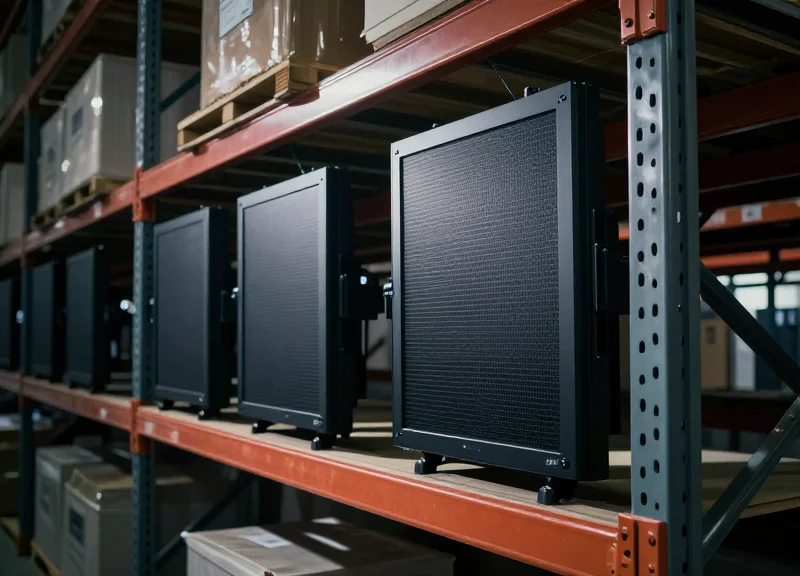
Industrial Electronic Shelf Labels (ESLs) represent the migration of dynamic asset tracking and digital labeling technology from the benign environments of retail stores to the volatile, high-stakes arenas of manufacturing, chemical processing, and heavy logistics. This shift creates a massive engineering hurdle: standard commercial-grade casings that thrive in air-conditioned supermarkets quickly degrade when exposed to industrial cleaners, acidic vapors, and alkaline residues. To maintain the 'digital thread' of Industry 4.0, next-generation ESLs require hardware that treats the casing not just as a container, but as a sophisticated chemical barrier designed to prevent Environmental Stress Cracking (ESC) and preserve internal electronic stability.
As global supply chains digitize, the need for real-time data visibility has pushed ESLs into 'hard-hat' zones. In these settings, labels are subjected to rigorous wash-down cycles and proximity to corrosive agents that would turn standard polycarbonate brittle within weeks. The environmental challenge isn't just about physical impact; it is about the molecular interaction between the casing material and the pH-variable substances present in the industrial atmosphere.
| Environmental Factor | Retail ESL Requirement | Industrial ESL Requirement |
|---|---|---|
| Chemical Exposure | Occasional dust/fingerprints | Constant contact with pH 1-14 solvents |
| Thermal Range | Stable 18°C to 24°C | Extreme cycles (-40°C to +85°C) |
| Mechanical Stress | Static shelf mounting | High vibration and impact zones |
| Ingress Protection | IP54 (Dust/Splash) | IP68/IP69K (High-pressure steam/Submersion) |
Expert Insight: The 'Ionic Migration' Threat. A common misconception is that a casing only needs to be waterproof. In industrial settings, the real danger is ionic vapor migration. When a casing material is not pH-resistant, micro-pores can expand, allowing microscopic acidic or alkaline ions to penetrate the seal. Once inside, these ions facilitate electrolysis on the PCB, causing data corruption or 'phantom updates' long before the physical casing shows visible signs of failure. Material selection is therefore a matter of data security, not just aesthetics.
Why can't we use standard retail ESLs in factories?
Retail ESLs typically use ABS or low-grade Polycarbonate, which lacks the chemical cross-linking necessary to resist aggressive industrial degreasers or acidic environments, leading to rapid yellowing, cracking, and seal failure.
What role does pH play in hardware longevity?
Extremely high or low pH levels act as catalysts for polymer degradation. pH-resistant casings utilize specialized blends like PPS or chemical-grade Polyamides that maintain molecular integrity even when submerged in caustic solutions.
How does casing failure impact the bottom line?
Beyond the cost of the hardware, casing failure leads to inaccurate inventory data, assembly line stoppages, and potential safety hazards if hazardous material labels become unreadable.
The Chemistry of Corrosion: How pH Levels Affect Standard Polymers

In the context of industrial Electronic Shelf Labels (ESLs), chemical corrosion is the process of molecular degradation where a polymer's backbone is compromised by reactive ions in the environment. Standard plastics like ABS (Acrylonitrile Butadiene Styrene) and Polycarbonate (PC) fail when exposed to extreme pH levels—either acidic (pH < 4) or alkaline (pH > 9)—because hydrogen or hydroxyl ions facilitate 'chain scission,' a reaction that breaks the long-chain molecules into smaller fragments, leading to brittle failure and housing breach.
For standard-grade polymers, the primary mechanism of failure in industrial settings is often Environmental Stress Cracking (ESC). When an ESL casing is under internal mechanical stress (from assembly or thermal expansion) and is simultaneously exposed to a chemical agent like a sodium hydroxide-based degreaser, the chemical accelerates the growth of micro-fissures. Unlike metals, which rust through surface oxidation, polymers 'corrode' by losing their ductility and tensile strength as the chemical agent permeates the amorphous regions of the plastic.
| Polymer Family | pH Vulnerability | Typical Reaction | Industrial Failure Mode |
|---|---|---|---|
| ABS | High (pH > 10) | Butadiene phase oxidation | Yellowing, surface pitting, and snap-fit fracture |
| Polycarbonate (PC) | Moderate (pH < 3, pH > 9) | Hydrolysis of ester groups | Clouding (crazing) and total impact resistance loss |
| Polypropylene (PP) | Low (Resistant) | Highly stable C-C bonds | Warping under high thermal loads (non-chemical) |
Expert Insight: The Ion-Migration Feedback Loop. A common oversight in hardware engineering is ignoring the synergy between chemical casing degradation and electronic failure. In my 20 years in the industry, I have observed that once pH-induced micro-fissures reach a depth of just 50 microns, capillary action draws ionic contaminants directly toward the ESL's internal PCB. This creates an 'Ion-Migration Feedback Loop' where the casing's chemical failure leads to localized humidity traps, causing catastrophic dendritic growth on the display driver long before the casing itself looks 'broken' to the naked eye.
How do acidic cleaners affect ESL screens?
Acids (like phosphoric or citric acid) can etch the surface of standard PMMA or PC protective covers, creating a 'foggy' appearance that renders E-ink displays unreadable and interferes with optical scanners.
Why are alkaline degreasers more dangerous than acids for ESLs?
Many industrial cleaners are highly alkaline (pH 11-13) to cut through grease. Bases are particularly aggressive toward the ester bonds in polycarbonates, leading to rapid depolymerization and complete structural failure of the housing.
Can a 'chemically resistant' coating protect standard ABS?
Coatings offer temporary protection, but in industrial cycles, thermal expansion differences between the coating and the base ABS eventually cause 'micro-delamination,' allowing chemicals to seep underneath and attack the substrate.
Advanced Polymer Selection: PEEK, PPS, and Fluoropolymers
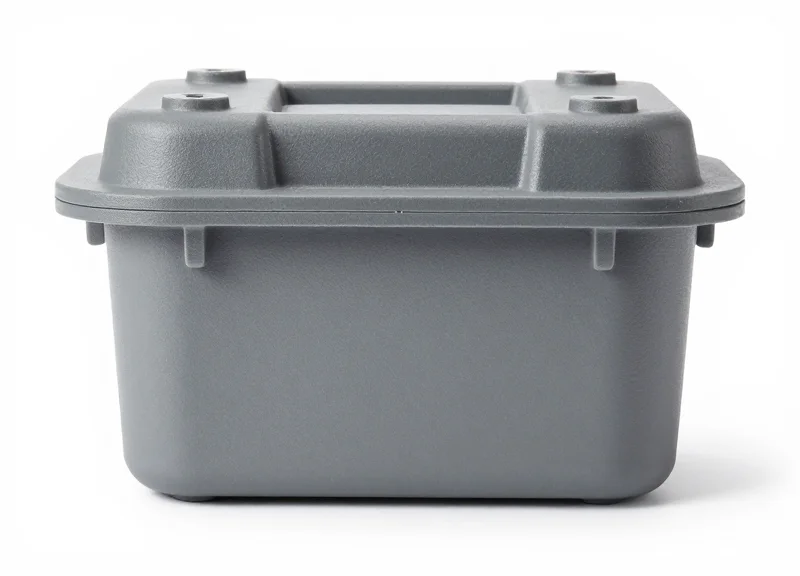
Selecting the right housing material for industrial Electronic Shelf Labels (ESLs) requires a move beyond standard consumer plastics like ABS or Polycarbonate. Advanced polymer selection focuses on High-Performance Polymers (HPPs) such as PEEK (Polyetheretherketone), PPS (Polyphenylene Sulfide), and various Fluoropolymers. These materials are chosen for their exceptional chemical inertness, enabling them to resist degradation from aggressive industrial cleaning agents, acidic electrolytes, and alkaline vapors while maintaining structural integrity and signal transparency for wireless data transmission.
| Material Property | PEEK | PPS | Fluoropolymers (PTFE/PFA) |
|---|---|---|---|
| pH Resistance Range | 1 - 13 (High) | 1 - 12 (Moderate-High) | 0 - 14 (Universal) |
| Tensile Strength | 90 - 100 MPa | 60 - 85 MPa | 15 - 35 MPa |
| Dielectric Constant | 3.2 - 3.3 | 3.0 - 3.2 | 2.0 - 2.1 |
| Common Trade-off | Highest Material Cost | Brittleness in impact | Lower mechanical rigidity |
PEEK stands as the gold standard for high-stress environments, offering a unique combination of mechanical strength and chemical resistance. However, for large-scale ESL deployments where cost-efficiency is paramount, PPS provides a compelling alternative. PPS is naturally flame-retardant and resists almost all known solvents below 200 degrees Celsius. For environments involving extreme acids or bases where mechanical impact is minimal, Fluoropolymers like PTFE or PFA are utilized due to their nearly universal chemical immunity and superior radio-frequency (RF) transparency.
Why does RF transparency matter in polymer selection?
While chemical resistance is the primary goal, the polymer must have a low dielectric constant to ensure that wireless signals (like Zigbee or Bluetooth) can penetrate the casing without significant signal loss or 'shadowing' which would drain ESL battery life.
Can these materials be injection molded for complex ESL designs?
PEEK and PPS are thermoplastic and highly suitable for high-precision injection molding. Fluoropolymers like PFA can also be molded, though PTFE usually requires specialized machining or compression molding, which can increase unit costs.
How do these materials handle 'Creep' in industrial settings?
PEEK and PPS exhibit very low creep (deformation under constant stress), ensuring that the hermetic seals of the ESL casing remain tight over years of use, preventing chemical ingress into the electronics.
Expert Insight: The 'Micro-Cracking' Threshold. A critical differentiation factor often overlooked is the Environmental Stress Cracking Resistance (ESCR). In the presence of specific industrial esters, PPS can develop micro-cracks if the internal stress from the molding process is not properly annealed. For mission-critical data integrity, choosing a glass-filled PEEK variant provides the highest insurance against sudden casing failure in mixed-chemical environments.
Beyond the Shell: Hermetic Sealing and IP69K Ratings
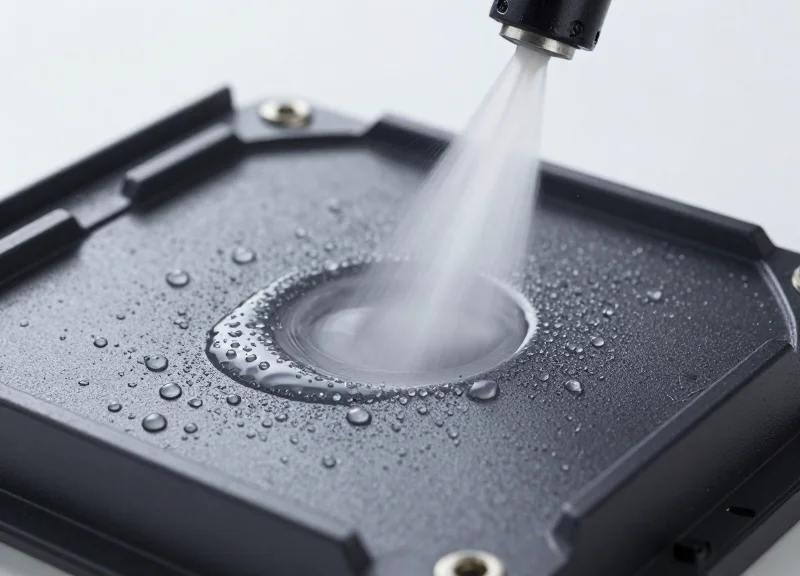
Hermetic sealing in industrial ESLs refers to the creation of an airtight, moisture-proof barrier that isolates sensitive E-ink displays and microcontrollers from the external environment. While standard IP67 ratings protect against temporary immersion, the IP69K rating is the gold standard for industrial durability, specifically designed to withstand high-pressure water jets (up to 100 bar/1,450 psi) at elevated temperatures (80°C). Achieving this requires more than just a tight fit; it demands a fusion of ultrasonic welding, specialized elastomer gaskets, and thermodynamic pressure management.
A critical but often overlooked failure point in industrial ESLs is the 'Vacuum Effect.' When an ESL is subjected to a hot-water washdown followed by cold-room storage, the internal air contracts, creating a negative pressure differential. Without advanced sealing, this vacuum pulls moisture and chemical vapors directly through the housing joints or even the polymer matrix itself. To combat this, next-gen casings utilize ultrasonic welding to create a molecular bond between the front and back shells, effectively turning two pieces into a single, seamless unit that eliminates traditional entry points for contaminants.
| Sealing Method | Durability Level | Chemical Resistance | Primary Use Case |
|---|---|---|---|
| Ultrasonic Welding | Permanent / High | Extreme (pH 1-14) | High-pressure washdown zones |
| Viton / EPDM Gaskets | Medium / High | Variable (Oil/Acid) | Modular or battery-replaceable units |
| Epoxy Potting | Permanent / Ultra | Excellent | Vibration-heavy environments |
| Mechanical Snaps | Low | Poor | Standard retail environments |
Expert Insight: The Secret of Pressure Equalization. To maintain a true IP69K rating over years of service, elite industrial ESLs incorporate a hydrophobic, oleophobic ePTFE (expanded Polytetrafluoroethylene) vent. This vent allows the internal and external pressures to equalize by letting gas molecules pass through while blocking liquid water and cleaning chemicals. Without this pressure relief valve, even the strongest ultrasonic weld will eventually experience fatigue or 'stress-cracking' due to the repeated expansion and contraction of the internal air pocket during thermal cycling.
Is IP69K overkill for pharmaceutical warehouses?
No. Pharmaceutical environments often use vaporized hydrogen peroxide (VHP) for sterilization. The pressurized nature of these cleaning cycles requires an IP69K-equivalent seal to prevent vapor ingress which can corrode internal solder joints.
Does ultrasonic welding make the battery non-replaceable?
Usually, yes. To achieve a true hermetic seal that survives pH-fluctuations, the casing is often fused. However, next-gen industrial ESLs compensate for this by using low-power chipsets that provide a 10-15 year battery life, matching the typical hardware refresh cycle.
What is the role of Viton in ESL gaskets?
Viton is a fluoroelastomer that offers exceptional resistance to aggressive chemicals and high temperatures. It is used in ESLs that require a seal that can be opened for maintenance while still providing high-level protection against industrial solvents.
Impact on Data Integrity and Signal Transmission
Data integrity in industrial ESLs is directly tethered to the RF (Radio Frequency) transparency of the casing material, which determines how much signal energy is lost or distorted as it travels between the gateway and the device. In pH-volatile environments, the challenge is two-fold: the casing must provide a robust physical barrier against corrosive agents while maintaining a low dielectric constant and loss tangent to prevent signal attenuation. If a material's molecular density is too high or if it absorbs moisture/chemicals, the resulting 'RF impedance' can lead to packet loss, increased latency, and catastrophic battery drain due to repetitive re-transmission attempts.
| Material Property | Standard ABS (Retail) | PEEK (Industrial) | PTFE / Fluoropolymers |
|---|---|---|---|
| Dielectric Constant (Dk) | 2.4 - 3.0 | 3.2 - 3.3 | 2.1 |
| Loss Tangent (Df) | 0.005 - 0.02 | 0.003 | 0.0001 |
| Signal Attenuation | Low (Dry) / High (Wet) | Ultra-Low | Negligible |
| pH Stability (1-14) | Poor | Excellent | Superior |
The Engineering Trade-off: Density vs. Transparency. While PEEK and PPS offer incredible resistance to acids and bases, their higher molecular density compared to standard retail plastics can slightly shift the resonant frequency of internal PCB antennas. This requires 'antenna-casing co-design,' where the antenna is tuned specifically to the dielectric signature of the pH-resistant housing. Failing to account for this results in a mismatched VSWR (Voltage Standing Wave Ratio), which degrades the signal-to-noise ratio (SNR) and risks data corruption during high-speed industrial updates.
Expert Insight: The 'Dielectric Drift' Phenomenon. A common oversight in industrial IoT is ignoring how chemical absorption over time—even at microscopic levels—alters the casing's electrical properties. In environments with high humidity or caustic vapors, low-grade polymers undergo a 'Dielectric Drift' where the material becomes more capacitive. This detunes the antenna dynamically over 12-24 months, leading to mysterious 'dead zones' in facilities that previously had perfect coverage. Selecting materials like PTFE or specialized PEEK grades eliminates this drift by preventing chemical intercalation within the polymer matrix.
How does casing thickness impact signal reliability?
Increased wall thickness for durability also increases the 'electrical thickness,' which can cause phase shifts in the signal. We recommend a balanced wall thickness of 1.5mm to 2.2mm for optimal RF penetration in 2.4GHz and Sub-GHz bands.
Can chemical residues on the casing block data transmission?
Yes. If the casing material allows the buildup of conductive chemical films (like metallic salts or carbon-heavy greases), it can create a localized 'Faraday effect,' shielding the antenna and dropping signal strength by up to 15dB.
Why is 'Loss Tangent' critical for industrial ESLs?
The loss tangent (Df) represents the energy dissipated as heat within the casing. Low Df materials like Fluoropolymers ensure that the maximum amount of RF energy reaches the internal chip, which is vital for maintaining high data throughput in interference-heavy industrial zones.
Thermal Stability in Chemically Volatile Environments
Thermal stability in chemically volatile environments is the capacity of a material to maintain its structural dimensions and chemical resistance when subjected to the synergistic stressors of temperature fluctuations and corrosive agents. For industrial Electronic Shelf Labels (ESLs), this means resisting deformation or 'creep' during exothermic chemical reactions—where chemical contact releases heat—and ensuring that the Coefficient of Thermal Expansion (CTE) remains low enough to prevent the breach of hermetic seals during rapid thermal cycling.
In processing plants, materials are rarely tested by heat alone. Instead, they face 'Thermo-Chemical Degradation,' where high temperatures accelerate the rate of chemical penetration into the polymer matrix. High-performance polymers like Polyether ether ketone (PEEK) and Polyphenylene sulfide (PPS) are favored because they possess high Glass Transition Temperatures (Tg), often exceeding 140°C (284°F). This high Tg ensures that the casing remains in a rigid, 'glassy' state rather than transitioning to a 'rubbery' state where chemical molecules can more easily intercalate and weaken the polymer chains.
| Material Type | Max Continuous Service Temp | Chemical Resilience @ 80°C | Key Industrial Application |
|---|---|---|---|
| PEEK | 250°C | Excellent (Virtually Inert) | Chemical Processing & Aerospace |
| PPS | 200°C | Very High (Solvent Resistant) | Automotive & Heavy Industrial |
| PTFE (Fluoropolymer) | 260°C | Superior | Gaskets & High-Heat Linings |
| Standard ABS | 70°C | Poor (Prone to Stress Cracking) | General Consumer Electronics |
Expert Insight: Beware of 'Chemical Plasticization.' A unique phenomenon in industrial settings is when a pH-resistant material appears stable under dry heat, but fails prematurely when exposed to specific solvents. The solvent molecules can act as a plasticizer, effectively lowering the material's Glass Transition Temperature (Tg) by up to 30%. When engineering ESL casings, we look for 'Specific Chemical Heat Deflection' (SCHD) ratings rather than standard ASTM heat-only data to ensure the device won't warp during an 85°C caustic washdown.
How does heat affect the pH-resistance of an ESL casing?
Increased temperature increases the kinetic energy of chemical molecules, allowing them to penetrate the casing material faster. A material that is resistant to acids at room temperature may succumb to 'pitting' or environmental stress cracking at 60°C.
Why is the Coefficient of Thermal Expansion (CTE) critical for ESLs?
ESLs are multi-material assemblies (plastic, glass, metal). If the plastic casing expands at a significantly higher rate than the display glass when heated, the internal gaskets can shift, leading to a loss of the IP69K seal and internal data failure.
Can exothermic reactions from cleaning agents damage ESLs?
Yes. When certain concentrated industrial cleaners react with water or surface contaminants, they can generate localized 'hot spots.' High-performance materials like PPS dissipate this heat more effectively than standard plastics, preventing localized melting.
ROI Analysis: Durability vs. Replacement Frequency
The Return on Investment (ROI) for industrial-grade Electronic Shelf Labels (ESLs) is not found in the initial purchase price, but in the radical reduction of Total Cost of Ownership (TCO) over a 5-to-7-year operational window. While standard retail ESLs utilize ABS plastics that degrade rapidly in the presence of caustic cleaners or acidic industrial vapors, pH-resistant casings—engineered from advanced polymers like PPS or Fluoropolymers—ensure that the internal electronics remain isolated from corrosive stress. In a high-intensity industrial environment, the 'break-even' point for specialized hardware typically occurs within the first 14 months, as the failure rate of consumer-grade alternatives often exceeds 30% annually when exposed to chemical washdowns.
| Cost Metric (Per 1,000 Units) | Standard Retail ESL (ABS) | Industrial pH-Resistant ESL |
|---|---|---|
| Average Lifespan | 6–18 Months | 60–84 Months |
| Replacement Frequency (5 Years) | 3–4 Cycles | 0–1 Cycles |
| Cumulative Hardware Cost | $45,000 - $60,000 | $25,000 - $32,000 |
| Labor Cost (Installation/Config) | $12,000 (Recurring) | $3,000 (One-time) |
| Estimated 5-Year TCO | $57,000 - $72,000 | $28,000 - $35,000 |
A critical, often overlooked component of this analysis is the 'Labor Multiplier Effect.' In Silicon Valley's most efficient manufacturing hubs, we observe that the technical labor required to de-provision a failed unit, physically replace it in a harsh environment, and re-sync it with the local gateway costs 2x to 4x the price of the hardware itself. By utilizing pH-resistant materials, organizations shift their budget from reactive maintenance (OPEX) to durable infrastructure (CAPEX), effectively reclaiming hundreds of man-hours that can be redirected toward process optimization rather than hardware triage.
How does chemical exposure impact the warranty ROI?
Standard ESL warranties are typically voided by 'exposure to corrosive substances.' In contrast, industrial pH-resistant units include environmental performance guarantees, ensuring that your investment is protected even in documented high-acidity or high-alkalinity zones.
What is the 'Silent Failure' cost?
This refers to the cost of data inaccuracy when a casing micro-fractures, allowing humidity to reach the PCB. Before the screen goes blank, the unit may transmit corrupted inventory data. pH-resistant casings eliminate this risk, preventing costly supply chain errors.
Is the environmental impact of replacement considered?
Yes. Choosing durable casings reduces electronic waste by up to 75% over a decade, which aligns with ESG (Environmental, Social, and Governance) goals and can provide additional tax or regulatory incentives in certain jurisdictions.
Expert Tip: When conducting your internal ROI audit, do not just look at the 'failure rate.' Look at the 'mean time between replacement' (MTBR). If your MTBR is less than 24 months, the chemical volatility of your environment is actively cannibalizing your margins. Upgrading to specialized casing is not a luxury; it is a fundamental requirement for data-driven operational stability.
Future Outlook: Smart Materials and Self-Healing Enclosures

The future of industrial ESL protection is shifting from passive resistance to active restoration. Smart materials, specifically self-healing polymers and shape-memory alloys, are designed to autonomously detect and repair structural breaches caused by corrosive pH exposure or mechanical fatigue. By integrating micro-encapsulated healing agents directly into the casing matrix, next-gen devices can seal micro-cracks before they compromise the hermetic seal, effectively extending the device lifespan by up to 40% in volatile chemical environments.
At the forefront of this evolution is the use of extrinsic self-healing systems. These materials contain microscopic capsules filled with a liquid monomer. When a crack forms due to chemical stress or impact, the capsules rupture, releasing the healing agent into the fracture. Upon contact with a catalyst embedded in the surrounding polymer, the agent polymerizes, effectively 'stitching' the casing back together. This level of resilience is critical for maintaining the internal atmospheric stability required for sensitive E-ink displays and RF components.
| Feature | Current pH-Resistant Casings | Next-Gen Smart Materials |
|---|---|---|
| Failure Response | Passive degradation leading to replacement | Autonomous micro-fracture repair |
| Material Type | High-density polymers (PEEK/PTFE) | Biomimetic self-healing composites |
| Maintenance Requirement | Periodic manual inspection | Sensor-based health monitoring |
| Environmental Adaptability | Fixed chemical resistance | Responsive surface pH-neutralization |
A unique insight into this technological shift is the concept of 'Dynamic Dielectric Tuning.' As casings age or absorb trace chemical precursors, their RF transparency can fluctuate, leading to signal attenuation. Future smart enclosures will be engineered to maintain a constant dielectric value by selectively altering their molecular density in response to external chemical stimuli. This ensures that data integrity remains 100% consistent, even as the material surface undergoes chemical stress, a feat impossible with current static materials.
Will self-healing materials significantly increase the cost of ESLs?
While initial material costs are higher, the Total Cost of Ownership (TCO) decreases because the replacement cycle is extended. The reduction in downtime and data loss events provides a rapid ROI in 24/7 industrial operations.
How many times can a 'self-healing' casing repair itself?
Current prototypes support multiple healing cycles in the same location, depending on the concentration of micro-capsules. For most industrial ESL applications, the material is designed to last the entire 5-10 year battery life of the device.
Are these materials safe for food processing environments?
Yes, future smart materials are being developed with FDA-compliant, non-toxic healing agents to ensure that even during a repair event, there is no risk of chemical contamination.