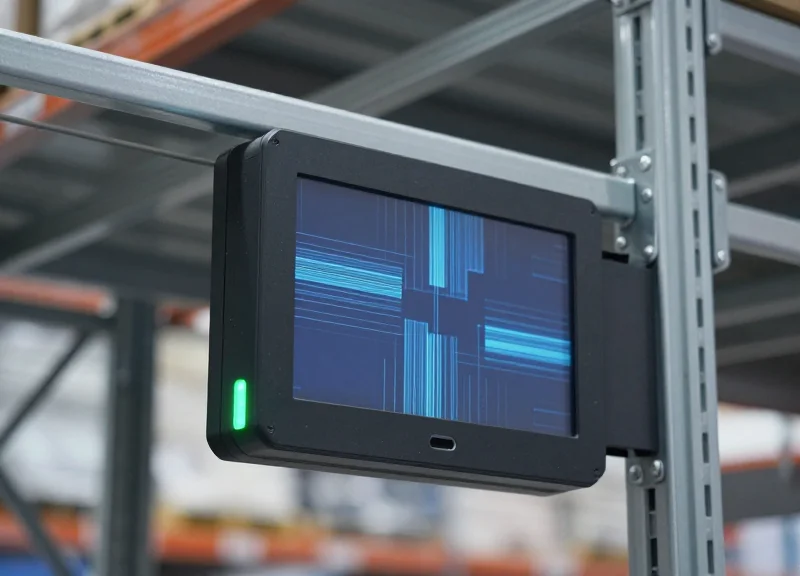
In the hyper-competitive landscape of 2026 logistics, the margin for error is razor-thin and the demand for speed is absolute. Electronic Shelf Labels (ESL) have transcended their origins as simple price tags to become the heartbeat of modern fulfillment centers. By utilizing high-visibility LED indicators, these smart devices enable 'pick-to-light' functionality that drastically reduces search time and human error. This guide provides an authoritative look at how to select the optimal ESL hardware to streamline high-speed fulfillment workflows and future-proof your warehouse infrastructure.
The Strategic Importance of LED Indicators in Modern Fulfillment
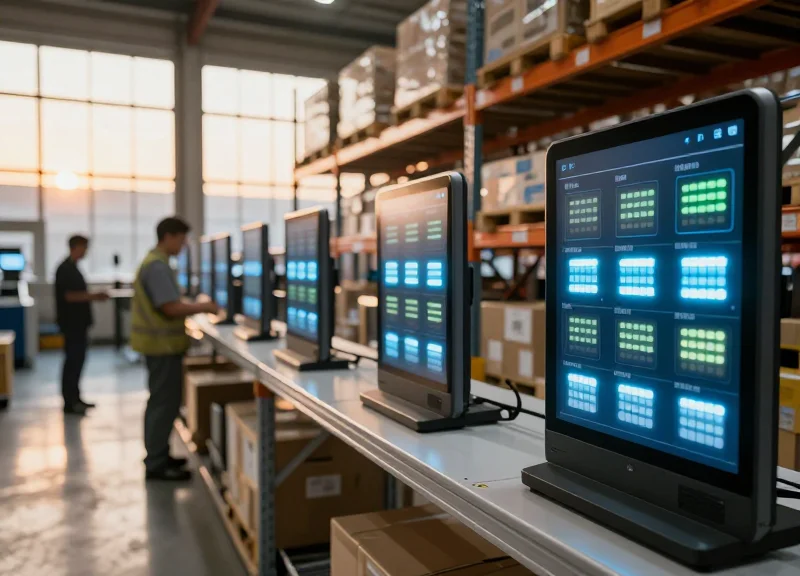
In the 2026 fulfillment landscape, LED indicators on Electronic Shelf Labels (ESLs) represent the final, critical link in the 'digital thread' of warehouse automation. These high-intensity visual cues transform traditional static shelving into a dynamic Pick-to-Light (PTL) system, allowing workers to identify correct items instantly without the cognitive fatigue of reading small text or matching SKU barcodes manually. By providing an immediate visual signal, LEDs eliminate the 'search and verify' lag that typically accounts for nearly 60% of a picker's manual work cycle, making them indispensable for high-speed, micro-fulfillment, and cold-chain environments.
| Metric | Standard ESL (No LED) | 2026 LED-Enabled ESL |
|---|---|---|
| Average Pick Time | 12-15 Seconds | 3-5 Seconds |
| Onboarding Time | 2-3 Days | Less than 2 Hours |
| Error Rate | 1.5% - 3% | < 0.1% |
| Task Concurrency | Single Order | Multi-color 'Swarm' Picking |
The 2026 Unique Insight: The 'Sub-Second Visual Ack'. In the ultra-fast fulfillment centers of today, the bottleneck is no longer data processing, but human reaction time. Leading 2026 ESL models now utilize 'Sub-Second Visual Ack'—a protocol where the LED triggers in under 200ms of a system call. This eliminates the 'stutter' in a picker's workflow, ensuring that by the time a worker turns their head toward a rack, the light is already pulsing. Expert tip: Look for 'synchronous blink' capabilities where multiple tags for a single multi-unit order pulse in unison to guide the eye toward total quantity volume instantly.
Why is multi-color LED support essential in 2026?
Multi-color LEDs (e.g., RGB) allow for 'Swarm Picking,' where multiple workers can pick in the same aisle simultaneously, each following a specific assigned color (e.g., Picker A follows Blue, Picker B follows Green) without confusion.
How do LED indicators impact labor costs?
They significantly lower the barrier to entry for seasonal staff. Because the system is visual and intuitive, workers require almost zero knowledge of the warehouse layout, reducing training costs by up to 90%.
Can LED indicators be seen in high-glare or dark environments?
2026 high-spec ESLs feature wide-angle (180-degree) high-candela LEDs that are specifically engineered to penetrate the glare of industrial overhead lighting and the dim conditions of automated storage retrieval systems (ASRS).
Beyond speed, the strategic value of LED indicators extends to inventory integrity. Real-time 'flash-to-find' capabilities allow managers to perform spot-checks or cycle counts by simply triggering lights for specific SKUs that require validation. This shift from reactive error-correction to proactive visual management is what separates market leaders from laggards in the current high-velocity commerce era.
Evaluating LED Visibility: Brightness, Colors, and Viewing Angles
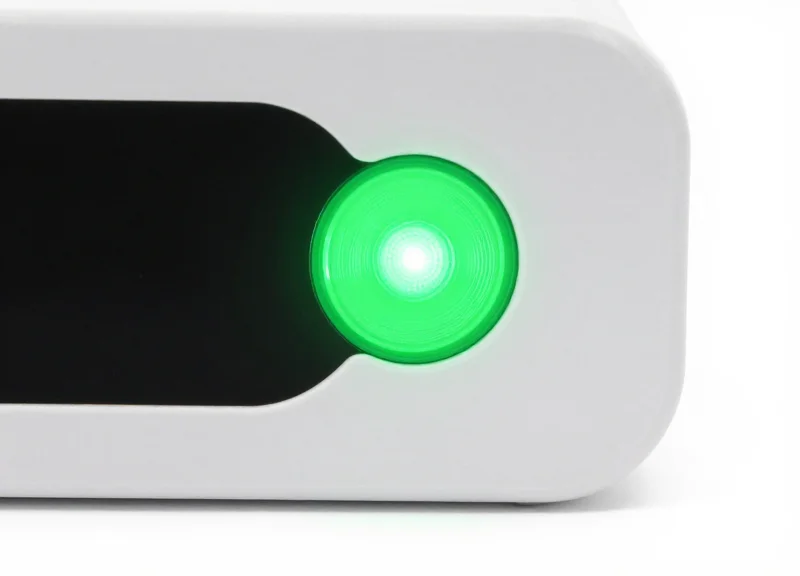
In high-speed fulfillment environments, the visibility of an ESL's LED indicator is the primary bottleneck for 'flash-to-pick' speeds. To meet 2026 performance benchmarks, an LED must be perceptible within 200 milliseconds of activation, regardless of the warehouse's ambient lighting or the picker's approach angle. This requires a triad of technical excellence: high luminous intensity (measured in millicandela), a wide spatial radiation pattern (viewing angle), and high-contrast color saturation that cuts through the visual noise of industrial shelving.
| Feature | Warehouse Standard (Legacy) | High-Speed Fulfillment Grade (2026) |
|---|---|---|
| Luminous Intensity | 50 - 150 mcd | 300 - 600+ mcd (Adjustable) |
| Viewing Angle | 90° - 120° | Full 180° Hemispherical Visibility |
| Color Channels | 1 - 3 Colors (Fixed) | Full RGB / 7+ Programmatic Colors |
| Refresh Rate | Static Blink | Pulse Width Modulation (PWM) Dimming |
Expert Insight: The 'Chromatic Contrast' Advantage. While raw brightness is often touted as the most important metric, the 2026 trend is shifting toward Chromatic Contrast. In facilities with high-intensity LED overhead lighting (often 5000K+ color temperature), a standard white or blue indicator may wash out. For maximum efficiency, select ESLs that utilize 'Pure Wave' LEDs with narrow spectral bandwidths. This allows the indicator to remain distinct and saturated even when the ambient light is ten times brighter than the indicator itself, a phenomenon critical for top-shelf picking near skylights or high-bay luminaires.
- Determine Ambient Lux Levels: Measure the brightness at the shelf edge during peak sunlight hours. For environments exceeding 1,000 lux, look for LEDs with at least 500 mcd to ensure the light is 'attention-grabbing' rather than just 'visible'.
- Validate 180-Degree Dispersion: Ensure the LED lens is 'domed' or flush-mounted with light-pipe technology. Picking efficiency drops by 30% if a worker must be directly in front of a bin to see the signal.
- Assign Color Logic by Task: Utilize RGB capabilities to differentiate between standard picks (Green), priority shipments (Red), and multi-order batching (Blue/Yellow) to minimize cognitive load on staff.
How far away should an ESL LED be visible?
In a standard 100-foot aisle, a high-quality indicator should be clearly identifiable from at least 30 feet away, allowing the picker to prep their movement before reaching the bin.
Do more colors consume more battery?
Yes, but modern 2026 chipsets use Pulse Width Modulation (PWM) to pulse the LED at high frequencies, maintaining perceived brightness while reducing actual power draw by up to 40%.
Are certain colors better for visibility?
Human eyes are most sensitive to Green (555nm), making it the most visible color in well-lit areas. However, Red is often better for 'alert' or 'priority' states due to psychological conditioning.
The Power of Multicolor LEDs for Multi-Order Picking
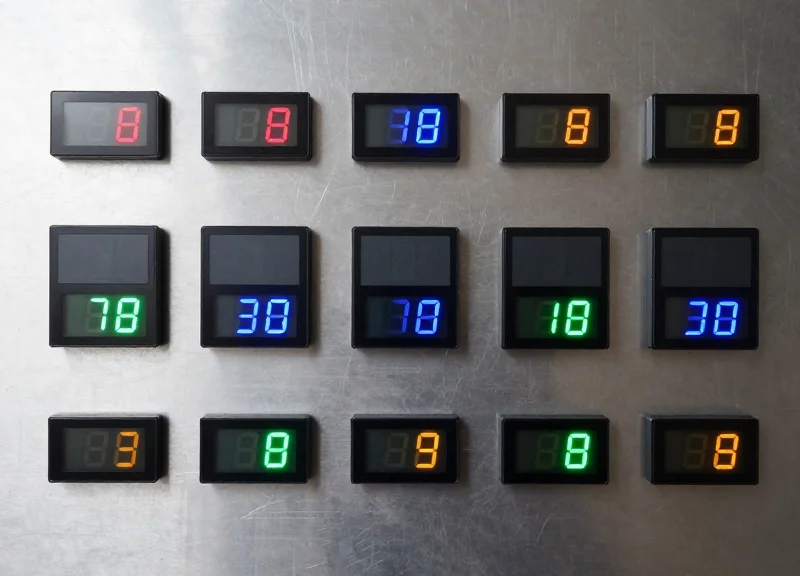
In high-speed fulfillment environments, multicolor LEDs on ESLs function as a visual traffic control system that allows multiple warehouse operators to pick different orders within the same aisle simultaneously. By assigning a distinct RGB color—such as Red for Picker A and Green for Picker B—to each active worker or order batch, the system guides staff to their specific target items without interference. This method increases picking density and eliminates the 'bottleneck effect' common in single-color legacy systems, where workers must wait for an aisle to clear before starting a new task.
| Color Assignment | Typical Use Case | Operational Benefit |
|---|---|---|
| Static RGB (Blue/Green) | Individual Picker ID | Directs specific workers to their assigned SKU without screen-checking. |
| Flashing Red | Priority/Expedited Order | Signals a 'Fast-Track' shipment that must bypass standard processing queues. |
| Yellow/Amber | Quantity Alert | Indicates a bulk pick or multi-unit requirement for a single order line. |
| Magenta/Cyan | Multi-Batching | Groups items for different delivery routes within the same physical cart. |
Expert Tip: As we move into 2026, the industry is shifting from static colors to 'Luminance Modulation.' By adjusting the pulse-width modulation of the LED, advanced ESL systems can now convey order urgency visually. A rapid 'heartbeat' pulse in a picker's assigned color indicates a high-priority SLA item, allowing the worker to intuitively prioritize their movements within a dense aisle without ever looking at a handheld device.
- Picker Authentication: Worker logs into a wearable or handheld device; the WMS assigns them a unique color profile for the duration of the shift.
- Intelligent Batching: The system groups orders based on location proximity and activates the LEDs for the entire batch route.
- Visual Navigation: The picker follows their color trail through the warehouse, reducing 'search time'—the biggest drain on fulfillment efficiency.
- Validation and Handoff: Once the pick is confirmed via button press or scan, the LED turns off or transitions to the next color in the multi-picker queue.
How many colors can a 2026-spec ESL typically display?
Most high-end models support 7 distinct colors (Red, Green, Blue, Yellow, Cyan, Magenta, White) through RGB diode mixing.
Does frequent LED usage significantly impact battery life?
Modern ESLs utilize ultra-low-power drivers and synchronized flashing patterns to maintain a 5-10 year battery life even in high-throughput environments.
What happens if two pickers need the same item simultaneously?
Advanced systems utilize a 'split-flash' or 'alternating color' pattern to notify both pickers that the SKU is required for their respective orders.
Battery Life Optimization: Balancing Flash Frequency and Longevity
Battery life optimization for LED-enabled Electronic Shelf Labels (ESLs) is the engineering practice of calibrating flash duration, color intensity, and wireless polling frequency to maximize operational years while maintaining high visibility. In high-speed fulfillment environments where an LED may trigger 200+ times per day, achieving the industry-standard 5-year lifespan requires a sophisticated 'Power Budget' that balances the millivolt-peak of an LED pulse against the background power draw of the e-paper display and sub-GHz radio communication.
| Parameter | Performance Mode | Balanced Mode (Recommended) | Eco Mode |
|---|---|---|---|
| Flash Duration | 500ms On / 500ms Off | 100ms On / 900ms Off | 50ms Single Pulse |
| Brightness Level | 100% (High Lux) | 60-70% (Standard) | 40% (Low Light Optimized) |
| Triggers per Day | Unlimited / Heatmap Driven | Max 150 Triggers | Max 50 Triggers |
| Est. Battery Life | 1.5 - 2 Years | 5 - 7 Years | 10+ Years |
The primary drain on an ESL battery isn't actually the e-paper screen refresh, but the 'listening' phase of the radio and the sustained current required to drive the LED. To combat this, 2026-gen ESLs utilize 'Adaptive Polling,' where the label only checks for an LED trigger signal every few seconds, rather than maintaining a constant connection. Selecting a label with a multi-cell CR2450 battery or advanced Lithium-thionyl chloride (Li-SOCl2) chemistry is essential for handles these peak current pulses without experiencing voltage drops that could reset the device.
- Define the Duty Cycle: Limit the LED 'On' time to the absolute minimum required for human perception. A 100ms flash is sufficient for most pickers to identify a location without over-taxing the battery cell.
- Implement Intelligent Timeouts: Configure the system to automatically disable the LED indicator once a pick is confirmed via the handheld scanner or after a 30-second inactivity period.
- Ambient Light Adjustment: Utilize labels with built-in light sensors to dim the LED in well-lit areas or during night shifts when lower brightness is equally effective for visibility.
Expert Insight: The 'Heat Map Logic' Strategy. Most generic guides treat all aisle locations equally. My recommendation for 2026 is to implement a tiered power strategy based on SKU velocity. By applying 'High Performance' LED settings only to your 'Class A' (fast-moving) items and 'Eco Mode' to 'Class C' items, you can extend the average fleet battery life by up to 40% while maintaining peak speed where it matters most. This 'Predictive Power Throttling' ensures that your most active labels aren't the first to fail.
How does LED color affect battery life?
Different colors require different forward voltages. Red LEDs are generally the most energy-efficient, while Blue and White LEDs require higher voltage and draw more power per millisecond of flash.
Will cold storage impact the LED performance?
Yes, lithium batteries lose capacity in sub-zero temperatures. For cold-chain fulfillment, you must select ESLs with specialized low-temperature electrolyte batteries to prevent the LED from causing a system brownout.
Can I replace the batteries in LED ESLs?
Most industrial-grade 2026 models feature replaceable battery cassettes. However, with proper optimization of flash frequency, the labor cost of replacement can be deferred for nearly a decade.
System Integration: Linking ESL LEDs to WMS and ERP Platforms
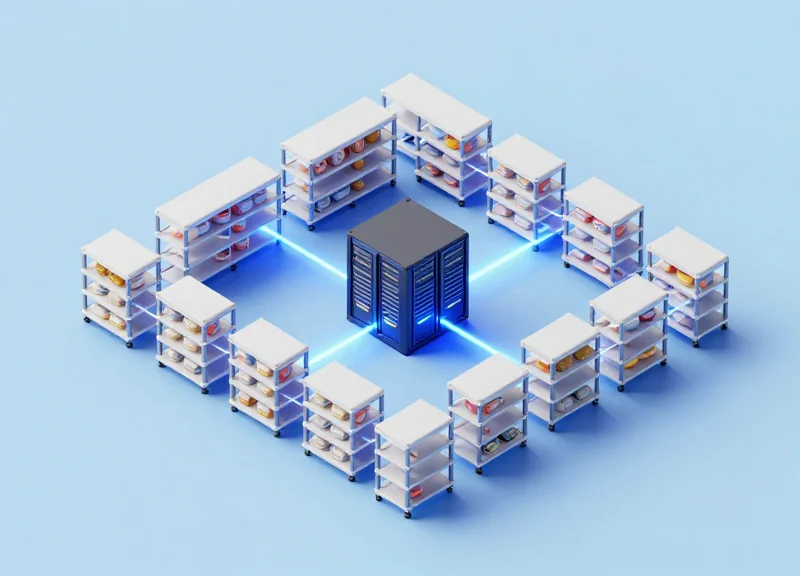
In high-speed fulfillment environments, system integration is the software handshake that allows your Warehouse Management System (WMS) or ERP to control physical hardware in real-time. By connecting your central database to the ESL gateway via RESTful APIs or MQTT protocols, the system translates a 'pick' command into a specific visual signal. In 2026, this integration is no longer just about pushing data; it is about synchronizing the digital twin of your warehouse with the physical reality on the floor, ensuring that as soon as an order is generated, the corresponding LED begins its guiding sequence.
| Integration Method | Primary Protocol | Best For... | Latency Profile |
|---|---|---|---|
| RESTful API | HTTP / JSON | Cloud-native WMS environments | Moderate (200-500ms) |
| MQTT Broker | Pub/Sub Messaging | High-volume, real-time pick-to-light | Ultra-Low (<50ms) |
| Edge Middleware | Local SDK / DLL | Legacy on-premise ERP systems | Low (100-200ms) |
- Order Trigger: The WMS identifies a required SKU and sends a payload containing the item's location and the required picker's color code.
- Gateway Translation: The central ESL gateway receives the API request and maps the SKU to a unique hardware MAC address.
- Sub-GHz Broadcast: The gateway transmits a low-frequency wireless signal to the specific label to minimize interference in crowded warehouses.
- Visual Confirmation: The ESL activates the LED and sends a bi-directional 'Acknowledgment' (ACK) signal back to the WMS to confirm the light is active.
{ "action": "LED_TRIGGER", "tag_id": "XL-4490", "color": "HEX_00FF00", "pattern": "FLASH_3S", "priority": 1 }A critical 2026 insight for high-speed hubs is the move toward 'Edge Orchestration.' Rather than waiting for a round-trip command from a cloud-based ERP to the label, modern gateways now cache 'picking waves' locally. This 'Fog Computing' approach eliminates 'light lag'—the frustrating 1-to-2 second delay pickers experience when moving between aisles. By processing the LED logic at the edge, the visual cue is often active before the picker even reaches the bin, potentially reclaiming hundreds of man-hours annually in large-scale operations.
Can one API call trigger multiple LEDs simultaneously?
Yes. By using 'Multicast' or 'Group IDs,' a single command can trigger a whole zone of LEDs for tasks like bulk replenishment or inventory audits.
How do you ensure the LED actually turned on?
Enterprise-grade ESLs use bi-directional communication; if a label fails to acknowledge a trigger, the WMS can immediately alert maintenance or redirect the picker.
Is a dedicated server required for integration?
Most 2026 systems use containerized middleware (Docker/Kubernetes) that can run on existing warehouse servers or directly on the ESL gateway hardware.
Wireless Connectivity: Speed and Latency Considerations

For high-speed fulfillment, wireless connectivity is defined by Total Trigger Latency (TTL)—the time elapsed from a WMS command to the physical LED activation on the shelf. In 2026, the benchmark for 'instantaneous' feedback is a TTL of less than 300 milliseconds. Achieving this requires a protocol that minimizes packet retries and avoids the congestion common in industrial environments, ensuring that pickers are never waiting for a light to catch up to their movement.
| Protocol Type | Frequency Range | Typical Latency | Interference Risk | Ideal Use Case |
|---|---|---|---|---|
| Sub-1GHz (Proprietary) | 868 / 915 MHz | 100ms - 250ms | Low (High Penetration) | Large warehouses with heavy shelving |
| BLE (Bluetooth 5.x+) | 2.4 GHz | 200ms - 500ms | Medium (Wi-Fi overlap) | Retail-to-Darkstore conversions |
| Zigbee / IEEE 802.15.4 | 2.4 GHz | 500ms - 1.5s | High (Congested spectrum) | Low-velocity inventory updates |
The Veteran's Insight: The 'Wake-up Interval' Paradox. Many operators mistakenly focus only on bandwidth, but in 2026, the real bottleneck is the Asynchronous Wake-up Interval. Most ESLs 'sleep' to save battery, checking for signals every few seconds. To achieve high-speed fulfillment, you must select a system utilizing 'LBT' (Listen Before Talk) or high-density paging gateways that can force an interrupt to the ESL's sleep cycle without draining the battery in three months. If your provider cannot guarantee a consistent p99 latency under 400ms during peak load, your pickers will outpace your technology.
How does signal interference affect LED performance?
In a crowded 2.4GHz environment (Wi-Fi, handheld scanners, and conveyor motors), packet loss increases. This causes 'stuttering' LEDs or missed flashes, which directly leads to picking errors and forces the system to re-transmit, doubling or tripling latency.
Why is Sub-1GHz considered superior for deep-aisle penetration?
Lower frequencies have longer wavelengths that can more easily diffract around metal racking and dense inventory. This ensures that even an ESL tucked into a bottom-shelf corner receives the 'flash' command as quickly as one in direct line-of-sight.
Can I use standard Wi-Fi for ESL LED triggering?
Generally, no. Standard Wi-Fi is too power-hungry for coin-cell battery devices and lacks the massive device-per-access-point density (often 5,000+ labels per gateway) required for a full-scale fulfillment center.
Durability and Industrial Design for High-Traffic Zones
In the high-octane environment of a 2026 fulfillment center, an Electronic Shelf Label (ESL) is more than a display—it is a piece of industrial hardware subjected to constant vibration, accidental forklift strikes, and localized dust. For LED-equipped labels, durability must extend beyond the screen to include the 'Light Pipe' or LED housing. Choosing the best ESL requires selecting units with an IK07 impact rating or higher and specialized polycarbonate casings that prevent the LED from fracturing under mechanical stress, ensuring that the visual guidance system remains functional even in the most demanding high-traffic zones.
| Feature | Standard Retail ESL | Industrial Fulfillment ESL |
|---|---|---|
| Impact Rating | IK02 - IK03 (Light touch) | IK07 - IK09 (Mechanical impact) |
| Ingress Protection | IP54 (Dust protected) | IP67 / IP68 (Dust tight/Waterproof) |
| Temp. Range | 0°C to 40°C | -25°C to 50°C (Cold chain ready) |
| LED Housing | Surface-mounted (Exposed) | Recessed with Polycarbonate Light Pipe |
Expert Insight: The 'Vibration-Fatigue' Factor. Most procurement teams overlook harmonic vibration caused by automated conveyor systems and heavy machinery. In my experience, the most common failure point in 2026-era ESLs isn't the screen breaking, but the internal solder joints of the LED fracturing due to micro-vibrations. Look for 'Fully Potting' or internal resin-filled designs that stabilize the PCB (Printed Circuit Board) against these high-frequency movements.
- Recessed LED Architecture: Ensure the LED is not a protruding 'bulb' but is recessed behind a thick, transparent light pipe. This design directs the light forward while protecting the diode from lateral impacts from passing totes or pallet jacks.
- Reinforced Mounting Rails: Standard plastic clips are insufficient for high-speed centers. Opt for aluminum rail systems or magnetic mounts with a secondary safety tether to prevent labels from falling into conveyor belts if dislodged.
- Chemical Resistance: In modern warehouses, sanitation and cleaning agents can degrade standard plastics. Industrial ESLs should feature ABS/PC (Acrylonitrile Butadiene Styrene / Polycarbonate) blends that resist cracking when exposed to isopropyl alcohol or industrial cleaners.
Can industrial ESLs handle freezer environments for grocery fulfillment?
Yes, but you must specify 'Cold Chain' versions. These utilize specialized battery chemistries (like Li-SOCl2) and low-temp e-paper displays that prevent the LED from flickering or the screen from 'ghosting' at sub-zero temperatures.
How do I prevent labels from being knocked off by automated picking robots?
Select labels with a low-profile, beveled edge design. This 'wedge' shape allows robotic arms or passing carts to glance off the label rather than catching a hard edge and ripping it from the shelf.
Are 'Ruggedized' labels too heavy for standard shelving?
Modern 2026 designs use lightweight internal honeycombing. While they are slightly heavier than retail versions, they are designed to fit the same standard industrial racking systems (like teardrop or pallet racks) without additional reinforcement.
Calculating ROI: Beyond the Initial Hardware Cost
Return on Investment (ROI) for LED-equipped Electronic Shelf Labels (ESLs) is not a simple calculation of hardware cost versus paper savings; it is the cumulative financial impact of slashing seconds-per-pick and virtually eliminating the high cost of fulfillment errors. In high-speed environments, ROI is typically realized within 14 to 22 months. This is driven by a 30-40% increase in picking productivity and a massive reduction in 'mispick' costs. To see the full picture, operators must analyze the Total Cost of Ownership (TCO), which balances the initial capital expenditure (CAPEX) against the drastic reduction in operational expenditure (OPEX) over the hardware's 5-to-7-year lifecycle.
| ROI Driver | Traditional Picking (Paper/RF) | LED-Assisted ESL Picking | Financial Impact |
|---|---|---|---|
| Pick Rate (Lines/Hr) | 60 - 80 | 110 - 150 | Nearly doubles throughput per labor hour. |
| Accuracy Rate | 98.5% | 99.9%+ | Saves $15-$50 per mispick in reverse logistics. |
| New Hire Training | 2 - 3 Days | Under 2 Hours | Reduces onboarding costs by 80% during peak seasons. |
| Walk Path Waste | High (Visual Search) | Low (Instant Recognition) | Significant reduction in worker fatigue and churn. |
The Veteran's Insight: The 'Inverted Alert' ROI. While most facilities focus on picking speed, the 2026 competitive edge lies in using LEDs for 'Pre-emptive Replenishment.' By programming labels to flash a specific color (e.g., Amber) when inventory drops below a dynamic threshold, you enable floor staff to restock bins before a 'zero-pick' event occurs. Every avoided out-of-stock moment saves an average of 5 minutes of supervisor intervention and picker downtime—a hidden efficiency gain that can recover 10-15% of the system cost annually in high-velocity centers.
What is the typical payback period for LED ESLs in a 24/7 facility?
In high-volume centers, the payback is usually 12 to 18 months. Facilities with higher labor costs and dense SKU counts see the fastest return due to the immediate reduction in labor-hours required per order.
How do LED flash frequencies affect the long-term ROI?
Battery life is the biggest variable in TCO. Using a 'smart-trigger' protocol—where LEDs only flash when a picker’s WMS task is active in that specific zone—preserves battery life, extending the replacement cycle from 3 years to over 6 years.
Does the system help with labor retention costs?
Absolutely. By reducing the cognitive load and stress of 'searching' for items, facilities report higher worker satisfaction and lower turnover. Given that replacing a warehouse associate costs roughly $4,000, reducing churn by even 10% significantly boosts the project's net present value.
Future-Proofing Your Investment for 2027 and Beyond
Future-proofing an Electronic Shelf Label (ESL) investment means selecting hardware that transcends current functional requirements by incorporating energy harvesting, software-defined signaling, and Matter-standard interoperability. By 2027, the standard for high-speed fulfillment will shift from simple 'blink-on-command' labels to autonomous devices that leverage ambient light or RF energy to power multi-color LED indicators indefinitely, ensuring your infrastructure remains compatible with the next decade of warehouse automation and AI-driven logic.
| Feature Capability | Standard 2024-2025 Tech | 2027+ Future-Ready Standard |
|---|---|---|
| Power Source | CR2450 Lithium Batteries | Ambient Light / RF Energy Harvesting |
| LED Logic | Centralized WMS Trigger | Edge-AI Predictive Flashing |
| Connectivity | Proprietary Sub-1GHz | Matter/Thread over BLE/WiFi 6E |
| Sustainability | Periodic Battery Disposal | Circular Economy / Zero-Waste |
Expert Insight: The Rise of 'Predictive Signaling'. Most current systems suffer from 'latency drift'—the small delay between a picker entering an aisle and the LED activating. The 2027 horizon belongs to systems that use Edge-AI to predict worker movement based on real-time heatmaps, pre-triggering LED indicators 0.5 seconds before the picker arrives. This 'Zero-Latency' fulfillment can increase picking speed by another 12% compared to reactive systems. When selecting hardware today, prioritize modules with enough RAM/Flash (at least 512KB/64KB) to support future OTA (Over-the-Air) firmware updates that will enable these AI features.
Will energy harvesting labels work in dark warehouses?
Modern energy harvesting ESLs utilize ultra-low-light indoor solar cells that can charge under 50 lux (standard emergency lighting levels) or via RF harvesting from the facility's WiFi access points, ensuring functionality even in dimmed environments.
Why is 'Matter' compatibility important for 2027?
Matter is the unified IP-based connectivity protocol. Selecting Matter-compliant ESLs ensures that your labels can communicate directly with other IoT sensors and robotics in the fulfillment center without requiring expensive custom middleware.
Can I upgrade my current labels to support AI features later?
Only if your current hardware has 'Software-Defined' architecture. Look for ESLs with programmable MCUs (Microcontroller Units) rather than fixed-function ASICs, which allow for complete logic overhauls via wireless updates.
Ultimately, the goal is to move from a 'Hardware Purchase' mindset to an 'Infrastructure Platform' mindset. By choosing labels with multi-color (RGB) LED capabilities and expandable memory footprints today, you ensure that as your WMS becomes more intelligent, your physical shelf edge is capable of speaking the same language.