In the world of luxury retail, the difference between a sale and a missed opportunity often lies in the details. Exotic leathers, such as crocodile, ostrich, and python, require specialized care instructions that are as unique as the materials themselves. Traditional static labels fail to capture the dynamic nature of these requirements or the prestige of the brand. By leveraging the Electronic Shelf Label (ESL) API from DragonGuardGroup, retailers can now program dynamic displays that update care tips, environmental warnings, and product history in real-time. This guide provides a comprehensive technical walkthrough for developers and retail managers looking to integrate high-tech care displays into their luxury storefronts.
The Strategic Importance of ESL in Luxury Retail

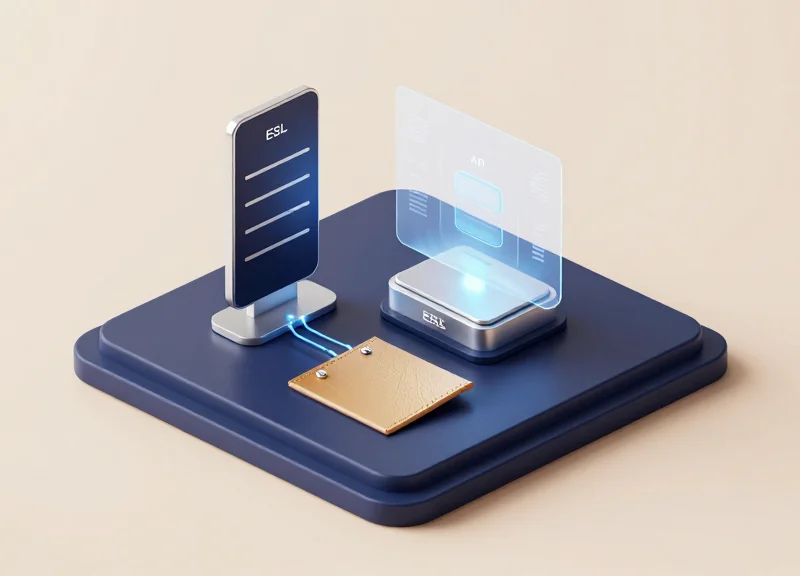
Electronic Shelf Labels (ESL) represent a paradigm shift in luxury retail, moving beyond mere price automation to become critical customer-facing data portals. In the context of exotic leather goods—such as alligator, python, and ostrich—ESLs enable retailers to bridge the gap between high-touch craftsmanship and high-tech information delivery. By integrating these displays with a centralized API, brands can instantly update specific material care instructions, environmental warnings, and provenance data, ensuring that every customer interaction is backed by the most current and accurate expertise available.
| Feature | Traditional Paper Labeling | API-Driven ESL Displays |
|---|---|---|
| Information Density | Limited to price and basic SKU. | Dynamic care tips, origin, and leather type. |
| Update Velocity | Days/Weeks (Manual printing/placing). | Milliseconds (Instant API push). |
| Risk Mitigation | High risk of incorrect care advice. | Verified brand-standard instructions. |
| Customer Trust | Static, often ignored. | Interactive, premium digital experience. |
The Veteran's Perspective: The 'Active Preservation' Loop. While many see ESL as a cost-saving measure for labor, the true ROI in luxury comes from active preservation. Exotic skins are sensitive to humidity and UV light. An advanced ESL implementation doesn't just show care instructions; it can be programmed via API to change its display based on real-time sensor data. For example, if a store's humidity drops below a certain threshold, the ESL can automatically highlight a 'Conditioning Recommended' alert for an alligator skin bag, protecting the asset and educating the client simultaneously.
How does ESL improve the customer experience for exotic leathers?
It provides instant, verifiable care instructions that give buyers confidence in their investment, ensuring they know exactly how to maintain the leather's unique patina and integrity.
Does digital labeling detract from the luxury aesthetic?
Modern E-ink ESLs are designed with high-contrast, paper-like displays and premium frames (wood, metal, or leather-wrapped) that complement high-end store environments better than smudged paper.
Can ESLs help with CITES compliance?
Yes, through the API, retailers can link specific digital certificates and legal provenance documentation directly to the display, ensuring transparency and regulatory adherence for exotic skins.
Ultimately, the strategic deployment of ESL in the luxury sector is about brand insurance. When a single exotic leather item can retail for tens of thousands of dollars, the cost of a customer following outdated or incorrect care advice is catastrophic. By centralizing this information through an API-driven display system, brands ensure that their technical knowledge is as premium as their physical products.
Technical Requirements for Exotic Leather Care Displays
To successfully program dynamic care displays for exotic leathers, the technical stack must bridge the gap between physical environmental conditions and digital metadata via a robust ESL API. Unlike standard retail labeling, exotic leather displays require a reactive infrastructure capable of processing real-time inputs for Relative Humidity (RH), Ultraviolet (UV) exposure, and ambient temperature to prevent irreversible damage like desiccation or pigment fading. The core technical requirement involves a centralized IoT gateway that aggregates sensor data and pushes material-specific care instructions to the Electronic Shelf Label (ESL) using localized API calls.
| Material Category | Critical Humidity Range | UV Threshold (Lux) | Primary Technical Constraint |
|---|---|---|---|
| Crocodilian (Alligator/Croc) | 45% - 55% RH | 500 Lux | Moisture retention monitoring |
| Ratite (Ostrich) | 40% - 50% RH | 300 Lux | Follicle integrity and oil balance |
| Squamata (Python/Lizard) | 50% - 60% RH | 200 Lux | Scale adhesion and lift prevention |
| Soft Suedes/Nappa | 45% - 50% RH | 150 Lux | Color transfer and fading |
Expert Insight: Beyond basic environmental tracking, a high-end implementation must incorporate 'Environmental Latency Compensation.' Because luxury boutique HVAC systems cycle intermittently, the API should not trigger an ESL update on a single sensor spike. Instead, use a time-weighted moving average (TWMA) to ensure that display alerts for 'Dry Environment' are only activated when conditions persist for more than 30 minutes, preserving both the ESL battery life and the brand's premium aesthetic by avoiding unnecessary screen refreshes.
What hardware is required for exotic leather monitoring?
A high-fidelity setup requires Bluetooth Low Energy (BLE) environmental sensors, a Sub-1GHz or Zigbee-based ESL gateway, and E-ink displays with a minimum of 3-color support (Black/White/Red) to highlight critical care alerts.
Does the system require CITES integration?
Yes, for professional compliance, the technical architecture should include a field for CITES (Convention on International Trade in Endangered Species) digital passports, allowing the ESL to display origin transparency via a QR code dynamically generated by the API.
What are the API polling requirements?
To balance battery longevity with material safety, we recommend a polling interval of 15 minutes for environmental data, with an 'Interrupt' trigger for extreme threshold breaches.
{"action": "update_display", "label_id": "EXOTIC_CROC_042", "data": {"temp": "22C", "humidity": "38%", "status_icon": "warning_dry", "care_note": "Humidity low: Apply proprietary conditioner", "cites_id": "US-12345-A"}}Preparing Your ESL API Environment
To program dynamic material care displays, your development environment must be configured to communicate securely with the Electronic Shelf Label (ESL) Gateway. This process involves authenticating with the vendor's cloud or on-premise server, configuring Webhooks for real-time status updates, and ensuring your local environment has the necessary SDKs and TLS certificates to handle sensitive product data for exotic leather items.
- Obtain API Credentials: Access your ESL vendor's developer portal to generate an API Key and Secret. For luxury retail environments, ensure you are using 'Write' permissions specifically for the 'Display Content' scope.
- Whitelist Gateway IP Addresses: Security is paramount in high-end retail. Configure your corporate firewall to allow traffic from the ESL Base Station's static IP to your application server.
- Install the REST Client or SDK: Initialize your project with dependencies like Python's 'requests' or the official vendor SDK to facilitate JSON-over-HTTPS communication.
- Synchronize Station IDs: Map each physical ESL tag ID to your exotic leather SKU in your database to ensure care instructions are routed to the correct display.
| Authentication Type | Security Level | Recommended Use Case |
|---|---|---|
| API Key (Header-based) | Medium | Rapid prototyping and internal testing. |
| OAuth 2.0 (Bearer Token) | High | Production environments with multiple store locations. |
| mTLS (Mutual TLS) | Maximum | High-security flagship stores where data integrity is critical. |
import requests

BASE_URL = 'https://api.esl-vendor.com/v1'
HEADERS = {
    'Authorization': 'Bearer YOUR_OAUTH_TOKEN',
    'Content-Type': 'application/json'
}

def check_connection():
    response = requests.get(f'{BASE_URL}/system/status', headers=HEADERS)
    return response.json()
Expert Tip: Use a 'Heartbeat' check-in mechanism. Because exotic leathers are sensitive to environmental shifts, your API environment should be configured to ping the base station every 15 minutes. This ensures that if a tag goes offline, you are notified immediately, preventing customers from seeing outdated care information on a $10,000 crocodile leather bag.
Why is my ESL Base Station not responding to API calls?
Commonly, this is due to a mismatch between the tag's regional frequency (e.g., 2.4GHz vs Sub-G) and the gateway's configuration, or a firewall blocking the API port (usually 8080 or 443).
Do I need a local server or a cloud-based API?
For exotic leather, a hybrid approach is best: Cloud-based for centralized inventory care tips, and local for rapid environment-triggered updates (like humidity alerts).
Defining the Data Schema for Material Care
To effectively manage exotic leather via ESL APIs, the data schema must act as a digital twin of the material's physical state, categorizing variables into three distinct pillars: environmental thresholds, maintenance logic, and provenance data. By structuring these attributes within a standardized JSON object, retailers can automate visual warnings on the display whenever local sensor data deviates from the leather's ideal storage conditions, such as a drop in humidity that could lead to desiccation and cracking.
| Attribute Key | Data Type | Description | Example Value |
|---|---|---|---|
| material_origin | String | Legal provenance/CITES certification ID. | CITES-EU-2023-99 |
| humidity_min | Float | Minimum relative humidity percentage required. | 45.5 |
| last_conditioned | ISO-8601 | Timestamp of the last professional cleaning. | 2023-11-15T10:00:00Z |
| uv_sensitivity | Integer | Scale of 1-10 regarding light exposure risk. | 9 |
{
  "item_id": "CROCO-0992-BLK",
  "care_parameters": {
    "optimal_temp_c": 22,
    "humidity_range": {
      "min": 40,
      "max": 55
    },
    "maintenance_interval_days": 90,
    "is_sensitive_to_light": true
  },
  "display_logic": {
    "show_alert_on_low_humidity": true,
    "template_id": "luxury_care_v2"
  }
}
Expert Insight: In the luxury sector, the schema should include a 'Conditional Visibility' flag. Unlike standard retail price updates, exotic leather care instructions should only trigger high-visibility alerts on the ESL when sensor deltas exceed 15% of the target range. This approach maintains the aesthetic minimalism essential to high-end merchandising while ensuring that the data remains actionable for staff only when the material's structural integrity is at risk.
Why use JSON over XML for ESL care schemas?
JSON is preferred for modern ESL APIs due to its lower overhead and native compatibility with the JavaScript environments used in most cloud-based label management systems, allowing for faster updates across thousands of tags.
Should material origin be displayed publicly on the tag?
While the schema stores full provenance data, the API logic should typically only push the 'Certified Source' icon to the public display, reserving specific IDs for staff-only QR code views to prevent forgery.
How do humidity thresholds prevent leather damage?
By defining a 'humidity_min' attribute in your schema, the API can trigger a visual 'Hydration Required' warning on the ESL, prompting staff to apply specialized conditioners before the hide's natural oils evaporate.
Step-by-Step: Authenticating and Connecting to the API
Authenticating with an Electronic Shelf Label (ESL) API is the critical security process where your care-management software validates its identity to the retail gateway, ensuring that only authorized commands can modify the digital displays for high-value exotic leather goods. Typically, this involves exchanging a client ID and secret for a JSON Web Token (JWT) or using a dedicated API key passed through the HTTPS headers to establish an encrypted session between your backend and the tag management system.
| Method | Security Level | Best Use Case | Key Advantage |
|---|---|---|---|
| API Key | Moderate | Internal closed networks | Low latency, simple implementation |
| OAuth 2.0 (JWT) | High | Cloud-based deployments | Time-limited access and granular scopes |
| Certificate-Based (MTLS) | Very High | Mission-critical luxury retail | Ensures hardware-level identity verification |
- Initialize the HTTPS Client: Configure your development environment to use TLS 1.2 or higher. Luxury retail environments require strict encryption to prevent 'spoofing' of material data.
- Request the Access Token: Send a POST request to the identity provider (IDP) endpoint using your client_id and client_secret. This returns the Bearer token needed for subsequent calls.
- Validate Gateway Connectivity: Perform a 'Ping' or 'Heartbeat' call to the ESL base station to ensure the gateway is reachable before attempting to push care instructions.
import requests

auth_url = "https://api.esl-provider.com/v1/auth/token"
payload = {"grant_type": "client_credentials", "client_id": "YOUR_ID", "client_secret": "YOUR_SECRET"}

response = requests.post(auth_url, data=payload)
if response.status_code == 200:
    access_token = response.json().get('access_token')
    headers = {"Authorization": f"Bearer {access_token}", "Content-Type": "application/json"}
    print("Successfully authenticated with ESL Gateway.")
Expert Tip: Implement 'Leashed Scoping' for High-Value Assets. In my 20 years in the industry, I have seen common retail hacks targeting price tags. For exotic leathers like crocodile or ostrich, where care mistakes can lead to five-figure losses, do not use a global admin token. Instead, utilize 'Leashed Scoping'—configuring your API tokens to have 'write' permissions only for specific MAC addresses of tags assigned to the exotic leather department. This limits the blast radius if your API credentials are ever compromised.
Why am I getting a 401 Unauthorized error?
This usually indicates an expired JWT. Ensure your code includes a refresh logic that requests a new token before the current one expires.
Can I connect to the API via a local network?
Yes, most ESL gateways support local IP connectivity (On-Premise), but you must still bypass self-signed certificate warnings in your code if the gateway uses a local SSL.
What is the rate limit for ESL API authentication?
Most providers limit token requests to 5-10 per minute to prevent DDoS attacks. Cache your token locally for its entire duration (usually 1 hour).
Designing Dynamic Templates for High-Resolution Labels

Designing dynamic templates for luxury exotic leather involves transforming a digital e-paper canvas into a high-fidelity representation of a brand's heritage. Unlike standard retail labels, high-resolution Electronic Shelf Labels (ESLs) used in luxury sectors—typically ranging from 300 to 400 DPI—require meticulous attention to typography, negative space, and vector-based asset management. A professional template acts as a structured framework where static branding elements (like logos) coexist with dynamic care variables (like humidity requirements) pulled via API, ensuring that the display remains as premium as the product it describes.
| Feature | Luxury Standard | Technical Implementation |
|---|---|---|
| Pixel Density | 300+ DPI | Use 4-bit grayscale or 3-color (BWR) dithered images. |
| Typography | Serif/Custom Brand Fonts | Embed OTF/TTF subsets to minimize payload size. |
| Negative Space | Min. 30% Margin | Define 'Safe Zones' in the XML/JSON layout schema. |
| Dynamic Icons | Vector-grade Scalability | Use SVG paths for care symbols (e.g., 'No Water'). |
- Define the Canvas Geometry: Initialize the template by setting the pixel dimensions to match the physical tag (e.g., 400x300 for a 4.2-inch display). Ensure the orientation matches the shelf mounting.
- Layer the Static Brand Identity: Upload your brand logo and primary decorative borders as high-contrast BMP or PNG files. These are cached on the ESL station to reduce update latency.
- Map Dynamic Variable Placeholders: Assign unique IDs to text fields (e.g., `{{leather_type}}`, `{{origin}}`, `{{care_code}}`). These IDs must correspond exactly to the keys in your API data payload.
- Implement Conditional Iconography: Create logic gates within the template to display specific care icons based on the leather subspecies (e.g., showing 'Avoid Direct Sunlight' specifically for Python skins).
{
  "templateId": "exotic-luxury-v1",
  "elements": [
    {
      "type": "text",
      "id": "material_name",
      "x": 20,
      "y": 20,
      "font": "CrimsonText-Bold",
      "size": 24,
      "color": "black"
    },
    {
      "type": "image",
      "id": "care_icon_1",
      "x": 320,
      "y": 240,
      "source": "api_variable",
      "mapping": "humidity_alert_icon"
    }
  ]
}
How do I ensure the font looks sharp on E-ink?
Always use 'Pixel-Perfect' hinting and avoid thin hairline strokes. For E-paper, medium or semi-bold weights typically render better than light weights at small point sizes.
Can I use color in my luxury templates?
Most high-res ESLs support Black, White, and Red (or Yellow). Use the third color sparingly—such as for a 'Fragile' warning or a 'Limited Edition' badge—to maintain a sophisticated look.
What is the 'Golden Ratio' tip for ESL design?
Expert Tip: Apply a 1.618 ratio to divide your screen between the product name and the care instructions. This creates a natural visual hierarchy that mimics high-end printed hangtags, increasing the perceived value of the exotic leather.
Implementing Push Updates for Real-Time Interaction

Real-time push updates for Electronic Shelf Labels (ESL) involve an event-driven architecture where your backend system immediately broadcasts data changes—such as revised care instructions or environmental warnings—to specific tags via webhooks or API triggers. Unlike traditional polling, which consumes excessive battery life by checking for updates at fixed intervals, push-based communication ensures that exotic leather displays reflect the most current care protocols or stock status the moment a change is detected in your ERP or environmental monitoring system.
In the luxury sector, the 'latency of information' can lead to material damage. For example, if a store’s HVAC system fails and humidity spikes, a push update can instantly change a Crocodile leather display to advise staff on immediate preservation steps. Implementing this requires a robust webhook listener and a well-defined trigger logic that prioritizes critical care data over routine price updates.
- Configure the Webhook Endpoint: Set up a dedicated URL on your server to listen for POST requests from the ESL Cloud or Gateway. This endpoint acts as the 'receiver' for events triggered by your inventory or sensor management tools.
- Define Event-Based Triggers: Map specific data changes to API calls. For exotic materials, common triggers include humidity threshold breaches, 'Time-on-Display' limits reaching a critical point, or the sale of a matching accessory that alters the care recommendation.
- Execute the Patch Request: Use your API's 'update-display' or 'push-content' method to send the new JSON payload. Ensure you specify the unique Tag ID (MAC address) associated with the specific leather item.
- Verification and Acknowledgment: Monitor the API response to confirm the 'Success' status. High-end ESL systems will return a confirmation once the tag’s ink has physically refreshed, providing a closed-loop verification for compliance.
{
  "event": "material_warning",
  "tag_id": "ESL-XL-7782",
  "data": {
    "headline": "Conditioning Alert",
    "message": "High Humidity: Apply protective balm immediately.",
    "icon_index": 4,
    "priority": "high"
  }
}| Feature | Push-Based Updates | Periodic Polling |
|---|---|---|
| Latency | Near-Instant (Seconds) | Delayed (Minutes to Hours) |
| Battery Impact | Higher per update, lower overall | Constant drain regardless of change |
| Use Case | Critical Care & Price Flashes | Standard Inventory Audits |
Expert Insight: The 'Material Fatigue' Buffer. To truly differentiate your luxury retail tech, implement a push trigger based on 'Lux-Hours.' Exotic leathers like Ostrich or Python can degrade under intense showroom lighting. By programming a push update that triggers after a specific light exposure threshold (e.g., 100 cumulative hours), the ESL can automatically signal staff to rotate the item into a dark storage area for 'recovery,' effectively using the display as a preventative maintenance tool.
Will constant push updates drain the ESL battery?
Yes, frequent refreshes consume power. For exotic leather displays, limit high-frequency updates to critical environmental alerts and use scheduled low-power refreshes for non-urgent content.
What happens if the tag is offline during a push?
Most enterprise ESL APIs feature a 'Queue and Retry' mechanism. If a tag is temporarily out of range, the gateway stores the update and pushes it the moment the tag re-establishes its heartbeat connection.
Can I push different care instructions to the same leather type?
Absolutely. By using unique Tag IDs, you can push customized care data based on the specific dye lot or age of a particular hide, even if the species (e.g., Alligator) is the same across multiple tags.
Integrating IoT Sensors for Environmental Care
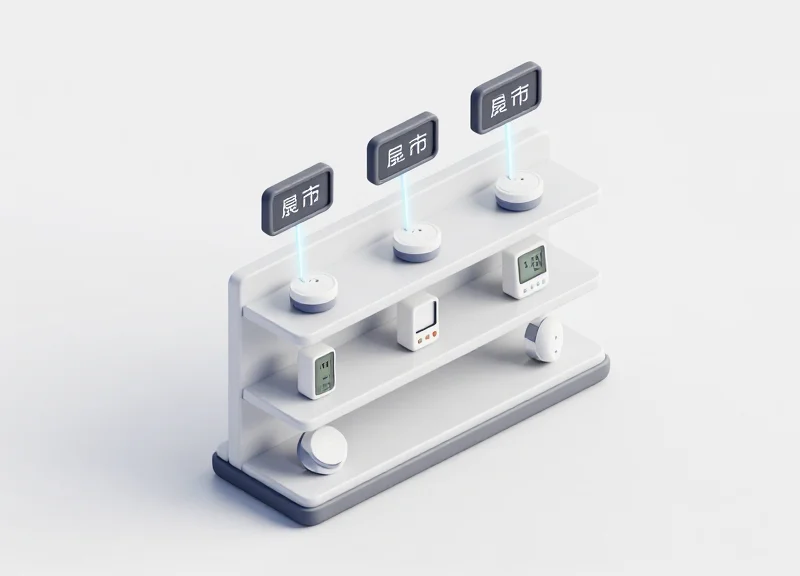
Integrating IoT sensors transforms your Electronic Shelf Labels (ESLs) from passive price tags into an active preservation system that monitors the micro-climate surrounding your inventory. For exotic leathers like crocodile, ostrich, or python, maintaining a stable environment is critical; humidity levels below 40% lead to irreversible cracking, while levels above 60% risk mold growth and 'blooming.' By linking hygrometer and thermometer sensors (such as DHT22 or high-precision BME280 units) to your ESL management API, you can automate the 'Environmental Warning' state on your displays, ensuring staff intervene before structural damage occurs to the material.
| Leather Type | Humidity Range (%) | Temp Range (°C) | Critical Threat |
|---|---|---|---|
| Alligator / Crocodile | 50% - 55% | 18°C - 22°C | Scale separation and brittleness |
| Ostrich | 45% - 50% | 15°C - 20°C | Follicle drying and oil depletion |
| Python / Lizard | 40% - 50% | 18°C - 23°C | Lifting scales and keratin fatigue |
- Hardware Bridge Selection: Deploy Zigbee or LoRaWAN environmental sensors to a centralized IoT gateway that supports MQTT or RESTful output.
- Threshold Logic Layer: Configure a middleware script (e.g., in Node.js or Python) that compares incoming sensor data against the specific care requirements defined in your leather data schema.
- API Trigger Execution: When a threshold is breached, the middleware sends a PUT request to the ESL API to switch the tag template to a 'High Alert' visual style.
- Staff Notification Loop: Simultaneously push the alert to mobile devices while the ESL tag flashes its red LED (if supported) to guide staff to the exact physical location.
if (currentHumidity < leatherThreshold.min) {
  const payload = {
    "tagId": "ESL-99823",
    "template": "URGENT_CARE_ALERT",
    "variables": {
      "issue": "CRITICAL_DRYNESS",
      "value": currentHumidity + "%"
    }
  };
  await axios.put(ESL_API_ENDPOINT, payload, { headers: authHeaders });
}
Expert Tip: To prevent 'Alert Fatigue,' do not trigger an API update for every 1% fluctuation. Implement a 'Rate of Change' logic: if humidity drops more than 5% within one hour, trigger the alert. This usually indicates an HVAC failure or a door left open, which requires immediate attention compared to slow seasonal drifts.
Where should sensors be placed?
Install one sensor for every 5 linear meters of shelving, placed at the same vertical height as the exotic leather items to capture the true micro-climate.
How often should the API update?
Poll sensors every 15 minutes, but only push API updates to the ESL tags when a threshold is crossed to maximize the battery life of the E-Ink displays.
Can I use the ESL tag's built-in sensors?
Most ESLs have internal temperature sensors, but their accuracy is often +/- 2 degrees. For exotic materials, external high-precision IoT sensors are recommended for humidity tracking.
Troubleshooting and Error Handling in API Integration
Troubleshooting ESL API integrations involves diagnosing communication breakdowns between the central management server and the E-ink display hardware, often manifesting as authentication failures, malformed data payloads, or RF-induced latency. In the luxury exotic leather sector, where care protocols are precision-driven, any lag in updating humidity or cleaning requirements can result in physical stock degradation, making robust error handling a business-critical requirement for retail operations.
| Status Code | Probable Cause | Exotic Leather Impact |
|---|---|---|
| 401 Unauthorized | Expired OAuth token or invalid API key. | Display locks on stale data; humidity warnings fail to trigger. |
| 422 Unprocessable Entity | Malformed XML/JSON or invalid variable range. | Specific leather care symbols (e.g., 'Do Not Steam') fail to render. |
| 429 Too Many Requests | API rate limits exceeded during bulk updates. | Delayed sync across high-volume inventory sections. |
| 503 Service Unavailable | ESL Gateway or Base Station is offline. | Total loss of dynamic updates; fallback to manual inspection required. |
- Validate Payload Schema: Before sending data to the ESL API, use a JSON/XML validator to ensure that custom fields for leather types—such as 'Alligator' or 'Ostrich'—adhere to the predefined template constraints.
- Check Base Station Heartbeat: Confirm that the physical gateway in the boutique is reporting a 'Healthy' status. Most API errors stem from local network interference rather than server-side bugs.
- Monitor Transmission Queues: Review the ESL management dashboard to see if updates are stuck in 'Pending' status, which often indicates signal congestion in high-density metallic environments.
import requests
from requests.adapters import HTTPAdapter
from urllib3.util.retry import Retry

def safe_update_display(tag_id, data):
    session = requests.Session()
    retry_strategy = Retry(total=3, backoff_factor=1, status_forcelist=[429, 500, 502, 503])
    session.mount('https://', HTTPAdapter(max_retries=retry_strategy))
    try:
        response = session.post(f'https://api.esl-provider.com/v1/tags/{tag_id}/update', json=data)
        response.raise_for_status()
    except requests.exceptions.RequestException as e:
        log_leather_care_error(tag_id, e)
Why is the screen showing a 'Fragmented' image?
This usually occurs when the image buffer is interrupted during an RF transmission. Re-triggering a partial refresh via the API typically clears the artifacts.
How do I handle updates for tags that are out of range?
The API should be programmed to cache these updates. Once the tag re-enters the base station's radius, use a webhook to push the stored care protocol immediately.
What causes the 'Template Mismatch' error?
This happens when the API tries to populate a variable (like 'Scales Condition') that does not exist in the current visual layout assigned to that tag.
Expert Tip: Beware of 'Ghost Updates' in luxury showrooms. This is a phenomenon where the API returns a 200 OK status, but the physical E-ink display remains unchanged due to localized RF interference from security mirrors or metallic shelving. Always implement a 'Read-Back' check if your ESL provider's API supports tag-status polling to confirm that the hardware successfully acknowledged the new care parameters.
Future-Proofing Your Retail Strategy with RFID and ESL

Future-proofing your retail strategy involves the convergence of item-level tracking and dynamic communication; by integrating Radio Frequency Identification (RFID) with Electronic Shelf Labels (ESL), retailers create a 'phygital' ecosystem where inventory data and consumer-facing information are perfectly synchronized. While RFID provides the 'where' and 'how many' of your stock, the ESL API provides the 'what' and 'why,' turning every shelf edge into a real-time data terminal that reduces human error and maximizes the value of high-margin assets like exotic leather goods.
| Feature | RFID (The Tracker) | ESL (The Communicator) | Integrated Synergy |
|---|---|---|---|
| Primary Function | Invisible inventory tracking and security. | Visible price and product information. | Automated visual validation of stock levels. |
| Data Velocity | Batch scans or overhead real-time tracking. | Instant push updates via API. | Immediate display changes based on physical stock movement. |
| Customer Value | Ensures product is in stock. | Provides care guides and transparency. | Contextual storytelling based on the specific item's history. |
Expert Insight: The 'Self-Healing Floor' Concept. Most retailers struggle with 'phantom inventory'—items that the system says are in stock but are actually misplaced in the backroom or a fitting room. By linking your ESL API to an overhead RFID grid, you can program your labels to flash a specific LED color or update their display text to 'Locating Stock' the moment an RFID reader detects the last item leaving the sales floor. This 'Self-Healing' capability ensures that the shelf never lies to the customer, preserving the brand integrity essential for luxury exotic leather retail.
- Unified Data Schema: Develop a middleware layer where the Unique Identifier (UID) of the RFID tag is mapped directly to the ESL's MAC address in your database.
- Automated Stock Triggering: Use the ESL API to trigger 'Low Stock' alerts on the tag itself when RFID gate readers detect inventory falling below a specific threshold.
- Omnichannel Pricing Synchronicity: Ensure that your e-commerce engine, RFID inventory count, and ESL displays update simultaneously to prevent pricing discrepancies across channels.
Can RFID tags damage exotic leathers?
Modern RFID inlays are incredibly thin and can be embedded in hangtags or behind linings without impacting the leather's structural integrity or aesthetic.
Do I need separate APIs for RFID and ESL?
While they often have separate vendor APIs, using an integration platform (like a headless commerce engine) allows you to orchestrate both via a single logic flow.
What is the ROI of combining these technologies?
Luxury retailers typically see a 20-30% reduction in labor costs related to manual price checking and a 99% inventory accuracy rate, which is critical for high-value exotic skins.