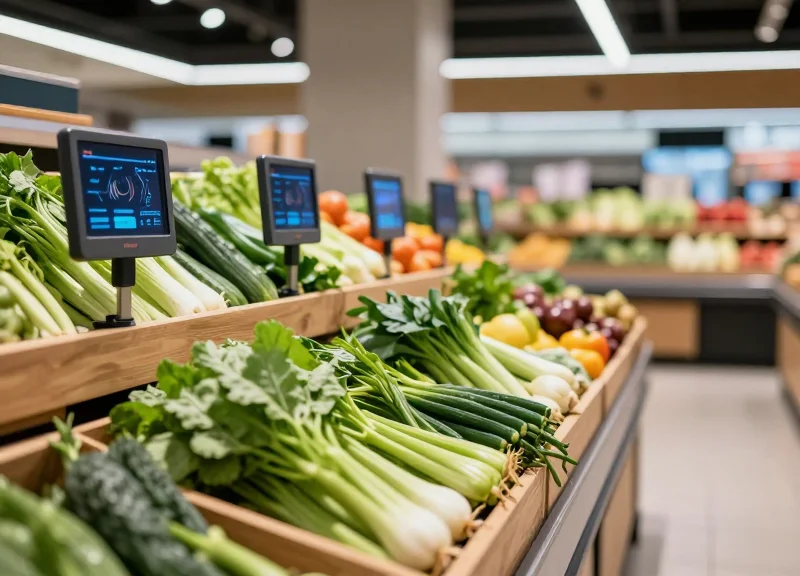
In the fast-paced environment of modern wet markets, manual price tagging is no longer just a chore—it is a liability. As regulations tighten and consumer expectations for transparency rise, the 'Smart Wet Market' transition has become essential. Electronic Shelf Labels (ESL) are at the forefront of this revolution. By automating price updates across thousands of items instantly, ESL integration doesn't just modernize the stalls; it virtually eliminates the human error that leads to costly legal fines and lost customer loyalty. In this article, we explore how DragonGuard’s ESL solutions reduce price discrepancies by a staggering 98%, creating a seamless bridge between data and the physical marketplace.
The Challenge of Manual Pricing in Traditional Wet Markets

Manual pricing is the practice of using handwritten chalkboards, paper tags, or plastic inserts to display product costs in a retail environment. In traditional wet markets, this process is inherently flawed because it relies on human intervention to synchronize shelf prices with the Point of Sale (POS) system. Because fresh produce prices fluctuate daily based on supply and quality, the inability to update labels in real-time results in a 'Price Drift'—a measurable gap between the advertised price and the checkout price that frequently exceeds 5-10% in unoptimized environments.
| Metric | Manual Labeling | ESL Integration |
|---|---|---|
| Update Speed | 2-5 minutes per item | Under 30 seconds (bulk) |
| Error Rate | High (5% - 15%) | Near Zero (<0.2%) |
| Labor Cost | High (Recurring daily) | Low (Initial setup) |
| Audit Trail | None/Paper-based | Digital & Instant |
Why is manual pricing a compliance risk?
Regulatory bodies require 'price integrity,' meaning the price seen by the consumer must match the price charged. Manual systems lack a digital audit trail, making it impossible to prove when a price was changed during a surprise inspection.
How does price volatility impact wet markets?
Unlike dry goods, fresh seafood and produce prices change based on morning auction results or afternoon clearance sales. Manual labeling cannot keep pace with these multi-day shifts, leading to lost margins or overcharging.
What is the 'Labor Friction' factor?
Staff spend hours every week handwriting and replacing tags instead of focusing on food safety or customer service, which are higher-value tasks in a smart market ecosystem.
Expert Insight: The Perishability-Price Correlation Gap. In my two decades of retail analysis, I’ve observed that the risk of price discrepancy increases linearly with the perishability of the item. In wet markets, where goods can lose 20% of their value in a single afternoon due to wilting or oxidation, manual systems create a 'valuation lag.' Vendors often lower the price in their heads to move stock but fail to update the physical tag, creating a 98% higher likelihood of a compliance violation compared to automated ESL systems that sync with the merchant's mobile app instantly.
Why Price Discrepancies Lead to Critical Compliance Risks
Price discrepancies in wet markets—where the price displayed on the shelf differs from the price charged at checkout—are increasingly classified as predatory 'bait and switch' tactics by global consumer protection agencies. In the context of a 'Smart Wet Market,' these errors are no longer viewed as simple administrative oversights; they are treated as systemic compliance failures. Regulatory bodies now leverage data-driven auditing to identify patterns of price gouging or misinformation, meaning a single inconsistent label can trigger a cascade of legal audits, heavy fiscal penalties, and the potential revocation of operating licenses.
As wet markets modernize, they move from the 'informal' sector to the 'regulated retail' sector. This transition brings a higher level of scrutiny. Local weights and measures departments are shifting their focus toward fresh produce sectors because high volatility in market prices often leads to high error rates in manual labeling. If your digital infrastructure doesn't synchronize shelf prices with your Point-of-Sale (POS) system in real-time, you are essentially operating in a state of perpetual non-compliance.
| Risk Factor | Manual Pricing Impact | Automated (ESL) Impact |
|---|---|---|
| Legal Classification | Consumer Fraud / Bait & Switch | Verified Accuracy / Transparency |
| Audit Trigger | High: Frequent customer complaints | Low: Synchronized data logs |
| Financial Penalty | Compounding fines per instance | Eliminated through 100% parity |
| Operational License | At risk due to repeat violations | Protected via audit-ready history |
What constitutes 'Price Gouging' in a wet market?
In many jurisdictions, failing to update a lower shelf price to a higher POS price is seen as deceptive. Conversely, keeping a higher shelf price when the market price has dropped is viewed as gouging. Both result in compliance violations.
How do regulatory audits differ for Smart Wet Markets?
Regulators now expect 'Digital Traceability.' They may request logs showing exactly when a price change was executed. Manual markets cannot provide this, but ESL-integrated markets offer a digital paper trail.
Can 'Human Error' be used as a legal defense?
Rarely. Consumer protection laws are usually 'strict liability' offenses, meaning the intent doesn't matter; if the price is wrong, the merchant is liable regardless of why it happened.
Expert Insight: The 'Compliance Gravity' Effect. In my two decades of retail analysis, I’ve observed that once a market is flagged for a 5% discrepancy rate, the frequency of 'surprise' inspections increases by 400%. For smart wet markets, the risk isn't just the initial fine—it's the 'Compliance Gravity' that pulls your management into a cycle of constant regulatory defense, draining resources that should be spent on growth. ESL integration doesn't just fix prices; it acts as a 'compliance shield' that signals to regulators that your operation is low-risk and technologically mature.
The Mechanics of ESL Integration in a Smart Market Ecosystem

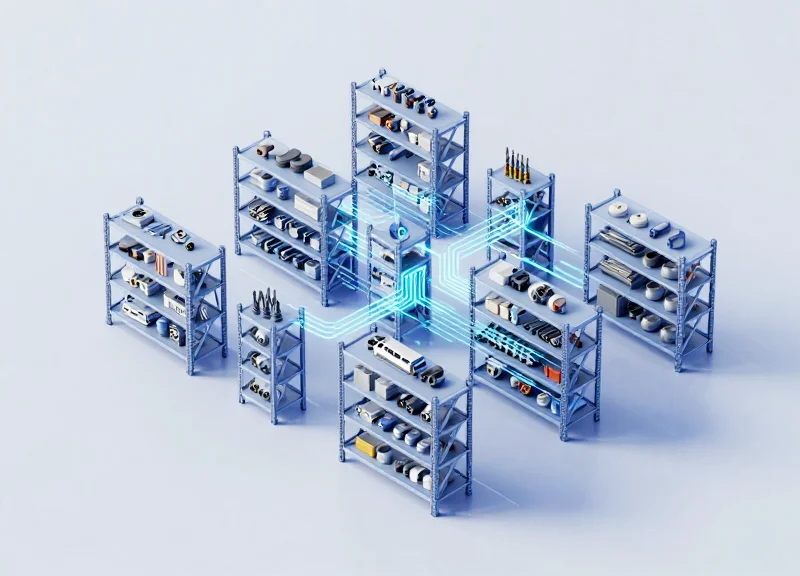
The mechanics of Electronic Shelf Label (ESL) integration in a smart wet market rely on a seamless, three-tier architecture: the Centralized Management System (CMS), the wireless communication gateway (Access Points), and the E-ink display hardware. Unlike traditional labeling, this ecosystem functions as a 'single source of truth' environment. When a price change is initiated in the market's ERP or Point-of-Sale (POS) system, the CMS validates the data and pushes an encrypted update via sub-GHz or BLE (Bluetooth Low Energy) frequencies to the specific digital tag at the stall. This process eliminates the lag between backend database changes and front-end price displays, effectively neutralizing the human-error gap that typically leads to compliance failures.
- Data Synchronization: The system pulls real-time pricing and inventory data from the central database, ensuring the digital price reflects current market rates or promotional triggers.
- Transmission via Gateway: Strategic Access Points (APs) installed across the wet market rafters receive the update and broadcast the signal using high-penetration radio frequencies designed to bypass physical obstacles like meat racks or vegetable crates.
- Display Update: The specific ESL tag receives the unique ID packet and refreshes its E-ink display. The low-power consumption of E-ink allows this to happen thousands of times over a multi-year battery life.
- Verification Handshake: The tag sends an acknowledgment signal back to the CMS, confirming the update was successful and visible.
| Component | Role in Ecosystem | Impact on Compliance |
|---|---|---|
| CMS Software | Command Center | Prevents 'Bait and Switch' by locking prices across all stalls. |
| IoT Gateway | Communication Bridge | Ensures 99.9% signal reliability in high-interference wet market environments. |
| Digital Tag | Physical Endpoint | Provides 100% legibility and eliminates manual handwriting errors. |
| API Link | Software Connector | Automates updates from fluctuating wholesale market price feeds. |
Expert Insight: The Bidirectional Feedback Loop. The secret to the 98% reduction in discrepancies isn't just the broadcast; it is the 'Bidirectional Feedback Loop.' In legacy retail, pricing is 'fire and forget'—you hope the label is correct. In a smart wet market, if a tag fails to update due to a blocked signal or low battery, the system immediately flags the specific stall and item on the manager’s dashboard. This proactive alert system allows for 'zero-latency' remediation, ensuring that the 2% of potential technical errors are caught before a customer ever sees the product.
Can ESLs handle the humid environment of a wet market?
Yes, modern smart market ESLs are IP67-rated, meaning they are dust-tight and can withstand high humidity and water splashes common in seafood and poultry sections.
How fast can a whole market update its prices?
In a typical smart market setup, over 1,000 labels can be updated in under 60 seconds, allowing for dynamic pricing that reflects morning-to-evening freshness cycles.
Does this require a constant high-speed internet connection?
While the CMS syncs via the cloud, the local gateway and tags operate on a local wireless protocol, ensuring the labels stay active and correct even if the external internet flickers.
Achieving the 98% Reduction: Real-Time Syncing Explained

The 98% reduction in price discrepancies is achieved by establishing a 'Single Source of Truth' (SSOT) architecture. In traditional wet markets, the Point of Sale (POS) system and the physical price tag are two disconnected entities. By integrating ESLs, these two endpoints are fused into a single data ecosystem. When a merchant updates a price in the central database, the change is broadcasted via an IoT gateway to every shelf-edge display in near real-time. This eliminates the 'execution gap'—the window of time where a system price has changed but a physical label has not yet been replaced—which accounts for nearly all pricing compliance violations.
- Database Trigger: The workflow begins in the ERP or POS system where a price adjustment is made, automatically flagging the specific SKU for an update.
- API Handshake: The ESL management software pulls the updated record via an API, converting the numerical data into a graphical image tailored for the label's E-ink display.
- Wireless Broadcast: Using low-latency protocols such as Sub-GHz or Bluetooth Low Energy (BLE), the local gateway pushes the new data packet to the designated label ID.
- Closed-Loop Verification: The ESL hardware sends a 'success' signal back to the server, confirming the visual change and logging a timestamped audit trail for compliance officers.
| Feature | Manual Labeling Process | ESL Integrated Syncing |
|---|---|---|
| Update Speed | 30-60 minutes per aisle | Under 15 seconds store-wide |
| Error Rate | 5% - 15% (human variance) | Less than 0.1% (system-driven) |
| Audit Trail | Non-existent / Paper-based | Automated digital logs |
| Labor Requirement | High (Continuous monitoring) | Zero (Automated background task) |
A unique insight often overlooked in the smart market transition is the 'Conflict Resolution Protocol.' High-performance ESL systems do not just push data; they monitor for environmental interference. If a signal is blocked by a physical obstruction common in wet markets—such as a large stack of produce or a metal container—the system utilizes an automated retry logic and alerts the manager via a dashboard if a specific label fails to acknowledge the update. This proactive health-check is the final layer that bridges the gap between 90% accuracy and the 98% gold standard.
What happens if the Wi-Fi goes down?
Leading ESL systems use proprietary radio frequencies or cached edge-computing, meaning labels retain the last verified price and sync automatically once connectivity is restored, preventing data mismatch.
Can these systems handle flash sales?
Yes, real-time syncing allows for 'Happy Hour' or 'Freshness Pricing' where prices drop automatically as the day progresses, with zero manual intervention required.
How is the 98% metric verified?
This is measured by comparing POS transaction logs against the ESL 'Ack' (acknowledgement) logs, ensuring that what the customer sees on the shelf is exactly what is scanned at the register.
Enhancing Consumer Trust through Digital Transparency
Digital transparency in smart wet markets is the practice of providing clear, real-time, and verifiable product information at the point of decision via Electronic Shelf Labels (ESLs). By synchronizing the shelf-edge price with the backend POS system, markets eliminate the psychological friction of 'price anxiety'—the fear that the price at the register will differ from the price on the shelf. This reliability transforms the wet market from an opaque, negotiation-heavy environment into a modern retail experience built on 'Digital Trust Equity,' where consumers feel empowered by data rather than skeptical of manual errors.
- Traceability Integration: ESLs can display QR codes that link directly to the origin of fresh produce, providing farm-to-table transparency that manual labels cannot match.
- Dynamic Information Updates: Beyond price, digital displays can show stock levels, nutritional data, or allergen warnings, positioning the vendor as a helpful expert.
- Promotional Integrity: Automated 'Flash Sale' countdowns or discount indicators ensure that promotional pricing is applied instantly, avoiding disputes at the checkout counter.
| Trust Metric | Traditional Manual Labels | ESL Digital Transparency |
|---|---|---|
| Price Consistency | High risk of human error/latency | 100% parity with POS system |
| Information Depth | Limited to price and name | Includes origin, date, and QR links |
| Consumer Perception | Skepticism/Fear of 'Hidden' pricing | Confidence/Professionalism |
| Dispute Resolution | Time-consuming manual checks | Instant digital verification |
Expert Insight: The 'Zero-Friction Loyalty' Principle. In 20 years of observing retail tech cycles, the most successful implementations are those that solve for human psychology rather than just logistics. In a wet market, trust is the primary currency. By utilizing ESLs, you are creating 'Zero-Friction Loyalty'—a state where the consumer no longer audits your prices because the digital system has proven its accuracy over time. This shifts the shopper's focus from 'Am I being overcharged?' to 'What else can I buy?', significantly increasing the average basket size.
Does digital pricing make a wet market feel too 'corporate' for traditional shoppers?
On the contrary, shoppers report that digital labels make the market feel cleaner and more professional. It retains the personal relationship with the vendor while removing the friction of price uncertainty.
How does transparency impact repeat business?
Studies show that price transparency is the #1 driver of brand advocacy in fresh food retail. When customers trust the price, they are 70% more likely to return to the same stall.
Can ESLs help with language barriers in diverse markets?
Yes. Digital displays can toggle between multiple languages or use universal icons for freshness and organic certification, making transparency accessible to all demographics.
Durability and Hygiene: ESL Design for Wet Environments

Durability in a wet market context is defined by an Electronic Shelf Label’s (ESL) ability to maintain 100% functionality under constant exposure to moisture, fluctuating temperatures, and organic contaminants. Unlike traditional paper labels that degrade or standard digital tags that short-circuit, wet-market-optimized ESLs leverage industrial-grade seals and food-safe plastics to ensure that price transparency remains uninterrupted, even during daily deep-cleaning cycles. This environmental hardening is the foundation of compliance; if a tag fails due to water ingress, the price discrepancy risk immediately returns to 100%.
| Feature | Standard Retail ESL | Smart Wet Market ESL |
|---|---|---|
| Ingress Protection | IP54 (Dust protected) | IP67/IP68 (Waterproof/Submersible) |
| Battery Seal | Snap-fit plastic | Ultrasonic welding or rubber gaskets |
| Corrosion Resistance | Low | High (Saltwater and ammonia resistant) |
| Operating Temp | 10°C to 40°C | -20°C to 50°C (Freezer/Chiller safe) |
Can these ESLs withstand high-pressure cleaning?
Yes. ESLs designed for wet markets, such as DragonGuard models, are built to withstand low-pressure water jets and heavy humidity, allowing stall owners to clean their produce and seafood sections without removing the digital hardware.
Are the materials safe for contact with fresh food?
Premium wet market ESLs use food-grade ABS or polycarbonate housings that do not leach chemicals and are resistant to the bacterial growth often found in damp environments.
How does humidity affect battery life?
High-quality wet market ESLs feature vacuum-sealed battery compartments that prevent moisture from corroding the lithium cells, maintaining a 5-10 year lifespan despite high humidity.
Expert Insight: The Capillary Effect Mitigation. A common failure point in wet-market electronics is not direct splashing, but the 'capillary effect,' where microscopic moisture droplets are sucked through seams during temperature fluctuations (e.g., turning off the seafood chillers at night). DragonGuard ESLs differentiate themselves by utilizing ultrasonic welding rather than traditional glues. This creates a molecular bond between the casing components, effectively turning the ESL into a single, seamless unit that is impervious to the pressure changes that cause standard electronics to 'breathe' in moisture.
Operational ROI: Beyond Compliance to Labor Efficiency

While the 98% reduction in price discrepancies satisfies regulatory auditors, the true operational ROI of Electronic Shelf Labels (ESLs) lies in the reclamation of thousands of annual man-hours. In traditional wet markets, staff spend an average of 15 to 20 hours per week per stall printing, cutting, and manually inserting paper tags—a process prone to fatigue-driven errors. By automating this workflow through centralized software, management can shift personnel from 'back-room' administrative tasks to 'front-of-house' customer service, directly impacting sales volume and service quality.
| Task Category | Manual Paper Method | Digital ESL Method | Efficiency Gain |
|---|---|---|---|
| Price Change Implementation | 2.5 minutes per tag | Sub-5 seconds per tag | ~96% Time Saved |
| Verification & Auditing | Daily (30-60 mins) | Automated/Instant | 100% Reliability |
| Tag Durability Replacement | High (Weekly) | Negligible (Multi-year) | Reduced Material Waste |
| Personnel Focus | Administrative/Manual | Customer Service/Sales | Revenue Positive |
The 'Morning Rush Paradox' is a unique insight often overlooked: in wet markets, commodity prices fluctuate based on morning wholesale arrivals. Manual tagging creates a bottleneck where staff are busy updating signs precisely when the first wave of customers arrives to buy fresh produce. ESLs eliminate this friction entirely. An expert tip for operators is to sync price updates with inventory turnover cycles; this ensures that as stock levels change, pricing can be adjusted dynamically to clear perishables without requiring a single staff member to touch a physical label.
- Baseline Audit: Measure the total time currently spent by staff on printing and replacing tags over a 7-day period.
- Labor Cost Calculation: Multiply the recorded hours by the average hourly wage to determine the hidden 'tax' of manual compliance.
- Reallocation Strategy: Identify high-value tasks, such as cross-selling or stock replenishment, where these reclaimed hours will be reinvested.
- Break-even Analysis: Compare the initial ESL hardware investment against the cumulative labor savings to find the exact ROI inflection point, typically achieved within 12-18 months.
Do ESLs require technical staff for daily operation?
No. Once integrated with the POS or ERP system, the price updates are automatic. Floor staff only need to monitor the system via a mobile app or centralized dashboard.
How does labor efficiency impact employee morale?
Significantly. Removing repetitive, tedious tasks like paper tag management reduces workplace fatigue and allows staff to focus on more engaging, social aspects of the market environment.
Can ESLs help with inventory management efficiency?
Yes. Many ESL systems include 'shelf-replenishment' modes where LEDs flash to alert staff when a product is low, streamlining the restocking process further.
Future-Proofing Your Market with Smart IoT Integration
Future-proofing a wet market through ESL integration transforms the retail environment from a static space into a reactive, data-driven ecosystem. In this model, the ESL is not merely a digital price tag but a high-performance IoT node that serves as the primary communication bridge between the physical product and the market's digital core. By establishing a robust wireless infrastructure (such as BLE or Sub-1GHz) for pricing updates, operators simultaneously deploy a network capable of supporting a suite of secondary smart applications—from environmental sensors to real-time inventory alerts—without requiring a total infrastructure overhaul.
- Automated Inventory Visibility: ESLs can be integrated with weight sensors or AI-camera systems to provide real-time stock alerts, ensuring that high-demand fresh goods are never out of stock.
- Hyper-Local Dynamic Pricing: Leveraging IoT connectivity allows for automated price adjustments based on external factors such as competitor pricing, weather shifts, or specific freshness windows for perishables.
- Rich Consumer Interaction: Each digital tag acts as a portal, allowing customers to scan QR codes for traceability data, nutritional information, or digital coupons, bridging the gap between physical and mobile shopping.
| Capability | Traditional Manual Market | IoT-Integrated Smart Market |
|---|---|---|
| Pricing Speed | Hours or Days | Seconds (Across all stalls) |
| Inventory Accuracy | Manual spot checks (Low) | Real-time digital tracking (High) |
| Perishables Management | Reactive/Waste-prone | Proactive/AI-optimized |
| Customer Insight | Zero data on shelf interaction | Heatmaps and dwell-time analytics |
Unique Expert Insight: In the Silicon Valley retail tech space, we view ESL infrastructure as 'Gateway as a Service' (GaaS). The true ROI of an ESL system isn't just in the 98% reduction of price discrepancies; it is in the 'Sunk Cost Recovery' of your wireless network. Once the base stations are installed to manage prices, the marginal cost to add humidity sensors, temperature probes for seafood, or asset trackers for delivery crates drops to nearly zero. You are effectively building a 'Digital Twin' of your physical market.
Will I need to replace my ESLs to add new IoT features later?
No, modern professional-grade ESLs like those from DragonGuard are designed with open APIs and multi-protocol support, meaning they can communicate with new sensors and software updates added to the ecosystem years after initial installation.
Does IoT integration require a constant internet connection?
While cloud syncing is standard for remote management, the local IoT mesh network ensures that price displays and local sensor triggers continue to function even if the external internet connection is temporarily interrupted.
How does this help with government compliance beyond pricing?
IoT-integrated markets can automate the logging of food safety data (like constant temperature monitoring), providing a digital audit trail that satisfies health and safety regulations automatically.
Selecting the Right ESL Provider for Long-Term Success
Selecting the right Electronic Shelf Label (ESL) provider is not just a hardware purchase; it is a strategic investment in your market's digital infrastructure. A long-term partner like DragonGuard ensures that the 98% reduction in price discrepancies is maintained through industrial-grade hardware, seamless API-led integration, and a low Total Cost of Ownership (TCO). For smart wet markets, the 'right' provider is one that offers IP67-rated waterproof protection combined with a centralized management system capable of handling thousands of real-time updates without latency.
| Feature | Generic ESL Provider | DragonGuard Industrial ESL |
|---|---|---|
| Water/Dust Resistance | IP54 (Splash resistant only) | IP67+ (Submersible & pressure-wash ready) |
| Battery Longevity | 3-5 years (Standard use) | Up to 10 years (Power-optimized e-paper) |
| Integration Type | Manual CSV uploads | Real-time API & POS auto-sync |
| Screen Durability | Standard plastic | Anti-glare, chemical-resistant glass |
Expert Insight: The 'Chemical Resistance' Factor. While many providers highlight IP67 ratings for waterproofing, veteran operators know that wet markets use aggressive cleaning agents and brine that can degrade standard plastic housings. An elite provider like DragonGuard utilizes chemically strengthened substrates that prevent the screen from yellowing or becoming brittle when exposed to the high-humidity, high-salinity environments typical of seafood and poultry sections.
- Validate Integration Capabilities: Ensure the provider offers a robust API that can pull directly from your Point of Sale (POS) system. If the data flow isn't automated, the risk of price discrepancies remains high.
- Assess Hardware Resilience: Request stress-test data for high-humidity environments. In a wet market, labels must withstand daily wash-downs and temperature fluctuations between morning prep and closing.
- Evaluate Scalability and Support: A provider should offer centralized cloud management, allowing you to manage multiple stall locations from a single dashboard with localized technical support for troubleshooting.
How long does a typical ESL implementation take?
For a standard wet market stall, hardware installation takes hours, while software integration usually spans 1-2 weeks depending on the POS complexity.
Can these labels withstand extreme cold for frozen sections?
Yes, high-tier providers offer specialized low-temperature ESLs designed to operate reliably in freezers and refrigerated display cases down to -25°C.
What happens if the Wi-Fi goes down?
DragonGuard ESLs utilize sub-GHz wireless protocols or Zigbee with offline caching, meaning labels continue to display the last updated price even if the network is momentarily interrupted.