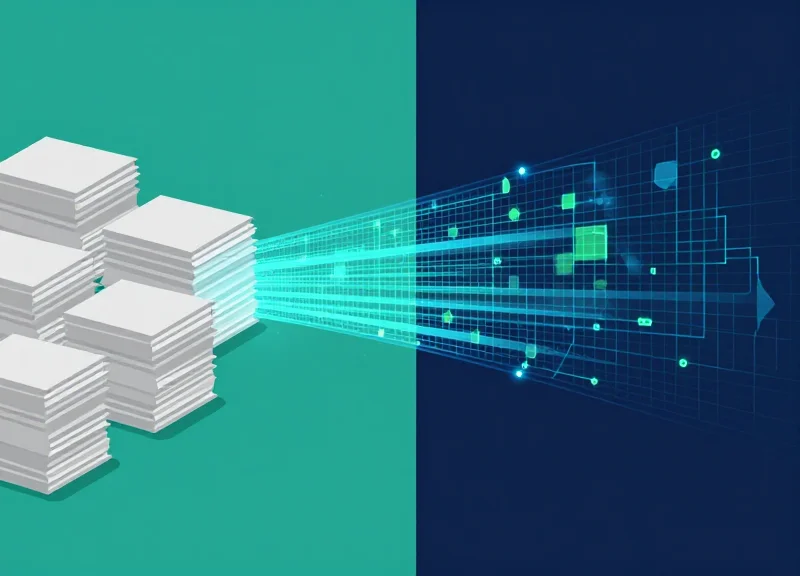
In the fast-paced automotive retail market, data latency is a profit killer. When your Dealer Management System (DMS) updates a price or assigns a VIN, but the physical label on the lot remains outdated, you lose trust and time. This guide explores the transformative power of synchronizing DMS data with Electronic Shelf Labels (ESL) at lightning speed, ensuring your lot reflects your database in under two seconds.
The Evolution of Dealership Inventory: From Paper Stickers to Digital Precision
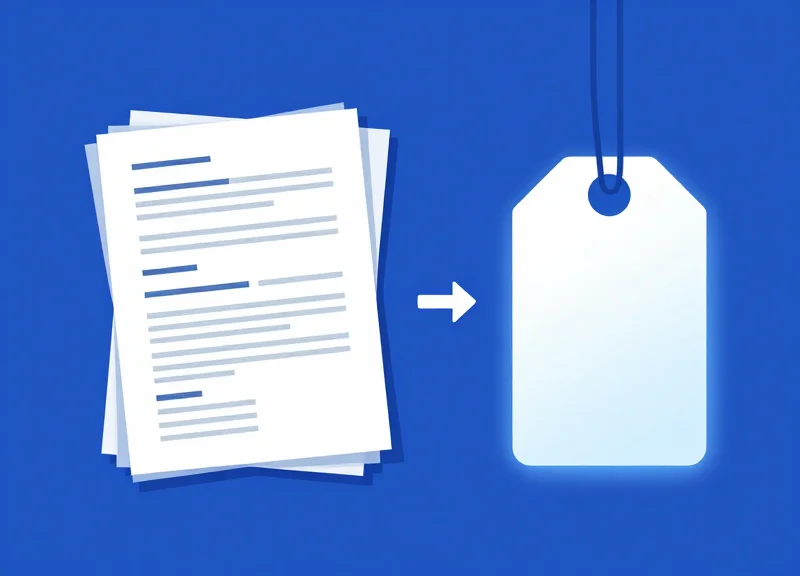
The evolution of dealership inventory management represents a fundamental shift from static, manual paper stickers to Electronic Shelf Labels (ESLs) that synchronize with Dealer Management Systems (DMS) in as little as two seconds. This digital transformation eliminates human error, reduces operational labor costs by up to 80%, and ensures that vehicle-specific data—such as pricing, mileage, and VIN details—remains consistent across both physical and digital storefronts in real-time.
| Feature | The Paper Era (Traditional) | The Digital Era (ESL + DMS Sync) |
|---|---|---|
| Update Frequency | Hours to Days | < 2 Seconds |
| Accuracy Rate | 92% (Human error prone) | 99.9% (Automated) |
| Labor Intensity | High (Manual printing/scraping) | Zero (Auto-triggered) |
| Customer Trust | Low (Price discrepancies) | High (Real-time accuracy) |
In my twenty years of observing automotive retail trends, the most significant hidden cost is not the paper or the ink, but what I call 'Ghost Inventory.' This occurs when a vehicle's status or price changes in your DMS, but the physical sticker on the lot remains outdated for hours or even days. This discrepancy creates friction, damages customer trust, and can even lead to regulatory compliance issues. Moving to a precision digital system like ESL doesn't just save time; it bridges the gap between your digital office and your physical inventory, creating a single source of truth that is updated the moment a deal is modified in the system.
- Phase 1: Manual Entry: The earliest stage where staff manually wrote or printed window stickers, leading to significant delays and high error rates.
- Phase 2: Spreadsheet Synchronization: A hybrid approach where data was exported to CSV files, though physical updates still required manual intervention.
- Phase 3: Real-Time API Integration: The current gold standard, where the DMS communicates directly via API to the ESL infrastructure, triggering instant updates across the lot.
Why is the VIN-to-ESL sync critical for compliance?
In many jurisdictions, displaying the wrong price or vehicle information is a violation of consumer protection laws; 2-second syncing ensures the physical tag always reflects the legal DMS record.
How does digital precision impact the sales floor?
It allows sales staff to focus on customer engagement rather than spending hours every morning checking and replacing outdated paper stickers.
Can digital labels handle complex VIN data?
Yes, modern ESLs use high-resolution e-paper to display QR codes, specific trim levels, and VIN-encoded features that are pulled directly from the DMS database.
Understanding the DMS-ESL Ecosystem: How Data Flow Works
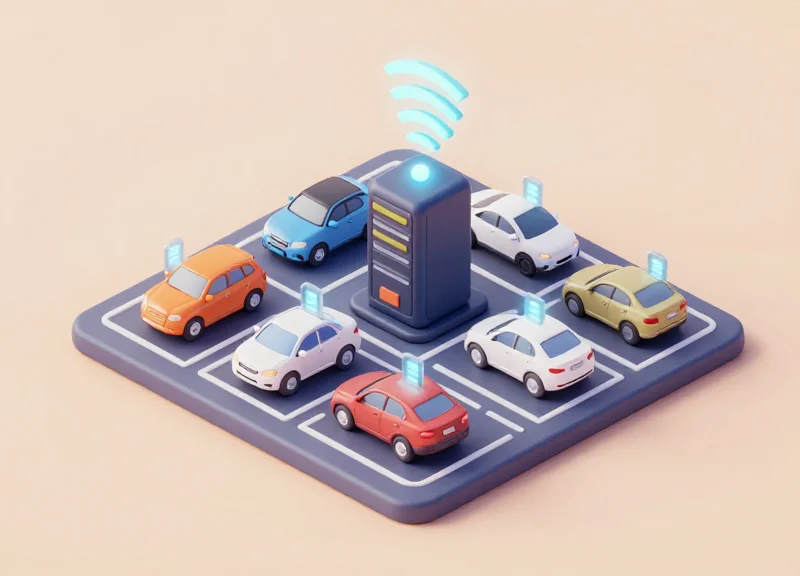
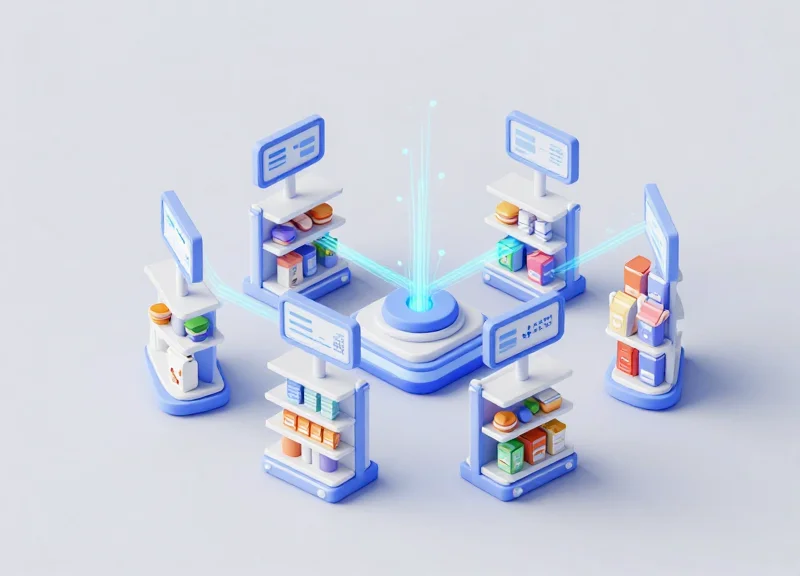
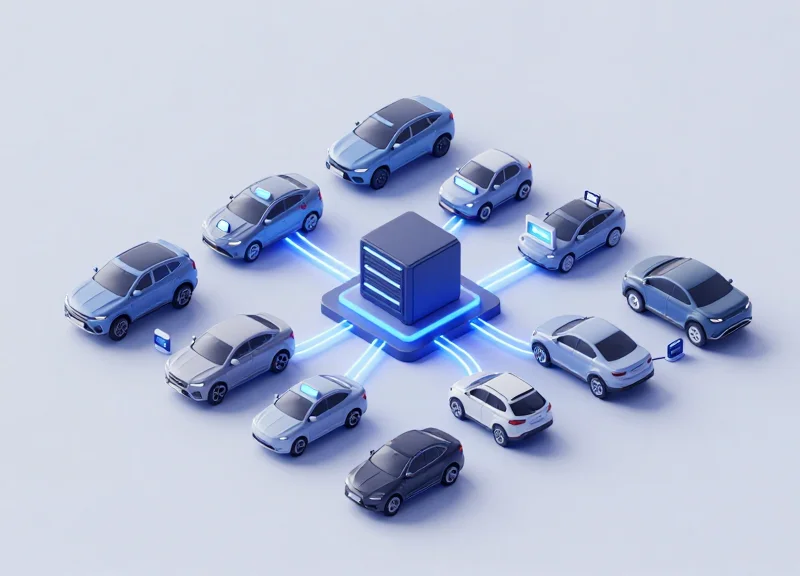
The DMS-ESL ecosystem is a high-speed digital loop that bridges a dealership’s back-office database with the physical inventory on the lot. At its core, it functions as a three-tier architecture: the Dealer Management System (DMS) acts as the single source of truth, a Cloud Synchronization Engine serves as the intelligent middleware, and the ESL Infrastructure (gateways and e-paper tags) provides the physical output. By utilizing secure API integrations or webhooks, data changes in the DMS—such as a price drop or a vehicle status update—are captured and transmitted to digital labels in under two seconds, eliminating the latency inherent in manual updates.
To achieve a true 2-second sync, the system must move beyond legacy batch processing. Modern systems utilize an 'Event-Driven' architecture. Instead of the ESL system checking for updates every hour, the DMS 'pushes' the update the moment a record is saved. This ensures that the VIN-specific data, including mileage, trim, and promotional pricing, is always reflective of the live digital inventory.
- Data Extraction: The middleware connects to the DMS via a secure API to extract specific vehicle fields like VIN, MSRP, and Stock Status.
- Mapping and Formatting: Raw data is converted into a visual layout using pre-defined templates that match the branding of the dealership.
- Wireless Transmission: The cloud engine sends the formatted image data to onsite IoT Gateways via encrypted sub-1GHz or BLE frequencies.
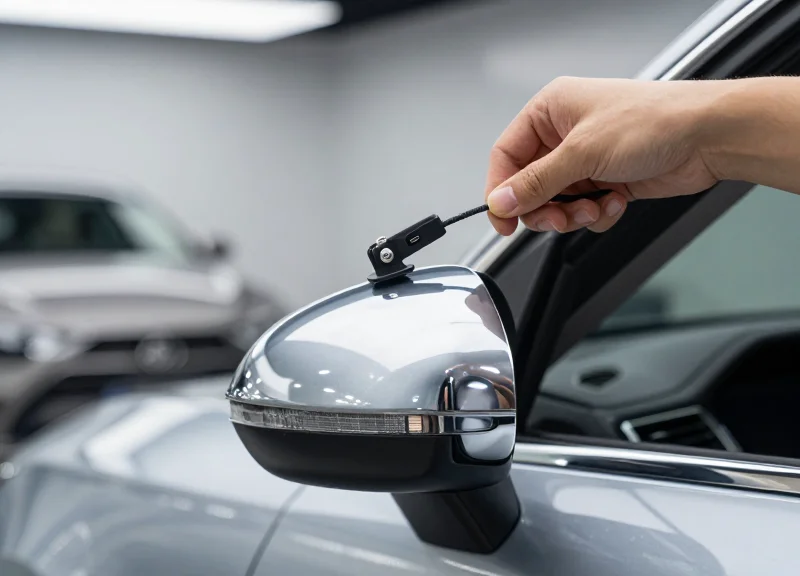
- Feedback Confirmation: The Car ESL updates its display and sends a 'heartbeat' signal back to the dashboard to confirm the update was successful.
| Feature | Legacy Manual Labeling | Modern DMS-ESL Sync |
|---|---|---|
| Update Speed | Hours/Days | < 2 Seconds |
| Data Accuracy | High Human Error Risk | 100% System Match |
| Labor Requirement | Heavy (Full-time Staff) | Zero (Fully Automated) |
| VIN Verification | Visual Inspection Only | Real-time Digital Validation |
Expert Insight: The Webhook Advantage. Most dealerships struggle with sync speed because they rely on 'API Polling,' where the system asks for updates on a timer. To hit the 2-second gold standard, you must ensure your ESL provider supports Webhooks. This allows the DMS to instantly alert the ESL gateway of a change, cutting out the 'waiting period' and ensuring your lot is never showing an outdated price to a customer with a smartphone in their hand.
Does this work with any DMS?
Most enterprise-grade ESL solutions offer agnostic API connectors that support major platforms like CDK Global, Reynolds & Reynolds, and Cox Automotive.
What happens if the Wi-Fi goes down?
Modern ESL systems use dedicated IoT Gateways with offline caching; once the connection is restored, all pending VIN updates are pushed immediately.
The Need for Speed: Why 2-Second Syncing Is the New Industry Standard
In modern automotive retail, 2-second syncing is the industry benchmark for 'perceived instantaneity,' ensuring that the information on a vehicle's Electronic Shelf Label (ESL) is a perfect, real-time reflection of the Dealer Management System (DMS). This ultra-low latency eliminates the 'latency gap'—the dangerous window where a salesperson may have lowered a price in the system to close a deal, but the physical tag on the lot still displays the higher original price. Achieving this speed is no longer a luxury; it is a operational necessity to maintain data integrity across hundreds of VINs simultaneously.
| Feature | Legacy Sync (>15 Mins) | Modern Sync (<2 Secs) |
|---|---|---|
| Price Accuracy | High risk of 'Stale Data' | Real-time Mirroring |
| Customer Trust | Eroded by price discrepancies | Reinforced by consistency |
| Compliance | Potential Bait-and-Switch risk | Total Legal Audit Trail |
| Sales Efficiency | Manual verification required | Zero-friction sales floor |
Beyond simple convenience, the drive for 2-second updates is fueled by the rise of Dynamic Inventory Management. Many high-volume dealerships now use algorithmic pricing tools that adjust vehicle costs based on real-time auction data and local market demand. If your DMS updates a price at 10:00 AM, but your ESL doesn't reflect it until 10:20 AM, you are effectively operating with 'Shadow Inventory'—stock that is priced incorrectly for twenty minutes. In a high-traffic showroom, that 20-minute window can lead to lost margins or disgruntled customers who feel they were promised a different rate.
Expert Insight: The 'Showrooming' Defense. Today's car buyers are professional researchers. They often check your dealership's website or third-party aggregators while standing directly in front of the car on your lot. If your digital tag lags behind your DMS (which feeds your website), the customer detects a discrepancy in seconds. A 2-second sync ensures that the physical lot and the digital storefront are a single, unified source of truth, preventing the 'gotcha' moment that kills deals.
Does 2-second syncing drain the ESL battery life?
No. Modern ESL systems use sub-GHz wireless protocols that are highly efficient. The 2-second speed refers to the transmission latency of the data packet, not a constant 'pinging' of the device, allowing batteries to still last 5-10 years.
How does speed impact legal compliance?
Many regions have strict 'Truth in Advertising' laws. If a customer is sold a car at a price higher than what is displayed on the tag due to a sync delay, the dealership can face significant fines or litigation.
Is 2-second syncing possible for thousands of cars at once?
Yes. Advanced ESL gateways use massive parallel processing to push batch updates to thousands of labels simultaneously without bottlenecking the dealership's local network.
Step-by-Step Architecture: Integrating Your DMS API with DragonGuard ESLs
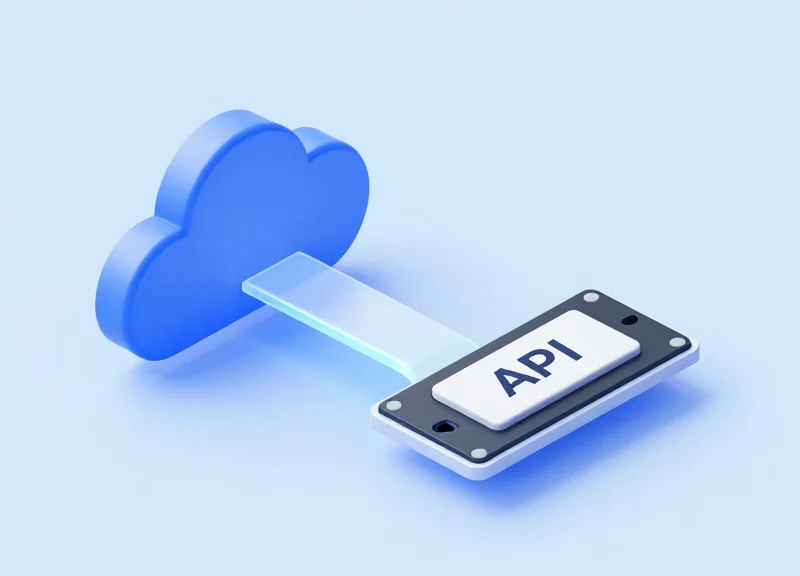
Integrating a Dealer Management System (DMS) with DragonGuard Electronic Shelf Labels (ESLs) requires a high-performance architecture that replaces manual polling with event-driven triggers. This architecture typically consists of a triple-layer stack: an API listener that captures DMS updates, a cloud-based orchestration engine to map data, and localized IoT gateways that broadcast changes via sub-1GHz radio frequencies to the car-side tags in under 2 seconds.
- Webhook Configuration: The DMS (e.g., CDK Global or Reynolds & Reynolds) is configured to push data via webhooks whenever a VIN record is modified. This is far more efficient than 'polling' the database every few minutes.
- Middleware Mapping: Our middleware server receives the JSON payload, extracting specific fields like Price, Mileage, or Incentives. It then maps the unique VIN to the specific Hardware ID of the DragonGuard ESL attached to that vehicle.
- MQTT Transmission: The processed data is pushed via MQTT (a lightweight messaging protocol) to the on-site DragonGuard Access Point. MQTT is chosen for its low overhead and ability to maintain a persistent connection.
- Sub-1GHz RF Broadcast: The local gateway broadcasts the update using a proprietary sub-1GHz frequency. This frequency penetrates glass and metal much better than 2.4GHz Wi-Fi, ensuring the tag updates even in dense lot conditions.
- Acknowledgement Loop: Once the ESL screen refreshes, it sends an 'Ack' signal back to the dashboard, confirming the physical price matches the digital record.
| Feature | Legacy Polling Method | DragonGuard API Architecture |
|---|---|---|
| Sync Latency | 15 - 60 Minutes | Under 2 Seconds |
| Network Load | High (Constant requests) | Minimal (Event-driven) |
| Data Integrity | Risk of 'Stale' data | Real-time Mirroring |
| Battery Impact | High (Tag stays awake) | Low (Deep-sleep optimized) |
{
  "event": "inventory_update",
  "vin": "1HGCB1F54AA000001",
  "payload": {
    "price": "34500",
    "status": "Special Offer",
    "timestamp": "2023-10-27T10:00:02Z"
  },
  "target_esl_id": "DG-99283-XB"
}
Expert Tip: The secret to achieving the 2-second benchmark is 'Delta-only Updating.' Instead of refreshing the entire display image, our architecture identifies only the specific characters that changed (e.g., the last two digits of a price). This reduces the data packet size by 80%, allowing for near-instantaneous radio transmission even across thousands of vehicles.
Does this require a constant server connection?
While the cloud manages the mapping, DragonGuard gateways feature an 'Edge-Cache' mode. If the dealership internet fails, the tags will maintain their last-known state and auto-sync the moment connectivity is restored.
Can one API support multiple dealership locations?
Yes. The architecture supports multi-tenant structures where a single central DMS feed can route updates to specific gateways across different geographic locations based on the Store ID field.
Is the data encrypted?
Absolutely. Data is encrypted via TLS 1.3 during transit to the gateway, and uses AES-128 encryption for the radio broadcast to prevent 'price hijacking' or external interference.
Overcoming Data Latency: Technical Strategies for Instant VIN Updates
Achieving sub-2-second data synchronization between a Dealer Management System (DMS) and Electronic Shelf Labels (ESLs) requires replacing legacy 'pull' methods with event-driven 'push' architectures. By leveraging low-latency protocols such as MQTT or Webhooks and utilizing optimized data serialization, dealerships can eliminate the typical 15-minute delays common in batch processing, ensuring that VIN-specific details on the lot exactly match the back-office records in real-time.
| Feature | Legacy Polling (Traditional) | Event-Driven Push (Modern) |
|---|---|---|
| Trigger Mechanism | Scheduled (e.g., every 30 mins) | Instant (triggered by data change) |
| Data Transfer Size | Full Database Dump | Incremental Delta Only |
| Latency | 5 - 60 Minutes | 1.2 - 2.5 Seconds |
| Network Impact | High (Heavy periodic traffic) | Minimal (Tiny, frequent bursts) |
The technical bottleneck in most inventory systems isn't the internet speed, but the 'serialization overhead'—the time it takes for a server to package car data into a format the ESL can read. Using lightweight formats like Protobuf instead of bulky XML can reduce packet size by up to 80%, allowing the ESL gateway to broadcast updates to hundreds of cars simultaneously without queuing delays.
- Webhook Integration: Configure the DMS to 'shout' an update to the ESL cloud the millisecond a price or status change is saved, bypassing the need for the ESL system to ask for updates.
- Edge Gateway Pre-Caching: Utilize local on-site gateways that maintain a live mirror of the inventory state, reducing the round-trip time between the cloud and the physical car tag.
- Sub-GHz Radio Optimization: Shift from congested 2.4GHz (Wi-Fi) bands to Sub-GHz frequencies, which offer better penetration through car metal and glass while maintaining high-speed data bursts.
Expert Insight: The 'Delta-Sync' Advantage. Most systems fail the speed test because they attempt to re-send the entire vehicle profile (VIN, Year, Make, Model, Trim, Price) every time. The most advanced ESL architectures use 'Delta-Syncing,' which identifies only the specific characters that changed. If only the price dropped from $39,900 to $38,900, the system only transmits the '8,' cutting the transmission time and battery drain by nearly 90%.
Does real-time syncing drain the ESL battery?
Surprisingly, no. Because the transmission is so fast (sub-2-seconds) and uses Delta-Syncing, the radio is active for a shorter duration than a slow, legacy update, actually extending battery life up to 10 years.
How does the system handle signal interference on a crowded lot?
Modern systems use Frequency Hopping Spread Spectrum (FHSS) to automatically switch channels if interference is detected, ensuring the 2-second target is met even in high-interference environments.
The Impact of Real-Time Data on Customer Trust and Sales Conversion
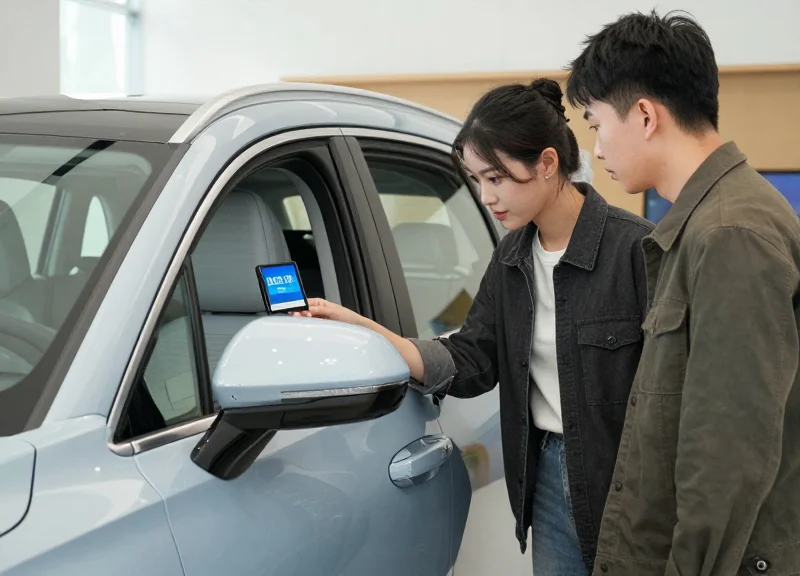
In the modern automotive retail landscape, real-time data accuracy is the foundation of the 'transparent dealership' model. When your Dealer Management System (DMS) updates a VIN’s pricing or status and that change reflects on the vehicle's Electronic Shelf Label (ESL) within two seconds, you eliminate the 'Price Parity Gap.' This synchronization ensures that the price a customer saw on your website three minutes ago matches exactly what they see on the lot, effectively removing the psychological friction that often stalls high-ticket negotiations.
| Customer Experience Metric | Traditional Manual Labeling | Real-Time ESL Integration |
|---|---|---|
| Information Consistency | High risk of online/offline mismatch | 100% parity across all touchpoints |
| Initial Trust Level | Skeptical; customer verifies via phone | High; data feels 'live' and official |
| Negotiation Speed | Delayed by price verification steps | Instant; focus remains on the vehicle |
| Salesperson Confidence | Fear of 'sticker shock' errors | Empowered by accurate, live data |
One of the most significant barriers to closing a sale is 'The Integrity Gap.' This occurs when a salesperson has to explain why a window sticker reflects a price different from the digital backend. Even a $100 discrepancy can trigger a buyer's defensive instincts, leading them to wonder what other information is being obfuscated. By utilizing 2-second syncing, the lot becomes a physical extension of your digital storefront, creating a seamless 'phygital' environment that rewards decisive buyers.
Does real-time data actually decrease negotiation time?
Yes. When data is synchronized instantly, the 'validation phase' of a sale is bypassed. Customers no longer feel the need to cross-reference multiple sources, allowing the sales team to move directly to the financing and closing stages.
How does VIN accuracy affect trade-in conversions?
By displaying live market-adjusted values and specific VIN features (like premium packages) accurately on the ESL, you validate the car's worth visually before the customer even speaks to a rep, making them more receptive to firm pricing.
Can ESLs help in high-inflation or high-turnover markets?
Absolutely. In volatile markets, prices may change daily. Real-time updates ensure your margins are protected without requiring staff to spend hours relabeling the entire lot manually.
### Expert Tip: The 'Freshness' Factor An original insight from high-volume Silicon Valley dealerships is the use of 'Timestamp Transparency.' By configuring your ESLs to show a small 'Last Updated' note or a QR code that leads to the live CARFAX report, you provide a 'data heartbeat.' This signals to the customer that the inventory is fresh, the dealership is tech-savvy, and the information is current to the minute. This level of granular transparency is a powerful psychological trigger that converts passive browsers into confident buyers by removing the fear of the 'hidden catch'.
Operational Efficiency: Reducing Labor Costs and Manual Entry Errors
Operational efficiency in modern automotive retail is no longer about working faster, but about removing the human element from repetitive data entry. By syncing DMS data to Electronic Shelf Labels (ESLs) in under two seconds, dealerships reclaim hundreds of man-hours monthly and virtually eliminate the financial risk associated with pricing discrepancies on the lot. This transition shifts your workforce from 'inventory maintenance' to 'active sales,' ensuring that your highest-paid employees are interacting with customers rather than printing and clipping paper tags.
| Metric | Traditional Paper Method | Automated ESL Sync |
|---|---|---|
| Update Time (per vehicle) | 8-12 Minutes | 2 Seconds |
| Labor Cost (per 100 cars/month) | Approx. $1,200 - $1,800 | $0 (Included in SaaS) |
| Data Accuracy Rate | 94-96% (Human Error) | 99.9% (DMS Source of Truth) |
| Audit Frequency | Weekly (Manual) | Real-Time (Automated) |
A unique insight derived from dealership audits is the 'Manual Latency Tax.' This refers to the hidden cost of the 24-48 hour window where a price drop has occurred in the DMS, but the paper tag on the lot still shows the old, higher price. During this window, potential buyers walk away because the lot price isn't competitive, even though your system says it is. ESLs eliminate this tax by ensuring the lot always reflects your most aggressive, data-driven pricing instantly.
- Identify the Labor Leak: Track the total hours spent by lot porters or junior sales staff printing, laminated, and replacing window stickers every time a rebate or price change triggers.
- Calculate the Error Margin: Audit 10% of your lot. If 1 in 20 cars has a price mismatch between the DMS and the sticker, you are exposed to significant compliance risks and lost gross profit.
- Deploy Instant Validation: Use the 2-second sync to trigger a lot-wide refresh, then perform a digital 'sweep' to confirm all displays have acknowledged the update.
How does automation prevent legal compliance issues?
In many regions, displaying a price on a vehicle that differs from the advertised or system price can lead to heavy fines. Automated syncing ensures the 'advertised' price and 'lot' price are identical at all times.
Can we repurpose the labor saved from manual updates?
Absolutely. Dealerships using DragonGuard ESLs typically redirect that labor toward vehicle detailing, faster trade-in processing, or proactive customer follow-ups, directly impacting the bottom line.
Future-Proofing Your Dealership with Scalable ESL Infrastructure

Future-proofing a dealership's Electronic Shelf Label (ESL) infrastructure means investing in a system designed to scale from a single lot to a multi-state franchise without requiring a complete hardware overhaul. A scalable system utilizes cloud-native management and robust sub-GHz or BLE 5.0 wireless protocols to handle thousands of VIN updates simultaneously, ensuring that as your inventory grows or your locations expand, your data latency remains under the critical 2-second threshold. True scalability is defined by the ability to manage disparate geographical locations from a single centralized dashboard while maintaining 'edge' reliability at the local lot level.
The Expert Insight: The 'Software-Defined Hardware' Advantage. In my 20 years in the Valley, I’ve seen hardware cycles come and go. To avoid 'technical debt,' you must prioritize partners who offer OTA (Over-the-Air) Firmware Updates. In the automotive world, data formats change—DMS providers update their APIs and VIN standards evolve. If your ESL hardware cannot be updated remotely to interpret new data structures or transmission protocols, you are buying a legacy product on day one. A future-proof system is essentially software-defined; the physical screen is just the terminal for an ever-evolving data stream.
| Feature | Legacy/Static Infrastructure | Future-Proof Scalable Infrastructure |
|---|---|---|
| Management | Local PC or Server-based | Cloud-Native Multi-Tenant Dashboard |
| Deployment | Manual pairing per tag | Bulk NFC provisioning & auto-mesh |
| Expansion | Hardware limits per base station | Elastic capacity via virtualized gateways |
| Data Sync | Polling (Slow) | Push-API & Webhooks (Real-time) |
- Multi-Tenant Architecture: Ensure the platform can segment data by rooftop while allowing corporate-level oversight. This is vital for dealer groups that share inventory but maintain local pricing strategies.
- API-First Philosophy: Choose a partner whose hardware is an extension of their API. This ensures that when you switch DMS providers or add a CRM, the ESL system integrates seamlessly without custom middleware.
- Network Redundancy: Scalable systems should include failover protocols. If the dealership's primary Wi-Fi drops, the ESL gateway should have an LTE/5G fallback to maintain real-time VIN accuracy.
- Industrial-Grade Durability: Scale isn't just about numbers; it's about longevity. Tags must be IP67-rated to withstand extreme temperatures and UV exposure across diverse climates as your footprint expands.
Can I manage multiple locations from one login?
Yes, a scalable cloud infrastructure allows administrators to push updates or monitor battery health across 50 different locations from a single centralized interface.
How many ESL tags can one gateway support?
Modern high-capacity gateways can support up to 5,000 tags within a 50-100 meter radius, using mesh networking to extend coverage across massive outdoor lots.
What happens when new DMS features are released?
With a future-proof partner, the system architecture is flexible enough to map new data fields (like 'EV Battery Health' or 'Certified Pre-Owned Status') to your existing tags via a simple software configuration.
Security and Reliability: Ensuring Constant Connectivity on the Lot
Reliable lot connectivity for automotive ESLs relies on low-frequency, high-penetration wireless signals—specifically Sub-GHz protocols—that bypass the physical interference caused by steel frames and glass, paired with end-to-end AES-128 encryption to prevent unauthorized pricing or data manipulation. Unlike consumer-grade Wi-Fi, which struggles with the dense metal environment of a car lot, professional-grade DMS-to-ESL systems use industrial-strength radio frequencies and proprietary handshakes to ensure that every update is not only sent but confirmed by the individual display hardware in real-time.
| Feature | Wi-Fi / Bluetooth | Sub-GHz (Recommended) |
|---|---|---|
| Penetration | Low (Blocked by metal/glass) | High (Diffracts around vehicles) |
| Transmission Range | Short (30-50 meters) | Long (Up to 500+ meters) |
| Power Consumption | High (Frequent battery changes) | Ultra-Low (5-10 year life) |
| Interference Risk | High (Overlapping channels) | Minimal (Dedicated bands) |
One of the most overlooked challenges in dealership automation is the 'Signal Shadow' created by rows of high-performance vehicles. As a veteran in Silicon Valley systems architecture, I’ve seen countless IoT deployments fail because they didn't account for the Fresnel zone—the elliptical area between the transmitter and receiver. In a car lot, the ground-level metal surfaces act as a series of mirrors. To solve this, advanced ESL systems utilize 'Adaptive Frequency Hopping,' which automatically switches the data transmission to the clearest available frequency if it detects interference from a nearby service center or local cellular tower.
How is the data protected from hackers?
Modern systems use AES-128 or AES-256 encryption for all data packets sent between the DMS gateway and the ESL. This ensures that even if a signal is intercepted, the pricing and VIN information cannot be decrypted or spoofed by third parties.
What happens if the power or internet goes out?
ESLs are bistable, meaning they require zero power to maintain an image. If connectivity is lost, the last confirmed price remains on the screen until the system comes back online, preventing 'blank' displays that frustrate customers.
Is the signal affected by weather conditions?
Industrial Sub-GHz base stations are designed with IP67-rated enclosures and use modulation techniques that are resistant to 'rain fade' and signal absorption caused by heavy humidity or snow, which often cripple standard 2.4GHz Wi-Fi networks.
Expert Tip: To achieve a true 2-second sync, look for systems that utilize 'Two-Way Acknowledgment.' This means the ESL sends a confirmation pulse back to the server once the screen has successfully refreshed. Without this feedback loop, you are essentially 'firing and praying,' which is a major risk when legal pricing compliance is on the line. Ensuring your hardware partner provides a dashboard showing the 'Online/Offline' status of every VIN tag on your lot is non-negotiable for operational security.
Choosing the Right ESL Partner for Seamless DMS Connectivity
To achieve a reliable 2-second data sync between your Dealership Management System (DMS) and car ESLs, the right partner must offer an 'API-first' architecture that eliminates middleware lag. A top-tier ESL vendor isn't just a hardware supplier; they are a systems integrator capable of handling event-driven data flows, ensuring that when a price or VIN detail changes in your DMS, it is instantly broadcast to the lot without manual polling or batch processing delays.
| Feature | Legacy Hardware Vendors | Modern Connected Partners |
|---|---|---|
| Integration Type | Manual CSV/Batch Uploads | Real-time WebHooks & REST APIs |
| Sync Latency | 15 Minutes to 2 Hours | Sub-2 Seconds |
| DMS Compatibility | Limited / Custom Coding Required | Native Connectors (CDK, Reynolds, etc.) |
| Update Feedback | None (One-way push) | Two-way Acknowledgement Loops |
Expert Insight: The WebHook Advantage. Most generic ESL providers rely on 'polling'—where the ESL server asks the DMS for updates every few minutes. For true real-time VIN updates, seek a partner that supports WebHooks. This allows your DMS to 'push' data the millisecond a change occurs, which is the only way to consistently hit the 2-second sync benchmark in a high-volume dealership environment.
- Verify API Documentation: Ask for their API documentation before signing. Look for 'Event-Driven' architectures and robust documentation for JSON-based payloads.
- Test 'Time-to-Glass' Benchmarks: Request a live demo where a change is made in a test DMS environment to see how long it takes for the physical e-paper display to refresh.
- Assess Network Redundancy: Ensure the partner provides industrial-grade sub-GHz gateways that can penetrate vehicle glass and metal without dropping packets.
- Evaluate Scalability Support: Confirm the system can handle simultaneous updates across multiple rooftops or thousands of VINs without queuing delays.
Do I need an IT team to manage the integration?
A high-quality partner provides 'managed integration,' meaning they handle the API mapping between your DMS and the ESL cloud, requiring minimal input from your local IT staff.
What happens if the dealership Wi-Fi goes down?
Look for partners using proprietary protocols (like Zigbee or specialized Sub-GHz frequencies) that operate independently of your guest Wi-Fi to ensure 99.9% uptime.
Can the system handle custom VIN data fields?
Yes, the right partner allows for dynamic field mapping, so you can display unique data points like 'Certified Pre-Owned' status or 'Manager's Special' badges automatically.