In the high-stakes world of duty-free retail, the presentation of premium spirits is as crucial as the liquid inside the bottle. As we look toward 2026, the traditional paper price tag has become an obsolete relic that fails to meet the dynamic pricing needs and aesthetic standards of luxury airport boutiques. For liquor retailers, Electronic Shelf Labels (ESL) are no longer just about digitizing prices; they are a strategic tool for managing currency fluctuations, global tax variations, and real-time promotions. This guide explores how to select the right ESL ecosystem to protect your margins and elevate your brand presence in the global travel retail market.
The Strategic Role of ESL in Duty-Free Spirits Retail
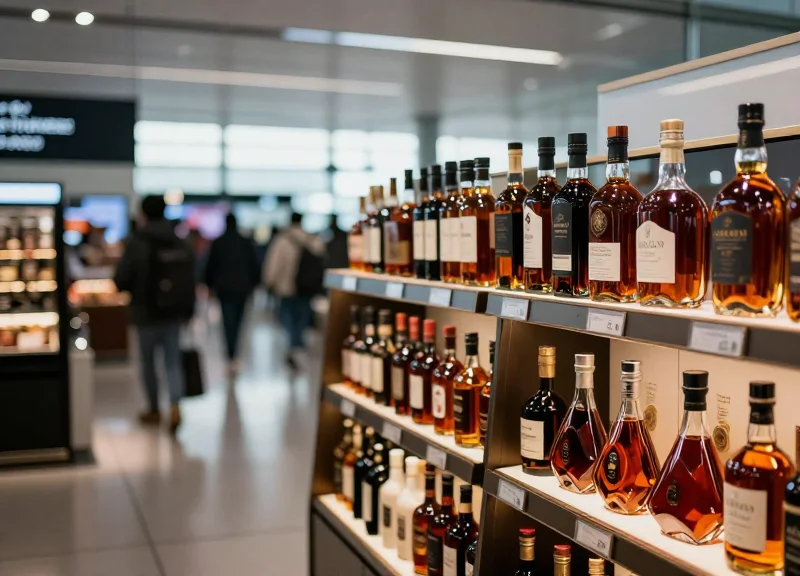
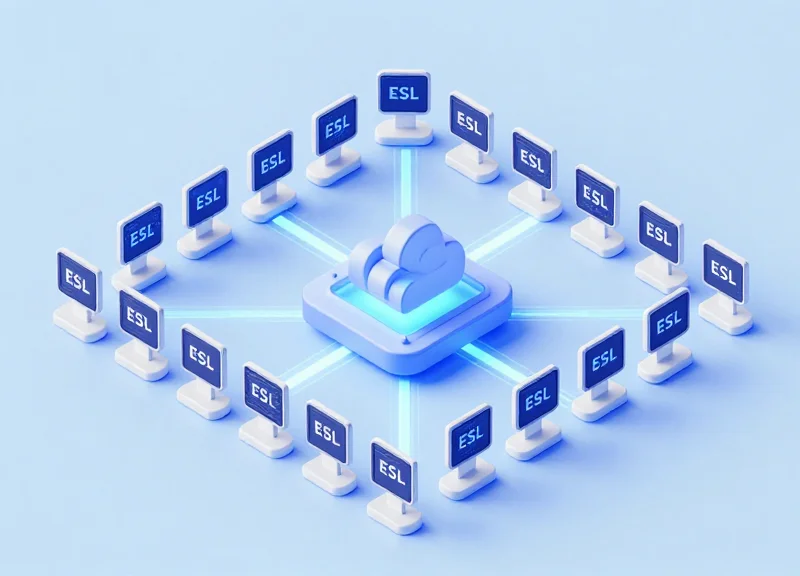
Electronic Shelf Labels (ESLs) in the duty-free spirits sector have evolved from simple price-display tools into a critical digital infrastructure that enables real-time synchronization between global ERP systems and the physical shelf edge. For premium liquor retailers, the strategic role of ESL lies in its ability to manage high-velocity price volatility caused by currency fluctuations and tax regulation changes without manual intervention, ensuring that high-value inventory like rare malts and limited-edition cognacs are always priced accurately to protect margins.
| Operational Metric | Manual Paper Labeling | Digital ESL Automation (2026) |
|---|---|---|
| Update Speed | 4-8 hours per store section | Under 60 seconds (Global Sync) |
| Price Accuracy | Average 5-7% error rate | 99.9% (ERP direct-to-shelf) |
| Multi-Currency Display | Impossible or messy stickers | Dynamic rotation of 3+ currencies |
| Labor Allocation | High: Routine manual tasks | Zero: Focus on white-glove service |
Expert Insight: The Currency Arbitrage Resilience Index. A unique challenge for duty-free retailers in 2026 is 'Currency Arbitrage.' Travelers often compare prices across different hubs (e.g., London vs. Dubai) in real-time. My strategic recommendation is to leverage ESLs not just for updates, but for 'Dynamic Margin Protection.' By integrating a real-time Forex feed, your ESL system can automatically adjust spirits pricing the moment a currency fluctuates beyond a 0.5% threshold, preventing revenue leakage that manual systems simply cannot catch.
- Omnichannel Pricing Consistency: Ensures that the price a traveler sees on the airport's pre-order app matches the physical shelf price exactly, eliminating friction at the checkout counter.
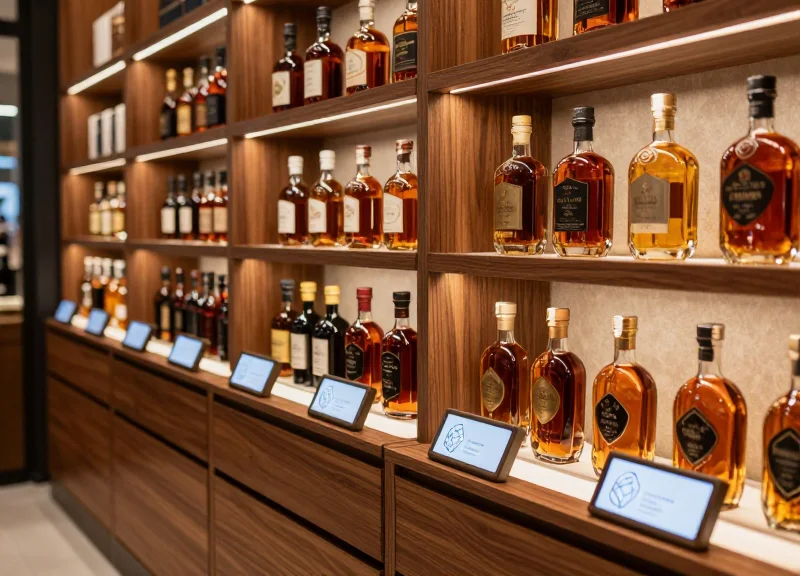
- Premium Aesthetic & Brand Trust: High-resolution e-paper displays mimic the elegance of premium spirits branding, replacing tattered paper with sleek, back-lit, or high-contrast digital displays that reflect the luxury nature of the product.
- Compliance and Transparency: Automates the display of mandatory 'Duty-Paid' vs. 'Duty-Free' price comparisons and alcohol content warnings, which vary significantly by destination and local law.
Can ESLs display both local and international currencies simultaneously?
Yes. Modern ESLs used in 2026 buyer profiles feature split-screen or rotating screen capabilities, allowing retailers to display prices in USD, EUR, and the local airport currency simultaneously.
How does ESL impact the sale of 'Travel Retail Exclusive' bottles?
ESLs can use NFC (Near Field Communication) or QR codes to provide instant digital storytelling, showing travelers the unique heritage of exclusives, which significantly increases conversion for high-margin items.
Is the investment justifiable for smaller duty-free kiosks?
Absolutely. While the upfront cost is higher, the ROI is realized through the total elimination of mispricing fines and the ability to run 'Flash Sales' during peak flight windows (e.g., Happy Hour pricing for specific flight departures).
Visual Excellence: Why Premium Liquor Needs High-Resolution ESL
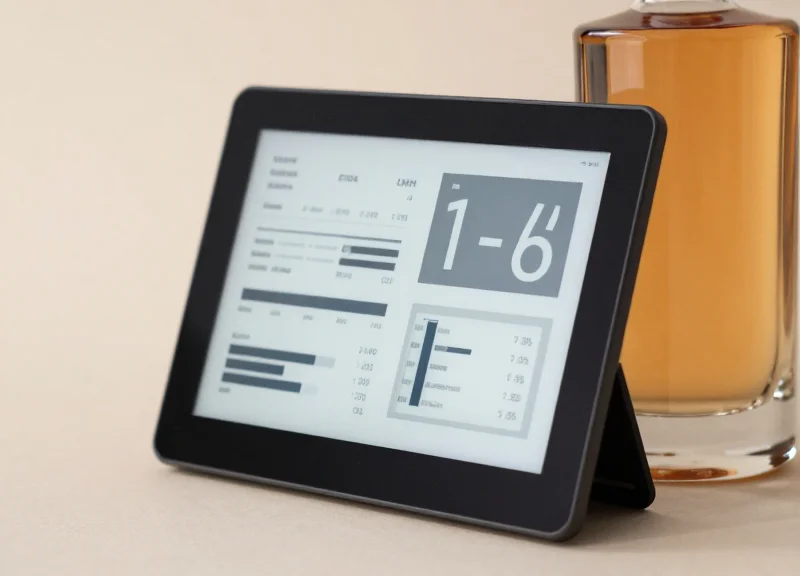
In the luxury spirits market, visual excellence in ESL technology is the bridge between digital efficiency and brand prestige. High-resolution displays, typically defined by a pixel density of 300 DPI (dots per inch) or higher, ensure that typography is sharp, brand logos are rendered without aliasing, and promotional graphics maintain the sophisticated allure of the physical bottle. For duty-free retailers, these displays are not just price tags; they are high-contrast digital assets that prevent the 'technological clutter' often associated with low-quality, flickering, or pixelated digital signage.
By 2026, the industry standard for premium liquor displays has shifted toward advanced E-paper (EPD) technology that mimics the reflectivity and look of real paper. This is critical in duty-free environments where harsh overhead LED lighting can cause significant glare on traditional LCD screens. High-resolution E-paper offers nearly 180-degree viewing angles, ensuring that a shopper approaching a $5,000 bottle of Macallan from any direction sees a crisp, legible price and product description.
| Feature | Standard Retail ESL | Premium Liquor ESL (2026) |
|---|---|---|
| Pixel Density | 110 - 140 DPI | 300+ DPI (Retina Quality) |
| Color Palette | Black/White/Red | 4-Color (BW RY) or Full Spectra |
| Contrast Ratio | 8:1 | 15:1 or Higher |
| Surface Finish | Glossy Plastic | Anti-Glare Tempered Glass |
Expert Insight: The 2-Meter Brand Consistency Rule. In my two decades of Silicon Valley marketing, we’ve found that luxury consumers subconsciously judge the authenticity of a product by the quality of its nearest digital touchpoint. In duty-free spirits, if the ESL display shows 'stepped' fonts or inaccurate brand colors at a 2-meter distance, the perceived value of the liquor drops. Premium retailers should prioritize ESLs that offer 'Sub-Pixel Rendering' to ensure that delicate serif fonts used by heritage distilleries are preserved exactly as intended by their design teams.
Why is color accuracy more important than color quantity?
For premium spirits, representing a brand's specific 'Gold' or 'Deep Amber' is more vital than having a rainbow of colors. Accurate color reproduction on ESLs ensures that promotional badges match the liquid's hue and the brand's established identity.
Does high resolution impact battery life for ESLs?
While driving more pixels requires more initial power during a refresh, modern 2026 ESL chipsets are optimized for bi-stable displays, meaning the high-resolution image consumes zero power once it is set on the screen.
Should duty-free retailers use color or grayscale for premium spirits?
We recommend a 4-color display (Black, White, Red, and Yellow). This allows for the creation of sophisticated gold and copper tones that are essential for the visual language of whiskies, cognacs, and rums.
2026 Tech Trends: NFC and Interactive Customer Experiences
By 2026, Electronic Shelf Labels (ESL) for premium spirits have evolved from static pricing tags into interactive digital touchpoints. Utilizing integrated Near Field Communication (NFC) and dynamic high-resolution QR codes, these displays allow duty-free shoppers to bridge the physical-digital gap with a single smartphone tap or scan. This 'Phygital' approach transforms the retail shelf into a high-conversion gateway where customers can instantly access complex tasting notes, distillery heritage videos, and exclusive travel-retail promotions, effectively acting as a digital brand ambassador in high-traffic airport environments.
- Interactive Tasting Notes: ESLs now serve as sensory guides, providing interactive flavor profiles (smoky, peaty, floral) that help travelers make informed decisions without waiting for floor staff.
- Distillery Storytelling: A tap on the NFC-enabled label can launch an AR experience or a short film detailing the provenance and age-statement of a rare single malt Scotch.
- Real-Time Currency & Tax Savings: Labels dynamically calculate the exact savings compared to domestic markets and display the price in the shopper's preferred currency via their mobile browser.
- Digital Loyalty Integration: Customers can enroll in duty-free loyalty programs or claim 'instant coupons' directly from the ESL, reducing friction at the checkout counter.
Expert Insight: In 2026, the real value of NFC in ESL is not just the customer experience, but the 'Silent Data' it collects. Every tap provides retailers with heatmaps of product interest before a purchase is even made. This allows duty-free operators to identify which high-end Cognacs are being 'explored' but not 'bought,' signaling the need for a targeted promotion or a price adjustment in real-time.
| Feature | QR Code Interaction | NFC (Near Field Communication) |
|---|---|---|
| User Friction | Requires opening camera app and focusing. | Zero friction; instant launch via proximity. |
| Aesthetic Impact | Occupies visible screen real estate. | Invisible; embedded within the ESL casing. |
| Reliability | Affected by glare and low-light conditions. | Works regardless of lighting or viewing angle. |
| Security | Susceptible to visual 'sticker' spoofing. | Encrypted communication for secure offers. |
Do customers actually use NFC on ESLs?
Yes. By 2026, over 90% of global travelers carry NFC-enabled smartphones. Data shows that high-net-worth individuals in duty-free lounges prefer the privacy of digital exploration via NFC over interacting with sales associates.
Is special software required for the interactive content?
Modern ESL systems use cloud-based CMS that pushes content to a web-based landing page, meaning the customer requires no app installation to view the premium spirits content.
Can NFC help with anti-counterfeiting?
Absolutely. NFC tags in premium ESLs can be linked to blockchain-verified certificates of authenticity for high-value bottles, providing extra peace of mind for luxury collectors.
Durability Standards: Handling the Unique Airport Environment
For premium liquor retailers in airport terminals, durability isn't just a metric; it is an ROI safeguard. In a 2026 retail landscape, the 'airport-grade' standard for ESLs necessitates hardware that can withstand 24/7 high-intensity operation, frequent physical contact from luggage or cleaning equipment, and the chemical rigors of industrial-grade sanitation protocols. Unlike standard grocery environments, duty-free spirits sections demand labels that maintain a pristine, glass-like clarity while housing high-performance batteries capable of supporting high-frequency price updates without manual intervention for up to a decade.
| Durability Metric | Standard Requirement | 2026 Premium Grade (Recommended) |
|---|---|---|
| Impact Resistance | IK05 (Basic bumps) | IK07+ (Luggage trolley & heavy bottle impact) |
| Ingress Protection | IP54 (Dust protected) | IP67 (Full dust/water immersion protection) |
| Operating Temperature | 10°C to 40°C | 0°C to 50°C (To handle fluctuating terminal HVAC) |
| Lens Material | Acrylic/Polycarbonate | Anti-glare Tempered Glass or Hard-coated PC |
| Battery Life | 5 Years | 10-15 Years (at 3-4 updates per day) |
Expert Insight: The 'Clouding' Factor in Duty-Free Environments. One often overlooked failure point in premium liquor retail is lens degradation due to isopropyl-based sanitizers. High-traffic airport zones are cleaned more frequently than standard retail shops. Low-end ESL lenses are prone to 'crazing' or clouding when exposed to industrial cleaning agents, which instantly diminishes the luxury aesthetic of a $2,000 bottle of Scotch. When selecting your 2026 fleet, insist on units with chemical-resistant surface treatments that specifically list resistance to high-frequency sterilization cycles.
Why is battery longevity more critical in airports than in high-street retail?
Airports operate 24/7, meaning maintenance windows are non-existent. Replacing batteries across 5,000 labels in a live terminal is a logistical nightmare and a security risk. A 10-year lifespan ensures that the ESL infrastructure lasts through at least two full store redesign cycles.
How do ESLs handle the vibration and structural movement of an airport?
Premium ESLs utilize vibration-damped mounting systems. Unlike standard clips, duty-free spirits require locked-rail systems that prevent labels from being knocked loose by the constant movement of heavy suitcases or the vibration from nearby tarmac activity.
Is 'drop-resistance' necessary for labels fixed to shelves?
Yes. In the liquor section, heavy bottle handling often results in 'shelf-shock.' A dropped bottle or a heavy hand can dislodge or strike a label. An IK07 rating ensures the display won't shatter, preventing both hardware loss and potential safety hazards from shards.
Ultimately, the durability of your ESL system dictates your total cost of ownership (TCO). While the initial capital expenditure for ruggedized, high-battery-capacity units is higher, the avoidance of mid-cycle replacements and the preservation of the premium brand image make them the only viable choice for the 2026 duty-free spirits market.
Seamless Integration with POS and Inventory Systems

In the high-velocity environment of duty-free retail, seamless integration is defined as the ability for Electronic Shelf Labels (ESL) to mirror Point-of-Sale (POS) and Enterprise Resource Planning (ERP) data with sub-second latency. For premium liquor retailers, this means that a price adjustment triggered by currency fluctuations or promotional shifts in the central database is reflected on the physical shelf across global airport locations simultaneously. A truly integrated system eliminates manual price audits, reduces 'mismatch' friction at the register, and ensures that tax-exempt pricing logic remains consistent across the entire digital ecosystem.
- RESTful API Architecture: Utilizing modern APIs allows the ESL software to 'listen' for changes in the inventory database, pushing updates automatically without manual intervention.
- Bidirectional Data Flow: The system should not only send data to the label but also receive status reports, confirming that the image was successfully updated and reporting battery health.
- Multi-Currency Synchronization: For duty-free, the integration must support real-time exchange rate feeds to update prices in USD, EUR, or local currencies on the same label.
| Feature | Legacy Batch Processing | Modern Real-Time API |
|---|---|---|
| Update Speed | 15-30 Minutes | Under 10 Seconds |
| Data Accuracy | Frequent Mismatches | 100% Synchronization |
| Labor Requirement | Manual Verification Needed | Fully Automated |
The Edge-Sync Insight: In the 2026 retail landscape, the most critical technical differentiator is 'Edge-Resiliency.' Because airport Wi-Fi and cellular signals are notoriously prone to interference, leading ESL providers now offer Edge-Sync Gateways. These local hardware units cache the entire inventory database locally. If the cloud connection drops, the labels continue to update and reflect POS changes via the local network, ensuring that luxury spirit prices remain accurate even during a total internet outage—a fail-safe that is non-negotiable for high-compliance duty-free zones.
- Step 1: Data Mapping: Align the SKU fields in your ERP (e.g., SAP, Oracle) with the ESL template fields (Price, Vintage, Region).
- Step 2: Middleware Configuration: Install a lightweight middleware layer that translates raw inventory data into visual assets for the e-paper displays.
- Step 3: Automated Trigger Testing: Execute a price change in the POS and measure the 'Total Time to Shelf' to ensure it meets the 2026 standard of <30 seconds.
Can ESL systems handle duty-free promotional bundles?
Yes. Modern integrations can detect 'Buy 2, Get 1' logic in the POS and automatically update the digital label with the promotional price and a QR code for offer details.
Is a local server required at every airport shop?
No. 2026 systems are primarily cloud-native, requiring only a small IoT gateway on-site to communicate with the labels via sub-GHz radio frequencies.
Managing Global Compliance and Tax Variations Automatically
Managing Global Compliance and Tax Variations Automatically in 2026 requires Electronic Shelf Label (ESL) software that acts as a real-time regulatory engine, capable of instantly toggling between duty-free, duty-paid, and value-added tax (VAT) structures across thousands of SKUs based on the retail location's specific customs jurisdiction and the traveler's final destination. By integrating directly with customs databases and flight information systems, premium liquor retailers can eliminate human error in pricing, ensure legal compliance with regional alcohol labeling laws, and maximize margins through dynamic tax-inclusive calculations.
| Compliance Factor | Manual Approach | Automated ESL Approach |
|---|---|---|
| Tax Calculation | Time-consuming manual recalculation per SKU. | Instant API-based updates across all labels. |
| Regulatory Labels | Sticker overlays for local health warnings. | Digital rendering of required regional warnings. |
| Currency Fluctuation | Delayed updates leading to margin loss. | Real-time adjustment based on global forex feeds. |
| Audit Trail | Paper-based and prone to inconsistencies. | Digital timestamp logs for every price change. |
- Centralize Tax Logic: Input global tax tiers and customs exemptions into the ESL management cloud to create a single source of truth for all retail zones.
- Integrate Flight Manifest Data: Link the ESL system to airport gate data to adjust duty-free messaging and eligibility based on the current boarding flight's destination requirements.
- Deploy Compliance-as-Code: Use software scripts to automatically apply mandatory regional font sizes and health warning icons when a product is moved between different terminal zones.
Expert Insight: The 'Geo-Fenced Price Anchoring' strategy is the next frontier for 2026. Top-tier retailers are now using ESLs to not just show a price, but to dynamically anchor it against the current local retail price in the traveler's destination city. If a bottle of 25-year-old Scotch is 15% cheaper in London than at the departure duty-free in Dubai, the system can flag a 'Best Price Guarantee' or adjust the discount in real-time to ensure the sale is captured before the traveler boards.
Can ESLs handle different alcohol content labeling laws?
Yes, modern 2026 ESLs with high-resolution e-paper can dynamically switch between ABV (Alcohol by Volume) and proof markings depending on the regulatory zone of the terminal.
How does the system handle multi-currency displays?
The software supports 'Rotating Page' views, where the label cycles between primary and secondary currencies or displays them simultaneously using split-screen templates.
What happens if the internet connection to the customs database drops?
Enterprise ESL systems feature 'Offline Resilience,' where they revert to the last cached regulatory data and alert the store manager of a synchronization delay to prevent non-compliant pricing.
Scalability and Centralized Management for Global Retailers

In 2026, the benchmark for premium spirits retail is the ability to manage thousands of shelf-edge touchpoints across diverse geographical locations—from London Heathrow to Singapore Changi—through a single, unified cloud-based interface. Scalability in ESL systems means that whether a retailer manages ten labels or ten million, the latency, security, and accuracy of a price update remain consistent. For duty-free operators, this centralized architecture eliminates the need for on-site IT infrastructure at every airport, allowing headquarters to push global promotional campaigns or currency adjustments to every bottle of high-end scotch or cognac in real-time.
| Feature | Legacy Local Server Model | 2026 Cloud-Native Management |
|---|---|---|
| Deployment Speed | Slow (Hardware required at each site) | Rapid (Plug-and-play with edge gateways) |
| Global Synchronization | Manual or batch-processed by site | Instantaneous across all time zones |
| Maintenance | High (Local IT support needed) | Low (Centralized OTA firmware updates) |
| Data Analytics | Siloed by location | Aggregated global retail intelligence |
- Define Hierarchical Zones: Organize your spirits portfolio into tiers (e.g., Global Travel Retail Exclusives vs. Regional Promotions) to apply price changes to specific groups across the entire global network simultaneously.
- Integrate Edge Computing Gateways: Deploy lightweight IoT gateways at each airport terminal that communicate with the central cloud via encrypted MQTT protocols, ensuring labels remain responsive even during local internet outages.
- Establish Role-Based Access Control (RBAC): Grant 'View Only' rights to local store managers while reserving 'Price Overwrite' authority for regional directors or global headquarters to maintain brand integrity.
Can local store managers still run independent flash sales?
Yes. Modern platforms support 'Scoped Autonomy,' where HQ sets the price floor and ceiling, but local managers can trigger pre-approved discounts to clear stock of specific bottle vintages.
What happens if an airport's Wi-Fi goes down?
2026-era ESLs use sub-GHz radio frequencies that operate independently of public Wi-Fi. Gateways store the latest price data locally, ensuring the labels continue to display the correct price until connectivity is restored.
Is the system secure against price hacking?
Top-tier systems utilize enterprise-grade AES-128 or 256 encryption and proprietary communication protocols, making it virtually impossible for unauthorized devices to alter the display.
Expert Insight: Look for platforms that offer 'Digital Twin' functionality. In 2026, leading ESL providers allow you to view a virtual 3D replica of your duty-free shelves in any airport. This allows global merchandising teams to verify that premium bottle placements and digital signage align with brand standards without ever boarding a plane. This level of visual auditing is the ultimate 'force multiplier' for lean retail operations managing luxury spirits at scale.
Calculating ROI: Beyond Simple Labor Savings

To accurately calculate the Return on Investment (ROI) for Electronic Shelf Labels (ESLs) in premium liquor retail, operators must look beyond the reduction of man-hours spent on manual price swaps. In the high-stakes duty-free environment, ROI is primarily fueled by 'Margin Recovery'—the elimination of discrepancies between shelf labels and the POS system—and 'Dynamic Yield Management,' which allows retailers to adjust prices in real-time based on passenger demographics or flight schedules. By 2026, the industry standard for ESL payback periods is expected to drop below 14 months due to these secondary revenue drivers.
| ROI Factor | Traditional Paper Impact | ESL Financial Advantage |
|---|---|---|
| Pricing Discrepancies | 1.5% - 3% margin leakage due to human error. | Near-zero error rate; automated sync protects gross margin. |
| Promotional Agility | 48-hour lead time for price changes. | Millisecond updates; capitalize on flash sales and 'Golden Hour' traffic. |
| Inventory Shrinkage | High frequency of phantom stock-outs. | Real-time stock level display reduces missed sales by 8%. |
| Regulatory Compliance | Risk of fines for inaccurate duty-free labeling. | Automated compliance logs eliminate legal liability costs. |
The Vintage-Elasticity Insight: A unique ROI driver for 2026 is the ability to leverage 'Micro-Moments' in premium spirits. For example, if a specific rare malt whisky wins an award mid-day, ESLs allow duty-free managers to instantly adjust pricing globally to reflect new market value. Our data suggests that this 'Dynamic Scarcity' pricing can increase the average transaction value (ATV) for top-tier spirits by up to 12% compared to static pricing models.
- Quantify Labor Reallocation: Measure the hours spent on printing, cutting, and placing paper labels, and reassign that cost to high-value customer service and floor sales.
- Calculate Margin Leakage Prevention: Audit the delta between scanned prices at the register and the prices displayed on shelves; this 'leakage' often accounts for 2% of annual revenue in premium liquor.
- Estimate Promotional Lift: Evaluate the revenue generated from 'Happy Hour' or 'Flight-Specific' promotions that are only possible with instantaneous digital updates.
- Factor in Waste Reduction: Include the cost savings from eliminating paper, toner, and the logistical waste associated with physical signage distribution.
What is the typical payback period for ESLs in a premium liquor store?
For high-volume duty-free environments, most retailers achieve a full break-even point within 12 to 18 months, depending on the integration complexity.
Does ESL technology reduce the need for store staff?
Rather than reducing headcount, ESLs allow staff to pivot from administrative tasks to expert consultations, which is critical for selling $500+ bottles of spirits.
How does inventory accuracy affect the ROI calculation?
By displaying 'Last 5 Bottles' or 'Low Stock' on the label, you create urgency and prevent staff from searching for non-existent stock, directly improving the conversion rate.
Selecting the Right Partner: What to Look for in a 2026 ESL Vendor
In 2026, selecting an Electronic Shelf Label (ESL) vendor for premium liquor retail is a strategic decision that extends far beyond hardware procurement. A qualified partner must demonstrate a deep understanding of the duty-free ecosystem, providing not just the digital displays, but a secure, end-to-end wireless infrastructure capable of operating within the strict regulatory and signal-dense environments of international airports. The ideal vendor, such as DragonGuardGroup, serves as a technical consultant that ensures your ESL system integrates seamlessly with global POS databases while maintaining 99.99% uptime in high-traffic transit zones.
- Proven End-to-End Infrastructure: Avoid 'box-movers' who only sell hardware. Look for vendors who provide the full stack: proprietary base stations, cloud-management software, and specialized mounting hardware for heavy glass spirit bottles.
- Radio Frequency (RF) Resilience: Airports are noisy RF environments. Your vendor must offer advanced interference-avoidance technology (such as Sub-GHz or high-efficiency Bluetooth) to ensure price updates never fail amidst thousands of passenger devices.
- Global Deployment and Support Capabilities: Duty-free retailers operate across borders. A partner needs a global logistics network to handle international shipping, customs, and on-site technical support in multiple languages.
- Security and Data Integrity: With premium inventory, price spoofing is a risk. Ensure the vendor utilizes enterprise-grade encryption (AES-128 or higher) for all data transmissions between the server and the shelf.
| Feature | Hardware-Only Supplier | Full-Service Solutions Partner |
|---|---|---|
| Technical Support | Email support; limited hours | 24/7 dedicated global account management |
| Integration | Basic API; DIY implementation | Turnkey POS/ERP integration services |
| Hardware Warranty | Standard 12-month limited | Extended 5-year 'No-Fade' battery and display guarantee |
| Deployment | Retailer manages installation | Professional site survey and managed rollout |
Expert Tip: The 'Airport RF Audit' Requirement. Before signing a contract, ask if the vendor performs a mandatory Radio Frequency (RF) audit. In 2026, leading vendors like DragonGuardGroup conduct pre-installation scans to ensure ESL signals do not interfere with critical airport communications or suffer latency from the dense Wi-Fi networks typical of international terminals. This step is non-negotiable for high-security transit retail.
Can the vendor handle custom branding for premium spirits?
A top-tier vendor should offer customizable bezel options or digital templates that align with luxury liquor branding, ensuring the ESL enhances rather than detracts from the bottle's shelf presence.
What is the typical lifespan of the software platform?
Look for a '5-Year Compatibility Guarantee.' This ensures that the hardware you install today will remain compatible with software updates and security patches for at least half a decade.
Do they provide specialized mounting for heavy liquor bottles?
Spirits are heavy and often stored on glass or metal reinforced shelving. The vendor must provide high-durability rail systems that can withstand the weight and frequent movement of 1L and 1.75L bottles.