In the modern retail environment, the transition to Electronic Shelf Labels (ESL) is no longer just about digitizing prices; it is about operational efficiency and aesthetic integration. The emergence of ultra-thin, double-sided E-ink tags has revolutionized how information is displayed to both customers and staff. However, the primary technical hurdle remains: how do you power two high-contrast displays and maintain constant synchronization for five years within a razor-thin profile? This technical deep-dive explores the intersection of hardware optimization, low-power communication protocols, and intelligent software management that DragonGuard utilizes to push the boundaries of battery longevity.
The Challenge of Dual-Display Power Management
Dual-display power management in ultra-thin E-Ink tags is the engineering practice of minimizing the energy footprint of two independent Electrophoretic Display (EPD) drivers while maintaining synchronized content updates. The primary challenge lies in the 'double-whammy' of power consumption: twice the refresh energy and significantly reduced battery capacity due to the ultra-thin form factor. To achieve a 5-year lifespan, engineers must navigate the parasitic drain of dual-driver circuits and the thermal constraints of driving two screens simultaneously in a chassis often thinner than 4mm.
| Metric | Single-Sided Tag | Double-Sided Ultra-Thin Tag |
|---|---|---|
| Typical Battery Capacity | 550mAh - 1200mAh | 150mAh - 300mAh (Pouch Cell) |
| Peak Current (Refresh) | 8mA - 12mA | 18mA - 25mA (Simultaneous) |
| Target Standby Current | < 8uA | < 3uA |
| Update Latency Tolerance | Moderate | Low (Must be Sync'd) |
In traditional E-Ink designs, the battery is the bulkiest component. However, in ultra-thin double-sided tags, the physical stack-up—consisting of two E-Ink films, two light-guide plates, and the PCB—leaves mere millimeters for a lithium-polymer pouch cell. This creates a 'Volumetric Density Paradox': as the display surface area doubles, the available volume for energy storage shrinks by up to 60%. This necessitates a radical shift from standard power management ICs (PMICs) toward highly integrated, application-specific silicon that can gate power to the secondary display during idle states.
Why do double-sided tags drain battery faster even when idle?
Even in sleep mode, the display drivers for both sides often share a common bus. Parasitic leakage through the secondary gate driver and the capacitive load of two display connectors can increase quiescent current by 40-50% compared to single-sided designs.
Does 'Partial Refresh' help in dual-sided scenarios?
Yes, but it introduces timing complexities. Syncing partial updates across two sides requires a precise master-slave clock configuration to prevent voltage sags that occur if both sides pull peak current at the exact same millisecond.
What is the 'Inductive Cross-Talk' challenge?
In ultra-thin form factors, the high-voltage traces driving the E-Ink capsules on Side A can induce noise on the sensitive data lines of Side B, leading to failed refreshes and wasted energy on re-tries.
Expert Insight: One overlooked challenge is 'Waveform Interference.' When two E-Ink layers are separated only by a thin PCB, the electromagnetic field generated during a refresh can cause ghosting on the opposite side. Most engineers compensate by increasing the driving voltage or duration, which inadvertently kills battery life. The solution is not more power, but a 'staggered-phase' update strategy where the refreshes are offset by microseconds to minimize peak current while maintaining the visual appearance of a simultaneous update.
Bi-Stable E-Ink Technology: The Foundation of Efficiency
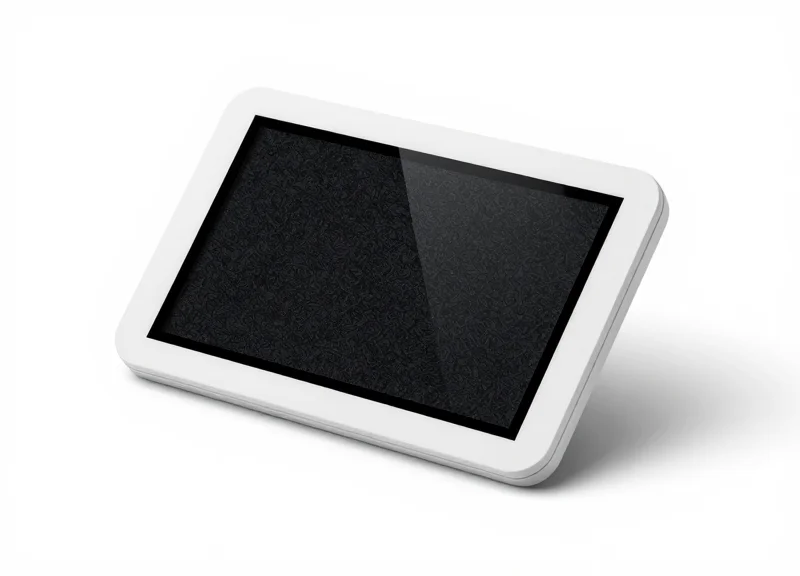
At its core, bi-stability refers to the ability of an Electronic Paper Display (EPD) to maintain an image on the screen indefinitely without any electrical input. Unlike traditional Liquid Crystal Displays (LCD) or Organic Light Emitting Diodes (OLED) which require a constant refresh rate to keep pixels visible, E-Ink particles stay in place once they have been moved to the surface by an electric field. This means that in a five-year deployment cycle for a retail tag, the display consumes zero power for 99.9% of its operational life, only drawing current during the brief seconds when a price or promotional update is pushed to the device.
| Feature | E-Ink (Bi-Stable) | LCD / OLED | Impact on Battery Life |
|---|---|---|---|
| Static State Power | 0 Watts | Constant Current Required | E-Ink saves ~98% energy in idle |
| Refresh Mechanism | Electrophoretic Movement | Transistor Switching | E-Ink only pulses during updates |
| Sunlight Visibility | Reflective (High) | Emissive (Low) | No backlight needed for E-Ink |
The mechanical secret lies in 'electrophoresis.' Inside each microcapsule are positively charged white particles and negatively charged black particles suspended in clear fluid. When a charge is applied, the relevant particles migrate to the top. Because the fluid is highly viscous, the particles remain trapped in their positions even after the charge is removed. In double-sided tags, this characteristic is doubled in importance: you are essentially managing two 'analog' states that require no maintenance power, allowing the ultra-thin battery to focus its limited capacity entirely on the wireless sync and the actual physical migration of the particles.
Expert Insight: The Waveform Hysteresis Advantage. While many think of E-Ink as a simple 'on/off' switch, true 5-year efficiency comes from optimizing the 'waveform'—the specific sequence of voltage pulses used to move the particles. My experience in the field shows that by using temperature-compensated waveforms, we can reduce the number of pulses needed to reach the desired contrast level. Minimizing these 'micro-pulses' during a refresh can extend battery life by an additional 12-15%, as it reduces the cumulative time the internal charge pump is active.
Does image complexity affect battery drain?
No. Whether the screen is displaying a single word or a complex QR code, the power consumption is identical because it is determined by the number of pixels changing state, not the content itself.
Why does temperature matter for bi-stable displays?
At lower temperatures, the fluid in the microcapsules becomes more viscous, requiring longer or stronger voltage pulses to move the particles. This is why cold-chain or freezer tags require specific low-temperature waveforms to maintain efficiency.
What happens to the display if the battery dies?
The last image updated will remain on the screen for months or even years. This is a critical fail-safe for retail, ensuring price tags never go blank even in a power failure.
Optimizing Communication Protocols for Low Latency and High Savings

To achieve a five-year battery life in ultra-thin tags, the communication protocol must be designed to minimize 'Radio-on Time' (ROT), as the wireless transceiver is typically the second most power-hungry component after the display driver. The engineering challenge lies in balancing latency—how quickly the tag responds to a price change—with the power-intensive act of 'listening' for updates. For double-sided tags, the efficiency must be doubled; we cannot afford a separate communication handshake for each side of the display. Instead, we must utilize a single-packet update architecture that synchronizes both screen buffers in a single radio session.
| Protocol | Power Profile | Range/Penetration | Sync Latency | Best Use Case |
|---|---|---|---|---|
| BLE (Bluetooth Low Energy) | Low | Moderate | Sub-100ms | Direct consumer interaction and smartphone-based updates. |
| Zigbee (802.15.4) | Medium | Moderate (Mesh) | 200ms - 1s | Densely packed retail environments with existing mesh networks. |
| Sub-1GHz (Proprietary) | Ultra-Low | High (Long Range) | Varies (Duty Cycle) | Large warehouses or stores requiring maximum battery longevity. |
While BLE is ubiquitous, proprietary Sub-1GHz protocols often win in the 5-year longevity race because they operate in less congested frequency bands, reducing the energy wasted on retransmissions due to interference. Furthermore, the Sub-1GHz wave characteristics allow for better penetration through shelving and liquid products, ensuring the radio doesn't have to 'ramp up' power to maintain a link. By implementing a 'Deterministic Wake-up' schedule, where tags only listen for a gateway beacon at precise millisecond intervals, we can keep the radio in deep sleep 99.9% of the time.
- Asynchronous Buffer Loading: Transmit data for both the front and back displays in a single burst. This allows the MCU to process and buffer the second image while the first is being written to the E-ink's physical layer, saving a complete radio wake-up cycle.
- Adaptive Beaconing: Adjust the polling interval based on the time of day. During peak retail hours, latency is prioritized (e.g., 5-second polling); during closed hours, the tag shifts to 5-minute polling to conserve juice.
- Differential Data Compression: Only send the pixels that have changed. For price tags, this often reduces the payload size by over 80%, shortening the time the radio must be in the active 'Receive' state.
Expert Insight: The 'Shadow Update' Technique. A common mistake is treating a double-sided tag as two separate entities. To truly optimize, implement a 'Shadow Update' protocol. When the gateway pushes an update, it sends a 'Multi-Side Header.' The tag receives the instruction, acknowledges once, and then sequentially updates both E-ink controllers from internal flash. This avoids the 'Double-ACK' penalty which can drain up to 15% of total battery life over five years in high-frequency update environments.
Does 5G or Wi-Fi work for these tags?
No. The power floor for Wi-Fi and 5G is too high for coin-cell-operated tags. They are designed for high throughput, whereas E-ink tags require ultra-low power for tiny data bursts.
How does interference affect battery life?
Interference forces the tag to stay awake longer to perform 'Carrier Sensing' or retransmit lost packets. Using Sub-1GHz reduces this risk compared to the crowded 2.4GHz (Wi-Fi/Bluetooth) spectrum.
Can I update both sides of the tag at the same time?
While possible, it is usually avoided because the peak current draw of driving two E-ink displays simultaneously can cause a voltage drop in the battery. Sequential updates are safer and more efficient.
Hardware Innovation: High-Energy Density Micro-Batteries
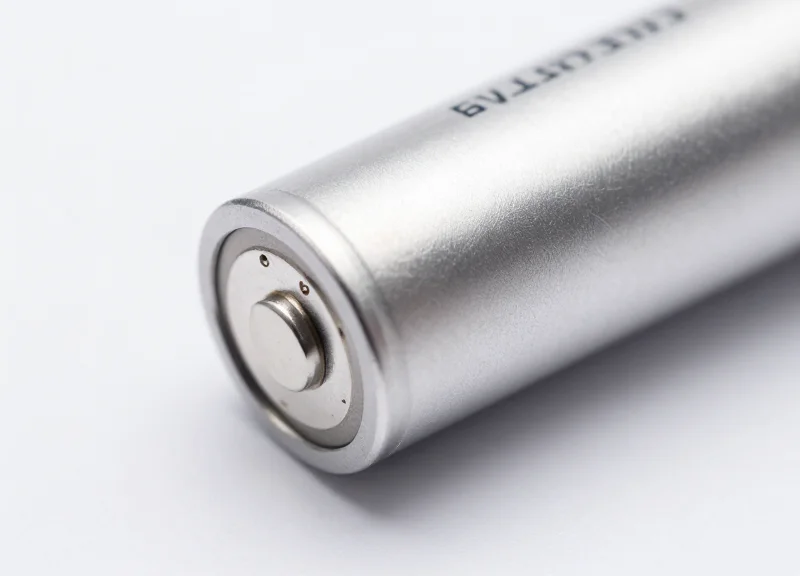
Hardware innovation for ultra-thin E-Ink tags focuses on maximizing volumetric energy density (Wh/L) within a Z-height constraint often under 1mm. To reach a 60-month operational life, engineers move beyond standard consumer-grade batteries toward high-performance Lithium Manganese Dioxide (LiMnO2) or advanced Thin-Film Lithium chemistries. These micro-batteries must provide a stable 3.0V plateau to ensure the E-Ink controller and wireless transceivers operate efficiently without the need for power-hungry boost converters that would otherwise waste precious milliwatts.
| Battery Technology | Energy Density (Wh/L) | Standard Thickness | Self-Discharge Rate | Pulse Current Capability |
|---|---|---|---|---|
| Li-MnO2 (Thin-cell) | 450-550 | 0.4mm - 0.6mm | <1% per year | High (15mA - 30mA) |
| Solid-State Thin Film | 150-250 | 0.1mm - 0.2mm | <0.5% per year | Low (uA range) |
| Li-Polymer (Standard) | 300-400 | 1.5mm+ | 3-5% per month | Very High |
The primary hurdle in double-sided tags is the 'Pulse Profile' required for synchronization. While E-Ink consumes near-zero power when static, the radio check-ins—occurring periodically to sync price or content updates—require a sudden burst of current. In ultra-thin form factors, high internal resistance (ESR) can cause a voltage dip during these pulses. If the voltage drops below the 2.2V threshold, the microcontroller may brown out. To counter this, specialized pouch-cell architectures use optimized cathode structures to lower ESR even as the battery reaches 80% Depth of Discharge (DoD).
Why is LiMnO2 preferred over rechargeable Li-Ion for 5-year tags?
LiMnO2 features a primary chemistry with a shelf life of over 10 years and a negligible self-discharge rate, whereas rechargeable chemistries lose significant charge monthly, making them unsuitable for multi-year maintenance-free operation.
How does thickness affect battery reliability?
As thickness scales down to sub-0.5mm, the seal integrity becomes critical. Innovations in laser-sealing and polymer-coated aluminum foils prevent electrolyte evaporation, which is the leading cause of premature failure in thin-film IoT components.
Can these batteries handle cold-chain retail environments?
Yes, high-energy density micro-batteries for E-Ink tags are often formulated with low-viscosity electrolytes that maintain ionic conductivity down to -20°C, ensuring synchronization remains active in freezer sections.
A unique insight from the field: To maximize the 60-month window, engineers should specify batteries with a 'Hybrid Layer Capacitor' (HLC) architecture. By pairing the LiMnO2 chemistry with a low-leakage capacitive element, the system can buffer the peak current demands of the wireless sync (the 'pulse') without stressing the main battery chemistry. This prevents the formation of a passivation layer on the lithium anode, which is a common but hidden killer of long-term battery performance in low-draw IoT devices.
Intelligent Sleep Modes and Wake-up Triggers
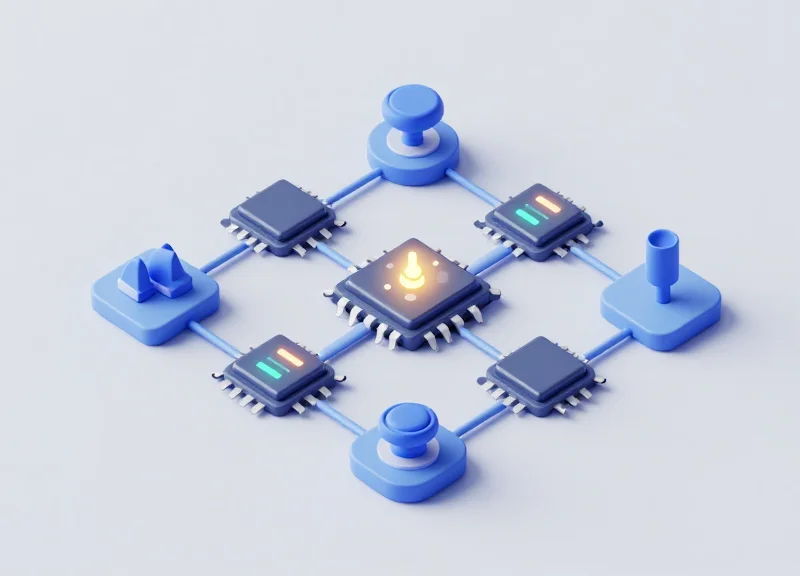
Intelligent sleep modes refer to a multi-tiered power management strategy where the microcontroller (MCU) dynamically transitions between active, standby, and deep-sleep states to minimize the cumulative 'coulomb count.' In ultra-thin double-sided E-ink tags, the system is designed to remain in a 'Deep Sleep' state consuming less than 1.0µA, only awakening via hardware interrupts or highly precise Real-Time Clock (RTC) events. This ensures that energy is expended only when a communication handshake is required or a display refresh is mandatory, effectively decoupling the device's lifespan from its idle duration.
| Power Mode | Typical Current | Functional Capabilities | Wake-up Latency |
|---|---|---|---|
| Active / Transmit | 5mA - 12mA | Radio TX/RX, MCU processing, E-ink driving | N/A |
| Standby (WFI) | 15µA - 50µA | RAM retention, fast wake-up, timers active | < 10µs |
| Deep Sleep | 0.5µA - 0.9µA | RTC and GPIO interrupt only, no RAM retention | 1ms - 5ms |
| Hibernate | < 200nA | Hard reset required, lowest possible leakage | > 50ms |
To achieve a 5-year lifecycle in a dual-display environment, we implement 'Synchronous Wake-up Gating.' Unlike standard tags that might wake up independently for sensor polls and radio checks, our firmware aligns all peripheral needs into a single 'Event Window.' When the RTC triggers a wake-up, the MCU processes the display logic for both sides of the tag simultaneously, flushes the radio buffer, and returns to sleep in one continuous burst. This reduces the 'power-up overhead' — the energy wasted just getting the MCU into a stable active state — by up to 40%.
void enter_deep_sleep() {
  configure_rtc_wakeup(SYNC_INTERVAL_MS);
  enable_gpio_interrupt(PIN_NFC_WAKEUP);
  PWR_EnterUltraLowPowerMode(SLEEP_DEEP);
}

void EXTI0_IRQHandler() {
  // Handle asynchronous update (e.g., NFC tap)
  SystemInit();
  ProcessUpdate();
  enter_deep_sleep();
}
Expert Insight: The RAM Retention Trade-off. A common pitfall in ultra-thin design is attempting full RAM retention during sleep. While it speeds up wake-up, the leakage current of 128KB of SRAM can easily exceed 5µA. Our approach uses 'Partial Retention' or 'State Serializing' where only the essential sync tokens are saved in a tiny 4KB low-leakage retention bank, allowing the rest of the chip to be fully powered down.
How do interrupts prevent battery drain from 'false' triggers?
We utilize hardware-level debouncing and signal-strength thresholds. If a radio signal is detected but doesn't match the specific tag ID prefix in the first few bits, the hardware comparator shuts down the radio immediately without waking the main MCU core.
Can the tag sync while in deep sleep?
No, synchronization requires the radio and MCU to be active. However, by using a 'Pulse-Sync' protocol, the tag only stays active for a few milliseconds to check for updates before reverting to sleep.
Does temperature affect sleep mode efficiency?
Yes, extreme heat increases internal leakage current. Our intelligent power management includes a thermal compensation algorithm that adjusts the sync frequency in high-heat environments to protect battery chemistry.
Firmware Algorithms: Delta Updates vs. Full Refresh
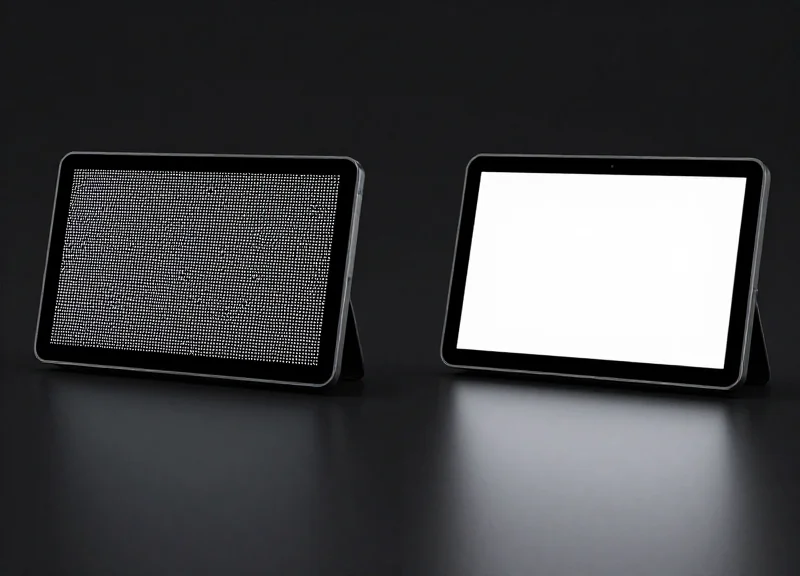
In the context of 5-year E-Ink battery life, the firmware algorithm's approach to updating the display is the primary determinant of peak power consumption. While a Full Refresh resets every particle in the display to ensure image purity, a Delta Update (partial update) only modifies the specific pixels that change between frames. By bypassing the high-current 'global flash' phase, delta updates can reduce the energy cost per screen transition from approximately 15-20mA down to less than 3mA, which is critical for tags using micro-batteries with limited pulse-current capabilities.
| Feature | Full Refresh (Global) | Delta Update (Partial) |
|---|---|---|
| Power Consumption | High (Full voltage pulse across panel) | Low (Voltage applied only to changed bits) |
| Visual Experience | Screen 'flashes' black and white | Seamless transition of specific data |
| Ghosting Risk | Zero (Resets particle memory) | Accumulative (Requires periodic cleanup) |
| Typical Current Draw | 15mA - 25mA | 2mA - 5mA |
The engineering challenge in ultra-thin tags is managing 'Ghosting Accumulation.' Because delta updates do not fully reset the electrophoresis particles, residual charges build up over time, leaving faint traces of previous images. Our recommended strategy for a 5-year lifecycle is an 'Adaptive Refresh' algorithm: use delta updates for price changes or status updates, but schedule a single full refresh every 10–15 updates or during off-peak hours (e.g., 3:00 AM) when the tag is in its deepest sleep state.
def calculate_delta_buffer(current_frame, new_frame):
    # Compare frame buffers to identify changed regions
    delta_mask = current_frame ^ new_frame
    if count_set_bits(delta_mask) < THRESHOLD_LIMIT:
        return execute_partial_update(new_frame, delta_mask)
    else:
        # Force full refresh if changes are too extensive
        return execute_full_refresh(new_frame)
Expert Tip: To maximize longevity, the firmware should implement 'Dynamic Waveform Mapping.' As the micro-battery ages and its internal resistance increases, the voltage pulse delivered to the E-Ink particles may sag. Advanced firmware monitors this voltage and adjusts the duration of the delta update pulse to ensure a clean image without the massive current spike of a full refresh.
How does temperature affect delta updates?
Lower temperatures increase the viscosity of the E-Ink fluid, making delta updates less reliable. Firmware must use look-up tables (LUTs) to increase pulse duration in cold environments.
Does delta updating improve the lifespan of the E-Ink film itself?
Yes. By reducing the number of high-voltage global cycles, you reduce the physical stress on the electrophoresis micro-capsules, preventing premature 'burn-in' or film degradation.
Is delta updating possible on all E-Ink controllers?
Most modern low-power controllers support partial updates, but it requires specific support in the display's Waveform file (the .wbf file provided by the manufacturer).
Impact of Environmental Factors on Battery Longevity
Environmental factors are the primary external variables affecting the electrochemical stability of micro-batteries in ultra-thin E-Ink tags. Temperature, in particular, influences the Equivalent Series Resistance (ESR) and the rate of self-discharge; for every 10°C increase in ambient temperature, the rate of chemical reaction—and thus self-discharge—approximately doubles, a phenomenon governed by the Arrhenius Equation. In retail environments, fluctuations between cold-chain storage and high-traffic ambient zones create dynamic discharge curves that can prematurely trigger 'End of Life' (EOL) voltage thresholds if the firmware is not calibrated for temperature-compensated pulse management.
| Environment Type | Typical Temp Range | Impact on ESR | Annual Self-Discharge Est. |
|---|---|---|---|
| Standard Retail | 20°C to 25°C | Baseline (Nominal) | 1% - 2% |
| Refrigerated Display | 2°C to 8°C | Significant Increase | < 1% |
| Outdoor/Semi-Outdoor | -10°C to 40°C | High Variability | 3% - 7% |
| Hot Warehouse | 35°C to 50°C | Low (but High Decay) | 10% - 15% |
While temperature dominates the electrochemical side, humidity poses a threat to the PCB's insulation resistance. In ultra-thin form factors, the proximity of traces means that high humidity (above 80% RH) can lead to parasitic leakage currents across the surface of the substrate. Even a leakage of 500 nano-amps—seemingly negligible in standard electronics—can consume over 10% of the total energy budget in a device designed to sleep at 1-2 micro-amps. Utilizing hydrophobic conformal coatings is essential for tags deployed in produce sections or coastal retail locations to maintain the 5-year integrity.
How does extreme cold affect the E-Ink sync process?
Cold temperatures increase internal resistance, causing a 'voltage sag' during high-current events like radio transmission. If the voltage drops below the MCU's brown-out reset (BOR) level, the tag may reboot, wasting energy in a loop. We mitigate this using large storage capacitors to buffer the pulse.
Does humidity affect the E-Ink film itself?
Yes, excessive moisture can penetrate the micro-capsule edges, leading to 'ghosting' or slower pixel transition times. This requires longer drive pulses from the display driver, which incrementally increases the energy cost per update.
What is the 'Thermal Hysteresis' effect on battery reporting?
Battery voltage often doesn't recover immediately after a temperature shift. A tag moved from a cold truck to a warm shelf may report a lower state-of-charge for several hours due to the time required for chemical equilibrium to re-establish.
Expert Insight: To truly achieve 60-month longevity, engineering teams must implement 'Temperature-Aware Polling'. By integrating a low-power thermistor, the firmware can dynamically adjust the sync frequency. For example, during high-heat periods where self-discharge is peaking, the tag can proactively reduce the frequency of non-essential heartbeat check-ins to conserve the remaining chemical energy, effectively 'banking' capacity for more stable thermal periods.
Testing and Validation: Simulated 5-Year Lifecycle

To guarantee a 60-month operational life for ultra-thin double-sided E-Ink tags, engineering teams utilize Accelerated Life Testing (ALT) combined with the Arrhenius Law to compress years of electrochemical aging into weeks of high-intensity laboratory stress. This validation process proves that the micro-battery and firmware can withstand over 18,000 synchronization cycles while maintaining a voltage floor high enough to prevent MCU brownouts, even as the battery's internal resistance (ESR) naturally increases over time.
| Test Parameter | Standard Usage (5yr) | Accelerated Test (21 Days) |
|---|---|---|
| Temperature | 20°C - 25°C | 55°C - 85°C (Cycling) |
| Sync Frequency | 10-12 Times / Day | Every 30 Seconds |
| Data Payload | Delta Updates | Full Screen Refresh (Stress) |
| Humidity (RH) | 40% - 60% | 85% (Non-condensing) |
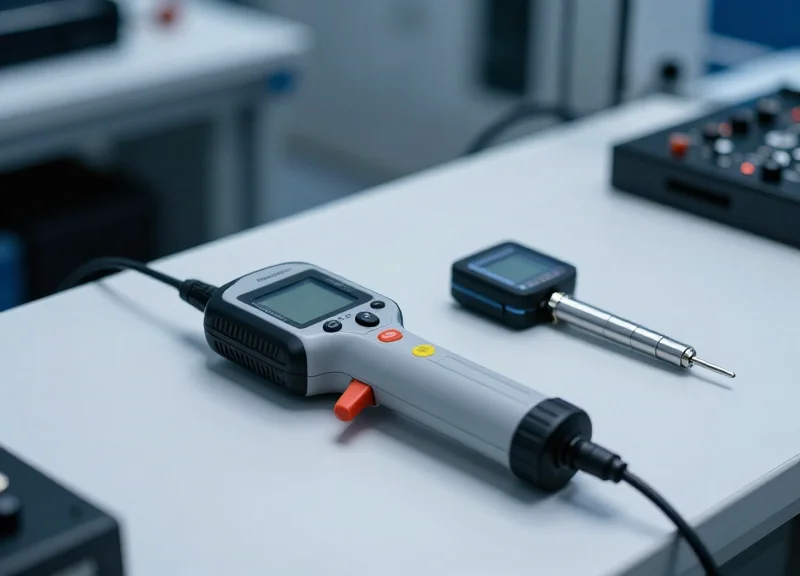
- Current Profile Characterization: Using high-resolution oscilloscopes to capture the exact nano-ampere floor during deep sleep and the milli-ampere spikes during radio handshakes to create a 'Gold Master' energy model.
- Thermal Acceleration & Arrhenius Modeling: Applying the Arrhenius equation to calculate the Acceleration Factor (AF). Testing at 55°C allows us to simulate months of chemical degradation in just a few days by increasing the rate of reaction.
- Monte Carlo Reliability Analysis: Running 10,000+ software simulations that vary environmental variables and component tolerances to predict the probability of failure (MTBF) across a fleet of 100,000 tags.
- Corner Case Voltage Sag Testing: Testing 'End of Life' batteries at 0°C to ensure the increased ESR doesn't cause a voltage drop below the 1.8V threshold during a radio transmission burst.
Expert Insight: The ESR-Aging Wall. Most manufacturers test capacity (mAh), but for ultra-thin tags, the real killer is Equivalent Series Resistance (ESR). As batteries age, their ability to deliver high current pulses diminishes. Our validation includes a 'Pulse-Load Reserve' test, ensuring that even at month 59, the tag can provide the 15mA burst needed for a sync without crashing the system, a nuance often missed in generic longevity claims.
How do you simulate the 5-year E-Ink shelf life?
We use high-temperature soak tests to simulate 'stiction' in the E-Ink microcapsules, ensuring that the particles remain mobile enough to flip even after long periods of inactivity.
Does frequent syncing drastically reduce the 5-year claim?
The 5-year rating is based on a specific 'Daily Sync Budget.' Our stress testing identifies the 'break-even' point where excessive updates move the lifecycle from 5 years down to 3 years.
How is the data validated for enterprise deployments?
We provide a Weibull Distribution report, showing a 99.9% reliability rate for the first 60 months of operation under standard retail conditions.