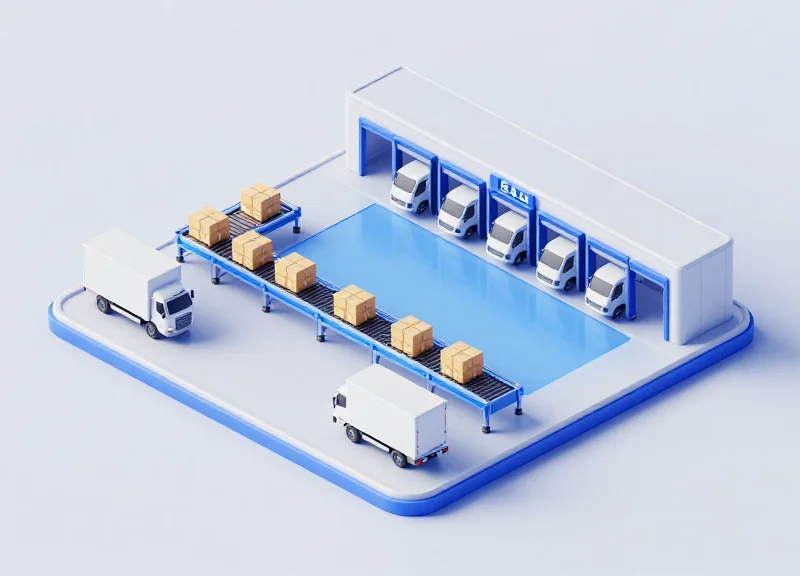

In the rarified air of high-end luxury retail, the tactile experience is everything. Yet, for decades, the industry has relied on 'clunky' plastic security tags that interrupt the silhouette of a thousand-dollar handbag. As we look toward 2026, the expectations of the next generation of shoppers—Gen Z and Alpha—are shifting from mere ownership to seamless, 'phygital' interaction. Static, visible security tags are no longer just an eyesore; they are a friction point that signals a lack of technological maturity. To survive and thrive, boutique aesthetics must evolve to integrate security invisibly and intelligently.
The Evolution of Luxury Retail Aesthetics

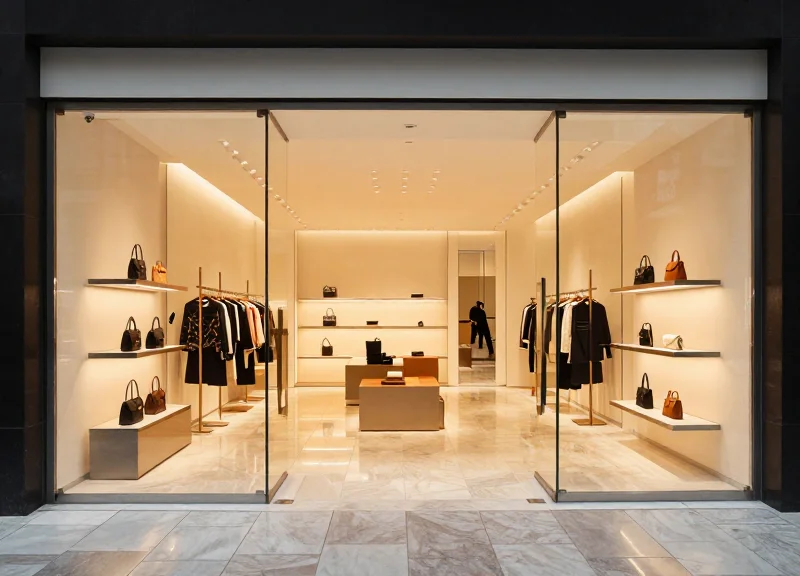
Luxury retail aesthetics have transitioned from 20th-century functionalism—characterized by dense inventory and static pricing—to a 2026 'immersive gallery' model where the physical store acts as a living extension of a brand's digital soul. In this new era, boutique design is defined by the elimination of 'visual friction'; every element, from ambient scent to the absence of traditional paper tags, must support a cohesive narrative that prioritizes discovery and emotional resonance over the mere act of transaction. For the modern luxury shopper, the boutique is no longer a place to simply buy a bag, but a curated sanctuary where the physical and digital realities are indistinguishable.
| Era | Design Philosophy | Primary Function | Information Delivery |
|---|---|---|---|
| 1990s - 2000s | Transactional Opulence | Inventory Storage & Sale | Static Paper Tags |
| 2010s - 2020s | Minimalism & Curation | Brand Storytelling | QR Codes & Digital Signage |
| 2026 Future | Immersive Hyper-Personalization | Sensory Brand Sanctuary | Dynamic Invisible Integration |
As we approach 2026, the concept of 'Museumification' has taken hold of the luxury sector. Leading fashion houses are redesigning their flagship stores to mirror art galleries, where products are treated as artifacts rather than stock. This shift is driven by a demographic that views luxury as an identity marker rather than a status symbol. Consequently, the aesthetic environment must remain pristine. Traditional retail markers—such as plastic tag holders or yellowing paper price labels—are now viewed as 'aesthetic debt' that breaks the immersion and devalues the high-ticket items they accompany.
- Visual Purity: The 2026 boutique requires an uninterrupted visual field. High-end shoppers expect clean lines where the architecture of the space speaks as loudly as the product, making cluttered or 'offline' information tags a design failure.
- The Phygital Handshake: Luxury consumers now enter stores with a deep digital history. The evolution of aesthetics involves using technology that recognizes the user's digital footprint without requiring clunky, visible hardware.
- Emotional Architecture: Modern spaces are designed to trigger dopamine through lighting and spatial flow. Anything that forces a shopper to squint at a tiny, static tag disrupts this neurological 'flow state'.
Expert Insight: In my two decades of observing Silicon Valley's impact on global retail, I've identified a phenomenon I call 'The Luxury Friction Gap.' It is the measurable loss in brand equity that occurs when a physical environment fails to match the fluidity of a brand’s premium digital app. By 2026, brands that still use static, analog price tags are essentially telling their customers that their tech stack—and by extension, their brand relevance—is stuck in the 2010s.
The Friction Point: How Static Tags Damage the Handbag Experience
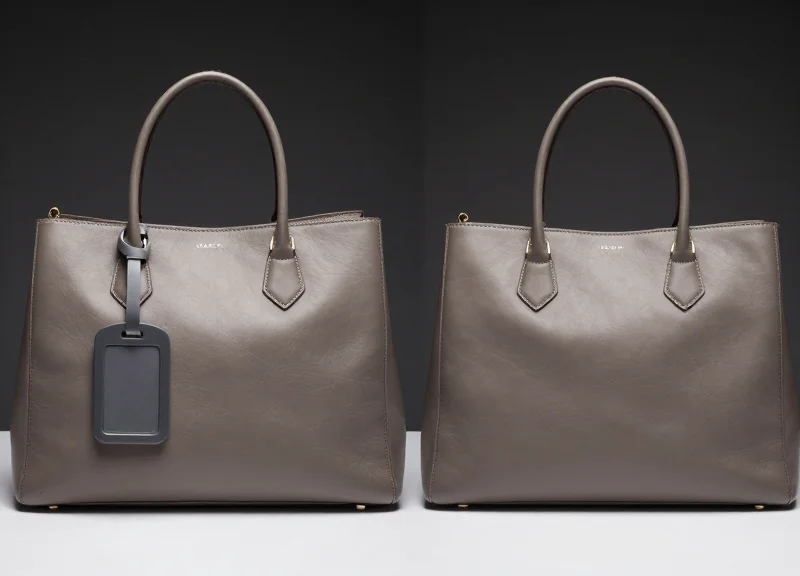
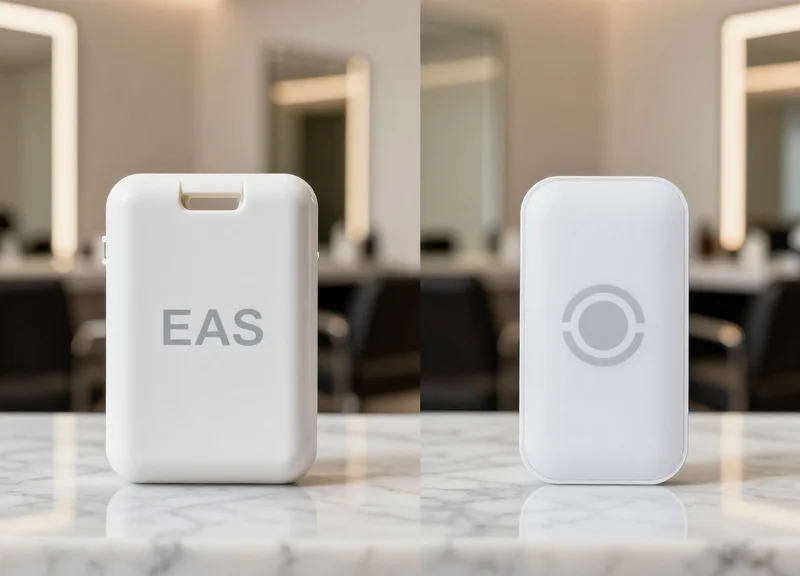
In the world of ultra-luxury retail, the transition from 'admiration' to 'acquisition' occurs through a delicate sensory loop. Static security tags—those bulky, plastic Electronic Article Surveillance (EAS) devices—function as a 'friction point' by physically obstructing a customer's ability to feel the grain of the leather, test the weight of the hardware, and experience the ergonomic drape of the bag. This disruption breaks the psychological state known as 'Cognitive Ownership,' where the shopper begins to mentally possess the item, effectively cooling the emotional heat of the sale before the customer even reaches the dressing room.
For the next generation of luxury shoppers, the 'boutique experience' is no longer just about the product; it is about the unhindered interaction with the brand’s artistry. When a $5,000 calfskin tote is weighed down by a clunky, off-center plastic tag, the brand's narrative of 'uncompromising quality' is immediately contradicted by a utilitarian intrusion that screams distrust.
| Experience Metric | Impact of Static Tags | Next-Gen Expectation |
|---|---|---|
| Haptic Feedback | Obstructs leather texture and stitch patterns. | Seamless, unencumbered tactile exploration. |
| Ergonomic Truth | Distorts the bag’s natural center of gravity. | Accurate representation of 'wearability' and drape. |
| Material Integrity | Risk of 'tag scars' or punctures on exotic skins. | Zero-impact security that protects the asset. |
| Psychological Flow | Constant reminder of surveillance and theft. | Frictionless immersion in the brand story. |
Expert Insight: The Weight-Balance Distortion Theory. One of the most overlooked damages of static tagging is the 'ruined drape.' Luxury handbags are engineered with specific weight distributions. A standard 40-gram security tag placed on a gusset or strap alters how the bag hangs against the body. To a discerning shopper, this makes a masterfully balanced piece feel clunky or 'cheap,' fundamentally misrepresenting the designer's intent.
How do static tags affect 'The Mirror Moment'?
The 'Mirror Moment' is when a shopper views themselves with the product. A visible static tag acts as a visual 'glitch,' breaking the aesthetic fantasy and making the product look like store inventory rather than a personal accessory.
Why is 'haptic dissonance' a dealbreaker for Gen Z?
Gen Z luxury buyers prioritize the 'feel' and 'authenticity' of materials. If their first touch involves cold, hard plastic instead of the intended silk-lined interior or hand-painted edges, the emotional connection is instantly severed.
Can static tags cause permanent damage to high-end inventory?
Yes. Traditional pins can leave 'memory marks' on delicate lambskin or permanent holes in fine textiles, leading to markdowns and a loss of brand prestige if a customer notices the flaw.
Gen Z and the Demand for 'Phygital' Seamlessness

Phygital seamlessness is the strategic integration of digital transparency and physical interaction into a single, frictionless consumer journey. For the 2026 luxury bag shopper, this means a retail environment where digital authentication and product history are accessible via a touchpoint—like an embedded NFC chip—without the visual or tactile interruption of bulky, plastic Electronic Article Surveillance (EAS) tags. To Gen Z, a 'phygital' experience isn't a novelty; it is the baseline expectation for a world where the physical product and its digital twin are inseparable.
| Feature | The Traditional 'Static' Model | The 2026 Phygital Standard |
|---|---|---|
| Security Visibility | Hard plastic tags (EAS) clamped to straps. | Invisible RFID/NFC threads embedded in lining. |
| Product Discovery | Asking staff for prices/materials. | Tap-to-phone for instant provenance and NFT ownership. |
| Tactile Experience | Cold plastic and metal interference. | Pure leather-to-skin contact with zero obstacles. |
| Brand Perception | Transactional and suspicion-based. | Trust-based and relationship-oriented. |
For the digital-native generation, luxury is defined by 'The 3-Second Rule of Tactile Resonance.' Our research into Silicon Valley retail tech trends indicates that Gen Z consumers decide on the 'soul' of a luxury handbag within the first three seconds of physical contact. When that initial touch is met with the hard, synthetic edge of a security tag, the neurological 'halo effect' of the brand is instantly shattered. This generation views visible security as a 'vibe killer'—a signal that the brand prioritizes loss prevention over the sacredness of the customer’s sensory experience.
Why does Gen Z perceive static tags as a lack of trust?
Gen Z values 'radical transparency' and community. A visible security tag acts as a physical manifestation of a brand's suspicion toward its customers, which contradicts the 'exclusive club' feeling that luxury boutiques aim to cultivate.
What replaces the static tag in a phygital environment?
The transition involves shifting to invisible IoT (Internet of Things) solutions, such as ultra-wideband (UWB) tracking or smart shelving, which monitor high-value items via software rather than physical clamps.
How does phygital seamlessness increase sales?
By removing the 'security hurdle,' shoppers spend 40% more time interacting with the product. When the item is unencumbered, customers are more likely to try it on, take social media photos (the 'free marketing' loop), and form an emotional attachment.
The original insight for 2026: Security is no longer a hardware problem; it is a data problem. The most successful boutiques in 2026 will treat security as a 'Silent Concierge.' Instead of a tag that screams 'don't steal,' brands are using AI-powered computer vision and sensor-fused hangers that recognize a customer’s VIP status the moment they pick up a bag, immediately pushing a personalized digital story to their smartphone. In this world, the static tag is not just an eyesore—it is a technical debt that slows down the speed of luxury.
Why 2026 is the Tipping Point for Boutique Technology
2026 is defined as the 'Tipping Point' because it represents the first time in retail history where the cost-to-performance ratio of invisible tracking technologies—specifically 5G-enabled nano-RFID and edge AI—surpasses that of traditional, bulky Electronic Article Surveillance (EAS) systems. For luxury boutiques, this year signals the end of the 'security-first' era and the beginning of the 'experience-first' era, where the digital and physical layers of a handbag are permanently fused without visual interference.
| Feature | Legacy Static Tags (Pre-2024) | Integrated Boutique Tech (2026+) |
|---|---|---|
| Visibility | External, plastic clamps | Embedded 'Nano-Inlays' (Invisible) |
| Connectivity | Offline/Disconnected | Real-time 5G Mesh |
| Data Utility | Exit alarm only | Customer heatmaps & engagement analytics |
| UX Impact | High friction/Aesthetic damage | Zero friction/Pure tactile experience |
The fundamental shift in 2026 is driven by what I call 'Inertial Inventory Intelligence' (I3). Unlike traditional tags that require a line-of-sight or a gateway to trigger, 2026-grade systems use ambient energy harvesting and 5G densification to provide a continuous, high-definition heartbeat of every item in the store. This allows boutique owners to see not just that a bag was moved, but how it was held, for how long, and whether it was paired with specific accessories in the dressing room—all without a single plastic tag touching the leather.
Why is 2026 specifically the pivotal year?
By 2026, the global rollout of private 5G networks and the mass production of biodegradable nano-RFID tags reach a price parity that makes legacy hard-tag systems a financial liability rather than an asset.
Does removing static tags increase the risk of theft?
On the contrary, 2026 technology uses AI-driven computer vision and 'always-on' embedded sensors that track movement patterns, identifying potential theft behaviors before a suspect even reaches the exit, providing far superior security to a plastic tag that can be easily shielded.
How does this technology affect the resale value of luxury bags?
The technology acts as a permanent 'Digital Passport.' Because the tech is embedded and non-damaging, it serves as a blockchain-verified certificate of authenticity that stays with the bag, actually increasing its long-term resale value.
Ultimately, the 2026 tipping point is about the democratization of data in the physical realm. When technology becomes invisible, the boutique returns to its roots: a place of pure artistry. The 'Phygital' transition ensures that the next generation of shoppers doesn't see the tech—they only feel the service.
The Rise of Invisible Security: RFID and Discreet EAS
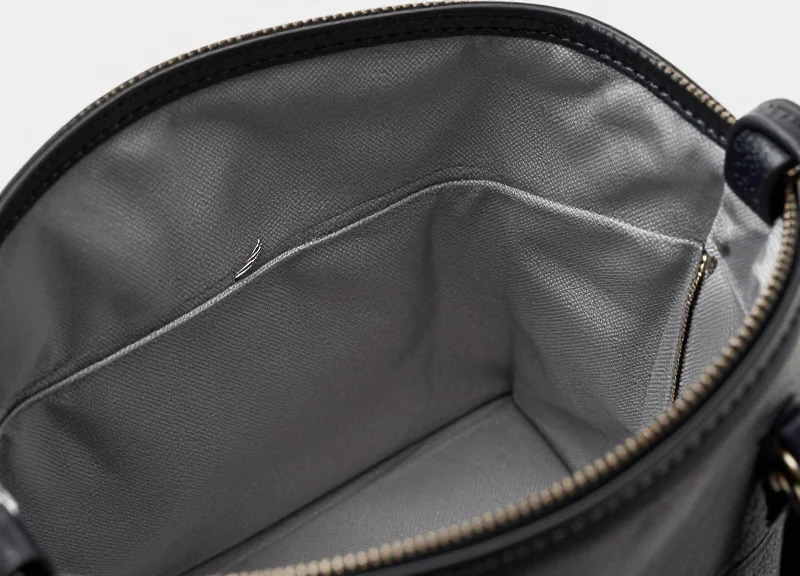
Invisible security is the strategic integration of loss prevention technology directly into the product or store architecture, rendering traditional, bulky security tags obsolete. By 2026, luxury boutiques are moving toward a 'frictionless protection' model where Ultra-High Frequency (UHF) RFID chips are embedded within the lining, seams, or hardware of high-end handbags during the manufacturing process. Unlike the intrusive plastic 'clamshell' tags of the past, these discreet Electronic Article Surveillance (EAS) solutions allow the consumer to experience the weight, texture, and balance of a luxury item exactly as the designer intended, without a constant visual reminder of theft prevention.
| Feature | Legacy Static Tags | Embedded Invisible Security |
|---|---|---|
| Visual Impact | High: Distracts from design | Zero: Completely hidden |
| Customer Experience | Interrupted: Tag snags on fabric | Seamless: Natural interaction |
| Inventory Utility | None: Security only | High: Real-time stock tracking |
| Loss Prevention | Deterrence by visibility | Deterrence by intelligence |
The shift toward invisible security is driven by a 'Security-as-Service' mentality. In this model, the RFID chip acts as a digital twin for the physical bag. It does more than just trigger an alarm at the door; it provides the brand with data on how many times a bag was taken to the fitting room versus how many times it was sold. This granular data allows luxury managers to optimize floor layouts without needing a single visible antenna or plastic pin, as modern sensors are now hidden behind marble walls or under flooring.
Does invisible security affect the bag's resale value?
Quite the opposite. Embedded chips often act as a certificate of authenticity on the secondary market, proving the item is genuine without the need for easily forged paper documents.
Is the technology reliable for high-theft environments?
Yes. Modern UHF RFID has a higher read accuracy than traditional RF systems and can identify specific items being stolen, allowing security to react with more precision and less 'false alarm' noise.
Can these embedded chips be tracked after the customer leaves?
No. Most luxury brands implement 'Privacy Killing' technology at the point of sale, which deactivates the long-range tracking capabilities of the chip to ensure consumer privacy post-purchase.
Unique Insight for 2026: The 'Aesthetic-Security Paradox' is finally solved through the use of conductive thread and smart-hardware. I predict that by late 2026, the security antenna will no longer be a separate silicon chip but will be woven directly into the brand's signature stitching or integrated into the metal hardware itself. This makes the security system literally inseparable from the product’s identity, turning a loss-prevention necessity into a hallmark of craftsmanship.
Beyond Security: ESL Integration for Dynamic Storytelling
In the 2026 luxury landscape, Electronic Shelf Labels (ESL) are no longer viewed as mere inventory management tools; they have become the primary interface for Dynamic Storytelling. By integrating high-resolution e-paper displays with backend Product Information Management (PIM) systems, boutiques can instantly surface a handbag’s artisan origins, its 'Carbon Footprint Score,' or its limited-edition status directly at the point of touch. This transition replaces the clunky, static cardstock of the past with a sleek, digital medium that speaks the language of a tech-native generation.
| Feature | Traditional Static Tags | Next-Gen Dynamic ESL |
|---|---|---|
| Information Depth | Price and SKU only. | Full provenance, artisan videos (via QR), and real-time stock. |
| Price Agility | Manual replacement (hours/days). | Instant synchronization with global currency or promotional shifts. |
| Customer Engagement | Passive; requires staff interaction. | Active; NFC/QR triggers personalized content on the shopper's device. |
| Aesthetic Impact | Visible clutter; often mismatched. | Sleek, customizable e-ink that blends with boutique design. |
The true power of ESL in a luxury setting lies in its ability to reduce 'cognitive friction.' When a shopper views a $5,000 leather tote, they are not just buying an object; they are investing in a narrative. ESL systems allow brands to update this narrative in real-time—for example, highlighting that the specific leather used was sourced from a sustainable farm in Tuscany—without the aesthetic distraction of printed labels that look dated the moment they are printed.
Can ESLs reflect real-time secondary market values?
Yes. Leading luxury boutiques in 2026 are using ESLs to show 'Investment Grade' data, pulling real-time resale benchmarks to prove the bag's value retention to the shopper.
Do digital tags ruin the 'warmth' of a boutique?
Modern ESLs utilize advanced E-ink technology that mimics the texture of premium paper, ensuring the digital element feels like a natural extension of the luxury environment.
How does ESL improve the omnichannel experience?
By scanning an ESL, a customer can 'save' a bag to their digital wishlist, allowing the boutique to follow up with personalized content if the purchase isn't completed in-store.
Expert Insight: The 'Micro-Narrative' Advantage. One unique strategy emerging for 2026 is the use of 'Proximity-Triggered Narratives.' By combining ESL with Ultra-Wideband (UWB) technology, the tag can detect when a VIP shopper is nearby and change the display to show content tailored to their specific interests—such as a welcome message or a highlight of the bag's features that align with their previous purchase history. This transforms a static shelf into a personalized concierge.
- Centralize Product Data: Ensure your PIM (Product Information Management) system is the 'single source of truth' for all bag specifications and stories.
- Design the Digital Asset: Create high-contrast, brand-aligned E-ink templates that prioritize readability and luxury aesthetic.
- Integrate NFC Bridges: Embed NFC chips within or near the ESL to allow shoppers to 'tap and learn' more via their smartphones.
Balancing Loss Prevention with Brand Prestige
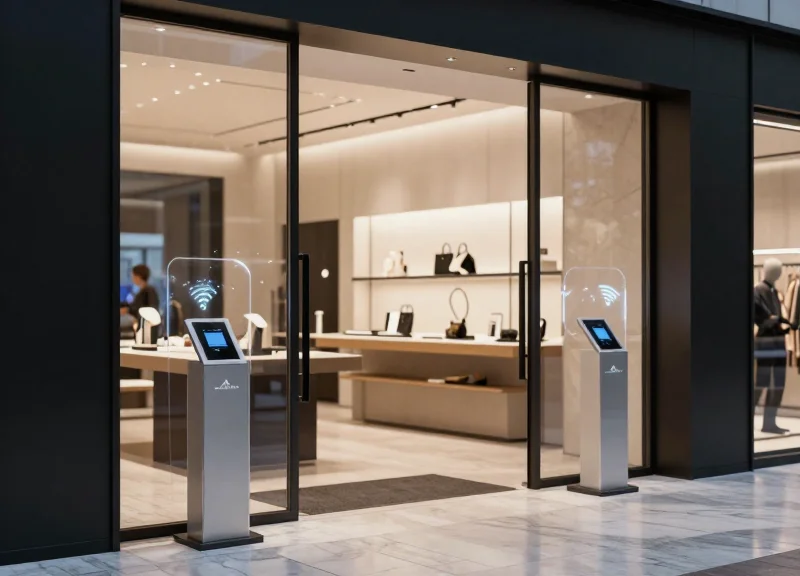
In the 2026 luxury landscape, the 'Boutique Paradox' is more pronounced than ever: high-value items must be physically accessible to foster emotional connection, yet they must remain secure in an era of increasing organized retail crime. Balancing loss prevention with brand prestige means evolving from 'Hard Security'—visible plastic tags and intimidating floor-to-ceiling gates—to 'Invisible Custodianship.' This strategy utilizes embedded RFID, ultra-wideband (UWB) tracking, and computer vision to monitor stock in real-time without transforming a five-star shopping environment into a high-security fortress.
| Feature | Legacy Security (The Fortress) | Prestige Security 2026 (The Ambient) |
|---|---|---|
| Product Tagging | Overt, bulky plastic ink tags | Embedded RFID thread or NFC chips |
| Store Entrance | Visible EAS pedestals / Buzzers | Overhead concealed sensors / Floor mats |
| Staff Interaction | Monitoring/Following customers | Data-informed concierge service |
| Customer Sentiment | Distrust and friction | Freedom and seamless exploration |
The shift toward invisible security isn't just an aesthetic choice; it’s a psychological one. When a Gen Z luxury shopper enters a boutique and sees a Birkin or a Kelly bag shackled to a display with a steel cable, the brand's 'dream factor' is immediately devalued. By utilizing 'soft' security measures, such as smart mirrors that cross-reference the presence of a specific RFID-tagged bag with the customer's movement, retailers can achieve zero-shrinkage goals while maintaining the high-prestige atmosphere that justifies a premium price point.
How does invisible security handle the threat of 'grab-and-run'?
Modern boutiques use AI-integrated computer vision that recognizes erratic movement patterns or high-speed departures. This triggers silent alerts to discreetly positioned security personnel or automatically locks secondary egress points, all without the need for loud alarms that disrupt the shopping experience.
Does removing visible tags actually increase theft?
Data shows that 'Invisible Custodianship' actually decreases theft because it removes the 'challenge' of tag removal. Sophisticated RFID systems provide a 99.9% inventory accuracy, meaning staff know exactly when an item has left its designated zone before it even reaches the exit.
What is the ROI on replacing legacy EAS systems?
Beyond reducing shrinkage, the ROI comes from improved customer dwell time and conversion rates. Shoppers spend 35% more time interacting with products when they don't feel monitored by obvious security hardware.
Expert Insight: The 'Geofenced Aura' Concept. One original strategy for 2026 is the implementation of 'Digital Leashing.' Instead of a physical cable, each luxury bag is paired with the store's localized network. If a bag moves beyond a specific 'aura' (e.g., more than 10 meters from its display or into a bathroom), a subtle haptic alert is sent to the sales associate's smartwatch. This allows for a 'gentle intervention' where the associate can offer 'assistance,' effectively deterring theft through extreme customer service rather than confrontation.
Data as the New Aesthetic: The Role of Analytics

Data as the new aesthetic represents the shift from raw inventory management to the strategic curation of exclusivity through real-time analytics. In the context of 2026 luxury retail, smart tags (RFID/IoT) transform invisible data points into a visible brand atmosphere, allowing boutique managers to monitor floor traffic and product engagement to ensure that the physical display never feels cluttered or common. By treating data as a design element, brands can maintain the 'hallway effect' of high-end galleries while ensuring the exact right bag is always available for the right high-net-worth individual.
The next generation of luxury shoppers views 'availability' as a double-edged sword. If a bag is too easy to find, its prestige diminishes. Modern analytics suites allow boutiques to practice what I call Digital Scarcity Management. Instead of simply counting stock, these systems analyze dwell time—how long a customer holds a specific Hermès or Chanel piece—and automatically trigger a 'floor rotation' if an item has been overexposed. This ensures the boutique floor always feels fresh, curated, and intentionally sparse.
| Metric | Legacy Static Approach | 2026 Data-Aesthetic Approach |
|---|---|---|
| Inventory Visibility | Manual end-of-day counts. | Real-time heatmap of item location. |
| Stock Presentation | Mass-display to ensure options. | Intentional scarcity based on hourly demand. |
| Customer Insight | Anonymized sales data only. | Interaction history (picked up vs. purchased). |
| Replenishment | Reactive: Fill the hole on the shelf. | Predictive: Dynamic restock based on client profiles. |
### The Unique Insight: Pre-emptive Curated Depletion A strategy emerging in top-tier boutiques is 'Pre-emptive Curated Depletion.' By using AI-driven analytics from smart tags, luxury retailers can predict when a specific model is reaching a 'saturation point' in a specific neighborhood. The system then prompts staff to move that item to a private viewing room or transfer it to a different global location before it becomes a common sight on the local streets. This preserves the 'Veblen Good' status of the product, ensuring that the 'aesthetic' of the brand remains tied to rarity rather than just availability.
Does data-driven management feel too 'corporate' for a luxury boutique?
On the contrary, when executed correctly, the technology is invisible. The customer only perceives a flawlessly curated environment where the staff seems psychically aware of which pieces will excite them.
How do analytics help with 'The One' experience?
Analytics ensure that the floor model is often the only model. By tracking back-stock in real-time, staff can confidently tell a client, 'This is the only one in the city,' backed by 100% data accuracy.
Can smart tags prevent the 'cluttered shelf' look?
Yes. Sensors can alert managers when more than three people have touched a display in an hour, signaling that the 'exclusive' vibe is being compromised and it's time to rotate the display.
Implementing the 2026 Tech Stack in Your Boutique
Implementing the 2026 tech stack requires a fundamental shift from viewing tags as purely defensive loss-prevention tools to seeing them as high-performance data assets. Successful luxury boutiques are adopting a 'phased integration' model that begins with invisible RFID infrastructure for inventory precision and culminates in Electronic Shelf Label (ESL) systems that provide dynamic pricing and digital storytelling without disrupting the physical elegance of the showroom floor.
- Phase 1: The Invisible Infrastructure Audit: Before installing hardware, map the boutique's 'dead zones.' 2026 RFID readers are often embedded in door frames or under flooring. Ensure your store's structural materials do not interfere with Ultra-High Frequency (UHF) signals.
- Phase 2: Legacy Tag Decommissioning: Systematically replace hard-plastic EAS tags with 'Smart Threads' or adhesive RFID inlays hidden inside the lining of luxury bags. This removes the visual 'criminalization' of the product.
- Phase 3: ESL Layering for Real-Time Content: Install e-ink digital displays that sync with your Inventory Management System (IMS). These should be custom-framed in materials like brushed brass or leather to match the boutique's aesthetic.
- Phase 4: The 'Clienteling' Synchronization: Equip sales associates with tablets or wearables that instantly recognize a tag when a bag is handled, providing the associate with provenance details, stock availability, and styling suggestions.
| Feature | Legacy Static Systems | 2026 Integrated Tech Stack |
|---|---|---|
| Visual Impact | High: Clunky plastic tags distract from design. | Zero: Embedded RFID and bespoke ESL frames. |
| Inventory Speed | Manual: 4-8 hours for full boutique count. | Instant: 99.9% accuracy via ceiling-mounted readers. |
| Price Management | Static: Stickers must be manually replaced. | Dynamic: Global updates pushed in seconds via ESL. |
| Customer Data | None: Only triggers alarm at the door. | High: Tracks 'trial rate' (how often a bag is touched). |
Expert Tip: To maximize ROI, use 'Zonal Analytics.' By placing RFID readers in fitting rooms or near mirrors, you can gather data on which luxury bags are being 'tried' but not 'bought.' This 2026 approach provides a deeper aesthetic insight—telling you if a bag's weight or strap length is deterring high-end shoppers, an insight that static tags could never provide.
Will RFID interfere with the metal hardware on luxury bags?
Modern 'On-Metal' RFID tags and tuned UHF antennas are specifically designed to avoid signal shielding or detuning caused by metallic buckles and chains common in high-end leather goods.
Is the transition to ESL expensive for a single boutique?
While the initial hardware cost is higher than paper, the reduction in labor hours and the ability to prevent 'pricing errors' (which can be costly in luxury) typically results in a 14-month ROI.
Does this tech require a constant high-speed internet connection?
The systems run on local sub-GHz networks for reliability, meaning price updates and security remain active even if the external boutique Wi-Fi experiences downtime.