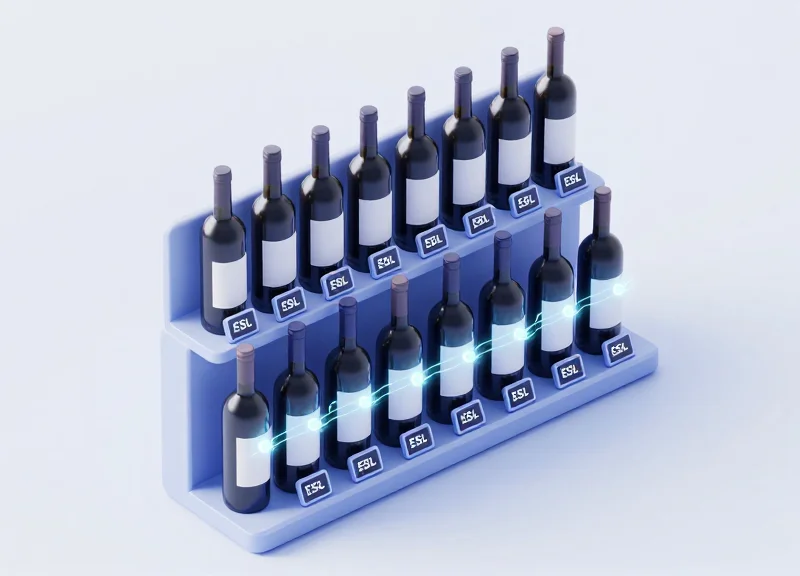

As we approach 2026, the physical bookstore is undergoing a profound metamorphosis, evolving from a simple point of sale into a high-tech sanctuary for literacy. The 'Future of Literacy' is not just about digital versus print; it is about the seamless integration of technology to enhance the physical browsing experience. At the heart of this revolution lies the convergence of Radio Frequency Identification (RFID) and Electronic Shelf Labels (ESL). This hybrid approach addresses the industry's most pressing pain points—inventory inaccuracies, labor-intensive pricing, and the need for personalized customer journeys—ensuring that brick-and-mortar bookstores remain competitive and culturally vital in a digital-first world.
The Strategic Shift: Book Retail in the 2026 Landscape

The strategic shift in 2026 book retail is defined by the rise of the 'Phygital Experience Center,' a model where physical bookstores leverage advanced RFID and Electronic Shelf Label (ESL) systems to automate inventory and pricing, allowing staff to focus exclusively on community curation and literacy advocacy. In this landscape, bookstores are no longer just points of sale but are critical nodes in a multi-modal literacy ecosystem that integrates physical browsing with digital-speed logistics and real-time market responsiveness.
| Feature | Traditional Model (Pre-2024) | Strategic Model (2026+) |
|---|---|---|
| Inventory Control | Manual scanning and periodic audits | Real-time RFID tracking with 99.9% accuracy |
| Pricing Strategy | Static stickers and weekly manual updates | Dynamic ESL updates based on global parity |
| Store Purpose | Volume-based product distribution | High-engagement community and cultural hub |
| Data Integration | Siloed POS and online data | Unified omnichannel customer profiles |
Cultural factors are driving this evolution as much as economic ones. In a society saturated with generative AI and digital fatigue, the 2026 consumer views the bookstore as a 'Focus Zone.' This demand for deep, tactile engagement has forced retailers to rethink their space. The strategic priority has moved from maximizing 'books per square foot' to maximizing 'engagement per visit.' By utilizing RFID-ESL hybrids, stores remove the friction of price checking and out-of-stock disappointments, ensuring the physical environment remains a place of quiet discovery rather than logistical frustration.
Why is the RFID-ESL hybrid system crucial for 2026 bookstores?
It eliminates the labor-intensive tasks of manual inventory and relabeling, enabling staff to transition from stock clerks to 'Literary Curators' who drive higher value through personalized recommendations.
How does this shift affect literacy in a tech-driven society?
By creating 'Smart Reading Hubs,' bookstores facilitate multi-modal literacy, helping readers bridge the gap between physical books, audiobooks, and digital annotations through interactive, sensor-driven displays.
What is the economic impact of these technologies on independent retailers?
While the initial investment is higher, the reduction in shrink (theft/loss) and the ability to dynamically price books against online giants allows independents to maintain healthy margins and inventory turnover.
Unique Silicon Valley Insight: The 'Atomic Inventory' Theory. In 2026, successful bookstores will adopt what I call 'Atomic Inventory.' Instead of holding deep backlogs of varied titles, RFID allows retailers to treat their physical stock as a high-rotation showroom for an infinite digital aisle. The store becomes a 'sampling station' where the physical copy is the interface for a wider ecosystem, effectively turning every shelf into a data-gathering sensor that tracks which genres are truly trending in a specific neighborhood in real-time.
Defining the RFID-ESL Hybrid Ecosystem

The RFID-ESL hybrid ecosystem is a unified technological framework where Radio Frequency Identification (RFID) provides the 'identity and location' of every book, while Electronic Shelf Labels (ESL) serve as the 'digital face' and interface for the customer. By 2026, these systems are no longer siloed; they function as a single nervous system. When an RFID tag moves—whether it is being shelved, picked up by a customer, or sold—the system instantly updates the corresponding ESL to reflect stock levels, promotional eligibility, or even real-time 'trending' status based on in-store activity.
| Feature | RFID (The Tracker) | ESL (The Communicator) | Hybrid Ecosystem (The Synergy) |
|---|---|---|---|
| Primary Function | Invisible tracking and inventory accuracy. | Digital pricing and visual display. | Automated visual response to physical inventory shifts. |
| Data Direction | Input: From item to database. | Output: From database to shelf. | Bidirectional: Real-time loop between shelf and system. |
| Operational Impact | Reduces stockouts and shrink. | Eliminates manual price tagging. | Enables 'Just-in-Time' merchandising and analytics. |
In a 2026 retail environment, the hybrid ecosystem moves beyond simple inventory. It creates a 'Digital Twin' of the bookstore. As an SEO and marketing veteran, I view this as a bridge between the physical and digital world. For example, if the RFID sensors detect that a specific title is being frequently picked up but not purchased, the system can trigger an ESL-led price adjustment or display a QR code for a digital preview, instantly attempting to convert the sale before the customer leaves the aisle.
Does the RFID-ESL hybrid system require separate servers?
Modern 2026 systems typically utilize a centralized cloud-based API that manages both the RFID reader network and the ESL access points, ensuring data latency is kept under 500ms.
How does the hybrid system impact 'Click and Collect' services?
The system is revolutionary for omnichannel retail; the RFID guides the staff to the exact book location, while the ESL can flash a built-in LED (Pick-to-Light) to expedite the fulfillment process.
Can RFID tags and ESLs communicate directly?
While they typically communicate through a central gateway, newer protocols allow for edge-computing where proximity to an RFID tag can trigger specific ESL visual states without server intervention.
Expert Tip: To maximize ROI in 2026, bookstores should implement 'Contextual Merchandising.' Use the RFID data to identify 'cold spots' in the store where books are gathering dust, and automatically update the ESLs in those sections with 'Staff Pick' or 'Flash Sale' badges. This converts passive inventory into active revenue without requiring a single human intervention.
Real-Time Inventory: Solving the 'Out-of-Stock' Dilemma

Real-time inventory in the 2026 bookstore landscape is the ability to maintain 99.9% stock accuracy through continuous, automated item-level tracking using RFID-ESL hybrid systems. Unlike traditional manual audits that are performed monthly or quarterly, this technology solves the 'Out-of-Stock' dilemma by identifying exactly which titles are on the shelves, which are misplaced, and which have been sold in real-second. By eliminating 'phantom inventory'—items that appear in the system but aren't actually available—booksellers can confidently manage diverse catalogs ranging from high-velocity bestsellers to ultra-niche indie publications.
| Metric | Traditional Manual Counting | RFID-ESL Hybrid System (2026) |
|---|---|---|
| Accuracy Rate | 65% - 75% | 99.5% - 99.9% |
| Counting Speed | 200 units per hour | 20,000+ units per hour |
| Shrinkage Visibility | Delayed (Weeks/Months) | Immediate (Real-Time) |
| Customer Experience | Frustration due to stockouts | High reliability and fulfillment |
The true innovation lies in how bookstores are leveraging this data to support the 'Long Tail' strategy. In the past, retailers avoided niche titles because the risk of 'losing' a single copy in a massive warehouse or store was too high. With RFID-ESL integration, the system knows precisely where that one unique poetry chapbook is located, making it as discoverable as a James Patterson novel.
- Automated Threshold Alerts: The system monitors sales velocity and automatically triggers restocking orders when a title hits a predefined minimum, preventing 'dead space' on shelves.
- Misplacement Detection: RFID readers identify books shelved in the wrong section, alerting staff via the ESL display to return the item to its proper category.
- Unified Commerce Sync: Ensures that the online 'Click and Collect' inventory matches physical shelf reality, preventing the common friction of customers arriving to find a 'reserved' book missing.
Expert Insight: The Curation Confidence Factor. A data point often overlooked by generalist retail analysts is 'Curation Confidence.' In 2026, the primary differentiator for physical bookstores is high-quality curation. When inventory accuracy hits 99.9%, buyers can afford to take risks on obscure authors. The tech doesn't just manage stock; it de-risks the artistic choice of the bookseller, allowing for a more diverse and vibrant literary culture without the fear of capital being tied up in 'lost' assets.
What is 'Phantom Inventory' in bookstores?
Phantom inventory refers to books that the digital system claims are in stock but cannot be found by staff or customers. RFID eliminates this by providing a physical 'heartbeat' for every tagged item.
Does RFID tracking affect customer privacy?
No. Modern 2026 systems use 'Privacy-Kill' tags that can be deactivated at checkout or use encrypted IDs that contain no personal data, focusing solely on the book's SKU and location.
How does this help with niche titles?
By ensuring that even a single copy of a rare title is accurately tracked, bookstores can expand their selection without the labor costs associated with manually finding 'lost' books in a large store.
Dynamic Pricing: The Strategic Advantage of ESL
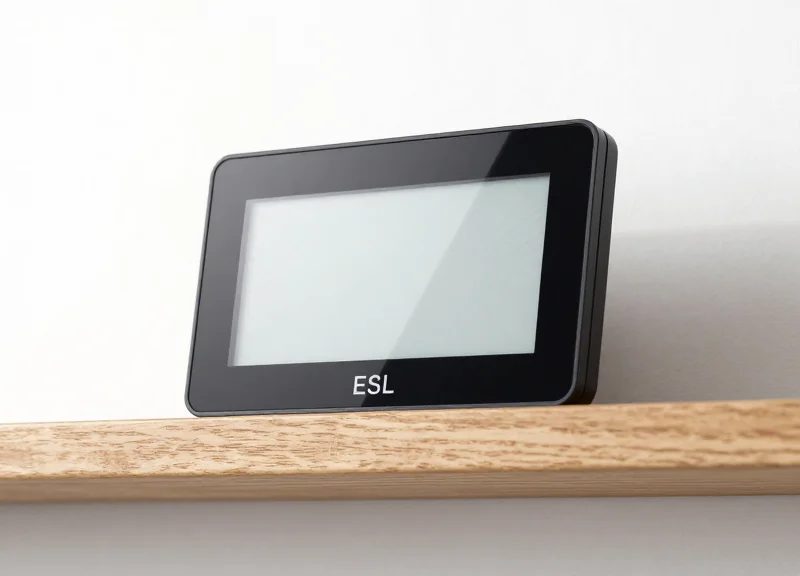
In the 2026 retail landscape, dynamic pricing is defined as the automated adjustment of book prices in real-time based on market demand, competitor movements, and local inventory levels. By utilizing Electronic Shelf Labels (ESL) integrated with a central management system, bookstores can eliminate the labor-intensive process of manual re-stickering, allowing for instantaneous price updates across thousands of titles. This agility ensures that physical bookstores can maintain price parity with online giants while capitalizing on the high-intent foot traffic generated during specific literacy festivals or seasonal promotions.
| Feature | Traditional Paper Labeling | ESL Dynamic Pricing |
|---|---|---|
| Update Speed | Hours/Days (Manual labor) | Seconds (System-wide) |
| Price Accuracy | Low (Prone to human error) | 100% (POS Synchronization) |
| Promotional Agility | Static / Scheduled weeks in advance | Reactive / Real-time flash sales |
| Customer Trust | Lower (Discrepancy at checkout) | Higher (Label matches system) |
Beyond simple price matching, the strategic advantage of ESL lies in its ability to leverage 'Hyper-Local Scarcity.' For instance, if a specific title gains viral momentum on social platforms like TikTok or during a regional author tour, the system can automatically adjust margins based on remaining shelf stock tracked by RFID. This creates a sophisticated ecosystem where the bookstore functions with the same algorithmic efficiency as a digital marketplace, but with the added value of an immersive physical experience. An expert tip for 2026: Use ESL to display 'Social Proof'—such as real-time star ratings or 'Trending Today' badges—alongside the dynamic price to increase conversion rates by up to 15%.
Can ESL help clear out slow-moving inventory?
Absolutely. Systems can be programmed to trigger 'Happy Hour' discounts or progressive markdowns on titles that haven't moved in a set period, significantly increasing inventory turnover without requiring staff intervention.
Does dynamic pricing alienate loyal customers?
When executed transparently, it does the opposite. By showing that prices are synchronized with the lowest market rates, customers feel confident they are getting a fair deal without needing to 'showroom' on their mobile devices.
What is the ROI on ESL for a mid-sized bookstore?
Most retailers see a full ROI within 14 to 18 months, primarily driven by a 90% reduction in pricing labor costs and a 3-5% increase in overall gross margins through optimized promotional timing.
Interactive Shelving: Bridging the Digital and Physical Gap

Interactive shelving in the 2026 bookstore landscape refers to the use of Electronic Shelf Labels (ESL) and RFID technology to create a 'phygital' environment where physical books are augmented by digital metadata. By embedding dynamic QR codes and NFC triggers into shelf-edge displays, retailers can provide instant access to book reviews, author interviews, and multimedia samples, effectively turning a static storage unit into an active discovery zone that replicates the information density of an e-commerce platform.
In the traditional retail model, the 'moment of discovery' often leads to friction: a customer finds a book but must pull out their phone to search for reviews or price comparisons, often leading them away from the physical store's ecosystem. Interactive shelving closes this loop. By presenting curated, high-value digital content directly at the point of purchase, bookstores retain the customer's attention, providing the social proof and context needed to finalize a sale on the spot.
| Feature | Traditional Paper Labels | Interactive ESL Hybrid Systems |
|---|---|---|
| Content Depth | Price and Title only. | Live ratings, QR links to bios, and audio snippets. |
| Customer Engagement | Passive observation. | Active interaction via smartphone sync. |
| Conversion Tracking | Impossible to measure 'browsing' intent. | Trackable QR scans provide data on high-interest titles. |
| Cross-Channel Sales | None. | Direct links to purchase digital or audiobook versions. |
- Social Proof Integration: ESLs can pull live star ratings from platforms like Goodreads or the store's own community, giving browsers immediate confidence in niche titles.
- Audiobook Previews: A simple scan allows a customer to hear a 30-second sample of the audiobook narrated by the author, bridging the gap between physical and digital formats.
- Author Connectivity: Interactive displays can highlight 'Author of the Week' with links to exclusive video content or upcoming local signing events.
Expert Insight: In 2026, the most successful bookstores will treat their shelving as a 'Contextual Content Delivery Network' (CCDN). By analyzing the 'scan-to-purchase' ratio on specific ESL tags, retailers can identify 'high-interest, low-conversion' titles. This data-driven insight allows managers to adjust pricing or shelf placement in real-time—a level of granularity previously only available to online giants like Amazon.
Do customers find QR codes on shelves intrusive?
Modern ESL designs use high-resolution E-ink that mimics paper. The QR codes are discreetly integrated into the layout, appearing only when relevant to minimize visual clutter.
How does interactive shelving impact store Wi-Fi?
Most RFID-ESL hybrid systems operate on sub-GHz frequencies or dedicated Zigbee networks, ensuring that customer-facing Wi-Fi remains fast and stable.
Can these systems support multiple languages?
Yes. Interactive shelving can detect a user's smartphone language settings upon a QR scan and deliver the book summary or review in their native tongue.
Operational Efficiency and Labor Optimization
By 2026, operational efficiency in bookstores will be defined by the elimination of 'invisible labor'—the hundreds of hours staff spend annually on manual price tagging and inventory reconciliation. The RFID-ESL hybrid system serves as a force multiplier, automating the tedious back-end logistics so that the human element of bookselling can return to the forefront. In this optimized environment, labor is not reduced, but reallocated from low-value mechanical tasks to high-value intellectual contributions like community curation and personalized reader advisory.
| Operational Task | Traditional Manual Method | RFID-ESL Hybrid System (2026) |
|---|---|---|
| Full Store Inventory | 24-48 hours (requires closure/overtime) | 15-30 minutes (via handheld RFID sweep) |
| Price Updates (1,000 SKUs) | 10-15 labor hours (printing/peeling/sticking) | Instant (via centralized cloud update) |
| Misplaced Book Recovery | Reactive (found by chance or during audit) | Proactive (Geofencing alerts for 'mis-shelved' items) |
| Staff Focus | 70% Logistics / 30% Customer Service | 10% Logistics / 90% Curation & Events |
The true ROI of this technology is found in the 'Curatorial Shift.' When a bookstore manager no longer needs to manage a team of label-stickers, they can manage a team of literary influencers. This shift addresses the retail industry's chronic turnover issues by providing staff with more engaging, creative work. Expert Tip: Use the 'Saved Labor Hours' metric to fund a 'Bookseller-in-Residence' program, where staff are paid to read and review upcoming releases, directly fueling your store’s social media and recommendation engines.
Does automating these tasks lead to job losses for bookstore employees?
No; rather than eliminating roles, it evolves them. In a competitive 2026 landscape, the value of a physical bookstore is its human expertise. Automation handles the 'robot work' so humans can do the 'human work'—event planning, niche curation, and deep-dive consultations.
How long does it take to train staff on the RFID-ESL ecosystem?
Modern systems are designed with 'smartphone-native' interfaces. Basic proficiency usually takes less than four hours, as the system eliminates the need to learn complex SKU-searching or manual auditing procedures.
What is the biggest operational hurdle when transitioning to this hybrid system?
The primary challenge is the initial 'Data Hygiene' phase. Ensuring your legacy POS database is clean before syncing with RFID tags is critical for 99.9% accuracy.
Unique Insight: The 'Ambient Productivity' Effect. By 2026, the most successful bookstores will utilize RFID data to create 'heat maps' of staff movement versus customer density. This allows for 'Precision Staffing'—placing your best genre experts in the right sections at the exact time data shows high-intent browsing, a level of operational nuance that was previously impossible without significant manual observation.
The Evolution of Loss Prevention in Modern Bookstores
In 2026, bookstore loss prevention has moved beyond traditional Electronic Article Surveillance (EAS) to a sophisticated RFID-ESL hybrid model that identifies precisely which titles are leaving the store and when. By embedding RFID tags into books and syncing them with Electronic Shelf Labels (ESL), retailers can now differentiate between a legitimate sale and 'shrinkage' at the exit gate, allowing for high-security protocols that do not compromise the open, inviting atmosphere essential to the modern literary experience.
| Feature | Legacy EAS Systems | Modern RFID-ESL Hybrid |
|---|---|---|
| Identification | Generic alarm trigger | Specific Item-level SKU tracking |
| Accuracy | High false-alarm rate | 99.9% precision via digital handshaking |
| Customer Experience | Visible, bulky security tags | Invisible, embedded RFID threads |
| Inventory Impact | Manual audit required after loss | Instant inventory update upon exit |
The synergy between RFID and ESL creates a 'Contextual Security' layer. While the RFID tag tracks the physical movement of the book, the ESL acts as a local sentinel. Modern sensors can detect when an unusual number of high-value titles are removed from a shelf simultaneously—a tactic often used in 'sweep' thefts. This triggers a silent alert to staff handhelds, enabling a customer-service-oriented intervention rather than a confrontational security response. This shift from 'hard security' to 'intelligent awareness' preserves the sanctity of the bookstore as a community hub.
- The 'Invisible Thread' Insight: A unique advancement in 2026 is the adoption of RFID-embedded bookmarks and binding threads. Unlike traditional stickers, these are nearly impossible to remove without damaging the book, significantly reducing 'tag swapping'—a common tactic where thieves move a low-price ESL-synced tag to a premium hardcover.
- Automated Reconciliation: When an item passes through the exit gate without a 'sold' status in the POS system, the cloud-based inventory immediately flags that specific copy as missing, rather than waiting for an annual physical count.
- Dynamic Risk Profiling: AI-driven ESLs can automatically update their security sensitivity based on local crime data or peak hours, increasing surveillance during high-risk windows without affecting low-traffic periods.
Does RFID technology violate reader privacy?
No. In accordance with 2026 data standards, RFID tags are 'killed' or anonymized at the point of sale. They serve as inventory and security tools within the four walls of the shop but do not track the customer after the purchase is finalized.
How do RFID gates differ from old security pedestals?
Modern gates are often integrated into the store's architecture (floor-mats or overhead sensors), removing the psychological barrier of 'jail-cell' style pedestals while providing better coverage.
Can these systems prevent organized retail crime (ORC)?
Yes. By identifying patterns of theft across multiple branches through shared cloud data, bookstores can identify professional theft rings and share specific SKU-loss data with law enforcement instantly.
Data-Driven Literacy: Predictive Analytics for Curated Collections

Data-driven literacy represents the next frontier in physical retail, where bookstores leverage real-time behavioral data captured through RFID-ESL hybrid systems to forecast community reading interests. By analyzing 'shelf interaction' metrics—such as how often a book is picked up versus how often it is purchased—retailers can move beyond reactive restocking to predictive curation. In 2026, this means bookstores function less like static warehouses and more like dynamic reflections of the local neighborhood's intellectual curiosities.
| Metric | Traditional Bookstore | 2026 Data-Driven Bookstore |
|---|---|---|
| Stock Logic | Based on national bestsellers and past sales. | Based on local 'dwell-time' and real-time interaction data. |
| Inventory Cycle | Monthly or quarterly audits. | Daily automated reconciliation via RFID. |
| Curation Style | Generic/One-size-fits-all. | Hyper-local and community-specific. |
| Shelf Life | Static until manual removal. | Dynamic pricing/placement based on interest decay. |
Expert Insight: The 'Dwell-to-Purchase' Ratio. One unique advantage of the RFID-ESL ecosystem is the ability to track 'The Ghost of the Lost Sale.' In traditional retail, if a customer picks up a book, reads the back, and puts it back, that data is lost forever. In a smart bookstore, the system identifies that a specific title has high engagement but low conversion. This signals to the manager that either the price point (adjustable via ESL) is too high or the community interest exists but the specific title isn't hitting the mark—allowing for instant strategic pivots that were previously impossible.
- Data Capture: RFID sensors embedded in shelves track every movement of a book, logging when it is removed and whether it reaches the Point of Sale (POS).
- Trend Identification: Predictive algorithms analyze spikes in localized interest, such as a sudden demand for 'Climate Fiction' in university towns versus 'Sustainable Gardening' in suburban areas.
- Automated Reordering: The system automatically triggers purchase orders for titles trending within the specific micro-location, ensuring high-demand books never go out of stock.
- ESL-Driven Promotion: Electronic Shelf Labels automatically highlight 'Community Favorites' or 'Trending Locally' badges based on the analyzed data, driving further engagement.
Does this technology track individual customers?
No. The focus is on aggregate movement data and anonymized shelf interactions to protect reader privacy while optimizing stock.
How does predictive analytics help small independent bookstores?
It levels the playing field by allowing small owners to compete with big-box algorithms, ensuring their limited shelf space is occupied only by books their specific community wants to buy.
Can these systems predict future literary trends?
By aggregating data across a network of smart stores, publishers can see emerging genre interests weeks before they hit national bestseller lists.
Sustainability and the Green Bookstore of the Future
Sustainability in the bookstore of 2026 is defined by the transition from physical waste-heavy operations to a digital-first infrastructure where Electronic Shelf Labels (ESL) and Radio Frequency Identification (RFID) work in tandem to minimize environmental impact. By replacing thousands of disposable paper price tags with ultra-low-power E-ink displays and utilizing RFID to eliminate overstocking and transportation inefficiencies, bookstores are evolving into 'Green Hubs' that prioritize circularity and carbon neutrality. This shift not only reduces the carbon footprint of the supply chain but also aligns with the values of modern readers who demand ethical consumption patterns.
| Sustainability Metric | Traditional Bookstore Model | RFID-ESL Hybrid Model |
|---|---|---|
| Paper Consumption | High (Thousands of labels and promotional flyers) | Near Zero (Digital updates via E-ink displays) |
| Supply Chain Waste | High (Overstocking due to inventory blind spots) | Minimal (Just-in-time logistics powered by RFID) |
| Energy Efficiency | Standard (Frequent manual labor and lighting) | High (ESL batteries last 10 years; automated monitoring) |
| Circular Economy | Limited (Difficulty tracking used book lifecycles) | Advanced (RFID tracking for buy-back and resale) |
How do ESLs specifically reduce a bookstore's carbon footprint?
Electronic Shelf Labels eliminate the need for chemical-laden adhesive stickers and paper tags. In a medium-sized bookstore, this prevents the waste of approximately 15,000 to 20,000 paper labels annually, while the E-ink technology ensures power is only used during price updates, not for maintaining the image.
Can RFID technology actually prevent book pulping?
Yes. By providing 99.9% inventory accuracy, RFID allows publishers and retailers to move toward 'print-on-demand' and 'micro-replenishment' strategies. This prevents the overproduction that currently leads to millions of unsold books being pulped or landfilled every year.
Are these digital systems themselves eco-friendly?
Modern ESL and RFID components are increasingly designed for the circular economy, featuring replaceable batteries and recyclable housings. The energy saved through logistics optimization far outweighs the carbon cost of the hardware manufacturing.
Unique Insight: The 'Hidden Carbon Cost' of a price change is often overlooked. In traditional retail, a store-wide sale requires staff to drive to the location, print labels using chemical toners, and manually apply them—a process with a measurable CO2 impact. By 2026, the 'Zero-Touch' bookstore will use RFID to detect when a book has been on the shelf too long and automatically trigger a price reduction via ESL. This creates a self-optimizing ecosystem that maximizes the 'literacy-per-liter' of fuel used in the shipping process, ensuring every printed book finds a home instead of a recycling bin.