In the high-stakes world of modern logistics and retail, 'close enough' is no longer sufficient. As we approach 2026, the industry standard has shifted toward near-perfect data integrity. Achieving 99.9% inventory accuracy requires more than just high-quality tags; it demands a deep understanding of RF physics, specifically antenna polarization. Whether you are managing a high-density warehouse or a fast-paced retail floor, the choice between Circular and Linear polarization is the single most critical factor in determining whether your system captures every signal or misses critical assets. This guide leverages 20 years of Silicon Valley engineering expertise to help you navigate this technical crossroad.
The Physics of RFID Polarization: A 2026 Perspective

In the context of 2026 RFID deployments, polarization refers to the geometric orientation of the oscillations of the electromagnetic wave's electric field (E-field) as it propagates through space. For an RFID reader to successfully energize a passive tag, the antenna's polarization must align with the tag’s antenna orientation; a mismatch here results in significant power loss, often measured as 'Polarization Mismatch Loss.' While traditional systems focused on simple signal strength, achieving 99.9% accuracy requires mastering the physics of wave phase and vector alignment to ensure consistent energy transfer regardless of tag placement.
| Feature | Linear Polarization | Circular Polarization |
|---|---|---|
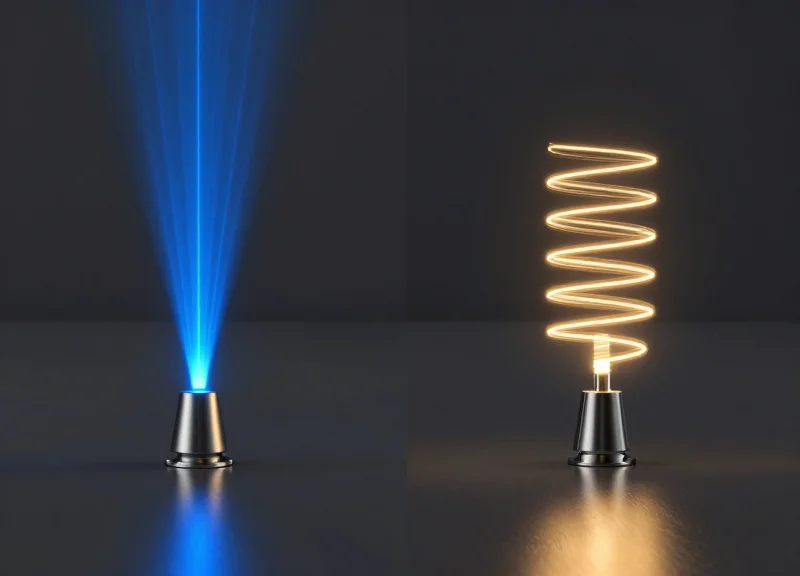
| Wave Shape | Single plane (Horizontal or Vertical) | Rotating helix (360-degree spread) |
| Range | Longer (Higher concentrated gain) | Shorter (Energy split across planes) |
| Tag Orientation | Must match antenna plane | Orientation independent |
| Ideal Use Case | High-speed conveyors, uniform portals | Retail shelves, chaotic bin sorting |
The fundamental physics of 2026-era RFID chips, such as those utilizing ultra-high sensitivity thresholds, has changed the math on polarization. We no longer just look at 'peak gain'; we look at the axial ratio. In circular polarization, the wave rotates as it travels. If the axial ratio is close to 1 (0 dB), the antenna is perfectly circular, meaning it delivers uniform power regardless of whether a tag is tilted. As we push toward 99.9% accuracy, the physics of multipath interference—where waves bounce off metallic surfaces and flip their polarization—becomes the primary hurdle for engineers.
What is Polarization Mismatch Loss?
This is the reduction in power transfer when the tag and reader antennas are not aligned. For linear antennas, a 90-degree misalignment can result in a theoretical 100% signal loss, effectively making the tag invisible to the reader.
Why does '2026' tech matter for polarization?
Modern ICs have higher sensitivity, but denser deployments create more RF noise. Choosing the right polarization physics is now about 'noise floor management' rather than just 'raw power.'
How does Faraday Rotation affect RFID?
In specific high-interference environments, the polarization of a wave can actually rotate as it passes through materials. Circular polarization is naturally more resilient to these shifts than linear polarization.
Expert Tip (The Silicon Valley Insight): In 2026, we are seeing the rise of 'Polarization-Agile' software-defined antennas. Instead of choosing between linear or circular at the hardware level, these systems use dual-linear elements and phase-shifting logic to dynamically 'hunt' for the tag's orientation. If you are aiming for 99.9% accuracy in a high-density warehouse, your physics strategy should prioritize antennas with an axial ratio of less than 1.5 dB to minimize the 'dead zones' caused by wave rotation.
Linear Polarization: High Power, High Precision
Linear polarization in RFID refers to an antenna design that radiates electromagnetic energy in a single, fixed plane—typically horizontal or vertical. Because the energy is not divided across multiple axes like its circular counterparts, linear antennas provide a significantly more concentrated and powerful signal. This allows for the maximum possible read range (often exceeding 12-15 meters) and the ability to penetrate dense materials, provided the tag's antenna is perfectly aligned with the reader's signal plane.
| Feature | Linear Polarization Performance | Impact on 99.9% Accuracy |
|---|---|---|
| Read Range | Maximum (Long Range) | Critical for high-clearance portals and dock doors. |
| Energy Density | Highest concentration per plane | Ensures penetration through liquids or metals. |
| Alignment Sensitivity | High (Must match tag) | Requires strict process control for tag placement. |
| Signal Narrowness | Highly focused beam | Reduces 'stray reads' from adjacent inventory zones. |
The 'High Precision' aspect of linear polarization comes from its directional focus. In a modern 2026 warehouse environment, this is leveraged to create 'surgical' read zones. For instance, in a high-density racking system where items are only inches apart, a linear antenna can be positioned to read a specific shelf without picking up tags from the aisle behind it. This spatial precision is the secret weapon for reaching 99.9% accuracy in environments where data noise is a major hurdle.
- Primary Advantage: Unmatched distance and power. If you need to read a tag from the top of a 30-foot pallet rack, linear is your only reliable option.
- Primary Constraint: The 'dead zone' effect. If a tag is rotated 90 degrees relative to the antenna's plane, the read rate can drop to near zero.
- Expert Tip for 2026: Utilize 'Dual-Linear' configurations. By mounting one horizontal and one vertical linear antenna on the same portal, you gain the power of linear polarization while covering both major axes, effectively bypassing the orientation limitation.
Unique Insight: In the current era of Phase-Based Localization, linear antennas are increasingly preferred for robotic inventory scanning. Because the linear signal is more predictable and less prone to multi-path interference than circular waves, AI-driven robots can use the 'Received Signal Strength Indicator' (RSSI) from linear antennas to calculate a tag's exact coordinate within centimeters—a level of precision that circular antennas struggle to maintain at distance.
Can I use linear antennas for handheld scanners?
Generally, no. Handheld use cases involve unpredictable wrist movements and tag orientations, making circular polarization the safer choice for mobile workers.
Why does linear polarization help with liquid-filled products?
Liquids absorb RF energy. The higher energy density of a linear wave provides the extra 'punch' needed to bounce a signal back from a tag placed near or on liquid containers.
Does 2026 tech solve the alignment issue?
Partially. Modern software-defined radio (SDR) can now rapidly cycle the polarization of an antenna, though a true fixed linear setup remains the most efficient for specialized, high-speed conveyor applications.
Circular Polarization: The Versatile All-Rounder
Circular polarization is an RFID antenna configuration where radio waves are emitted in a continuous 360-degree helical rotation, moving through space like a corkscrew. Unlike linear antennas that focus energy on a single plane, circular antennas emit energy on both horizontal and vertical planes simultaneously. In the context of 2026 inventory standards, this 'spatial diversity' is the primary mechanism for achieving 99.9% accuracy, as it allows the antenna to capture tag data regardless of whether the RFID tag is oriented vertically, horizontally, or at an obscure angle.
- Orientation Independence: Because the wave is always rotating, it will eventually align with the tag's dipole antenna, regardless of how the tag is placed on the item.
- Reduced Installation Complexity: Engineers do not need to precisely align the antenna with the workflow, making it ideal for portals, dock doors, and ceiling-mounted readers.
- Multipath Resilience: Circularly polarized waves are better at handling signal bounces off metal or concrete, which are common in industrial 2026 smart-warehouses.
| Feature | Circular Polarization | Linear Polarization | Impact on Accuracy |
|---|---|---|---|
| Tag Orientation | Any (360°) | Fixed Plane Only | Circular prevents missed reads in chaotic piles. |
| Read Range | Moderate (8-12m) | Long (15m+) | Linear reaches further but misses misaligned tags. |
| Energy Density | Split across planes | Concentrated | Circular requires slightly more power for the same distance. |
| Best Use Case | Retail/Mixed Pallets | Rail/Choke Points | Circular is superior for 99.9% inventory audits. |
Expert Insight: The 'Axial Ratio' Trap. In 2026, the secret to 99.9% accuracy isn't just choosing circular; it's monitoring the Axial Ratio. This metric measures how close the wave is to a perfect circle (1.0 dB is ideal). Many low-cost antennas claim circular polarization but have an axial ratio of 3.0 dB or higher, effectively making them 'elliptical.' In high-density environments, an imperfect axial ratio leads to 'dead zones' where tags won't read even if they are within range. For mission-critical inventory, always spec antennas with an Axial Ratio below 1.5 dB.
What is the difference between RHCP and LHCP?
Right-Hand Circular Polarization (RHCP) and Left-Hand Circular Polarization (LHCP) refer to the direction of rotation. If using two antennas facing each other, mixing these can reduce interference, but for most standard inventory, either works as long as the tag is passive.
Does circular polarization work better with high-memory tags?
Polarization affects the power transfer (link budget). While it doesn't change the memory capacity, the consistent power delivery of circular waves ensures that high-memory chips complete their 'handshake' without dropping the connection mid-read.
Can I use circular antennas for conveyor belts?
Yes, but if the items are always perfectly flat and aligned, linear might be more efficient. Circular is preferred if items are tumbling or placed randomly on the belt.
Direct Comparison: Read Range vs. Orientation Flexibility
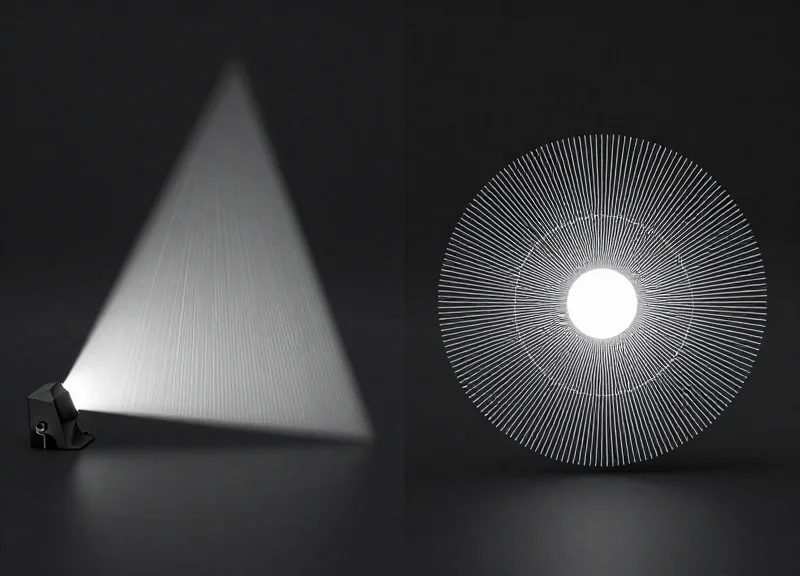
In the quest for 99.9% inventory accuracy, the fundamental trade-off lies in energy distribution: Linear polarization concentrates electromagnetic energy into a single, focused plane to maximize reach, whereas Circular polarization splits that energy to rotate through space, maximizing the probability of a hit. To choose correctly, engineers must decide if their environment requires a 'sniper rifle' approach (Linear) for long-distance, predictable tag paths, or a 'floodlight' approach (Circular) for chaotic, multi-angle item movement.
| Performance Metric | Linear Polarization | Circular Polarization |
|---|---|---|
| Theoretical Read Range | 100% (Maximum Power Density) | ~70% (3dB Split Loss) |
| Orientation Sensitivity | High (Must align with antenna) | Low (360-degree flexibility) |
| Read Zone Shape | Narrow, elongated 'pencil' beam | Wide, bulbous 'donut' volume |
| Multipath Resilience | Lower (Prone to null zones) | Higher (Effective in reflective areas) |
| Best Application | Portal/Conveyor (Fixed tags) | Retail/Warehouse (Random orientation) |
The Veteran's Insight: The 20dB Mismatch Rule. A critical factor often overlooked in spec sheets is the 'Polarization Mismatch Loss.' If a linearly polarized tag is rotated 90 degrees relative to a linear antenna, the signal loss can exceed 20dB—effectively making the tag invisible even at close range. In contrast, circular antennas maintain a constant, predictable 3dB loss regardless of the tag's rotation. For 2026 systems aiming for six-sigma reliability, the 'insurance' provided by circular polarization's consistency often outweighs the raw distance advantage of linear setups.
How does polarization affect signal penetration in dense pallet loads?
Linear polarization typically offers better penetration through dense or semi-liquid materials because the concentrated wave energy is more effective at overcoming attenuation, provided the tags are aligned correctly.
Can I use Linear antennas to achieve 99.9% accuracy?
Yes, but only in highly controlled environments like automated conveyor tunnels where mechanical guides ensure every tag passes the antenna at a precise 0-degree offset.
Is 'Circular' always better for hand-held scanners?
Almost always. Since human operators move their wrists unpredictably, a circular antenna ensures the tag is read regardless of how the staff member holds the device.
Critical Use Cases: When to Choose Linear Antennas
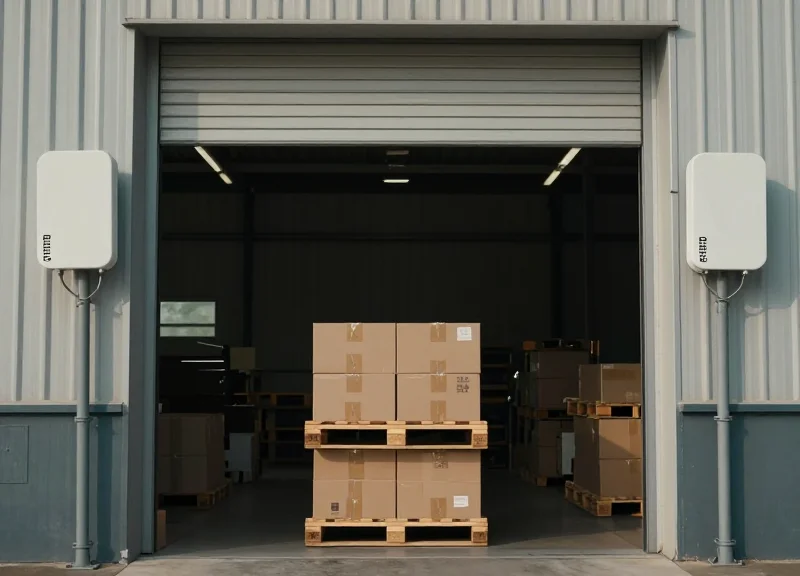
In the quest for 99.9% inventory accuracy in 2026, linear polarization is your surgical instrument. While circular antennas offer convenience for random orientations, linear antennas provide maximum energy density and read range by focusing the electromagnetic field into a single, high-intensity plane. This makes them the superior choice for 'controlled-path' applications where the tag's orientation relative to the antenna is known and consistent. By matching the antenna’s polarization to the tag’s orientation, you virtually eliminate Polarization Mismatch Loss (PML), ensuring every milliwatt of power is utilized for the backscatter signal.
| Use Case | Primary Advantage | Accuracy Driver |
|---|---|---|
| High-Speed Conveyors | Concentrated Power Beam | Faster tag energization (TTF) allows for higher belt speeds without dropped reads. |
| Portal Gates (Side-Mounted) | Extended Read Depth | Narrower beamwidth prevents 'stray reads' from adjacent dock doors while maintaining depth. |
| Fixed-Orientation Tool Tracking | Signal Penetration | High gain allows signals to penetrate through dense packaging or close to liquid containers. |
| Overhead Gantry Systems | Reduced Multipath Interference | Specific plane focus reduces signal bouncing in high-metal manufacturing environments. |
Expert Insight: The 2026 'Beam Sculpting' Trend. Modern RFID architects are moving away from 'blanket coverage' and toward 'energy sculpting.' In high-density warehouses, using linear antennas allows you to create a high-gain 'curtain' of energy. This ensures that even if a tag is partially shielded, the concentrated linear signal has the decibel overhead to force a response, a feat circular antennas often fail at when the range exceeds 5 meters.
- Analyze Tag Physics: Ensure all tags are applied to assets in a uniform orientation (e.g., all vertical). Linear antennas only work if the tag's dipole is aligned within 15-20 degrees of the antenna's plane.
- Optimize Antenna Placement: Mount the antenna so the signal plane is parallel to the tag. For conveyor belts, this usually means mounting the antenna on the side for vertical tags or overhead for horizontal tags.
- Calibrate Power for Zero Bleed: Because linear antennas have higher gain, you must tune the transmit power to ensure the read zone ends exactly where the physical workflow stops, preventing crosstalk.
What happens if a tag rotates in a linear system?
If a tag rotates 90 degrees (perpendicular) to a linear antenna's plane, the read range can drop by up to 90%, or the tag may become completely invisible to the reader. This is why strict application standards are required.
Can I use linear antennas for palletized goods?
Only if the items on the pallet are uniformly packed and the pallet always enters the read zone from the same direction. If orientation varies, a dual-linear or circular setup is safer.
Why are linear antennas often cheaper than circular ones?
They are technically simpler to manufacture as they lack the internal phase-shifting components required to create a rotating circular field. This allows for higher gain at a lower hardware cost.
Strategic Deployment: When Circular Antennas are Essential

Circularly polarized antennas are strategically essential in any RFID deployment where the orientation of the tag relative to the antenna is unknown, inconsistent, or constantly changing. By emitting an electromagnetic field that rotates 360 degrees, these antennas effectively eliminate 'dead zones' caused by orientation mismatch, making them the gold standard for high-volume retail, dense warehousing, and mobile inventory workflows where 99.9% accuracy is non-negotiable.
- Retail Apparel & Hanging Garments: In retail, garments on hangers or folded in stacks rarely maintain a uniform plane. Circular antennas capture tags regardless of whether the item is tilted, flipped, or obscured within a dense rack.
- Mixed-Pallet Warehousing: Pallets containing diverse SKUs with tags applied at various angles require circular polarization to ensure that every item is accounted for during a single pass, preventing costly shipping errors.
- Mobile Inventory Counting: When using handheld RFID sleds, the 'human factor' introduces variable angles. Circular polarization compensates for the natural arc of a worker's arm movement, maintaining a consistent link.
| Deployment Scenario | Tag Orientation | Recommended Polarization | Primary Benefit |
|---|---|---|---|
| Hanging Apparel | Random / Rotating | Circular | Eliminates orientation mismatch |
| Warehouse Search/Find | Unknown | Circular | Faster locate times in 3D space |
| Return Logistics | Chaotic | Circular | High throughput for mixed bins |
| Metal-Rich Environments | Variable | Circular | Mitigates multipath fading |
The 2026 Strategic Insight: Multipath Scavenging. While most guides focus on orientation, veteran engineers know that circular antennas excel in 'Multipath Fading' mitigation. In modern smart-warehouses filled with metal racking and automated guided vehicles (AGVs), RFID signals bounce aggressively. Circular polarization is more adept at 'scavenging' these reflected signals because the rotating field is more likely to align with a reflected wave's phase than a fixed linear field. This 'spatial diversity' is often the secret ingredient to moving from 98% to 99.9% accuracy in high-interference zones.
Will circular antennas reduce my total read range?
Technically, yes. Because the energy is split across two planes, the effective linear range is shorter than a dedicated linear antenna of the same gain. However, the 'usable' range in a warehouse is often better with circular because it catches tags that a linear antenna would miss entirely.
Can I use circular antennas for portal gates?
Yes, and it is often preferred if the items passing through the gate are not orientation-controlled (e.g., items thrown into a bin or loose on a cart).
Is there a specific 'hand' for circular polarization?
Yes, LHCP (Left Hand) and RHCP (Right Hand). In complex 2026 setups, alternating these can help reduce interference between adjacent read zones.
Achieving the 99.9% Accuracy Threshold
To achieve 99.9% inventory accuracy in 2026, enterprises must move beyond simple 'read and record' hardware setups. This elite threshold is reached through a synchronized 'Accuracy Triad': selecting the optimal antenna polarization for the specific use case, mapping the RF environment to mitigate multi-path interference, and implementing edge-based software filtering to eliminate 'stray reads' from adjacent zones.
| Accuracy Lever | Impact on 99.9% Goal | Optimization Strategy |
|---|---|---|
| Antenna Polarization | High (Prevents dead zones) | Circular for mixed orientations; Linear for fixed portal gates. |
| RSSI Thresholding | Medium (Filters stray reads) | Software-level filtering of tags with weak signal strength. |
| Environment Mapping | High (Reduces signal bounce) | Shielding reflective metal surfaces with RF-absorptive materials. |
| Tag Population Density | Medium (Prevents collisions) | Using Q-algorithm adjustments in the reader firmware. |
Expert Insight: The 'RSSI Floor' Strategy. In high-density warehouses, the biggest threat to 99.9% accuracy isn't missing a tag; it's 'ghost reads'—picking up tags from 30 feet away or through walls. By setting a Received Signal Strength Indicator (RSSI) floor in your middleware, you can programmatically ignore any tag that doesn't meet a specific decibel threshold, ensuring only items within the intended antenna's 'bore-sight' are counted.
- Site Survey & RF Audit: Use a spectrum analyzer to identify 900MHz interference from existing machinery or competing wireless systems.
- Polarization Stress Test: Test your chosen antenna (Circular or Linear) against the most difficult tag orientation in your inventory—typically tags placed flat against liquid or metal-lined packaging.
- Multipath Mitigation: Identify 'Hot Spots' where RF energy bounces off metal racking. Use Circular antennas here to ensure the phase-shifted reflected signal still has a chance of activating the tag.
- Logic-Based Filtering: Apply 'Directionality Logic' in your software. If a tag is seen by Antenna A and then Antenna B, it is moving; if seen by both simultaneously at low power, it is a stray read.
Can I reach 99.9% accuracy with only Linear antennas?
Yes, but only in highly controlled environments like conveyor belts where tag orientation is 100% predictable. In retail or general warehousing, the lack of orientation flexibility makes 99.9% nearly impossible with Linear alone.
What is the biggest 'accuracy killer' in 2026?
Signal shadowing. When one dense object (like a pallet of liquid) blocks the RF path to another, even the best Circular antenna may fail. This requires multi-antenna arrays to 'see' the item from different angles.
How often should I recalibrate my accuracy filters?
At least quarterly. Changes in warehouse layout, shelving materials, or even humidity levels can shift the RF profile of your space, necessitating an update to your RSSI thresholds.
Environmental Factors: Interference and Multipath Effects

In high-density industrial environments, environmental factors like multipath interference—where radio waves bounce off metal surfaces—and signal attenuation from liquids can significantly degrade polarization performance. While linear antennas offer greater range, they are highly susceptible to 'null zones' caused by phase cancellation when signals reflect off metallic obstructions. Conversely, circular antennas are better at capturing 'ricochet' signals in complex layouts, making them the superior choice for environments where the line-of-sight is frequently broken by moving machinery or dense inventory.
| Environmental Factor | Linear Polarization Impact | Circular Polarization Impact | Mitigation Strategy |
|---|---|---|---|
| High-Density Metal | Severe signal cancellation; high risk of dead zones. | Better resilience; utilizes reflections to reach tags. | Use circular antennas to leverage multipath propagation. |
| Liquid Containers | High absorption; requires precise tag-to-antenna alignment. | Moderate absorption; better at finding signal 'leakage'. | Increase gain or use specialized 'On-Liquid' RFID tags. |
| Physical Obstructions | Complete signal loss if tag orientation shifts. | Maintains connectivity through non-metallic barriers. | Deploy circular antennas for spatial diversity. |
The 2026 Expert Insight: Spatial Multipath Diversity. A common misconception is that multipath interference is always a negative force. In modern smart-warehousing, we leverage 'Spatial Multipath Diversity.' By 2026, high-end readers use AI-driven phase analysis to reconstruct data from reflected waves. Because circular polarization changes its 'sense' (left-hand to right-hand) upon reflecting off metal, advanced systems can now distinguish between a direct read and a reflected read, allowing for hyper-accurate X-Y-Z axis localization that was previously impossible with linear antennas alone.
How does metal interference specifically affect 99.9% accuracy goals?
Metal causes reflections that lead to multipath interference. If using linear polarization, a reflected wave might arrive 180 degrees out of phase with the direct wave, effectively canceling the signal and creating a dead zone where a tag becomes 'invisible' to the reader.
Why are circular antennas preferred for liquid-heavy environments?
Liquids absorb RF energy. Since circular polarization transmits in a rotating corkscrew pattern, it has a higher probability of 'finding' a path around or through gaps in liquid-filled pallets compared to the rigid single-plane path of a linear signal.
Can software filters compensate for environmental interference?
To an extent, yes. In 2026, RSSI (Received Signal Strength Indicator) filtering and phase-angle analysis are used to 'clean' the data, but these software fixes cannot recover a signal that was physically canceled by poor antenna polarization choice.
When designing your 2026 RFID infrastructure, perform a 'Radio Frequency Site Survey' using a spectrum analyzer. If your facility features more than 30% metallic surface area (racking, conveyors, or foil packaging), circular polarization is no longer an option—it is a requirement to prevent the signal collisions that prevent reaching that final 0.9% accuracy threshold.
Future-Proofing Your RFID Infrastructure
Future-proofing your RFID infrastructure in 2026 involves moving beyond simple hardware selection to an architecture that supports 'Polarization Agility' and increasing silicon sensitivity. As RFID integrated circuits (ICs) shrink and power requirements drop, the antenna's role shifts from merely broadcasting power to precision-mapping data in high-density environments. To ensure your 2026 deployment remains relevant through 2030, you must prioritize wide-band antenna designs (860-960 MHz) that can handle global frequency shifts and the emergence of eco-friendly, 'plastic-free' tag substrates that exhibit different dielectric properties than traditional PET inlays.
The next decade of RFID will be defined by 'Sensitivity Gains.' As reader sensitivity improves—potentially reaching -95 dBm or better—the choice between circular and linear polarization becomes less about raw power and more about noise floor management. Future-proof antennas must be able to reject multipath interference while maintaining high gain for smaller, high-performance chips like the Impinj M800 series or NXP UCODE 9xm.
| Feature | 2024 Standard | 2026+ Requirement |
|---|---|---|
| Reader Sensitivity | -80 dBm to -85 dBm | -90 dBm to -100 dBm |
| Antenna Bandwidth | Region-specific (e.g., FCC/ETSI) | Global Wide-band (860-960 MHz) |
| Tag IC Energy | Standard consumption | Ultra-low power (20% reduction) |
| Infrastructure Style | Fixed Hardware | Software-Defined Radio (SDR) Ready |
Expert Insight: The Rise of Software-Defined Polarization. While we currently choose between physical linear or circular antennas, the Silicon Valley 'vanguard' is moving toward software-controllable antenna arrays. My unique recommendation for 2026 is to look for 'Hybrid Port' antennas that allow readers to electronically toggle between horizontal, vertical, and circular modes. This prevents the 'Rip-and-Replace' cycle when your inventory layout changes from high-stacked pallets to hanging garments.
Will 2026-era tags work with older antennas?
Yes, they are backward compatible, but older antennas often lack the tuning required to maximize the high sensitivity of newer chips, potentially leading to missed reads in dense environments.
Is it worth investing in Phase-Array antennas now?
For high-ceiling warehouses or complex 3D tracking, yes. Phase-array technology allows for dynamic beam-steering, which is the ultimate form of future-proofing for irregular tag orientations.
How does 5G/Private LTE affect antenna choice?
Modern antennas must include high-rejection filters for the 900MHz band to prevent interference from nearby private LTE networks, a common issue in smart factories.
- Audit Current Substrates: Determine if your transition to sustainable packaging will change the dielectric constant of your tagged items.
- Standardize on Wide-band: Purchase antennas that cover the full 860-960 MHz range to simplify global supply chain scaling.
- Evaluate SDR Readers: Pair your antennas with Software-Defined Readers that can be upgraded via firmware to handle new air interface protocols.