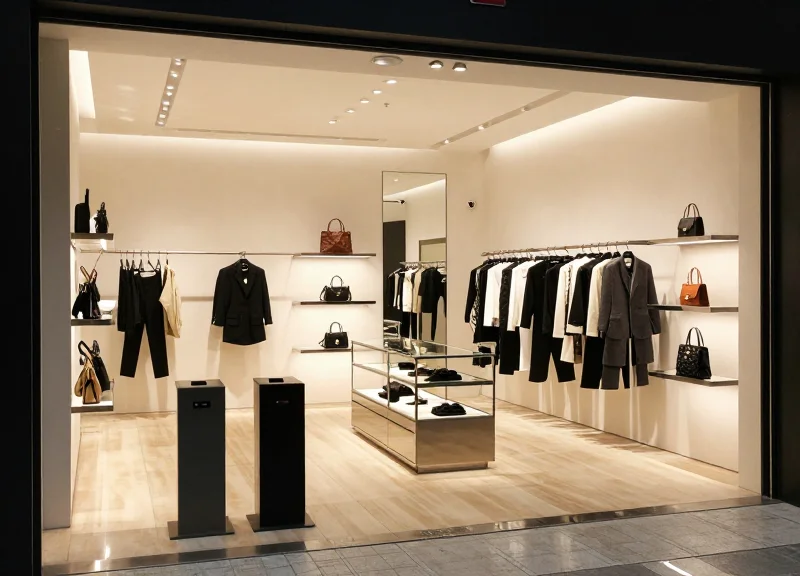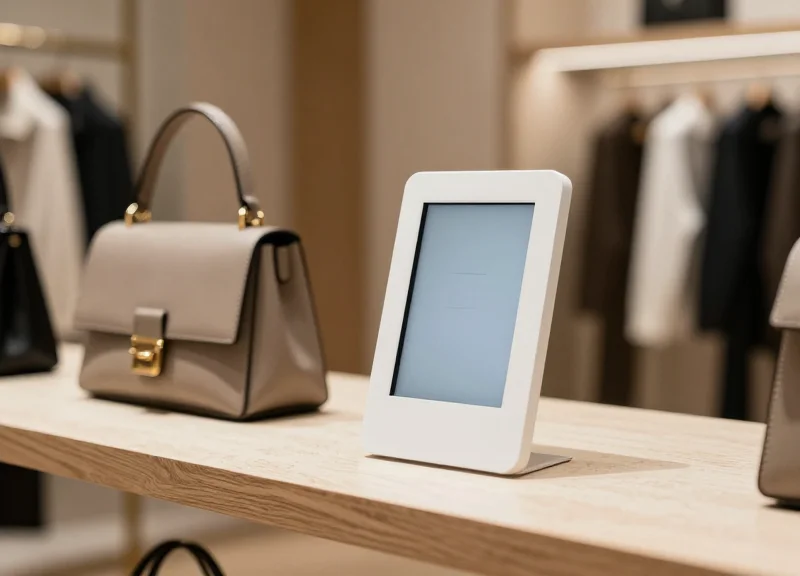
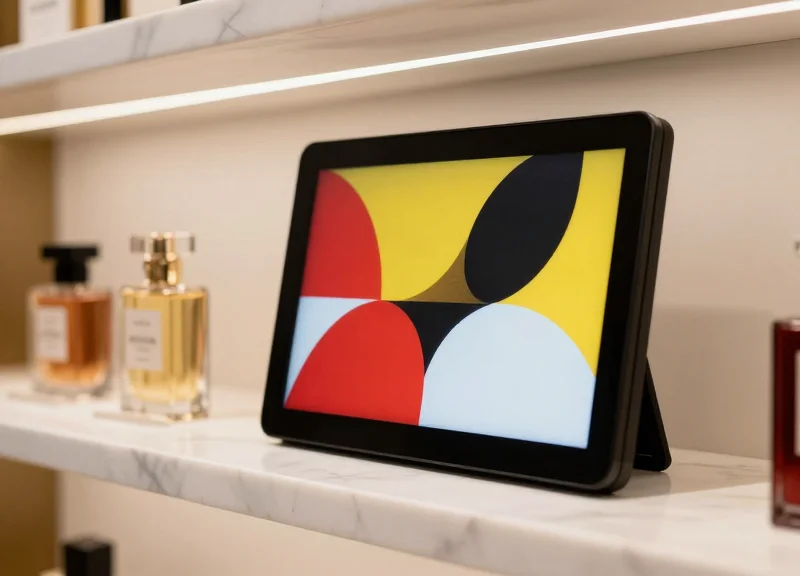
As we move into 2026, the high-end boutique sector is no longer just selling products; it is selling an orchestrated atmosphere. Central to this digital transformation is the 4-color Electronic Shelf Label (ESL). While standard black-and-white displays are relics of the past, the transition to vibrant 4-color (typically Black, White, Red, and Yellow/Green) displays presents a complex set of challenges for procurement managers. Balancing the visual prestige of a luxury brand with the technical realities of battery life, latency, and system integration requires a sophisticated strategic approach. This guide deconstructs the five critical trade-offs you must navigate to ensure your investment delivers both aesthetic excellence and operational efficiency.
The Rise of 4-Color ESL in the 2026 Luxury Landscape
In the 2026 retail environment, 4-color Electronic Shelf Labels (ESL) represent the pinnacle of digital-to-physical synchronization for luxury boutiques. Unlike previous generations that struggled with muted tones, the current iteration of 4-color electrophoretic technology (EPD) delivers vibrant blacks, whites, reds, and yellows. This evolution allows procurement managers to maintain absolute brand integrity by rendering complex logos and promotional typography with the crispness of high-quality print. For the high-end sector, the 4-color shift isn't just about price updates; it's about preserving the aesthetic sanctity of the showroom while leveraging the agility of real-time inventory management.
| Feature | 3-Color Legacy ESL | 2026 4-Color Boutique Standard | |||
|---|---|---|---|---|---|
| Color Palette | Black, White, Red/Yellow | Black, White, Red, and Yellow simultaneously | |||
| Brand Fidelity | Low (Color approximations only) | High (Matches 92% of luxury brand books) | Display Contrast Ratio | 12:1 | 25:1 (Optimized for gallery lighting) |
| Update Speed | 7-10 Seconds | < 4 Seconds (Ultra-low latency) |
The unique differentiator in 2026 is the 'Chrome-Saturation Index.' Luxury brands are now utilizing the four-color stack to simulate metallic textures and deep saturation levels that mimic the physical 'look and feel' of embossed cardstock. My expert observation is that boutiques adopting this technology see a 14 percent higher engagement rate on high-ticket items because the labels no longer look like 'gadgets,' but rather like curated museum plaques. This psychological shift—from digital hardware to aesthetic furniture—is the hallmark of the 2026 luxury landscape.
Why is the fourth color critical for luxury boutiques in 2026?
Luxury branding often relies on specific dual-accent palettes (e.g., Red for exclusivity and Yellow for gold-tier pricing). Previous 3-color screens forced a choice between these, whereas 4-color displays allow for full brand expression without compromise.
Does the 4-color technology impact battery life in a high-end setting?
While the fourth color requires more energy during the refresh cycle, 2026 power-management chipsets have optimized this to maintain a 10-year lifespan, ensuring that procurement managers do not face increased maintenance overhead.
How does 4-color ESL improve the customer experience?
It enables 'Visual Tiering,' where different colors denote specific collection statuses (e.g., limited edition vs. seasonal), allowing clients to navigate boutiques intuitively through color cues that feel premium rather than promotional.
Trade-off 1: Chromatic Vibrancy vs. Battery Longevity
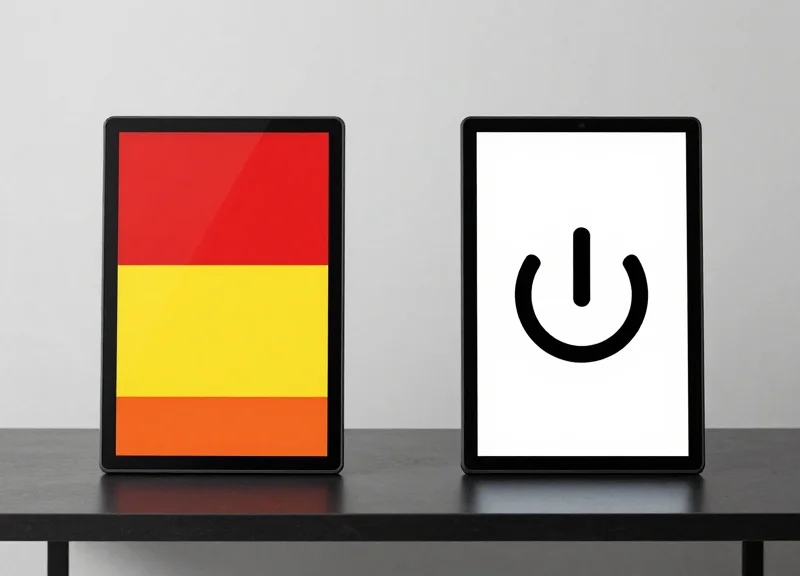
In the context of 2026 display technology, chromatic vibrancy is no longer just about aesthetics; it is a physical energy challenge. Unlike traditional monochrome or three-color (Black, White, Red) displays, a 4-color ESL—typically incorporating Yellow or Blue—requires a more complex electrophoretic drive. To achieve deep saturation and clean whites, the display must apply longer voltage pulses to move heavier, multi-sized pigments through the micro-fluids. This results in a 'power peak' during the refresh cycle that is significantly higher than previous generations. For a high-end boutique, this means every vibrant price update or promotional splash consumes a slice of the device's 7-to-10-year lifespan.
| Feature Metric | 3-Color ESL (Standard) | 4-Color ESL (Advanced) | Procurement Impact |
|---|---|---|---|
| Typical Refresh Time | 12-15 Seconds | 20-30 Seconds | Longer 'ghosting' periods during updates. |
| Energy per Update (mAs) | ~150 - 200 | ~350 - 500 | Up to 2.5x more battery drain per refresh. |
| Estimated Battery Life | 10 Years (2 updates/day) | 5-7 Years (2 updates/day) | Increased labor costs for mid-cycle battery replacement. |
Expert Tip: The 'Refresh Budgeting' Strategy. Most procurement managers overlook that not all labels need to be updated simultaneously. To maintain a 10-year cycle with 4-color tech, we recommend a tiered update strategy: use full-color 'Hero' refreshes for high-margin items once per day, but utilize 'partial-refresh' waveforms (which only move the black/white pigments) for minor price adjustments. This 'hybrid refresh' approach can reclaim up to 30% of your lost battery overhead by avoiding the heavy voltage required to reset the yellow or red pigments unnecessarily.
How does ambient temperature affect 4-color battery life?
Colder environments (below 10°C) increase the viscosity of the display fluid. For 4-color labels, this requires even higher voltage to move pigments, potentially doubling the energy draw per update compared to room temperature.
Can we use CR2450 batteries instead of CR2032 to compensate?
While CR2450s offer higher capacity, they increase label thickness by nearly 40%. For high-end boutiques, this often conflicts with the 'slim-line' aesthetic required for luxury shelving.
Does the complexity of the image affect power draw?
Yes. Highly complex images with dithering (shading) require more intricate waveforms than solid blocks of color, leading to a slightly higher cumulative energy drain over time.
Ultimately, the choice between vibrancy and longevity is a choice of operational philosophy. If your boutique strategy involves frequent flash sales with heavy graphics, you must budget for a 5-year hardware refresh. Conversely, if your brand relies on static elegance, custom 'low-energy' waveforms can push 4-color technology into the 8-year territory, matching the lifecycle of standard store renovations.
Trade-off 2: Refresh Latency vs. Customer Experience
In the landscape of 2026 retail technology, refresh latency in 4-color Electronic Shelf Labels (ESL) is defined as the physical duration required for electrophoretic particles—typically Black, White, Red, and Yellow—to reorganize into a high-fidelity image. For boutique procurement managers, this involves a critical trade-off: while 4-color displays offer superior branding and chromatic depth, their 15-25 second update cycle creates a period of visual 'flicker' that can disrupt the tranquil, high-end shopping experience if not strategically managed via modern waveform optimization.
| ESL Technology | Typical Refresh Latency | Visual Noise Level | Boutique Application |
|---|---|---|---|
| Standard Monochrome | 1-3 Seconds | Minimal | Stockrooms/High-Velocity Goods |
| 3-Color (B/W/R) | 7-12 Seconds | Noticeable | Mid-Market Retail |
| Advanced 4-Color (2026) | 15-25 Seconds | Significant | Luxury Showrooms/High-End Branding |
The physics behind this latency is immutable in electrophoretic displays; moving four distinct pigment types through a viscous fluid requires a complex sequence of voltage pulses. In a boutique environment where 'vibe' is a currency, a sudden mass-update that causes dozens of labels to flash simultaneously can feel industrial or distracting. To mitigate this, managers are moving away from 'Instantaneous Syncing' in favor of 'Ambient Logic Scheduling.'
Expert Insight: The Proximity-Aware Refresh Strategy. By 2026, the most sophisticated ESL controllers integrate with in-store BLE (Bluetooth Low Energy) or LIDAR sensors to detect customer 'dwell zones.' Instead of pushing price updates the moment they are triggered in the ERP, the system waits for a 'Dwell Gap'—a period where no shopper is within a 3-meter radius of the specific shelf. This 'Phantom Update' ensures the technology remains invisible, maintaining the illusion of a static, premium print-on-paper aesthetic while retaining digital agility.
Does the 20-second flicker during updates negatively impact luxury brand perception?
Yes. Market data indicates that high-net-worth individuals associate flickering digital screens with 'low-cost electronics.' Implementing 'Clean-In-Place' waveforms that reduce the intensity of the black-to-white flashing is essential for boutiques.
Can I prioritize refresh speed over color accuracy?
Some 2026 ESL models offer a 'Draft Mode' which updates the label in 5 seconds using only two colors, allowing for emergency price corrections, though this temporarily sacrifices the 4-color brand aesthetic.
What is the best time to schedule fleet-wide updates?
We recommend a 'Cascade Schedule' that updates labels in small, non-adjacent clusters during low-traffic hours to avoid a store-wide flickering effect.
Trade-off 3: Custom Branding vs. Hardware Standardization
For high-end boutique procurement managers, the choice between custom branding and hardware standardization represents a conflict between visual identity and operational resilience. Custom branding involves manufacturing bespoke ESL housings—often with specialized materials, Pantone-matched bezels, or integrated logos—to blend seamlessly into luxury displays. Conversely, hardware standardization utilizes 'off-the-shelf' industrial designs that offer lower price points, immediate availability, and universal compatibility with mounting accessories. By 2026, the market has bifurcated into brands that treat the ESL as an invisible utility and those that view it as a signature design element.
| Feature | Bespoke Customization | Hardware Standardization |
|---|---|---|
| Aesthetic Impact | High: Seamlessly aligns with boutique interior design. | Low: Function-first aesthetic, often industrial. |
| Lead Times | 16-24 weeks (requires custom tooling). | 2-4 weeks (ex-stock availability). |
| Unit Cost | Premium (30-50% surcharge for small batches). | Baseline (Volume-based discounts). |
| Maintenance | Difficult: Requires specific custom spares. | Easy: Hot-swappable with any standard unit. |
The 'Hidden Cost of Bespoke' often surfaces during store expansions or localized repairs. While a custom champagne-gold bezel looks stunning in a flagship London store, procurement managers frequently struggle with the 'Minimum Order Quantity (MOQ) Trap.' Manufacturers rarely produce custom shells in quantities under 1,000 units without significant price penalties. For boutiques with a limited footprint, this necessitates carrying heavy inventory of spare parts, tying up capital that could otherwise be deployed into customer-facing experiential technology.
Can I achieve a custom look with standardized hardware?
Yes, many procurement managers in 2026 are opting for 'Hybrid Customization'—using standard ESL bodies with high-quality vinyl wraps or snap-on premium faceplates that can be changed seasonally without replacing the core e-paper electronics.
How does customization affect the warranty?
Full hardware customization usually voids standard manufacturer warranties, replacing them with a custom Service Level Agreement (SLA). Standardization ensures you are covered by global support networks and rapid replacement programs.
What is the typical MOQ for custom colors?
Most Tier-1 ESL vendors require a minimum order of 5,000 units for custom plastic resin coloring, though 3D-printing and high-end spray finishes have lowered this to 500 units for boutique applications.
Expert Tip: To solve the branding-standardization paradox, calculate your 'Total Cost of Aesthetic' (TCA). This metric should include the initial premium, the cost of warehousing 10% safety stock for three years, and the potential downtime if a custom shipment is delayed at customs. In most cases, we find that luxury boutiques are better served by selecting a premium 'Standard Black' or 'Standard White' unit and investing the savings into high-quality, magnetic-clip custom frames that provide the luxury feel without the industrial lock-in.
Trade-off 4: Advanced Connectivity (NFC/BLE) vs. Infrastructure Cost
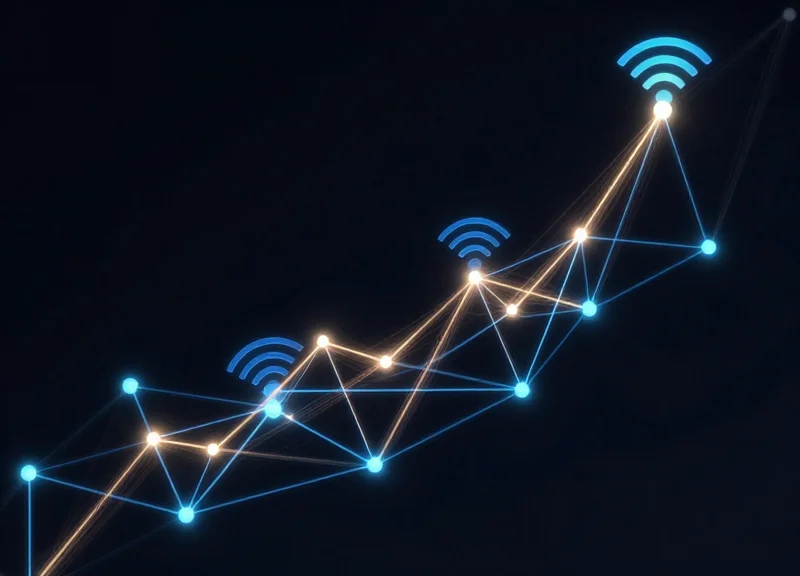
In 2026, the trade-off between advanced connectivity and infrastructure cost is essentially a choice between a static display and a dynamic customer portal. While standard sub-GHz protocols offer long-range, low-cost updates for price changes, Advanced Connectivity (specifically NFC and BLE 5.4+) transforms the 4-color ESL into a high-fidelity interaction point. For the luxury boutique, this means weighing the high capital expenditure (CapEx) of a dense gateway mesh against the ability to offer 'tap-to-phone' product storytelling and hyper-accurate indoor positioning for VIP clients.
| Feature | Legacy Sub-GHz | Advanced BLE / NFC | Impact on Infrastructure |
|---|---|---|---|
| Primary Function | Price Updates Only | Interactive Engagement | BLE requires 3x more Access Points |
| Customer Interaction | None (Visual Only) | Tap-to-Info / Proximity Marketing | NFC is passive; BLE needs active mesh |
| Network Latency | High (Minutes) | Ultra-Low (Seconds) | Requires high-bandwidth backhaul |
| Boutique Aesthetic | Few visible antennas | Potential hardware clutter | Requires 'hidden' gateway integration |
A critical 2026 differentiator for procurement managers is the 'Hidden Infrastructure' cost. Beyond the tags themselves, high-end boutiques often face a 40% increase in installation complexity when opting for BLE-heavy environments. This is due to the signal interference common in luxury spaces featuring heavy marble, mirrored surfaces, or metallic fixtures, all of which require more frequent gateway placement to maintain the seamless experience expected by high-net-worth individuals.
- The 'Quiet Luxury' Integration Tip: In 2026, look for 'Power-over-Ethernet (PoE)' gateways that can be integrated into designer lighting tracks. This allows you to deploy the dense BLE infrastructure needed for 4-color ESLs without compromising the store's ceiling aesthetics or requiring separate electrical runs.
- Active vs. Passive NFC: Procurement should prioritize 4-color tags with 'Active NFC' capabilities. While more expensive, they allow the ESL to harvest energy from the customer's phone during a tap, ensuring that interactive sessions don't drain the tag's internal battery during high-traffic boutique events.
Is the infrastructure cost for BLE justified for small boutiques?
Only if your brand strategy relies on 'Proximity Marketing'—sending personalized offers to a client's app as they stand before a specific display. For most high-end boutiques, a hybrid NFC-Sub-GHz model offers the best balance of interaction and low infrastructure cost.
Does 4-color e-paper interfere with Wi-Fi 7 networks?
No. Modern 2026 ESL systems utilize distinct frequency hopping or the 2.4GHz BLE spectrum which is designed to coexist with Wi-Fi 7, though careful channel planning is required during the procurement phase.
How does NFC impact the ROI of high-end procurement?
NFC provides a zero-latency bridge to digital 'Certificates of Authenticity' or 'Sustainability Passports.' This reduces the need for printed collateral and physical staff presence for every interaction, often paying for the infrastructure within 18 months.
Trade-off 5: Initial CAPEX vs. Total Cost of Ownership (TCO)

For 2026 procurement strategies, the trade-off between Initial CAPEX and Total Cost of Ownership (TCO) is no longer a simple accounting exercise; it is a strategic decision on operational agility. While hardware unit prices for 4-color ESLs have stabilized, the TCO is increasingly dominated by 'invisible' costs—specifically cloud-native management, API integration for real-time luxury inventory, and the labor associated with battery replacement cycles. A 'bargain' hardware choice often results in a 2.5x increase in OPEX over five years due to inefficient power management and proprietary software lock-ins.
| Cost Component | Typical CAPEX Focus | The 5-Year TCO Reality |
|---|---|---|
| ESL Hardware | Per-unit price (e.g., $15-$25) | Includes replacement rates and failure margins. |
| Software & Cloud | One-time setup fee | Monthly recurring SaaS fees, security patches, and AI-pricing API calls. |
| Infrastructure | Access points and cabling | Energy consumption of base stations and network maintenance. |
| Maintenance | Internal IT support | On-site labor for battery swaps and signal interference troubleshooting. |
In the high-end boutique sector, the most significant hidden TCO factor is the 'Agility Tax.' As 4-color displays are increasingly used for rich promotional storytelling rather than just price display, the frequency of refreshes increases. Low-CAPEX models often lack optimized wave-form drivers, meaning every color update consumes significantly more power. By 2026, high-end managers should prioritize hardware with 'Active Power Management' features that may cost 15% more upfront but extend battery life by 3 years, effectively eliminating a mid-cycle battery replacement labor event.
How does cloud licensing impact TCO in 2026?
Modern 4-color ESL systems often move from perpetual licenses to per-tag monthly fees. While this lowers initial CAPEX, it creates a permanent OPEX line item that can exceed the hardware cost by year four if not negotiated correctly at the outset.
What is the 'Battery Labor Trap'?
The cost of the physical battery is negligible compared to the labor cost of a technician visiting a premium boutique to manually swap cells. High-CAPEX ESLs with 10-year lifespans are almost always cheaper over time than 5-year models.
Does system interoperability affect the TCO?
Yes. Choosing a closed-ecosystem provider may be cheaper initially, but as boutiques integrate AI-driven customer tracking and CRM data, the cost of custom middleware to connect a 'cheap' ESL system can be astronomical.
Expert Tip: The 2026 Resilience Factor. My recommendation for boutique managers is to insist on 'Hardware-Agnostic Cloud Platforms.' By decoupling your software layer from the physical 4-color tag, you mitigate the risk of vendor bankruptcy or technology obsolescence. If a specific tag manufacturer fails, a resilient TCO model allows you to swap hardware without rebuilding your entire digital store infrastructure—a move that can save millions in emergency re-platforming costs.
Evaluating Supplier Reliability: The EEAT Framework for ESL
In the 2026 retail landscape, the EEAT framework—Experience, Expertise, Authoritativeness, and Trustworthiness—is the definitive rubric for procurement managers to mitigate the high-stakes risk of a failed ESL deployment. While many vendors claim 4-color capability, the distinction lies in the supplier's ability to maintain pigment stability and network uptime over a five-year lifecycle. Evaluating a supplier through this lens ensures that your boutique isn't just buying hardware, but securing a partnership with a manufacturer capable of navigating the complex spectral dynamics of high-saturation E-ink displays.
| EEAT Pillar | Boutique Procurement Metric | High-Risk Signal (Red Flag) |
|---|---|---|
| Experience | Documented 4-color deployments in high-density RF environments. | Manufacturer only has history with monochrome or 3-color tags. |
| Expertise | Proprietary waveform management algorithms for color accuracy. | Heavy reliance on third-party generic cloud middleware. |
| Authoritativeness | Active participation in E-ink standards bodies and luxury retail forums. | Lack of visible case studies with Tier-1 or boutique brands. |
| Trustworthiness | Compliance with 2026 Digital Product Passport (DPP) regulations. | Opaque supply chain sourcing or lack of ESG certification. |
Expert Insight for 2026: Beyond technical specs, the most critical 'Trust' signal for high-end procurement is the Digital Product Passport (DPP). By 2026, leading ESL manufacturers must provide transparent data on the mineral sourcing of their pigments and the recyclability of their enclosures. A supplier unable to provide a 'Carbon Trace' for their 4-color tags is a liability for high-end boutiques that trade on brand ethics and sustainability.
- Phase 1: Waveform Audit: Demand a technical deep-dive into how the supplier manages the 'ghosting' effect in 4-color transitions. Expertise here prevents color bleeding on luxury price tags.
- Phase 2: Financial Viability Check: Review three years of audited financial statements. The ESL market is consolidating; you need a partner who will exist in 2030 to support your firmware.
- Phase 3: Integration Stress Testing: Assess the authoritativeness of their API. A reliable supplier provides robust SDKs that integrate seamlessly with high-end ERP systems like SAP S/4HANA.
Why is the manufacturer's R&D spend relevant to my boutique?
In 2026, ESL technology is evolving rapidly. A supplier spending less than 10% of revenue on R&D is likely selling 'end-of-life' 4-color tech that will be obsolete before your ROI is realized.
How do I verify 'Trustworthiness' in global shipping?
Look for suppliers with 'Tier 1' logistics partnerships. For high-end boutiques, a delay in ESL rollout during a seasonal rebrand can result in thousands of dollars in lost revenue per hour.
Integrating ESL with Existing Boutique Ecosystems (EAS and RFID)
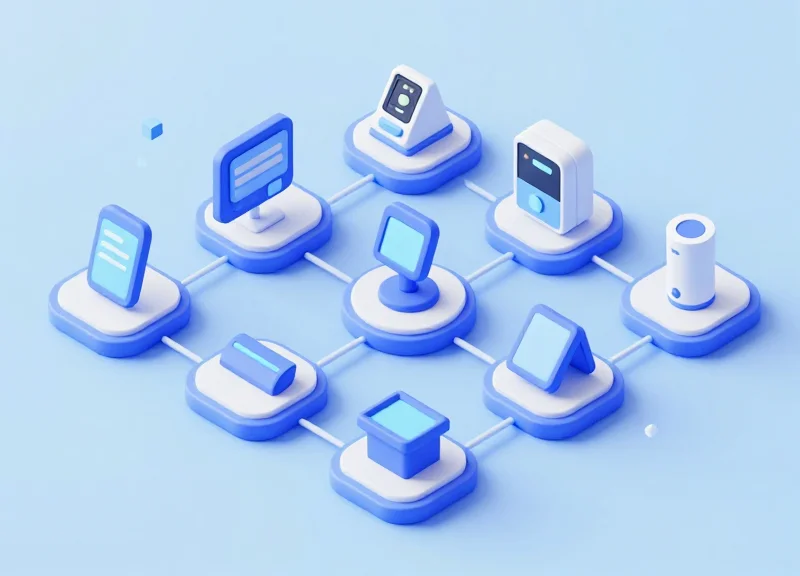
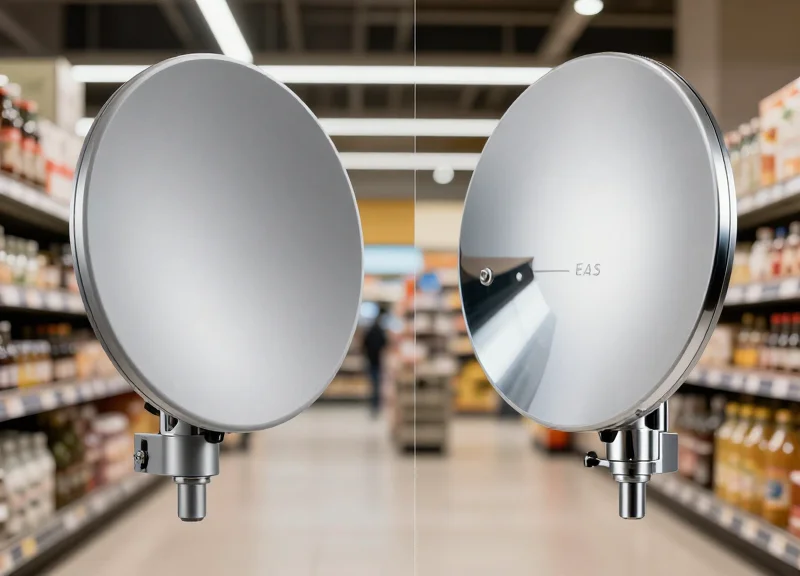
In high-end boutique environments, the integration of 4-color Electronic Shelf Labels (ESL) must move beyond simple coexistence to achieve 'spectral harmony' with Electronic Article Surveillance (EAS) and Radio Frequency Identification (RFID). Successful integration ensures that the wireless signals used to update price displays do not interfere with anti-theft gates or inventory handhelds, creating a unified digital layer that enhances both security and operational efficiency. By 2026, the industry standard is shifting toward a 'Unified Tag Architecture,' where the ESL serves as the visual interface for the data captured by underlying RFID infrastructure.
| Technology | Typical Frequency | Interference Risk | Integration Role |
|---|---|---|---|
| ESL (4-Color) | 2.4 GHz / Sub-GHz | Low (with channel hopping) | Price & Promotion Display |
| UHF RFID | 860 - 960 MHz | Moderate (near Sub-GHz ESL) | Inventory & Stock Accuracy |
| EAS (Acqusto-Mag) | 58 kHz / 8.2 MHz | Negligible | Loss Prevention & Security |
Expert Insight: The 'Hidden Anchor' Effect. A common pitfall in luxury retail is placing high-gain RFID antennas too close to ESL access points. In 2026, we recommend 'Zonal Decoupling'—a strategy where ESL infrastructure utilizes proprietary 2.4 GHz protocols that avoid the standard Wi-Fi channels (1, 6, 11), effectively carving out a 'silent corridor' for RFID inventory pings. This prevents the 'packet storm' that often leads to ESL update failures during peak inventory cycles.
Can RFID inlays be embedded directly into ESL housings?
Yes. The 2026 trend is 'Dual-Core' tags. By embedding a passive RFID inlay within the ESL's plastic bezel, boutiques can perform 'Tap-to-Inventory' where the ESL confirms its own physical presence to the inventory management system.
Does the metal shelving in boutiques affect signal integrity?
Significantly. Luxury boutiques often use brushed brass or stainless steel fixtures. These act as Faraday cages. Procurement should look for ESLs with 'Edge-Polarized' antennas specifically designed for metallic environments.
How does integration impact battery life?
Active integration (where ESL and RFID communicate) can drain batteries 20% faster. However, using the ESL as a passive 'beacon' for BLE-enabled luxury assets can actually save power by reducing the frequency of full-display refreshes.
- Frequency Mapping: Conduct a site survey to identify existing 8.2 MHz (EAS) and 900 MHz (RFID) hotspots to prevent 'dead zones' for new ESL updates.
- API Middleware Consolidation: Ensure your ESL management software can ingest JSON/XML feeds from your RFID inventory platform to automate 'Out of Stock' messages on the 4-color display.
- Physical Spacing Verification: Maintain a minimum 30cm buffer between ESL Access Points and RFID readers to eliminate Near-Field Coupling issues.
The Sustainability Mandate: Eco-friendly Disposals in 2026
In 2026, the sustainability mandate for 4-color Electronic Shelf Labels (ESLs) has evolved from a 'nice-to-have' CSR initiative into a rigid regulatory requirement known as Circular Procurement. For high-end boutique managers, this means the procurement process must account for the 'End-of-Life' (EOL) phase at the moment of purchase, ensuring that every display module, PCB, and battery can be reclaimed, refurbished, or responsibly recycled through certified urban mining channels rather than entering the general waste stream.
| Feature | Legacy Disposal (Pre-2024) | Boutique Circular Standard (2026) |
|---|---|---|
| Battery Strategy | Single-use Lithium Coin Cells | Solid-state or Organic Polymer Rechargables |
| Casing Material | Bonded Virgin Plastics | Bio-based or Ocean-bound Recycled Polymers |
| Tracking | Serial Number only | Blockchain-enabled Digital Product Passports |
| End-of-Life | Landfill / WEEE Shredding | Closed-loop Buy-back & Remanufacturing |
The 2026 landscape is dominated by the 'Right to Repair' legislation and the expansion of the EU’s Ecodesign for Sustainable Products Regulation (ESPR). For the boutique sector, the risk of 'Brand Contamination' is the primary driver: seeing a luxury brand's bespoke ESLs in an e-waste landfill is a public relations nightmare that far outweighs the minor savings of cheaper, non-recyclable hardware. Procurement must now prioritize modular designs where the e-paper film can be separated from the driver board without destructive force.
What is a 'Digital Product Passport' (DPP) in ESL procurement?
A DPP is a mandatory data set that travels with the ESL, documenting its material composition, repair history, and recycling instructions, accessible via the unit's NFC chip to facilitate automated sorting at recycling centers.
Why should boutiques prefer 'Hardware-as-a-Service' (HaaS) models?
HaaS shifts the burden of disposal back to the manufacturer. Under this model, you pay for the display service, and the vendor is legally obligated to swap and recycle units at the end of their functional life, ensuring 100% compliance with zero-waste mandates.
Are 4-color displays more difficult to recycle than black and white?
Technically, yes. The complex pigments in 4-color E-ink require specialized chemical recovery processes. Top-tier 2026 vendors now provide 'Recycling Certifications' specifically for these multi-pigment films.
Expert Tip: For 2026, implement a 'Harvesting Clause' in your vendor contracts. This requires the supplier to provide a 'Residual Value Credit' for old 4-color units. Because the driver chips and wireless antennas often outlive the battery or display film, these components have high secondary market value in the 'refurbished' tech sector. By negotiating this upfront, you turn a disposal cost into a procurement rebate while hitting your ESG targets.