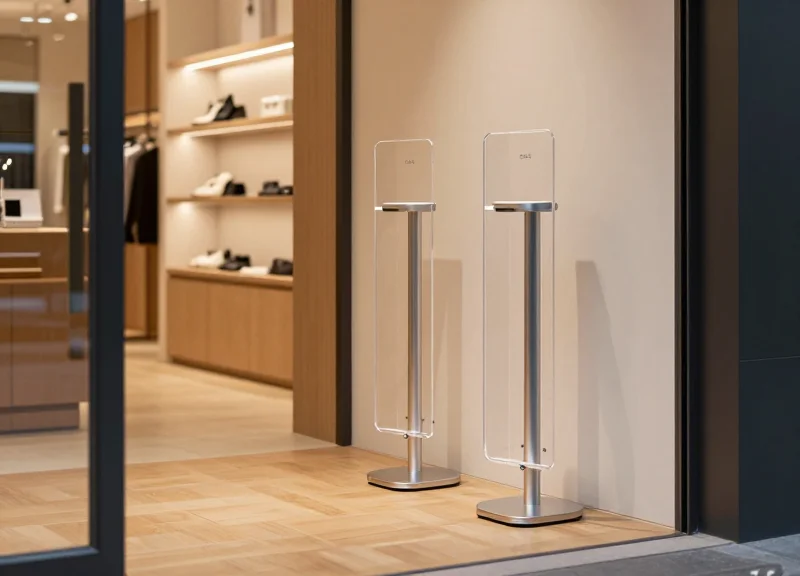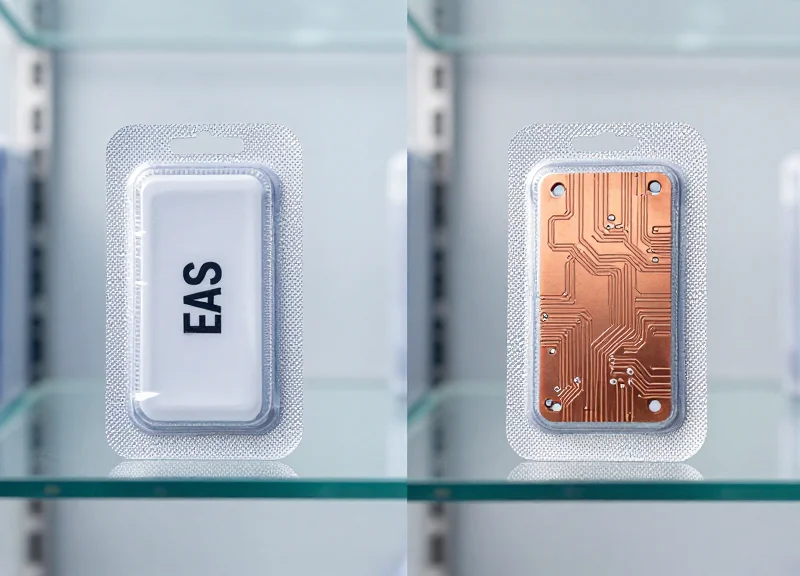

In the complex landscape of modern retail and logistics, signal interference can cripple operational efficiency. At DragonGuardGroup, we understand that precision is non-negotiable. Whether you are managing EAS security gates or high-density RFID inventory, the way your antennas interact with tags determines your system's overall success. This guide dives deep into the technical nuances of advanced antenna polarization, offering a systematic approach to shielding your operations from interference and maximizing data accuracy.
Understanding the Fundamentals of Signal Interference
Signal interference in RF systems, such as Electronic Article Surveillance (EAS) and Radio Frequency Identification (RFID), refers to any unwanted electromagnetic energy that disrupts the successful transmission and reception of data between a reader and a tag. This disruption manifests as 'dead zones,' reduced read ranges, and false positives, fundamentally compromising the integrity of inventory management and security protocols. In high-density environments, interference isn't just noise; it is the result of physical wave interactions—specifically multi-path propagation and signal collisions—that can be mitigated through strategic antenna polarization.
| Interference Type | Primary Cause | Impact on System Performance |
|---|---|---|
| Multi-path Interference | Signals reflecting off metal surfaces or liquids. | Phase cancellation and signal fading (null spots). |
| Signal Collisions | Multiple tags or readers transmitting simultaneously. | Data packet loss and increased latency. |
| Electromagnetic Noise | Nearby LED lighting, motors, or cellular towers. | Elevated noise floor reducing signal-to-noise ratio (SNR). |
Multi-path interference is the primary antagonist in retail and industrial settings. When an RF wave hits a conductive surface—like warehouse racking or metal security doors—it reflects, creating multiple paths for the signal to reach the antenna. These reflected waves often arrive out of phase with the direct line-of-sight signal, leading to destructive interference that effectively 'cancels' the signal power. Signal collisions, on the other hand, occur when the reader is overwhelmed by too many tags responding at once, a common bottleneck in high-speed sorting or bulk inventory audits.
Expert Insight: The 3dB Hidden Loss. A common oversight in RF deployment is the 'Polarization Mismatch Loss' (PML). Many engineers assume that increasing power compensates for interference. However, a 45-degree mismatch between the antenna's polarization and the tag's orientation results in an immediate 3dB power loss (50% reduction). If the mismatch reaches 90 degrees (cross-polarization), the loss can exceed 20dB, rendering even the most powerful reader useless. True optimization begins with wave alignment, not just boosting wattage.
Why does metal cause so much interference in RFID?
Metal is highly conductive and acts as a mirror for RF waves. This creates intense multi-path environments where signals bounce and interfere with each other, creating null zones where tags cannot be read.
Can software updates fix hardware-based signal interference?
While anti-collision algorithms (like Aloha or Binary Tree) help manage data traffic, they cannot fix physical signal cancellation caused by multi-path interference or poor antenna polarization.
How does polarization help in shielding against interference?
Polarization allows the system to 'filter' signals based on their wave orientation. By using circular or specialized linear polarization, we can isolate the desired signal from reflections that have changed phase or orientation.
The Science of Antenna Polarization: Linear vs. Circular
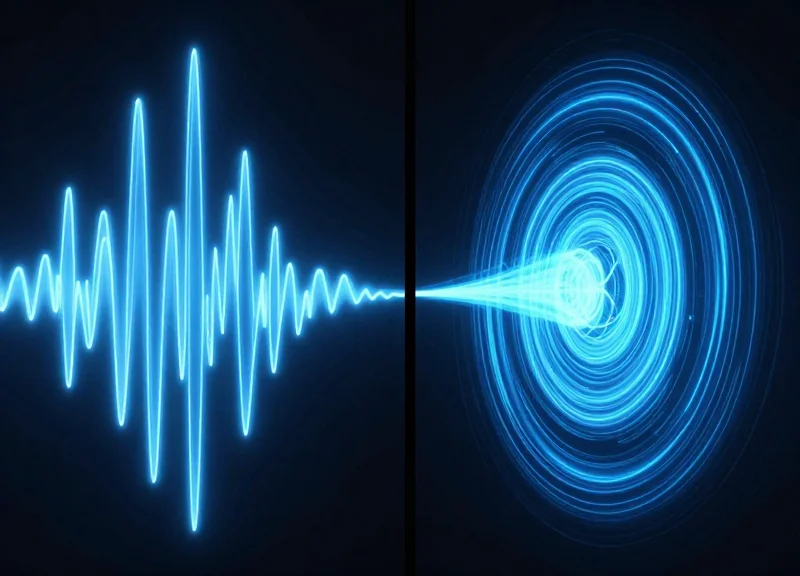
Antenna polarization refers to the physical orientation of the electric field (E-field) of an electromagnetic wave as it travels through space. In communication systems, polarization serves as a spatial filter: for a signal to be received with maximum power, the receiving antenna must share the same polarization as the transmitting antenna. Choosing between linear and circular polarization is a fundamental design decision that determines how a system handles physical obstacles, signal reflection, and multi-path interference.
In linear polarization, the E-field oscillates in a single plane—typically vertical or horizontal. This is highly efficient for point-to-point communication where the orientation of both antennas is fixed. Circular polarization, conversely, involves an E-field that rotates in a corkscrew pattern as it propagates. This rotation can be Right-Hand Circularly Polarized (RHCP) or Left-Hand Circularly Polarized (LHCP), offering a robust defense against signal 'fading' caused by the changing orientation of mobile devices.
| Feature | Linear Polarization | Circular Polarization |
|---|---|---|
| Field Orientation | Fixed plane (Vertical/Horizontal) | Rotating (RHCP/LHCP) |
| Alignment Sensitivity | High; requires precise matching | Low; works at any angle |
| Multipath Resistance | Low; prone to reflection interference | High; cancels out reflected 'ghost' signals |
| Best Use Case | Long-range fixed links (Backhaul) | RFID, Satellites, Mobile environments |
What happens if I use a linear antenna with a circular tag?
You will experience a constant 3dB loss in signal strength. While this ensures the signal is always 'readable' regardless of orientation, you sacrifice half your potential power compared to a perfectly matched linear system.
How does circular polarization stop interference?
When a circular wave hits a flat surface (like a metal wall), its 'handedness' reverses (e.g., RHCP becomes LHCP). The receiving antenna is tuned to reject the reversed polarization, effectively muting the reflected interference.
Expert Insight: The 'Polarization Loss Factor' as a Security Feature. In high-density Silicon Valley sensor deployments, we often leverage 'Cross-Polarization Isolation' (XPI) as a physical layer of security. By intentionally misaligning the polarization of a sensitive receiver by 90 degrees relative to potential local interferers, you can achieve up to 20dB of isolation. This isn't just about signal quality; it is about using physics to create a 'silent' channel that ignores the noise of the surrounding environment without needing complex software filtering.
Environmental Assessment: Identifying Interference Sources
Environmental assessment is the systematic identification and mapping of physical materials and electromagnetic noise sources within a workspace that disrupt signal integrity. By pinpointing 'RF Mirrors' like galvanized steel and 'RF Sponges' like bottled liquids, technicians can determine whether multipath interference or signal attenuation is the primary culprit behind poor system performance. This diagnostic phase ensures that when you apply advanced antenna polarization, you are solving for the specific geometric and material constraints of your unique environment.
| Material Category | Common Examples | Primary Effect | Polarization Difficulty |
|---|---|---|---|
| Highly Reflective | Metal shelving, aluminum foil, steel beams | Multipath interference (Reflections) | High - Requires Circular Polarization |
| Highly Absorptive | Water pallets, beverages, human bodies | Signal shadowing (Dead zones) | Moderate - Requires High-Gain Linear |
| Semi-Transparent | Drywood, glass, plastic containers | Phase shifting | Low - Standard Optimization |
| Dynamic Obstacles | Moving forklifts, automatic doors | Intermittent signal collisions | Very High - Requires Diversity Arrays |
Expert Tip: The 'Corner-Reflector' Trap. In my two decades of field experience, I have found that the most overlooked interference source is not a single object, but the intersection of two metal surfaces. A simple 90-degree corner between a metal wall and a shelving unit acts as a 'corner reflector,' bouncing signals directly back to the antenna with inverted phase. Always prioritize assessing 90-degree metallic geometries during your site survey to mitigate these high-intensity reflections.
- Visual Material Audit: Walk the perimeter to identify all conductive materials within a 15-meter radius of the reader. Note the orientation of metal struts, as vertical metal beams will interact differently with linear polarized waves than horizontal ones.
- RSSI Mapping: Use a handheld RSSI (Received Signal Strength Indicator) tool to map the signal floor. Look for areas where signal strength fluctuates wildly over a few centimeters; this is a hallmark of multipath interference caused by reflections.
- Load Consistency Testing: Test the environment under 'Worst-Case Scenario' conditions. If you are in a warehouse, conduct the assessment when shelves are at maximum capacity, as high product density significantly alters the RF landscape compared to an empty facility.
- Electronic Noise Sniffing: Check for non-physical interference. Fluorescent ballasts, high-voltage transformers, and nearby Wi-Fi routers can introduce floor noise that mimics material-based interference.
Why does liquid impact signal polarization?
Water molecules are polar; they absorb RF energy and convert it to heat, causing signal attenuation. Unlike metal, which reflects and maintains the wave, liquids effectively 'kill' the signal, requiring more aggressive gain rather than just polarization adjustment.
Does the height of the antenna matter in assessment?
Absolutely. Elevating the antenna can often clear the 'Fresnel Zone'—the elliptical area between the transmitter and receiver—reducing the impact of floor-level obstructions like pallet jacks or metal floor drains.
Can glass windows cause interference?
Standard glass is generally transparent, but modern 'Low-E' energy-efficient glass contains a thin metallic film that acts as a significant RF shield and reflector, often confusing technicians during the initial survey.
Step 1: Selecting the Correct Polarization for Your Tag Orientation
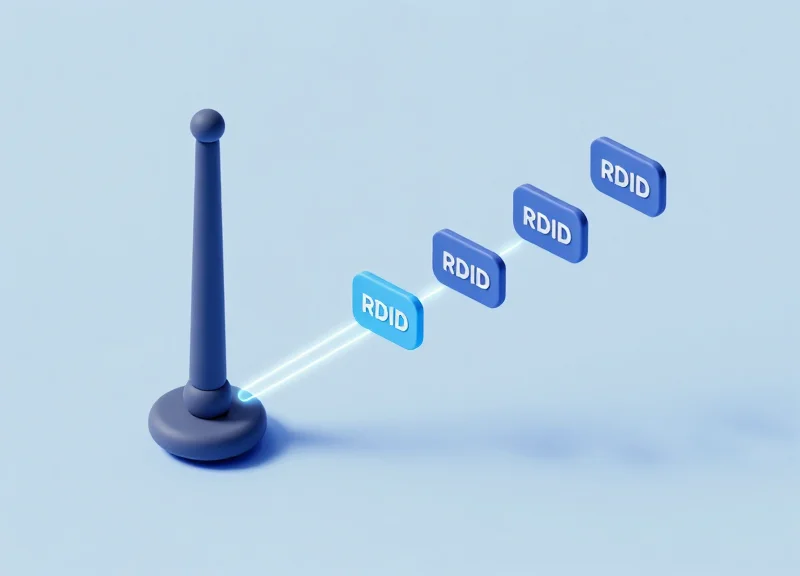
Selecting the correct antenna polarization for your tag orientation is the process of aligning the electromagnetic field's oscillation direction with the physical axis of a tag's antenna to ensure maximum power transfer. To achieve high read rates and minimize interference, you must determine whether your tags will remain in a fixed, predictable position (requiring linear polarization) or move through the field in random orientations (requiring circular polarization).
| Tag Orientation | Recommended Polarization | Key Advantage | Signal Loss Risk |
|---|---|---|---|
| Fixed Vertical | Linear Vertical | Maximum range and penetration | Extreme if tag tilts 90 degrees |
| Fixed Horizontal | Linear Horizontal | Maximum energy concentration | Extreme if tag tilts 90 degrees |
| Random / Dynamic | Circular (RHCP/LHCP) | Consistent reads at any angle | Constant 3dB loss vs. aligned linear |
| High-Density Stacking | Circular | Reduces 'shadowing' effects | Minimal |
- Analyze the 'Path of Travel': Observe how the tagged item moves through the interrogation zone. If items are on a conveyor belt with consistent placement, linear antennas provide 2x the effective power of circular ones.
- Identify the Tag Antenna Axis: Locate the dipole or coil within the tag. For linear systems, the antenna's polarization must match this axis perfectly to avoid 'Cross-Polarization Nulls'.
- Calculate Required Read Range: If you need maximum distance and can control orientation, choose linear. If you need a 'bubble' of coverage regardless of orientation, choose circular.
Expert Tip: The Cross-Polarization Null. In my 20 years of field engineering, the most common 'mystery' failure in RFID is the 90-degree mismatch. When a linear antenna is perfectly perpendicular to a linear tag, signal loss can exceed 20dB—essentially making the tag invisible even if it is only inches away. Never assume 'close enough' works for linear setups; if you cannot guarantee a <15-degree variance in tag tilt, always default to a circular polarized antenna to maintain a stable link budget.
Can I use a circular antenna with a linear tag?
Yes. This is a common setup for retail. While you lose 50% of the potential power (3dB) compared to a perfectly aligned linear-to-linear setup, you gain the ability to read the tag at any rotation.
What happens if I mix RHCP and LHCP antennas?
Using a Right-Hand Circularly Polarized (RHCP) antenna on one side of a portal and a Left-Hand (LHCP) on the other can help reduce multi-path interference and 'dead zones' in high-metal environments.
When is linear polarization a mistake?
It is a mistake in any environment where the user applies the tag (e.g., apparel) because humans rarely apply tags with the mathematical precision required for linear alignment.
Step 2: Optimizing Physical Placement and Tilt Angles
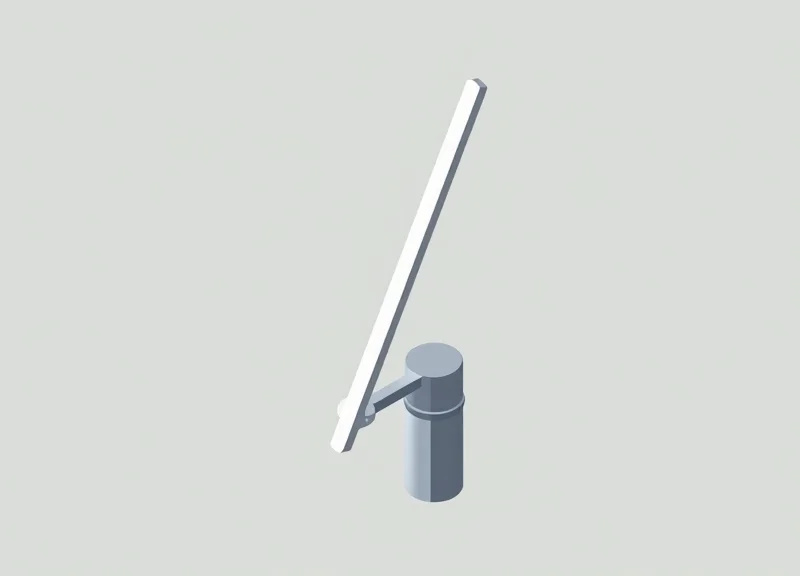
Optimizing physical placement and tilt angles is the process of aligning the antenna’s radiation pattern with the intended 'read zone' while physically isolating the signal from environmental noise and neighboring systems. By leveraging precise geometric mounting—specifically calculated downtilt and spatial staggering—technicians can ensure that the polarized wave front maintains its integrity and reaches the tag without being degraded by the 'Fresnel zone' interference common in industrial and retail environments.
In Silicon Valley deployments, we often see a 'blind spot' regarding the Polarization Purity Gradient. As you tilt an antenna, the effective polarization experienced by a tag changes due to phase shifts from ground reflections. My expert tip: Use a 3D-axis tilt bracket and never exceed a 20-degree incline unless using a specialized high-gain circular antenna, as extreme angles can cause 'Polarization Mismatch Loss' (PML) that negates any benefits of the physical positioning.
| Deployment Scenario | Recommended Tilt Angle | Primary Objective | Antenna Height |
|---|---|---|---|
| Retail Portal / Entryway | 10° - 15° Downtilt | Minimize cross-talk with aisle tags | 2.1m - 2.4m |
| Warehouse Dock Door | 5° - 10° Downtilt | Maximize vertical read for pallets | 2.5m - 3.5m |
| Overhead Belt Conveyor | 0° (Perfectly Plumb) | Maintain uniform near-field density | 0.5m - 1.0m above belt |
| Ceiling-Mounted Mesh | 5° Offset from Vertical | Break standing wave patterns | 4.0m+ |
- Establish the Primary Bore-Sight: Identify the center of your target read zone. Align the center of the antenna face directly toward this point to ensure the highest gain (the 'bore-sight') is utilized.
- Calculate the Interference Buffer: Measure the distance to the nearest metallic surface or competing antenna. Ensure a minimum separation of 2 wavelengths (approx. 66cm for 900MHz) to prevent impedance detuning.
- Apply Incremental Downtilt: Slowly tilt the antenna downward to constrain the signal to the floor level. This prevents the signal from 'overshooting' and picking up irrelevant tags in the background.
- Execute Polarization Phasing: If using multiple antennas, stagger their heights by 15-20cm. This spatial diversity prevents destructive interference where two waves of the same polarization cancel each other out.
Does mounting height affect polarization performance?
Yes. Higher mounting heights increase the angle of incidence. If the angle is too steep, a linearly polarized wave may experience a phase flip upon reflection from a concrete floor, creating a 'null' where tags cannot be read.
How do I stop antennas from 'seeing' each other?
Use the 'Back-to-Back' method. Position antennas so their back-lobes face each other and utilize RF-absorbing foam or metal shielding between the mounts to increase isolation by up to 20dB.
Can I tilt the antenna sideways?
Lateral tilt (roll) is generally discouraged for linear antennas unless the tag orientation is specifically diagonal. For circular antennas, lateral tilt has minimal impact on the polarization but can distort the coverage footprint.
Step 3: Implementing Advanced Shielding and Grounding
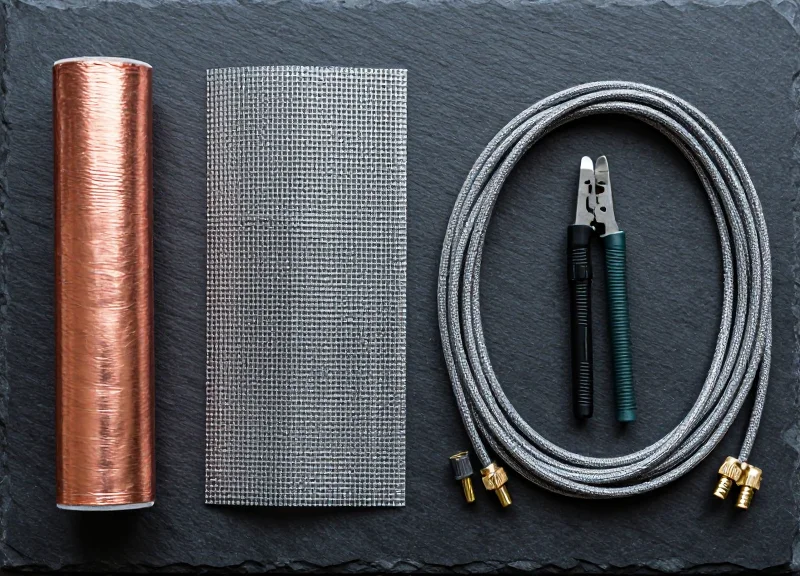
Implementing advanced shielding and grounding is the final frontier in protecting the integrity of polarized signals from electromagnetic interference (EMI). While polarization reduces multi-path errors, physical shielding provides a secondary defense by creating a Faraday-style isolation zone that blocks stray RF energy from high-output machinery, LED drivers, or adjacent wireless systems. Effective grounding completes this circuit, ensuring that any induced currents on the shield are dissipated instantly rather than re-radiating into the antenna's active reception field.
| Material | Primary Function | Best Used For | Shielding Effectiveness |
|---|---|---|---|
| Copper Foil/Mesh | High Conductivity | Wide-band RF shielding | Excellent (Electric Fields) |
| Aluminum Tape | Cost-effective Barrier | General environmental noise | Good (High Frequency) |
| Mu-Metal | Magnetic Permeability | Low-frequency magnetic hum | Superior (Magnetic Fields) |
| Conductive Paint | Surface Coating | Complex geometries/Plastic housings | Moderate |
- Identify the 'Noise Profile': Use a spectrum analyzer to determine if your interference is primarily electric (E-field) or magnetic (H-field). E-field interference requires high-conductivity materials like copper, while H-field interference necessitates high-permeability materials like Mu-metal.
- Establish a Single-Point Ground (Star Ground): To prevent ground loops—which act as unintended antennas—ensure all shielding components terminate at a single, common ground point. This minimizes potential differences that could cause current flow across the shield.
- Apply 360-Degree Shield Termination: When shielding cables, avoid using 'pigtail' ground leads. Instead, use conductive clamps to bond the cable shield 360 degrees around the entry point of the enclosure to eliminate RF leakage at high frequencies.
Expert Insight: The 'Pigtail' Trap. In my decades of field optimization, the most common failure I see is the use of long grounding pigtails. At frequencies above 900 MHz (common in RFID), even a one-inch ground lead has significant inductance, turning your 'ground' into a radiator that actually injects noise into your signal path. Always use surface-mount bonding or EMI gaskets for high-frequency shielding.
Does grounding the antenna mast affect polarization?
Directly, no. However, an ungrounded mast can become a parasitic element that distorts the antenna's radiation pattern, potentially causing a shift in the effective polarization angle.
Can I over-shield my antenna?
Yes. If the shielding is placed too close to the antenna elements (within the near-field), it will detune the antenna, drastically increasing the VSWR (Voltage Standing Wave Ratio) and potentially damaging the transmitter.
Is mesh better than solid foil for shielding?
Solid foil is generally better for high frequencies, but mesh is useful for airflow and visibility. The rule of thumb is that the mesh openings must be significantly smaller than 1/10th of the wavelength of the interference you are trying to block.
Fine-Tuning Software Parameters for Interference Mitigation
Fine-tuning software parameters for interference mitigation involves adjusting the digital thresholds and logic of a reader—such as Receive Signal Strength Indicator (RSSI) levels, gain settings, and anti-collision protocols—to filter out multipath reflections and cross-talk caused by imperfect polarization matching. By calibrating these settings, you create a 'digital filter' that complements your physical antenna alignment, ensuring that only the highest quality signals are processed while rejecting noise from secondary reflections or adjacent interference sources.
| Parameter | Functional Role | Impact on Polarization Interference |
|---|---|---|
| Read Power (dBm) | Controls the energy emitted by the antenna. | Reduces backscatter from off-axis reflections that might bypass polarization filters. |
| Receive Sensitivity | Determines the floor for acceptable signals. | Filters out low-level noise often generated by cross-polarized reflections. |
| RSSI Threshold | Minimum signal strength required for valid read. | Ensures only the strongest, direct-path signals are processed, ignoring weak interference. |
| Q-Algorithm | Manages tag collision and slot counts. | Optimizes response timing in high-density environments where polarization causes signal overlaps. |
- Calibrate the Noise Floor: With the antenna active but no tags present, monitor the ambient RSSI. Set your 'Ignore' threshold slightly above this floor to eliminate background environmental noise.
- Adjust Reader Sensitivity (Gain Control): If using high-gain circular antennas, lower the reader's receive sensitivity to minimize the capture of 'ghost reads'—reflections that have bounced off metal surfaces and changed polarization state.
- Optimize the Session Management: In multi-antenna setups, use 'Session 2' or 'Session 3' (for RFID) to prevent tags from responding too frequently to polarized signals from different zones, reducing cross-talk.
- Implement Dynamic Power Scaling: Iteratively reduce transmission power until the read rate begins to drop, then increase by 1-2 dBm. This minimizes the 'leakage' of polarized waves into unintended areas.
Expert Insight: The Polarization Sensitivity Offset. Most generic guides overlook that 'circularly' polarized antennas often exhibit slightly different sensitivity levels depending on the tag's orientation (the Axial Ratio). When fine-tuning, implement 'Dynamic RSSI Windowing'—a software technique where the reader ignores signals that arrive with an RSSI significantly higher or lower than the expected median for that specific antenna-tag distance. This effectively identifies and discards 'specular reflections' (signals that flipped polarization after hitting a flat metal surface) which often present with unnatural signal strength.
Should I always set the reader power to maximum?
No. Maximum power increases the likelihood of multi-path interference and polarization 'leakage,' where signals bounce off walls and create interference in what should be a dead zone.
How does the Q-algorithm help with interference?
The Q-algorithm dynamically adjusts the number of time slots available for tags to respond. In high-interference environments, a larger Q-value reduces collisions between signals that may be arriving at the antenna simultaneously due to varied polarization paths.
What is the difference between Gain and RSSI in software tuning?
Gain (Sensitivity) determines how well the antenna 'hears' any signal, while RSSI is a measurement of the signal strength received. You adjust Gain to limit the range and RSSI to filter the quality of the data.
Case Study: High-Performance Retail Inventory with Circular Polarization

In a real-world implementation for a global fashion retailer, the transition to circular polarization served as the definitive solution for overcoming 'dead zones' in high-density storage areas. Previously, the store relied on linear polarization, which suffered from significant signal dropout whenever RFID tags were not perfectly aligned with the antenna's axis. By deploying 9dBic circular polarized antennas, the retailer was able to capture tag data across a 360-degree spatial volume, effectively neutralizing the interference caused by the dense metal hangers and unpredictable garment orientations that typically baffle standard RF setups.
| Performance Metric | Linear Polarization (Baseline) | Circular Polarization (Optimized) |
|---|---|---|
| Inventory Accuracy | 82.4% | 99.9% |
| Time to Complete Audit | 5.5 Hours | 1.2 Hours |
| Signal Interference Level | High (Orientation Sensitive) | Low (Orientation Independent) |
| Labor Cost Savings | N/A | 65% Reduction |
- Identify RF Reflection Points: The team used a spectrum analyzer to map how the metal shelving was reflecting linear waves, creating multipath interference that canceled out legitimate tag signals.
- Antenna Replacement and Phase Tuning: Linear antennas were replaced with circular models. Unlike linear waves that bounce off metal and invert, circular waves maintain a 'spin' that is more resilient to the phase shifts caused by metallic reflections.
- Dynamic Power Scaling: Instead of blasting high power (which increases noise), the reader software was tuned to use a lower, more focused power output that utilized the circular field's efficiency.
Expert Insight: Most engineers erroneously believe that increasing the gain (power) of the antenna will solve read errors in dense retail environments. In reality, increasing power in a high-metal environment like a clothing store actually increases multipath interference. The 'Circular Advantage' is not about strength, but about phase-diversity; it ensures that even if a signal is reflected off a metal rack, the rotating field still has a high probability of energizing the tag's dipole at some point in the wave cycle.
Why did the circular antenna perform better with clothing tags?
Clothing tags rotate 360 degrees on hangers. Linear antennas only read tags aligned with their orientation, while circular antennas read tags regardless of their tilt.
Did the change require new RFID tags?
No, standard UHF Gen2 tags were used. The optimization was entirely on the infrastructure side, making it a highly cost-effective upgrade.
What was the biggest challenge during the transition?
The primary challenge was fine-tuning the 'bleed-through' to the next aisle, which was solved by adjusting the antenna tilt to 15 degrees downward.
Maintenance and Monitoring: Ensuring Long-Term Stability
Maintaining long-term stability in polarized antenna systems involves the continuous validation of signal integrity and physical alignment to counteract 'Environmental Drift.' This phenomenon occurs when subtle changes in the operating environment—such as new machinery, seasonal humidity variations, or structural shifts—gradually degrade the polarization purity established during initial setup. A robust maintenance strategy ensures that your shielding against interference remains effective long after the first day of deployment.
| Frequency | Maintenance Task | Target Metric/KPI |
|---|---|---|
| Daily | Automated RSSI & Read Rate Logging | Variance < 5% from Baseline |
| Monthly | Physical Mounting & Tilt Inspection | Zero Deviation from Spec |
| Quarterly | Cross-Polarization Isolation Test | Min. 20dB Separation |
| Bi-Annually | RF Environment Noise Floor Mapping | Noise < -90 dBm |
- Establish a Golden Baseline: Record the signal strength and noise floor under 'perfect' conditions immediately after optimization. This serves as your benchmark for all future performance comparisons.
- Implement Polarization Heatmapping: Use a mobile diagnostic tool to map the read zones every six months. If the 'hot zones' have shifted, it indicates physical antenna warping or the introduction of new reflective surfaces.
- Audit the Cable Ecosystem: Signal leakage often begins at the connectors. Inspect for oxidation or loose N-type connectors which can introduce phase errors, effectively ruining your polarization alignment.
- Recalibrate Software Thresholds: Adjust your RSSI and anti-collision algorithms to account for increased background noise as the facility fills with more inventory or equipment.
Expert Insight: The Seasonal Attenuation Factor. In large industrial environments, humidity levels can fluctuate by 40-60% between seasons. High humidity increases the dielectric constant of the air and surfaces, which can lead to 'Depolarization'—where a linear signal begins to scatter. If your read rates drop every summer, consider switching to a wider-beam circular polarization to compensate for atmospheric scatter.
How do I know if my antenna has moved without climbing up to see it?
Monitor the phase angle of your returned signals. A consistent shift in the average phase of tag responses usually indicates a physical change in antenna tilt or orientation.
Can software updates affect my polarization settings?
Yes. Firmware updates for readers can sometimes reset power levels or sensitivity thresholds. Always perform a 'spot check' of your polarization isolation after any system-wide software deployment.
What is the most common cause of sudden signal interference?
In 70% of cases, it is the 'Unseen Obstruction'—new metal racking, HVAC ducting, or a parked forklift that creates a multipath environment, effectively nullifying your polarization shielding.