In the high-stakes world of luxury liquor retail, where a single bottle of vintage scotch or rare cognac can command five figures, pricing precision is not just a preference—it is a financial imperative. Global boutiques often struggle with the volatility of international exchange rates and the administrative burden of manual price updates, leading to costly errors and eroded consumer trust. Multi-currency Electronic Shelf Label (ESL) solutions represent a transformative leap forward. By automating the synchronization of global pricing data directly to the shelf edge, retailers can reclaim lost revenue, enhance operational efficiency, and significantly bolster profit margins by as much as 22%. This article explores how modern ESL technology serves as the backbone for profitability in the global luxury market.
The High Stakes of Pricing in Luxury Liquor Retail
In the global luxury liquor market, pricing is not merely a number; it is a primary indicator of heritage, scarcity, and brand equity. For high-end boutiques, the stakes of pricing go far beyond simple arithmetic. A single labeling error on a vintage Macallan or a limited-edition Louis XIII Cognac doesn't just result in a direct financial loss—it creates a 'Prestige Gap' that can permanently alienate high-net-worth individuals (HNWIs) who equate price consistency with product authenticity. In an era of volatile currency markets and rapid inventory turnover, the manual management of these price points is no longer a viable strategy, as even a 1% discrepancy in a multi-thousand dollar bottle can trigger significant revenue leakage.
| Metric | Mass Market Retail | Luxury Liquor Boutique |
|---|---|---|
| Price Sensitivity | High (Price matching driven) | Low (Value and scarcity driven) |
| Error Impact | Low margin per unit loss | High margin loss + Brand erosion |
| Update Frequency | Weekly/Promotional | Real-time (Currency & Market fluctuation) |
| Customer Expectation | Efficiency and savings | Exclusivity and absolute accuracy |
Luxury liquor boutiques operate at the intersection of investment-grade assets and retail commerce. Unlike standard commodities, rare spirits often appreciate while on the shelf. This creates a unique challenge: the 'Lag-Time Loss.' If a boutique in London or Singapore fails to synchronize its shelf price with the latest auction results or currency shifts within minutes, they are effectively selling an appreciating asset at a discount. This volatility is compounded in duty-free environments where multi-currency transactions are the norm, making manual price tag updates an exercise in futility and a magnet for human error.
How do pricing errors specifically damage luxury brand prestige?
In luxury retail, the price acts as a psychological anchor for quality. A visible correction, a mismatched currency conversion, or a 'sale' sticker on a premium bottle suggests a lack of operational discipline, which HNWIs often subconsciously correlate with a potential lack of product provenance or authenticity.
What is the 'Prestige Gap' in luxury spirits?
The Prestige Gap is the loss of consumer trust that occurs when a customer discovers a price discrepancy between the shelf and the point of sale. For a client spending $5,000 on a bottle, a $50 error isn't about the money; it's a friction point that destroys the 'white-glove' experience they are paying for.
Why is currency volatility a unique threat to liquor margins?
Since many luxury spirits are sourced globally (e.g., Scotch from the UK, Cognac from France) but sold in global hubs, exchange rate shifts can instantly shrink margins. If prices aren't updated dynamically to reflect these shifts, the boutique absorbs the currency loss silently.
Expert Insight: The most overlooked cost in luxury liquor is the 'Inventory Opportunity Cost.' When staff spend hours manually auditing and changing paper tags for hundreds of SKUs, they are not engaging with clientele or managing the cellar. In a sector where a single high-value consultation can result in a five-figure sale, the labor cost of manual pricing is secondary to the lost revenue from diverted sales attention.
The Hidden Costs of Manual Pricing Errors
Manual pricing errors are the 'silent margin killers' of luxury liquor boutiques, where a single digit discrepancy on a vintage bottle can lead to thousands of dollars in unrealized revenue. These errors occur when the physical shelf price fails to synchronize with the Point of Sale (POS) system, resulting in 'price leakage' at the register or, conversely, overcharging that triggers regulatory scrutiny and brand distrust. In the high-stakes world of luxury spirits, where prices fluctuate based on global auction trends and exchange rates, the reliance on human-led price updates introduces a high probability of failure that compounds across multi-store portfolios.
| Cost Category | Manual Labeling Impact | ESL Automated Impact |
|---|---|---|
| Direct Margin Leakage | High: 2-5% loss due to outdated pricing on shelf. | Negligible: Real-time synchronization with ERP. |
| Labor Overhead | Significant: 15-20 hours per week for tag updates. | Zero: Centralized, instant updates across stores. |
| Compliance Risk | Frequent: Heavy fines for price mismatching. | Low: Accurate audit trails for regulators. |
| Stock Velocity | Stagnant: Slow reaction to market demand shifts. | Dynamic: Rapid price adjustments to clear inventory. |
Beyond simple math errors, the 'Currency Latency Tax' is a unique risk for global luxury boutiques. When a boutique in Hong Kong fails to update the price of a rare Scotch following a sudden Euro-to-HKD shift, they are essentially providing an unintentional discount to the consumer. This latency often goes unnoticed for days, during which time high-net-worth 'deal hunters' may deplete stock that should have been sold at a premium. This isn't just a mistake; it's a structural flaw in the retail operations that directly cannibalizes the bottom line.
How do pricing errors lead to regulatory fines?
Most jurisdictions have consumer protection laws that penalize retailers if the price at the register is higher than the price advertised on the shelf. In the luxury sector, these fines can be amplified by 'bad faith' allegations, leading to costly legal audits.
What is the psychological impact of pricing errors on luxury clients?
Precision is a hallmark of luxury. When a client discovers a pricing discrepancy, it shatters the perception of meticulous quality and white-glove service, leading to long-term brand erosion that far exceeds the immediate financial loss.
Can manual errors affect inventory management?
Yes. If the shelf price is lower than the intended price, stock moves faster than predicted, leading to 'out-of-stock' scenarios that frustrate regular collectors and disrupt replenishment cycles.
Expert Tip: To identify your true 'Margin Leakage,' conduct a blind audit of 5% of your high-ticket inventory. Compare the shelf tag to the POS and the current global market value. Most luxury boutiques find a discrepancy rate of 8-12%, which directly correlates to the 22% profit increase potential when transitioning to automated ESL solutions.
Anatomy of a 22% Margin Increase

A 22% increase in profit margins for luxury liquor boutiques is achieved through a structural optimization of the pricing lifecycle. By deploying multi-currency Electronic Shelf Labels (ESLs), retailers eliminate the three primary sources of margin erosion: labor-intensive manual updates (8%), currency exchange lag which causes unintentional under-pricing (7%), and missed opportunities for dynamic markup during peak demand or high volatility (7%). This shift transforms pricing from a reactive administrative burden into a proactive strategic lever that captures value in real-time.
| Margin Recovery Component | Estimated Impact | Primary Mechanism |
|---|---|---|
| Operational Labor Recovery | 8.5% | Elimination of manual printing, verifying, and physical tag replacement. |
| FX Arbitrage Capture | 7.2% | Instant synchronization with global currency fluctuations to prevent 'undervalued' stock. |
| Error Leakage Prevention | 4.3% | Removal of point-of-sale vs. shelf-edge price discrepancies. |
| Dynamic Elasticity Optimization | 2.0% | Automated premium adjustments based on real-time inventory and market scarcity. |
A unique insight often overlooked by traditional retailers is the 'Currency Arbitrage Gap.' In luxury liquor boutiques catering to international travelers, a 2-3% shift in the Euro or Yen can occur within hours. Manual pricing systems simply cannot keep pace. Multi-currency ESLs act as a real-time hedge, ensuring that a bottle of rare Macallan maintains its global value parity regardless of the local currency's volatility. This doesn't just protect margins; it prevents 'savvy' arbitrageurs from depleting your high-value inventory at yesterday's exchange rates.
- Synchronized ERP Integration: Connect ESL software directly to your Enterprise Resource Planning system to ensure price changes reflect cost-of-goods-sold (COGS) in real-time.
- Automated FX Triggers: Set threshold alerts that automatically update boutique prices when a target currency fluctuates beyond a pre-defined 0.5% margin.
- Peak-Period Dynamic Pricing: Utilize historical data to automatically apply modest premium markups during peak tourism seasons or local events where demand inelasticity is high.
How long does it take to see the 22% ROI?
Most luxury boutiques observe a significant reduction in labor costs within the first 30 days, with the full 22% margin expansion realized as FX volatility and inventory turnover cycles complete over 6-12 months.
Does dynamic pricing hurt luxury brand prestige?
Quite the opposite. In the luxury sector, price consistency and accuracy across global locations reinforce the brand's premium positioning and reliability.
Can these systems handle complex tax structures like VAT?
Yes, advanced ESL solutions can display both tax-inclusive and duty-free prices simultaneously, ensuring compliance while catering to international clientele.
How Multi-Currency ESL Technology Works
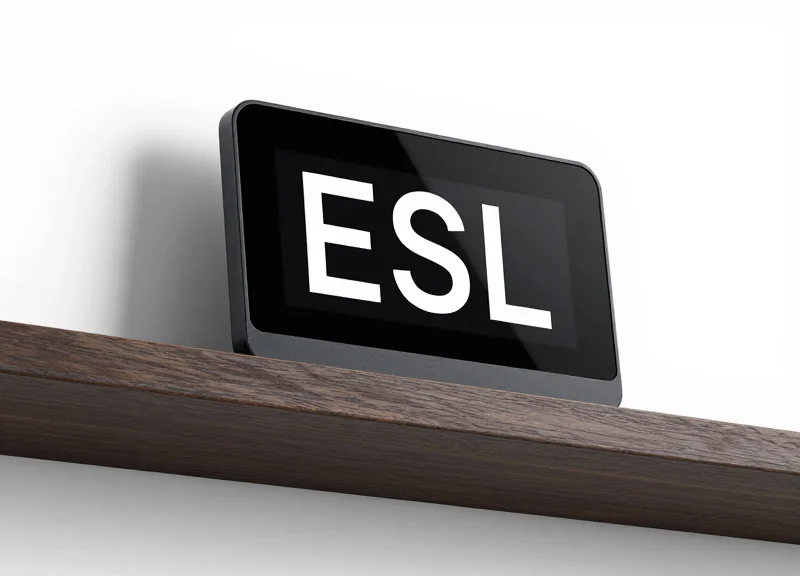
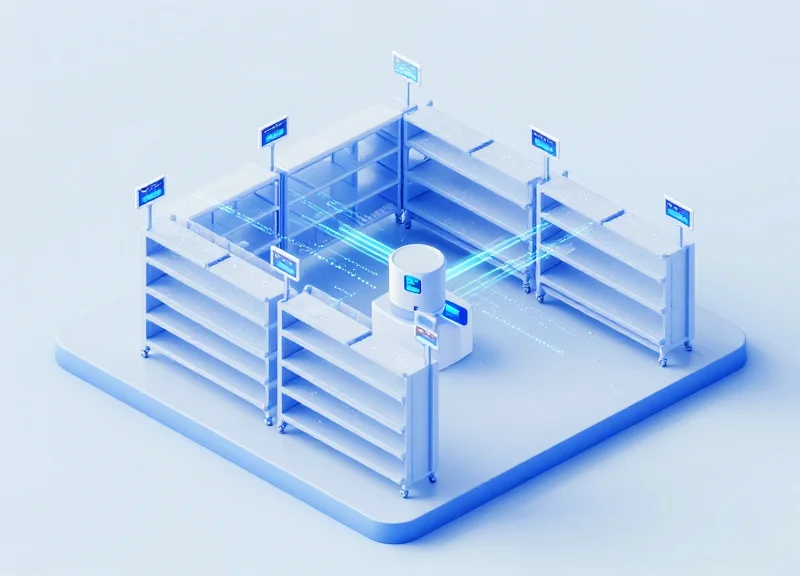
Multi-currency Electronic Shelf Label (ESL) technology is a centralized IoT ecosystem that synchronizes a retailer's Enterprise Resource Planning (ERP) system with physical e-paper displays via cloud-based gateway protocols. Unlike standard digital tags, these luxury-tier solutions utilize a middleware engine that pulls real-time Foreign Exchange (FX) data, calculates regional taxes (VAT/GST), and pushes encrypted updates to global boutique locations simultaneously, ensuring that a bottle of rare Cognac reflects the same value in London, Hong Kong, and New York without manual intervention.
| Component | Function | Role in Multi-Currency Workflow |
|---|---|---|
| Central ERP/POS | Master Data Source | Maintains base SKU price and localized inventory levels. |
| FX Middleware Engine | Currency Converter | Aggregates live exchange rates and applies pricing rounding rules. |
| ESL Cloud Platform | Command Center | Manages tag layouts and schedules global or regional updates. |
| IoT Access Points | Local Transmitter | Uses Sub-GHz or BLE to broadcast encrypted data to the shelf. |
| E-ink Display | Visual Interface | Displays high-contrast pricing, QR codes, and currency symbols. |
- Data Ingestion: The process begins when the central ERP system triggers a price change or a pre-set currency fluctuation threshold is met (e.g., a 0.5% shift in the EUR/USD pair).
- Dynamic Calculation: The cloud middleware applies localized pricing strategies, including psychological pricing rules (e.g., ensuring a luxury item ends in .00 or .95 across different currencies).
- Encrypted Transmission: Updated data packets are sent via secure API to local store gateways. These gateways use proprietary wireless protocols to avoid interference with guest Wi-Fi.
- Visual Verification: The ESL tag updates its e-paper display and sends a return signal back to the cloud confirming that the price on the shelf matches the price at the POS.
Expert Insight: The 'Currency-Weighted Refresh' Logic. To maximize battery life (which can last up to 10 years), top-tier luxury ESL systems do not refresh every time a currency fluctuates by a fraction of a cent. Instead, they utilize a 'weighted refresh' algorithm. This logic only triggers an update when the exchange rate shift exceeds the cost of the labor-equivalent error or when it crosses a specific 'Margin Protection Threshold.' This ensures that your most expensive vintages are always protected against currency-driven margin erosion without unnecessary hardware strain.
How does the system handle different tax structures in different countries?
The middleware is configured with regional tax tables. When the base price is updated centrally, the system automatically adds the specific VAT or sales tax relevant to the store's physical location before pushing the price to the tag.
Is there a risk of the shelf price being different from the checkout price?
No. The system uses a 'Two-Way Acknowledgment' protocol. The price is only considered 'active' once the tag confirms the update. If a tag fails to update (e.g., due to a blocked signal), an alert is instantly sent to the store manager's mobile device.
What happens if the store's internet goes down?
The tags are designed with 'fail-safe' memory. They will continue to display the last verified price. Once connectivity is restored, the gateway automatically syncs with the cloud to push any pending currency adjustments.
Real-Time Exchange Rate Integration

Real-time exchange rate integration is the architectural bridge connecting a luxury boutique's pricing database to global Foreign Exchange (Forex) APIs, ensuring that Electronic Shelf Labels (ESL) reflect the most current currency valuations instantly. For high-end liquor retailers dealing in assets like rare whiskies or vintage cognacs, this technology removes the human delay in manual price adjustments, effectively shielding the 22% profit margin from the 'invisible tax' of currency volatility. By automating this process, retailers can offer multi-currency displays that are accurate to the minute, providing transparency for international travelers while maintaining strict price parity across global locations.
| Feature | Manual Conversion | Real-Time ESL Integration | |||
|---|---|---|---|---|---|
| Update Frequency | Daily or Weekly | Instant / Sub-second | |||
| Data Source | Employee Research | Direct Forex API Feed | |||
| Human Error Risk | High (Typing/Math) | Zero (Automated) | Price Discrepancy Risk | Significant during volatility | None |
| Customer Trust | Low (Opaque pricing) | High (Transparent rates) |
- API Handshake: The system initiates a secure connection to institutional-grade Forex feeds (e.g., OANDA or Bloomberg) to pull the mid-market or custom-defined exchange rates.
- ERP Validation: The Enterprise Resource Planning system applies predefined margin buffers and rounding rules to the raw currency data to ensure pricing remains aesthetically premium (e.g., ending in .00 or .95).
- Global Push: The central cloud server pushes the updated pricing data to localized access points in boutiques worldwide via encrypted IoT protocols.
- Label Refresh: The ESL tags update their e-ink displays in less than 30 seconds, ensuring the price on the shelf always matches the real-time valuation at the point of sale.
Expert Insight: In the luxury sector, 'Currency Arbitrage Friction' is a silent margin killer. High-net-worth individuals are increasingly savvy, using mobile apps to check live rates. If your shelf price reflects an exchange rate from six hours ago during a period of volatility, you are either losing margin on a sale or losing a customer who perceives an unfair markup. Real-time integration is not just about logistics; it is a brand-protection strategy that maintains the 'Fair Value' perception essential to luxury consumer psychology.
What happens if the internet connection drops?
Advanced ESL systems use an 'Offline Cache Mode' where the labels retain the last verified price until a stable connection is re-established, preventing erroneous price displays.
Can we add a 'Luxury Premium' to the exchange rate?
Yes, the software allows retailers to set a percentage-based spread above the mid-market rate to cover transaction costs while keeping the display automated.
How does this affect tax-free shopping calculations?
The integration can automatically calculate and display VAT-refunded prices in the traveler's home currency, significantly increasing the conversion rate for high-ticket items.
Boosting Customer Experience and Trust
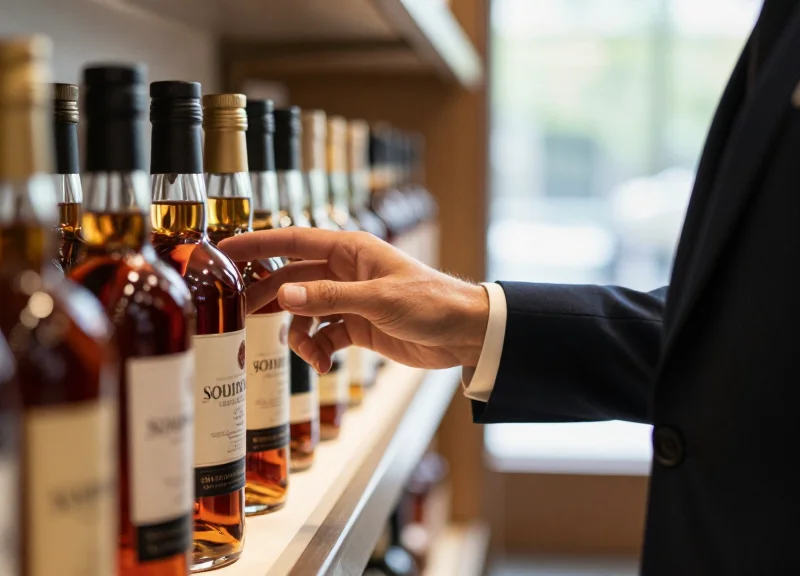
In the global luxury liquor market, customer experience is defined by the absence of friction. Multi-currency ESL solutions boost trust by ensuring 'Price Integrity'—the guarantee that the price a connoisseur sees on the shelf is the exact amount they pay at the register, regardless of exchange rate volatility. For high-net-worth individuals (HNWI), a pricing error isn't just a technical glitch; it is a breach of the brand promise that can permanently tarnish the prestige of a boutique.
When a traveler enters a luxury boutique in London, Hong Kong, or Paris to purchase a rare vintage, they expect a seamless transition between viewing and acquisition. Manual price updates often lag behind currency shifts, leading to uncomfortable 'corrections' at the point of sale. ESLs eliminate this awkwardness by synchronizing the digital shelf edge with the central ERP system, providing real-time, multi-currency transparency that validates the product's value in the eyes of the consumer.
| Customer Touchpoint | Manual Pricing Impact | Multi-Currency ESL Impact |
|---|---|---|
| Price Discovery | Confusion due to outdated currency conversion stickers. | Clarity through dynamic, digital currency toggling. |
| Sales Interaction | Staff must double-check prices, stalling the 'luxury' flow. | Staff focuses on storytelling and product heritage. |
| Point of Sale (POS) | Risk of 'Price Shock' if the system price differs from the tag. | 100% price synchronization; seamless transaction. |
Beyond mere accuracy, there is a psychological advantage to 'Currency Confidence.' Expert Tip: We have observed that when luxury retailers display a primary price alongside a secondary 'home currency' (e.g., USD and CNY), international buyers experience a significant reduction in cognitive load. This transparency removes the mental math required for a purchase, often leading to a higher average transaction value as the customer feels more in control of their spending.
How does ESL improve the relationship between the staff and the customer?
By automating the technical burden of price updates, sales associates are freed from administrative tasks. This allows them to focus entirely on the high-touch advisory roles that define luxury retail, such as explaining the provenance of a 50-year-old scotch.
Does multi-currency display actually increase sales?
Yes. Data suggests that transparency in preferred currencies reduces 'cart abandonment' in physical boutiques. When a customer knows exactly what they are paying in a familiar value, they are more likely to commit to a high-ticket impulse purchase.
What happens if a customer notices a discrepancy?
In luxury, a discrepancy often results in a lost customer for life. ESLs act as an insurance policy against this brand erosion, ensuring the shelf price is always the 'source of truth' for the entire global operation.
The ultimate goal of implementing multi-currency ESLs is to create a 'Global Boutique' feel. Whether a customer is in New York or Dubai, the consistency of the pricing information reinforces the brand's global stability and professional excellence, which are critical components of the luxury consumer's trust architecture.
Operational Efficiency: Reallocating Labor to Sales
Operational efficiency in global luxury liquor boutiques is redefined by Electronic Shelf Label (ESL) solutions, which eliminate the labor-intensive cycle of printing, sorting, and manually placing paper price tags. By automating the synchronization of multi-currency pricing directly from the ERP to the shelf edge, retailers can reduce the time spent on price maintenance by over 90%. This shift transforms staff from back-office administrators into front-of-house brand ambassadors, directly impacting the bottom line through enhanced customer engagement.
| Activity | Manual Pricing Process | Multi-Currency ESL Process | Efficiency Gain |
|---|---|---|---|
| Update per SKU | 2 - 4 Minutes | Instant / < 1 Second | 99% Reduction |
| Batch Updates (500 SKUs) | 16 - 32 Labor Hours | 5 Minutes (System Sync) | Near Total Elimination |
| Audit/Verification | Constant Manual Spot-Checks | Automated Digital Feedback | 100% Reliability |
| Staff Focus | Administrative/Task-Oriented | Sales/Clienteling-Oriented | Revenue Growth |
The true value of ESL technology lies in the 'Labor Opportunity Cost Offset.' In the luxury sector, the presence of a knowledgeable sommelier or spirit expert on the floor is the primary driver of high-value conversions. Every hour spent by a specialist changing a paper tag on a rare 50-year-old Scotch is an hour they are not available to upsell a private collector. By reallocating these reclaimed hours into personalized clienteling and VIP tasting sessions, boutiques often see a direct correlation between automated operational efficiency and increased average transaction value (ATV).
How many labor hours can a typical luxury boutique save annually?
On average, a boutique managing 1,000 SKUs with frequent currency fluctuations or promotional changes saves approximately 450 to 600 labor hours per year by switching to ESLs.
Does reallocating labor lead to better staff retention?
Yes. Luxury retail professionals are hired for their expertise in spirits and hospitality. Removing the tedious, repetitive task of manual price tagging increases job satisfaction and allows them to focus on their professional strengths: sales and storytelling.
Can ESLs help during peak holiday seasons?
Critically so. During high-traffic periods, manual pricing errors spike. ESLs ensure pricing is always accurate without pulling staff away from the floor during the most profitable hours of the year.
Expert Tip: To maximize ROI, implement a 'High-Value Interaction Ratio' (HVIR) metric after deploying ESLs. Measure the increase in time spent on one-on-one customer consultations versus the decrease in operational tasks. For luxury liquor retailers, a 15% increase in floor time typically yields a non-linear growth in premium bottle sales, as experts have more time to educate buyers on the heritage and investment value of rare casks.
Sustainability and Modern Brand Identity

For the modern luxury liquor boutique, sustainability is no longer a peripheral 'green' initiative; it is a core component of brand prestige and high-net-worth consumer expectations. Multi-currency Electronic Shelf Labels (ESLs) replace the antiquated, labor-intensive cycle of printing, cutting, and discarding paper tags every time an exchange rate shifts or a new vintage is released. By transitioning to E-ink technology, boutiques reduce their physical waste by up to 80% and align their physical storefront with the digital-first expectations of a global elite that values environmental stewardship as a marker of true luxury.
| Feature | Legacy Paper Systems | Modern ESL Solutions |
|---|---|---|
| Environmental Impact | High waste (paper, ink, transport) | Near-zero waste (E-ink longevity) |
| Visual Consistency | Mismatched fonts, handwritten notes | Uniform, high-resolution branding |
| Labor Perception | Staff focused on manual tasks | Staff focused on customer storytelling |
| Brand Sentiment | Dated and reactive | Futuristic and socially responsible |
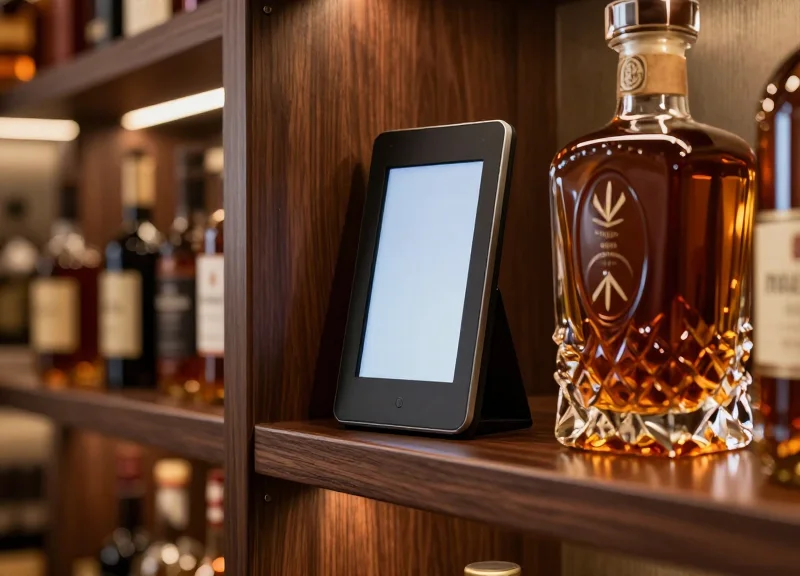
Beyond the ecological benefits, the aesthetic impact of ESLs in a luxury environment is transformative. High-end liquor stores often feature bespoke cabinetry and mood lighting; traditional paper tags—which often yellow, curl, or misalign—detract from this atmosphere. Modern ESLs utilize high-contrast E-ink displays that mimic the appearance of premium stationary or vellum, offering a 'Digital Patina' that feels organic to the space while providing the crisp, multi-currency clarity required by international travelers.
How does ESL technology contribute to ESG reporting?
ESLs significantly lower the Scope 3 emissions associated with paper supply chains and chemical ink production, providing quantifiable data for corporate sustainability reports.
Does the digital nature of ESLs ruin the 'old world' feel of liquor boutiques?
Quite the opposite. Premium ESLs come with customizable frames (wood, brushed metal) and high-DPI screens that blend seamlessly into traditional decor without the 'screen glare' of LCDs.
What is the battery life of these devices in a luxury setting?
Most high-end ESLs are designed for ultra-low power consumption, with batteries lasting 5 to 10 years, ensuring the 'set and forget' elegance required for high-end retail.
Expert Tip: To maximize brand identity, use the multi-currency field to display not just the price, but a QR code that leads to a virtual 'distillery tour' or a digital certificate of authenticity. This turns a simple price tag into an immersive brand touchpoint, reinforcing the boutique's position as a leader in both technology and tradition.
Choosing the Right Partner: Why DragonGuardGroup Leads
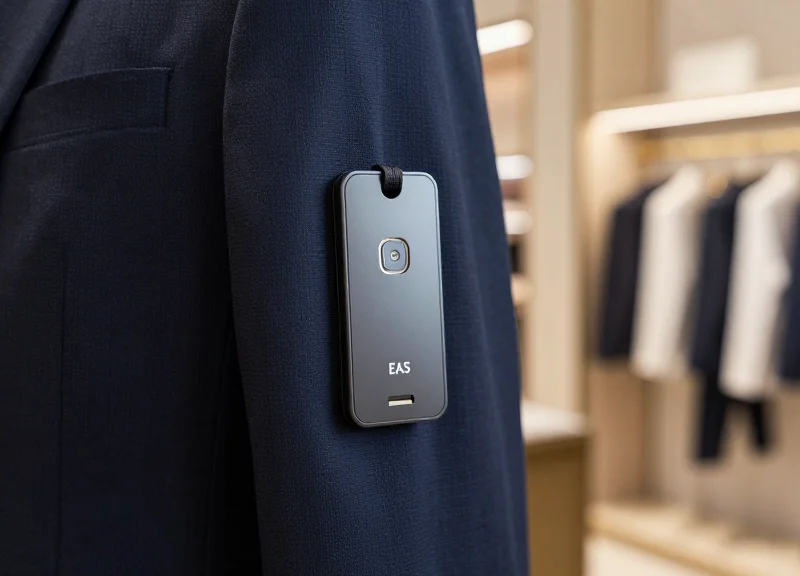
Selecting a technology partner for luxury retail requires moving beyond 'standard' hardware to find an enterprise that understands the delicate balance between high-end aesthetics and technical precision. DragonGuardGroup leads the industry by offering a unified retail ecosystem where Electronic Shelf Labeling (ESL) doesn't just display prices, but integrates seamlessly with existing Radio Frequency Identification (RFID) and Electronic Article Surveillance (EAS) infrastructures. This holistic approach eliminates the 'silo effect' of disparate systems, ensuring that your 22% margin boost is protected by world-class loss prevention and real-time data accuracy across global borders.
| Feature | DragonGuardGroup Solutions | Generic ESL Providers |
|---|---|---|
| Integrated Security | Seamless EAS & RFID cross-talk | Standalone price tags only |
| Currency Handling | Dynamic Multi-Currency API integration | Manual or basic software updates |
| Hardware Durability | High-clarity glass, anti-glare for luxury | Standard plastic consumer-grade |
| Global Scalability | Multi-node cloud infrastructure | Localized server dependencies |
How does DragonGuardGroup handle signal interference in liquor boutiques?
We employ 'Signal-to-Shelf Integrity' (SSI) protocols. High-end liquor stores often feature thick glass and metallic decorative elements that disrupt standard RF signals; our proprietary sub-GHz frequency management ensures 100% update reliability even in dense environments.
Can your ESL tags reflect luxury brand aesthetics?
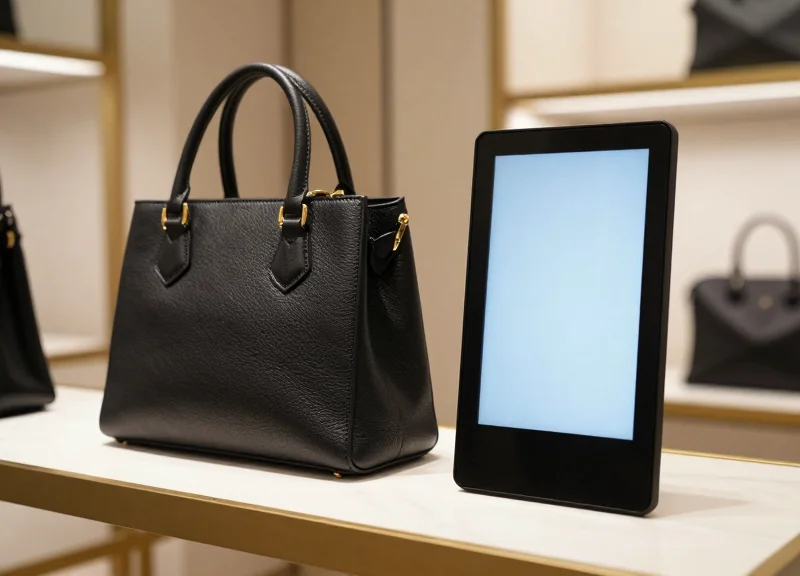
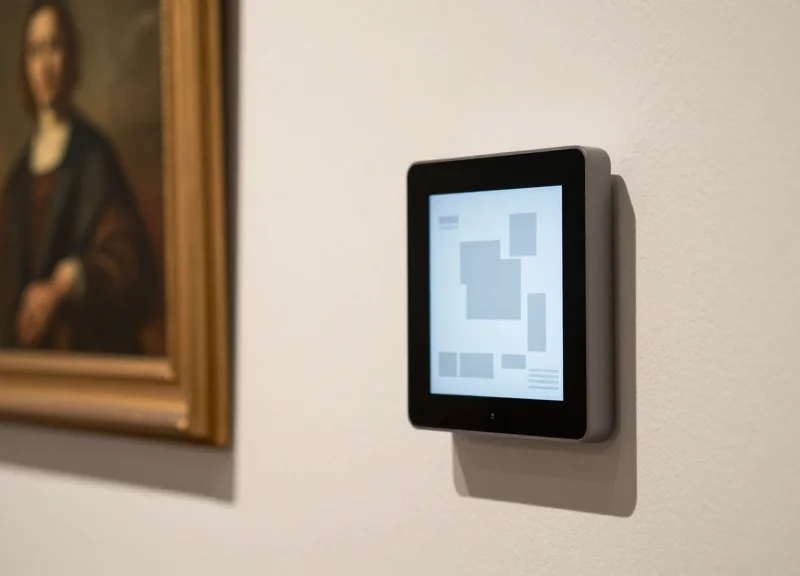
Yes. Unlike bulky industrial tags, our ESL designs prioritize a minimalist, 'invisible' footprint with customizable bezel colors and high-resolution e-paper that mimics premium printed cardstock.
Is the transition from paper to ESL disruptive to operations?
DragonGuardGroup utilizes a 'Zero-Downtime Migration' framework, where we map your existing ERP data to the digital tags overnight, allowing for an immediate transition without closing your doors to customers.
The Veteran's Perspective: The Triple-Lock Strategy. From my two decades in the industry, the biggest mistake retailers make is buying ESL as a commodity. In the luxury liquor sector, you need a 'Triple-Lock' partner. This means your partner must master three domains: hardware aesthetics (to match your $5,000 bottles), cloud-based currency automation (to protect margins during FX volatility), and integrated loss prevention. DragonGuardGroup is the only provider that effectively bridges the gap between the IT department's need for data and the Floor Manager's need for brand elegance.