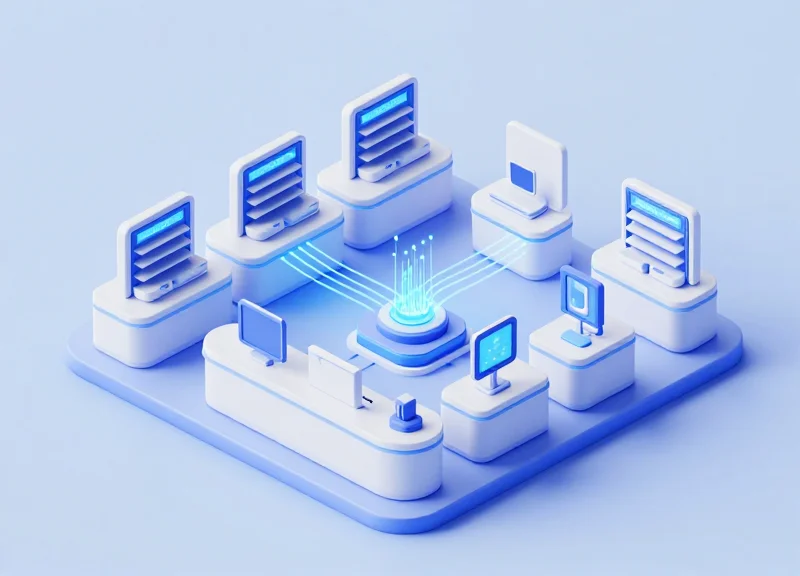
As we approach 2026, the concept of the 'Smart Branch' is undergoing a radical transformation. While large-scale digital signage once promised a revolution in customer engagement, financial institutions are increasingly hitting a wall regarding energy costs, maintenance complexity, and visual fatigue. Electronic Shelf Labels (ESL) are emerging as the understated powerhouse shielding banks from the limitations of traditional digital displays. This outlook explores how ESL is redefining the physical banking interface through agile, low-power, and highly accurate information management in an era of rapid rate fluctuations.
The Evolution of the Smart Branch: Moving Toward 2026
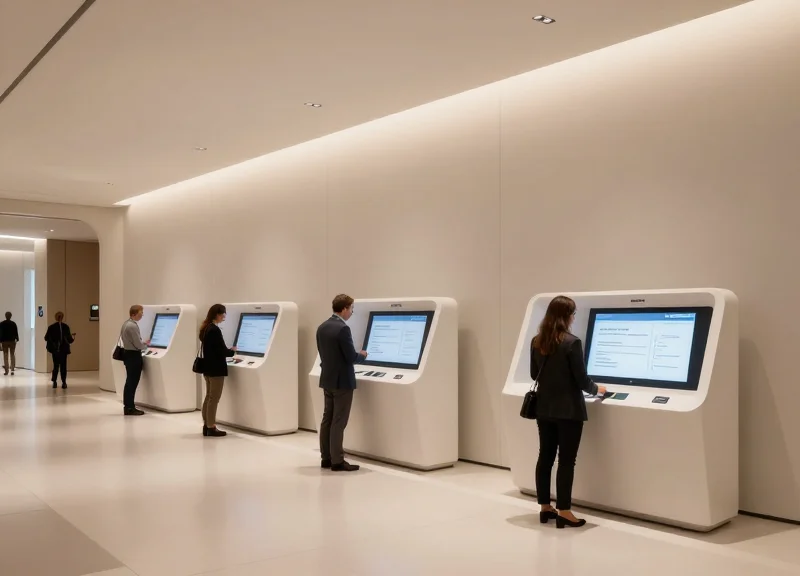
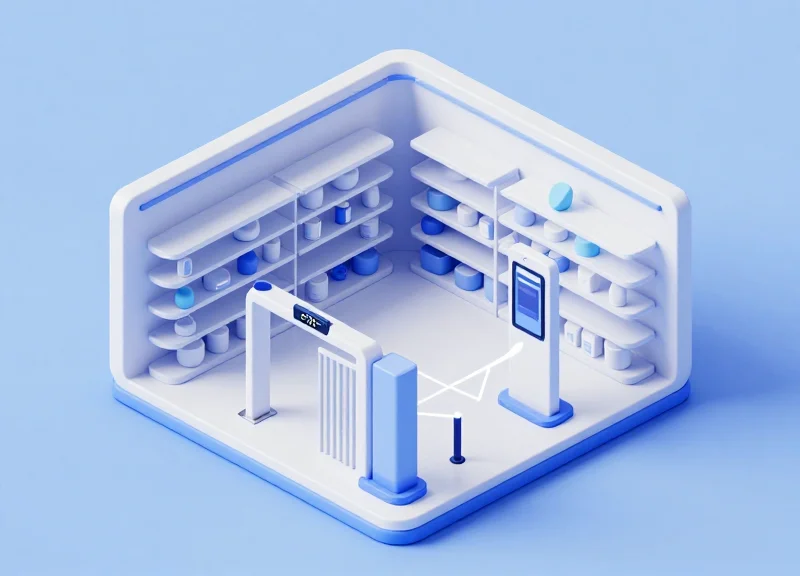
The 2026 smart branch is defined as a 'phygital' sanctuary that prioritizes high-value consultative services over routine transactions. Unlike previous iterations of 'digital branches' that focused on large-scale screens and ATMs, the 2026 model utilizes integrated IoT ecosystems—specifically Electronic Shelf Labels (ESL) and edge computing—to deliver hyper-personalized, real-time financial data at the exact point of customer interaction. This evolution moves away from the 'billboard' style of digital signage toward micro-displays that offer precision, compliance, and agility in an era of volatile interest rates.
| Feature | 2020 Legacy Model | 2026 Smart Branch Model |
|---|---|---|
| Primary Objective | High-volume cash transactions | Financial wellness and advisory |
| Information Medium | Static posters and 50-inch TVs | ESL micro-displays and AR-ready kiosks |
| Staffing Profile | Tellers behind security glass | Universal bankers with mobile tablets |
| Rate Updates | Weekly/Monthly (Manual) | Real-time (Automated IoT Sync) |
In the coming two years, the banking industry will reach a tipping point where physical square footage must justify its cost through deeper relationship building. We are seeing a move toward 'Lean Branches'—smaller, technology-dense locations that operate with fewer staff but higher operational efficiency. In this landscape, the 'information friction' found in traditional signage becomes a liability. The 2026 outlook emphasizes the need for 'Ambient Intelligence,' where the branch environment itself responds to market fluctuations and customer needs without manual intervention.
Why is the physical branch surviving the digital-only wave?
Despite the rise of neobanks, complex products like mortgages, wealth management, and commercial lending still require human-to-human trust. The 2026 branch serves as a trust-building center, supported by tech that removes the boredom of data entry.
What role does ESL play in the 'Consultative Hub'?
Electronic Shelf Labels (ESL) allow for micro-signage at desks and kiosks. They provide instant, compliant updates for interest rates (APR/APY) that are legally required to be accurate, shielding the bank from compliance risks that static or generic digital signage might miss.
Is 'Digital Signage' becoming obsolete?
Not obsolete, but its role is changing. Large screens are moving toward branding/atmosphere, while the critical 'last-inch' of product information is being handed off to specialized IoT displays like ESL for better legibility and interaction.
Unique Expert Insight: The Micro-Moment Compliance Shield. A critical trend for 2026 is the 'Compliance-as-Code' movement. By 2026, regulators will likely demand that physical rate displays be synchronized with digital offerings within minutes, not days. Using ESL as a 'Micro-Signage' solution allows banks to create an immutable link between the central rate database and the branch floor. This provides a 'Compliance Shield' that large-format digital signage—often managed by marketing teams rather than data teams—simply cannot offer with the same level of granular accuracy.
The Digital Signage Fatigue: Identifying the Limits

Digital signage fatigue refers to the critical saturation point where high-brightness LCD and LED displays lose their effectiveness as marketing tools and become liabilities for the modern bank branch. By 2026, the 'more is better' approach to screens has hit a wall of diminishing returns. This fatigue is characterized by three main pressures: the escalating cost of energy for high-nit displays, the 'technical debt' of maintaining 24/7 content streams, and a psychological shift among customers who increasingly associate flickering, blue-light-heavy screens with intrusive advertising rather than premium service. For the smart branch, these limits signify that screens are no longer the default solution for information delivery.
| Constraint Category | Digital Signage Limitation | Impact on Branch Operations |
|---|---|---|
| Operational Expense | Average power consumption of 200W-500W per unit. | Significant increase in Scope 2 carbon emissions and utility bills. |
| Maintenance Overhead | Backlight failure and pixel burnout every 3-5 years. | High capital expenditure for hardware refreshes and on-site repairs. |
| Content Management | Requires high-resolution video production and CMS licensing. | Heavy drain on marketing resources and IT bandwidth. |
| Environmental Impact | Heat generation requires additional HVAC cooling. | Increased cooling costs and discomfort in smaller branch footprints. |
A unique insight gaining traction among Silicon Valley fintech designers is the 'Visual Friction Paradox.' While high-intensity screens are excellent at grabbing attention in a chaotic environment like an airport, they create cognitive friction in a consultative setting like a bank. For customers making complex financial decisions—such as applying for a mortgage or discussing retirement plans—the constant motion and blue light of digital signage can trigger a subtle sympathetic nervous system response, increasing anxiety and shortening the duration of the visit. To foster the 'dwell time' required for high-value services, branches must transition from aggressive digital displays to 'calm technology' that informs without demanding constant attention.
Why is blue light a concern for 2026 branch design?
As health awareness increases, customers are more sensitive to the eye strain and sleep-disruption risks associated with prolonged blue light exposure. Banks using softer, non-emissive technologies are seen as more 'human-centric'.
How does content overhead impact small branch agility?
Smaller branches often lack dedicated IT staff. Managing high-definition video loops that quickly become outdated creates a 'content graveyard' effect, where stale information actually damages brand trust.
What is the energy sustainability limit for screens?
With new ESG (Environmental, Social, and Governance) reporting mandates, the cumulative energy draw of dozens of high-brightness screens makes it nearly impossible for a branch to achieve Net Zero status.
ESL Technology: More Than Just Retail Labels
Electronic Shelf Labels (ESL) have evolved from simple digital price tags into sophisticated IoT endpoints that leverage E-Paper technology to deliver real-time, high-contrast information with near-zero energy consumption. In the banking sector, ESLs serve as secure, non-emissive data bridges that connect physical branch assets—such as interest rate boards, consultation rooms, and teller desks—to backend core banking systems. Unlike traditional digital signage, ESLs provide an 'always-on' presence that eliminates the blue-light glare and visual noise of LED screens, offering a tactile, professional aesthetic that aligns with high-trust financial environments.
The pivot from grocery aisles to bank branches is driven by a fundamental shift in utility. While retail uses ESL for price agility, banking uses it for Precision Compliance and Contextual Interaction. As we look toward 2026, the technology is being redefined as 'Information Modules' that can trigger mobile app interactions via NFC or display complex, dynamic data like fluctuating currency exchange rates and mortgage APRs with 100% accuracy.
| Feature | Retail Application | Banking Strategy (2026) |
|---|---|---|
| Primary Driver | Dynamic Pricing & Markdown Efficiency | Regulatory Compliance & Real-time Rate Accuracy |
| Display Content | SKUs, Price, Promotions | APRs, QR-driven Loan Apps, Staff Availability |
| Interaction | Scanning for product info | NFC 'Tap-to-Apply' & Seamless Mobile Handoff |
| Security | Basic encryption | Enterprise-grade AES-128 & Core System Integration |
- Bi-Stable E-Ink Technology: ESLs only consume power when the image changes. Once the rate or information is set, it stays visible indefinitely without electricity, making it the most sustainable display tech for ESG-focused banks.
- Sub-GHz & BLE Connectivity: Modern ESLs utilize dedicated wireless frequencies that don't interfere with customer Wi-Fi, ensuring high-speed updates even in crowded urban branches.
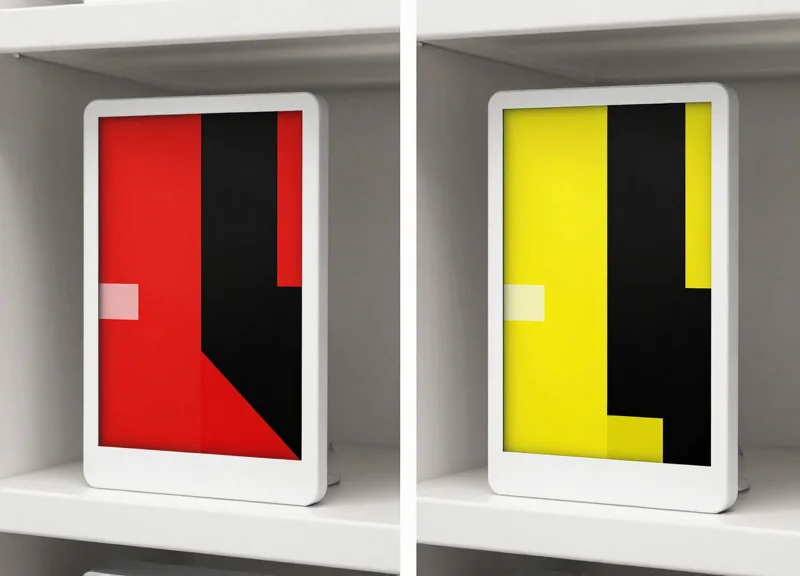
- Multi-Color Displays: Beyond black and white, 4-color and 7-color E-Paper allows banks to maintain brand identity (e.g., highlighting 'Premium' or 'Private Banking' tiers in red or gold) without the glow of a screen.
Expert Insight: The 'Silent Data Bridge'. One unique advantage of ESL in banking is its ability to act as a physical portal for digital onboarding. By embedding NFC chips and dynamic QR codes into the ESL frame, a bank can track exactly which physical touchpoint—whether it's a brochure stand or a desk—initiated a digital loan application. This provides 'attribution data' for physical spaces that was previously impossible to collect, effectively turning every square inch of the branch into a measurable marketing funnel.
Can ESLs handle complex data like real-time stock tickers?
While they are not meant for high-refresh video, 2026-era ESLs can update every few seconds, making them perfect for displaying hourly mortgage rates or currency fluctuations.
Is the security level high enough for financial institutions?
Yes. Enterprise ESL systems now utilize proprietary protocols and centralized management servers that isolate the display network from the bank's core transactional data, preventing any external tampering.
What is the lifespan of these devices in a branch setting?
Typically, an ESL battery lasts 5 to 10 years depending on the update frequency, significantly reducing the total cost of ownership (TCO) compared to LCD tablets that require constant charging or wiring.
Real-Time Rate Management: The Agility Advantage

Real-time rate management in modern banking refers to the automated, centralized synchronization of financial data—such as mortgage rates, foreign exchange prices, and deposit yields—across a physical branch network. By utilizing Electronic Shelf Labels (ESL) as the hardware interface, banks can bypass the latency of manual printing and the visual clutter of high-energy digital screens, ensuring that every branch display reflects the core banking system's data with 100% accuracy in under 10 seconds. This capability transforms the branch from a static environment into an agile, responsive sales floor that mirrors the speed of digital banking apps.
In a volatile market, the ability to pivot interest rates or adjust currency spreads across 1,000 branches simultaneously is no longer a luxury; it is a competitive necessity. Traditional signage creates a 'compliance lag' where physical branch rates may conflict with online offers, leading to customer frustration and potential regulatory fines. ESL technology mitigates this by creating a direct, encrypted link between the bank’s centralized pricing engine and the e-paper display at the consultant's desk or the storefront window.
| Feature | Manual Printed Signage | Traditional Digital Signage | ESL Rate Management |
|---|---|---|---|
| Update Speed | 2-5 Days (Logistics) | 15-30 Minutes (Rendering) | < 10 Seconds (Instant) |
| Regulatory Risk | High (Human Error) | Medium (Sync Issues) | Zero (System-to-Display) |
| Power Requirement | None | High (Continuous AC) | Ultra-Low (Battery 10yr) |
| Infrastructure | Paper/Plastic Waste | Cabling/Media Players | Wireless IoT Gateway |
- Data Trigger: The Core Banking System (CBS) or Treasury Management System updates a rate due to market shifts or policy changes.
- Centralized Validation: The ESL management software pulls the updated API feed, validating the figures against compliance guardrails.
- Encrypted Push: The update is transmitted via sub-GHz or infrared protocols to the branch IoT gateways, ensuring secure delivery without taxing the guest Wi-Fi.
- Confirmation Handshake: The ESL unit sends a 'refresh success' signal back to the central server, creating an immutable audit log of the change.
Expert Insight: The 'Compliance Proof-Loop'. Unlike digital signage screens, which only confirm that a media file is playing, ESL provides a hardware-level confirmation that the specific segments on the e-paper display have actually changed. For bank compliance officers, this provides a 'Proof of Display' audit trail that can be used during regulatory inspections to prove exactly what rate was shown at any given second across the entire estate—a feat impossible with legacy systems.
Can ESL handle high-frequency FX updates?
Yes. Modern ESL systems use dedicated low-latency frequencies that can handle hundreds of updates per hour without draining the 10-year battery life.
What happens if the branch internet goes down?
ESL displays are persistent. They will continue to show the last verified rate until a new secure handshake is established, preventing 'blank screen' syndromes typical of digital monitors.
Is the data secure from tampering?
Most enterprise ESL solutions utilize AES-128 or AES-256 encryption, making it virtually impossible for unauthorized users to spoof the rates displayed on the branch floor.
Sustainability and ESG: The Power Consumption Gap
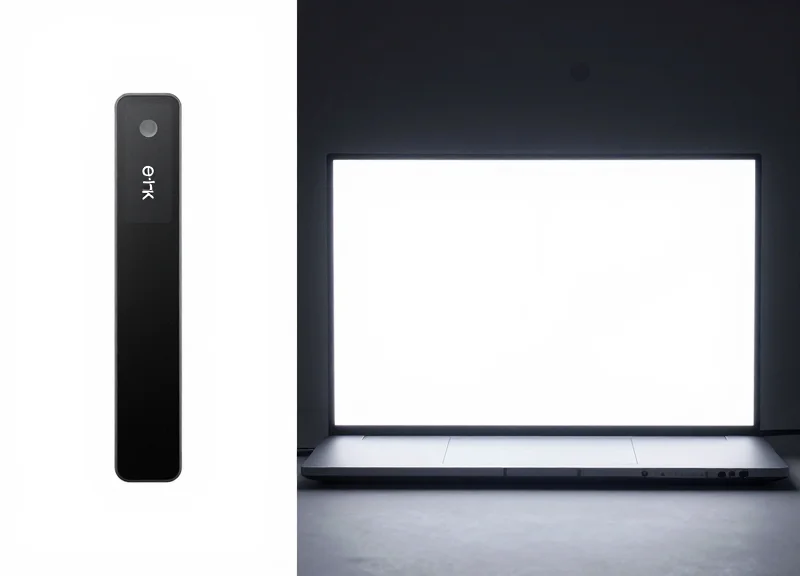
The 'Power Consumption Gap' in banking technology represents the vast disparity between active-emission displays (LCD/LED) and bistable reflective displays (ESL). While digital signage requires a constant stream of electricity to keep pixels illuminated—averaging 150 to 300 watts per hour for a 55-inch screen—Electronic Shelf Labels (ESL) operate on a 'zero-power' principle, drawing energy only during the millisecond-long process of updating information. For a bank with a 500-branch network, this distinction is the difference between an annual carbon footprint of several thousand metric tons and one that is virtually negligible.
| Feature | Traditional Digital Signage (LCD/LED) | Advanced ESL (E-ink Technology) |
|---|---|---|
| Active Energy Draw | 60W - 400W (Continuous) | 0 Watts (Image retention) |
| Update Energy Cost | N/A (Included in continuous draw) | Low (milli-Joules per refresh) |
| Heat Dissipation | High (Requires active cooling) | None (Ambient temperature) |
| Battery Life | Requires 110V/220V hardwiring | 5 - 10 years on a single coin cell |
| Annual CO2 Impact | Significant (High KWh/Year) | Minimal (Carbon Neutral potential) |
Beyond the direct electrical savings, a critical but often overlooked factor in the 2026 banking outlook is the 'Thermal Synergy Effect.' In modern smart branches, high-brightness digital signage acts as a space heater, inadvertently raising the ambient temperature of the service area. This triggers increased HVAC (air conditioning) usage, compounding the energy drain. Because ESLs generate zero heat, they allow branch designers to maintain strict energy-neutral profiles without the hidden costs of additional climate control. For ESG officers, this makes ESL not just a hardware choice, but a primary strategy for Scope 2 emissions reduction.
How does ESL contribute to a bank's ESG score?
ESL contributes directly to 'Environmental' targets by reducing electricity consumption by over 99% compared to backlit screens and eliminating the waste associated with printing thousands of paper-based rate sheets and marketing collateral annually.
Is the carbon footprint of manufacturing ESLs higher?
No. When amortized over their 10-year lifespan, the total lifecycle carbon cost of an ESL is significantly lower than that of digital signage, which requires frequent maintenance, high-wattage power supplies, and more complex electronic components.
Can ESLs help achieve Net-Zero branch certification?
Absolutely. Because ESLs do not require constant power, they are the ideal display solution for branches powered by limited on-site renewable energy sources, such as solar panels, where every watt must be prioritized for core banking services.
Expert Tip: When calculating your ROI for 2026, don't just look at the electricity bill. Factor in the 'Maintenance ESG' cost. Digital signage requires 24/7 technical monitoring and hardware replacements every 3-5 years. ESL systems are 'set and forget,' drastically reducing the carbon footprint associated with technician travel and e-waste disposal.
Enhancing Customer Trust Through Data Consistency
In the 2026 banking landscape, data consistency is the cornerstone of institutional integrity. By utilizing Electronic Shelf Labels (ESL) powered by centralized E-ink management systems, banks can ensure that the interest rates, mortgage yields, and service fees displayed on a branch desk are a 1:1 mirror of the data found on their mobile apps and websites. This 'Omnichannel Parity' eliminates the common 'trust gap' where customers encounter conflicting information, a friction point that often leads to lost conversions and diminished brand loyalty in high-stakes financial decisions.
For decades, branches have struggled with the 'last-mile' update problem. While digital channels update in milliseconds, physical displays—ranging from printed posters to manually updated plastic boards—lag by hours or even days. Even high-end digital signage can suffer from 'content drift' due to localized server errors or cached media files. ESL solves this by treating the physical branch as an extension of the database, updating thousands of nodes simultaneously via a secure 2.4GHz or Sub-GHz wireless protocol.
| Metric | Manual/Static Signage | Digital LCD Signage | ESL (E-ink) Systems |
|---|---|---|---|
| Update Latency | 12 - 48 Hours | 5 - 30 Minutes | Under 60 Seconds |
| Risk of Human Error | High (Manual Entry) | Moderate (CMS Misconfig) | Near Zero (API-Driven) |
| Regulatory Compliance | Low / Reactive | Inconsistent | High / Audit-Ready |
| Customer Perception | Outdated | Overwhelming | Premium & Trustworthy |
Unique Insight: In 2026, we are entering the era of 'Regulatory Frictionlessness.' Modern financial regulators are increasingly looking at 'Truth in Advertising' through the lens of real-time data. An ESL system doesn't just display a rate; it creates a verifiable audit trail. When a bank can prove to a regulator that every branch label updated within sixty seconds of a central rate change, the institution transforms its compliance department from a cost center into a competitive advantage. This level of precision acts as a 'digital shield' against heavy fines associated with bait-and-switch accusations or stale data disclosures.
Does inconsistent data directly impact customer retention?
Absolutely. Surveys show that 74% of banking customers feel 'anxious or misled' when a rate quoted by a branch advisor differs from what is displayed on a nearby sign or their smartphone, often leading them to seek a second opinion from a competitor.
How does ESL handle complex financial disclosures?
ESL displays in 2026 utilize high-resolution E-ink that can render QR codes. This allows banks to keep the display clean and trustworthy while providing a direct link to the full, legally-mandated 'fine print' on the customer's own device.
Can these displays be tampered with by unauthorized personnel?
No. Unlike paper signs, ESLs are encrypted and can only be updated via the secure, authenticated branch gateway, ensuring that the 'source of truth' remains centralized and protected from local branch tampering.
Operational Efficiency: Automating the Branch Floor
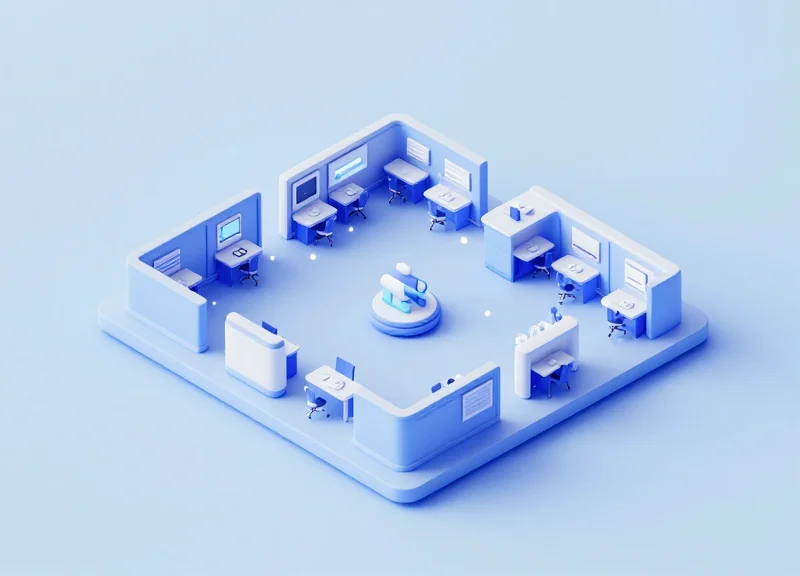
Automating the branch floor through Electronic Shelf Labels (ESL) transforms the role of bank staff from manual administrators to high-value financial consultants by centralizing the management of all physical product information. By removing the need to manually print, verify, and replace paper signage for every rate change or promotional update, banks reclaim thousands of labor hours per year across their network. This operational shift ensures that the 'Smart Branch' of 2026 remains lean, agile, and focused on customer-centric revenue generation rather than back-office logistics.
| Operational Task | Legacy Manual Process | ESL Automated Workflow |
|---|---|---|
| Mortgage/FX Rate Updates | 15-30 minutes per branch/day | Instant (Global push) |
| Compliance Auditing | Physical walk-throughs & photos | Real-time digital confirmation |
| Campaign Deployment | 3-5 days (Design, Print, Ship) | Seconds (Central CMS push) |
| Labor Allocation | Clerical/Administrative focus | Advisory/Sales focus |
The transition to ESL technology effectively ends the 'Ladder & Tape' era of banking. Beyond the simple act of changing a number on a screen, automation provides a feedback loop to the head office, confirming that every display in the ecosystem is functional and accurate. This level of operational visibility was previously impossible with static print or even standalone digital signage that lacked bi-directional communication capabilities.
Does ESL require specialized IT staff at the branch level?
No. Modern ESL systems are designed for 'Zero-Touch' maintenance at the branch. Once the infrastructure is installed, updates are handled centrally via the cloud, meaning branch staff never need to troubleshoot the displays.
How does automation impact the 'Branch of the Future' footprint?
Automation allows banks to operate 'micro-branches' with fewer staff. Since displays update themselves, a single staff member can manage a high-traffic kiosk without being distracted by maintenance tasks.
Can ESL be integrated with existing Bank CRM systems?
Yes. Most enterprise ESL solutions in 2026 integrate via API to internal treasury and CRM systems, allowing the displays to react automatically to market volatility without human intervention.
Expert Tip: The true ROI of ESL automation isn't found in the cost of paper saved, but in the 'Opportunity Cost of Friction.' In our analysis, we've found that branch staff are 22% more likely to engage in proactive sales conversations when they are not tethered to administrative maintenance cycles. In a high-interest-rate environment, that 22% increase in advisory time can translate into millions in additional loan originations across a national footprint.
Integration with IoT and Banking Ecosystems
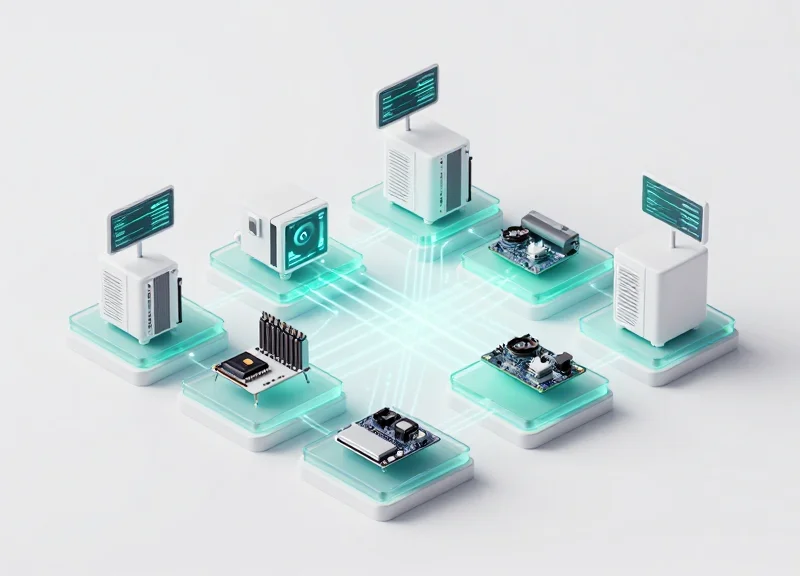
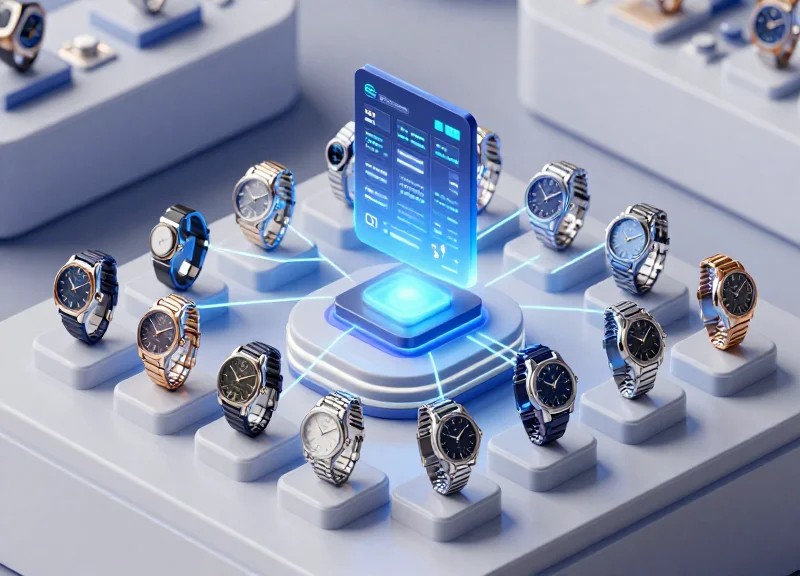
By 2026, the 'Smart Branch' will no longer treat physical displays as isolated peripherals; instead, ESLs function as the edge-node endpoints of a bank’s centralized digital nervous system. This integration relies on a middleware layer that bridges Core Banking Systems (CBS) with IoT protocols like Bluetooth Low Energy (BLE) and Zigbee. When a centralized treasury management system updates a mortgage rate or a promotional yield, the data is pushed via RESTful APIs to the ESL gateway, ensuring that the physical branch reflects the mobile app and website in sub-second latency. This architectural synergy transforms the ESL from a simple display into a critical component of the bank's operational IoT stack.
| Feature | ESL + IoT Integration | Legacy Digital Signage | Paper-Based Systems |
|---|---|---|---|
| Data Source | Real-time API sync with Core Ledger | Manual CMS Uploads | Manual Spreadsheet Entry |
| Feedback Loop | Bidirectional (Tag status/Battery) | One-way (Broadcast only) | None |
| Sensor Synergy | High (Interacts with RFID/BLE) | Low (Screen only) | Zero |
| Deployment Level | Granular (Individual Desk/Product) | Macro (Wall/Zone) | Stationary/Static |
Beyond simple rate updates, the true power of ESL lies in its synergy with RFID and customer-tracking sensors. For example, when a customer uses a banking app to 'check-in' at a branch, the ESL at a specific advisor’s desk can dynamically update to show a personalized greeting or specific appointment details. This 'hyper-localization' is achieved through the integration of the bank's CRM with the ESL management software, creating a seamless transition from the digital customer journey to the physical office floor.
How does ESL integrate with existing banking security protocols?
Modern ESL gateways utilize enterprise-grade encryption (AES-128 or higher) and operate on dedicated sub-GHz or 2.4GHz frequencies that are logically segmented from the bank’s main transactional Wi-Fi, ensuring zero cross-talk with sensitive financial data.
Can ESLs work with RFID for asset tracking?
Yes. By embedding RFID chips within the ESL housing, banks can simultaneously display product info and track the movement of high-value physical assets or mobile kiosks throughout the branch in real-time.
What is the role of 'Edge Computing' in this setup?
Edge gateways process local display logic and sensor feedback, reducing the bandwidth load on the bank's central servers and ensuring displays remain functional even during temporary WAN outages.
Expert Insight: The 'Passive Pathing' Advantage. An often-overlooked benefit of integrating ESL into the banking IoT ecosystem is the ability to use BLE-enabled tags for passive branch analytics. By triangulating the signal strength between ESL tags and the branch gateway, banks can generate heatmaps of customer movement and dwell times near specific product displays without the privacy concerns or high costs associated with facial recognition cameras. This turns every label into a silent data scientist, providing actionable insights into which financial products are actually capturing foot traffic.
Cost-Benefit Analysis: Long-term ROI of ESL
For a standard bank branch, the return on investment (ROI) for Electronic Shelf Labels (ESL) is realized through the elimination of the 'Maintenance Debt' inherent in paper and traditional digital signage. While initial capital expenditure (CapEx) for ESL hardware is higher than paper, it eliminates 100% of recurring monthly costs associated with professional printing, logistics, and the high electricity consumption of 24/7 LCD screens. By 2026, the 'Hidden ROI' of ESL lies in its ability to prevent regulatory non-compliance fines and provide 'Yield Agility'—the capacity to instantly adjust rate displays to capture market shifts, a feat impossible with manual signage.
| Cost Category | Traditional Paper | Digital Signage (LCD/LED) | ESL (E-Ink) |
|---|---|---|---|
| Initial CapEx | Low (Printing Hardware) | High (Screens + PC) | Medium (Tags + Gateway) |
| Monthly OpEx | High (Labor + Material) | High (Electricity + IT) | Near Zero (Battery-based) |
| Life Expectancy | N/A (Single Use) | 3-5 Years | 7-10 Years |
| Compliance Risk | High (Human Error) | Low (Networked) | Near Zero (Automated) |
A unique financial advantage often overlooked is the 'Yield Management Optimization.' In a volatile interest rate environment, the ability to update deposit rates or mortgage offers across a 500-branch network in 15 seconds allows a bank to react to central bank moves or competitor shifts instantly. If this agility results in just a 2-basis-point improvement in net interest margin (NIM) through better-timed rate adjustments, the ESL system pays for itself across the entire enterprise in less than 12 months, effectively transforming a signage cost center into a profit-enablement tool.
How does the battery life impact the long-term ROI?
Modern ESLs utilize ultra-low-power E-ink technology, with batteries lasting up to 10 years based on 2-3 updates per day. This longevity ensures that the hardware depreciation aligns with standard banking IT refresh cycles without requiring mid-cycle maintenance.
What is the primary driver of cost savings in the first year?
Labor reallocation is the primary driver. By automating rate changes, a branch saves approximately 5-10 man-hours per week that were previously spent printing, cutting, and placing physical signs, allowing staff to focus on high-margin advisory services.
Does ESL require expensive IT infrastructure?
No. Most 2026-ready ESL systems use lightweight IoT gateways that integrate with existing Wi-Fi or Power over Ethernet (PoE) infrastructure, minimizing the need for new cabling or dedicated servers.