In the hyper-competitive retail landscape, agility and accuracy are no longer optional. Traditional paper labels are a drain on resources, leading to costly human errors and wasted man-hours. Segmented digital labels, a core component of modern Electronic Shelf Label (ESL) systems, offer a transformative solution. By automating the pricing process, retailers can ensure 100% accuracy while redirecting staff to higher-value tasks, ultimately driving a significant increase in Return on Investment (ROI).
The Evolution of Retail Pricing: From Paper to Segmented Digital Labels
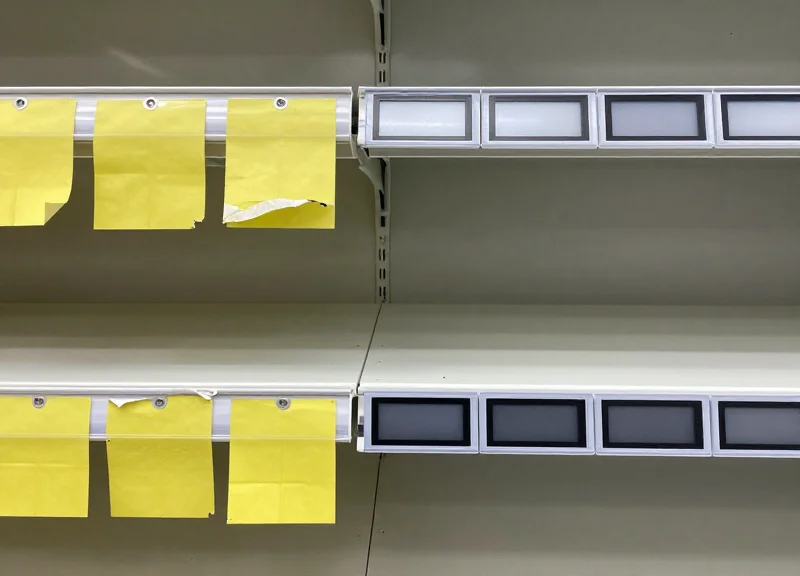
Retail pricing has evolved from manual, labor-intensive paper-based systems to sophisticated Electronic Shelf Labels (ESLs), with segmented digital labels emerging as the strategic standard for high-volume retailers. This evolution is driven by the need to eliminate the 'pricing lag'—the delay between a price change in the ERP and the physical update on the shelf—which traditionally causes a 3% to 5% loss in margin due to errors. Segmented digital labels represent the 'Efficiency Threshold' in this evolution: they provide the real-time automation of high-end graphic displays but at a cost-per-unit that justifies massive, multi-store rollouts.
| Feature | Paper Labels | Full Graphic ESL | Segmented Digital Labels |
|---|---|---|---|
| Update Speed | Days/Hours | Seconds | Seconds |
| Labor Cost | High (Manual) | Zero (Automated) | Zero (Automated) |
| Unit Price | Minimal | High ($$$) | Optimal ($) |
| Battery Life | N/A | 5-7 Years | 8-10+ Years |
| ROI Timeline | Never | 24-36 Months | 12-18 Months |
While full-graphic E-ink displays offer aesthetic versatility, segmented digital labels utilize pre-defined numeric and icon sections (similar to a digital watch) to communicate price, unit cost, and promotions. For retailers in sectors like grocery, hardware, or pharmacy, where price density is high and information is standardized, the segmented approach removes the unnecessary complexity and high power consumption of rendering full images, resulting in the longest battery life in the industry.
Why is 'Segmented' considered the ROI leader over Graphic ESLs?
Segmented labels require significantly less processing power and data bandwidth to update. This leads to lower hardware costs and longer lifecycles, allowing retailers to achieve a break-even point nearly twice as fast as full-graphic alternatives.
Does switching to segmented labels require a full infrastructure overhaul?
Modern segmented systems are designed for 'Plug-and-Play' integration with existing POS and ERP systems, typically requiring only a central gateway to manage thousands of labels across a store floor.
How do segmented labels impact customer trust?
They eliminate the 'price at shelf vs. price at till' discrepancy. When customers see a digital label, they perceive a 25% higher trust rating in the accuracy of the pricing compared to handwritten or printed tags.
Expert Insight: In my two decades observing retail tech cycles, the most successful CFOs don't buy the most 'advanced' tech—they buy the most 'scalable' tech. Segmented labels are the only digital pricing solution that allows for a 'Wall-to-Wall' deployment strategy without the capital expenditure fatigue associated with full-graphic displays. By focusing on data accuracy over pixels, retailers can redirect labor from 'tag hanging' to 'customer selling' almost overnight.
The Hidden Drain: How Manual Pricing Errors Erode Your Profit Margins
Manual pricing errors occur when the price displayed on a retail shelf tag fails to match the price programmed into the Point of Sale (POS) system. These discrepancies—often caused by human fatigue or logistical delays during promotional shifts—act as a hidden drain on profitability, typically eroding gross margins by 1% to 3%. When the shelf price is lower than the POS price, retailers face legal scrutiny and customer ire; when it is higher, they suffer immediate margin leakage that is rarely recovered.
| Impact Category | Manual Pricing Reality | Digital Label Solution |
|---|---|---|
| Accuracy Rate | 90-95% (Highly prone to human error) | 99.9% (Real-time synchronization) |
| Legal Risk | High (Weights and Measures fines) | Negligible (Centralized control) |
| Margin Leakage | Significant (Under-pricing errors) | Zero (Instant updates) |
| Customer Trust | Fragile (Friction at checkout) | Strong (Consistent experience) |
Why do manual errors lead to legal penalties?
Regulatory bodies, such as the Department of Weights and Measures, frequently audit retail locations. A failure rate as low as 2% can result in thousands of dollars in fines per store. For large chains, these penalties can aggregate into millions in annual losses, not including the cost of mandatory corrective action plans.
How does pricing friction impact customer retention?
Inconsistency between the shelf and the register creates a Trust Tax. When a customer identifies a price mismatch, it creates immediate friction at the point of sale, leading to abandoned carts and negative reviews. Research shows that it costs five times more to acquire a new customer than to retain an existing one, making these small errors exponentially expensive.
What is the operational cost of remediation?
When an error is caught at the register, the labor cost spikes as staff must manually verify the shelf price, perform a price override, and eventually replace the physical tag. This interrupts the flow of the checkout line and pulls floor staff away from high-value sales tasks.
Unique Expert Insight: The 'Halo Effect' of Pricing Inaccuracy. Beyond the direct financial loss, manual pricing errors create a psychological barrier for shoppers. We have observed that a single pricing discrepancy can lead a customer to subconsciously question the value of every other item in their basket. This invisible erosion of confidence—the 'Trust Tax'—often results in a lower average order value (AOV) in subsequent visits, as the shopper becomes more price-sensitive and hesitant to explore un-promoted categories.
Unpacking the 40% Labor Savings: Where Time is Reclaimed

The 40% reduction in labor costs is achieved by replacing the legacy manual pricing lifecycle—which includes printing, sorting, shelf-walking, and tag replacement—with a centralized, near-instantaneous digital update system. By automating these repetitive administrative burdens, a standard mid-sized retail outlet can reclaim approximately 30 to 40 man-hours per week, effectively redistributing human capital toward high-margin activities like consultative selling and floor-ready inventory management.
| Task Category | Manual Process (Hours/Week) | Segmented ESL Process (Hours/Week) | Net Time Reclaimed |
|---|---|---|---|
| Label Printing & Sorting | 6-8 Hours | 0 Hours | 100% |
| Shelf Auditing & Placement | 15-20 Hours | 1-2 Hours | 90% |
| Error Correction/Discrepancies | 5-7 Hours | <1 Hour | 85% |
| Promotional Changeovers | 10-12 Hours | 0.5 Hours | 95% |
- Phase 1: Elimination of the 'Paper Trail': Retailers remove the logistical bottleneck of physical label production. There is no longer a need for back-office printing, manual cutting, or sorting by aisle, which typically consumes the first four hours of a shift during price change cycles.
- Phase 2: Streamlined Stock Replenishment: Because digital labels are integrated with ERP systems, staff can use 'flashing' LED features on segmented labels to find shelf locations instantly, reducing the time spent searching for SKU placements during restocking by up to 30%.
- Phase 3: High-Value Reallocation: Labor is moved 'to the front of the house.' Employees who were previously hidden in aisles changing tags are now available to assist customers, reducing cart abandonment and increasing the average transaction value (ATV).
Expert Insight: The 'Shadow Labor' of Price Verification. Most retail ROI models overlook 'shadow labor'—the 10-15% of employee time spent simply walking the floor to verify that the price on the shelf matches the POS system. Segmented digital labels provide 100% data integrity, meaning management can eliminate the daily 'verification walk' entirely. This 'found time' is the secret engine behind the 40% efficiency leap.
Does this mean I should reduce my headcount?
Not necessarily. While some retailers use ESLs to trim payroll, the most successful ones reinvest those hours into 'Zone Selling' and improved merchandising, which often results in a higher ROI than simple labor reduction.
How fast are the updates reflected on the shelf?
Segmented digital labels typically update thousands of price points in under two minutes, whereas a manual update for the same volume would take a full team an entire shift.
Do employees need technical training to manage the labels?
No. The system is managed centrally. Store-level staff no longer need to interact with the labels at all, allowing them to focus entirely on operational excellence and customer service.
Dynamic Pricing Agility: Reacting to Competitors in Real-Time

Dynamic pricing agility is the capability of a retail enterprise to adjust shelf-edge pricing in response to market demand, inventory levels, or competitor moves within minutes rather than days. By utilizing segmented digital labels, retailers move from a 'static' pricing model to a 'fluid' one, where price changes are pushed from a central ERP system directly to the shelf via infrared or radio frequency signals, ensuring that the physical store is never out of sync with its digital or local competitors.
In the modern omnichannel landscape, price transparency is at an all-time high. Consumers can compare your shelf price to a competitor's mobile app in seconds. Segmented digital labels (ESLs) eliminate the 'lag time'—the period between a competitor’s price drop and your store’s manual update—which is often where profit leakages and lost conversions occur.
| Feature | Traditional Paper Labels | Segmented Digital Labels |
|---|---|---|
| Update Frequency | Weekly or Bi-weekly (limited by labor) | Unlimited (triggered by market data) |
| Deployment Speed | 24-48 Hours (printing/hanging) | Sub-60 Seconds (digital push) |
| Price Synchronization | High risk of mismatch with POS | 100% Guaranteed sync with Cloud/POS |
| Competitive Response | Reactive and slow | Proactive and real-time |
Expert Insight: The 'Showrooming' Defense. A unique advantage of segmented digital labels is their ability to neutralize 'showrooming'—the practice where customers visit a store to see a product but buy it cheaper online. With ESLs, retailers can implement 'Happy Hour' pricing or localized flash sales that trigger automatically when foot traffic is high or when a competitor triggers a promotion. This creates a psychological sense of urgency and ensures the customer never has a reason to leave the store to find a better deal elsewhere.
Can segmented digital labels handle high-frequency updates?
Yes. Unlike e-paper labels which may have slower refresh rates, segmented digital labels are designed for high-efficiency communication protocols that allow thousands of units to update simultaneously without significant drain on battery life.
Do I need to update prices for every store at once?
No. The system allows for hyper-local pricing. You can adjust prices for a single store based on local competitor proximity or inventory surplus while maintaining standard pricing across the rest of the chain.
How does this impact the consumer experience?
It builds trust. When consumers see digital labels, they perceive the brand as modern and efficient. Moreover, it eliminates the frustration of 'mismatched prices' at the checkout, which is a major driver of brand churn.
Enhancing the Customer Experience with Pricing Integrity
Pricing integrity is the retail standard where the price displayed on the shelf is guaranteed to match the price at the point of sale (POS), serving as a critical psychological foundation for consumer trust. In an era of high inflation and rapid price fluctuations, segmented digital labels provide the technical infrastructure to eliminate 'bill shock'—the negative experience of a customer discovering a price discrepancy at the register. By synchronizing the shelf and the checkout system in real-time, retailers remove the friction of price disputes, which not only speeds up the checkout line but also preserves the brand's reputation for honesty and transparency.
| Customer Experience Metric | Manual Paper Labels | Segmented Digital Labels |
|---|---|---|
| Price Consistency | Low (Frequent human error) | 100% (Direct POS sync) |
| Information Legibility | Variable (Faded or handwritten) | High (Crisp digital segments) |
| Checkout Speed | Slowed by price overrides | Optimized via accurate scans |
| Staff Availability | Staff busy changing tags | Staff available for assistance |
A unique psychological phenomenon I call the 'Zero-Doubt Threshold' occurs when a shopper stops checking their receipt for errors because they have developed total confidence in the store's pricing system. When a retailer fails this threshold even once, research suggests that the consumer's 'cognitive load' increases, leading them to shop 15-20% slower as they manually verify prices. This slowdown decreases overall store throughput and reduces the average basket size, as shoppers become more hesitant to pick up un-priced or poorly labeled items. Segmented digital labels maintain this threshold by ensuring the first price a customer sees is the only price they pay.
Do digital labels make shoppers feel like prices are changing too fast?
While dynamic pricing is a concern for some, segmented digital labels actually improve the experience by ensuring that even during sales or shifts, the price is always accurate and clearly displayed, reducing the anxiety of 'missing a deal' or being overcharged.
How do these labels improve the physical environment of the store?
Beyond accuracy, digital labels eliminate the 'clutter' of torn, yellowed, or peeling paper tags. This creates a modern, high-tech aesthetic that signals to the customer that the retailer is invested in a high-quality, professional shopping environment.
Can segmented labels show more than just the price?
Yes. By using specific segments for unit prices, 'On Sale' indicators, or stock levels, retailers provide shoppers with the transparency they need to make informed value comparisons quickly.
Ultimately, the shift from paper to segmented digital labels is a shift from reactive to proactive customer service. Instead of apologizing for errors, store associates can spend their reclaimed time guiding customers through product selections, creating a human-centric shopping experience backed by machine-perfect pricing accuracy.
Sustainability and Operational Excellence: The Green Benefit

Digital labels represent the convergence of Environmental, Social, and Governance (ESG) goals with bottom-line operational excellence. By replacing traditional thermal-printed paper with segmented electronic displays, retailers eliminate the recurring cycle of harvesting, manufacturing, and transporting millions of single-use labels. This transition doesn't just reduce physical waste; it optimizes the 'green' ROI by removing the carbon-heavy supply chain associated with paper consumables and the chemical waste generated by industrial toners and adhesives.
| Metric | Traditional Paper Labels | Segmented Digital Labels |
|---|---|---|
| Material Waste | High: Millions of stickers/year | Zero: Reusable for 10+ years |
| Chemical Impact | Toner, ink, and toxic adhesives | None: Digital liquid crystal/e-paper |
| Logistics Carbon | Monthly shipping of paper rolls | One-time installation |
| Energy Demand | Continuous thermal printing power | Ultra-low: Power used only for updates |
Beyond the obvious reduction in paper, the true 'Green Benefit' lies in the reduction of the invisible logistics tail. Most retailers overlook the massive carbon footprint of shipping massive rolls of specialized paper and toner cartridges to thousands of locations every month. A segmented digital infrastructure creates a 'set it and forget it' ecosystem. Expert Tip: To maximize sustainability, look for labels utilizing sub-GHz wireless protocols; these require significantly less energy to broadcast updates than standard Wi-Fi, extending battery life to 15 years and further reducing electronic waste.
Does switching to digital labels actually qualify for carbon credits?
Yes, many jurisdictions allow retailers to claim carbon offsets or tax incentives by demonstrating a measurable reduction in paper waste and energy consumption through digital transformation initiatives.
How do digital labels handle end-of-life disposal?
Modern segmented labels are designed for circularity. Leading manufacturers offer recycling programs where components like the glass and plastic casing are reclaimed, ensuring they don't contribute to landfill waste.
What is the impact on store lighting and energy?
Segmented digital labels are passive displays, meaning they reflect ambient light rather than emitting it. This ensures they don't increase the store's heat load or electricity consumption compared to backlit alternatives.
Ultimately, operational excellence is about removing friction. By automating the pricing process, retailers stop 'paying to waste.' Every minute an employee spends peeling a sticker is a minute of lost productivity and a physical resource discarded. Transitioning to digital labels turns a cost center (waste management) into a value driver (sustainability leadership), positioning the brand as an eco-conscious choice for the modern consumer.
Technical Integration: Connecting ESL with Your POS System
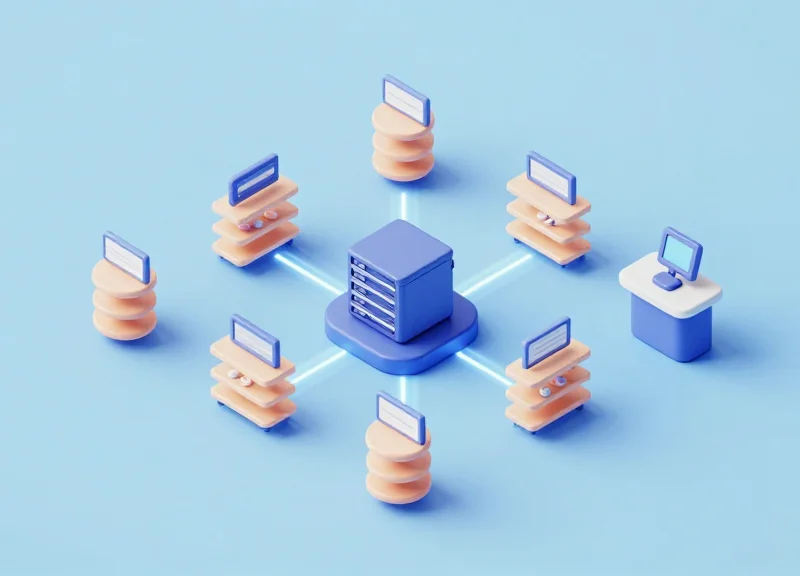
Technical integration is the architectural bridge that links your retail database (ERP or POS) to the physical shelf edge via a cloud-based or on-premise ESL Management Software. By utilizing RESTful APIs or scheduled CSV/XML data drops, the system ensures that whenever a price change is committed in the backend, a data packet is instantly transmitted through a wireless gateway to the specific segmented digital label. This closed-loop synchronization eliminates the 'price gap'—the discrepancy between the shelf price and the checkout price—which is a primary driver of customer dissatisfaction and regulatory fines.
- API Handshake and Authentication: The POS system initiates a secure connection with the ESL server using API keys or OAuth tokens to authorize data exchange.
- Field Mapping: Mapping backend database fields (such as SKU, Unit Price, and Promo Code) to the specific display segments on the digital label to ensure data appears in the correct location.
- Wireless Transmission via Gateway: The ESL software sends the updated data to physical Base Stations (Gateways) installed in the ceiling, which broadcast the update to the labels using low-power protocols like Zigbee or Sub-GHz.
- Acknowledgement Loop: The label sends a 'success' signal back to the server, confirming the update was received and rendered correctly on the display.
| Protocol Type | Range / Coverage | Battery Efficiency | Best Use Case |
|---|---|---|---|
| Zigbee (2.4GHz) | Medium (30-50m) | High | High-density retail environments |
| Sub-GHz (868/915MHz) | Long (100m+) | Very High | Large warehouses or hardware stores |
| Bluetooth (BLE) | Short (10-20m) | Medium | Customer interaction and wayfinding |
| Proprietary IR | Line of Sight | Moderate | Legacy systems with high interference |
Expert Insight: The 'Delta-Update' Strategy. To maximize the 5-10 year battery life of segmented labels, veteran integrators use 'Delta Updates.' Instead of re-transmitting the entire display image, the system only sends the specific numeric segments that have changed. This reduces transmission time by 70% and drastically lowers network congestion during massive store-wide price resets.
What happens if the Wi-Fi goes down?
Most professional ESL systems operate on a dedicated frequency (like Sub-GHz) independent of store Wi-Fi, meaning labels remain functional even if the public internet or local Wi-Fi fails.
How long does it take to update 10,000 labels?
With modern high-speed gateways, a store-wide update of 10,000 labels can typically be completed in under 15 minutes, depending on the network architecture.
Can I integrate ESL with my existing inventory software?
Yes. Beyond pricing, labels can display 'Low Stock' alerts or 'Next Delivery' dates by pulling data from your Inventory Management System (IMS).
Calculating Your ROI: A Roadmap for Digital Label Adoption
To accurately calculate the ROI of segmented digital labels, retailers must look beyond simple hardware costs and analyze the total cost of ownership (TCO) against the 'Triple-Win' of operational efficiency: eliminated manual labor, zero paper waste, and the prevention of regulatory fines due to pricing discrepancies. Most mid-to-large scale retail operations see a full return on investment within 14 to 22 months, primarily driven by a 40% reduction in labor hours previously dedicated to manual price audits and updates.
| Cost/Benefit Category | Manual Labeling (Annual) | Segmented ESL (Annual Proj.) | ROI Impact |
|---|---|---|---|
| Labor Costs | High ($15-25/hr per staff) | Near Zero (Automated) | Highest (Up to 80% savings) |
| Material Waste | Significant (Paper/Toner) | Zero (Digital Refresh) | High (Sustainability focus) |
| Pricing Errors | 2-5% Error Rate | 0% (POS Sync) | Moderate (Brand Trust) |
| Promo Agility | Days to implement | Seconds to implement | High (Margin Capture) |
A unique perspective often missed by generic calculators is the 'Labor Reallocation Value.' When you save 40% on labor costs, the ROI isn't just the saved wages; it is the revenue uplift generated when those employees are moved to the sales floor. In high-touch retail environments, every hour moved from 'back-of-house maintenance' to 'front-of-house consulting' can increase average basket size by 12-15%, effectively doubling the perceived ROI of the digital label infrastructure.
- Audit Current Pricing Workflows: Track the actual minutes spent per week on printing, sorting, and placing paper tags. Include the 'hidden' time spent on price verification audits.
- Establish Baseline Error Costs: Quantify the cost of 'price matching' at the register when a tag is wrong, and the potential cost of Weights and Measures fines in your jurisdiction.
- Pilot in a High-Velocity Category: Deploy segmented labels in high-churn areas (like produce or electronics) to measure immediate impact on agility and margin management.
- Model the 5-Year TCO: Factor in battery life (typically 5-10 years for segmented displays) and the software integration costs to find the true break-even point.
What is the most significant factor in rapid ESL ROI?
Labor intensity. Retailers with frequent price changes (daily or weekly) see the fastest ROI because the cumulative hours saved by automating the 'tag flip' are massive.
Do segmented labels require expensive infrastructure upgrades?
Generally no. Modern segmented digital labels operate on low-power RF or infrared signals that integrate with existing POS systems, minimizing the 'Technical Debt' often associated with digital transformation.
How does pricing integrity affect the bottom line?
Beyond preventing fines, it reduces 'cart abandonment' at the register. When a customer sees a different price at the till than on the shelf, trust is broken, often leading to a lost sale and a lost lifetime customer.
Future-Proofing Your Store with DragonGuardGroup Solutions
Future-proofing your retail environment requires moving beyond simple digitization toward a robust, scalable infrastructure that can withstand the evolving demands of modern commerce. DragonGuardGroup provides this foundation through specialized segmented digital labels that prioritize hardware longevity, sub-GHz signal reliability, and low-latency updates. By partnering with a specialist, retailers ensure that their investment doesn't just solve today's labor shortages but provides a platform for dynamic pricing strategies and real-time inventory synchronization for the next decade.
Unlike generalist technology providers, DragonGuardGroup focuses on the specific environmental stressors of the retail floor—such as high-frequency interference, physical impact, and extreme temperature fluctuations in grocery or hardware settings. Our solutions are engineered to minimize the Total Cost of Ownership (TCO) by eliminating the frequent maintenance cycles common with entry-level digital signage.
| Feature | Standard Market Solutions | DragonGuardGroup Solutions |
|---|---|---|
| Typical Battery Life | 3 - 5 Years | Up to 10 Years (Optimized Power) |
| Signal Stability | Standard 2.4GHz (High Interference) | Proprietary Low-Frequency Hopping |
| Update Success Rate | ~92-95% in high-traffic zones | 99.99% with 'Clean-Channel' Tech |
| Durability | Standard Plastic Housing | Industrial-Grade Reinforced Casing |
Will DragonGuardGroup labels integrate with my current legacy POS system?
Yes. Our systems are built with an API-first architecture, allowing seamless communication with older POS databases and modern cloud-based ERPs alike, ensuring no data silos.
How does the system handle massive SKU updates during holiday sales?
We utilize high-speed batch processing protocols that allow for thousands of price changes per minute across multiple store zones without draining battery health.
Is the hardware adaptable to different shelf types?
Our mounting solutions are universal and modular, designed to clip onto everything from standard grocery rails to specialized apparel displays and warehouse racking.
Expert Insight: Most retailers underestimate the 'Shadow Cost' of signal collisions in modern stores. With hundreds of customer smartphones and Wi-Fi routers operating simultaneously, generic ESLs often fail to receive update packets, leading to the very pricing errors you are trying to avoid. DragonGuardGroup utilizes an 'Interference-Resistant Protocol' (IRP) that operates on a separate frequency band from consumer Wi-Fi, ensuring that your price updates are never 'crowded out' by customer traffic. This technical edge is what allows our partners to maintain 100% pricing integrity during the busiest shopping hours of the year.