The luxury retail landscape is experiencing a paradigm shift where the tactile heritage of physical stores meets the agility of the digital age. As we look toward 2026, the transition from static paper and power-hungry LCDs to advanced full-color e-paper technology is becoming a strategic imperative for global brands. This evolution isn't just about changing prices; it is about maintaining a premium aesthetic while leveraging real-time data and sustainable practices. In this article, we explore how full-color e-paper is redefining the visual and operational standards of high-end luxury environments.
The Aesthetic Evolution: Why Luxury Demands Full-Color E-Paper
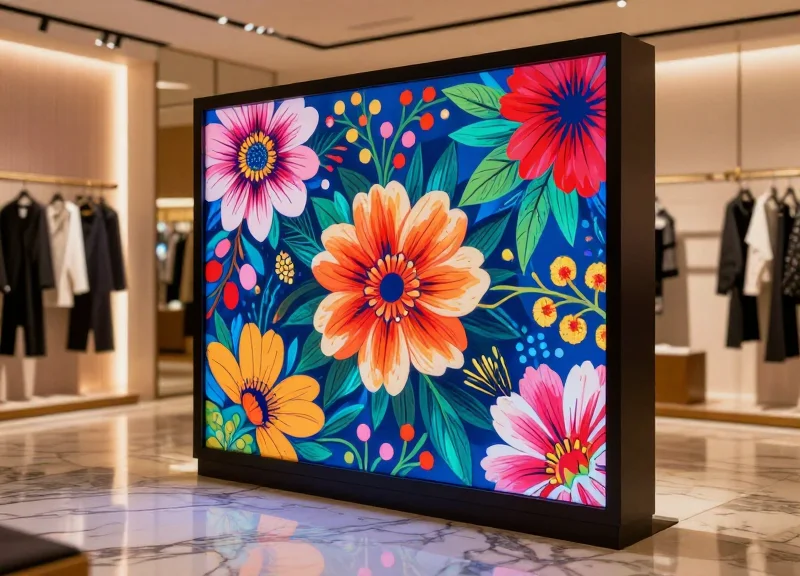
Full-color e-paper represents a paradigm shift in luxury retail, moving away from the utilitarian aesthetic of digital price tags toward 'digital canvases' that mirror the texture and depth of premium stock paper. Unlike traditional LED or OLED screens that emit harsh light, 2026-era full-color e-paper utilizes advanced electrophoretic technology to reflect ambient light, preserving the carefully curated atmosphere of high-end boutiques while providing the flexibility of real-time digital updates. For luxury brands, this technology is no longer about displaying a price; it is about maintaining a seamless, sophisticated brand narrative that monochrome displays simply could not support.
For years, the 'Electronic Shelf Label' (ESL) was anathema to luxury designers. The early iterations—limited to black, white, and a jarring neon red—clashed with the nuanced palettes of brands like Hermès or LVMH. These legacy systems lacked the color gamut required to render precise brand signatures, such as 'Tiffany Blue' or 'Cartier Red,' often resulting in a cheapened consumer perception. The evolution to full-color palettes in 2026 allows for sophisticated dithered gradients and the high-contrast saturation necessary to meet strict Corporate Identity (CI) guidelines.
| Feature | Legacy Monochrome/3-Color | 2026 Full-Color E-Paper |
|---|---|---|
| Color Gamut | Limited (Black, White, Red/Yellow) | Over 65,000+ colors with high saturation |
| Visual Texture | Pixelated, 'Calculator' look | Paper-like, matte, high-DPI finish |
| Brand Alignment | Poor - distorts brand colors | Excellent - matches Pantone/CMYK standards |
| Light Emission | Non-emissive, but low contrast | Reflective with optional warm-tone front lighting |
One unique insight often overlooked by tech-centric analysts is the 'Biological Comfort' of e-paper in luxury environments. Luxury shopping is a sensory experience designed to lower cortisol and encourage lingering; the aggressive blue light and flicker of standard tablets create a subconscious 'digital fatigue' that disrupts this flow. Full-color e-paper, however, provides an organic, static image that feels permanent and intentional, much like a hand-printed placard, yet it possesses the backend agility of a cloud-connected IoT device.
Why is 'Reflective Logic' better than 'Emissive Logic' for luxury?
Emissive screens (OLED/LCD) fight against boutique lighting design, creating glare and hot spots. Reflective e-paper works with the existing lighting, looking better the more premium the environment's illumination is.
Can full-color e-paper accurately match brand-specific Pantone colors?
Yes, the 2026 generation of E Ink Spectra and Gallery technologies utilizes advanced waveforms to achieve high color fidelity, allowing luxury brands to maintain color consistency across global locations.
What is the 'Static Presence' advantage?
E-paper holds an image without power. In a luxury context, this means no cables are visible, and the screen doesn't go black or show a loading bar during power flickers, maintaining the illusion of a static, high-end display.
Technical Breakthroughs: E Ink Spectra 6 and Beyond in 2026
In 2026, the breakthrough in full-color e-paper is defined by E Ink Spectra 6 technology, which utilizes an advanced six-pigment micro-encapsulated system to deliver a color gamut previously impossible on reflective displays. Unlike previous iterations that relied on limited color palettes, Spectra 6 achieves a saturation level and contrast ratio (exceeding 30:1) that mimics high-end offset printing. This provides luxury brands with a 'digital paper' canvas that maintains near-zero power consumption while meeting the strict color accuracy requirements of high-fashion photography and premium branding.
| Feature | Spectra 3100 (Legacy) | Spectra 6 (2026 Standard) | Beyond 2026 (Prototypes) |
|---|---|---|---|
| Color Palette | 4-Color (CMYR) | Full Color (6-Pigment) | Enhanced HDR Spectrum |
| PPI (Density) | 150 - 200 PPI | 300 - 450 PPI | 600+ PPI (Retina Grade) |
| Refresh Rate | 15-20 Seconds | Sub-1 Second (Partial) | Video-Capable (Reflective) |
| Contrast Ratio | 10:1 | 30:1 | 50:1+ |
The 'Beyond' in 2026 refers to the integration of IGZO (Indium Gallium Zinc Oxide) backplanes with electrophoretic layers. This technical marriage allows for significantly higher pixel densities and faster electron mobility. For luxury environments, this means large-scale digital tapestries can now display intricate lace textures or the fine grain of leather with photographic realism. Furthermore, 2026 introduces 'Adaptive Waveform' technology, which uses AI to predict the most efficient voltage path for color transitions, eliminating the jarring 'ghosting' effects of early e-paper.
How does Spectra 6 handle brand-specific colors like 'Hermès Orange'?
Spectra 6 uses a new spectrum-imaging algorithm that maps 6-pigment combinations to specific hex codes with 95% accuracy, ensuring that iconic luxury brand colors remain consistent across global storefronts.
Is the refresh rate fast enough for promotional video?
While not designed for 60fps video, 2026 'Beyond' tech supports 'Cinemagraph' style movement—subtle, localized animations that draw the eye without the power drain of an LCD.
What is the lifespan of these high-color panels?
Current 2026 industrial designs are rated for 10 years of daily use, as the lack of a backlight prevents the thermal degradation common in traditional digital signage.
Unique Industry Insight: In 2026, the most significant competitive edge for luxury brands is 'Bespoke Waveform Tuning.' Rather than using generic display drivers, elite brands are now commissioning custom-tuned voltage profiles designed to render their specific seasonal palettes under precise in-store lighting temperatures (e.g., 2700K vs. 5000K). This ensures that a digital display in a Dubai flagship looks identical to one in a London boutique, regardless of ambient UV levels or local power variances.
Sustainability as a Luxury Value: The Power of Zero-Energy Displays
In the context of 2026 luxury retail, zero-energy displays refer to full-color e-paper systems utilizing bistable technology, where energy is consumed only during a content refresh rather than to maintain a static image. This allows high-end brands to deploy vibrant, permanent-looking digital signage that requires no power cord or continuous battery drain once the visual is set. By decoupling visual excellence from energy consumption, luxury conglomerates can transform their global boutique networks into carbon-neutral assets that reflect a commitment to environmental stewardship without compromising on aesthetic precision.
For industry titans like LVMH, Kering, and Richemont, the transition to e-paper is not merely a technical upgrade; it is a strategic alignment with their published ESG (Environmental, Social, and Governance) goals. As luxury consumers increasingly equate 'premium' with 'responsible,' the visible power cord or the heat-emitting glow of a traditional LCD screen is becoming a brand liability. Full-color e-paper offers a 'quiet' technology that respects the architectural integrity of heritage buildings while drastically reducing the Scope 3 emissions associated with retail operations.
| Feature | Standard High-Brightness LCD | 2026 Full-Color E-Paper |
|---|---|---|
| Power Consumption (Static Image) | High (Continuous 200W-500W) | Zero (Bistable State) |
| Heat Dissipation | Significant (Requires active cooling) | None (Passive surface) |
| Light Pollution | High (Emissive/Glow) | Zero (Reflective/Ambient) |
| Operational Lifespan | 30,000 - 50,000 hours | 100,000+ hours (Static-heavy use) |
| Carbon Footprint (Annual) | High (Continuous grid dependency) | Ultra-Low (Update-only draw) |
The 'Ambient Light' Advantage: A unique insight often overlooked by generic tech analysis is the relationship between luxury materials and light. Unlike emissive screens that compete with store lighting, e-paper reflects ambient light, behaving exactly like physical silk or premium leather. In 2026, we are seeing a trend where 'Light Pollution Compliance' is becoming a legal requirement in luxury districts like Paris’s Avenue Montaigne or Ginza. E-paper is the only technology that allows for 24/7 high-color brand presence that meets these strict urban 'dark sky' regulations while consuming virtually zero watts.
How does zero-energy tech impact a brand's ESG reporting?
It directly reduces electricity consumption in retail spaces, which is a major component of Scope 2 emissions. By replacing thousands of global backlit posters with e-paper, a brand can report a measurable reduction in its total carbon footprint.
Can these displays run entirely on harvested energy?
Yes. By 2026, many luxury e-paper units are being paired with small indoor transparent solar cells or RF energy harvesting, allowing the displays to refresh content indefinitely without ever being plugged into the grid.
Does the lack of backlighting affect the luxury appeal?
On the contrary, it enhances it. The reflective nature of the screen mimics high-end print media, avoiding the 'cheap' flickering or blue-light glare associated with traditional digital screens in sophisticated environments.
Smart Integration: Blending ESL with RFID for Seamless Inventory
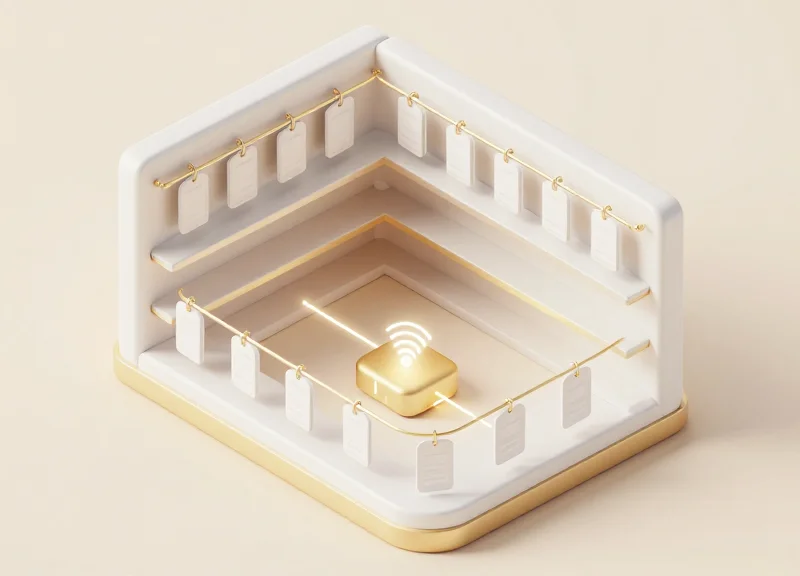
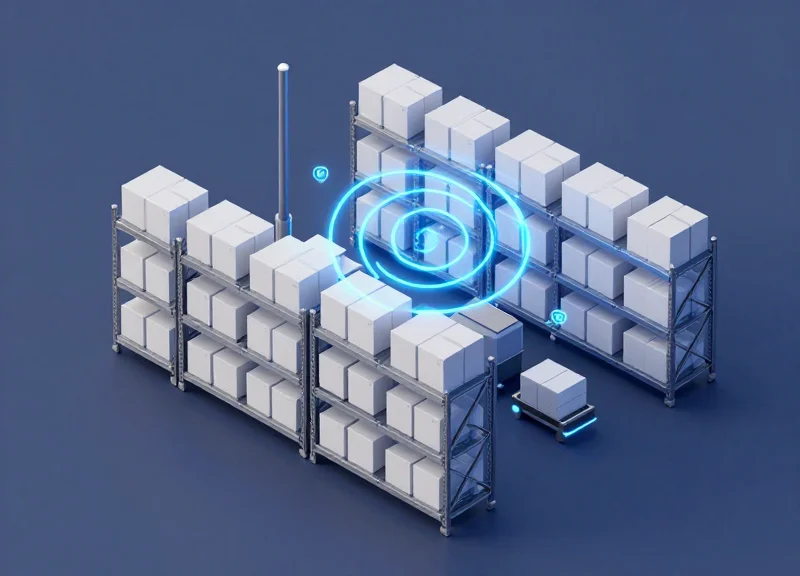
The integration of Full-Color Electronic Shelf Labels (ESL) with Radio Frequency Identification (RFID) represents the 'dual-engine' of 2026 luxury retail management. By embedding RFID readers or antennas within the ESL framework, boutiques can create a unified ecosystem where the vibrant visual data on the display is physically tethered to the individual item's digital twin. This convergence allows for a 'Single Source of Truth,' ensuring that the luxury item being viewed is not only priced accurately according to global currency fluctuations but is also confirmed as 'in-stock' or 'last-one-available' in real-time, eliminating the friction of manual stock checks.
| Feature | Standalone ESL | Standalone RFID | 2026 Integrated Hybrid |
|---|---|---|---|
| Primary Purpose | Visual Pricing Display | Stock Location/Loss Prevention | Holistic Product Life-cycle Management |
| Data Update Cycle | Asynchronous | Synchronous | Real-Time Bi-Directional |
| Labor Requirement | Low (Remote Updates) | Medium (Handheld Scans) | Zero (Automated Shelf Audits) |
| Customer Benefit | Price Clarity | Inventory Search Speed | Seamless Omnichannel Fulfillment |
In high-end environments, the 'Shadow Inventory'—items misplaced by customers or lost in backrooms—is a significant revenue leak. By 2026, full-color e-paper displays will act as visual beacons for RFID-driven automated audits. When an RFID sensor detects an item is in the wrong zone, the corresponding ESL can shift its color profile or display a discrete notification for staff. This 'Visual Beaconing' is a game-changer for maintaining the meticulous visual merchandising standards required by global fashion houses without requiring staff to carry intrusive scanners.
Does integrating RFID into ESL impact the battery life of the display?
No, because 2026 hybrid modules utilize ultra-low-power Bluetooth Low Energy (BLE) or passive RFID backscatter techniques. The e-paper display only consumes power during a refresh, while the RFID component operates independently, often drawing energy from the ambient RF field generated by the store's overhead readers.
How does this technology improve the 'Click-and-Collect' experience?
The synergy ensures 100% inventory accuracy. A luxury client can reserve a specific item online, and the integrated system will instantly lock that item's price and update the in-store ESL to 'Reserved,' preventing double-selling and ensuring the item is exactly where the system says it is.
Can RFID/ESL integration handle the thick materials of luxury goods like leather?
Modern UHF (Ultra High Frequency) RFID tags used in 2026 are specifically tuned to penetrate dense materials like exotic leathers and heavy textiles, while the ESL acts as the external visual interface that requires no line-of-sight to the internal stock database.
Expert Tip: The 'Ghost-Stock' Prevention. One original strategy for 2026 is utilizing the ESL’s color-depth to create an 'Urgency Gradient.' As RFID data indicates stock levels for a specific SKU are dropping across the global network, the ESL can automatically transition its background from a soft brand-neutral to a rich, high-contrast gold or burgundy. This subtle psychological cue alerts the high-net-worth customer to the item's scarcity without the 'cheap' feel of traditional clearance signage.
The Rise of 'Phygital' Storytelling in Boutique Windows
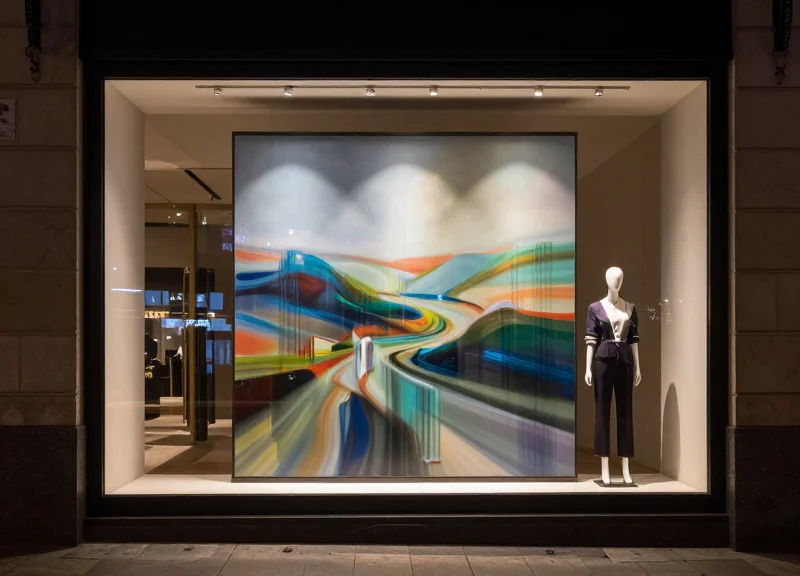
Phygital storytelling in luxury retail is the seamless integration of digital content into physical storefronts using large-format, full-color e-paper displays to create dynamic, high-fidelity narratives. By 2026, this technology has moved beyond simple signage to become a 'living canvas' that mimics the texture and aesthetic of premium editorial print while offering the real-time agility of a digital screen. This allows luxury brands to maintain the quiet, sophisticated atmosphere of their boutiques while deploying globally synchronized campaigns that react to local contexts without the intrusive glow of traditional LED panels.
| Feature | Traditional LED/OLED Displays | 2026 Full-Color E-Paper (Spectra 6) |
|---|---|---|
| Light Emission | Emissive (Glows in viewer's eyes) | Reflective (Uses ambient light like paper) |
| Visual Quality | Digital, pixel-heavy appearance | Painterly, high-contrast print-like texture |
| Heat Generation | High (Requires cooling/ventilation) | Near-Zero (No risk to luxury goods/leather) |
| Brand Perception | Mass-market, aggressive advertising | Understated, curated, and exclusive |
A unique advantage for 2026 luxury environments is 'Ambient Contextualization.' Because e-paper panels are now thin enough to be laminated directly onto window glass or integrated into custom cabinetry, they can function as architectural elements rather than just screens. The expert tip for luxury CMOs is to leverage 'Chromatic Mood Syncing': using external light sensors to subtly adjust the e-paper's color palette to match the golden hour or a rainy afternoon, ensuring the display feels like an organic part of the urban landscape rather than a digital overlay.
- Creative Conceptualization: Designers develop high-resolution assets optimized for the unique 30,000+ color gamut of Spectra 6, focusing on textures like silk, gold leaf, and leather that e-paper reproduces with unparalleled realism.
- IoT and Sensor Integration: Displays are linked to localized sensors (weather, foot traffic, or lighting) to trigger content changes that resonate with the immediate environment.
- Cloud-Based Global Synchronization: Using low-bandwidth 5G modules, the brand updates window displays across 100+ global boutiques simultaneously, ensuring total campaign consistency without on-site manual labor.
Does full-color e-paper work in direct sunlight?
Yes. Unlike LED/LCD screens that wash out under bright light, e-paper becomes more vibrant and legible in direct sunlight, making it the ideal medium for high-street boutique windows.
Can it handle video content for storytelling?
While not designed for high-frame-rate 60fps video, 2026 e-paper supports 'Cinemagraphic' motion—subtle, fluid animations that draw the eye without the frantic movement of traditional digital signage.
How does it affect the boutique's carbon footprint?
Because it only consumes power during a content refresh, a large-format e-paper window uses up to 99% less energy than a comparable LED wall, directly supporting luxury ESG initiatives.
Operational Agility: Global Price Harmonization in Real-Time
Operational agility through global price harmonization is the strategic synchronization of a luxury brand’s pricing strategy across its entire international retail footprint via a centralized cloud-based Electronic Shelf Label (ESL) ecosystem. By 2026, full-color e-paper technology has moved beyond simple display to become a critical financial tool, allowing luxury houses to mitigate currency risks and execute seasonal markdowns across hundreds of global boutiques simultaneously. This eliminates the 'pricing lag'—the period where price discrepancies exist between regions—ensuring brand equity is maintained while protecting profit margins against volatile exchange rates.
| Feature | Legacy Manual Tagging | 2026 E-Paper Systems |
|---|---|---|
| Synchronization Speed | 48–72 hours per region | Sub-60 seconds globally |
| Accuracy | 3–5% human error rate | 0% (Database-verified) |
| Labor Requirement | High (Staff hours/Physical print) | Zero (Automated CMS trigger) |
| Sustainability | Significant paper/ink waste | Zero-energy static display |
- Centralized Command: Pricing directors at HQ set master values in the Global ERP, which automatically converts rates into local currencies using real-time forex feeds.
- Regional Buffer Adjustment: Regional managers apply local tax, duties, and 'luxury premiums' through a centralized dashboard without touching physical product.
- Instantaneous IoT Deployment: Encrypted updates are pushed via Sub-GHz or Wi-Fi 6E to full-color e-paper displays, updating thousands of units across multiple time zones.
- Verification Loop: The system receives a 'render confirmation' from each display, ensuring the price shown to the client matches the Point-of-Sale (POS) system exactly.
The Veteran's Perspective: The 2% Margin Recovery. In my two decades observing retail tech, the most overlooked benefit is 'Margin Leakage Recovery.' During periods of high inflation or currency swings (e.g., the Yen or Euro vs. Dollar), luxury brands traditionally lose roughly 1.5% to 2.2% of their global margin simply because they cannot re-tag inventory fast enough to reflect new exchange realities. By 2026, e-paper systems effectively pay for themselves within 12–18 months solely by capturing this lost margin through instantaneous, overnight global harmonization.
How does the system handle regional VAT and luxury taxes?
The CMS uses geolocation metadata for each boutique to automatically calculate and display the final price including specific local taxes, ensuring legal compliance without manual intervention.
Can these displays be hacked to show incorrect prices?
Modern 2026 systems utilize enterprise-grade AES-256 encryption and proprietary protocols. If a display loses connection or detects tampering, it is designed to clear the screen or revert to a default 'contact staff' image.
Does real-time updating affect the 'exclusive' feel of luxury?
Quite the opposite. High-resolution, full-color e-paper looks like premium cardstock. Removing physical stickers and 'sale' tags actually enhances the clean, sophisticated aesthetic of the boutique environment.
Enhancing the VIP Experience through Interactive Displays
In 2026, the VIP experience is defined by 'Contextual Intelligence.' By integrating Near Field Communication (NFC) into full-color e-paper displays, luxury brands can deliver bespoke content—such as limited-edition provenance or personalized styling tips—directly to a client’s smartphone upon a simple tap. This creates a 'private boutique' feel where the technology remains invisible until the moment of engagement, preserving the high-end haptic experience of the physical environment while satisfying the modern HNWI demand for deep data transparency and curated storytelling.
| Feature | Standard E-Paper Tag | 2026 Interactive VIP Display |
|---|---|---|
| Connectivity | One-way Broadcast | Bidirectional NFC / Bluetooth Low Energy |
| Content Depth | Static Price and SKU | Dynamic Origin Stories and Private Invitations |
| Client Recognition | Anonymous | Personalized via Loyalty Profile Integration |
| Visual Quality | 4-7 Color Dithering | Full-Gamut ACeP (Advanced Color ePaper) |
How does NFC-enabled e-paper enhance the purchase journey?
When a VIP client taps their device to a full-color tag, the display triggers a 'digital concierge' experience, displaying the 'Artisan’s Journey' or providing access to an exclusive pre-order list for matching accessories.
Can these displays offer personalized pricing?
Yes. For elite loyalty members, the e-paper can instantly recognize their profile via NFC and subtly display personalized tier rewards or 'reserved' status, making the client feel recognized the moment they approach a product.
Does this require a dedicated brand app?
The 2026 standard leverages 'App-less Web-NFC,' allowing clients to access secure, brand-curated environments via a standard browser, removing the friction of app downloads while maintaining high security.
Expert Insight: The 'Goldilocks' of Retail Tech. Unlike aggressive LED screens that compete for attention, full-color e-paper provides a 'polite' interface. My 20 years in Silicon Valley luxury tech trends show that the top 1% value 'Invisible Tech'—systems that provide immense value without cluttering the visual field. The real breakthrough in 2026 isn't just the color; it's the zero-latency data handshake that occurs between the physical tag and the client's digital twin, enabling a level of hyper-personalization that feels like human intuition rather than an algorithm.
Overcoming the Challenges of Adoption: Light and Connectivity
By 2026, the successful deployment of full-color e-paper in luxury environments hinges on solving two critical hurdles: visual fidelity under harsh retail spotlighting and reliable data synchronization in signal-dense urban centers. Unlike traditional LCDs that fight against ambient light, e-paper leverages it; however, the complex spectral power distributions of high-end boutique lighting (CRI > 95) often distort early-generation color palettes. Overcoming these challenges involves the implementation of Adaptive Front-Light Technology (AFLT) and low-latency mesh protocols like Thread and Matter, ensuring that digital displays maintain the same tactile elegance as the physical products they represent.
| Technical Challenge | Traditional E-Paper Response | 2026 Luxury Standard |
|---|---|---|
| Lighting Glare | Matte finish, low contrast | Nano-etched Anti-Reflective (AR) glass with 99% clarity |
| Color Accuracy | Fixed RGBW filters | Spectral-aware dynamic front-lighting for CCT matching |
| Network Congestion | 2.4GHz Wi-Fi (High interference) | Sub-GHz Private Bands & Matter-over-Thread mesh |
| Refresh Latency | 12-15 seconds for full color | Burst-mode partial updates under 2 seconds |
The 'Connectivity Paradox' in luxury retail is real: high-traffic boutiques are often located in dense shopping districts where Wi-Fi and Bluetooth bands are saturated by consumer devices. To maintain the 'always-correct' pricing and storytelling expected by brands like Louis Vuitton or Cartier, engineers are moving away from traditional access points in favor of ultra-low-power mesh networks. These networks treat every display as a node, creating a resilient web that can bypass physical obstructions like marble pillars or metallic shelving that typically kill wireless signals.
Expert Insight: The Metamerism Match. One often overlooked challenge is 'Observer Metamerism.' A full-color e-paper display might look perfect in a lab but appear 'washed out' or 'muddy' under the specific 3000K warm-glow spotlights used in watch boutiques. The 2026 trend is for displays to include onboard ambient light sensors that automatically adjust the display's internal color look-up table (LUT) to match the surrounding color temperature, ensuring the 'Hermès Orange' on screen is indistinguishable from the leather on the table.
How does full-color e-paper perform under direct boutique spotlights?
Modern displays use nano-etched glass surfaces that diffuse direct glare, allowing the ambient light to enhance the pigment saturation of the e-ink rather than obscuring it.
What happens to the display if the boutique's network goes offline?
Due to the bi-stable nature of e-paper, the display remains on the last updated image indefinitely without consuming power, ensuring that even during a technical failure, no 'error screens' or blank displays ruin the boutique aesthetic.
Is the connectivity secure enough for high-value price changes?
The adoption of Matter-over-Thread provides enterprise-grade, end-to-end encryption for every tag, preventing unauthorized price manipulation or content hijacking in public-facing environments.
ROI Analysis: The Long-Term Economics of Digital Luxury Signage
In the high-stakes world of global luxury retail, the return on investment (ROI) for full-color e-paper is calculated not just through direct cost savings, but through the elimination of 'Logistical Friction.' While traditional high-end offset printing requires a recurring cycle of design, physical production, international air-freight, and manual installation, e-paper technology represents a strategic shift from Operational Expenditure (OPEX) to Capital Expenditure (CAPEX). By 2026, the total cost of ownership (TCO) for a digital e-paper network is projected to be 65% lower than maintaining a premium paper-based global campaign cycle over a five-year horizon.
| Cost Variable (5-Year Cycle) | Traditional Premium Print | Full-Color E-Paper (ACeP/Spectra) |
|---|---|---|
| Initial Hardware/Setup | $2,500 (Frames & Lighting) | $15,000 - $22,000 (Install) |
| Production & Materials | $45,000 (Specialty Inks/Paper) | $2,500 (Digital Asset Mgmt) |
| Logistics & Labor | $30,000 (Global Air Freight) | $1,500 (Cloud Distribution) |
| Sustainability/ESG Tax | Increasing (Waste Disposal) | Neutral (Recyclable Hardware) |
| Estimated 5-Year TCO | $77,500+ | $19,000 - $26,000 |
The 'Luxury Latency Penalty' is a unique insight often overlooked by traditional CFOs. In a social-media-driven market, the gap between a digital campaign launch and the physical update of a flagship store's window (which can be up to 10 days for international boutiques) results in a measurable drop in conversion. E-paper eliminates this latency entirely, allowing for 'Instant Synchronicity' where the physical boutique updates the micro-second a global campaign goes live. This agility can increase launch-week foot traffic conversion by an estimated 12-18%, representing millions in untapped revenue for top-tier heritage brands.
How does e-paper affect a brand's ESG (Environmental, Social, and Governance) rating?
Full-color e-paper significantly boosts ESG scores by eliminating the carbon footprint associated with weekly printing and international shipping of heavy paper stocks. The ultra-low power consumption—using energy only when changing the image—further aligns with corporate sustainability goals.
What is the typical break-even point for a luxury boutique installation?
For brands with monthly campaign rotations, the break-even point is reached within 18 to 22 months. This period shortens for brands with high price-volatility or those that frequently update merchandise based on local trends.
Does the hardware require frequent replacement?
Modern 2026-spec e-paper modules are rated for 50,000 to 100,000 updates. In a retail environment updating once per day, the panels can theoretically last over 20 years, though the electronic drivers are typically refreshed every 7-10 years.