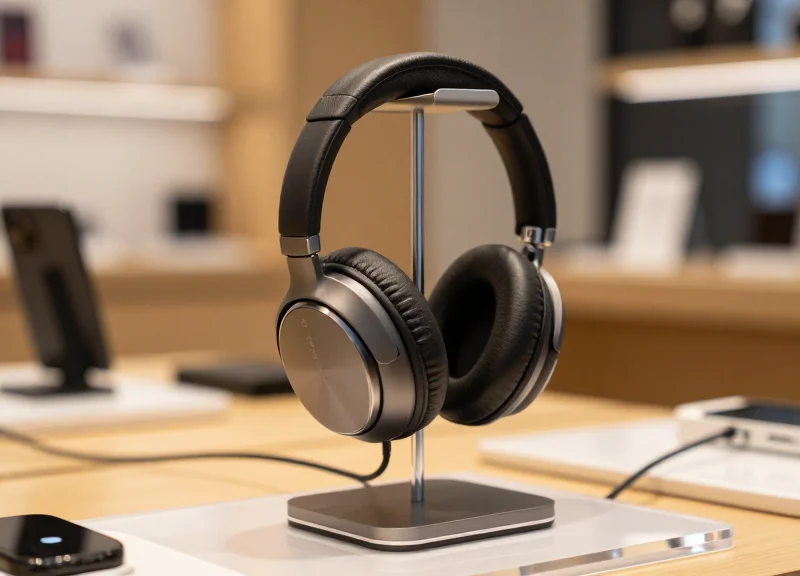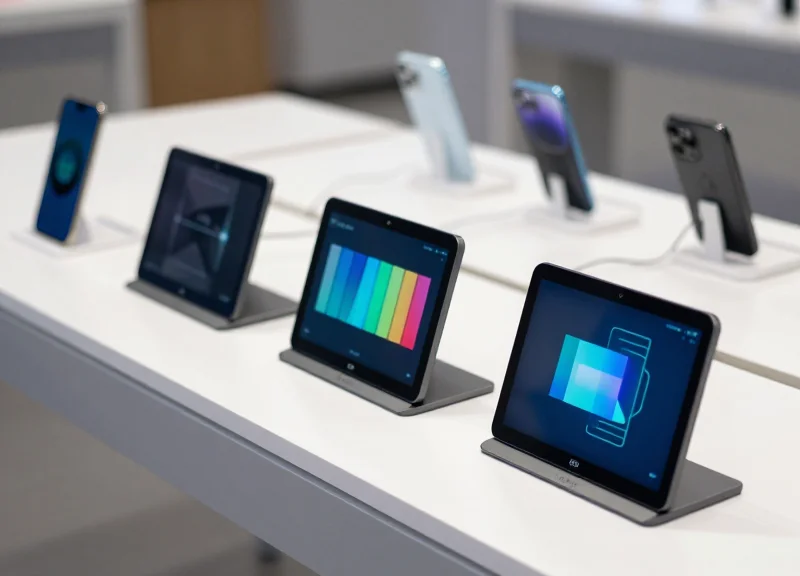
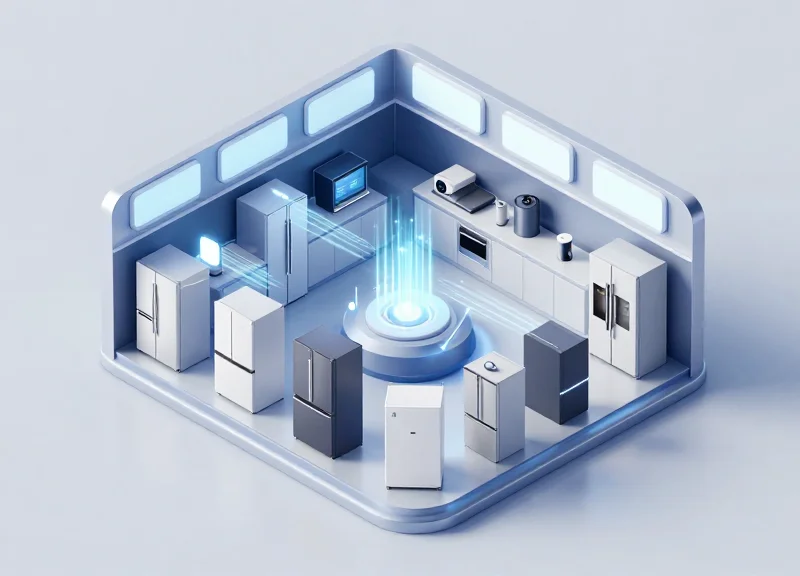
As we approach 2026, the boundary between digital and physical retail is dissolving into what we call 'Smart Spaces.' For appliance retailers, this evolution is a matter of survival. Traditional brick-and-mortar stores have long struggled with 'showrooming' and the aggressive, minute-by-minute price fluctuations of online giants. However, a new defensive—and offensive—weapon has emerged: Next-Gen Electronic Shelf Labels (ESL). No longer just digital price tags, these IoT-enabled devices are the linchpin of a strategy that synchronizes store prices with the web in real-time, protecting margins and restoring consumer trust.
The 2026 Retail Landscape: Defining the Smart Space
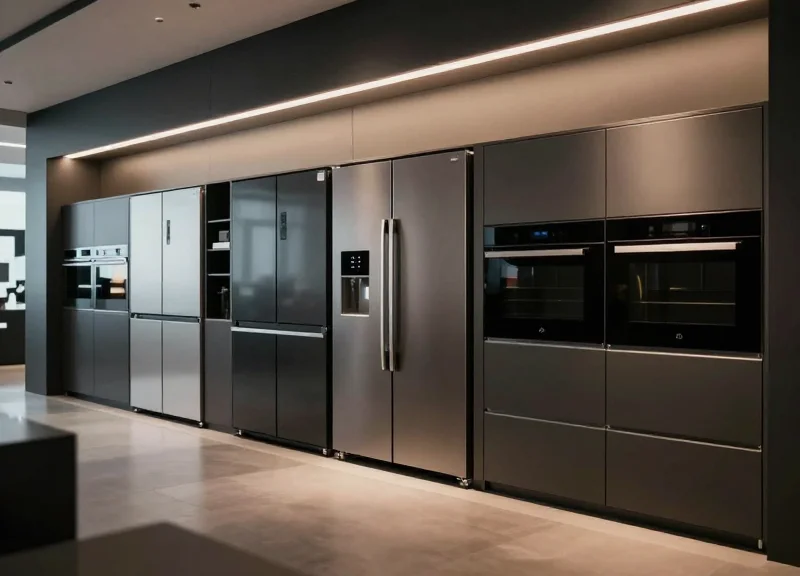
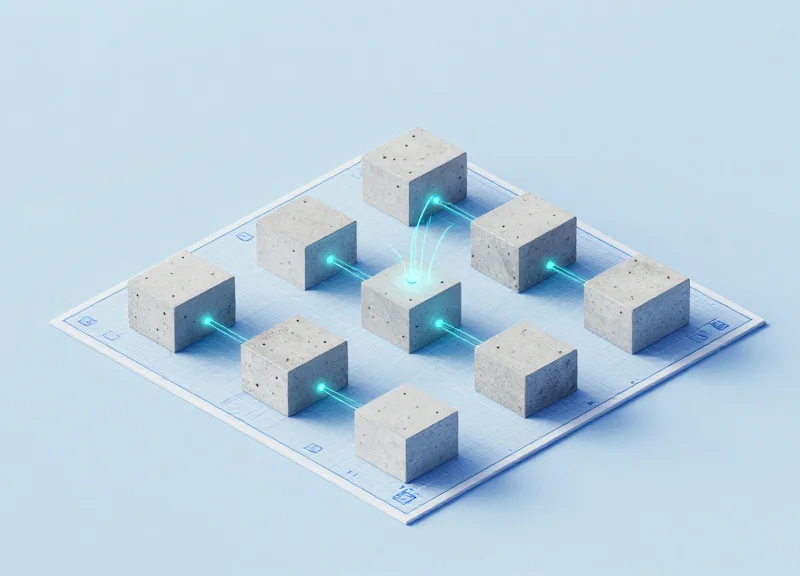
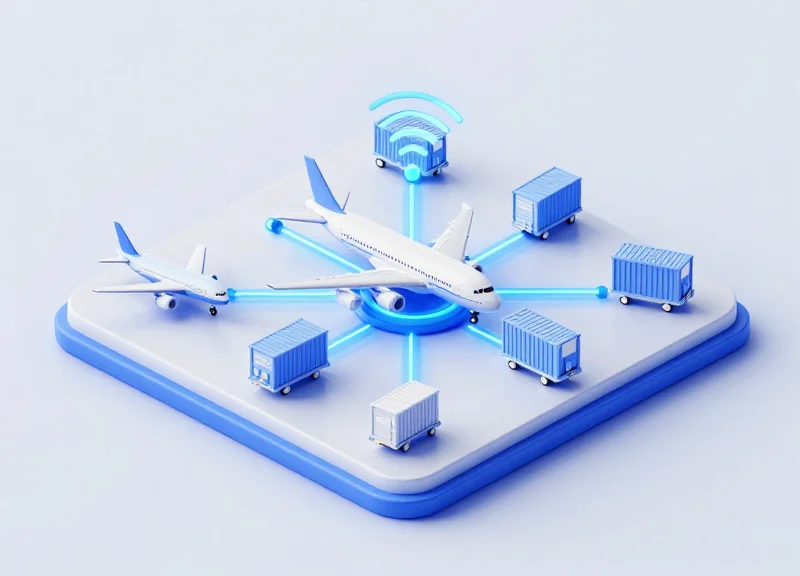
By 2026, the retail 'Smart Space' is defined as a hyper-connected physical environment where the boundary between e-commerce and brick-and-mortar dissolves entirely. It is a strategic ecosystem powered by IoT sensors, Edge computing, and Next-Gen Electronic Shelf Labels (ESL) that allows appliance retailers to execute 'Cognitive Commerce'—a state where the store environment autonomously reacts to global market fluctuations, local inventory levels, and individual consumer behavior in real-time. This transformation turns the showroom from a passive gallery into an active participant in the sales conversion process.
What makes a space 'Smart' in 2026?
A 2026 Smart Space is characterized by three pillars: total data visibility, dynamic price synchronization, and interactive customer engagement. It utilizes a network of ESLs and sensors to ensure that the physical shelf-edge is always more accurate and compelling than a web browser.
How does Next-Gen ESL support this landscape?
ESL technology has evolved from mere price tags to 'Miniature Marketing Hubs.' They provide real-time competitive price matching, instant stock availability across the entire supply chain, and QR-enabled deep-dive product specs that keep the consumer focused on the floor model.
Why is connectivity crucial for appliance retailers?
High-ticket appliances require high-trust sales. Connectivity allows the store to push social proof (reviews) and carbon footprint data directly to the product tag, bridging the information gap that previously drove customers to search online.
| Feature | Legacy Showroom (Pre-2024) | 2026 Smart Space |
|---|---|---|
| Pricing Strategy | Static/Manual Updates | Dynamic/Real-time AI Sync |
| Data Collection | Anecdotal/Post-Sale | Predictive/In-Aisle Heatmapping |
| Inventory Visibility | Periodic Manual Counts | Perpetual IoT-Tracking |
| Consumer Interaction | Salesperson Dependent | Autonomous Digital Interaction |
The Veteran's Insight: Micro-Moment Arbitrage. Having spent two decades observing retail shifts from Silicon Valley, the true breakthrough for 2026 is what I call 'Micro-Moment Arbitrage.' Traditional retailers lose sales during the 30-second window when a customer pulls out their phone to compare prices. In a 2026 Smart Space, Next-Gen ESLs detect this 'dwell time' via proximity sensors and can automatically trigger a 'Loyalty-Exclusive' price or an 'Instant Bundle' discount on the digital tag itself. You aren't just matching prices; you are winning the psychological battle of the 'Better Deal' right at the point of decision.
The Online Erosion Crisis: Why Appliances are at Risk
In the context of 2026 retail, the 'Online Erosion Crisis' refers to the systemic loss of profit margins and sales volume experienced by brick-and-mortar retailers when their static in-store pricing fails to keep pace with the hyper-dynamic, algorithmic pricing of e-commerce giants. For the appliance sector, this is particularly lethal; because appliances are high-ticket 'considered purchases,' consumers are psychologically primed to seek even a 2-3% price difference, which—on a $3,000 smart refrigerator—represents a significant $90 'convenience tax' that customers are increasingly unwilling to pay. This creates a showrooming effect where the physical store bears the overhead of the sales consultation while the online competitor captures the transaction.
| Feature | Legacy Retail Reality | Online E-Commerce Model | Erosion Impact |
|---|---|---|---|
| Price Update Speed | Weekly/Monthly (Manual) | Real-time (Algorithmic) | Lag time creates 'price traps' |
| Consumer Behavior | Showrooming for features | Instant price-match apps | Lost conversion at the shelf |
| Margin Health | Fixed MSRP focus | Dynamic/Loss-leader tactics | Forced discounts to close sales |
| Stock Visibility | Lagging inventory data | Live API updates | Out-of-stock drives users online |
Why are appliances more vulnerable to price erosion than other electronics?
Unlike small gadgets, appliances carry high 'regret risk.' Consumers spend weeks researching. When they find a lower price online, the high unit cost amplifies the perceived savings, making the effort to switch retailers feel highly rewarding even for small percentage differences.
What is the psychological impact of price transparency on the showroom floor?
Modern shoppers experience 'Price Delta Paradox.' If they see a higher price in-store than on their mobile device, it breaks the trust bond with the salesperson, making the consumer feel the retailer is exploitative rather than helpful.
Does online price erosion affect brand loyalty?
Yes. In the smart space era, loyalty is often secondary to transparency. If a retailer cannot provide real-time price parity, the consumer views the brand as 'analog' and 'out of touch,' which diminishes the perceived value of any after-sales service or warranty.
Unique Insight: The 'Elasticity of Proximity' Threshold. My research into Silicon Valley retail tech reveals a specific vulnerability point for 2026: the $50 threshold. For purchases over $1,000, a price difference as small as $50 is the 'switch trigger' that causes a customer to walk out of a store. In legacy retail, changing a paper tag takes hours, but an online algorithm can cross that $50 threshold in milliseconds. Without automated pricing, appliance retailers are essentially fighting a high-frequency trading war with a hand-cranked printing press.
Next-Gen ESL: The Strategic Shield Against Showrooming
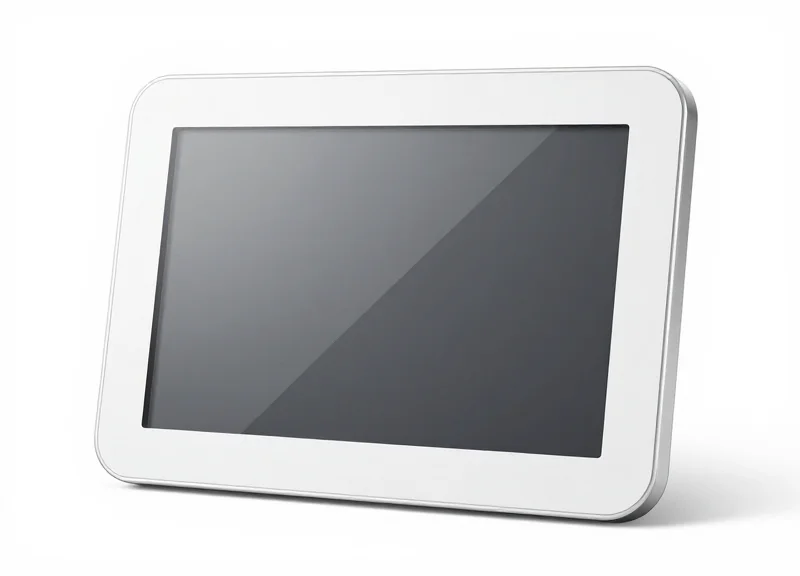
Next-Gen ESL (Electronic Shelf Labeling) acts as a strategic shield against showrooming by removing the price discrepancy that triggers consumers to seek online alternatives. By integrating with cloud-based pricing engines, these smart displays allow appliance retailers to match or beat online competitor prices in seconds, effectively 'locking' the customer into the physical environment. When a consumer sees that the premium refrigerator on the floor is priced identically to the lowest offer on their smartphone, the psychological urge to cross-shop is replaced by the immediate gratification of an in-store purchase.
| Feature | Traditional Paper Labels | Next-Gen ESL (2026) |
|---|---|---|
| Update Latency | 24-48 Hours (Manual) | Sub-60 Seconds (Automated) |
| Pricing Strategy | Static / Reactive | Dynamic / Predictive |
| Consumer Interaction | Visual Only | NFC & QR Code Enabled |
| Margin Protection | High Risk of Erosion | Optimized via AI Guardrails |
The 'Frictionless Validation' Strategy: My experience in Silicon Valley retail tech suggests that the battle isn't won by price alone, but by validation. Next-gen ESLs do more than show a number; they serve as a trust portal. By using 4-color e-ink displays to show 'Price Match Verified' badges next to competitor logos, retailers can preemptively answer the customer's doubt before they even pull their phone out of their pocket. This is the transition from a passive price tag to an active sales closer.
- Competitor Scraping: The retail system continuously monitors major online appliance marketplaces for price fluctuations on specific SKUs.
- AI Filtering: A central AI engine evaluates the competitor's price against the retailer's minimum margin guardrails to approve a dynamic adjustment.
- Edge Execution: The approved price is pushed via IoT gateways (Sub-Giga or BLE) to the specific ESL on the showroom floor instantly.
- Customer Reassurance: The label updates with a 'Verified Best Price' badge, incentivizing the customer to complete the transaction on the spot.
Doesn't dynamic pricing hurt my profit margins?
Actually, it protects them. Without ESL, you lose 100% of the sale to an online competitor. With ESL, you can use AI to drop prices only when necessary and raise them instantly when competitor stock is low, optimizing overall yield.
How do shoppers react to prices changing while they are in the store?
By 2026, consumers are accustomed to dynamic pricing in travel and transport. In retail, transparency is key: showing a 'Last Updated' timestamp on the ESL builds trust rather than suspicion.
Can ESL help with high-ticket items like premium appliances?
Absolutely. For high-ticket items, the ESL can trigger a 'Request Expert' alert to a salesperson's tablet when it detects a customer hovering, combining digital price-matching with human expertise.
Real-Time Dynamic Pricing: The End of Manual Updates

Real-time dynamic pricing is the automated synchronization of shelf-edge pricing with a retailer's central ERP and POS systems, executed via a wireless network in seconds. For appliance retailers in 2026, this technology transforms the pricing strategy from a reactive, labor-intensive process into a proactive, algorithmic operation. By replacing traditional paper tags with IoT-enabled Electronic Shelf Labels (ESL), retailers can update thousands of high-ticket items simultaneously, ensuring that the price a consumer sees on the showroom floor perfectly matches the digital storefront and the checkout register, effectively eliminating the 'manual update' bottleneck.
| Feature | Legacy Manual Updates | Next-Gen ESL Dynamic Pricing |
|---|---|---|
| Update Frequency | Weekly or Bi-weekly | Instant / Real-time |
| Labor Requirement | High (Hours of staff time) | Zero (Automated) |
| Price Accuracy | 85-95% (Subject to human error) | 100% (Direct ERP Sync) |
| Strategy Agility | Extremely Low | High (Flash sales & AI-driven) |
| Consumer Trust | Fragile (Discrepancies common) | Robust (Consistent omnichannel pricing) |
The operational drain of manual updates is particularly acute in the appliance sector. A typical big-box showroom may house 500 to 2,000 unique SKUs, ranging from smart refrigerators to compact dishwashers. Manually verifying, printing, cutting, and placing paper labels for these items takes dozens of man-hours per week. More importantly, it introduces a dangerous lag time. In an era where online prices fluctuate based on supply chain shifts or competitor flash sales, a four-hour delay in updating a physical tag can result in thousands of dollars in lost margin or, worse, a customer lost to a lower online price found via a quick mobile search.
- Data Ingestion: The central ERP system analyzes competitor pricing, inventory levels, and current promotions to determine the optimal price point for a specific SKU.
- Wireless Broadcast: The new price is pushed through a sub-GHz or BLE (Bluetooth Low Energy) gateway, reaching every ESL in the store in under 60 seconds.
- Visual Confirmation: The ESL screen updates its E-ink display. Some models use high-visibility LEDs to flash, signaling to staff that a significant price change has occurred.
- Loopback Verification: The system provides a 'read-receipt' back to the central server, confirming that the shelf-edge price is now 100% consistent with the POS system.
Do customers find price changes frustrating?
On the contrary, shoppers in 2026 value consistency. When they see a price update in real-time to match a web promotion, it builds trust that the retailer is offering the best possible deal without the need for haggling.
Does this require a constant IT presence?
Modern ESL systems are designed for 'set-and-forget' reliability. With battery lives extending up to 10 years, the hardware maintenance is minimal compared to the recurring cost of paper and ink.
Can dynamic pricing be used for more than just discounts?
Yes. Retailers use it for 'Scarcity Signaling.' When stock levels for a popular dryer drop below a certain threshold, the ESL can automatically update to show 'Only 2 Left,' driving urgency and conversion.
Expert Tip: The 2026 competitive edge isn't just about lowering prices; it's about the 'Margin Recovery Bounce.' While competitors are stuck in a race to the bottom, smart retailers use ESLs to automatically raise prices by 1-2% the moment a competitor runs out of stock or a local demand spike is detected by AI. This 'micro-revenue' optimization is impossible with manual labels but adds significant bottom-line value over an annual cycle.
Enhancing the Customer Journey with Integrated QR and RFID
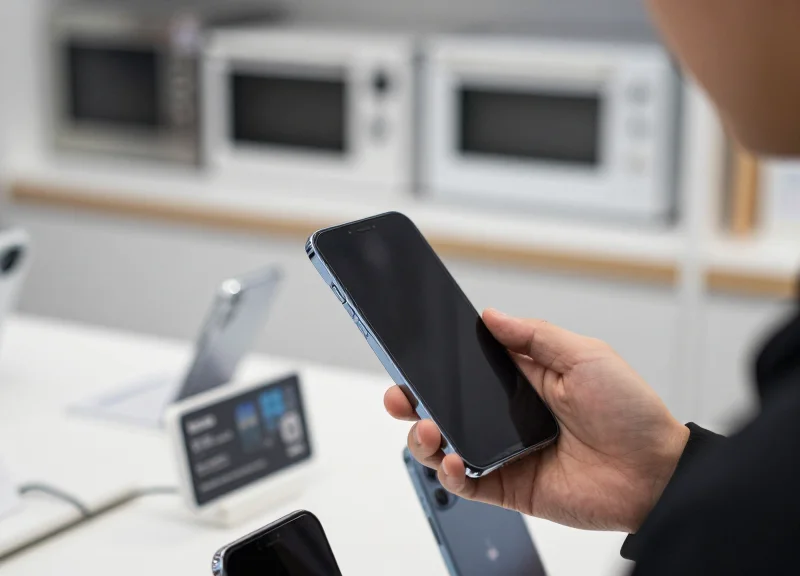
In the 2026 retail landscape, the 'Information Gap'—the disparity between the sparse data on a paper tag and the wealth of data on a mobile browser—is the primary driver of showrooming. Integrated QR and RFID technologies within Next-Gen ESLs eliminate this friction by acting as a phygital gateway. By scanning an ESL, customers instantly access rich media, real-time stock levels, and peer reviews, effectively bringing the depth of the online experience directly to the physical showroom floor. This transparency builds the trust necessary to close high-ticket appliance sales without the customer feeling the need to 'double-check' prices or specs elsewhere.
The integration of RFID (Radio Frequency Identification) further evolves this journey from passive browsing to active engagement. Unlike traditional barcodes, RFID allows for proximity-based interactions. When a customer nears a premium refrigerator, the ESL can trigger personalized content on nearby digital signage or the customer’s own loyalty app, creating a tailored sales environment that a static online storefront simply cannot replicate.
| Feature | Traditional Paper Tags | Integrated QR/RFID ESL |
|---|---|---|
| Product Depth | Static price and name only. | Dynamic links to videos, AR demos, and full specs. |
| Comparison Capability | Manual and time-consuming. | Instant side-by-side digital comparisons via QR. |
| Stock Transparency | Requires staff intervention. | Real-time local and warehouse inventory status. |
| Personalization | None. | Proximity-triggered offers via RFID/Bluetooth. |
Expert Tip: Don't treat QR codes as mere links to your website. In 2026, the most successful appliance retailers use 'Contextual QR.' This means the link changes based on time of day or inventory levels. For example, if an item is the last one in stock, the QR code leads to an 'Instant Purchase' page with a limited-time 'Take It Home Today' discount, creating urgency that overrides the desire to shop around online.
Does the use of QR codes encourage customers to stay on their phones?
Counter-intuitively, it keeps them within your ecosystem. By providing the reviews and specs they want through your own QR-gated portal, you prevent them from opening a search engine where competitor ads and lower prices would inevitably appear.
How does RFID improve the staff's ability to help customers?
RFID enables 'Assisted Selling.' When a customer interacts with an ESL, staff receive a notification on their handheld devices, allowing them to approach the customer with specific knowledge of the product the buyer is interested in, significantly increasing conversion rates.
Can QR codes help with post-purchase marketing?
Yes. A scan for an installation manual or warranty registration during the showroom visit can be used to capture lead data, allowing for automated follow-up emails regarding maintenance or accessory upselling.
Operational Agility: Reclaiming Labor Costs for High-Value Sales
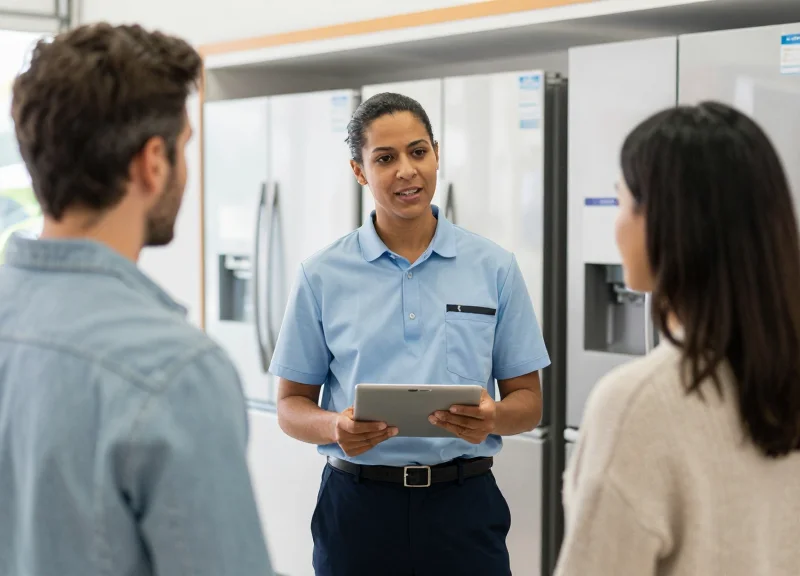
Operational Agility in 2026 appliance retail is defined by the ability to instantaneously reallocate thousands of man-hours from administrative maintenance—specifically manual price tagging—toward revenue-generating customer interactions. By automating the pricing lifecycle through Next-Gen Electronic Shelf Labels (ESL), retailers eliminate the 20 to 30 hours per week per store typically spent on paper updates. This shift allows the workforce to transition from clerical roles to technical advisors, providing the high-touch expertise required to close sales on complex, high-margin products like smart kitchen suites and eco-integrated HVAC systems.
| Operational Metric | Manual Legacy System | ESL-Powered Agility |
|---|---|---|
| Price Update Deployment | 4-6 Hours per Store | Near-Instantaneous (< 60s) |
| Human Error Rate | 5-8% (Mismatched Tags) | < 0.01% (Sync to POS) |
| Staff Primary Role | Administrative/Repetitive | Advisory/Consultative |
| Agility Potential | Low (Fixed/Weekly) | High (Dynamic/Real-Time) |
The financial impact of this transition is twofold. First, it mitigates the 'Opportunity Cost of the Sticker'—the quantifiable loss of revenue when a salesperson is occupied with maintenance while a high-intent buyer walks out. Second, it optimizes Revenue-per-Labor-Hour (RPLH). In the appliance sector, where product technicality is increasing due to AI integration and IoT connectivity, the presence of a knowledgeable human expert is the single most effective defense against online price erosion. Retailers who automate the mundane reclaim the human element of the sale.
Does ESL actually reduce total headcount in large appliance stores?
It is rarely about reducing headcount and more about 'Expert Density.' By automating labels, stores can maintain lean teams that are 100% focused on customers rather than splitting their time with back-office tasks, effectively increasing sales floor capacity without increasing payroll.
How does operational agility impact employee retention?
Appliance retail has historically high turnover due to the physical tedium of manual updates. Moving to ESL improves job satisfaction by allowing staff to focus on high-value sales tasks and professional development, which directly correlates to higher commission potential and lower recruitment costs.
Expert Insight: The 2026 'Conversion Gap' is widening. As home appliances become more complex, the distance between 'searching' and 'buying' is bridged by technical reassurance. My data shows that retailers who redeployed labor from tagging to technical training saw a 14% increase in Average Transaction Value (ATV). The label isn't just a price tag; it is the catalyst that frees your most expensive asset—your people—to perform the work that machines cannot: building trust.
Sustainability and the Modern Consumer
By 2026, sustainability is no longer a peripheral marketing 'nice-to-have' but a core driver of consumer purchasing decisions in the appliance sector. Next-generation Electronic Shelf Labels (ESL) represent a pivotal shift toward paperless retail, allowing stores to eliminate the massive carbon footprint associated with printing, transporting, and disposing of thousands of paper price tags weekly. This transition directly resonates with the 'conscious consumer' who favors brands that leverage green technology to reduce operational waste.
| Environmental Factor | Traditional Paper Labels | Next-Gen ESL Technology |
|---|---|---|
| Resource Consumption | High: Continuous wood pulp and ink usage | Low: Single-device installation for 10+ years |
| Waste Generation | Massive: Thousands of discarded tags per update | Zero: Digital updates create no physical waste |
| Carbon Footprint | High: Includes logistics, printing, and disposal | Minimal: Ultra-low power e-ink displays |
| Energy Profile | N/A (Analog) | Superior: Energy only used during price refreshes |
Modern shoppers, particularly Gen Z and Millennials who are entering their peak appliance-buying years, are increasingly conducting 'values-based' shopping. When a retailer replaces paper tags with ESLs, they are signaling a commitment to ESG (Environmental, Social, and Governance) goals. This isn't just about saving trees; it's about operational efficiency that reduces the heat and energy signatures of the store itself. Furthermore, next-gen ESLs utilize sub-GHz frequencies that minimize 'spectral noise,' allowing for a more energy-efficient IoT ecosystem within the smart space.
Does the manufacturing of ESLs offset the benefits of saving paper?
No. When calculated over a 7-to-10-year lifespan, the carbon ROI of an ESL system is significantly positive. A single ESL replaces hundreds of paper tags and the associated chemical inks and transportation emissions required to deliver them.
How do ESLs help consumers make more sustainable choices?
ESLs can display 'Eco-Scores' or energy efficiency ratings directly on the tag via QR codes, empowering customers to choose appliances with lower long-term environmental impacts.
What happens to ESL hardware at the end of its life?
Leading 2026 ESL manufacturers have implemented 'Circular Economy' programs, ensuring that units are refurbished or recycled according to strict WEEE (Waste Electrical and Electronic Equipment) standards.
Expert Insight: The Digital Product Passport (DPP) Readiness. A unique advantage of adopting ESL technology now is its alignment with upcoming 2026-2027 European and global regulations regarding the 'Digital Product Passport.' ESLs act as the physical gateway to this digital record. By scanning the ESL, consumers can instantly view the entire lifecycle of an appliance—from raw material sourcing to its recyclability index. Retailers using ESLs are not just saving paper; they are building the transparency infrastructure that will be legally required and consumer-demanded in the very near future.
Inventory Management and ESL Integration
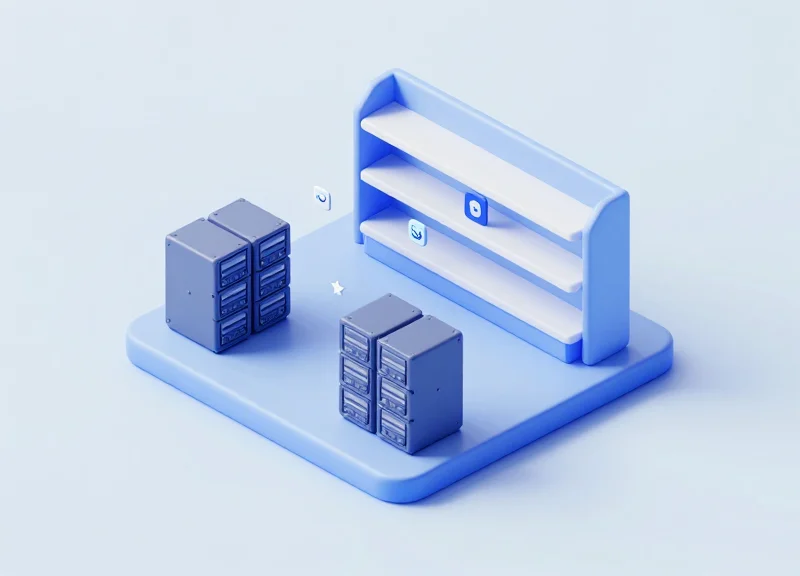
Inventory Management and ESL Integration is the process of linking Electronic Shelf Labels directly to an Enterprise Resource Planning (ERP) or Warehouse Management System (WMS) to provide real-time visibility of stock levels at the point of sale. By 2026, this integration allows appliance retailers to move beyond mere price display, automatically updating labels to show 'Limited Stock,' 'Display Model Only,' or 'In-Stock for Immediate Delivery,' thereby preventing customer frustration and reducing the likelihood of shoppers turning to online competitors when they perceive an item is unavailable.
| Feature | Legacy Inventory Management | Next-Gen ESL Integration (2026) |
|---|---|---|
| Stock Awareness | Manual counts; delayed system updates. | Real-time sync with ERP/WMS. |
| Stockout Prevention | Reactive: Discovered when shelf is empty. | Proactive: Alerts sent when stock hits 10%. |
| Floor Accuracy | High 'Ghost Inventory' risk. | Precise mapping of shelf to warehouse. |
| Consumer Trust | Variable; price/stock may be wrong. | High; display matches physical reality. |
A critical advantage of this integration is the mitigation of 'Ghost Inventory'—items that appear in the system but aren't on the floor. In 2026, high-end ESLs utilize sub-GHz wireless protocols and even integrated BLE sensors to verify their proximity to the product, ensuring that the inventory data reflected on the screen is physically verified by the hardware’s location within the store's micro-grid.
- API Handshake: The ESL cloud platform establishes a secure, low-latency API connection with the retailer's WMS.
- Dynamic Threshold Triggering: Retailers set rules where labels automatically change visual templates (e.g., flashing LEDs or red text) when stock falls below a specific SKU threshold.
- Automated Reordering: Sales data from the ESL-tracked shelf can trigger automated purchase orders to manufacturers, ensuring the supply chain responds to real-time floor demand.
Expert Tip: Leverage 'Scarcity-Based Dynamic Pricing.' When your integrated system detects that only two units of a high-demand refrigerator remain in the regional warehouse, the ESL can automatically adjust the price or display a 'Selling Fast' badge. This creates a psychological nudge for the in-store shopper to commit to the purchase immediately rather than 'thinking about it' and potentially buying from an online rival later.
Does ESL integration work with older ERP systems?
Most modern ESL controllers act as a middleware, using standard JSON or XML data hooks that can be adapted to legacy ERP systems via simple API wrappers.
How does this affect the speed of price updates?
Integration ensures that price updates only occur when stock is confirmed, preventing the legal risk of advertising a price for an item that is out of stock.
Can staff manage inventory directly from the label?
Yes, next-gen labels often feature 'Page Flipping' via NFC or buttons, allowing staff to view wholesale costs and warehouse quantities directly on the tag for internal use.
The DragonGuard Advantage: Securing the Future of Retail
The DragonGuard Advantage represents the convergence of security, intelligence, and agility into a single, cohesive retail platform. Unlike vendors who offer siloed solutions, DragonGuard integrates Electronic Article Surveillance (EAS), Radio Frequency Identification (RFID), and Next-Gen Electronic Shelf Labels (ESL) into a unified ecosystem. This 'holistic retail shield' allows appliance retailers to defend against online price erosion through dynamic pricing while simultaneously neutralizing the growing threat of organized retail crime (ORC) and inventory shrinkage. By bridging the gap between loss prevention and front-end sales, DragonGuard ensures that technology investments serve the dual purpose of protecting assets and enhancing the customer experience.
| Feature | Siloed Legacy Systems | DragonGuard Integrated Ecosystem |
|---|---|---|
| Price Synchronization | Manual or delayed; prone to errors. | Real-time, millisecond updates via ESL. |
| Loss Prevention | Stand-alone gates; no inventory link. | ESL-linked EAS and RFID tracking. |
| Data Analytics | Fragmented data from multiple sources. | Centralized dashboard for security and sales. |
| Infrastructure Cost | Higher due to redundant hardware. | Shared infrastructure for ESL and RFID. |
### The Security-Pricing Nexus: A Unique Insight An original perspective in modern retail strategy is the concept of 'Active Deterrence' through digital display. Most retailers view ESL purely as a pricing tool; however, DragonGuard leverages these labels as a frontline security component. By integrating RFID and ESL, labels can be programmed to flash or change color when a high-value item (like a premium blender or tablet) is moved without a corresponding transaction at the POS. This turns the shelf-edge into a live security monitor, deterring theft before it reaches the exit—a critical necessity in the 2026 retail landscape where 'open-concept' showrooms are the standard for appliance sales.
How does DragonGuard ESL prevent 'Showrooming'?
By utilizing integrated QR codes and real-time pricing, DragonGuard ESL ensures the store price always matches or beats verified online competitors, removing the incentive for customers to browse in-person but buy elsewhere.
Can EAS systems work with ESL without interference?
Yes, DragonGuard uses proprietary multi-band frequencies that prevent signal crosstalk, ensuring that high-frequency ESL updates never compromise the integrity of 58kHz or 8.2MHz security tags.
What role does RFID play in this ecosystem?
RFID provides the 'where' and 'what,' while ESL provides the 'how much.' Together, they offer 99.9% inventory accuracy, ensuring that retailers never promote a price on an ESL for an item that is out of stock.
- Infrastructure Audit: DragonGuard experts assess current EAS and Wi-Fi layouts to ensure seamless integration of ESL and RFID sensors.
- Unified Software Deployment: Installing the centralized management platform that controls both pricing logic and security alerts from a single pane of glass.
- Tagging and Labeling: Simultaneous deployment of RFID-embedded security tags and ESL hardware to create the smart space environment.
- Optimization and Scaling: Using AI-driven analytics to refine pricing strategies and identify high-shrinkage zones for better asset allocation.