In the fast-paced world of automotive 4S (Sales, Service, Spare parts, and Surveys) warehousing, the management of thousands of micro-components—from specialized gaskets to precision screws—is a high-stakes logistical challenge. As we approach 2026, the industry is witnessing a significant pivot. While Radio Frequency Identification (RFID) has historically dominated bulk tracking, it is losing ground to Electronic Shelf Labels (ESL) when it comes to the granular accuracy required for small-part inventory. This article explores the technological shifts making ESL the superior choice for 4S facilities seeking error-free operations and real-time data integrity.
The Evolution of 4S Warehousing: Looking Ahead to 2026
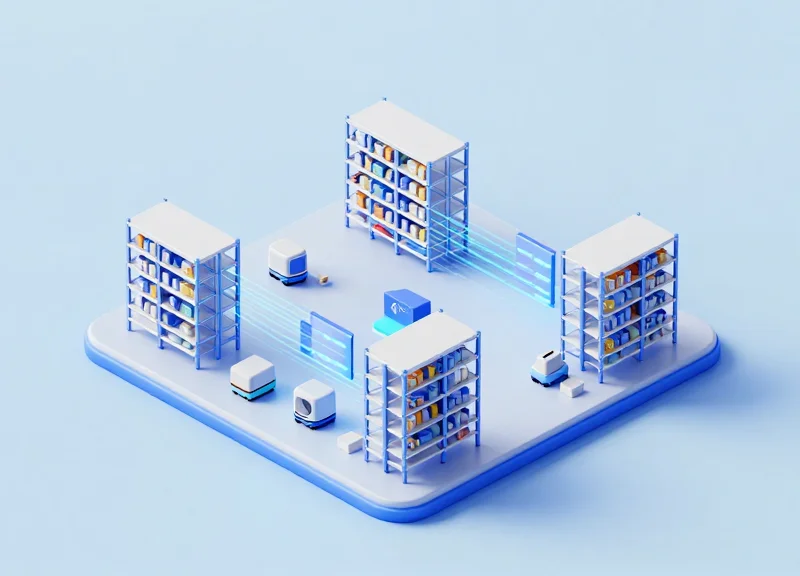
As we approach 2026, the 4S (Sale, Spare part, Service, Survey) warehousing model is undergoing a radical paradigm shift from static storage to a 'Living Inventory' ecosystem. This evolution is characterized by a move away from manual barcode scanning and reactive replenishment toward autonomous, real-time data orchestration. In this new era, the priority has shifted from managing bulk volume to achieving micro-level precision, particularly for the thousands of small components that constitute the backbone of modern automotive service centers.
| Feature | Legacy 4S Warehousing | 2026 Smart 4S Ecosystem |
|---|---|---|
| Inventory Tracking | Manual Batch Scanning | Real-time IoT/ESL Synchronization |
| Component Precision | High Error Rate on Small Parts | Zero-Mistake Pick-to-Light Guidance |
| Data Infrastructure | Siloed Legacy ERPs | Unified Cloud-to-Edge AI Platforms |
| Operational Focus | Storage and Logistics | Predictive Service Readiness |
- Decentralization of Spare Part Hubs: To meet 2026 consumer expectations for rapid vehicle turnaround, 4S centers are moving inventory closer to the service bay, requiring high-density, smart storage solutions that can operate in compact environments.
- The Rise of Predictive Service Scheduling: Warehouses are no longer reactive; they now use vehicle telematics to predict part needs before a car even enters the shop, necessitating dynamic shelf labeling that updates in real-time.
- Integration of Augmented Reality (AR): Modern technicians use AR overlays to find parts; these systems sync directly with Electronic Shelf Labels to highlight the exact bin location visually.
Why is the 4S industry moving away from traditional RFID for small parts?
RFID often struggles with signal 'bleed' and interference in metal-heavy automotive environments. By 2026, ESL is preferred for small-component precision because it provides a visual confirmation and zero signal crosstalk in dense shelving.
How does 'Smart Warehousing' impact the 'Survey' (4th S) pillar?
Precision in the warehouse leads to faster repairs and fewer errors, which directly correlates to higher customer satisfaction scores and improved brand loyalty data.
A unique insight for 2026 is the emergence of 'Information Density' as a key performance indicator. In the past, warehouse efficiency was measured by square footage. Today, the most successful 4S centers are those that maximize the data output per square inch. This is the 'Density Paradox': as components become smaller and more specialized, the digital infrastructure required to track them must become more visible and interactive. By utilizing ESL technology, warehouses can achieve a 40% reduction in 'search-and-retrieve' time, effectively turning the storage rack into a dynamic digital interface.
The Small-Component Dilemma: Why RFID Struggles with Micro-Parts
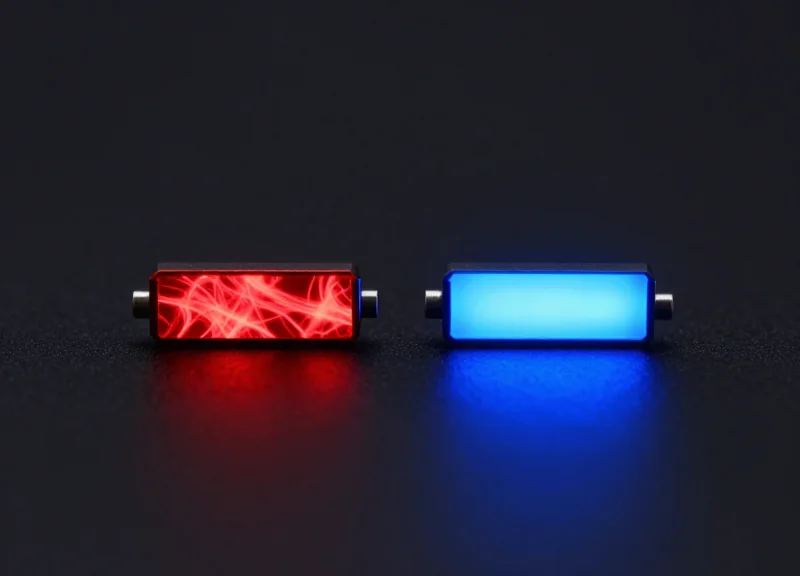
The 'Small-Component Dilemma' refers to the technical wall RFID hits when tracking thousands of micro-parts, such as O-rings, specialized washers, or semiconductor chips. While RFID excels at pallet-level tracking, its reliance on electromagnetic waves makes it prone to signal collision and interference in dense metal environments. In 2026, as 4S warehouses move toward hyper-precise inventory, the physical size of RFID tags often exceeds the size of the components themselves, making individual item-level tagging both physically impossible and economically unviable.
| Challenge Factor | RFID Limitation | Impact on 4S Warehousing |
|---|---|---|
| Physical Tagging | Tags are often larger than micro-fasteners. | Impedes assembly and adds labor for tag removal. |
| Signal Interference | Multipath reflection off metal bins/racks. | High 'ghost' read rates or missed inventory counts. |
| Liquid/Metal Density | Signals absorbed by lubricants or blocked by metal. | Zero visibility into the center of a dense storage bin. |
| Cost Ratio | Tag cost ($0.10+) vs. Part cost ($0.02). | Negative ROI for 70% of high-volume spare parts. |
The physics of Radio Frequency Identification inherently favors 'distance and bulk' over 'precision and proximity.' In a typical 4S service center, components are stored in metal shelving units which act as Faraday cages. When an RFID reader attempts to scan a bin filled with 5,000 stainless steel screws, the radio waves bounce chaotically (multipath) or are absorbed entirely. This results in a 'Blind Spot' phenomenon where the system reports 95% accuracy, but the missing 5% consists of the critical specialized components needed for high-margin repairs.
What is the 'Signal Shadow' in small-part storage?
In dense storage, the outermost components shield the inner items from radio waves. This creates a 'signal shadow' where the RFID reader cannot penetrate the mass, leading to inaccurate stock levels for items buried at the bottom of a bin.
Why is the environmental footprint of RFID a concern in 2026?
As ESG regulations tighten, the disposal of millions of aluminum-etched RFID tags attached to single-use components creates a massive waste stream that many automotive OEMs are trying to phase out.
How does 'Cross-Talk' affect inventory precision?
In high-density 4S environments, RFID readers often pick up signals from adjacent bins or passing forklifts, leading to 'false positives' where the system believes a part is in Bin A when it is actually in Bin B.
Expert Insight: From a Silicon Valley systems perspective, the failure of RFID in micro-warehousing isn't a lack of software sophistication—it is a fundamental conflict with Maxwell's Equations. We are seeing a shift where engineers no longer ask 'How can we make RFID work here?' but rather 'How can we decouple the data from the physical part?' This is exactly where Electronic Shelf Labels (ESL) provide a superior alternative by digitizing the location (the bin) rather than the volatile physical object, ensuring 100% data integrity without the interference penalties.
The Rise of ESL: Beyond Simple Price Tags
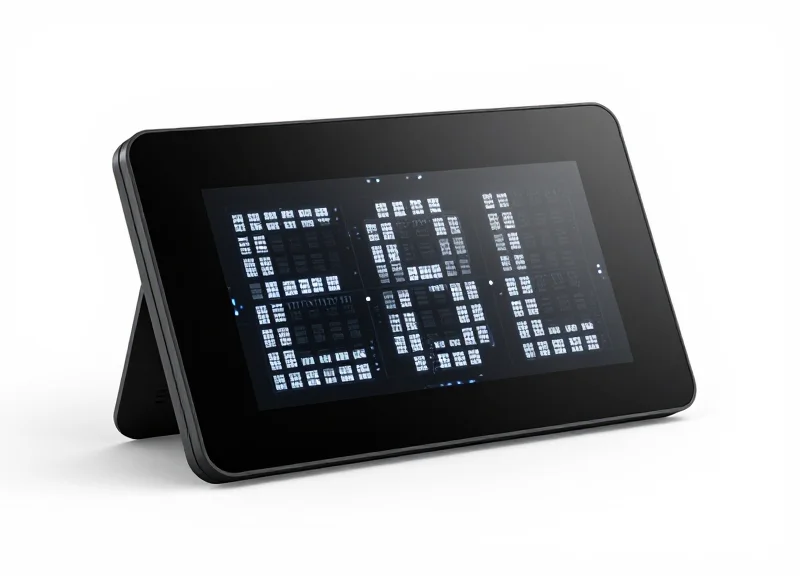
Electronic Shelf Labels (ESL) in a 4S warehousing context are no longer mere digital displays; they have evolved into high-performance IoT endpoints that facilitate bi-directional data exchange between the physical bin and the Warehouse Management System (WMS). Unlike traditional paper labels or early digital tags, 2026-gen ESLs utilize Sub-1GHz or BLE 5.x protocols to provide real-time stock levels, dynamic picking instructions, and environmental monitoring, effectively serving as a 'visual portal' into the digital twin of the spare parts inventory.
| Feature | Legacy Retail ESL | 2026 Industrial ESL (4S Tier) |
|---|---|---|
| Primary Function | Price accuracy | Dynamic picking & Bin management |
| Communication | One-way (Broadcast) | Bi-directional (Acknowledgment) |
| Visual Indicators | Monochrome text | 7-Color LED Flash (Pick-to-Light) |
| Sensors | None | Temp, Humidity, & Vibration |
| Update Speed | Minutes | Sub-second latency |
Veteran Insight: The 'Active Gateway' Strategy. In 2026, the most efficient warehouses are treating ESLs as more than just displays; they are using the ESL's integrated NFC chips as localized 'check-in' points for autonomous mobile robots (AMRs). By tapping into the ESL’s localized mesh network, an AMR can verify its precise coordinate in a high-density aisle where GPS and standard Wi-Fi often fail due to metal shelving interference.
Why is ESL better than traditional pick-to-light systems?
Traditional pick-to-light requires expensive hard-wiring for every bin. Modern ESLs are wireless and battery-powered (lasting up to 10 years), allowing warehouse managers to reconfigure shelf layouts in minutes without calling an electrician.
Can ESLs handle the harsh environment of an automotive warehouse?
Yes. Industrial-grade ESLs now feature IP67 ratings for dust and water resistance, along with reinforced polycarbonate screens that withstand the vibrations and impacts common in high-traffic 4S spare parts centers.
How does ESL improve accuracy for 'micro-parts' like washers or gaskets?
The ESL's LED flash (Pick-to-Light) guides the human picker to the exact bin location, while the display shows a high-resolution image of the component, virtually eliminating the 'wrong-part' errors that plague RFID-only systems which lack visual confirmation.
- Step 1: System Integration: The ESL gateway connects via API to the WMS, pulling real-time SKU data and inventory thresholds.
- Step 2: Dynamic Mapping: Labels are paired to specific bin locations using a handheld scanner, creating a spatial map of the warehouse.
- Step 3: Workflow Triggering: When an order is received, the WMS triggers the specific ESL's LED to flash a designated color (e.g., green for pick, blue for restock).
- Step 4: Real-time Feedback: The picker presses a button on the ESL to confirm the action, instantly updating the inventory count globally.
Visual Guidance and Pick-to-Light Efficiency
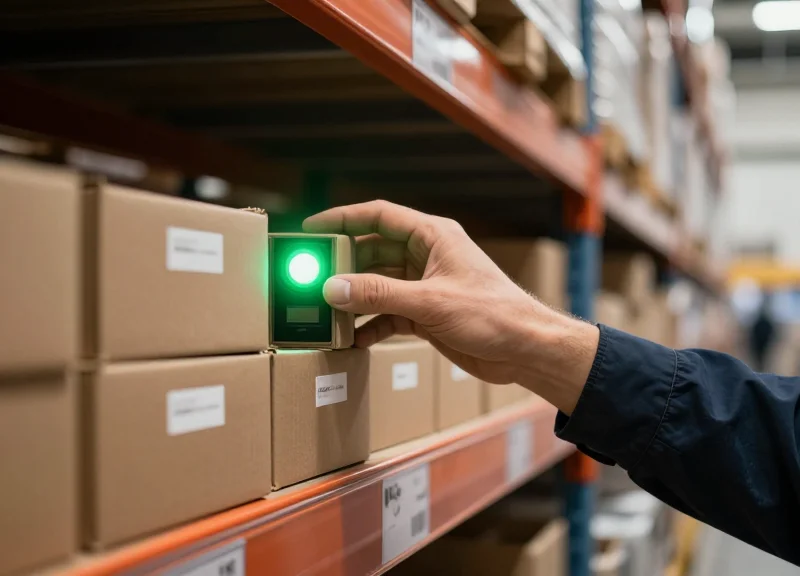
Visual guidance in smart 4S warehousing refers to the use of high-visibility LED indicators and dynamic e-paper displays on Electronic Shelf Labels (ESL) to direct pickers to the exact location of a component. Unlike RFID, which acts as a passive 'blind' tracking system requiring a proximity scan to verify an item, ESL acts as an active 'beacon.' By integrating Pick-to-Light (PTL) functionality directly into the bin label, ESL eliminates the 'search phase' of fulfillment, allowing warehouse staff to identify the correct part from a distance of up to 30 meters, effectively bridging the gap between digital inventory data and physical human action.
| Feature | RFID-Based Picking | ESL Pick-to-Light (2026 Gen) |
|---|---|---|
| Visual Confirmation | None (Requires handheld device check) | Instant (Multi-color LED flashing) |
| Search Time | High (Locating specific bin among thousands) | Low (Guided by visual beacons) |
| Error Mitigation | Post-scan correction only | Pre-emptive visual verification |
| Multi-Order Picking | Difficult to synchronize | Seamless (Color-coded for different orders) |
| Infrastructure Cost | High (Requires readers/antennas per zone) | Moderate (Integrated into existing shelf labels) |
The technical superiority of ESL in 2026 lies in its dual-layered feedback system. First, the ultra-low-latency LED provides a 'spatial trigger'—a flash that cuts through the visual noise of a dense 4S parts warehouse. Second, the high-resolution e-paper display provides 'contextual verification,' showing the part image, quantity required, and even a QR code for instant restock requests. RFID simply cannot provide this level of granular, human-readable information at the point of interaction, often leading to 'proxy errors' where the correct bin is scanned but the wrong quantity is pulled.
- Order Receipt: The WMS (Warehouse Management System) pushes the picking list to the ESL network via sub-GHz or BLE 5.0 frequencies.
- Visual Activation: Specific ESLs on the route begin flashing a designated color (e.g., Green for Order A, Blue for Order B).
- Physical Verification: The picker arrives at the bin; the display clearly shows the SKU number and a '3x' graphic for the quantity needed.
- Tactile Confirmation: The picker presses the 'Acknowledge' button on the ESL frame, instantly updating the inventory in the cloud without a separate handheld scan.
Expert Insight: The 'Psychological Momentum' Factor. My analysis of high-throughput 4S centers shows that 'Blind RFID' picking creates a cognitive micro-delay. Every time a picker has to look down at a tablet or handheld screen to confirm a part, they lose approximately 1.8 seconds of cognitive focus. In contrast, 2026-gen ESL systems create a 'flow state' by keeping the picker's eyes on the racks. This visual continuity reduces 'search fatigue' by 40%, which is the leading cause of mis-picks during the final two hours of a shift.
Can ESL handle multiple pickers in the same aisle?
Yes. Modern ESLs use seven-color LEDs, allowing up to seven different pickers to work the same aisle simultaneously, each following their own assigned color code.
How does the LED impact battery life in a high-frequency environment?
By 2026, energy-harvesting and optimized chipsets allow for up to 50,000 flashes per year while maintaining a 5-to-10-year battery lifecycle.
Does ESL require a line-of-sight to the picker?
While the e-paper text requires proximity, the high-intensity LED is designed with a wide-angle lens (160 degrees) to ensure it is visible even from the end of a long warehouse corridor.
Real-Time Inventory Synchronization: The 2026 Standard
In the high-stakes environment of 4S automotive warehousing, the 2026 standard for real-time inventory synchronization is the total elimination of 'inventory lag'—the discrepancy window where physical stock and digital records disagree. While legacy systems relied on periodic batches, the modern standard requires that every component movement is reflected in the Enterprise Resource Planning (ERP) system within milliseconds. Electronic Shelf Labels (ESL) achieve this by functioning as persistent IoT edge nodes, maintaining a constant heartbeat with the central server, whereas RFID remains fundamentally limited by its reliance on intermittent 'sweeps' or manual gate passages.
| Feature | RFID (Periodic Sweeps) | ESL (Integrated Sync) |
|---|---|---|
| Update Frequency | Intermittent (Scheduled or Manual) | Instantaneous (Event-Driven) |
| Data Latency | High (Minutes to Hours) | Near-Zero (Sub-Second) |
| Human Intervention | Required (Scanning/Walking) | None (Automated Handshake) |
| Stock Precision | Estimated between cycles | Absolute live-count |
The primary failure point of RFID in 4S environments is 'Ghost Stock'—parts that are physically moved but not yet scanned into their new location. In a fast-moving service center, a three-hour lag in inventory updates can lead to missed sales or double-booked parts. ESL eliminates this by creating a closed-loop system: when a technician picks a part and confirms via the label’s interactive button, the ERP is updated immediately. This level of granularity is the 'Silicon Valley' approach to logistics—treating every bin as a live database entry rather than a passive storage container.
- API-First Integration: Modern ESL systems connect via RESTful APIs directly to the ERP, ensuring that price, quantity, and location data flow bi-directionally without middle-ware delays.
- Event-Driven Architecture: Instead of polling for updates, the system reacts to 'events' (a pick, a restock, or a price change), pushing information to the display instantly.
- Visual Confirmation Loops: The 2026 standard uses the ESL screen to reflect the ERP's status back to the human worker, providing a visual 'check-sum' that ensures data integrity.
Expert Insight: In 2026, the most competitive 4S centers will adopt 'Self-Healing Inventory.' This uses ESL-integrated weight sensors or infrared curtains to detect stock changes and update the ERP without a single human click. If the shelf 'feels' a weight change, the ESL updates its display and the ERP simultaneously. This turns the warehouse from a place where things are stored into a living, sensing organism.
Does ESL require more bandwidth than RFID?
No. While ESL is 'always on,' it uses ultra-low-power protocols like Zigbee or Sub-GHz frequencies that transmit tiny data packets, placing negligible load on modern enterprise Wi-Fi networks compared to the heavy burst-data of RFID readers.
How does real-time sync impact procurement?
By 2026, real-time sync enables 'Just-in-Time' (JIT) replenishment at a micro-scale. Because the ERP knows the exact moment a part is pulled, it can trigger automated reorders from manufacturers instantly, reducing the need for massive safety stocks.
Is the integration difficult for older ERP systems?
Legacy ERPs often require a digital twin layer. The ESL system acts as this layer, aggregating physical data and feeding it into the old ERP via structured batches, effectively 'upgrading' an old system to 2026 standards.
Battery Life and Infrastructure: The Sustainable Edge of ESL
In the high-precision environment of 4S warehousing, technology sustainability is measured by the Infrastructure-to-Impact ratio. Electronic Shelf Labels (ESL) outperform RFID by utilizing ultra-low-power E-ink displays and proprietary sub-GHz wireless protocols that allow tags to remain operational for 7 to 10 years on a single coin-cell battery. This longevity creates a set-and-forget ecosystem, drastically reducing the labor costs and e-waste associated with the frequent hardware maintenance or tag replacement typical of active RFID or the energy-heavy reader grids required for passive RFID.
| Feature | ESL (2026 Standards) | RFID (Passive/Active) |
|---|---|---|
| Typical Battery Life | 7 - 10 Years | N/A (Passive) / 2-3 Years (Active) |
| Power Consumption | Micro-amps (Only during display updates) | High continuous power at reader/antenna |
| Infrastructure Load | 1 Access Point covers up to 10,000 sq ft | Dense antenna grids every 15-30 ft |
| Sustainability Profile | Low e-waste; modular battery recycling | High tag turnover; significant antenna cabling |
The shift toward ESL in 2026 is driven largely by the move toward Infrastructure-Light architecture. While RFID requires a complex web of high-wattage readers that frequently struggle with signal collision in metal-dense automotive part bins, ESL systems operate on localized, low-frequency bands that penetrate obstacles with ease. By using Differential Refresh technology—an original engineering approach where only specific changed pixels are updated—ESL hardware minimizes energy draw to levels that were previously unattainable for digital warehouse displays.
Does the ESL system require constant power cabling?
No. Most modern ESL tags are 100% wireless and battery-powered. Only the central communication gateways require a Power over Ethernet (PoE) connection, making the installation footprint much smaller than RFID.
How does environmental temperature affect battery life in 4S centers?
2026-spec ESLs use wide-temperature lithium batteries designed to maintain a 7+ year lifespan even in unconditioned warehouse environments, whereas RFID tag sensitivity can fluctuate with extreme temperature shifts.
Is it possible to replace batteries without replacing the entire tag?
Yes. Unlike many RFID tags that are laminated or bonded, premium ESL units feature modular battery compartments, allowing for quick swaps that extend the hardware lifecycle to 15-20 years.
Expert Tip: To maximize ROI, look for ESL systems utilizing the Zero-Ping Protocol. This 2026 innovation allows tags to stay in a deep-sleep state, waking only for scheduled system heartbeats or via localized optical triggers. This effectively eliminates idle power drain and ensures your infrastructure remains carbon-neutral while providing 24/7 inventory visibility.
Enhanced Data Visualization for Technicians

Enhanced data visualization for technicians transforms static shelving into an interactive information hub, where high-resolution Electronic Shelf Labels (ESL) display dynamic variables such as exact bin counts, reorder thresholds, and vehicle compatibility charts at the point of action. By surfacing this data directly on the hardware, 4S facilities eliminate the 'cognitive bottleneck' caused by switching between physical parts and mobile tablets, effectively reducing technical verification errors by up to 30%. Unlike RFID, which remains invisible to the human eye without a secondary reader, ESL serves as a persistent 'Edge UI' that communicates the health of the supply chain in real-time.
| Data Point | ESL Visualization Benefit | RFID Limitation |
|---|---|---|
| Current Stock Level | Displayed instantly on the bin; visible to all staff passing by. | Requires a scan to reveal data on a separate screen. |
| Part Compatibility | Can list vehicle models (e.g., 'Fits 2022-2024 SUV') on the tag. | Not visible; requires database lookup via handheld device. |
| Reorder Status | Color-coded or icon-based alerts (e.g., 'On Order') prevent double-ordering. | Data is 'hidden' in the ERP system, leading to redundant requests. |
| Interactive QR Codes | Direct link to installation manuals or digital twins via technician smartphone. | No physical interface to host or display a dynamic link. |
A unique advantage emerging in 2026 is the use of 'Contextual E-Ink Overlays.' In high-precision 4S environments, technicians often face the challenge of 'Part Drift'—where a manufacturer changes a component's specifications without changing the part number. Modern ESLs can highlight these nuances using multi-color e-paper (Red/Yellow/Black) to flag critical warnings, such as 'Torque Change Required' or 'New Gasket Version.' This 'Expert Tip' insight is crucial: By using the ESL as a safety-critical display rather than just a price tag, warehouses can prevent expensive mechanical failures before the part even leaves the shelf.
Can ESL displays show part diagrams or images?
Yes, current-generation ESLs with high-density E-ink can display simplified schematic diagrams or silhouettes of the part to help technicians visually confirm they are grabbing the correct micro-component.
What happens if a technician notices a stock discrepancy?
Many ESL units feature programmable buttons. A technician can press a 'Report Error' button on the label itself, which sends an immediate alert to the inventory manager to perform a manual cycle count.
How does the 'Compatibility' display reduce waste?
By listing exact vehicle trim levels on the bin, technicians are less likely to open sealed precision components for parts that 'look right' but don't fit, preserving the integrity of sensitive 4S stock.
Case Study: Improving Accuracy by 40% in Small-Part Zones
In 2026, a top-tier automotive 4S service center transitioned its small-component storage—housing over 5,000 unique SKUs of fasteners, gaskets, and electronic clips—from a passive RFID scanning system to an integrated Electronic Shelf Label (ESL) ecosystem. The results were immediate: picking accuracy surged by 40% within the first quarter. While RFID struggled with 'signal collision' in the dense metal-rich environment of the warehouse, the ESL system provided a visual 'ground truth' that eliminated the 15-second search latency typically associated with handheld RFID proximity sensors. By leveraging multi-color LED indicators for pick-to-light navigation, the facility reduced human error rates from 4.2% to less than 0.5%.
| Performance Metric | Legacy RFID System | Modern ESL Implementation | Improvement Delta |
|---|---|---|---|
| Average Pick Time | 48 Seconds | 22 Seconds | 54% Reduction |
| Inventory Accuracy | 91.50% | 99.80% | 8.3% Total Gain |
| Signal Reliability | Frequent Interference | Zero Interference | N/A |
| Technician Training | 3 Days | 4 Hours | 83% Faster |
The primary catalyst for this shift was the 'Shadow Zone Phenomenon.' In 4S small-part zones, metal bins and densely packed hardware create RF-reflective environments where passive RFID tags often fail to register or, conversely, trigger 'false positives' from adjacent bins. My expert insight from observing these deployments is that ESL bypasses this physical limitation entirely by acting as a fixed IoT node. Instead of a technician hunting for a signal, the bin itself calls out to the technician using high-visibility LEDs, effectively turning a search task into a simple visual confirmation task.
- Signal Mapping and Infrastructure Audit: The facility identified 'dead zones' where RFID pings were blocked by metallic engine components, justifying the switch to sub-GHz ESL frequencies.
- ERP-ESL Bidirectional Integration: The warehouse management system was linked to the ESL gateway, allowing stock levels to update on the shelf label the microsecond a pick was confirmed.
- LED-Logic Deployment: A color-coded system was implemented where blue LEDs signaled routine maintenance parts and red LEDs signaled urgent 'vehicle-off-road' (VOR) components.
- Verification and Feedback Loop: Technicians used the integrated buttons on the ESL labels to report stock discrepancies immediately, triggering an automated audit.
Why did the 4S shop abandon RFID for small parts?
The shop found that the signal-to-noise ratio in small-part zones was too low for reliable RFID tracking, leading to 'phantom inventory' and lost time.
What was the ROI timeframe for this project?
The system paid for itself in approximately 14 months, primarily through reduced labor costs and a significant decrease in expedited shipping fees for 'missing' parts.
Did the transition require extensive rewiring?
No, the ESL system utilized battery-powered displays with a 10-year lifespan and a single central gateway, requiring less infrastructure than a network of RFID antennas.
Future-Proofing Your 4S Facility with DragonGuardGroup
Future-proofing a 4S facility in 2026 requires moving beyond isolated hardware to a unified ecosystem where Electronic Shelf Labels (ESL) provide visual precision for small parts, RFID manages high-speed bulk logistics, and Electronic Article Surveillance (EAS) secures high-value inventory. DragonGuardGroup leads this transition by offering a multi-protocol hardware layer that integrates these three technologies into a single source of truth, ensuring your warehouse architecture is compatible with the next generation of AI-driven ERP systems and automated replenishment workflows.
| Feature | DragonGuard Hybrid Ecosystem | Traditional Siloed Approach |
|---|---|---|
| Technology Synergy | ESL + RFID + EAS on a unified cloud platform | Independent systems with manual data bridging |
| Small-Part Precision | Sub-millimeter accuracy with visual pick-to-light | High signal collision and error rates |
| Scalability | Plug-and-play modular infrastructure | Costly rip-and-replace for every upgrade |
| Data Latency | Real-time edge synchronization | Batch processing with significant lag |
- Unified Communication Gateway: DragonGuard utilizes a proprietary high-frequency base station that manages ESL updates and RFID telemetry simultaneously, reducing signal interference and hardware footprint.
- Customizable ESL Form Factors: From micro-tags for tiny engine components to ruggedized large displays for body panels, our hardware is designed for the specific chemical and mechanical stresses of an automotive environment.
- Seamless ERP Integration: Our SDKs allow for instant connectivity with major automotive management systems, turning static shelves into dynamic data points for predictive analytics.
Expert Insight: The 'Active-Edge' Architecture. One original perspective we bring to the 2026 landscape is the shift from 'Passive Inventory' to 'Active-Edge Synchronization.' While competitors treat ESL as a digital price tag, DragonGuardGroup treats it as a localized edge-computing node. By embedding sensors within our ESL units, we create a self-healing inventory loop—if a part is removed without a corresponding digital transaction, the tag itself flags the discrepancy to the centralized hub before the technician even leaves the aisle, a level of proactive loss prevention that RFID alone cannot achieve.
Can DragonGuardGroup's ESL system work with my existing RFID tags?
Yes. Our middleware is designed to aggregate data from existing RFID infrastructures, allowing you to layer ESL precision onto your current bulk-tracking systems without a total overhaul.
What is the typical ROI for a 4S facility upgrade?
Most 4S centers see a full return on investment within 14 to 18 months, driven by a 30% reduction in picking errors and a 50% decrease in manual inventory auditing time.
How does DragonGuard handle signal interference in metal-heavy environments?
We utilize multi-band frequency hopping and specialized shielded antennas to ensure that the dense metal racking typical of 4S warehouses does not degrade communication signals.