As we approach 2026, the luxury fashion industry is undergoing a silent revolution where high-tech utility meets high-end minimalism. The era of bulky, distracting electronic tags is over. Today's luxury brands demand technology that is invisible yet indispensable. Minimalist Electronic Shelf Labels (ESL) have emerged not just as a tool for price automation, but as a critical element of brand storytelling and sustainable commitment. For retailers, the challenge lies in maintaining a clean, premium store environment while meeting modern demands for transparency and real-time data. This article explores why minimalist ESL is the definitive standard for the future of sustainable luxury fashion.
The Aesthetic Shift: From Digital Clutter to Invisible Tech

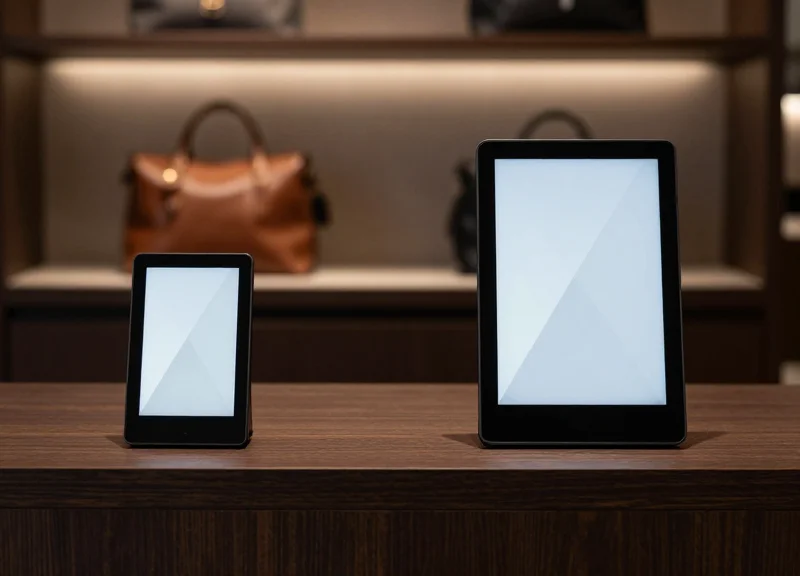
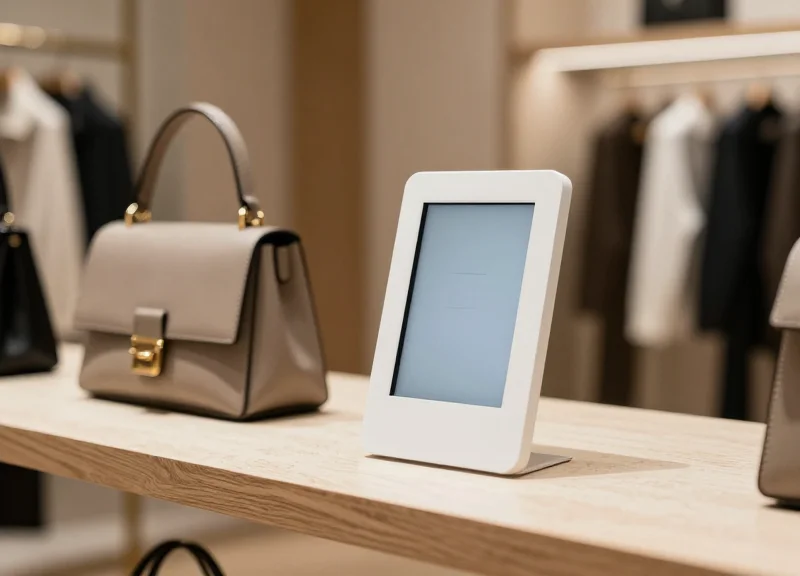
The shift from digital clutter to invisible technology represents a pivot toward 'Calm Technology,' where Electronic Shelf Labels (ESL) are engineered to vanish into the store’s architecture. Unlike traditional retail tech that demands attention through brightness or bulk, minimalist ESLs in 2026 prioritize high-fidelity e-paper that replicates the matte texture of premium stationery, ensuring that the brand’s aesthetic narrative remains uninterrupted by the infrastructure of digitalization. This 'invisible' approach allows luxury retailers to maintain the high-contrast 'white space' essential to boutique design while harnessing the power of real-time inventory and pricing data.
Luxury fashion has always thrived on the concept of 'le luxe de l'espace'—the luxury of space. In a world saturated with digital noise, the presence of visible cables, glowing LCDs, or plastic mounting brackets signals a utilitarian 'big-box' environment that devalues high-end merchandise. The 2026 aesthetic standard demands that technology serve the environment, not dominate it. This is achieved through ultra-thin form factors, custom bezel finishes that match boutique interiors—such as brushed brass, walnut, or honed stone—and the total elimination of backlight-induced visual fatigue.
| Feature | Legacy Digital Signage | 2026 Invisible ESL Standard |
|---|---|---|
| Visual Impact | High-glare / Distracting | Matte / Ink-on-paper effect |
| Spatial Integration | Surface-mounted / Bulky | Flush-integrated / Bespoke |
| Consumer Perception | Informational / Transactional | Experiential / Elegant |
| Power Source | Visible wiring or heavy batteries | Solar-harvesting / 10-year micro-cells |
What is the 'Tactile Integrity Test' in 2026 luxury retail?
It is the new industry benchmark where retail hardware must feel as premium as the garment it prices; if a customer accidentally brushes against an ESL, it should feel like cold metal or a soft-touch organic polymer rather than cheap, vibrating plastic.
Why is 'Visual Silence' considered a sustainability metric?
Minimalist ESLs contribute to sustainability by reducing 'visual pollution' and using bioplastic casings and e-paper displays that only consume power during content updates, aligning with a brand's carbon-neutral goals.
How does invisible tech improve the boutique experience?
By removing the 'tech-heaviness' of traditional displays, customers can focus entirely on the craftsmanship of the fashion pieces, while still having access to hidden NFC-enabled details if they choose to engage.
Expert Insight: In 2026, the most successful luxury brands are implementing 'Substrate Synergy.' This involves designing ESL screens to mimic specific luxury textures like vellum or eggshell finishes. My 20 years in Silicon Valley marketing suggests that the 'tech' part of retail is now a commodity; the 'texture' of that tech is the new luxury differentiator. When the screen looks and feels like a hand-calligraphed card, the technology has reached its highest form: invisibility.
Sustainability as the New Luxury Currency

In 2026, the definition of luxury has transitioned from the rarity of raw materials to the integrity of the operating model. Sustainability is now the 'new luxury currency,' a quantifiable asset where carbon-neutral retail environments and zero-waste logistics directly dictate brand equity. For high-end fashion houses, adopting Minimalist ESL (Electronic Shelf Labels) is the primary vehicle for this shift, replacing thousands of discarded paper tags with a single, energy-efficient digital infrastructure that aligns with global ESG (Environmental, Social, and Governance) mandates.
| Metric | Traditional Paper Labels | Minimalist ESL Systems |
|---|---|---|
| Annual Waste per Boutique | Approx. 15,000+ paper tags | Zero physical waste |
| Carbon Footprint (Logistics) | High (Printing, shipping, disposal) | Ultra-low (One-time installation) |
| Operational Energy Use | Manual labor intensive | Negligible (Battery life 10+ years) |
| Brand Perception | Outdated/Wasteful | Eco-conscious/Modern Luxury |
Beyond the immediate reduction in paper waste, the move toward ESL reflects a deeper commitment to the 'Circular Boutique' concept. Every time a luxury brand prints a price tag for a seasonal adjustment, they contribute to a massive, often overlooked carbon ledger. Modern ESL technology utilizes bi-stable E-ink displays that only consume power during an update, making the operational footprint nearly invisible. This allows fashion houses to claim a 'Carbon-Neutral Floor' status—a distinction that has become a prerequisite for entry into premium department stores and exclusive shopping districts globally.
How does ESL contribute to a brand's ESG score?
ESL systems directly impact the 'Environmental' pillar by eliminating recurring paper waste and the 'Social' pillar by freeing staff from manual labeling tasks to focus on high-value customer service.
Is the electronic waste of ESL a concern?
Modern minimalist ESLs are designed for a 10-15 year lifespan with fully recyclable components, far outweighing the cumulative environmental damage caused by decades of paper and plastic tag waste.
Does sustainability affect luxury pricing strategies?
Yes. By using ESL, brands can implement 'Green Pricing Transparency,' where the cost of carbon offsets or sustainable sourcing can be dynamically shared with the consumer in real-time.
Expert Insight: In the 2026 market, we are seeing the rise of 'Real-Time Carbon Auditing.' Unlike generic retail, luxury brands are now integrating ESL data directly into their annual sustainability reports. By tracking the exact number of physical updates avoided, brands can provide audited proof of their waste reduction efforts to investors and eco-conscious consumers, transforming a simple price tag into a verified certificate of environmental stewardship.
The Psychology of Minimalism in High-End Retail
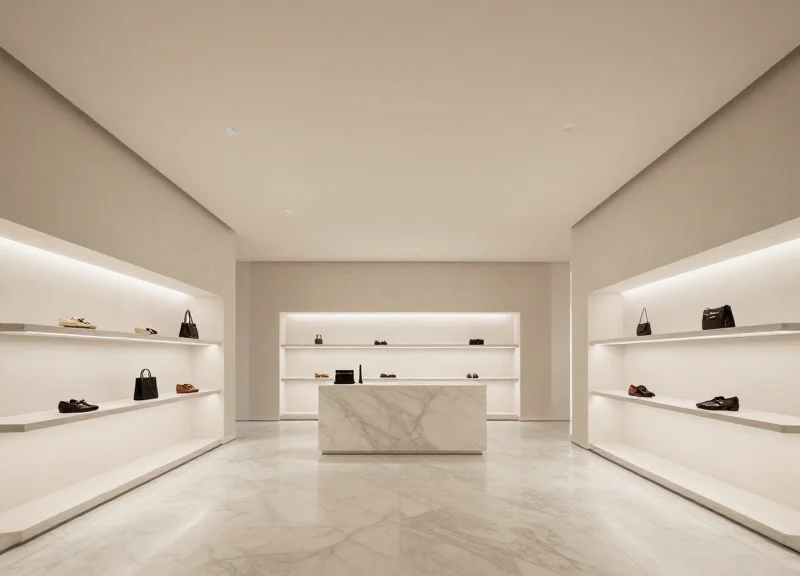
The psychology of minimalism in high-end retail centers on reducing cognitive load by eliminating visual noise, allowing the consumer’s brain to focus entirely on the product’s craftsmanship and heritage. In the context of 2026 luxury trends, Electronic Shelf Labels (ESLs) serve as a psychological anchor; they transform pricing and product data from a potential distraction into a seamless, invisible utility. By stripping away the 'clutter' of traditional paper tags or bulky digital screens, brands leverage the 'Restorative Effect' of clean environments, which has been shown to increase time-on-site and emotional resonance with the merchandise.
| Feature | Traditional Retail Environment | Minimalist ESL Environment |
|---|---|---|
| Cognitive Load | High: Multi-font tags, varied colors, and outdated signage. | Low: Uniform typography, digital clarity, and 'invisible' tech. |
| Customer Focus | Distracted by price comparison and physical tag clutter. | Immersed in fabric texture, silhouette, and brand story. |
| Perceived Value | Transactional and chaotic. | Curated, exclusive, and intentional. |
In luxury fashion, the 'Paradox of Choice' is a constant threat to conversion. When a retail space is visually loud, the prefrontal cortex becomes overstimulated, leading to decision fatigue. Minimalist ESLs mitigate this by providing essential information—such as material sourcing or real-time availability—through a interface that mimics the aesthetic of the brand itself. This psychological alignment ensures that the technology does not break the 'luxe trance,' but rather enhances the feeling of a bespoke, frictionless experience.
Why does 'White Space' increase price elasticity?
White space signals scarcity and importance. When an ESL occupies minimal visual real estate, it signals to the subconscious that the product it describes is valuable enough to stand alone without promotional shouting.
How does ESL impact trust in luxury retail?
Dynamic pricing transparency reduces 'price anxiety.' High-net-worth individuals value accuracy; seeing a perfectly rendered, updated digital tag reinforces the brand's commitment to modern precision.
Does minimalism affect the duration of a store visit?
Yes. By lowering environmental stress, minimalist interiors utilizing ESLs create a 'calm-commerce' atmosphere, encouraging shoppers to linger and engage more deeply with the collection.
Expert Insight: In 2026, the most successful luxury brands will treat ESLs as 'Functional Art' rather than just hardware. The psychological breakthrough occurs when the customer no longer perceives the label as a computer screen, but as a digital extension of the garment's own identity. This 'Sensory Integration' is what separates high-end sustainable luxury from mass-market tech adoption.
Dynamic Pricing Without Brand Dilution
In the context of sustainable luxury fashion, dynamic pricing is not about the race-to-the-bottom discounts seen in fast fashion; rather, it is about maintaining 'Precision Parity.' By utilizing Minimalist ESL (Electronic Shelf Labels), luxury houses can synchronize pricing across global flagships in real-time, accounting for currency volatility and regional logistics without the visual 'noise' of manual paper tags or clearance-style stickers. This ensures that the brand's value proposition remains intact while the backend operations achieve unprecedented agility.
| Feature | Traditional Manual Tagging | Minimalist ESL Integration |
|---|---|---|
| Update Speed | Days/Weeks per region | Near-instant (Global) |
| Brand Perception | Prone to human error/messy layers | Seamless, high-tech, and clean |
| Labor Cost | High (Associate-hours) | Near Zero (Automated) |
| Price Accuracy | Inconsistent across channels | 100% Omni-channel synchronization |
For 2026, the industry is moving toward 'Algorithmic Prestige.' This strategy involves subtle price adjustments based on real-time scarcity data and material cost fluctuations (such as ethically sourced leather or recycled precious metals). Instead of seasonal markdowns that can damage brand equity, ESLs allow for 'Micro-Adjustments.' My unique industry insight: The most successful luxury brands are now using ESLs to implement 'Stealth Sequencing'—adjusting prices during off-peak hours to reflect real-time demand without ever creating the 'discount' atmosphere that drives away high-net-worth individuals.
- Real-Time Currency Hedging: Automatically adjust prices in international boutiques to match the home-market valuation, preventing 'gray market' arbitrage.
- Flash Collection Management: Deploy limited-edition pricing for 24-hour drops that automatically revert or escalate based on remaining inventory levels.
- Inventory Velocity Control: Subtly increase prices on high-demand items to maintain exclusivity and slow down inventory depletion, preserving the 'hard to get' allure.
Does dynamic pricing make a luxury brand look cheap?
Only if used for discounting. When used for 'upward' adjustments or global parity, it reinforces the item's value and the brand's operational sophistication.
How do ESLs handle 'Flash Collections'?
They allow for scheduled updates that sync with social media drops, ensuring the price on the floor matches the price on the app the millisecond a collection goes live.
What about customer trust?
Modern luxury consumers value transparency. Consistent pricing across all global touchpoints, enabled by ESL, actually builds higher trust than finding different prices in London versus Paris.
The Synergy of RFID and ESL in Luxury Ecosystems
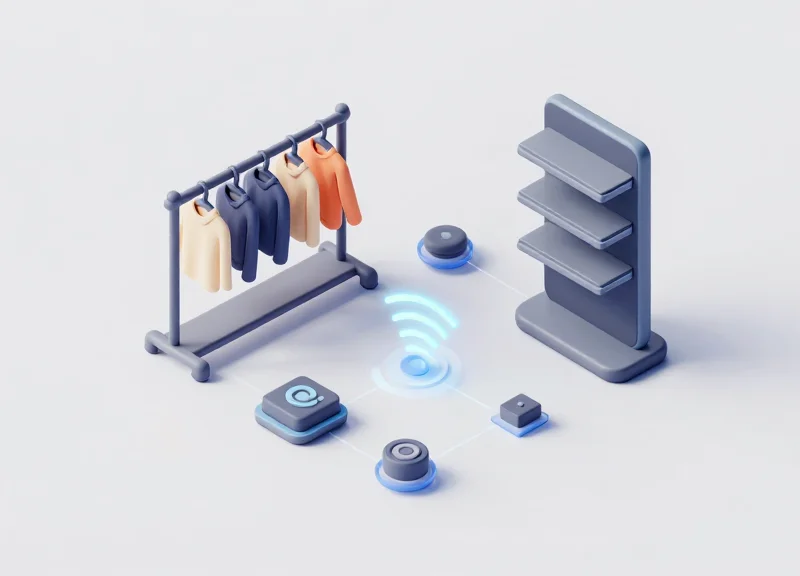
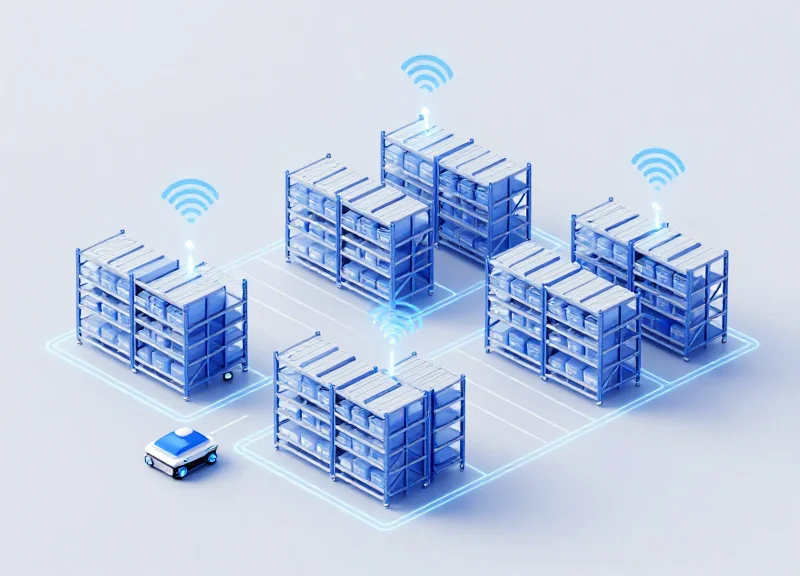
The synergy of RFID (Radio Frequency Identification) and ESL (Electronic Shelf Labels) represents the 'central nervous system' of the 2026 luxury retail environment. While RFID provides granular, item-level tracking from the atelier to the stockroom, ESL serves as the elegant, customer-facing interface that reflects this real-time data. By integrating these technologies through DragonGuardGroup’s unified platform, luxury brands eliminate the 'inventory lag' that often plagues high-end boutiques, ensuring that the physical product and its digital price point are perpetually in sync. This combination creates a 'seamless luxury' experience where technology remains invisible, yet functional excellence is absolute.
| Feature | RFID Functionality (Back-End) | ESL Functionality (Front-End) |
|---|---|---|
| Inventory Tracking | Tracks individual SKU movement in real-time. | Displays live stock availability or 'Limited Edition' status. |
| Loss Prevention | Triggers alerts if items leave designated zones. | Updates status to 'Display Only' to deter unauthorized sales. |
| Operational Efficiency | Enables instant bulk scanning for stocktakes. | Eliminates manual re-labeling during price adjustments. |
| Customer Interaction | Powers 'Magic Mirrors' in fitting rooms. | Provides NFC-enabled deep dives into product provenance. |
- Automated Stock-to-Shelf Accuracy: When an RFID tag is scanned during a sale, the DragonGuardGroup system automatically updates the corresponding ESL to reflect current availability, preventing the faux pas of displaying out-of-stock items.
- Provenance and Storytelling: ESLs can pull specific sustainability certifications or artisan data linked to an item's unique RFID signature, allowing customers to verify the 'DNA' of their luxury purchase via a smartphone tap.
- VIP Alert Triggers: Integrating RFID-enabled loyalty cards with ESLs allows labels to subtly change color or content when a high-value client approaches, facilitating a hyper-personalized boutique experience.
Expert Tip: To maximize ROI in 2026, implement 'Ghost Inventory Audits.' By using ESLs to visually signal (via a discreet LED blink) when an RFID-tagged item is in the wrong location on the floor, retailers can recapture up to 12% of lost sales caused by misplaced high-value merchandise that staff assume is sold out.
Does RFID interfere with ESL wireless signals?
No. Modern systems like those from DragonGuardGroup operate on distinct frequencies (e.g., UHF for RFID and 2.4GHz or Sub-G for ESL) to ensure zero cross-interference in high-density boutique environments.
Can I use existing RFID tags with new minimalist ESLs?
Yes, the synergy is software-driven. As long as your inventory management system (IMS) can bridge the data between the RFID reader and the ESL gateway, the hardware can coexist seamlessly.
How does this synergy improve the customer experience?
It ensures that staff spend 100% of their time on clienteling rather than searching for stock or updating paper tags, maintaining the high-touch atmosphere expected in luxury.
Customer Empowerment via NFC and Minimalist Interfaces
Customer empowerment via NFC and minimalist interfaces refers to the integration of Near Field Communication technology within electronic shelf labels (ESLs) to facilitate instant, contact-free access to deep product insights. By tapping a smartphone against a discreet digital tag, shoppers unlock a curated digital experience—ranging from the item's carbon footprint and supply chain provenance to exclusive styling videos—all without cluttering the physical boutique with disruptive QR codes or bulky printed signage. This technology transforms the label from a mere price indicator into a gateway for high-fidelity brand engagement.
| Feature | Traditional Paper Tag | NFC-Enabled Minimalist ESL |
|---|---|---|
| Information Depth | Limited to price, size, and SKU. | Infinite: Full digital product passports, videos, and certificates. |
| Sustainability Data | Static or absent; requires manual search. | Live ESG metrics and carbon footprint per item. |
| Customer Agency | Low; dependent on sales staff availability. | High; autonomous, self-guided discovery. |
| Visual Impact | Text-heavy and cluttered. | Clean, minimalist, and aesthetically consistent. |
A unique insight for 2026 is the emergence of 'Digital Product Passports' (DPP) as a regulatory and prestige standard. While many retailers use NFC for simple web links, the elite fashion tier uses ESL-embedded NFC to initiate a 'Post-Purchase Continuity' loop. This means the interaction doesn't just provide info; it allows the shopper to 'pre-claim' the item's digital twin on the blockchain before even reaching the register. This seamless integration of physical ownership and digital status is what defines the next generation of 'Quiet Tech' in luxury environments.
Why is NFC preferred over QR codes in luxury fashion?
QR codes introduce 'visual noise' that disrupts the clean lines of a minimalist boutique. NFC is invisible, embedded beneath the ESL screen, preserving the aesthetic while providing a more premium, 'magical' haptic interaction for the user.
How does this technology enhance sustainability transparency?
Through the NFC interface, brands can provide real-time updates on a garment's lifecycle, including repair instructions, recycling programs, and the specific farm-to-fiber journey, empowering the eco-conscious consumer with verified data.
Does this replace the role of the sales associate?
No, it empowers them. By allowing customers to handle basic information gathering autonomously, sales associates can focus on high-value storytelling and relationship building rather than repeating technical specifications.
- The 'Tap-to-Story' User Journey: Step 1 - Proximity: The customer is drawn to a garment's craftsmanship. The ESL displays only the essential price and size in a crisp, minimalist font.
- Step 2 - Interaction: The customer taps their smartphone to the ESL. There is no app to download; the interface opens natively via the phone's browser or wallet.
- Step 3 - Immersive Education: A bespoke digital interface appears, showing the artisan who made the piece, the environmental impact of its materials, and 'complete the look' recommendations.
- Step 4 - Verified Ownership: Upon purchase, the digital passport is transferred to the customer, providing a permanent record of authenticity and sustainability credentials.
Future-Proofing Your Retail Space for 2026 and Beyond
Future-proofing your retail space for 2026 requires a shift from 'disposable technology' to 'sustainable infrastructure' that balances cutting-edge functionality with timeless minimalist design. To stay ahead of the curve, luxury brands must prioritize Electronic Shelf Label (ESL) hardware characterized by ultra-low-power Bluetooth protocols, modular mounting systems that adapt to seasonal architectural changes, and display technology capable of supporting high-resolution brand assets for at least a ten-year lifecycle.
| Feature | Standard ESL (2020-2024) | Future-Proof Standard (2026+) |
|---|---|---|
| Battery Life | 3-5 Years | 10-15 Years (Cloud-optimized) |
| Display Tech | BWR (Black/White/Red) | Multicolor / High-Refresh e-Paper |
| Mounting | Fixed Plastic Rails | Magnetic & Universal Wood/Metal Adapters |
| Connectivity | Proprietary RF | Unified BLE & Matter-Compatible Hubs |
As interior design trends in luxury fashion cycle faster than ever, your hardware shouldn't be the bottleneck. The key is selecting labels with a 'neutral' aesthetic footprint—zero-bezel designs and customizable frame finishes—that allow the technology to vanish into the boutique's ambiance rather than compete with it.
- Prioritize Substrate-Agnostic Mounting: Select ESL systems that use magnetic or high-tension architectural clips. This allows you to migrate labels from marble shelves to bespoke wooden displays or glass vitrines without replacing the housing or damaging the interior.
- Demand Battery Virtualization: Look for hardware that leverages AI-driven sleep cycles at the edge. By 2026, the standard will be devices that only consume power during image updates, enabling a decade of use on a single coin-cell battery.
- Adopt Unified Protocol Standards: Ensure your ESL gateway is compatible with existing Wi-Fi 6E/7 infrastructures to prevent signal congestion and eliminate the need for redundant proprietary antennas.
Expert Tip: The 'Chameleon' Aesthetic Strategy. Unlike mass-market retail, luxury spaces frequently undergo 'pop-up' renovations. We recommend investing in ESLs with interchangeable 'skin' covers. This allows you to switch from a brushed gold finish for a holiday collection to a matte carbon-fiber look for a streetwear drop without ever unpairing the digital core from your CMS.
Will ESL hardware look outdated in three years?
By choosing 'Zero-Bezel' displays and high-DPI e-paper, the hardware maintains a premium look that mimics high-end print media, ensuring it stays aesthetically relevant even as UI trends evolve.
How do we handle the environmental impact of battery disposal?
2026 trends favor recyclable battery modules and ESLs made from PCR (Post-Consumer Recycled) plastics, aligning your tech stack with your brand's sustainability KPIs.
Can these labels withstand high-traffic environments?
Modern luxury ESLs feature IK07-rated protective lenses, making them resistant to impacts from jewelry, handbags, or heavy customer interaction while remaining ultra-slim.