The retail landscape is undergoing a seismic shift as we approach 2026. For businesses specializing in smart home technology, the irony of using 20th-century static displays to sell 21st-century innovation has reached a breaking point. Traditional paper tags and rigid signage can no longer keep pace with the hyper-dynamic pricing, real-time inventory needs, and interactive experiences that modern consumers demand. As IoT (Internet of Things) matures, the transition from 'dumb' shelves to intelligent, connected retail ecosystems is no longer a luxury—it is a survival requirement for competitive retailers.
The Death of the Static Label: A 2026 Perspective
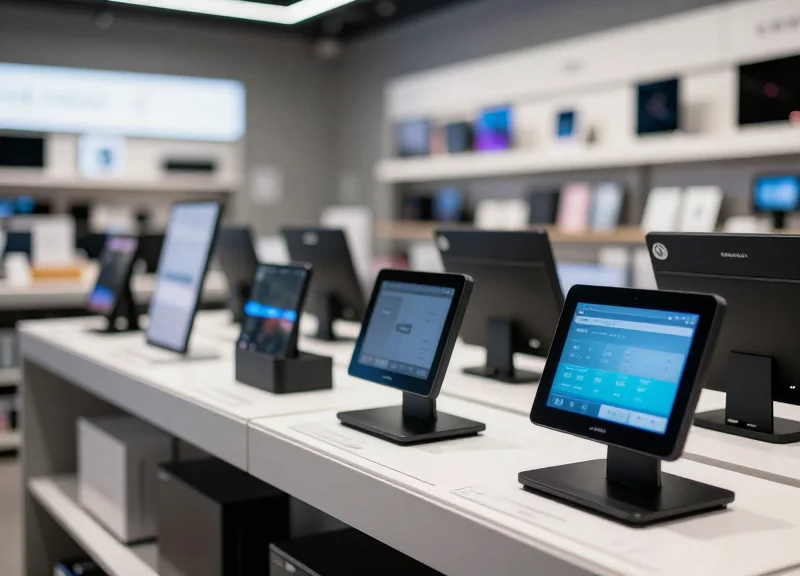
By 2026, the static paper label is no longer just an antiquated tool; it is a systemic bottleneck. In a retail environment defined by hyper-dynamic markets, a physical tag that requires manual replacement represents a fatal operational delay. The 'death' of the static label is driven by its inability to communicate with the broader IoT ecosystem, creating a 'Data Silo' that prevents retailers from executing real-time pricing strategies or providing the transparency that smart home consumers now demand as a baseline requirement.
For two decades, we viewed labels as passive price indicators. However, the rise of the smart home has conditioned consumers to expect 'live' data. When a shopper's smart fridge can track milk expiration and local price drops in real-time, walking into a store and seeing a handwritten or printed clearance tag feels like a breach of trust. This friction between the digital expectations of 2026 and the physical limitations of paper has led to the 'Latency Tax'—the measurable loss in revenue caused by the gap between a price change in the cloud and its reflection on the shelf.
| Feature | Static Paper Labels | IoT-Enabled Digital Displays (2026) |
|---|---|---|
| Update Speed | Hours/Days (Manual) | Sub-second (Automated) |
| Data Accuracy | High Error Margin | 100% System Synchronized |
| Customer Interaction | None | NFC/QR/Haptic Engagement |
| Operational Cost | High (Labor + Materials) | Low (Initial CapEx, zero OpEx) |
| Inventory Integration | Disconnected | Real-time Stock Sensing |
Expert Tip: The most significant hidden cost of static labels in 2026 is 'Contextual Friction.' If your store label cannot update its metadata to reflect a flash-sale triggered by a local weather event or a social media trend within five minutes, you are effectively invisible to the algorithmic shopping bots that modern consumers use to optimize their daily spend.
Why is labor cost the biggest driver away from static labels?
By 2026, labor shortages and rising minimum wages make manual label swapping financially unsustainable. Automation allows staff to focus on high-value customer service rather than administrative maintenance.
How do IoT labels improve the Smart Home Retail experience?
IoT labels bridge the gap between the store and the home. They allow for 'Scan-to-Cart' features where a customer can sync a physical product directly to their home automation system for future recurring orders.
Is the transition to digital labels purely about price?
No. It is about data richness. Digital labels provide dynamic CO2 footprint tracking, origin transparency, and real-time reviews, which paper labels simply cannot accommodate.
Consumer Expectations in the Smart Home Sector
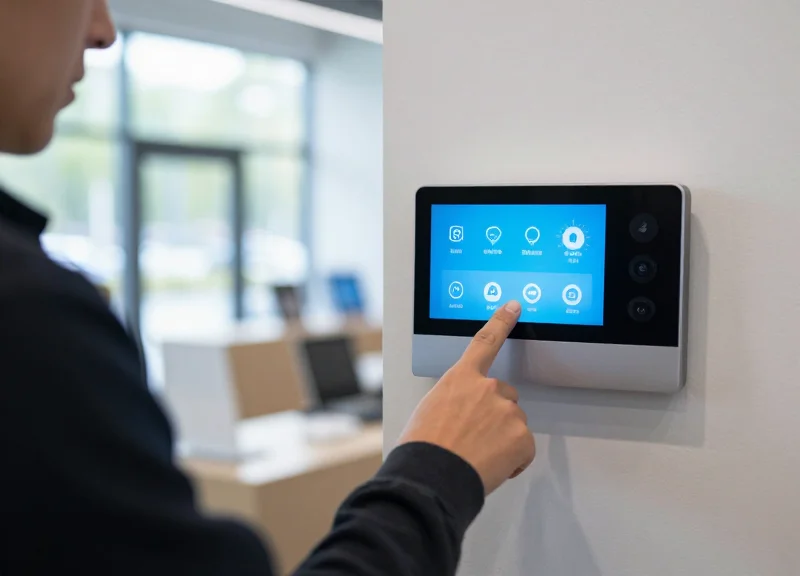
By 2026, the consumer expectation for smart home retail has shifted from passive observation to active, interconnected engagement. Modern shoppers no longer view a product in isolation; they evaluate how a device fits into their existing ecosystem. This 'ecosystem-first' mindset means that if a retail environment cannot demonstrate real-time interoperability, live data updates, and seamless mobile integration, it fails to meet the basic standard of the very technology it sells. In short, consumers now expect the store to be as 'smart' as the home they are building.
| Feature | Legacy Retail Expectation | 2026 Smart Home Expectation |
|---|---|---|
| Product Info | Printed specs and price tags | Dynamic QR codes with live firmware/compatibility updates |
| Interactivity | Physical touch and dummy units | Full functional control via smartphone or voice command |
| Price Transparency | Fixed price, maybe a sale sign | Real-time competitive benchmarking and loyalty-based pricing |
| Ecosystem Check | Asking a salesperson for help | Instant digital 'Handshake' to check home compatibility via app |
Unique Insight: The Rise of 'Contextual Continuity'. One trend often overlooked by generalist analysts is the demand for Contextual Continuity. This is the expectation that a user's digital footprint (preferences, existing smart home brand loyalty, and energy usage patterns) should automatically sync with the physical display as they walk through the aisle. In 2026, the 'Smart Display' isn't just a screen; it's a personalized API endpoint that recognizes the shopper and highlights only the products that are technically compatible with their specific Matter or Thread-enabled home network.
Why do shoppers demand real-time data on shelves?
Smart home tech evolves weekly with software updates. Consumers want to know the exact current OS version, security patch status, and compatibility rating before they commit to a purchase.
How does mobile integration influence the buying decision?
Modern shoppers use their phones as the primary interface for their lives. A store that requires them to put their phone away to read a static sign creates a 'friction gap' that leads to cart abandonment.
What role does environmental impact play in 2026 expectations?
Sustainability is now a core metric. Consumers expect to see real-time energy efficiency ratings and lifecycle carbon footprints—data that static paper labels simply cannot provide.
To remain competitive, retailers must pivot away from 'warehousing' products and toward 'orchestrating' experiences. The disconnect between a high-tech smart thermostat and a low-tech paper price tag creates a psychological dissonance that erodes brand trust. In the 2026 landscape, the medium is the message: the sophistication of your display technology is the ultimate proof of the sophistication of the products you sell.
IoT-Enabled Displays: More Than Just Digital Pricing
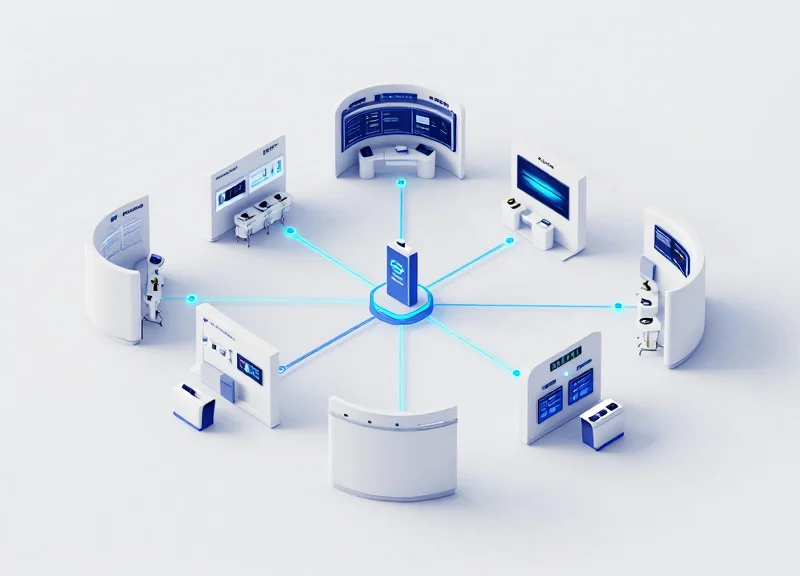
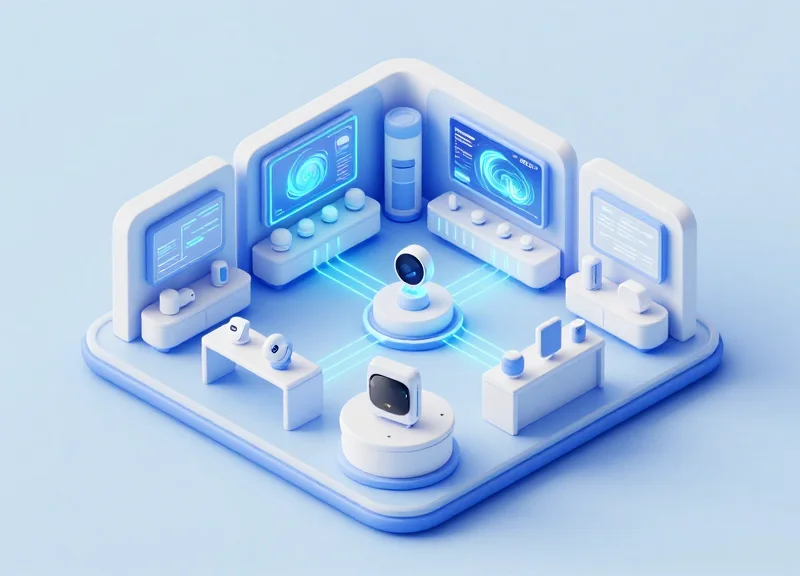
By 2026, the definition of an IoT-enabled display has shifted from a simple electronic price tag to a bidirectional 'edge node' that facilitates real-time communication between the product, the retailer, and the consumer. These displays utilize integrated sensors (LiDAR, BLE, and NFC) to monitor foot traffic, dwell time, and inventory levels simultaneously, turning the retail shelf into a high-fidelity data source for predictive analytics.
| Feature | Legacy Digital Labels (2020-2023) | IoT-Enabled Intelligent Displays (2026) |
|---|---|---|
| Primary Function | Automated price updates | Behavioral tracking & interactive UX |
| Data Direction | One-way (Server to Label) | Bidirectional (Full API integration) |
| Sensors | Rarely included | ToF (Time of Flight), Temperature, Humidity |
| Connectivity | Proprietary RF / Infrared | Sub-GHz Mesh, Matter-over-Thread, BLE 6.0 |
The true power of these displays lies in their ability to act as environmental and behavioral barometers. In the smart home retail sector, where product compatibility is a top consumer concern, IoT displays can communicate with a shopper’s smartphone to verify if a smart lock or thermostat is compatible with their existing ecosystem (e.g., Apple Home, Google Home, or Home Assistant) before they even pick up the box.
How do IoT displays improve inventory accuracy?
Beyond pricing, integrated weight or optical sensors detect when a product is removed or returned to the wrong shelf, triggering automated restock alerts or 'misplacement' notifications to floor staff.
Can these displays influence real-time purchasing decisions?
Yes. By utilizing 'Heatmap Triggers,' a display can sense a customer's presence and automatically surface a limited-time discount or a QR code for an unboxing video, significantly increasing conversion rates at the point of decision.
Do these displays support the 'Circular Economy'?
They do by tracking 'Product Life Cycles.' Displays can adjust prices dynamically based on the manufacturing date or software version, ensuring older smart home stock is moved efficiently before next-gen updates arrive.
Expert Insight: The Concept of 'Shelf-Edge Edge Computing'. In my two decades in Silicon Valley, the biggest shift I've seen is the move toward processing data where it is generated. By 2026, the most advanced retailers aren't just sending data to the cloud; they are using 'Shelf-Edge Edge Computing.' This means the display itself processes the proximity of a customer and decides which content to show locally within milliseconds, reducing latency and ensuring a seamless interactive experience even if the store's primary Wi-Fi is congested.
Dynamic Pricing: Harmonizing Online and Offline Channels
In the 2026 retail landscape, dynamic pricing is defined as the automated, real-time synchronization of product price points across all sales channels—physical shelves, e-commerce sites, and mobile apps—facilitated by IoT-connected Electronic Shelf Labels (ESLs). This technology eliminates the 'price gap' that historically fueled consumer distrust, allowing retailers to implement sophisticated algorithmic pricing strategies that respond to competitor shifts, inventory levels, and demand surges in milliseconds rather than days.
| Feature | Legacy Static Pricing | 2026 Dynamic IoT Pricing |
|---|---|---|
| Update Speed | Average 24-72 Hours (Manual) | Near-Instant (< 60 Seconds) |
| Price Parity | Frequent Online/Offline Mismatch | 100% Guaranteed Synchronization |
| Labor Cost | High (Printing, Sorting, Placing) | Zero (Automated Cloud Updates) |
| Consumer Trust | Eroded by Showrooming Friction | Reinforced by Transparency |
One of the most significant hurdles in smart home retail has been 'showrooming'—the act of inspecting a device in-store only to purchase it cheaper online. By harmonizing channels, retailers transform the physical store from a liability into a high-conversion asset. When a customer sees a smart hub in-store and realizes the price is identical to the best offer found on their smartphone, the psychological barrier to immediate purchase vanishes. This 'zero-friction' environment is the new baseline for 2026.
- Identify Market Triggers: The pricing engine monitors competitor APIs, local inventory levels, and even current energy grid demand for energy-efficient smart devices.
- Algorithmic Adjustment: AI models calculate the optimal price point to maximize margin while maintaining parity with the brand's digital presence.
- IoT Distribution: The new price is pushed via sub-GHz or Bluetooth Low Energy (BLE) networks to every ESL in the retail network simultaneously.
- Confirmation Loop: Sensors on the shelf labels report back to the central hub, confirming the price change has been rendered visually for the shopper.
Expert Insight: Beyond simple parity, 2026 leaders are utilizing 'Contextual Elasticity.' Unlike generic discounts, IoT displays can now trigger micro-adjustments based on local store traffic or even the weather. For instance, if a regional heatwave is forecasted, IoT displays can preemptively optimize the pricing of smart AC controllers across specific zip codes, ensuring inventory turns at maximum efficiency without manual intervention.
Does dynamic pricing lead to 'price gouging' concerns?
No, when implemented correctly. In 2026, transparency is key; retailers use QR codes on the displays to show price history or price-match guarantees, building trust rather than suspicion.
What happens if the store's Wi-Fi goes down?
Modern IoT displays use mesh networking and cached data. They maintain the last verified price and alert the IT department immediately, ensuring no 'blank' or incorrect tags are visible.
Can I target different prices for different store locations?
Yes. Hyper-localization allows a store in a high-rent district to have different algorithmic triggers than a rural outlet, all while maintaining parity with that specific location's digital 'local inventory' feed.
Operational Efficiency and the ROI of Automation
Operational efficiency in the 2026 retail landscape is defined by the elimination of 'dead labor'—repetitive, low-value tasks like manual price swapping that provide zero benefit to the customer experience. By transitioning from static labels to IoT-enabled displays, retailers shift from a reactive maintenance model to an automated, cloud-synchronized ecosystem. The Return on Investment (ROI) is not merely found in the reduction of paper and ink, but in the total reclamation of human capital, allowing store associates to transition from logistical laborers to high-value smart home consultants.
| Metric | Static Display (Manual) | IoT-Enabled (Automated) |
|---|---|---|
| Update Time (1,000 SKUs) | 12 - 18 Hours | < 60 Seconds |
| Pricing Accuracy | 92 - 95% (Human Error Risk) | 99.9% (System Synced) |
| Labor Cost (Annual/Store) | High ($15k - $30k) | Negligible (Included in OpEx) |
| Agility | Weekly/Monthly Batches | Real-Time / Per-Second |
The most significant 'hidden' cost of static displays is 'Price Drift'—the margin leakage that occurs when floor prices fail to match real-time digital promotions. In a high-ticket sector like Smart Home tech, a 2% discrepancy can result in thousands of dollars in lost revenue or brand-damaging customer friction at the point of sale.
- Audit Current Labor Burn: Track the total hours spent per week by staff on price audits, tag printing, and physical shelf-label replacement.
- Quantify Error-Related Losses: Calculate the cost of price overrides at checkout and the 'customer churn' value resulting from inconsistent cross-channel pricing.
- Calculate Opportunity Cost: Determine the potential revenue increase if staff spent those saved 'labeling hours' performing live demos of smart home ecosystems.
Expert Tip: In the 2026 market, ROI should be measured through 'Staff Velocity.' This unique metric tracks how quickly a floor associate can pivot from a logistical alert to a consultative sale. IoT displays facilitate this by providing employees with real-time inventory and spec data directly at the shelf edge, turning the display into a tool for the staff as much as the customer.
What is the typical payback period for IoT display implementation?
Most mid-to-large scale smart home retailers see a full capital expenditure (CapEx) recovery within 14 to 22 months, primarily driven by labor savings and margin protection.
Does automation lead to staff reductions?
While it reduces the need for seasonal labor, leading retailers use automation to upskill existing staff into 'Experience Ambassadors,' which increases conversion rates and average order value.
How does this impact inventory management?
IoT displays often include 'out-of-stock' sensors that alert the backroom automatically, reducing the 'empty shelf' syndrome that costs retailers billions annually.
Interactive Customer Journeys via ESL and RFID
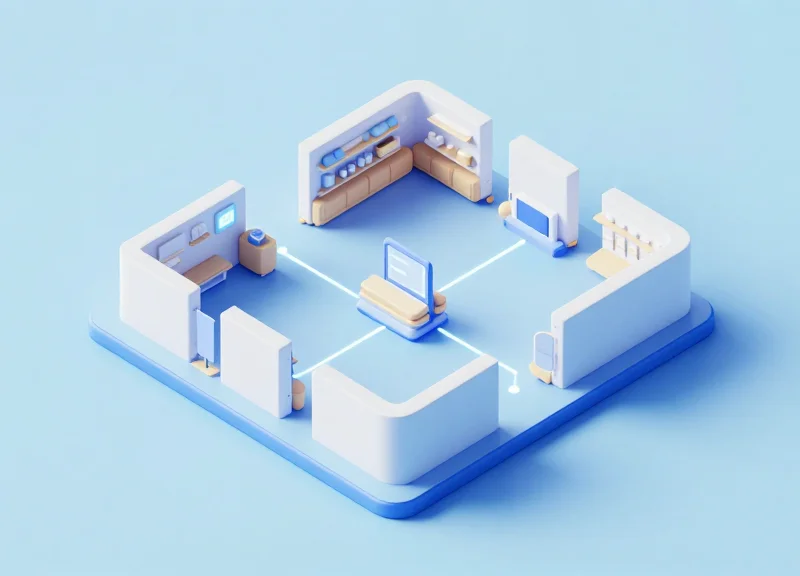
Interactive customer journeys via ESL (Electronic Shelf Labels) and RFID (Radio Frequency Identification) represent the ultimate convergence of physical retail and digital intelligence. In this ecosystem, the ESL acts as a dynamic interface while RFID provides the precision tracking necessary to understand exactly where a product is and how a customer is interacting with it. Together, they allow shoppers to bypass the 'information gap' of traditional retail, using their smartphones to instantly unlock technical specifications, user ratings, and real-time inventory availability across the entire retail network.
| Feature | Static Retail Display | IoT-Enabled Interactive Display |
|---|---|---|
| Information Depth | Limited to printed surface area | Unlimited via digital deep-links (QR/NFC) |
| Social Proof | None (or outdated printed quotes) | Live aggregate star ratings and video reviews |
| Stock Visibility | What you see is what you get | Real-time warehouse and nearby store levels |
| Interaction Trigger | Visual observation only | NFC tap, QR scan, or RFID 'Lift-and-Learn' |
Expert Insight: The most significant value shift in 2026 won't just be the customer's access to data, but the retailer's access to 'Intent-to-Buy' signals. When a customer taps an ESL to read a review, they are providing a high-intent digital footprint in a physical space. This allows retailers to implement 'The Ghost Basket' analysis—tracking which products are frequently interacted with but rarely purchased, revealing price friction or negative review trends that would be invisible in a static environment.
How does RFID improve the ESL experience?
RFID ensures the ESL is always reflecting the exact item on the hook. If a product is misplaced, the RFID system alerts the staff or automatically updates the ESL to show 'Out of Position' or the correct pricing for the item currently occupying that space.
Do customers need to download a specific app?
Modern 2026 standards prioritize frictionless entry. Most ESL-RFID journeys utilize NFC (Near Field Communication) or Web-AR, which allows customers to access the interface through their phone's native browser without downloading a dedicated retailer app.
Can these systems handle 'Lift-and-Learn' functionality?
Yes. When an RFID-tagged smart home device is lifted from a shelf, sensors trigger a nearby digital display to play a video demonstrating that specific device's compatibility with other smart ecosystems like Matter or Thread.
- The Tap/Scan Event: The shopper interacts with the ESL's NFC chip or QR code using a smartphone.
- Contextual Data Retrieval: The system identifies the unique RFID signature of the batch to provide specific manufacture dates, warranty info, or firmware versions.
- Omnichannel Conversion: The customer can choose to buy in-store, ship a larger unit from the warehouse, or save the item to a digital wishlist for later.
Sustainability: The Green Advantage of Digital Systems

By 2026, the transition from static to digital displays represents the single most effective way for retailers to hit ESG (Environmental, Social, and Governance) targets. While traditional signage requires a constant cycle of paper production, chemical ink usage, and carbon-heavy logistics for distribution, IoT-enabled systems like Electronic Shelf Labels (ESL) and digital kiosks offer a 'set and forget' infrastructure that reduces physical waste to near-zero. This shift moves the retail environment from a linear 'print-and-toss' model to a circular digital ecosystem where updates happen via software rather than physical replacement.
| Sustainability Metric | Traditional Static Signage | IoT-Enabled Digital Systems |
|---|---|---|
| Material Waste | High: Thousands of tons of paper and plastic annually. | Negligible: Zero-paper operation after initial install. |
| Logistics Footprint | Continuous: Weekly shipping of physical signs to stores. | Low: Single shipment for hardware with 5-10 year lifespan. |
| Chemical Impact | High: Solvent-based inks and adhesives in landfills. | Minimal: Compliant with RoHS and WEEE recycling standards. |
| Operational Energy | None (Manual) | Ultra-Low: e-Paper tech only uses power during updates. |
A critical, often overlooked aspect of the green advantage is the 'Logistics Tail.' For a national retail chain, the carbon emissions generated by the fuel used to transport physical price tags and promotional banners from printers to thousands of storefronts are staggering. Digital systems centralize this process. A single command from a central server updates 500 stores simultaneously, effectively deleting the need for a fleet of delivery trucks to maintain price accuracy.
How long do the batteries in digital displays last?
Modern IoT displays use e-Paper technology, which only consumes energy when the image changes. This allows batteries to last up to 10 years, ensuring that the environmental cost of the battery is offset by a decade of paper savings.
Is the electronic waste a concern for these systems?
While hardware does eventually need recycling, the 10-year lifecycle and the use of modular, recyclable components mean the total mass of electronic waste is significantly less than the cumulative weight of 10 years of discarded paper signage.
Can digital displays help reduce food waste in retail?
Yes. IoT systems enable dynamic pricing that allows retailers to automatically discount perishable goods as they near their expiration date, significantly reducing the amount of waste sent to landfills.
Expert Insight: The Rise of Energy Harvesting in 2026. One of the most significant breakthroughs for 2026 is the integration of indoor photovoltaic (PV) cells into digital shelf displays. These 'light-powered' units harvest ambient store lighting to keep their capacitors charged, potentially eliminating the need for batteries entirely. This innovation turns every display into a self-sustaining node, creating a truly 'zero-maintenance' green infrastructure that satisfies both the CFO's ROI requirements and the Chief Sustainability Officer's carbon-reduction mandates.
Security and Inventory Loss Prevention in 2026
By 2026, inventory loss prevention has shifted from reactive hardware to proactive, data-driven ecosystems. Modern security in smart home retail utilizes IoT-connected displays that integrate Electronic Article Surveillance (EAS) directly into the customer experience. This allows retailers to offer an 'open-sell' environment—where customers can freely handle high-value items like smart thermostats or premium cameras—while sophisticated sensors monitor movement patterns, removal from charging bases, and proximity to store exits in real-time, triggering subtle staff alerts before a theft even occurs.
| Feature | Legacy Security Systems | 2026 IoT-Enabled Security |
|---|---|---|
| Detection Method | Physical gates at exits (EAS) | Behavioral analytics and sensor-fusion |
| Customer Experience | Items locked behind glass or heavy cables | Wireless tethers and 'soft' security |
| Alert System | Audible sirens (often ignored) | Haptic alerts to staff wearables |
| Inventory Sync | Manual audit required after loss | Real-time inventory depletion updates |
A unique advantage of the 2026 model is the 'Digital Heartbeat' security protocol. Unlike traditional systems that only monitor if a cable is cut, IoT displays monitor the operational status of the product itself. If a smart speaker is disconnected from the store's secure mesh network or if its internal diagnostic 'heartbeat' ceases, the system immediately locks down the display and captures high-definition footage of the event. This turns the product's own connectivity into a layer of defense, making stolen demo units virtually useless for resale through automated hardware 'bricking'—a massive deterrent for organized retail crime.
- Engagement Tracking: IoT sensors detect when a product is lifted from its stand, notifying nearby staff to offer assistance, which simultaneously serves as a 'security greeting' to deter theft.
- Zonal Monitoring: Internal geofencing alerts the system if a high-value item moves beyond a pre-defined 'interaction zone' without being scanned at a Point of Sale.
- Automated Loss Logging: If a breach occurs, the IoT system automatically logs the time, SKU, and associated sensor data, instantly updating inventory levels and filing a digital incident report.
How do IoT displays reduce false alarms?
Advanced algorithms can distinguish between a curious shopper interacting with a device and an attempt to force-remove it from the display, reducing 'alarm fatigue' for store associates.
Is customer privacy protected during security monitoring?
Yes, 2026 systems focus on anonymous metadata and heatmapping rather than facial recognition, ensuring security compliance with evolving global privacy regulations like GDPR and CCPA.
Can these systems work during power outages?
Most 2026 IoT security hubs include dedicated battery backups and utilize low-power Wide Area Networks (LPWAN) to maintain security even when primary store power or Wi-Fi fails.
Future-Proofing Your Retail Infrastructure
Future-proofing your retail infrastructure means moving beyond the 'rip-and-replace' cycle by investing in a modular, interoperable framework where hardware like Electronic Shelf Labels (ESLs), AI sensors, and digital signage are managed through a unified, cloud-native control plane. By 2026, the competitive edge will belong to retailers who treat their physical stores as programmable environments, utilizing high-bandwidth wireless protocols (like Wi-Fi 6E or 7) and Edge Computing to process real-time IoT data without the latency of traditional centralized systems.
- Audit for High-Density Connectivity: Modern IoT environments fail on legacy Wi-Fi. Transition to Wi-Fi 6E or private 5G networks to support thousands of concurrent device connections—from smart tags to AR-enabled customer devices—without signal degradation.
- Implement an API-First Software Architecture: Avoid vendor lock-in by selecting software platforms with robust RESTful APIs. This ensures that your inventory management system, CRM, and IoT displays can 'talk' to each other, allowing for automated triggers based on live data.
- Shift to Composable Hardware: Prioritize modular hardware components. If a display panel fails or a new sensor technology emerges, you should be able to swap individual components rather than replacing the entire shelving unit or signage system.
- Establish an Edge-to-Cloud Data Pipeline: Deploy local edge servers to process immediate actions—like updating a price tag when a customer picks up a paired item—while syncing long-term analytics to the cloud for deeper trend analysis.
| Feature | Legacy Static Infrastructure | 2026 IoT-Enabled Infrastructure |
|---|---|---|
| Scalability | Manual and high-cost | Software-defined and instantaneous |
| Data Flow | One-way (Information only) | Bi-directional (Feedback loops) |
| Update Frequency | Weeks or Months | Real-time / Sub-second |
| Maintenance | Reactive (Repair when broken) | Predictive (AI-driven health monitoring) |
One often overlooked aspect of future-proofing is 'Data Gravity.' As retail spaces generate terabytes of interaction data, the cost of moving that data to the cloud becomes a bottleneck. My expert tip for 2026: Architect your infrastructure to keep 'hot' data—the immediate interactions happening on the shelf—at the Edge. Only push 'cold' data (aggregated metrics) to the cloud. This 'Local-First IoT' approach ensures your store remains operational even during internet outages and significantly slashes operational cloud costs.
Will IoT infrastructure be too expensive for mid-sized retailers?
Not if implemented modularly. The 'as-a-service' (HaaS) model is emerging, allowing retailers to pay for IoT infrastructure as an operational expense rather than a massive upfront capital expenditure.
How long does a typical IoT infrastructure transition take?
A phased rollout usually takes 12 to 18 months. Starting with a pilot 'Smart Zone' allows you to prove ROI before scaling to the entire floor.
Is security a major risk in an IoT-heavy store?
It can be, which is why a 'Zero Trust' network architecture is essential. Every ESL and sensor must be authenticated and segmented from the store's primary payment processing network.