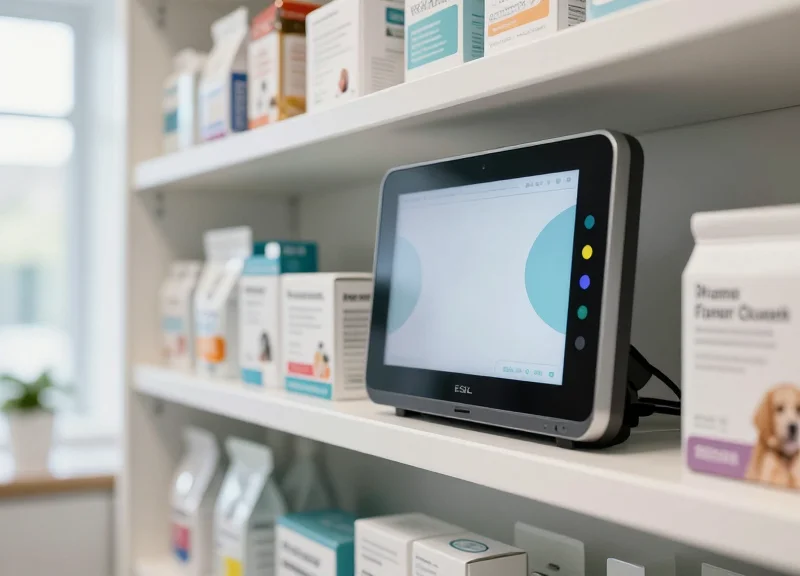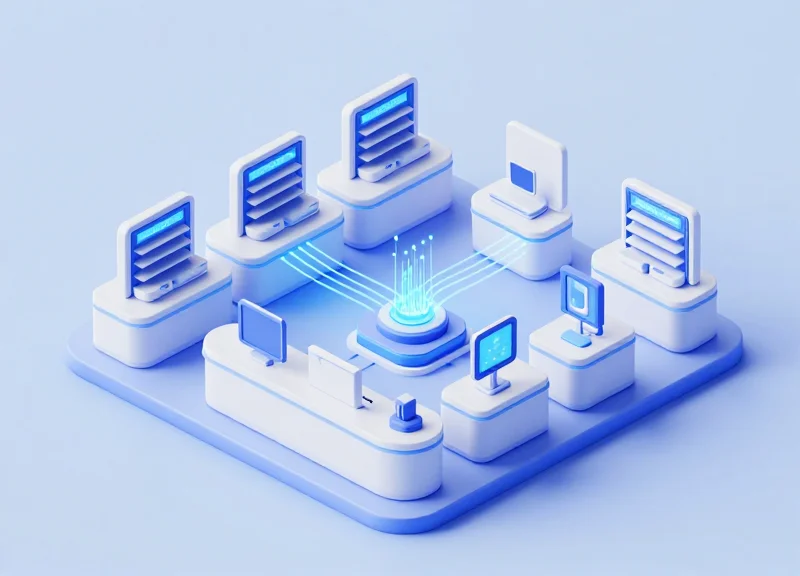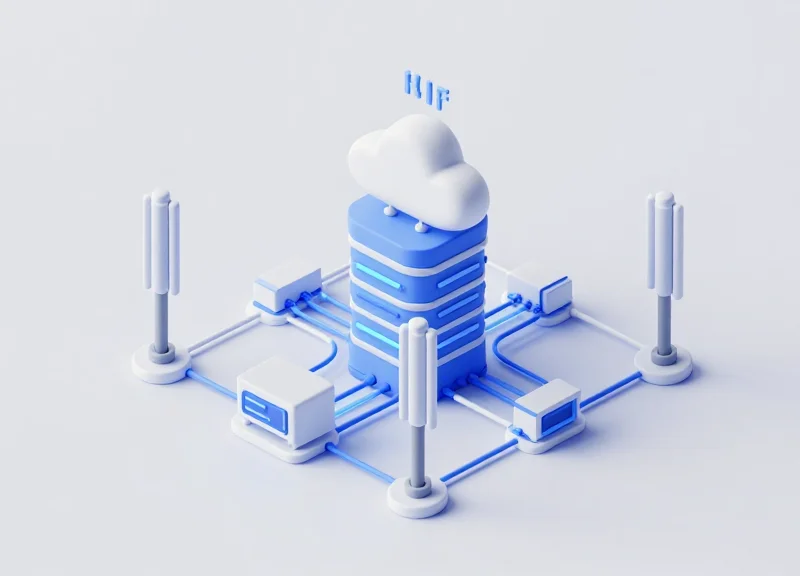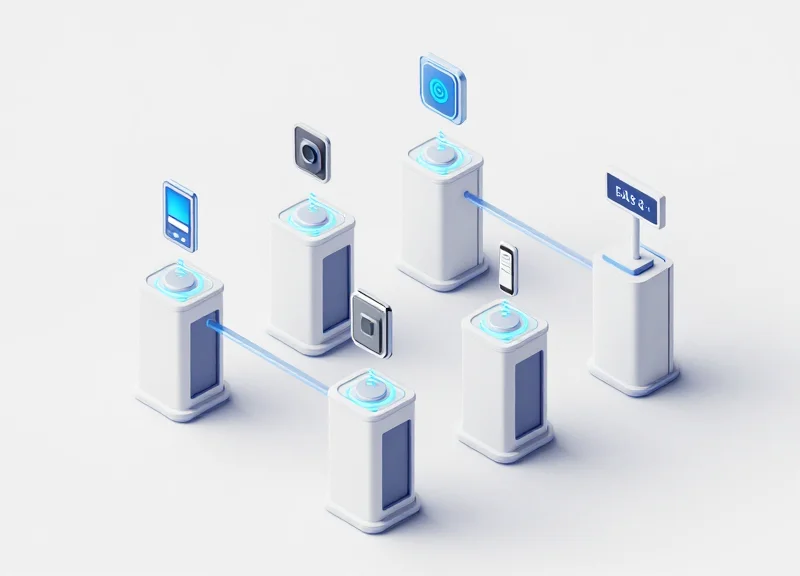
The traditional retail showroom is undergoing a radical metamorphosis. By 2026, the gap between physical and digital storefronts will vanish, leaving those who rely on static paper labels at a significant competitive disadvantage. As labor costs rise and consumer expectations for real-time information skyrocket, forward-thinking tech showrooms are turning to next-generation Electronic Shelf Labels (ESL) and interactive inventory systems. This isn't just about changing prices; it is a strategic maneuver to shield profits, optimize operations, and create an immersive shopping environment that paper simply cannot match.
The Death of the Static Label in High-Tech Retail

In the high-velocity tech market of 2026, the static paper label is no longer just a relic; it is a financial liability. The death of the static label refers to the systemic obsolescence of physical price tags that fail to reflect real-time market fluctuations, cloud-managed inventory levels, and omnichannel pricing strategies. As high-tech showrooms evolve into experience centers, the 'data-reality gap' created by paper labels leads to margin leakage, where physical stores sell products at outdated prices while online competitors pivot in milliseconds. For modern retailers, moving beyond static labels is a prerequisite for protecting profitability and maintaining brand authority in an era of hyper-transparent pricing.
| Feature | Legacy Static Labels | 2026 Next-Gen E-Ink Nodes |
|---|---|---|
| Update Velocity | Manual (Hours to Days) | Instantaneous (API-driven) |
| Pricing Precision | Static / Fixed | Dynamic / Algorithmic |
| Labor Overhead | High (Printing & Placement) | Near-Zero (Centralized Control) |
| Customer Trust | Variable (Label mismatch) | High (Omnichannel Parity) |
The primary driver behind this shift is the emergence of 'Margin Shielding.' In Silicon Valley and global tech hubs, hardware depreciation happens at a record pace. A static label cannot reflect a flash sale or a competitor's price drop, forcing the retailer to either lose the sale to a smartphone-wielding customer or honor a manual price match that erodes commission. By 2026, high-tech showrooms use E-ink labels as active edge-computing nodes that communicate directly with the warehouse. This ensures that the price on the shelf is always the 'correct' price for that specific second, shielding the retailer's bottom line from the volatility of the global supply chain.
Why is the static label considered a brand risk in 2026?
Modern consumers expect a 'frictionless' experience. If a customer sees a different price on the physical tag than what is listed on the store's app, it creates immediate cognitive dissonance and distrust, suggesting the brand is technologically inept.
What is the 'Omni-Channel Parity Engine'?
This is a unique 2026 tech standard where E-ink labels are synced to a central engine that matches prices across web, mobile, and physical aisles simultaneously, preventing 'showrooming' where customers use physical stores only to browse before buying cheaper elsewhere.
How do interactive labels improve inventory management?
Beyond pricing, next-gen labels display 'Real-Time Stock Velocity.' If only two units are left in the backroom, the label can automatically trigger a 'Low Stock' alert to the customer, driving urgency and increasing conversion rates without human intervention.
Expert Tip: To maximize ROI, don't view E-ink as a simple replacement for paper. View it as a digital real estate play. My 20 years in the valley have shown that the most successful retailers use these labels to display 'Live Peer Reviews' and 'Compatibility Badges' (e.g., 'Works with your Home Ecosystem'). This contextual data transforms a price tag into a silent salesperson, significantly increasing the Average Order Value (AOV) by upselling accessories that the consumer can see are currently in stock.
Harnessing Next-Gen E-Ink: More Than Just Digital Ink
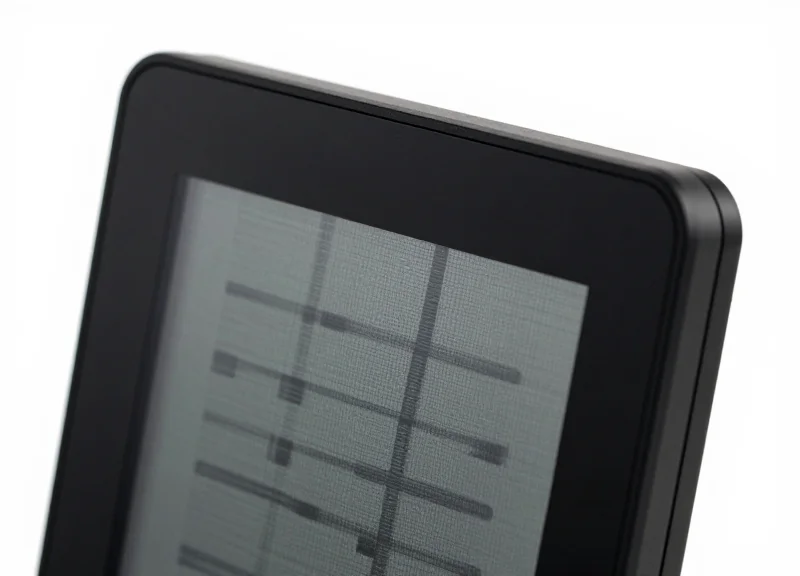
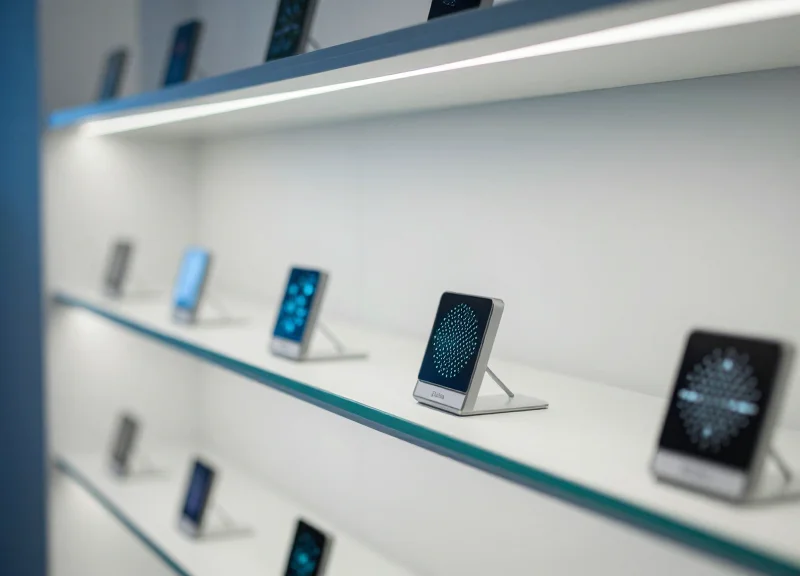
Next-generation E-Ink in 2026 represents a paradigm shift from simple 'digital paper' to high-fidelity, interactive data nodes. Unlike early Electronic Shelf Labels (ESLs) that were limited to three colors and slow refresh cycles, the 2026 standard utilizes full-color gamuts (such as E-Ink Spectra 6) and sub-second latency. These displays allow tech showrooms to synchronize physical pricing with volatile online markets instantly, ensuring that profit margins are shielded from rapid competitor price drops or flash-sale cycles without the overhead of manual updates.
| Feature | Legacy ESL (Circa 2020) | Next-Gen E-Ink (2026) |
|---|---|---|
| Color Palette | Black/White/Red or Yellow | Full Color (65,000+ shades) |
| Refresh Rate | 1.0 - 2.5 Seconds | 300ms - 500ms (Partial Update) |
| Connectivity | Proprietary RF (One-way) | Bi-directional BLE 5.4 / NFC |
| Power Profile | 5-Year Replaceable Battery | Ambient Energy Harvesting (Battery-free) |
The technical leap in 2026 is driven primarily by the integration of OxTFT (Oxide Thin Film Transistor) backplanes. This allows for higher resolution displays that can render detailed QR codes and complex infographics. For a tech showroom, this means a label is no longer just a price tag; it is an interactive portal where a customer can tap their phone to see a live stock count across all regional branches or view a 30-second product demo video triggered by the label's integrated NFC chip.
How does Next-Gen E-Ink handle 'ghosting' in fast-moving environments?
Modern waveforms and improved fluid viscosity in the microcapsules allow 2026 displays to perform 'flashless' updates, eliminating the distracting black-to-white flicker seen in older Kindle-style displays.
Is the color accurate enough for luxury tech brands?
Yes. With the introduction of Spectra 6 technology, E-Ink now achieves a color saturation level comparable to high-quality print media, allowing brands like Apple or Sony to maintain strict color-accurate branding on the shelf.
Does the increased interactivity drain the battery?
No. Most 2026 units utilize 'Energy Harvesting' from indoor LED lighting via thin-film photovoltaic layers, making the devices functionally immortal as long as the showroom lights are on.
Expert Insight: The Rise of 'Zero-Latency Retail' One original development we are seeing in 2026 is the 'Logic-on-Label' architecture. Historically, the central server did all the thinking. Now, the labels themselves possess enough localized processing power to execute 'if-then' pricing rules locally. For example, if an onboard light sensor detects a customer is standing in front of the product for more than 45 seconds, the label can autonomously trigger a 'Buy Now' discount or highlight a specific feature, creating a hyper-personalized sales funnel at the physical point of interest.
Shielding Profits: Dynamic Pricing as a Defensive Strategy
In the volatile retail environment of 2026, dynamic pricing has evolved from a revenue-maximization tactic into a fundamental defensive strategy. By leveraging next-gen E-Ink infrastructure, tech showrooms can automatically synchronize floor prices with backend procurement costs and global market fluctuations. This ensures that profit margins are shielded in real-time, preventing 'margin leak' where products are sold at outdated prices that no longer reflect their current replacement value or the brand's competitive positioning.
| Feature | Legacy Static Labels | 2026 Dynamic E-Ink Shield |
|---|---|---|
| Update Velocity | Days/Weeks (Manual) | Seconds (Automated) |
| Inflation Response | Reactive & Delayed | Proactive & Immediate |
| Price Matching | Loss-Leading Manual Checks | Algorithmic Competitive Sync |
| Margin Protection | Eroded by Supply Spikes | Guaranteed by Floor-Price Logic |
The primary defensive benefit is the mitigation of 'Inflationary Lag.' In 2026, supply chain costs can shift overnight; a retailer relying on paper labels or legacy digital systems often sells through high-demand stock at old prices, only to find the cost of restocking that inventory has risen above the previous retail price. Dynamic E-Ink labels eliminate this risk by linking the shelf price directly to the Inventory Replacement Cost (IRC) index, ensuring every sale contributes to sustainable business growth.
How does dynamic pricing protect against 'showrooming'?
Showrooming—where customers view items in-store but buy cheaper online—is neutralized by real-time price matching. E-Ink displays can scan top-tier competitor APIs every hour, ensuring the in-store price is always the 'best' price, thus securing the conversion on the spot.
Can dynamic pricing prevent inventory deadstock?
Yes. By integrating with interactive inventory status, labels can trigger micro-markdowns for items with slowing velocity or high stock levels, clearing capital before the product becomes obsolete without requiring a store-wide clearance event.
Is it possible to set 'Profit Floor' protections?
Absolutely. Modern systems allow retailers to set a hard margin floor. Even if a competitor drops their price significantly, the E-Ink system will only match it down to a specific profitability threshold, alerting staff if a manual override is needed.
Expert Insight: The IRCR Protocol. A unique strategy emerging in 2026 is the 'Inventory Replacement Cost Realignment' (IRCR). Unlike traditional pricing that looks at historical cost, IRCR uses AI to predict the cost of the next shipment. If a semiconductor shortage is predicted to spike GPU prices next month, your E-Ink labels can begin incremental 0.5% daily increases today. This 'smooths' the price transition for consumers while building a capital reserve to afford the more expensive incoming stock, effectively using the showroom floor as a hedge against future supply chain volatility.
Interactive Inventory Status: The End of 'Out of Stock' Frustration
Interactive Inventory Status is the real-time synchronization of Electronic Shelf Labels (ESLs) with backend Enterprise Resource Planning (ERP) and Warehouse Management Systems (WMS) to provide customers with instant transparency regarding product availability. By 2026, this technology has evolved beyond a simple 'In Stock' message; it now serves as a dynamic retail portal that offers precise unit counts, incoming shipment ETAs, and 'Endless Aisle' fulfillment options like 'Ship to Home' or 'Store-to-Store' transfers. This integration effectively ends the 'out of stock' frustration that accounts for nearly $1 trillion in lost retail sales globally by capturing the purchase intent the moment it occurs at the shelf edge.
| Feature | Legacy Static Labels | 2026 Interactive ESLs |
|---|---|---|
| Stock Visibility | Binary (On shelf or not) | Precise real-time unit count |
| OOS Recovery | Customer leaves or asks staff | Immediate QR-code 'Ship to Home' |
| Supply Chain Data | None | Live 'Next Shipment' countdown |
| Cross-Channel Sync | Manual / Lagging | Instant ERP/WMS integration |
The 'Endless Aisle' Strategy at the Shelf Edge. When a tech showroom shopper encounters an empty peg, the interaction usually ends there. In 2026, the ESL acts as a digital clerk. By scanning the interactive label, a customer can see that while the local store is out of a specific VR headset, there are four units at a nearby hub. With one tap, they can trigger a 'Ship to Home' order or reserve it for pickup. This turns a high-friction 'Out of Stock' event into a high-satisfaction omnichannel conversion, shielding the retailer's profit from competitors like Amazon.
- Trigger Point: The ERP system detects local stock hitting zero and automatically updates the E-Ink display to 'Out of Stock - Order for Home Delivery'.
- Customer Interaction: The customer scans the ESL's dynamic QR code or taps via NFC, opening a pre-authenticated mobile checkout page.
- Fulfillment Selection: The system presents the fastest delivery options from regional distribution centers or nearby 'Dark Stores'.
- Conversion: The sale is finalized at the shelf, preventing the customer from price-shopping elsewhere or losing interest.
Expert Insight: Solving 'Phantom Stock' with Haptic ESLs. A common Silicon Valley retail hack for 2026 involves using ESLs to solve the 'Phantom Stock' problem—where the computer thinks an item is in stock, but it's misplaced in the wrong aisle. Next-gen ESLs now feature 'Find My Item' LED beacons. When a customer or staff member searches for a 'lost' item via the store app, the shelf label itself flashes a high-visibility color. This 0.5-meter precision location tracking reduces 'lost' inventory write-offs by up to 15% and ensures that 'Interactive Inventory' status is accurate to the physical reality of the floor.
How often does the inventory status update on the label?
In 2026, updates are near-instantaneous. Using Sub-GigaHertz or BLE 5.4 protocols, the ERP pushes stock changes to labels in under 3 seconds to ensure customers never try to buy 'Ghost' inventory.
Can labels show stock for different configurations (e.g., color or storage size)?
Yes. Interactive ESLs often feature 'page flipping' or touch-sensitive zones that allow users to toggle through different SKU variants and see the specific availability for each directly on the E-Ink screen.
Does this require a dedicated app download?
Modern implementations utilize App Clips or PWA technology via QR/NFC, allowing customers to interact with inventory and purchase items without the friction of a full app installation.
Labor Optimization: Redefining the Role of Showroom Staff
By 2026, labor optimization in high-end tech showrooms has evolved from a simple cost-cutting measure into a strategic talent reallocation framework. By eliminating the manual 'sticker-and-scraper' cycle of price updates, next-gen E-Ink systems recover an average of 35 to 45 man-hours per week per location. This shift allows floor associates to move away from administrative maintenance and toward high-impact consultative selling, where their expertise directly influences high-margin transactions and customer lifetime value.
| Activity Category | Legacy Manual Showroom (Weekly Hrs) | 2026 E-Ink Showroom (Weekly Hrs) | Net Impact |
|---|---|---|---|
| Price Tag Updates | 18.5 | 0.2 | 98% Time Recovery |
| Inventory Reconciliation | 12.0 | 2.5 | Real-time Sync |
| Consultative Selling | 14.5 | 42.3 | 190% Engagement Increase |
| Staff Training/Upskilling | 2.0 | 8.0 | Higher Talent Retention |
The ROI of this transition is not merely found in saved wages, but in the 'Conversion per Interaction' (CPI) metric. When staff are no longer tethered to mundane tasks, they can utilize interactive inventory data at the shelf-edge to close complex sales, such as cross-selling smart home ecosystems or high-tier workstation configurations that require human nuance and technical depth.
- Phase 1: Automate Low-Value Repetition: Deploying E-Ink labels that sync via 2.4GHz or Sub-GHz protocols ensures that global price changes propagate in seconds, not days, instantly freeing the workforce.
- Phase 2: Knowledge Accessibility: Utilize the reverse-side of E-Ink displays or hidden NFC triggers to provide staff with instant backend specs and training talking points, turning every employee into a subject matter expert.
- Phase 3: Pivot to Relationship Management: Incentivize staff based on customer satisfaction scores and upsell ratios rather than floor maintenance metrics, aligning their career growth with store profitability.
Expert Insight: The 'Silent Trainer' Strategy. A unique advantage of 2026 E-Ink systems is their ability to act as internal training tools. By toggling a 'staff mode' via a handheld device, the labels can display profit margins, current bundle promotions, or 'frequently bought with' data. This allows junior staff to navigate complex product lines with the confidence of a veteran, effectively shortening the onboarding process by up to 60%.
Does E-Ink automation lead to retail layoffs?
On the contrary, 2026 tech showrooms use automation to justify higher wages for more skilled 'Product Consultants' who provide the human touch that e-commerce lacks.
How does staff morale change after implementation?
Surveys show a significant decrease in burnout and a 30% increase in job satisfaction when employees are empowered with technology rather than burdened by manual paperwork.
Can labels help with stockroom efficiency too?
Yes, interactive status indicators can flash or change colors to guide staff during 'Ship from Store' picking or restocking, further optimizing behind-the-scenes labor.
The Security Synergy: Integrating ESL with EAS and RFID
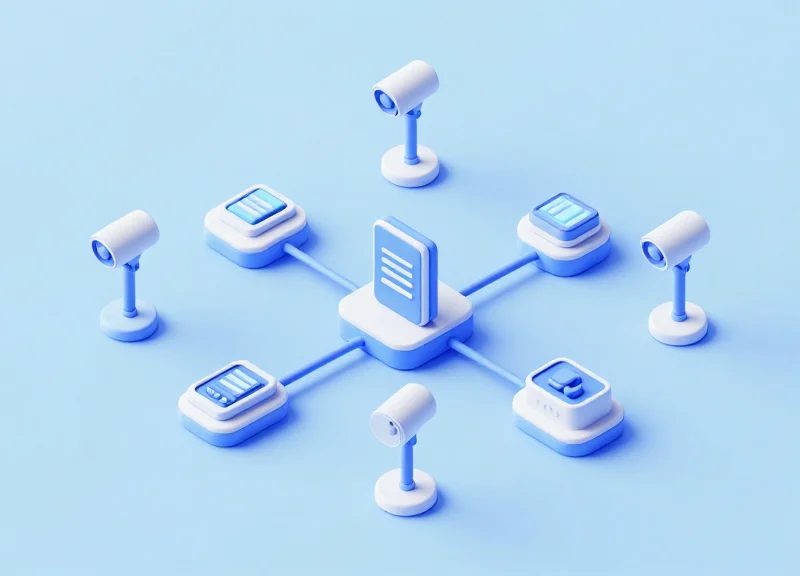
The security synergy of 2026 is defined by the convergence of Electronic Shelf Labels (ESL), Electronic Article Surveillance (EAS), and Radio Frequency Identification (RFID) into a single, cohesive infrastructure. By embedding RFID sensors within or alongside ESL units, retailers move beyond simple price display to 'intelligent asset monitoring.' This unified ecosystem allows a showroom to track the precise location, status, and security level of every high-value item in real-time. When these systems communicate, an ESL doesn't just show a price; it acts as a digital sentry that bridges the gap between inventory management and profit protection.
| Feature | Traditional Security | Integrated Security Synergy |
|---|---|---|
| Theft Detection | Passive gate alarms | Real-time item-level movement alerts via ESL gateway |
| Inventory Visibility | Manual cycle counts | Continuous automated tracking via RFID/ESL mesh |
| Operational Response | Reactive security guards | Proactive 'Customer Assistance' alerts for high-risk behavior |
| Profit Protection | Post-loss investigation | Live shrinkage prevention and margin shielding |
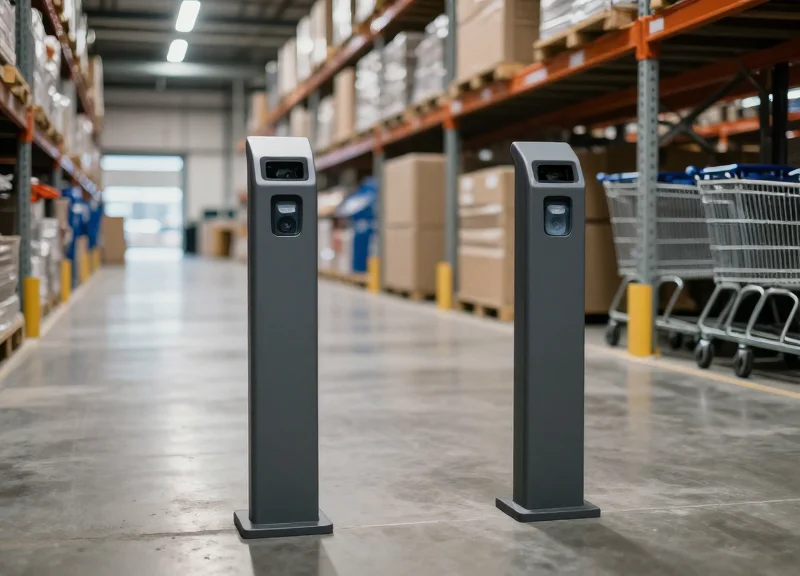
DragonGuard solutions exemplify this integration by using the ESL communication backhaul to relay RFID data. This eliminates the need for redundant networking hardware, significantly lowering the total cost of ownership. In this environment, if an item is moved from its designated 'smart zone' without a corresponding POS transaction, the system can trigger silent alerts or update the ESL display to a 'Security Enabled' mode, deterring theft before the suspect reaches the exit.
How does RFID integration improve ESL accuracy?
RFID provides the 'physical' location data that validates the 'digital' status on the ESL. If the RFID tag indicates the last unit has been moved to a dressing room, the ESL can instantly update to 'Check Availability' instead of 'In Stock,' preventing customer friction and identifying potential theft patterns.
Does EAS integration impact ESL battery life?
Modern DragonGuard ESLs use ultra-low-power sub-GHz protocols. The EAS components are typically passive or triggered by specific events, ensuring that the 10-year battery life of the E-Ink display remains uncompromised.
Can these systems prevent 'Sweethearting' at checkout?
Yes. By syncing the ESL/RFID cloud with the Point of Sale, the system ensures that the item being scanned matches the item removed from the shelf. Any mismatch triggers an immediate notification to floor managers.
Expert Insight: Contextual Security Levels. A unique advantage of the DragonGuard ecosystem is the ability to implement 'Contextual Security.' This means security protocols can automatically tighten based on real-time data. For example, if a high-value tech product's price is dynamically lowered during a flash sale, increasing foot traffic and theft risk, the ESL-linked RFID sensors can increase their polling frequency. This ensures that during high-risk periods, your most profitable assets have the highest level of digital surveillance without requiring extra security personnel.
Enhanced CX: QR Codes, NFC, and the Connected Customer
In the 2026 retail landscape, the 'Connected Customer' expects the transparency of e-commerce within the tactile environment of a physical showroom. Enhanced Customer Experience (CX) is achieved by turning Electronic Shelf Labels (ESLs) into interactive gateways using QR codes and Near Field Communication (NFC). These technologies allow shoppers to instantly access rich media—such as peer reviews, video tutorials, and technical specifications—by simply tapping their smartphone against the shelf edge or scanning a dynamic code. This 'phygital' integration eliminates the friction of searching for information manually, ensuring the customer remains engaged at the point of decision.
| Feature | QR Code Interaction | NFC (Near Field Communication) |
|---|---|---|
| User Friction | Low: Requires opening camera/app. | Ultra-Low: Just a physical tap. |
| Content Depth | Link to landing pages, videos, AR. | Direct app triggers, secure payments. |
| Accessibility | Visual; works from a short distance. | Proximity-based; works in low light. |
| Primary Use Case | Educational content & social proof. | Loyalty check-ins & instant checkout. |
Expert Insight: The Rise of 'Intent Attribution' in Physical Aisles. The true power of interactive labels isn't just convenience; it is data. For the first time, retailers can capture 'Intent Data' that was previously exclusive to web browsers. By tracking which E-Ink labels are scanned and which content is consumed, showrooms can identify 'high-interest/low-conversion' products. If a product is scanned 50 times a day but sells zero units, the retailer knows the issue is likely price or a specific negative review found online, allowing for real-time strategic pivots.
How do interactive labels improve loyalty program enrollment?
By embedding NFC triggers in the ESL, customers can join a loyalty program with a single tap, automatically applying 'member-only' pricing to their digital cart without filling out paper forms.
Can these labels display localized social proof?
Yes. Dynamic E-Ink displays can generate QR codes that lead directly to filtered reviews from customers in that specific geographic region or demographic.
Does this technology replace the need for sales associates?
It augments them. By handling 'Level 1' queries (specs and stock), associates are freed to provide high-level consultative selling and relationship management.
- Audit Digital Assets: Ensure every SKU has a mobile-optimized landing page, video demo, or comparison chart ready for link-linking.
- Synchronize Loyalty Data: Connect the ESL management software with your CRM to allow for personalized 'Tap-to-See-My-Price' functionality.
- Deploy Dynamic QR Generation: Use central software to push unique, trackable UTM links to labels, enabling precise ROI measurement of shelf-edge interactions.
Sustainable Retail: Reducing the Carbon Footprint of Paper Waste

In the 2026 retail landscape, sustainability has transitioned from a boardroom buzzword to a core driver of brand equity and operational profitability. By replacing traditional paper labels with next-gen Electronic Shelf Labels (ESLs), tech showrooms can effectively eliminate up to 100% of price-tag-related paper waste. This shift addresses the 'Linear Consumption' model—where labels are printed, shipped, used for days, and discarded—by replacing it with a circular, low-power digital ecosystem that drastically reduces a retailer's Scope 3 emissions and overall carbon debt.
| Sustainability Metric | Traditional Paper Labels | Next-Gen E-Ink Labels (ESL) |
|---|---|---|
| Material Waste | High (Continuous disposal of paper/adhesives) | Near-Zero (Single device used for 5-10 years) |
| Chemical Impact | High (Bleaches, toxic inks, and glues) | Minimal (RoHS compliant electronics) |
| Logistics Carbon | Recurring (Weekly shipping of physical tags) | One-time (Initial installation only) |
| Energy Use | Invisible (Energy used in printing/processing) | Ultra-Low (Battery powered, 0W to maintain image) |
Beyond the obvious reduction in physical trash, the environmental ROI of E-Ink lies in the elimination of the 'Logistical Tail.' In a standard tech showroom, price updates occur frequently due to market volatility. For a national chain, this translates to millions of labels being couriered annually. By digitizing this process, retailers cut the carbon emissions associated with the production, transportation, and chemical processing of these materials. Furthermore, modern E-Ink technology is incredibly energy-efficient, requiring power only during a 'page flip,' meaning the display remains static and readable for years without additional energy draw.
How does switching to ESLs impact my ESG reporting?
ESLs provide measurable data for Environmental, Social, and Governance (ESG) reports by quantifying the exact reduction in paper tonnage and carbon emissions from avoided logistics, helping brands meet 2026 regulatory standards.
Isn't the e-waste of the labels worse than paper?
No. While ESLs are electronic, their 7-10 year lifespan and high recyclability far outweigh the cumulative environmental impact of printing, bleaching, and disposing of tens of thousands of paper tags per store every year.
Do consumers actually care about digital labels?
Yes. Studies show that 2026 tech consumers—particularly Gen Z and Alpha—prefer brands that demonstrate 'Invisible Sustainability' through tech-forward, waste-reducing infrastructure.
Expert Tip: To truly differentiate your showroom, leverage your ESLs to display 'Carbon Transparency' scores. By 2026, use the interactive display to show the carbon footprint of the specific tech product being sold. This unique application of E-Ink doesn't just reduce your own waste; it educates the consumer, positioning your brand as a leader in the global move toward radical environmental transparency.
Data Analytics: Using Shelf-Edge Insights to Drive Sales

Shelf-edge insights represent the next frontier in retail business intelligence, where Electronic Shelf Labels (ESLs) function as the 'browser cookies' of the physical world. By integrating sensors and interactive touchpoints, 2026-era ESL systems capture granular customer behavior data—such as dwell time, interaction frequency via NFC/QR codes, and stock-to-touch ratios—allowing showroom managers to optimize product placement and pricing strategies with the same precision as an e-commerce giant.
- Engagement Tracking: ESLs equipped with Bluetooth Low Energy (BLE) and proximity sensors detect how long a customer stays in front of a specific product category, identifying 'cold zones' that need layout adjustments.
- Interactive Funnel Analysis: By monitoring every NFC tap or QR code scan, retailers can track the conversion funnel from physical curiosity to digital deep-dive (specs, reviews), and finally to the point of sale.
- Real-Time A/B Testing: Retailers can now run live experiments by changing the digital content on one shelf section (e.g., highlighting a specific feature vs. a discount) and measuring the immediate impact on customer dwell time.
| Metric Category | Legacy Showroom Tracking | 2026 Next-Gen ESL Analytics |
|---|---|---|
| Customer Interest | Manual observation/Guesswork | Real-time dwell time & proximity alerts |
| Product Engagement | Inventory depletion only | Digital interaction count (NFC/QR/Touch) |
| Layout Success | Weekly/Monthly heatmaps | Hourly performance metrics per shelf-inch |
| Price Sensitivity | Delayed sales reports | Instant elasticity testing via dynamic price shifts |
Expert Insight: The Engagement-to-Purchase Lag (EPL). In the 2026 landscape, we are moving beyond simple 'sales' metrics to track the EPL. This original metric measures the time elapsed between a customer's first digital interaction at the shelf edge and the final transaction. A shortening EPL indicates high-quality product education at the shelf, while a widening gap often signals a need for immediate staff intervention or a pricing misalignment. Mastering the EPL allows showrooms to 'shield' profits by preemptively addressing friction points before a customer leaves the store to buy online.
How does ESL analytics protect customer privacy?
Modern ESL systems focus on aggregate behavioral data and anonymous proximity signals. They track 'events' rather than 'identities,' ensuring compliance with evolving global privacy regulations like GDPR and CCPA while still providing actionable retail insights.
Can shelf-edge data be integrated with my existing CRM?
Yes. Open API architectures in next-gen systems allow shelf-edge interactions to sync with loyalty programs. If a logged-in customer taps an ESL, the system can provide a personalized offer based on their past browsing history, bridging the gap between digital and physical profiles.
What is the most significant ROI of these analytics?
The primary ROI is found in 'Inventory Optimization.' By understanding which products are touched but not bought, retailers can identify flaws in product demos or pricing, preventing dead stock and maximizing the profit-per-square-foot of the showroom.
Future-Proofing Your Showroom: A Step-by-Step Implementation Guide
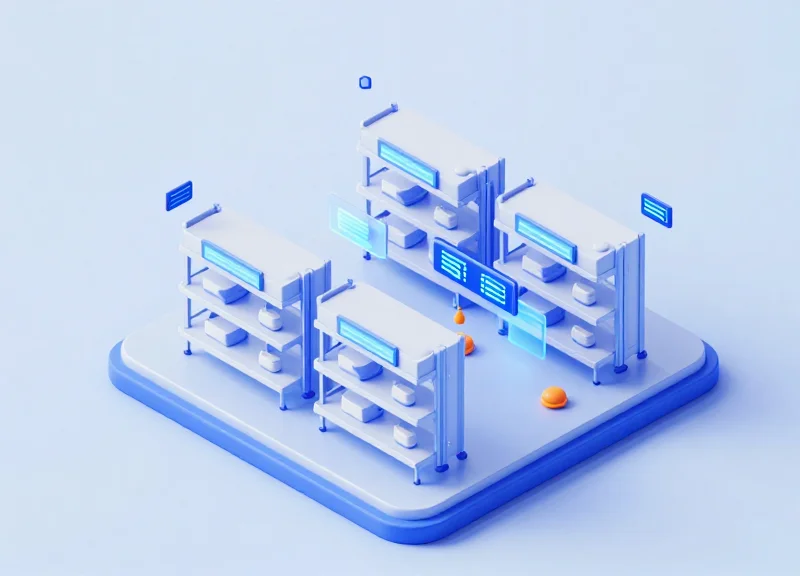
Future-proofing a 2026 tech showroom requires a holistic shift from 'digital price tags' to a 'connected edge ecosystem.' Implementation involves five critical phases: auditing current infrastructure for bandwidth capacity, deploying multi-protocol gateways, integrating middleware with real-time ERP/POS feeds, physical installation of high-refresh E-Ink displays, and establishing a closed-loop data feedback system. By prioritizing interoperability and network low-latency today, retailers can shield their profits against the rising costs of manual labor and inventory inaccuracies.
- The Network Audit & Spectrum Planning: Evaluate your current wireless environment. High-density showrooms often suffer from 2.4GHz interference; for 2026, we recommend sub-GHz gateways for E-Ink communication to ensure 99.9% transmission reliability through walls and metal fixtures.
- API-First Middleware Selection: Choose a software layer that acts as the 'brain' between your inventory database and the shelf edge. Ensure it supports RESTful APIs or GraphQL for real-time status updates, such as 'Low Stock' or 'Live Demo Available'.
- Gateway & Infrastructure Deployment: Install gateways at a density that ensures overlapping coverage. A standard 5,000 sq. ft. showroom typically requires 3-5 gateways to support simultaneous updates of 10,000+ tags without latency spikes.
- Hardware Commissioning & Mapping: Link unique SKU IDs to ESL MAC addresses using mobile handhelds. This physical-to-digital mapping ensures that the interactive inventory status on the label reflects the exact product on the pedestal.
- Iterative Testing & Stress Loading: Conduct a 'bulk update' stress test. Trigger a showroom-wide price or status change to verify that the system handles peak data loads without draining tag battery life unnecessarily.
| Feature | Sub-GHz (Recommended) | Bluetooth Low Energy (BLE) | Standard Wi-Fi |
|---|---|---|---|
| Signal Penetration | Superior (Long Wave) | Moderate | Poor in Crowded Areas |
| Battery Life | 10-15 Years | 5-7 Years | Months (High Drain) |
| Interference Risk | Minimal | High (shares 2.4GHz) | Critical (Showroom Congestion) |
| Primary Use Case | Mass ESL Updates | Customer Proximity Marketing | High-Bandwidth Streaming |
Expert Insight: The 'Power-Latency Paradox' of 2026. In my two decades of Silicon Valley infrastructure scaling, the biggest mistake I see is over-optimizing for speed at the expense of battery longevity. Next-gen systems solve this by utilizing 'Edge-Wake' triggers—where the tag remains in a deep-sleep state until a gateway sends a specific low-power wake-up signal. This allows for sub-second 'Live Status' updates (like stock counts) only when a customer is detected nearby via NFC or IR, preserving the 10-year battery life that makes the ROI of E-Ink truly viable.
How many tags can one gateway handle?
Modern sub-GHz gateways can manage up to 5,000 tags within a 30-50 meter radius, though we recommend a 20% buffer for showroom expansion.
Can these labels integrate with Shopify or Oracle?
Yes, through middleware connectors. Most enterprise-grade ESL solutions offer pre-built plugins for major ERP and e-commerce platforms to sync online/offline inventory instantly.
What happens if the power goes out?
E-Ink is bistable, meaning the image remains on the screen indefinitely without power. Your inventory status stays visible even during a complete showroom outage.