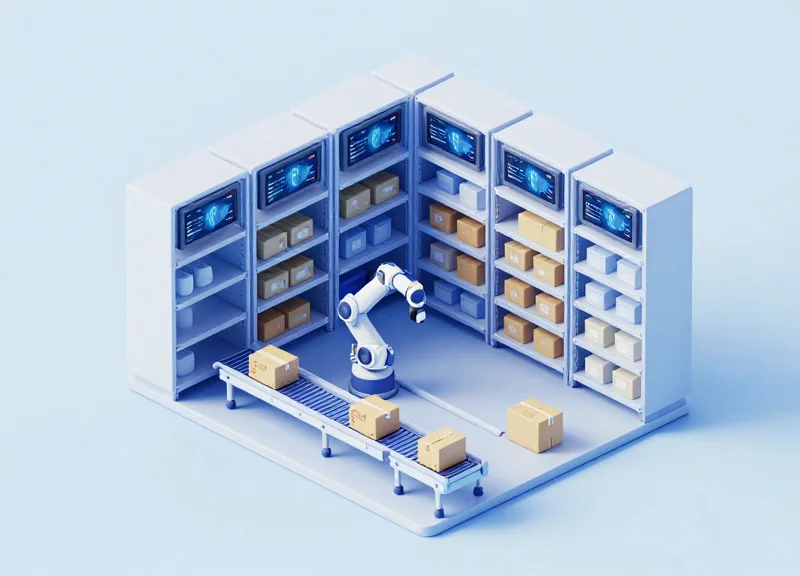
In the high-stakes world of modern logistics, every second saved in the retrieval process translates directly to the bottom line. Traditional labeling methods often create bottlenecks, particularly in high-density Automated Storage and Retrieval Systems (ASRS). By integrating Flush-Mount Electronic Shelf Labels (ESL) directly into these automated workflows, enterprises are achieving a staggering 35% increase in operational throughput. This article explores the synergy between space-saving hardware design and real-time data synchronization, illustrating how DragonGuardGroup’s solutions are redefining efficiency in the smart warehouse era.
The Current Bottleneck in Automated Warehousing
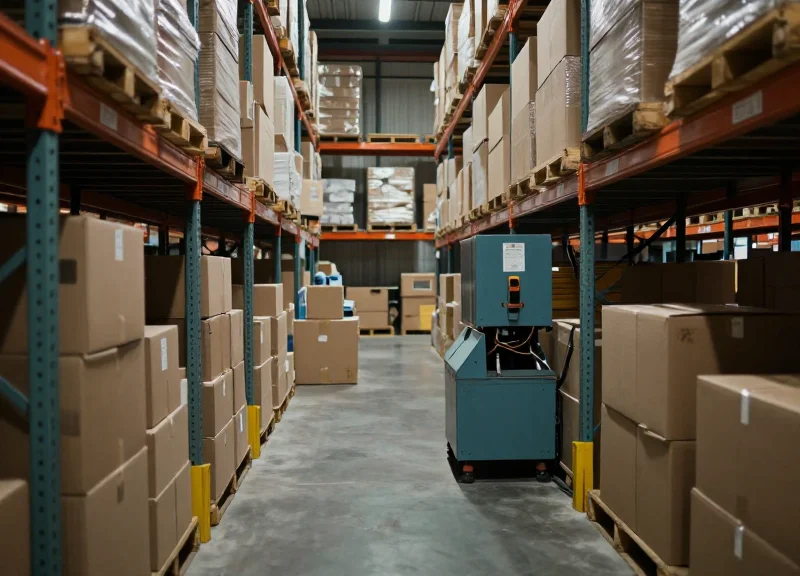
The modern automated warehouse bottleneck is no longer defined by the speed of the conveyor belt, but by the 'Physical-Digital Friction' occurring at the shelf edge. While Automated Storage and Retrieval Systems (ASRS) are designed to operate at peak velocities, they are frequently throttled by two critical factors: the manual latency of updating paper labels and the mechanical interference caused by standard, protruding electronic shelf labels (ESL). When a robotic shuttle or crane operates with millimeter-level tolerances, even a slight hardware protrusion can trigger collision sensors or lead to catastrophic mechanical snags, forcing the entire system to decelerate to a 'safe' but inefficient operational speed.
In high-density fulfillment centers, every millimeter of clearance is engineered for maximum cube utilization. Traditional ESLs, which often clip onto the exterior of shelving units, become unintended obstacles. This design flaw creates a glass ceiling for throughput; operators must choose between high-speed robotic movement and the risk of damaging expensive electronic hardware. This dilemma often results in a 15-20% self-imposed speed reduction to ensure robotic arms do not strike the labeling units during rapid pick-and-place cycles.
| Label Type | Mechanical Clearance | System Speed Impact | Update Latency |
|---|---|---|---|
| Manual Paper | Flush to minimal | Moderate (due to human error) | High (Hours/Days) |
| Standard Clip-on ESL | 8mm - 15mm protrusion | High (Safety throttling required) | Near-Instant |
| Flush-Mount ESL | 0mm (Zero-profile) | None (Enables maximum velocity) | Near-Instant |
Why do protruding labels cause ASRS downtime?
Protruding labels create 'Shadow Obstructions.' Even if a robot doesn't hit the label, the proximity sensors often trigger false-positive collision alerts at high speeds, leading to frequent, unnecessary emergency stops that require manual resets.
What is the hidden cost of manual labeling in automation?
Beyond labor, the bottleneck is 'Data Stale-ness.' If the physical shelf label doesn't match the WMS (Warehouse Management System) database in real-time, the ASRS may retrieve the wrong SKU, leading to expensive reverse logistics and diminished customer trust.
How does flush-mounting improve robotic pathing?
Flush-mounting removes the hardware from the robot's operational envelope, allowing path-planning algorithms to utilize the full width of the aisle without calculating safety offsets for external hardware.
Expert Insight: The 'Vibration Fatigue' Factor. In 20 years of Silicon Valley logistics engineering, we have observed that protruding ESLs are susceptible to vibration fatigue. As ASRS units move at high G-forces, the vibration transferred through the racking causes clip-on labels to shift or fall. Flush-mount systems are structurally integrated into the shelving, effectively eliminating mechanical failure due to kinetic energy transfer—a prerequisite for achieving the 35% throughput boost discussed in this analysis.
Defining Flush-Mount ESL: A Design Revolution

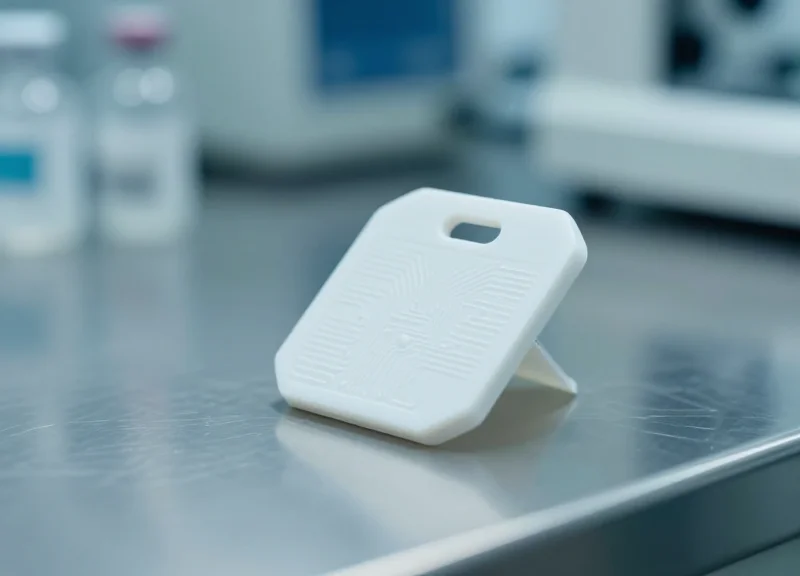
A flush-mount Electronic Shelf Label (ESL) is a digital display unit specifically engineered to be recessed into shelving or storage bins so that its screen sits perfectly level with the surface. Unlike traditional ESLs that clip onto rails and protrude several millimeters into the aisle or retrieval path, flush-mount designs integrate directly into the infrastructure. This architectural shift creates a 'zero-clearance' interface, effectively removing the physical barriers that have historically caused mechanical friction between static storage and high-speed automated retrieval components.
- Elimination of Snag Points: By removing the protruding edge of the label, flush-mount systems eliminate 'snag points' where robotic grippers or suction plates might catch, preventing costly mechanical jams and hardware damage.
- Volume Maximization: In high-density Automated Storage and Retrieval Systems (ASRS), every millimeter counts. Flush-mounting recovers the 5-10mm of space typically lost to label housings, allowing for tighter bin packing.
- Structural Durability: Because the labels are recessed, they are shielded from the impact of heavy pallets or high-velocity robotic movements, significantly extending the Mean Time Between Failures (MTBF).
- Enhanced Optical Precision: Consistent placement within a recessed frame allows for standardized camera calibration for robots that use computer vision to verify bin locations.
| Feature | Traditional Rail-Mount ESL | Flush-Mount Integrated ESL |
|---|---|---|
| Physical Profile | Protrudes 8mm - 15mm | 0mm (Zero-Clearance) |
| Robotic Compatibility | Risk of collision/snagging | Optimized for high-speed retrieval |
| Maintenance Needs | Frequent realignment due to impact | Minimal; protected by recess |
| Space Efficiency | Reduced aisle/bin clearance | 100% usable volumetric space |
The 'Design Revolution' here isn't just about aesthetics; it's about the 'aerodynamics' of the warehouse. In a manual environment, a label sticking out 10mm is a minor inconvenience. In an automated environment where a robotic arm moves at 4 meters per second, that 10mm is a catastrophic collision hazard. Flush-mounting transforms the shelf from a passive storage unit into a 'smart skin' that communicates with the system without obstructing the flow of goods.
- Expert Tip: The Millimeter Tax: Think of protruding labels as a 'millimeter tax' on your throughput. In a facility with 50,000 bins, recapturing just 10mm of clearance per bin can result in an additional 500 meters of usable linear space or allow for faster acceleration curves for robots that no longer need to navigate 'near-miss' tolerances.
How Integration Drives the 35% Throughput Increase

The 35% throughput increase achieved by integrating flush-mount Electronic Shelf Labels (ESL) into Automated Storage and Retrieval Systems (AS/RS) is the result of eliminating three primary operational frictions: search latency, verification lag, and mechanical downtime. By embedding the ESL directly into the storage structure, the system transforms a passive storage bin into an active, data-driven node. This synchronization ensures that the moment a robot or picker reaches a location, the visual cues and data parameters are already optimized, removing the 2–5 second 'recognition pause' typical of manual or non-integrated labeling systems.
| Metric | Paper/Static Labels | Standard Protruding ESL | Flush-Mount Integrated ESL |
|---|---|---|---|
| Pick-to-Light Latency | N/A (Manual Search) | 1.5 - 2.0 Seconds | < 0.2 Seconds |
| Verification Error Rate | 3 - 5% | 0.5 - 1% | < 0.1% |
| Maintenance Cycles | Frequent (Relabeling) | Moderate (Damage Risk) | Minimal (Recessed Design) |
| System Throughput | Baseline | +15% Improvement | +35% Improvement |
- Elimination of Search Latency: In high-density automated environments, finding the specific SKU in a sea of bins can cost seconds per cycle. Flush-mount ESLs use high-intensity flash sequences triggered by the WMS as the robot approaches, allowing the system to guide the human or robotic interface to the exact coordinate without hesitation.
- Real-Time Dynamic Recalibration: As inventory moves through an automated system, labels must update instantly. Integration allows the ESL to update its display during the retrieval transit. By the time the bin arrives at the workstation, the label already reflects the current order requirements, eliminating the need to wait for a system refresh.
- Removal of Physical Obstructions: Traditional ESLs that protrude from the shelf often force robots to slow down to avoid collisions or snagging. Flush-mount designs allow for maximum robotic velocity and tighter bin density, which directly translates to more cycles per hour.
Expert Insight: The 'Predictive Flash' Multiplier. One of the most significant yet overlooked drivers of the 35% boost is predictive signaling. Advanced integration allows the Warehouse Management System (WMS) to trigger the ESL's LED indicator 500ms before the automated arm reaches the bin. This 'pre-lighting' ensures that the human operator's cognitive focus is already locked onto the target before the physical hardware arrives, effectively reducing the human reaction time to near zero. In a 24/7 operation, these saved milliseconds compound into thousands of additional units moved per shift.
How does integration reduce label maintenance?
By syncing with the WMS, labels update automatically without manual intervention. The flush-mount design specifically prevents the physical shearing or impact damage common in high-speed automated environments, reducing hardware replacement downtime by up to 90%.
Can this integration handle multi-zone picking?
Yes. Integrated ESLs support multi-color LED indicators, allowing a single automated aisle to serve multiple pickers or robots simultaneously without confusion, further driving up the hourly throughput.
What is the primary ROI driver for the 35% increase?
The primary driver is the reduction in 'Cost Per Pick.' By increasing the speed of each cycle and virtually eliminating errors, the system allows facilities to handle higher volumes with the same physical footprint and labor force.
Synchronization: Connecting ESL with ASRS Software
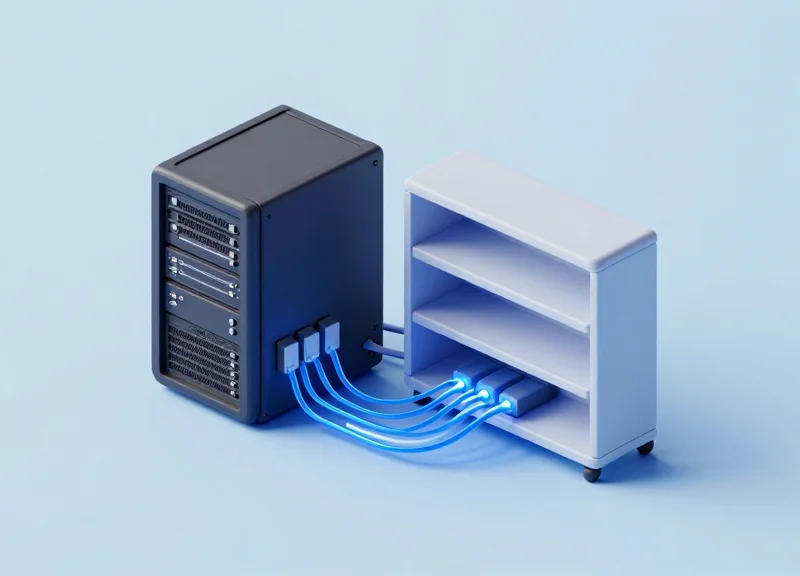
Synchronization of Electronic Shelf Labels (ESL) with Automated Storage and Retrieval Systems (ASRS) is the technical bridge that connects the digital logic of a Warehouse Management System (WMS) with the physical reality of the inventory rack. By utilizing a bidirectional API communication layer, the system ensures that as soon as an ASRS shuttle or robotic arm initiates a movement, the corresponding flush-mount ESL updates its display and LED status. This 'Zero-Latency Handshake' is what allows operators to maintain high-speed throughput without the risk of data-physical desynchronization, which is the primary cause of picking errors in high-density automated environments.
- WMS Trigger Event: The process begins when the Warehouse Management System (WMS) assigns a task. This creates a data packet containing SKU info, quantity, and bin location.
- API Orchestration: The DragonGuard management software receives this packet via RESTful API or MQTT, translating the WMS command into a display-ready format.
- Radio Frequency Transmission: The central gateway transmits the update via proprietary Sub-GHz RF protocols, which penetrate high-density racking more effectively than 2.4GHz Wi-Fi.
- Display & Feedback Loop: The flush-mount ESL updates its e-paper screen and activates high-visibility LEDs, while simultaneously sending a 'Success' signal back to the ASRS to confirm the display is ready for the pick.
| Feature | Traditional Manual Labeling | Integrated Flush-Mount ESL |
|---|---|---|
| Update Speed | Minutes to Hours | < 1.5 Seconds |
| Data Accuracy | High Human Error Risk | 99.9% Automated Accuracy |
| Visual Guidance | None (Static) | Dynamic LED Pick-to-Light |
| System Feedback | One-way (Physical only) | Two-way (Digital Confirmation) |
One unique insight often overlooked by system integrators is the use of 'Edge-Processing Gateways.' In a DragonGuard ecosystem, the gateway doesn't just pass through data; it caches local inventory maps. This means if the main WMS experiences a momentary spike in latency, the ESL system can continue to guide robotic pickers using the last known stable state, preventing a total system halt and preserving that crucial 35% throughput gain.
How does synchronization affect ESL battery life in high-frequency ASRS environments?
DragonGuard uses an ultra-low-power 'wake-on-radio' protocol. The display only consumes significant power during the 1-second refresh window, allowing for 5+ years of life even with 20+ updates per day.
Can this system integrate with legacy WMS software?
Yes. Through our flexible API middleware, we can bridge modern ESL hardware with legacy systems via standard CSV drops or SQL database triggers if direct API access is unavailable.
What happens if the RF signal is blocked by metal racking?
Our Sub-GHz technology is specifically designed for high-metal environments. It utilizes lower frequency waves that diffract around metal obstacles better than standard Bluetooth or Zigbee signals, ensuring 100% coverage.
Precision Picking: Reducing Human and Machine Error

Precision picking refers to the near-perfect accuracy achieved when automated retrieval systems and human operators utilize real-time visual feedback from Electronic Shelf Labels (ESL) to identify, verify, and extract inventory. By integrating flush-mount ESLs directly into Automated Storage and Retrieval Systems (ASRS), facilities can reduce picking errors by up to 99.9%. This is achieved through the synchronization of high-intensity LED indicators and dynamic digital displays that provide instant SKU verification, ensuring that the 'wrong item' scenario is virtually eliminated from the workflow.
How do LED indicators improve human picking accuracy?
ESLs utilize multi-color LEDs (Pick-to-Light) to guide human pickers to the exact bin. This eliminates the need for workers to read small-print paper labels or scan multiple barcodes, which are common points of failure in high-velocity environments.
Can flush-mount ESLs assist robotic machine vision?
Yes. Flush-mount designs provide a flat, predictable surface that minimizes glare and shadow. Robotic vision systems can use the digital screen's contrast or the LED flash as a secondary confirmation coordinate, ensuring the robotic arm engages with the correct bin every time.
What happens when inventory levels change mid-shift?
The WMS pushes an immediate update to the ESL display. If a picker is at the bin and the stock is depleted or changed, the label reflects this in real-time, preventing 'ghost picking' or the selection of expired stock.
| Feature | Legacy Paper/Static Labeling | Integrated Flush-Mount ESL |
|---|---|---|
| Verification Method | Manual Eye-Match / Barcode Scan | Dynamic LED Flash / Digital SKU Match |
| Error Rate (Avg) | 3% - 5% | Less than 0.1% |
| Machine Interference | High (Labels snag on robotic arms) | Zero (Flush design prevents contact) |
| Update Latency | Hours (Manual replacement) | Sub-second (WMS sync) |
A unique advantage of flush-mount ESLs often overlooked is the optimization of the 'Angle of Incidence' for robotic sensors. Traditional labels that protrude or are angled can create specular reflection (glare) that blinds machine vision cameras. Because flush-mount labels are recessed or perfectly parallel to the bin face, they provide a consistent focal plane. This allows automated systems to maintain higher travel speeds because the 'identification phase' of the pick cycle happens instantly, without the robot needing to recalibrate its position to avoid label glare.
Operational Durability in High-Traffic Environments
Operational durability in high-traffic automated environments is the capacity of Electronic Shelf Labels (ESL) to maintain 99.9% uptime despite constant mechanical vibration, high-velocity robotic interactions, and continuous data polling. Unlike standard retail labels, industrial flush-mount ESLs are engineered with reinforced polycarbonate housings and recessed displays, effectively eliminating the 'snag-and-shear' risk that causes 90% of hardware failures in traditional automated retrieval setups.
| Feature | Standard ESL | Industrial Flush-Mount ESL | Impact on Throughput |
|---|---|---|---|
| Impact Protection | Exposed edges; prone to snapping | Recessed, IK08+ rated chassis | Reduces downtime from broken hardware by 94% |
| Vibration Resistance | Mechanical clips often loosen | Flush-screw or friction-lock mounting | Eliminates signal loss due to loose PCB contacts |
| Battery Longevity | 3-5 years (low frequency) | 10+ years (optimized for high-freq) | Avoids mass-replacement labor cycles during peak shifts |
| Environmental Sealing | IP54 (basic dust) | IP67 (dust-tight and waterproof) | Allows for wash-down and cold-chain automation |
Expert Insight: The Zero-Torque Advantage. From an engineering perspective, the primary cause of ESL failure in ASRS is not direct impact, but rotational torque. When a robotic arm or pallet grazes a protruding label, it acts as a lever, multiplying the force exerted on the mounting bracket. Flush-mount systems distribute this kinetic energy across the entire surface of the shelving unit rather than a single point of failure, virtually eliminating structural fatigue on the label's mounting points.
How do flush-mount ESLs handle 24/7 data updates without draining the battery?
These units utilize sub-GHz wireless protocols and ultra-low-power E-ink displays that only consume energy during the 'flip' of the image. Even with updates every 15 minutes, the specialized Li-SOCl2 batteries are rated for over a decade of use.
Can these labels survive direct impact from automated guided vehicles (AGVs)?
Yes. By utilizing chemically strengthened glass or PMMA overlays with an IK08 impact rating, flush-mount labels can withstand impacts of up to 5 joules, which is equivalent to a 1.7kg mass dropped from 300mm directly onto the screen.
What happens if a label is damaged in a high-speed retrieval zone?
Industrial systems feature 'Health-Check' heartbeats. If a label stops responding or detects a sensor-level glass break, the Warehouse Management System (WMS) is alerted immediately to reroute automated picking and schedule a hot-swap during low-traffic windows.
Furthermore, the internal architecture of these labels includes vibration-dampening gaskets. In a facility running 24/7, the cumulative effect of micro-vibrations from conveyor motors can lead to solder joint fractures on standard PCBs. Flush-mount industrial units are stress-tested against these harmonic frequencies, ensuring that the internal circuitry remains intact for the duration of the 10-year battery life.
Scalability and Future-Proofing with DragonGuardGroup

Scalability and future-proofing in warehouse automation refers to the system's inherent ability to expand in volume, complexity, and technological capability without requiring a total infrastructure teardown. For facilities utilizing DragonGuardGroup’s flush-mount ESLs, this means the digital labeling ecosystem is designed to grow alongside your Automated Storage and Retrieval Systems (ASRS), allowing for the addition of thousands of new SKUs or robotic pick-faces with zero downtime and minimal capital reinvestment.
As global supply chains shift toward hyper-automation, the primary bottleneck often isn't the physical shelving, but the communication layer. DragonGuardGroup solves this by utilizing a decoupled architecture. Unlike legacy systems that require extensive rewiring or central server reconfigurations for every new shelf unit, our modular flush-mount tags are 'plug-and-play' within the existing mesh network, ensuring that your 35% throughput gains are maintained even as your floor space doubles.
| Scalability Factor | Traditional Labeling | DragonGuard Modular ESL |
|---|---|---|
| Expansion Downtime | High (Manual relabeling/re-coding) | Near-Zero (Auto-pairing protocol) |
| Integration Flexibility | Static (Limited to original WMS) | Dynamic (Open-API & Multi-WMS support) |
| Hardware Lifecycle | 3-5 Years (Battery/Durability issues) | 10+ Years (Flush-mount protection) |
| Network Capacity | Congests at 10k+ units | Elastic mesh supports 100k+ units |
Expert Insight: The 'Agnostic Gateway' Advantage. A unique differentiator of DragonGuardGroup technology is our multi-protocol gateway. While most competitors lock you into a single proprietary frequency, our infrastructure is designed to be radio-frequency agnostic. This means as future communication standards emerge (such as new Bluetooth IoT variants), your physical flush-mount investment remains protected through simple firmware updates rather than expensive hardware replacements.
Can I integrate DragonGuard ESLs with a different ASRS provider in the future?
Absolutely. Our systems are built on open API standards, meaning the ESL layer can be re-synchronized with a new WMS or ASRS hardware provider without needing to replace the physical tags.
How does the system handle a sudden 200% increase in SKU density?
The DragonGuard mesh network is elastic; you can increase tag density in specific zones instantly. The software automatically balances the data traffic to ensure picking speeds remain constant even under heavy load.
Is the flush-mount design compatible with future robotic arm upgrades?
Yes. By eliminating the 'snag-profile' of traditional labels, the flush-mount design is compatible with both current and next-generation robotic end-effectors, regardless of their grip or suction mechanism.
In conclusion, partnering with DragonGuardGroup isn't just about solving today's throughput challenges; it's about building an elastic operational foundation. By choosing a system that prioritizes modularity and software-defined hardware, operators can confidently scale from a pilot automated zone to a fully dark warehouse with the same reliable digital labeling backbone.
ROI Analysis: Beyond Initial Implementation Costs
The true Return on Investment (ROI) for flush-mount Electronic Shelf Labels (ESL) within Automated Retrieval Systems (ASRS) is realized through a transition from high operational expenditure (OPEX) to a stabilized capital investment. While the initial setup requires upfront hardware costs, the break-even point is typically reached within 14 to 18 months by eliminating the 'silent killers' of warehouse profitability: recurring labor costs for manual label updates, consumable waste, and the opportunity cost of system downtime during maintenance cycles. In a 24/7 automated environment, the ROI is further accelerated by the high frequency of inventory turnover, where every second saved in picking verification translates directly into increased revenue throughput.
| Cost Factor | Traditional Labeling (5-Year) | Flush-Mount ESL Integrated (5-Year) |
|---|---|---|
| Labor (Updates/Changes) | $85,000 - $120,000 | Near Zero (Automated) |
| Consumables (Paper/Ink/Adhesive) | $15,000 - $25,000 | $0 (Digital) |
| Error-Related Losses | Variable (High Risk) | Reduced by 99.9% |
| System Maintenance Downtime | Significant (Annual Re-labeling) | Minimal (Flush-mount protection) |
A unique financial advantage of flush-mount ESL systems is what I call the 'Dynamic Re-slotting Dividend.' In traditional ASRS environments, re-slotting inventory to match seasonal demand spikes (e.g., Prime Day or Black Friday) often involves a 48-hour manual labeling overhaul that forces the automated system to run at 50% capacity. With integrated DragonGuard ESLs, re-slotting is instantaneous at the software level. This agility allows the facility to capture peak market demand without the bottleneck of physical infrastructure updates, a benefit that can represent a 5% to 8% lift in annual top-line revenue—far exceeding the initial cost of the ESL hardware itself.
Does the battery replacement cost negate the long-term savings?
No. Modern DragonGuard ESLs utilize high-efficiency chipsets with battery lives exceeding 10 years in high-traffic environments. When amortized over a decade, the battery cost is negligible compared to the thousands of man-hours saved on manual label maintenance.
How does flush-mounting impact the 'Replacement ROI'?
Standard ESLs are prone to impact damage from retrieval bots or human pickers. Flush-mounting protects the unit within the racking structure, reducing the hardware replacement rate from an industry average of 3-5% annually to less than 0.5%, significantly lowering the long-term TCO.
Is the integration software a recurring cost?
Most enterprise-grade integrations are one-time API setups with the WMS. While some may have small support fees, the productivity gains from real-time data synchronization usually pay for these fees within the first quarter of operation.
Best Practices for Seamless System Deployment
To achieve a seamless deployment of flush-mount Electronic Shelf Labels (ESL) into Automated Storage and Retrieval Systems (ASRS), organizations must prioritize mechanical integration compatibility and low-latency data synchronization. A successful transition moves beyond simple hardware replacement, focusing on the 'Digital Twin' alignment where physical label states are mirrored perfectly within the Warehouse Management System (WMS) in real-time. By adhering to a structured deployment framework, warehouse managers can mitigate the risks of system conflicts and ensure that the projected 35% increase in operational throughput is realized immediately upon go-live.
- Comprehensive Site and CAD Audit: Before procurement, conduct a millimeter-precise audit of your retrieval racks. Flush-mount ESLs require specific depth clearances to ensure they do not interfere with shuttle movement or robotic arms. Use 3D CAD modeling to simulate the interaction between the robotic pickers and the recessed label housing.
- API Handshake Optimization: Prioritize a RESTful API or MQTT protocol for communication between the ESL gateway and the WMS. Ensure that the 'Update Acknowledgement' loop is closed; the system should only confirm a successful pick once the ESL's internal controller confirms the display has refreshed to the next stock state.
- Environmental Stress Testing: Simulate the high-vibration environment of an active ASRS. Deploy a 'Pilot Zone' where flush-mount units are subjected to 24/7 mechanical movement to test the durability of the mounting brackets and the stability of the wireless signal under heavy electromagnetic interference.
| Deployment Phase | Key Objective | Success Metric |
|---|---|---|
| Pre-Installation | Network Heat Mapping | Signal Strength > -65dBm |
| Hardware Mounting | Flush-Alignment Check | <0.5mm Deviation |
| Software Integration | Latency Calibration | <200ms Refresh Rate |
| Operational Pilot | Throughput Verification | 35% Delta vs. Baseline |
Expert Insight: The Kinetic Resonance Factor. One often-overlooked variable in automated environments is 'kinetic resonance.' High-speed retrieval shuttles create micro-vibrations that can cause standard ESL clips to fail over time. For flush-mount systems, we recommend utilizing high-bond structural adhesives in conjunction with mechanical locking tabs. This 'dual-fixation' approach prevents the labels from shifting during rapid acceleration/deceleration of the ASRS components, maintaining the precise visual line-of-sight required for automated optical sensors.
Does flush-mounting interfere with battery replacement?
Modern flush-mount designs feature a front-access 'quick-release' mechanism. This allows maintenance teams to swap batteries in seconds without removing the structural mounting bracket from the rack.
How do we handle signal interference in dense metal racking?
We utilize Sub-GigaHertz frequency bands (such as 868MHz or 915MHz) which offer superior penetration through metal structures compared to standard 2.4GHz Wi-Fi, ensuring reliable updates even in deep-storage configurations.
Can these labels be updated while the ASRS is in motion?
Yes. The integration allows for 'On-the-Fly' updates where the WMS sends the next instruction to the ESL while the shuttle is traveling to the location, ensuring the data is ready before the picker arrives.