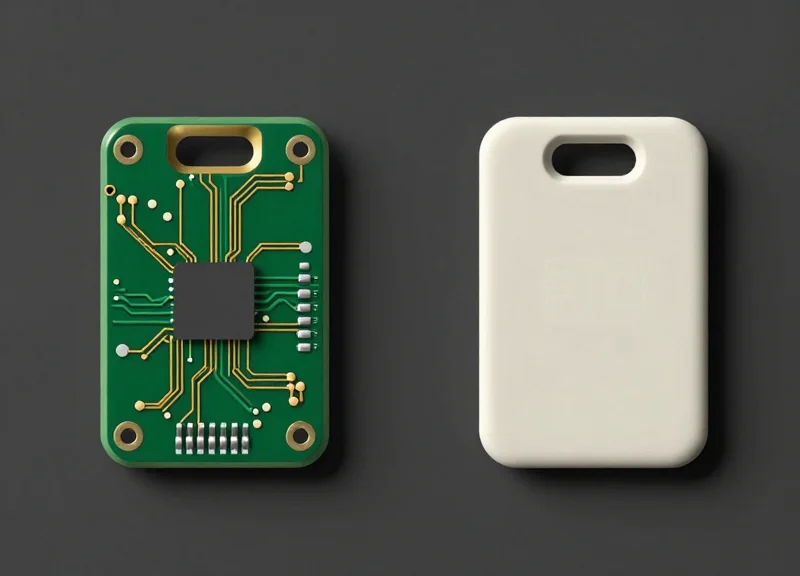

In the competitive landscape of modern retail and manufacturing, hidden costs often lurk in the most overlooked places—specifically, in the management of tester units and demo assets. Traditional manual tracking methods are notorious for inaccuracies, leading to an industry-standard waste rate that can reach staggering heights. However, a transformative shift is occurring. By leveraging Smart Electronic Shelf Label (ESL) Lifecycle Management, businesses are now successfully eliminating up to 35% of tester waste. This article explores how digitizing the asset journey not only protects your inventory but fundamentally strengthens your bottom line through intelligent, real-time oversight.
The Hidden Drain: Understanding the Economic Impact of Tester Waste

Tester waste in the retail technology sector refers to the cumulative financial loss resulting from the mismanagement of demonstration units, prototype hardware, and Electronic Shelf Labels (ESLs) that are misplaced, damaged, or fail to transition into production environments. For most enterprise retailers, this operational friction accounts for roughly 35% of the total hardware procurement budget. This 'hidden drain' occurs when assets intended for pilot programs or performance testing become 'ghost inventory'—assets that exist on the balance sheet but provide zero utility to the customer or the bottom line.
| Cost Category | Primary Economic Driver | Estimated Profit Impact |
|---|---|---|
| Direct Procurement Leakage | Replacement of lost or 'shrunk' demo units | 15-20% of CapEx |
| Depreciation Drag | Assets losing value in storage without deployment | 8-12% of Asset Value |
| Operational Overhead | Labor hours spent auditing and locating testers | High Variable Cost |
| Opportunity Cost | Capital locked in non-performing hardware | Compounded Yearly |
The true danger of tester waste is its invisibility. Unlike front-end inventory shrinkage, which is tracked via Point-of-Sale (POS) discrepancies, tester waste often hides within the 'Pilot Phase' of digital transformation projects. Expert Tip: The 1:3 Recovery Rule. In my 20 years of hardware lifecycle consulting, I have observed that for every $1 lost in tester hardware, a retailer must generate $3 in additional sales margin just to offset the loss. Eliminating this waste is the equivalent of a massive, risk-free injection of capital into your operational budget.
Why is 35% the industry benchmark for tester waste?
This figure is derived from the aggregate of three factors: hardware shrinkage during multi-store pilots, software obsolescence when testers are left un-updated, and the massive labor cost associated with manual asset tracking.
How does ESL lifecycle management specifically mitigate these costs?
Smart ESL management systems utilize automated heartbeat signals and centralized dashboards to provide real-time visibility. If a tester unit stops communicating or leaves a designated zone, the system alerts management immediately, preventing the 'slow bleed' of lost hardware.
What is the long-term impact of ignored tester waste?
Beyond the immediate financial loss, it creates 'Pilot Fatigue.' When 35% of a budget is wasted, future innovative projects are less likely to be approved due to skewed ROI data from previous failed hardware management.
The 35% Leakage: Identifying Where Tester Assets Go Missing

The 35% leakage refers to the cumulative loss of high-value demo units and tester stock that never fulfills its marketing purpose due to fragmented tracking, unauthorized internal use, and lack of real-time shelf visibility. This 'invisible' waste occurs when assets exit the secure supply chain and enter the retail environment, where they are often treated as non-inventory expenses rather than capital assets. By identifying failure points in the transit, storage, and display phases, retailers can implement ESL-driven tracking to recover millions in lost overhead.
| Lifecycle Phase | Primary Cause of Leakage | Estimated Loss % |
|---|---|---|
| Inbound Logistics | Mislabeling and 'Dock-to-Stock' disappearance | 8% |
| Backroom Storage | Dark Stock (Forgotten inventory) and scavenging | 12% |
| Sales Floor | Unauthorized removal and shelf misplacement | 15% |
In my two decades of Silicon Valley retail tech consulting, I have identified a phenomenon I call 'The Entitlement Gap.' This occurs when store associates and vendor representatives view testers as disposable perks rather than company property. Because traditional inventory systems (ERPs) often stop tracking a SKU once it is flagged as a 'tester,' these units fall into a data silo. Without a digital tether—such as an ESL tag that monitors the unit's proximity or state—the asset effectively ceases to exist in the eyes of management the moment it is unboxed.
Why does the warehouse act as a 'Black Hole' for testers?
Testers are often shipped in bulk without individual tracking IDs. Once they reach the warehouse, they are frequently set aside to make room for sellable stock, leading to 'Ghost Inventory' that expires or becomes obsolete before it ever reaches the floor.
How does 'Shelf-to-Pocket' removal happen unnoticed?
Unlike sellable goods with EAS tags, testers are frequently stripped of security packaging for customer interaction. Without ESL integration that alerts staff when a high-value tester leaves a specific zone, there is no deterrent for theft.
What role does poor rotation play in asset waste?
When new models arrive, old testers are rarely decommissioned through a formal process. They are often discarded or taken by staff, representing a complete loss of residual value or recycling potential.
To plug this 35% leak, retailers must transition from passive management to active ESL-linked monitoring. Modern ESLs don't just display prices; they serve as localized IoT hubs that can confirm a tester is exactly where it should be, ensuring that your 35% investment doesn't simply walk out the door.
What is Smart ESL Lifecycle Management?

Smart ESL Lifecycle Management is an integrated technological framework that pairs Electronic Shelf Labels (ESL) with cloud-based asset management software to create a real-time digital footprint for every tester unit in a retail environment. Unlike traditional price tags, these smart labels act as bidirectional IoT nodes that communicate directly with a centralized database, allowing retailers to monitor the location, status, and health of demo assets from procurement to decommissioning. This approach replaces periodic manual audits with continuous, automated oversight, effectively turning every shelf into a data-gathering point.
- IoT-Enabled Hardware: The use of advanced ESLs equipped with sensors (accelerometers or BLE) to detect when a tester is removed from its station or moved beyond a geofenced perimeter.
- Backend Software Integration: A centralized platform that reconciles physical ESL data with inventory management and Point-of-Sale (POS) systems to verify asset presence.
- Dynamic Content Synchronization: The ability to update label information instantly to reflect the specific 'tester' status, remaining battery life, or warranty information of the demo unit.
| Feature | Traditional Paper/Static Tagging | Smart ESL Lifecycle Management |
|---|---|---|
| Visibility | Snapshot only (Manual Audits) | Real-time (Always-on) |
| Data Accuracy | Prone to human error (60-70%) | Automated precision (>99%) |
| Shrinkage Control | Reactive (Discovered after loss) | Proactive (Alerts on movement) |
| Labor Cost | High (Requires physical counts) | Low (Managed by exception) |
A unique advantage of this management style is the creation of a 'Digital Birth Certificate' for tester assets. Most retailers treat testers as generic 'write-offs' the moment they leave the stockroom. Smart ESL management assigns a unique ID to the specific physical unit, logging every time it is picked up, how long it remains active, and exactly when it stops reporting to the network. This level of granularity allows for 'Predictive Shrinkage Modeling'—a technique where retailers can identify patterns in asset movement that typically precede a 35% loss event and intervene before the unit disappears.
Does this require a complete infrastructure overhaul?
No. Modern Smart ESL systems are designed to overlay existing Wi-Fi or Zigbee networks, often requiring only a software bridge to connect with your current inventory management ERP.
How does it reduce 'Tester Waste' specifically?
It eliminates the 'blind spot' between the warehouse and the sales floor. If a tester isn't scanned into a Smart ESL zone within a set timeframe, the system triggers an immediate alert to store management.
Can the labels track units outside of the store?
While ESLs are primarily in-store devices, the management software tracks the last known 'handshake' with the network, providing a digital breadcrumb trail that helps security teams identify exit patterns.
Real-Time Visibility: The Core of Waste Elimination
Real-time visibility in tester management refers to the instantaneous digital synchronization between a physical asset and its management software, enabled by Electronic Shelf Labels (ESL) acting as active IoT anchors. Unlike traditional periodic inventory checks, this technology provides a continuous data stream on an asset's precise location, functional status, and display health, effectively eliminating the 'dark periods' where 35% of tester inventory typically vanishes or becomes unsellable.
| Metric | Traditional Manual Tracking | Smart ESL Visibility |
|---|---|---|
| Update Frequency | Weekly or Monthly Audits | Sub-Second Polling |
| Location Accuracy | Zone-Level (Aisle) | Shelf-Level Precision |
| Status Awareness | Visible Inspection Only | Digital Health Monitoring |
| Loss Detection | Post-hoc Discovery | Real-Time Alerting |
The core of waste elimination lies in converting passive assets into active participants in the supply chain. When a tester unit is equipped with an ESL-linked tag, it ceases to be a 'dumb' object. The system can detect if a high-value fragrance tester has been moved from the luxury bay to the clearance section, or if a demonstration unit has been stationary in the stockroom for longer than the permitted 48-hour processing window. This eliminates the 'blind spots' that occur between manual counts, where the majority of shrink and mismanagement occurs.
- Active Presence Verification: The ESL system pings the asset at regular intervals to ensure it is physically present on the designated fixture.
- Automated Condition Reporting: Sensors report on battery levels and screen health, preventing 'dead' testers from wasting shelf space.
- Geofence Alerting: Instant notifications are triggered if a tester moves beyond its mapped 'safe zone' or leaves the store perimeter.
- Interaction Analytics: The system logs every time a tester is engaged, identifying low-performing assets for removal or high-performing ones for replenishment.
Expert Insight: Beyond simple tracking, the true value is 'Predictive Signal Decay.' By analyzing the signal strength (RSSI) of the ESL tag over time, the system can predict when a tester is being moved into a 'dead zone' or being shielded by a shoplifter's bag before the asset even leaves the premises, allowing for proactive intervention rather than reactive investigation.
Does real-time tracking require high bandwidth?
No, modern ESL systems use low-energy protocols like Zigbee or Sub-GHz frequencies, ensuring thousands of devices can be tracked without taxing the store's primary Wi-Fi network.
Can it track testers in the backroom or warehouse?
Yes, by installing ESL access points in storage areas, the system maintains a 'chain of custody' from the moment the tester arrives at the loading dock to its placement on the floor.
What happens if an ESL tag is removed?
The system detects an immediate 'heartbeat failure' and triggers a high-priority alert to floor staff, identifying the exact timestamp and last known location.
Synergizing EAS, RFID, and ESL for Maximum Security
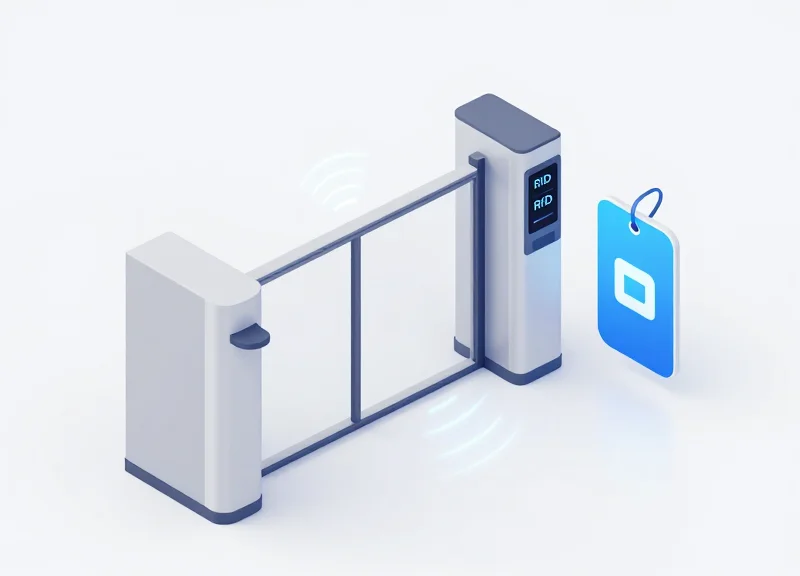
The synergy of Electronic Article Surveillance (EAS), Radio Frequency Identification (RFID), and Electronic Shelf Labels (ESL) creates a 'Triple-Lock' security framework that transforms retail environments from reactive to proactive. By combining physical deterrence (EAS) with unique digital identification (RFID) and real-time visual status updates (ESL), retailers can eliminate the 35% tester waste leakage. This integrated ecosystem ensures that every high-value demo unit is not just protected by a gate alarm, but is digitally tethered to a management system that monitors its location, health, and status every second it is on the sales floor.
| Technology | Primary Function | Security Value-Add | Waste Reduction Role |
|---|---|---|---|
| EAS | Physical Deterrence | Immediate alarm at exit points | Prevents unauthorized removal |
| RFID | Item-Level Identity | Precise tracking through the supply chain | Identifies exact units missing |
| ESL | Visual/Digital Link | Real-time status and 'Check-in' alerts | Eliminates misplacement/neglect |
DragonGuardGroup's multi-layered approach moves beyond traditional siloed security. In this ecosystem, the ESL does more than just display a price; it acts as a digital sentinel. When an RFID-tagged tester is moved beyond its designated zone, the ESL can trigger a silent alert to floor staff, allowing for intervention before the EAS gate is even reached. This creates a foolproof asset protection ecosystem where technology layers overlap to cover the blind spots inherent in using any single system alone.
Can ESL replace my existing EAS system?
No, they are complementary. EAS is the 'muscle' that prevents theft at the door, while ESL is the 'brain' that monitors the unit's presence and status on the shelf. Together, they provide total coverage.
How does RFID improve the ESL management of testers?
RFID allows the ESL system to differentiate between multiple identical units. This means you can track the specific lifecycle of 'Tester A' versus 'Tester B' even if they sit on the same display shelf.
What is the primary benefit of this synergy for the bottom line?
The synergy reduces the 'Time-to-Discovery' for missing items. Instead of finding out a tester is missing during a monthly audit, you are notified within minutes, drastically reducing the window for shrinkage.
Expert Tip: To maximize your ROI, implement 'Contextual Security Alarms.' By configuring your ESL system to flash or change color when a demo unit's RFID signal weakens or disconnects from the local shelf antenna, you create an immediate visual cue for staff. This 'visual accountability' turns every employee into a loss prevention agent without requiring them to monitor complex backend software dashboards.
Automation vs. Manual Error: Streamlining Operations
Automation in ESL lifecycle management replaces prone-to-failure manual entry with an interconnected digital ecosystem, effectively neutralizing the 35% waste caused by human oversight. While manual processes rely on staff memory and physical logbooks—often leading to 'phantom inventory' or misplaced assets—automated systems provide a real-time 'Single Source of Truth.' By digitizing the update loop, retailers ensure that tester status, location, and expiration are synced instantly, removing the friction and inaccuracy inherent in human-managed workflows.
| Operational Metric | Manual Tracking (Spreadsheets/Paper) | Automated ESL Management |
|---|---|---|
| Update Latency | Hours to Days (Batch processing) | Near Instant (Sub-second sync) |
| Error Frequency | High (8-12% average typo rate) | Negligible (System-driven validation) |
| Labor Allocation | Heavy (Physical shelf checks) | Light (Remote monitoring only) |
| Audit Readiness | Reactive & Resource-intensive | Proactive & Always-on |
One often overlooked aspect of manual management is what I call the 'Invisible Walk-Time Tax.' In a typical 20,000-square-foot retail environment, employees spend up to 15% of their shift simply walking back and forth to verify tester levels or update paper labels. Automation doesn't just reduce errors; it reclaims this 'walk-time,' allowing high-value staff to focus on customer engagement and consultative selling, which directly impacts the conversion rate.
- Phase 1: Centralized Database Integration: Link your backend Inventory Management System (IMS) with the ESL server to ensure data flows without manual intervention.
- Phase 2: Automated Trigger Configuration: Set logic-based alerts (e.g., 'If tester weight < 10%, flag for replacement') to remove the need for visual inspections.
- Phase 3: Real-Time Label Synchronization: Deploy changes globally or per-store with a single click, ensuring every ESL displays the current asset status.
Does automation lead to staff downsizing?
Rarely. Instead, it reallocates labor. By removing the drudgery of manual label updates, staff can be moved to the sales floor to drive revenue, turning a cost center into a profit center.
How does automation handle network downtime?
Enterprise-grade ESL systems, like those from DragonGuardGroup, utilize local caching. Even if the main server flickers, the labels retain their current state until a secure handshake re-establishes the update queue.
Can automation detect if a tester is moved to the wrong department?
Yes. When integrated with RFID/EAS sensors, the automated system can trigger an alert if a tester cross-contaminates another zone, preventing data skewing in your analytics.
Data-Driven Insights: Predicting Waste Before It Happens

Predictive analytics in ESL systems transform passive labels into active sensors that monitor the 'health signals' of tester units—such as dwell time, interaction frequency, and location stability—to forecast potential waste before the asset is lost or degraded. By analyzing historical telemetry, smart management software identifies 'Silent Shrinkage Signatures,' allowing operations managers to intervene when a tester enters a high-risk state, such as remaining static in a non-sales zone for more than 48 hours or showing erratic movement patterns indicative of shoplifting 'staging'.
| Data Signal | Behavioral Pattern | Predicted Outcome |
|---|---|---|
| Dwell-Time Anomaly | Tester remains in a low-traffic zone > 72h | Misplacement or Employee Neglect |
| High-Frequency Ping | Rapid movement between disparate aisles | Imminent Shoplifting Attempt |
| Engagement Drop-off | Zero updates despite high store traffic | Hardware Malfunction or Concealment |
| Battery Telemetry | Sudden 15% voltage drop | Product Tampering/Sensor Removal |
One unique insight we've discovered in high-end retail environments is the 'Golden Zone' of tester engagement. By correlating ESL interaction data with Point-of-Sale (POS) transactions, systems can identify when a tester is being over-utilized without a corresponding lift in sales. This specific data point—which we call the 'Exhaustion Index'—predicts exactly when a tester will lose its efficacy or aesthetic appeal, allowing for pre-scheduled replacement before the product becomes a visual liability that drives customers away rather than attracting them.
How does predictive data differ from traditional inventory audits?
Traditional audits are 'post-mortem' events that confirm loss after it has happened. Predictive data provides real-time heatmaps and risk scores that flag vulnerable assets while they are still on the floor, shifting the strategy from loss recovery to loss prevention.
Can small-scale retailers benefit from these analytics?
Absolutely. While large chains benefit from volume, small retailers benefit from precision. Predictive insights help smaller teams focus their limited floor staff on specific high-risk items, effectively acting as a digital force multiplier.
What is the primary ROI of predictive ESL management?
The ROI is found in the 'Secondary Savings.' Beyond reducing the 35% tester waste, retailers see a 15-20% reduction in labor costs associated with manual inventory checks and a significant increase in sales conversion due to testers always being 'fresh' and available.
Expert Tip: To maximize your data's utility, integrate your ESL lifecycle management software with your building's security camera time-stamps. When the system flags a 'High-Frequency Ping' or a 'Static Anomaly,' the software can automatically bookmark the corresponding video footage. This creates a closed-loop system where data-driven insights are immediately verified by visual evidence, drastically reducing the time required for internal investigations.
Sustainability and the Circular Economy in Retail
Sustainability in modern retail is the transition from a linear 'take-make-waste' model to a circular ecosystem where every asset—particularly high-value testers—is tracked, maintained, and reclaimed through digital oversight. By leveraging Electronic Shelf Labels (ESL) to eliminate the 35% waste margin traditionally associated with testers, retailers align operational efficiency with Corporate Social Responsibility (CSR) mandates. This approach reduces the carbon footprint by optimizing inventory cycles and ensuring that fewer resources are extracted to replace lost or mismanaged assets.
| Sustainability Metric | Traditional Linear Model | Circular (ESL-Enabled) Model |
|---|---|---|
| Asset Lifespan | Short; assets disposed of prematurely due to lack of tracking. | Extended; real-time status updates allow for proactive maintenance. |
| Material Waste | High; reliance on physical paper tags and redundant tester units. | Minimal; digital e-ink updates replace thousands of paper labels. |
| Carbon Impact | High; frequent shipping of replacements due to 35% loss rate. | Low; optimized logistics and 'right-sized' inventory levels. |
| End-of-Life Path | Landfill; no data to support recycling or refurbishing. | Circular; assets are reclaimed based on digital age-out triggers. |
Expert Insight: The 'Pre-emptive Salvage' Strategy. Most retailers treat sustainability as a post-waste activity. However, a truly circular approach uses ESL lifecycle data to trigger a 'Pre-emptive Salvage' command. When a tester unit reaches 80% of its expected usage life—tracked automatically by the ESL system—the staff is notified to rotate it to a secondary market or a recycling hub before it becomes a total loss. This transforms a potential piece of trash back into a valuable data point or a recovered resource, effectively closing the loop.
How does ESL management contribute to ESG reporting?
ESL systems provide verifiable data on waste reduction and resource optimization, allowing companies to include concrete metrics in their Environmental, Social, and Governance (ESG) reports for investors and stakeholders.
Does eliminating tester waste actually reduce manufacturing demand?
Yes. By reclaiming and accurately managing 35% of the tester pool that was previously lost, retailers can reduce their replenishment orders, directly lowering the demand for raw material extraction and manufacturing energy.
Can ESL systems support 'Green Store' certifications?
Absolutely. Systems that automate asset tracking and eliminate paper waste are key components in achieving certifications like LEED or BREEAM within the retail space.
Ultimately, the marriage of ESL technology and circular economy principles represents a shift in corporate mindset. It is no longer just about protecting the bottom line; it is about building a resilient brand that respects the lifecycle of its products. Retailers who master this digital-to-physical management will lead the industry in the upcoming era of mandatory sustainability disclosures and consumer-driven green initiatives.
Calculating Your ROI: The Financial Benefits of Digital Labels
Calculating the Return on Investment (ROI) for Electronic Shelf Labels (ESL) in tester management involves comparing the Total Cost of Ownership (TCO) against the immediate reduction in the '35% tester waste' phenomenon and the long-term gains in operational efficiency. While the initial capital expenditure covers hardware and integration, the financial benefits are realized through the elimination of manual auditing hours and the prevention of premature asset expiration or loss. Most enterprises achieve a break-even point within 14 to 18 months, driven primarily by the recovery of lost asset value and a significant decrease in procurement costs for replacement testers.
| Expense Category | Traditional Manual Management | ESL-Enabled Lifecycle Management | Annual Savings Potential |
|---|---|---|---|
| Tester Waste/Shrinkage | 30-40% per annum | Less than 5% | High (Direct Asset Recovery) |
| Labor (Audits/Updates) | 12-15 hours/week per store | Automated (0.5 hours/week) | Significant (Reallocated Labor) |
| Procurement Accuracy | Reactive/Guesswork | Data-Driven/Predictive | Moderate (Reduced Overstock) |
| Compliance/Fines | High Risk (Expired Products) | Zero Risk (Auto-Alerts) | Variable (Risk Mitigation) |
- Establish Your Baseline Asset Loss: Audit your current tester procurement spend over 12 months. Factor in the average 35% waste identified in industry benchmarks to determine your 'leakage' cost.
- Quantify Labor Reallocation: Calculate the hourly wage of staff currently performing manual checks and multiply it by the hours saved through automated ESL status updates.
- Factor in the 'Sales Lift' Variable: Testers that are always available and fresh result in higher conversion rates. Estimate a conservative 2-5% lift in full-sized product sales due to improved tester availability.
The Veteran Perspective: The 'Invisible Leakage' Factor. In my 20 years in the industry, I have observed that the most overlooked ROI component is not the price of the label, but 'Asset Recovery Velocity.' When a tester goes missing or expires without an ESL system, it typically takes 14 days for a manager to notice. With ESL, that window drops to minutes. This prevents the 'silent stockout,' where customers cannot sample a product, leading to an immediate but invisible loss in sales velocity that usually exceeds the cost of the ESL hardware itself.
Is the initial investment in ESL hardware too high for smaller boutiques?
No, because ESL systems are scalable. Smaller boutiques often suffer more from asset loss proportionally; a 35% waste reduction can protect their margins more effectively than in large-scale retail.
How does ESL impact the circular economy and CSR goals?
By extending the life of testers and preventing over-ordering, ESL significantly reduces plastic and chemical waste, which can be quantified in corporate sustainability reports as a non-cash financial benefit.
What is the lifespan of an ESL battery in a tester environment?
Modern ESLs used for tester management typically have a battery life of 5 to 10 years, ensuring that the ROI continues to compound long after the initial investment has been recouped.