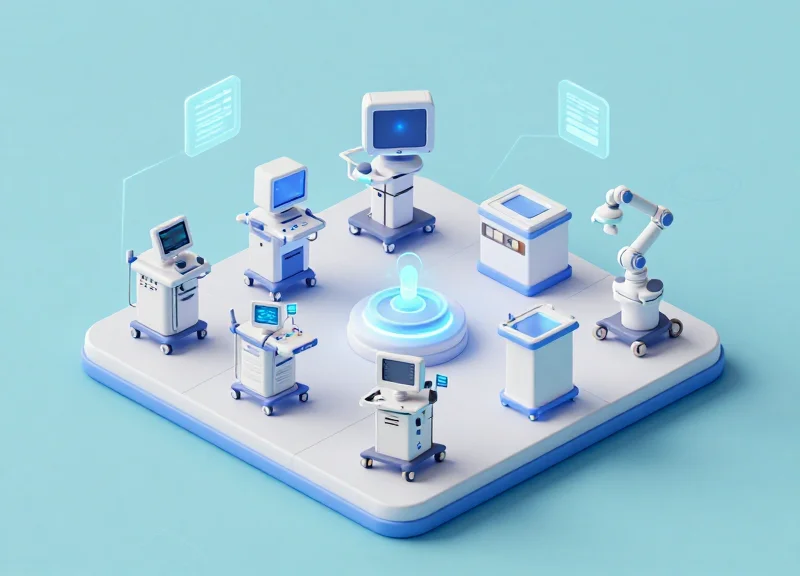
In the high-stakes world of medical device sales, accuracy and clarity are paramount. Showrooms for surgical equipment, imaging systems, and diagnostic tools are transitioning from static paper labels to dynamic Electronic Shelf Labels (ESL) to keep pace with rapid innovation and regulatory changes. As we look toward 2026, the need for sophisticated digital labeling that can handle complex technical specifications and real-time inventory updates has never been higher. This guide provides a strategic roadmap for selecting an ESL solution that meets the unique demands of high-tech medical displays while ensuring long-term scalability and compliance.
The Strategic Shift: Why Medical Showrooms Need ESL in 2026
The 2026 strategic shift toward Electronic Shelf Labels (ESL) in medical showrooms is defined by the evolution from static pricing to 'Information-as-a-Service.' For high-stakes medical technology, where product specifications and regulatory approvals change quarterly, digital displays serve as live IoT endpoints synchronized with Product Information Management (PIM) systems. This ensures that surgeons, hospital procurement officers, and distributors view 100% accurate, real-time data that matches the global digital twin of the device, eliminating the liability and brand erosion caused by outdated paper labeling.
| Feature | Traditional Paper Labels | 2026 ESL Systems |
|---|---|---|
| Update Frequency | Days/Weeks (Manual) | Seconds (Automated) |
| Data Accuracy | Prone to human error | Direct PIM/ERP synchronization |
| Regulatory Compliance | Lagging/Reactive | Real-time (MDR/FDA 2026 ready) |
| Technical Detail | Extremely limited space | Multi-page/QR interactivity |
In the medical device industry, the cost of misinformation isn't just a lost sale; it's a compliance risk. As we move into 2026, the complexity of technical displays has increased, with many devices requiring specific software versions or modular attachments that change frequently. ESL technology provides a centralized command center for these details. Expert Tip: Look for systems that support 'Regulatory Versioning'—a unique 2026 requirement where the display automatically updates its compliance symbols (like CE or UKCA) the moment a new certificate is issued in your backend system, providing an automated audit trail for showroom inspections.
Why is accuracy more critical for medical showrooms than retail?
Medical showrooms deal with 'Class III' technical specifications where a minor error in battery life or frequency range can mislead a clinical buyer, potentially leading to procurement errors or regulatory non-compliance during audits.
How does ESL reduce operational overhead in large showrooms?
By 2026, labor costs for manually updating hundreds of technical spec cards have become prohibitive. ESL allows a single marketing manager to push global updates to thousands of showrooms simultaneously, reducing labor by up to 95%.
What role does NFC play in 2026 medical displays?
Modern ESLs act as a bridge to deep-dive content. A visiting physician can tap their phone to the label via NFC to instantly download a clinical whitepaper or surgical manual, creating a seamless 'phygital' experience.
Displaying Complexity: High-Resolution E-Ink vs. Traditional LCD
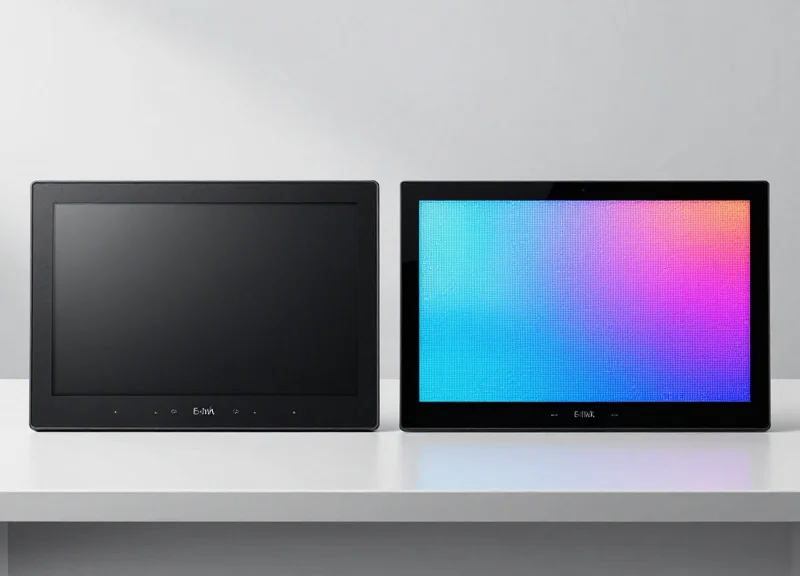
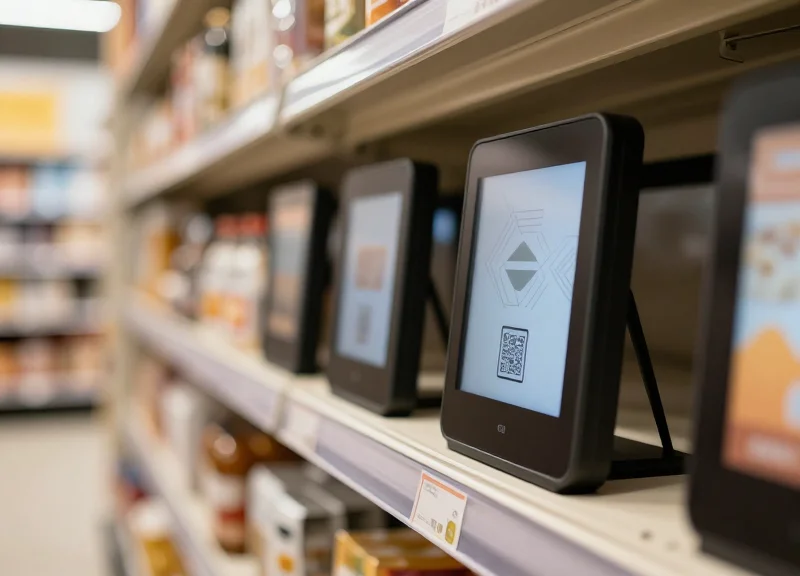
In the context of medical device showrooms, choosing between High-Resolution E-Ink and Traditional LCD depends on the balance between 'Visual Persistence' and 'Dynamic Content.' While LCDs offer vibrant color and motion, E-Ink (Electronic Paper) provides a zero-glare, high-contrast surface that mimics printed documentation, making it the superior choice for displaying dense technical specifications, regulatory symbols, and high-density QR codes that require 100% legibility under varied showroom lighting.
| Feature | High-Resolution E-Ink (2026 Standard) | Commercial Grade LCD |
|---|---|---|
| Pixel Density | Up to 300 DPI (Laser-print quality) | Typically 72-150 DPI (Standard) |
| Viewing Angle | Near 180° (No color inversion) | Limited (Contrast drops off-center) |
| Power Consumption | Bistable (Zero power to hold image) | Constant power required (Backlit) |
| Glare Resistance | Excellent (Matte, anti-reflective) | Poor (Reflects overhead surgical lights) |
| Information Density | High (Ideal for 6pt font specs) | Moderate (Small text can blur/pixelate) |
The 'Ambient Consistency' Factor: A unique challenge in 2026 medical showrooms is the use of high-intensity, color-accurate LED lighting designed to mimic surgical suites. Traditional LCDs often struggle with 'washout' in these environments, requiring high brightness levels that increase heat and visual fatigue. E-Ink leverages this ambient light, becoming clearer as the room gets brighter, which ensures that complex technical diagrams maintain their integrity regardless of the lighting setup.
Why is DPI critical for medical ESLs?
Medical labels often require 'Micro-Typography'—fonts smaller than 8pt to fit mandatory FDA or CE warnings. Only 300 DPI E-Ink can render these without aliasing, ensuring the showroom remains compliant and professional.
Can E-Ink handle QR codes effectively?
Yes. Unlike LCDs which can suffer from moiré patterns when photographed, E-Ink's static, non-refreshing state allows mobile devices to instantly lock onto complex QR codes linking to digital manuals or clinical trial data.
When should a showroom choose LCD over E-Ink?
LCD remains the better choice only if the display requires full-motion video (e.g., demonstrating a robotic arm in motion) or if the display must be used in a completely dark environment without external lighting.
Expert Tip: For 2026, we recommend a 'Hybrid Showroom' approach. Use large-format LCD screens for brand storytelling and 4-color high-resolution E-Ink ESLs for the 'Technical Deep Dive' at the point of product interaction. This strategy maximizes engagement while ensuring the critical technical data is presented with the authoritative clarity of a printed medical journal.
Data Synchronization: Integrating with Hospital ERP and CRM Systems

In 2026, the benchmark for a premium medical device showroom is 'Dynamic Data Integrity.' Data synchronization for ESLs (Electronic Shelf Labels) is the automated process of linking display content directly to the hospital's Enterprise Resource Planning (ERP) or Customer Relationship Management (CRM) systems. This ensures that every technical specification, regulatory approval status, and pricing tier reflected on the E-ink screen is a mirror image of the central 'single source of truth,' eliminating the liability of displaying outdated or non-compliant information during high-stakes demonstrations.
| Integration Tier | Methodology | Update Latency | Best For |
|---|---|---|---|
| Cloud-to-Cloud | RESTful API / Webhooks | < 5 Seconds | Multi-location international showrooms |
| Hybrid Edge | Local Middleware Hub | Near Instant | Dense technical displays with high-frequency updates |
| Legacy Batch | SFTP / CSV Export | 15 - 60 Minutes | Showrooms with static regulatory data |
Expert Insight: The Shift to FHIR-Ready Labels. A common pitfall in 2026 is treating medical ESLs like retail price tags. Leading solutions now utilize HL7 FHIR (Fast Healthcare Interoperability Resources) protocols. By mapping ESL fields to FHIR resources, showrooms can automatically update 'Availability' or 'Sterilization Status' the moment it changes in the hospital supply chain, preventing sales teams from showcasing backordered or decommissioned units.
- Discovery & Data Mapping: Identify the specific ERP fields (e.g., SAP S/4HANA or Oracle NetSuite) that must be visible to customers, such as SKU, FDA 510(k) status, and technical dimensions.
- API Handshake & Authentication: Establish a secure connection using OAuth 2.0 or mTLS to ensure that sensitive medical device data is encrypted during transit between the CRM and the ESL gateway.
- Logic Layer Configuration: Define business rules in the ESL middleware that determine how data is formatted—for example, automatically switching a price to 'Contact Sales' if a custom hospital contract is detected via the CRM.
- Broadcast & Verification: The central server pushes the update to the Access Points (APs), which update the displays and send back a 'Heartbeat' signal confirming the screen has refreshed successfully.
How do ESLs handle CRM-specific pricing for different hospital groups?
Modern ESL solutions use 'Multi-Page' memory. When a salesperson logs into the showroom via a tablet (connected to the CRM), the ESL can toggle to a specific page showing the negotiated contract pricing for that specific visitor's organization.
Can these systems work offline if the hospital network fails?
Yes. Top-tier ESLs utilize 'State-Persistence' technology. If the connection to the ERP is lost, the label continues to display the last cached valid data and triggers an alert to staff that the data is no longer 'Live'.
Is a specialized IT team required for maintenance?
While the initial setup requires IT for API configuration, 2026 solutions feature 'No-Code' dashboards that allow marketing and clinical leads to adjust display templates without touching the backend code.
Durability and Compliance: Healthcare-Grade Hardware Standards
In a medical device showroom, ESL hardware must meet 'Clinical-Grade' durability standards, which extend far beyond standard retail requirements. This involves three critical pillars: chemical resistance to hospital-grade disinfectants (like IPA and bleach), electromagnetic interference (EMI) safety to ensure no disruption to active medical devices, and high-density battery longevity within the fluctuating temperatures of technical display suites. For 2026, the industry benchmark has shifted from simple 'water resistance' to rigorous chemical-cycle testing and IEC 60601-1nd compliance.
| Feature | Standard Retail ESL | Healthcare-Grade ESL (2026) |
|---|---|---|
| Ingress Protection | IP54 (Dust/Splash) | IP67 or IP68 (Full Immersion/Chemical Proof) |
| Chemical Resistance | Limited to mild soap | Resistance to IPA 70%, Peracetic Acid, and Bleach |
| EMI Compliance | FCC Part 15 | IEC 60601-1-2 (Medical Electrical Equipment) |
| Casing Material | Standard ABS Plastic | Anti-microbial, Non-leaching Polymers |
A critical yet often overlooked factor is the battery performance in temperature-controlled environments. Many high-end medical devices (such as cryo-ablation tools or specialized imaging sensors) are showcased in cooler environments. Standard lithium coin cells can see a 30% drop in capacity when operated below 10°C. Leading 2026 ESL solutions utilize hybrid-pulse capacitors or low-temperature optimized chemistry to ensure that the 5-to-10-year lifespan remains intact, regardless of the showroom's climate settings.
Why is EMI safety crucial for showroom displays?
Many medical devices, like pacemakers or neurostimulators, are sensitive to radio frequency (RF) signals. Healthcare-grade ESLs undergo rigorous testing to ensure their wireless updates (Zigbee, BLE, or Infrared) do not create electromagnetic interference that could trigger false readings or malfunctions in the devices being showcased.
Can standard ESLs survive medical cleaning protocols?
Usually, no. Standard retail ESLs use adhesives and plastics that degrade, yellow, or crack when exposed to the high-frequency wiping of isopropyl alcohol or quaternary ammonium compounds used in healthcare settings. You must verify that the screen and casing are 'chemical-hardened'.
What is the 'Dielectric Barrier' requirement?
This refers to the insulation quality of the ESL housing. In a medical environment, hardware must prevent accidental electrical discharge to either the user or the sensitive electronic medical equipment (SEME) it is labeling.
Expert Tip: For 2026, don't just look for 'waterproof' labels. Request the 'Mean Time To Failure' (MTTF) data specifically for chemical exposure. The best-in-class hardware now features vacuum-bonded optical stacks where the E-Ink film is fused directly to the cover lens, eliminating the air gap where corrosive cleaning vapors can condense and destroy the display from the inside out.
User Interaction: Leveraging NFC and QR Codes for Deep Dives
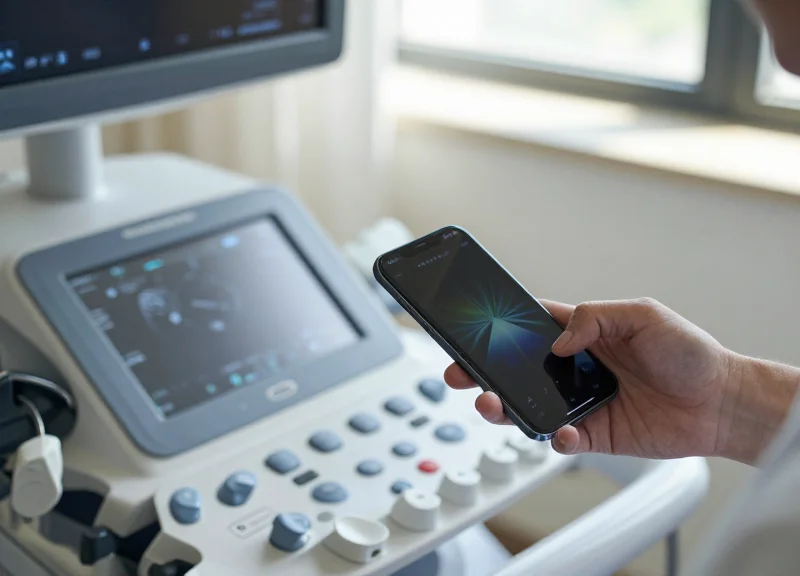
In the 2026 medical device landscape, an Electronic Shelf Label (ESL) is no longer a passive display; it is a high-bandwidth gateway to a product's 'Digital Twin.' By integrating Near Field Communication (NFC) and dynamic QR codes, showrooms transform static equipment displays into interactive educational hubs. This allows surgeons and procurement officers to transition from a physical inspection of a device to a deep dive into its clinical efficacy, instructional videos, and regulatory certifications with a single tap or scan, effectively eliminating the friction between physical hardware and digital validation.
| Feature | NFC (Near Field Communication) | Dynamic QR Codes |
|---|---|---|
| User Friction | Zero: Instant 'Tap-and-Go' experience. | Low: Requires opening a camera app. |
| Primary Use Case | One-to-one secure data exchange and app triggers. | Visual cues for broad compatibility and older devices. |
| Content Flexibility | Programmable via back-end cloud management. | Can be regenerated on-screen for specific campaigns. |
| Analytics Depth | Precise tracking of unique interaction IDs. | Scans/location tracking via UTM parameters. |
Expert Insight: The 'Intent Analytics' Loop. Unlike traditional paper brochures, digital interaction points allow marketing teams to capture high-intent data. By 2026, the leading ESL solutions will offer heatmaps of which technical whitepapers were downloaded most frequently, enabling manufacturers to pivot their showroom strategy based on real-time clinician interest. If an NFC tap leads to a 3-minute video view of a specific robotic joint assembly, your sales rep knows exactly where to focus their follow-up conversation.
- Instant Access to FDA/CE Documentation: Clinicians can immediately verify compliance and clearance status by scanning the label, ensuring transparency in high-stakes environments.
- 3D AR Model Overlays: QR codes can trigger Augmented Reality (AR) experiences on the user's tablet, showing internal components or surgical pathways that aren't visible on the exterior of the device.
- Direct Sales Inquiry Routing: A 'Request a Quote' or 'Speak to a Specialist' button embedded in the NFC landing page can instantly notify a floor representative that a high-value prospect is ready to engage.
Do visitors need a special app to use NFC features?
No. Modern smartphones have native NFC readers. A simple tap on the ESL frame automatically opens the specified URL or document in the device's default browser.
Is the connection secure for sensitive medical data?
Yes. While the labels provide public-facing marketing data, sensitive clinical trials or proprietary whitepapers can be gated behind a secure, single-sign-on (SSO) login triggered by the scan.
How do we update the links if a video changes?
Through the centralized ESL management software. You can update the target URL globally for all labels across multiple showrooms instantly without replacing any physical hardware.
Connectivity Protocols: Choosing Between Infrared, Sub-GHz, and BLE
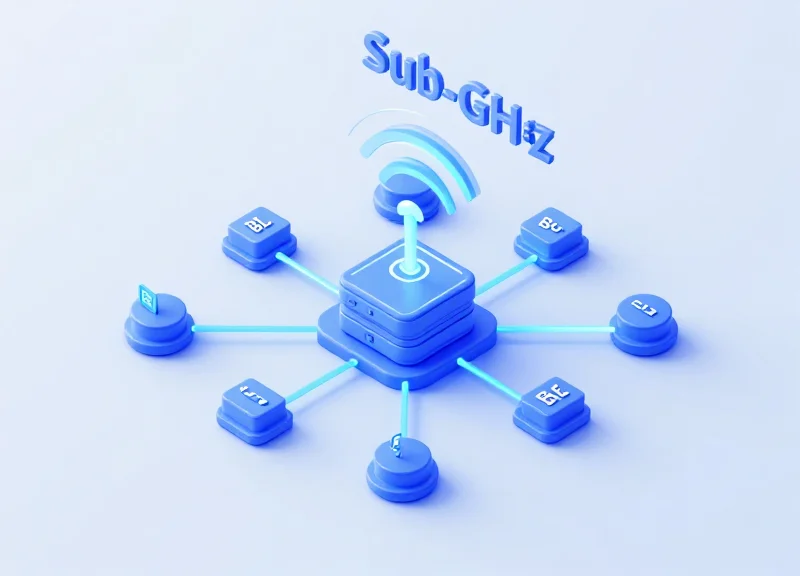
For 2026 medical showrooms, the choice of Electronic Shelf Label (ESL) connectivity is no longer just about battery life; it is about Electromagnetic Compatibility (EMC). As medical devices become increasingly networked, the wireless protocol used to update displays must operate without interfering with sensitive telemetry, imaging systems, or patient monitoring equipment. The industry has converged on three primary standards: Infrared (IR) for total RF isolation, Sub-GHz for superior penetration and reliability, and Bluetooth Low Energy (BLE) for high-bandwidth interactivity and smartphone integration.
| Feature | Infrared (IR) | Sub-GHz (433/868/915 MHz) | Bluetooth Low Energy (BLE) |
|---|---|---|---|
| Interference Risk | Zero (Non-RF) | Very Low (Avoids 2.4GHz) | Moderate (Shared 2.4GHz band) |
| Signal Penetration | Line-of-sight only | Excellent (Walls/Liquid) | Good (Short Range) |
| Update Speed | Slow | Moderate | High |
| Security | Physical (Hard to intercept) | High (Proprietary Encryption) | Enterprise Grade (AES-128+) |
Expert Insight for 2026: The 'Spectral Crowding' Crisis. As medical facilities adopt Wi-Fi 7 and advanced 5G private networks, the 2.4GHz spectrum used by standard BLE is becoming increasingly congested. For showrooms featuring high-frequency diagnostic tools like MRI or robotic surgical suites, we recommend a Sub-GHz proprietary protocol. Because Sub-GHz operates at a lower frequency, it provides superior 'diffraction' around metal medical equipment and avoids the noise floor of standard hospital Wi-Fi, ensuring 99.99% update success rates even in RF-shielded environments.
When should I choose Infrared (IR) for my showroom?
Infrared is the 'gold standard' for high-security or ultra-sensitive environments like MRI rooms where any radio frequency (RF) could cause image artifacts. Since IR does not penetrate walls or emit electromagnetic waves, it offers a zero-interference guarantee.
Is BLE safe for showrooms with active medical monitoring?
Yes, provided the ESL system utilizes 'Adaptive Frequency Hopping.' This allows the labels to automatically switch to clear channels, avoiding interference with other 2.4GHz medical devices, though Sub-GHz remains the safer bet for critical environments.
Which protocol is best for displaying complex 2026 technical graphics?
BLE is superior for high-resolution image transfers and frequent updates. If your showroom frequently rotates complex technical diagrams or high-fidelity e-ink images, BLE’s higher data throughput significantly reduces the 'refresh lag' compared to Sub-GHz.
Scalability and Future-Proofing: Preparing for 2026 and Beyond
In the context of 2026 medical device displays, scalability and future-proofing refer to the ability of an Electronic Shelf Label (ESL) ecosystem to expand across global showroom networks while maintaining the agility to update firmware and data structures via Over-the-Air (OTA) protocols. As healthcare regulations like the EU MDR and FDA UDI requirements evolve, a future-proof ESL solution must allow for remote configuration of display logic and security patches without requiring physical hardware access, ensuring that your technical displays remain compliant and operationally efficient for at least a 7-to-10-year lifecycle.
The transition from 'static digital tags' to 'intelligent edge displays' is the hallmark of the 2026 landscape. For medical device manufacturers, this means the software layer must be modular. If you introduce a new robotic surgical system with 50 unique data points, your ESL system shouldn't require a total database overhaul. Instead, a modular API-first architecture allows you to 'plug and play' new data fields and UI templates instantly across your entire global fleet.
| Feature | Legacy ESL (Pre-2024) | 2026 Future-Proof Standard |
|---|---|---|
| Update Method | Manual or Limited Wireless | Massive Parallel OTA (Over-the-Air) |
| Software Architecture | Monolithic / Closed | Modular / API-First Microservices |
| Regulatory Adaptability | Hard-coded templates | Dynamic Regulatory Windows (DRW) |
| Battery Management | Fixed Consumption | AI-Driven Adaptive Sleep Cycles |
Expert Tip: Look for 'Regulatory-as-Code' capabilities. The most advanced 2026 vendors are offering automated compliance triggers where the ESL layout automatically shifts based on the geo-location of the showroom. If a device's clearance status changes in a specific region, the ESL should update its technical warning or certification badge globally in under 60 seconds.
Why are OTA updates critical for medical showrooms?
OTA (Over-the-Air) updates allow manufacturers to push security patches and new communication protocols (like BLE 5.4) to the labels remotely. In medical environments, this ensures that the labels remain compatible with evolving hospital-grade cybersecurity standards without costly hardware replacements.
How does modular software prevent vendor lock-in?
Modular software separates the display management from the backend data source. By choosing a solution with open APIs, you ensure that if you change your CRM or ERP system in 2028, your ESL infrastructure can bridge to the new system without needing a platform migration.
Can the hardware handle future display requirements?
Select displays with high-resolution e-paper (at least 200 DPI) and multi-color support (Black/White/Red/Yellow). High-resolution screens ensure that complex medical diagrams and QR codes remain scannable as data density increases in the future.
Calculating ROI: Beyond Simple Labor Savings
Calculating the Return on Investment (ROI) for Electronic Shelf Labels (ESLs) in a medical device showroom transcends simple labor cost reductions; it is fundamentally about Technical Friction Reduction and Brand Authority Preservation. While traditional retail focuses on price agility, medical showrooms leverage ESLs to ensure that complex specifications—such as software versions, regulatory certifications, and compatibility matrices—are 100% accurate, thereby preventing the 'misinformation lag' that often derails high-value procurement cycles.
| ROI Metric | Traditional Retail Focus | Medical Showroom Strategic Value |
|---|---|---|
| Labor Efficiency | Time saved changing paper tags. | Redirecting clinical experts from admin tasks to lead nurturing. |
| Risk Mitigation | Reducing pricing errors at checkout. | Preventing regulatory non-compliance and legal liability from outdated specs. |
| Sales Velocity | Driving impulse buys via promos. | Accelerating the 'Trust Phase' by providing instant access to verified data. |
| Brand Equity | Clean shelf appearance. | Projecting a 'state-of-the-art' image consistent with $1M+ hardware. |
A unique insight for 2026 is the 'Cost of Specification Correction.' In medical sales, if a hospital board discovers a discrepancy between a showroom display and the final contract (e.g., an outdated DICOM standard listed on a display), the sales cycle typically restarts, costing the manufacturer an average of 4.5 months in delayed revenue. ESLs act as a Single Source of Truth (SSoT), pulling directly from your Product Information Management (PIM) system to eliminate this risk.
- Quantify 'Time-to-Information': Measure how long it takes a sales representative to find and present technical whitepapers via traditional means versus a customer self-serving via an ESL NFC tap.
- Calculate Error-Induced Churn: Track the number of leads lost or delayed due to technical misinformation provided during the initial showroom walkthrough.
- Analyze Engagement Data: Use ESL interaction logs to identify which high-value devices are attracting the most interest, allowing for better inventory and marketing spend allocation.
Does ESL integration actually speed up the medical sales cycle?
Yes. By providing instant, verifiable technical data via QR or NFC, you eliminate the need for 'I'll check with engineering and get back to you' follow-ups, which are notorious for cooling lead momentum.
What is the typical 'Break-Even' point for a medical showroom?
While retail break-even is often 18-24 months, medical showrooms often see ROI in under 12 months when factoring in the prevention of a single lost multi-unit device contract.
How does ESL improve the clinician's experience?
Clinicians value efficiency. Being able to instantly download a spec sheet to their mobile device directly from the display creates a friction-less experience that reinforces brand professionalism.
Case Study: Modernizing a Global Diagnostic Equipment Showroom
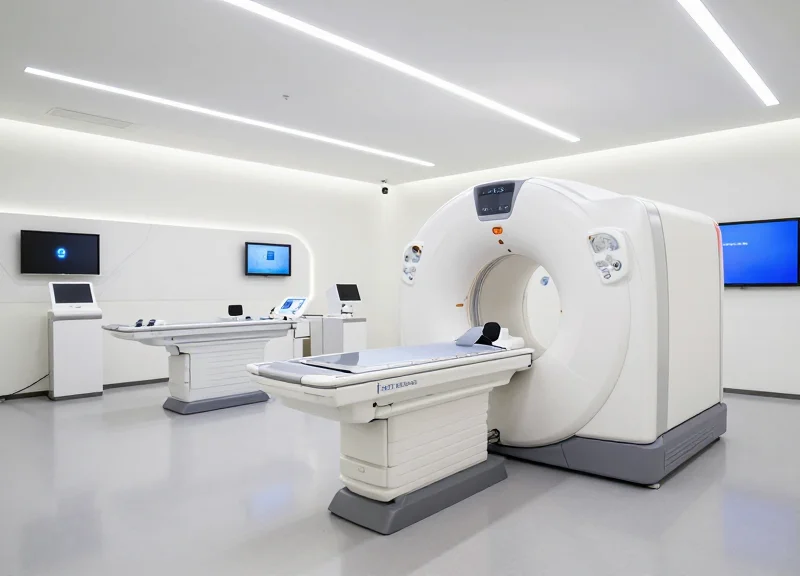
In early 2025, a Tier-1 global diagnostic imaging leader modernized its 15,000-square-foot flagship showroom by replacing traditional static placards with a centralized ESL ecosystem. Facing the challenge of managing over 500 high-complexity items—ranging from portable ultrasound units to multi-ton MRI gantries—the firm implemented a multi-size ESL deployment (4.2-inch to 12.2-inch displays) to ensure that technical specifications, regulatory approvals, and regional pricing remained synchronized across global databases in real-time.
| Metric | Legacy Manual System | ESL Integrated Solution (Post-2025) |
|---|---|---|
| Update Latency | 48-72 Hours per batch | < 60 Seconds (Global) |
| Technical Accuracy | 92% (Manual error margin) | 99.9% (Single source of truth) |
| Content Depth | Static Text Only | Dynamic (NFC-linked Whitepapers/Videos) |
| Staff Productivity | 20 hours/week on signage | 0 hours (Automated) |
| Regulatory Alignment | Reactive/Delayed | Proactive (Instant compliance updates) |
Expert Insight: The 'Shadow Label' Strategy. A unique takeaway from this implementation was the use of NFC-triggered 'Shadow Labels.' While clinicians see patient-facing benefits on the display, sales representatives can tap their authorized mobile devices to the label to instantly pull up 'Internal-Only' data—such as current supply chain lead times, maintenance contract margins, and bulk-buy discount tiers—turning the ESL into a dual-purpose sales enablement tool without cluttering the public UI.
- Site Survey & RF Mapping: The team conducted a comprehensive RF environment scan to ensure the Sub-GHz ESL frequency would not interfere with sensitive diagnostic imaging signals or hospital-grade Wi-Fi 7 networks.
- PIM/ERP Integration: The ESL software was linked directly to the Product Information Management (PIM) system, ensuring that any engineering change orders (ECOs) were instantly reflected on the showroom floor.
- Custom Template Design: High-resolution e-paper templates were designed to prioritize 'Compliance Symbols' (CE, FDA, ISO) and QR codes for instant access to Clinical Evidence papers.
How did the system handle high-value equipment movement?
The showroom utilized BLE (Bluetooth Low Energy) beaconing within the labels to track the location of portable diagnostic units, ensuring the correct digital profile followed the device as it moved between demo zones.
What was the primary driver for ROI in this case?
Beyond labor savings, the primary ROI was the 15% increase in 'Lead-to-Quote' velocity, as clinicians could immediately access the specific technical documentation required for hospital procurement boards via the ESL's digital bridge.
Vendor Selection Checklist: 5 Questions to Ask Before You Buy
Selecting an Electronic Shelf Label (ESL) vendor for a medical device showroom requires a shift from retail-centric thinking to a focus on mission-critical reliability. Because these displays often represent multi-million dollar diagnostic equipment, the vendor must prove that their infrastructure can operate without interfering with sensitive medical frequencies while maintaining 100% data integrity between your Product Information Management (PIM) system and the showroom floor. The following five questions are designed to flush out generic providers and identify true technical partners.
Can you provide a documented Coexistence Report for hospital-grade wireless environments?
In a medical showroom, interference with existing wireless signals (like Zigbee or proprietary patient monitoring bands) is a non-starter. A qualified vendor must demonstrate how their protocol—whether Sub-GHz or BLE—manages frequency hopping to avoid 'crowding' your technical environment.
How does your system handle 'Source of Truth' verification and display-latency?
Inaccurate technical specifications on a medical display can lead to serious compliance or sales issues. Ask the vendor to prove their 'feedback loop'—how the system confirms a display has actually updated successfully and what the latency is between a price/spec change in the database and the physical tag.
What is your hardware continuity guarantee for the next 5 to 7 years?
Medical showrooms require a high level of aesthetic consistency. Unlike retail, where tags are replaced frequently, you need a vendor that guarantees the same form factor and screen resolution for several years to ensure your display wall remains uniform as you expand.
Is your software architecture SOC2 Type II compliant and capable of on-premise deployment?
For many medical device manufacturers, cloud-only solutions present a security risk. A top-tier vendor should offer flexible deployment models (Cloud, Hybrid, or On-Prem) with enterprise-grade encryption to protect proprietary technical data.
Do your displays utilize 'Ghosting Mitigation' for high-contrast technical diagrams?
Medical displays often feature complex schematics. Standard E-ink can suffer from 'ghosting' where old data leaves a shadow. Ensure the vendor uses high-refresh controllers designed for technical rendering rather than just simple price text.
### The 2026 'Red Flag' Detector While many vendors claim to support 'enterprise' features, the nuances of the medical sector often expose weaknesses in generic retail hardware. Use the table below to differentiate between a standard retail vendor and a specialized medical-technical partner.
| Feature | Retail-Grade Vendor | Medical-Technical Partner |
|---|---|---|
| Wireless Protocol | Crowded 2.4GHz only | Shielded Sub-GHz or Low-Interference BLE |
| Data Update Speed | Batched (minutes to hours) | Real-time (seconds) with ACK confirmation |
| Hardware Life | Consumer-grade plastics | Chemical-resistant (IPA) housing |
| API Support | Proprietary / Closed | RESTful API / Webhooks / ERP-Native |
Expert Tip from the Field: In 2026, the most overlooked cost is 'Technical Debt.' Always ask a vendor for their 'End-of-Life' (EOL) policy. If they cannot guarantee that a new tag model in three years will be backward compatible with the rails and software you install today, you are purchasing a disposable system rather than a long-term asset.