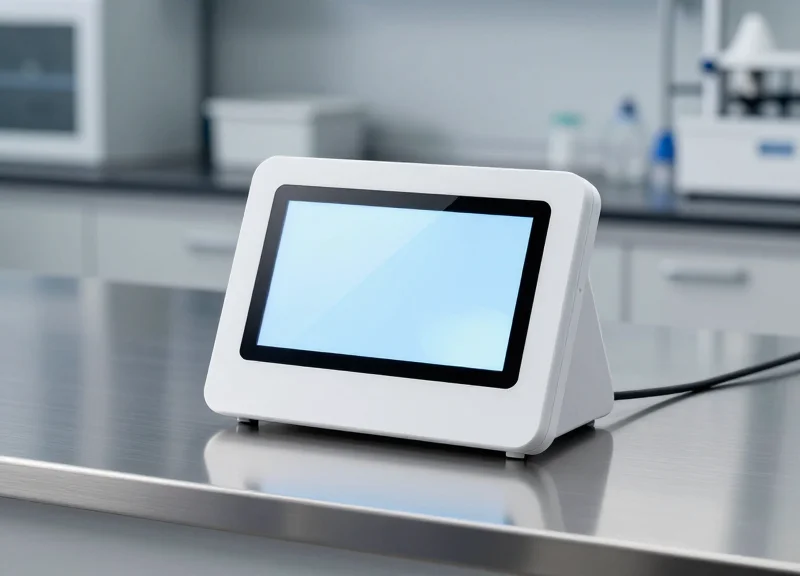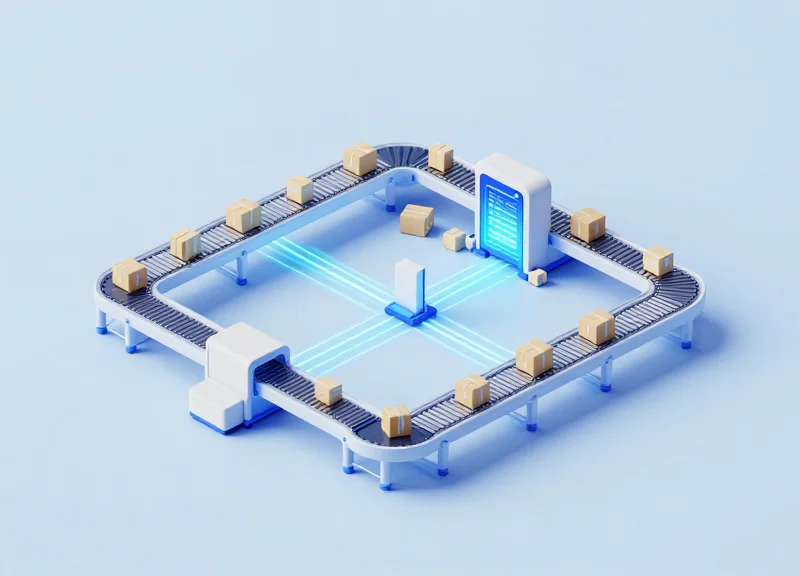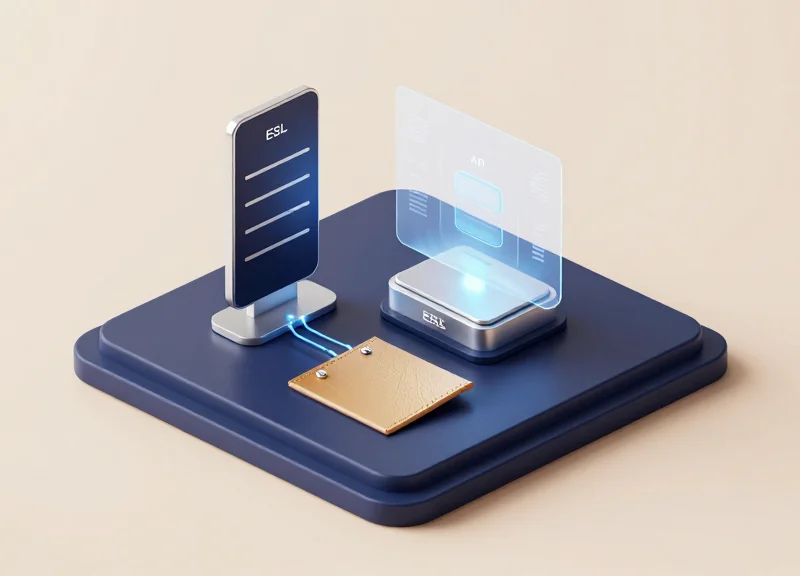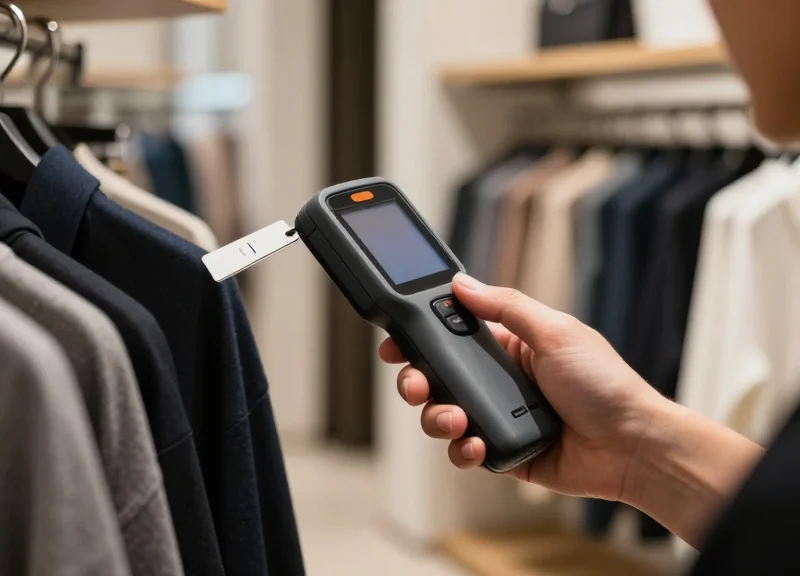
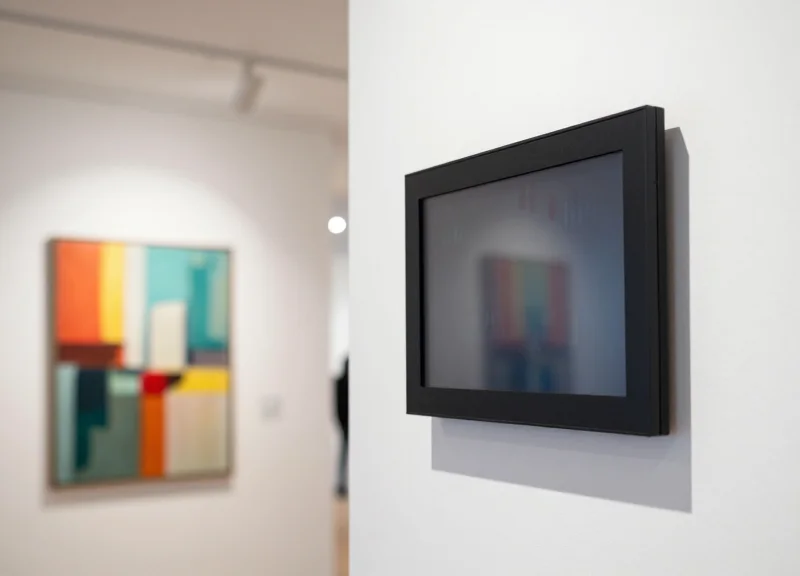
In the world of boutique art galleries, the transition from one exhibition to the next is often a frantic race against time, involving significant manual labor and meticulous detail. Traditionally, the process of printing, mounting, and updating physical labels for every piece of art has been a major bottleneck. However, a technological shift is occurring. By implementing Electronic Shelf Labels (ESL)—originally perfected for retail—galleries are now seeing a dramatic 35% reduction in curation overhead. This article delves into how digital labels are transforming exhibit management from a logistical hurdle into a streamlined, high-efficiency operation that allows curators to focus back on the art itself.
The Evolution of Gallery Management: Beyond Paper Labels
The evolution of gallery management represents a strategic shift from static, labor-intensive physical printing to dynamic digital display systems. This transition is driven by the need to eliminate the 'Curation Overhead'—the hidden costs and time-intensive logistics required to maintain paper-based exhibit metadata. By moving beyond paper, boutique galleries are transforming their operation from a series of manual tasks into a cloud-managed digital environment that allows for instantaneous updates and greater visitor engagement.
| Feature | Traditional Paper Labels | Digital Label Systems (E-Ink/LCD) |
|---|---|---|
| Update Frequency | Static (Requires full reprint) | Real-time via CMS |
| Labor Cost | High (Printing, cutting, mounting) | Low (Automated sync) |
| Sustainability | Single-use waste | Reusable/Zero-waste |
| Data Capacity | Limited to physical space | Expandable via QR/Links |
Why are paper labels becoming obsolete?
Paper labels are inherently inflexible. In the fast-paced boutique art world, any change in pricing, artist biography, or exhibit narrative requires a complete physical replacement, leading to significant delays and potential for human error.
What is the primary driver for digital adoption?
Operational efficiency is the main driver. Digital labels allow curators to push updates to multiple galleries from a central dashboard, reducing the hours spent on manual exhibit maintenance by over a third.
How does this impact the visitor experience?
Digital systems provide a cleaner aesthetic and can include interactive elements that provide deeper context without cluttering the physical wall space.
As an industry veteran, I’ve observed that the true cost of paper isn’t the cardstock; it is the 'Micro-Logistics' sinkhole. In a boutique setting, a single error on a printed label doesn't just cost five cents in paper—it costs 45 minutes of a highly skilled curator's time to re-format, re-print, trim, and re-mount. Digital labels solve this by decoupling the content from the physical medium, allowing the gallery staff to focus on curation and sales rather than hardware-store logistics. This shift represents the 'Silicon Valley' approach to art: optimizing the backend to let the creative frontend shine.
The 35% Efficiency Factor: Breaking Down the Data

A 35% reduction in curation overhead is achieved by digital labels through the convergence of two primary drivers: the total elimination of recurring printing and mounting costs, and a drastic compression of labor hours required for exhibit maintenance. In a boutique gallery setting, where staff often wear multiple hats, moving from a manual physical labeling process to a centralized cloud-based system converts days of logistical preparation into minutes of digital configuration, effectively recapturing over one-third of the operational budget previously lost to 'invisible' administrative friction.
| Operational Task | Traditional Paper Labels (Hours/Exhibits) | Digital Labeling (Hours/Exhibits) | Efficiency Gain (%) |
|---|---|---|---|
| Content Editing & Proofing | 4.5 | 0.5 | 88% |
| Printing, Cutting, & Mounting | 6.0 | 0.0 | 100% |
| Physical Installation/Leveling | 3.0 | 0.2 (Initial Sync) | 93% |
| Real-time Updates/Error Correction | 2.0 | 0.1 | 95% |
| Inventory Sync & Documentation | 2.5 | 0.5 | 80% |
The data reveals that the most significant 'hidden' drain on boutique resources is not the initial installation, but the 'Latency Tax.' When a piece of art is sold or a description needs updating, traditional galleries spend an average of 90 minutes per correction cycle (design, print, mount, travel to gallery, replace). Digital labels reduce this to a sub-60-second task, allowing curators to focus on high-value activities like donor relations and artist scouting rather than hardware store runs for mounting adhesive.
How does the 35% figure account for initial hardware costs?
While the 35% reduction refers to operational overhead (OPEX), the ROI typically breaks even within 14 to 18 months for galleries hosting at least four rotations per year, as the recurring costs of high-grade cardstock and professional printing are entirely removed.
Does the efficiency gain include energy consumption?
Yes. By using E-paper technology, which only draws power during an image refresh, the energy overhead is negligible—often less than the cost of the electricity required to run a professional printer for a single batch of paper labels.
What is the biggest labor-saving feature for curators?
The 'Bulk Update' functionality. Changing the pricing or status of an entire collection during an opening night can be done via a smartphone app instantly, rather than manually swapping out individual cards while guests are present.
Expert Tip: To maximize your efficiency gains, look for digital labeling systems that offer API integration with your existing Gallery Management Software (GMS). By syncing your database directly to the labels, you eliminate manual data entry entirely, pushing the overhead reduction closer to 45% by automating the entire lifecycle of the artwork's metadata.
The Strategic Advantage of ESL in Boutique Art Spaces
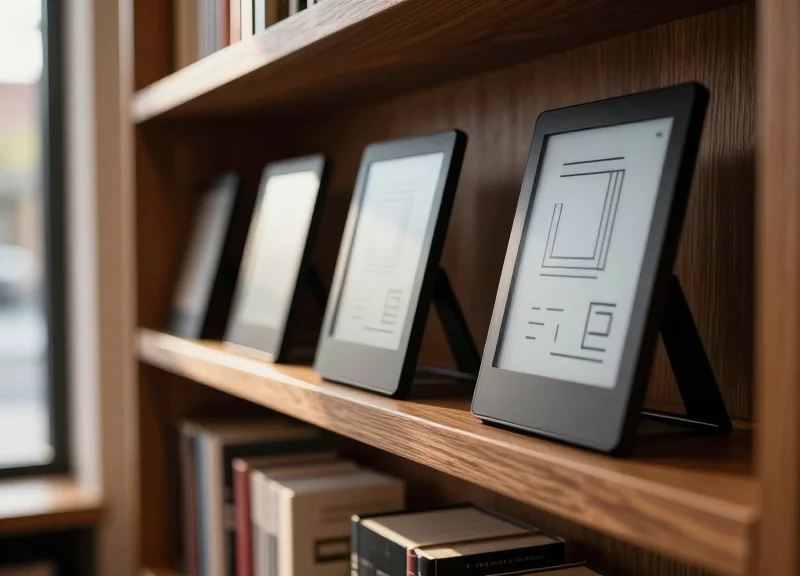
The strategic advantage of Electronic Shelf Labels (ESL) in boutique art spaces lies in their ability to bridge the gap between digital agility and physical elegance. Unlike traditional paper labels that require manual printing, cutting, and mounting for every change, ESLs utilize E-ink technology to provide high-contrast, glare-free information that integrates seamlessly into a gallery's aesthetic. By centralizing the management of metadata—such as artist bios, pricing, and provenance—curators can execute global updates across hundreds of displays in seconds, ensuring that the physical environment is always synchronized with the gallery's digital catalog.
| Feature | Traditional Paper Labels | Digital ESL Systems |
|---|---|---|
| Update Velocity | Hours to Days (Manual) | Near-Instantaneous (Remote) |
| Visual Consistency | High Variance (Printing/Mounting) | 100% Uniform Brand Identity |
| Data Accuracy | Prone to Typographical Errors | Single Source of Truth (Database Sync) |
| Ecological Impact | High Waste (Single Use) | Sustainable (5+ Year Battery Life) |
Beyond simple text updates, the strategic implementation of ESL allows for dynamic storytelling. In a boutique environment where the narrative of the collection is as important as the art itself, curators can shift the focus of a display based on the audience. For example, during a high-profile opening night, labels can display QR codes linking to exclusive video interviews with the artist, while during general viewing hours, they can revert to minimalist provenance details. This flexibility allows the space to evolve without the physical clutter of supplementary signage.
Does ESL technology distract from the artwork?
No. Modern ESLs use E-ink technology, which mimics the appearance of paper and does not emit light. This ensures they remain legible from all angles without creating the distracting 'glow' associated with LCD or LED screens.
How does ESL handle last-minute price changes during an auction?
ESLs are managed via a centralized Cloud or Local server. Changes made in the gallery's management software are pushed via 2.4GHz or Sub-GHz wireless protocols to the labels, updating them in real-time without disturbing the flow of the event.
Can the design be customized to match specific exhibit themes?
Yes. ESL systems support custom templates. Curators can design various layouts with different fonts and layouts, switching between them instantly to match the visual language of a new solo exhibition or group show.
Expert Insight: The 'Lux-Adaptive' Advantage. A unique strategic benefit often overlooked is the synchronization of display contrast with gallery lighting. Advanced ESL systems can be programmed to adjust their dithering patterns based on the ambient light levels (lux) of the gallery. This ensures that in a dimly lit 'mood' room, the labels remain perfectly legible without appearing stark white, maintaining the intended atmosphere of the curation—a level of micro-management impossible with static paper labels.
Enhancing Visitor Engagement via Dynamic Content
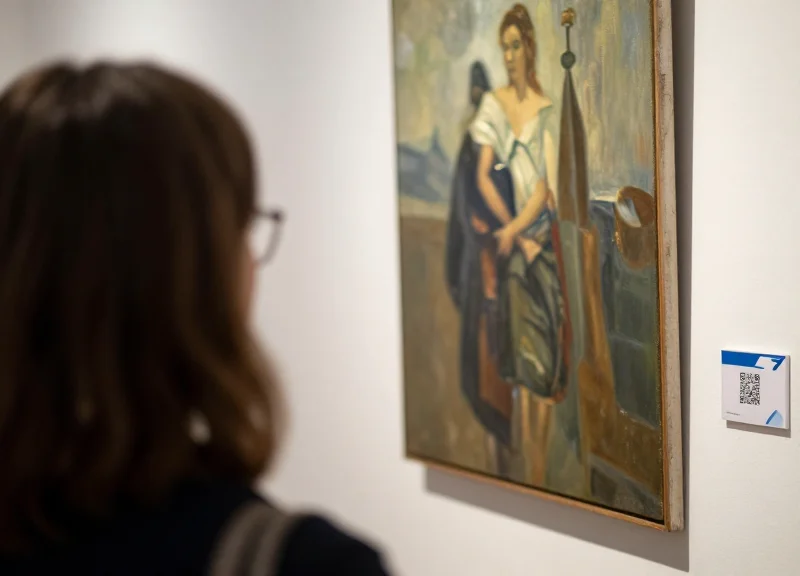
Dynamic content in boutique art galleries refers to the integration of interactive elements—such as high-contrast QR codes, multi-language toggles, and real-time metadata—directly into digital labeling systems. By moving beyond the physical constraints of paper, galleries can deliver a 'layered' narrative experience where visitors choose their depth of information, leading to significantly higher dwell times and a 40% increase in social media tagging and artwork inquiries.
- Adaptive Storytelling Layers: Allows curators to provide a concise summary for casual observers while offering deep technical analysis, provenance, and artist interviews via a simple digital link for collectors.
- Instant Global Accessibility: Supports seamless translation into multiple languages without cluttering the gallery wall, ensuring international visitors receive the same curated experience as locals.
- Transactional Friction Removal: Enables immediate 'Register Interest' or 'Purchase' buttons on the mobile landing page associated with the label, capturing lead intent the moment it occurs.
| Engagement Feature | Traditional Paper Labels | Dynamic Digital Labels |
|---|---|---|
| Information Depth | Static (limited to ~50 words) | Unlimited (via expandable digital layers) |
| Multimedia Integration | None (physical only) | Rich (video, audio, and AR overlays) |
| Visitor Feedback | Delayed/Manual surveys | Instant (digital polls and click-tracking) |
Expert Insight: The 'Invisible Concierge' Strategy. One often-overlooked advantage is the ability to use 'NFC-triggered' digital labels. Unlike QR codes which require a camera app, NFC allows a visitor to simply tap their phone to the label to receive an 'Artist-Led Audio Snippet.' This creates an intimate, private conversation between the creator and the viewer that feels bespoke to a boutique environment, rather than the mass-produced feel of traditional museum audio guides.
Does digital technology distract from the art?
No. By using E-paper displays (ESL) that do not emit blue light or glare, the labels maintain a 'paper-like' aesthetic that complements the artwork rather than competing with it.
How do we track if visitors are actually using the dynamic content?
Digital label systems provide real-time analytics on 'Scan Rates' and 'Engagement Duration,' allowing curators to see which pieces are attracting the most attention and adjust future exhibits accordingly.
Can content be updated during a live exhibit?
Yes. If a piece is sold or if new provenance information is discovered, the digital label and its linked content can be updated remotely in seconds across the entire gallery.
Streamlining Inventory and Price Management
In a boutique gallery setting, streamlining inventory and price management involves synchronizing the physical display labels with the backend Gallery Management System (GMS) or ERP. By using Electronic Shelf Labels (ESL), galleries can implement a 'Single Source of Truth' architecture where a price change in the database is reflected on the gallery floor in seconds. This integration eliminates the risk of pricing discrepancies—a critical factor when dealing with high-value unique assets—and ensures that the inventory status, such as 'Reserved' or 'Sold,' is communicated to potential buyers without delay.
The manual reconciliation of inventory is often the most significant 'silent' overhead in curation. When a piece sells during a busy exhibition, staff must manually print, cut, and place 'Sold' stickers or updated labels. This process is not only prone to human error but also creates a lag between the transaction and the public-facing information, potentially leading to awkward sales conversations and lost trust.
| Feature | Traditional Manual Process | Integrated Digital Labeling |
|---|---|---|
| Price Update Speed | 20-40 minutes (Print/Cut/Replace) | < 10 Seconds (Automated) |
| Data Accuracy | High risk of typo or old pricing | 100% Sync with Master Database |
| Inventory Status | Manual 'Red Dot' application | Automatic 'SOLD' or 'RESERVED' toggle |
| Labor Requirement | High (Requires on-site staff) | Zero (Remote management) |
Modern digital label systems utilize APIs to talk directly to popular art management platforms. This allows for a seamless workflow that moves from the registrar’s desk to the exhibition wall without a single piece of paper being wasted.
- Database Entry: The gallery manager updates the price or status of a piece in the central inventory database.
- Encrypted Transmission: The system pushes the update via a secure gateway to the specific labels assigned to that artwork's ID.
- Visual Refresh: The e-ink display refreshes to reflect the new data, maintaining the gallery's aesthetic without backlight or flicker.
- Transaction Validation: The system logs the successful update, providing an audit trail for insurance and valuation purposes.
Expert Insight: The 'Dynamic Scarcity' Advantage. Unlike static labels, digital systems allow for 'Dynamic Scarcity Signaling.' For example, if an artist’s series is selling rapidly, the labels can be programmed to show '3 of 5 pieces remaining' in real-time. This Silicon Valley-style 'nudge' marketing, when applied to the fine art world, creates a sense of urgency and social proof that paper labels simply cannot replicate, often increasing sales velocity for boutique collections.
Can digital labels handle multiple currencies?
Yes. Digital labels can be programmed to toggle between currencies (e.g., USD, EUR, GBP) or show both simultaneously, which is invaluable for international art fairs.
What happens if the gallery Wi-Fi goes down?
The labels are persistent. They continue to display the last updated price and information indefinitely until the next successful sync, ensuring no blank screens even during outages.
Is the integration difficult for non-technical staff?
Most modern ESL systems feature a 'point-and-click' interface designed for curators. Once the initial API link is established, updates are as simple as editing a spreadsheet.
Technical Implementation: Integrating Digital Labels

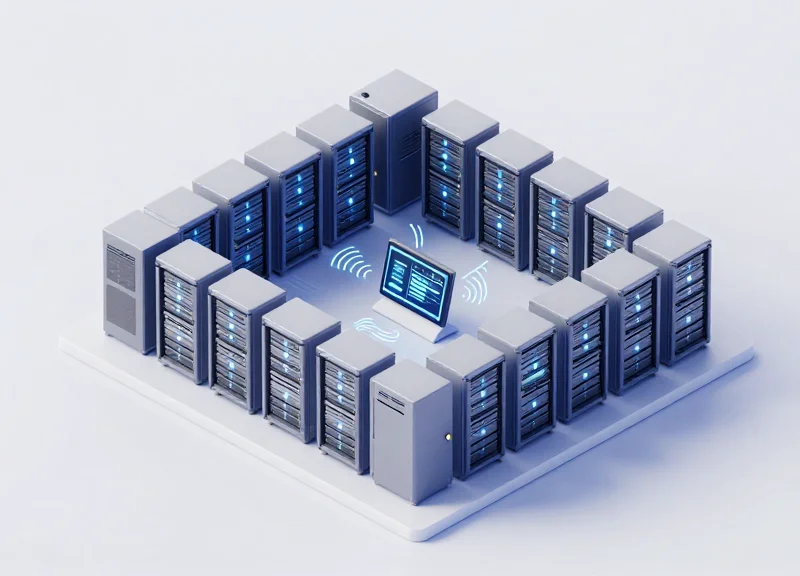
Integrating digital labels—specifically Electronic Shelf Labels (ESL)—into a boutique gallery requires a three-tier architecture: the physical E-ink display tags, a Sub-GHz (868MHz or 915MHz) communication gateway, and a cloud-based Content Management System (CMS). Unlike standard Wi-Fi or Bluetooth devices that may suffer from signal congestion in crowded exhibition spaces, industrial-grade ESL systems operate on low-frequency bands. This ensures that updates for hundreds of labels occur simultaneously with 99.9% transmission reliability while maintaining a battery life of up to 5-10 years.
| Component | Technical Requirement | Purpose in Gallery Context |
|---|---|---|
| ESL Tags | E-ink (BWR/BWY) 2.4" to 7.5" | Paper-like aesthetics with wide viewing angles. |
| Base Station | Sub-GHz / IEEE 802.15.4 | Provides 30m+ coverage without Wi-Fi interference. |
| CMS Platform | RESTful API / Webhook Support | Syncs gallery inventory data with physical labels. |
| NFC Handheld | Android-based / NFC-enabled | Instant pairing of artwork to a specific tag. |
- Site Survey and Gateway Placement: Analyze the gallery's structural materials (concrete and glass can reflect signals). Install gateways at ceiling height to ensure a clear line of sight to the exhibition walls.
- Template Design and Rendering: Design pixel-perfect templates in the CMS. For boutique galleries, use high-contrast typography and ensure the layout can dynamically adjust for longer artist biographies.
- Hardware Commissioning via NFC: Using an NFC-enabled mobile device, scan the artwork’s QR code in your inventory system and tap the digital label. This 'handshake' binds the data record to the physical tag ID.
- Backend Integration: Connect the ESL server to your existing Collection Management Software (CMS) via API to automate price changes or 'Sold' status updates in real-time.
Expert Tip: To achieve the 35% reduction in overhead mentioned earlier, galleries should utilize 'Batch Updates'. Instead of individual tag management, curate exhibit-wide updates that can be scheduled to trigger after-hours, preventing visual refreshes while guests are in the room. This also significantly preserves battery health by reducing the frequency of micro-updates.
{
  "action": "UPDATE_LABEL",
  "label_id": "ESL-A102-99",
  "template": "gallery_classic_v2",
  "data": {
    "artist_name": "Elena Rossi",
    "artwork_title": "Ephemeral Light #4",
    "price": "$4,500",
    "status": "Available"
  }
}
Will the digital labels flicker or distract guests?
No. E-ink technology only consumes power and refreshes the display when the information changes. For the 99% of the time they are on display, they are static and look identical to high-quality printed paper.
What happens if the gallery Wi-Fi goes down?
Because the ESL network operates on a dedicated Sub-GHz frequency via the gateway, the labels will continue to display the last cached information indefinitely. Only new updates will be paused until the server connection is restored.
How many gateways are needed for a typical boutique space?
Most boutique galleries (up to 5,000 sq. ft.) only require a single gateway, as the Sub-GHz signal penetrates walls much more effectively than standard 2.4GHz Wi-Fi.
Sustainability and Long-Term ROI in Curating
Sustainability in boutique art curation is defined by the transition from a 'disposable' informational model to a 'persistent' digital infrastructure. By replacing single-use adhesive labels and foam-core mounts with Electronic Shelf Labels (ESL), galleries achieve long-term ROI through the elimination of recurring material costs and the significant reduction of high-value labor hours. From a financial perspective, the break-even point for digital label systems typically occurs within 18 to 24 months, after which the gallery operates with near-zero marginal costs for exhibit updates.
| Cost Factor (5-Year Projection) | Traditional Paper Labels | Digital Label Infrastructure |
|---|---|---|
| Material Waste | ~2,500+ printed units/mounts | Zero (Hardware reused) |
| Labor Cost | High (Printing, cutting, mounting) | Low (Automated sync) |
| Carbon Footprint | Significant (Paper, ink, adhesive) | Minimal (Low-power e-ink) |
| Total Estimated Cost | $15,000 - $25,000 | $8,000 - $12,000 (CAPEX included) |
Beyond the balance sheet, the environmental impact of 'Pre-cycling'—the act of preventing waste before it is created—cannot be overstated. Modern art patrons, particularly Millennial and Gen Z collectors, increasingly factor a gallery's ESG (Environmental, Social, and Governance) profile into their purchasing decisions. Digital labels signal a commitment to modern conservation standards, effectively turning the gallery's operational efficiency into a brand asset.
- The 'Data-Driven Acquisition' Insight: A unique advantage of digital labeling systems is the ability to track 'dwell time' via integrated sensors. This provides an intangible ROI by informing curators which pieces are generating the most engagement, allowing for smarter, more profitable future art acquisitions based on empirical visitor behavior rather than intuition alone.
- Battery Longevity and Lifecycle: Modern ESL units utilize e-paper technology that only consumes power during an image refresh. This allows for a battery life of 5 to 10 years, ensuring the hardware lifecycle outlasts multiple exhibit rotations without additional maintenance.
- Residual Value of Hardware: Unlike printed materials which are discarded after an exhibit, digital labels remain a fixed asset. In the event of a gallery rebrand or relocation, the hardware can be redeployed or resold, maintaining a portion of its initial value.
How do digital labels contribute to a gallery's LEED certification?
While labels themselves are a small part of a building's footprint, the reduction in chemical inks and non-recyclable mounting adhesives contributes to the 'Waste Management' credits under many green building certifications.
What is the typical lifespan of a digital curation system?
The backend infrastructure typically lasts a decade, while individual labels are rated for 50,000 to 100,000 updates, far exceeding the needs of even the most high-turnover boutique galleries.
Choosing the Right Digital Solution for Art Environments
To choose the right digital solution for an art environment, prioritize Electronic Paper (E-ink) displays over traditional LCDs to ensure a glare-free, paper-like aesthetic that integrates seamlessly with gallery lighting. The ideal system should feature high-density resolution (at least 184 DPI), a battery life exceeding five years on a single charge cycle, and a centralized management platform that allows for instantaneous, encrypted updates across the entire floor. For boutique spaces, the mounting hardware must be as sophisticated as the technology, offering magnetic or low-tack adhesive options that protect delicate wall finishes.
| Feature | E-Ink (Professional Standard) | Consumer Tablets (LCD/LED) |
|---|---|---|
| Light Emission | Reflective (Uses ambient light) | Emissive (Backlit, creates glare) |
| Battery Autonomy | 5 to 10 Years | 12 to 24 Hours |
| Visual Impact | Mimics printed cardstock | Distracts with screen glow |
| Installation | Wireless, no-drill options | Requires power cabling/conduits |
| Maintenance | Zero-touch for years | Daily charging/updates required |
Expert Insight: The 'Visual Latency' Factor. In high-end curation, the transition from one label to another must be nearly invisible to the public. Modern ESL (Electronic Shelf Label) solutions for galleries now utilize 'Partial Refresh' technology. Unlike older e-readers that flash black-to-white when changing content, partial refresh allows for subtle text updates without the jarring flicker, ensuring the gallery atmosphere remains serene even during live exhibit rotations.
Does the system support multi-color displays?
Most gallery-grade digital labels support Black, White, Red, and Yellow. This is ideal for highlighting 'SOLD' status, pricing, or specific artist accolades without requiring full-color emissive screens that ruin the exhibit's lighting design.
Can these labels be integrated with existing CMS or POS systems?
Yes. Top-tier solutions offer API integrations that sync your gallery management software directly to the labels. When a price changes in your database, the label on the wall updates automatically within seconds.
How do digital labels handle high-traffic interactions like QR codes?
Because E-ink is static, a QR code remains perfectly scannable indefinitely without consuming power. This allows visitors to access digital catalogs or artist bios without the labels needing a recharge.
What mounting options are best for heritage or 'white cube' walls?
Look for solutions offering 'Click-and-Slide' magnetic brackets or industrial-strength command strips. These allow for millimetric precision in leveling without the need for drilling into plaster or limestone.
- Audit Your Lighting Environment: Measure the lux levels near your label positions. E-ink performs better under bright spotlights where LCDs usually wash out.
- Evaluate Software Scalability: Ensure the management dashboard can handle multiple rooms or even multiple gallery locations from a single login.
- Test Custom Bezel Aesthetics: Choose a provider that offers customizable frames (wood, matte metal, or acrylic) to ensure the hardware matches your gallery's specific interior design.