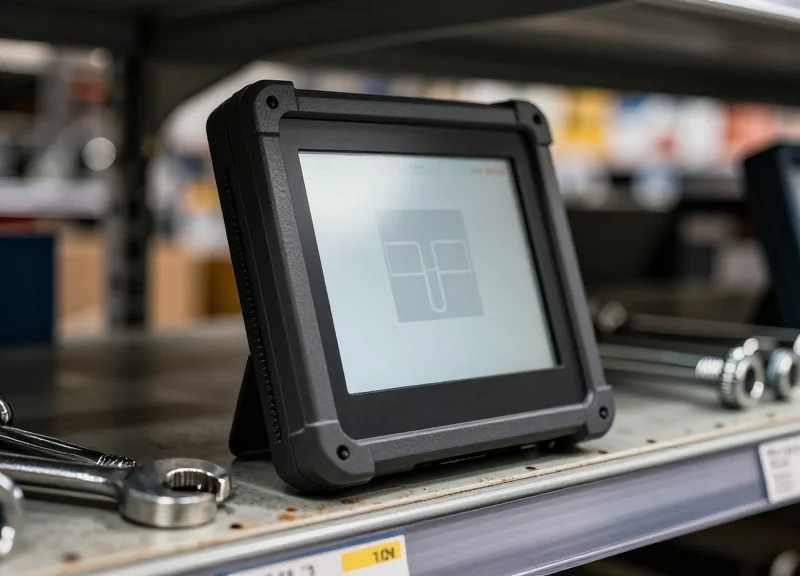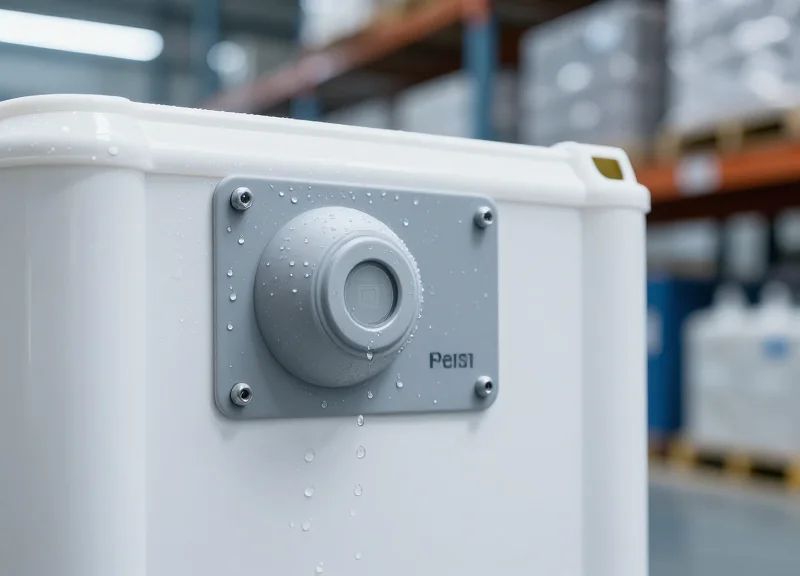

In the fast-paced world of airport retail, the ability to communicate pricing and promotions across multiple languages is not just a luxury—it is a competitive necessity. Electronic Shelf Labels (ESL) have revolutionized how duty-free stores manage their inventory, yet the true power of these systems lies in their integration. This technical guide delves into the complexities of optimizing API architectures to support high-frequency, multi-lingual updates within the unique constraints of airport infrastructure, ensuring seamless traveler engagement and operational agility.
The Strategic Role of ESL in Modern Airport Infrastructure
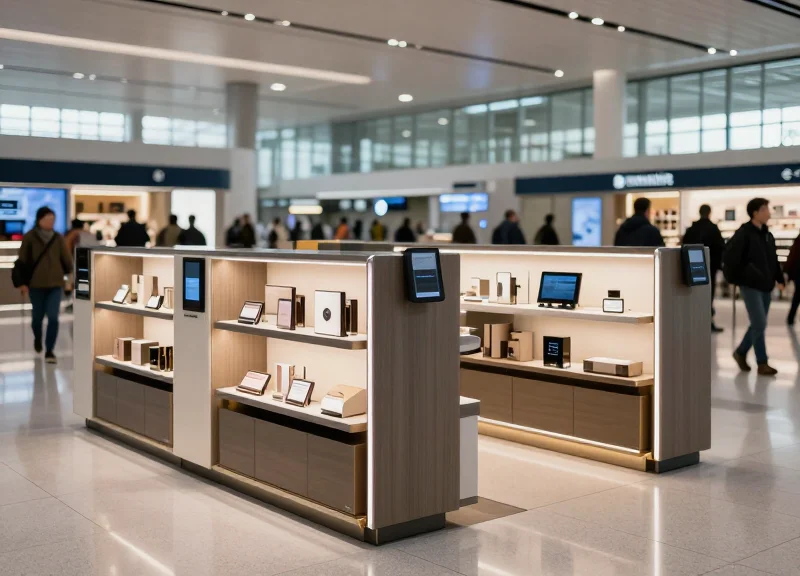
In the context of modern airport infrastructure, Electronic Shelf Labels (ESL) are not merely digital replacements for paper tags; they are dynamic IoT endpoints that facilitate 'Fluid Retail.' By integrating with centralized ERP and flight information systems via API, ESLs allow airport retailers to synchronize pricing, promotional content, and multi-lingual product information instantly across thousands of square meters. This transition from static to dynamic display is essential for managing the high-volatility environment of transit hubs, where passenger demographics, currency fluctuations, and flight schedules change by the hour.
| Feature | Legacy Static Pricing | Next-Gen ESL Infrastructure |
|---|---|---|
| Update Latency | Hours/Days (Manual) | Seconds (Automated) |
| Language Support | Single/Dual (Fixed) | Multi-lingual (Dynamic Rotation) |
| Promotion Accuracy | High Error Margin | Single Source of Truth (API-driven) |
| Operational Cost | High Labor Requirements | Low (Battery life 5-10 years) |
The strategic value of ESL lies in its ability to solve the 'Global-Local Paradox' of airport retail. An airport serves a global audience that requires information in their native tongue, yet the retailer operates within a local logistics framework. Through robust API integration, infrastructure managers can push updates that reflect real-time exchange rates or adjust stock levels based on the origin of the next arriving flight, ensuring that the right message reaches the right passenger at the exact moment of purchase intent.
How does ESL integration improve passenger experience?
It eliminates pricing confusion by providing clear, multi-lingual information that matches the traveler's context, reducing friction at checkout for international passengers.
Is ESL infrastructure scalable for massive terminals?
Yes. Modern ESL systems utilize sub-GHz or BLE communication protocols that can manage over 50,000 tags from a single gateway, designed specifically for high-interference airport environments.
What is the primary ROI driver for airport ESL?
The primary ROI comes from 'Agile Markdown Management.' Retailers can instantly discount perishables or promotional items across all terminals simultaneously, significantly reducing waste and maximizing margin.
Expert Insight: The 'Flight-Triggered Pricing' Model. A unique strategic advantage of API-integrated ESLs is the ability to implement flight-triggered promotions. For example, if a flight to Tokyo is boarding at Gate B32, the API can trigger the nearest duty-free ESLs to switch their primary language to Japanese and highlight products favored by that specific demographic. This level of granular, automated targeting is impossible with static infrastructure and represents the future of hyper-personalized transit commerce.
Architecting the API: REST vs. GraphQL for ESL Management

For airport retail infrastructure, the API architecture serves as the nervous system connecting the central ERP to thousands of Electronic Shelf Labels (ESLs). While REST (Representational State Transfer) remains the industry standard for its simplicity and cacheability, GraphQL is emerging as a superior choice for multi-lingual environments. The fundamental difference lies in data fetching: REST requires multiple endpoints to gather product, price, and localized description data, whereas GraphQL allows the ESL gateway to request exactly the attributes needed—such as a specific currency or a single language string—in a single round trip.
| Feature | REST API | GraphQL |
|---|---|---|
| Data Fetching | Fixed endpoints; often leads to over-fetching. | Client-defined queries; zero over-fetching. |
| Multi-lingual Support | Usually requires large payloads with all languages. | Specific language strings can be queried individually. |
| Network Overhead | Higher due to multiple requests per update. | Lower; consolidated into a single request. |
| Caching | Native HTTP caching support (excellent). | Complex; requires specialized client-side caching. |
| Real-time Updates | Polling or Webhooks required. | Built-in Subscriptions for live price changes. |
In the specific context of airport 'Duty-Free' retail, where a single SKU may require promotional text in five different languages (e.g., English, Mandarin, Arabic, French, and Japanese), RESTful payloads often become bloated. Sending all localized strings to a low-power ESL gateway consumes unnecessary bandwidth and battery life. GraphQL’s ability to perform 'Field Selection' allows the system to push only the English and Mandarin strings to labels in Terminal A, while pushing English and Arabic to Terminal B, optimizing the limited throughput of Zigbee or Sub-GHz wireless networks used by ESL hardware.
query GetAirportPromotion($productID: ID!, $langCode: [String!]) {
  product(id: $productID) {
    sku
    price(currency: "USD")
    localizations(languages: $langCode) {
      title
      promotionalText
    }
  }
}
Expert Insight: In my experience scaling retail systems, the biggest mistake in airport deployments is ignoring 'Payload Latency' at the gateway level. If your API returns a 50KB JSON for a single price change because it includes every language available, you will bottle-neck your ESL base stations. I recommend a GraphQL-first approach for multi-lingual displays to ensure that your 'Context-Aware' pricing—changing prices based on flight origin or destination—doesn't crash your local network during peak travel hours.
Is REST still viable for airport ESLs?
Yes, REST is highly effective if your SKU data is relatively flat and you are not frequently rotating multi-lingual marketing copy. It is also easier to implement if you have a legacy ERP that lacks a modern API layer.
How does GraphQL affect ESL battery life?
By reducing the size of the data packet sent over the air, GraphQL indirectly extends battery life. The ESL hardware spends less time in 'active' mode receiving and processing data bits.
Which architecture is better for high-frequency price changes?
GraphQL with Subscriptions is technically superior for real-time reactivity, but a well-optimized REST API using Webhooks can handle high-frequency updates effectively if the payload is minimized.
Solving the Multi-Lingual Challenge: Character Encoding and Localization
To successfully deploy Electronic Shelf Labels (ESL) in international airport hubs, the API architecture must move beyond basic Latin-1 support to a comprehensive UTF-8 standard. Localization in this context isn't just about translating currency; it is about ensuring that character-heavy scripts like Mandarin, Arabic, or Cyrillic render with 100% fidelity on low-power, pixel-constrained displays. The API layer serves as the critical translation gate, managing character encoding, right-to-left (RTL) logic, and font-subsetting to prevent the 'mojibake' effect—garbled text that undermines brand trust in high-stakes retail environments.
| Encoding Type | Compatibility | ESL Performance Impact | Recommended Use Case |
|---|---|---|---|
| ASCII / Latin-1 | Legacy Systems | Low Overhead | Domestic-only stores (deprecated) |
| UTF-8 | Universal / Web Standard | Moderate (Variable byte length) | Standard for API transmission |
| UTF-16 | Java/Windows Native | High (Memory intensive) | Internal system processing only |
| Base64 Image Buffers | Hardware-Agnostic | Highest (Payload size) | Complex scripts (Arabic/Mandarin) |
A unique challenge for airport retail is 'Font-Subsetting at the Edge.' Because ESL hardware often possesses limited onboard memory (often measured in Kilobytes), it cannot store full global font files like Noto Sans. A sophisticated API integration doesn't just send text; it dynamically analyzes the promotion content and pushes only the necessary glyphs or pre-rendered bitmap snippets to the tag. This 'just-in-time' rendering ensures that an ESL can switch from French to Japanese in milliseconds without requiring a hardware-wide firmware update for new fonts.
{
  "product_id": "HND-7721",
  "localization": {
    "default_locale": "en-US",
    "active_translations": ["ja-JP", "zh-CN"],
    "render_mode": "glyph_subset",
    "content": {
      "en-US": { "text": "Exclusive Whiskey", "price": "$120" },
      "ja-JP": { "text": "限定ウイスキー", "price": "¥17,500" },
      "zh-CN": { "text": "独家威士忌", "price": "¥850" }
    }
  }
}
Why is UTF-8 preferred over UTF-16 for ESL APIs?
UTF-8 is more space-efficient for ASCII-heavy data (like price strings) while maintaining full compatibility with global characters. This reduces the payload size sent over the airport's Zigbee or BLE networks, preserving battery life on the display tags.
How does the API handle Right-to-Left (RTL) scripts like Arabic?
The API must include a 'directionality' flag in the metadata. Advanced ESL controllers use this flag to reorder the character buffer and adjust text alignment from right-to-left, ensuring grammatical and visual accuracy.
What happens if a character is not supported by the ESL's firmware?
Reliable systems implement a 'fallback rendering' strategy where the API detects unsupported glyphs and automatically converts the text string into a high-contrast 1-bit PNG image to be displayed instead of raw text.
Latency and Throughput: Handling Real-Time Promotional Bursts

In the context of airport retail infrastructure, managing latency and throughput is the difference between a successful global promotion and a systemic failure. Throughput refers to the maximum volume of price and language updates the API can push to the Electronic Shelf Labels (ESLs) per second, while latency is the time elapsed from a trigger in the central Retail Management System (RMS) to the physical refresh of the ink on the shelf. When a flight from Tokyo lands and the duty-free shop triggers a Japanese-language promotion across 5,000 items, the API must handle a massive 'burst' of data. Failure to optimize these metrics leads to 'price lag,' where the digital display contradicts the point-of-sale system, causing consumer friction and potential regulatory fines.
| Optimization Strategy | Primary Benefit | Infrastructure Requirement |
|---|---|---|
| Delta-Only Updates | Reduces payload size by 70% | Middleware to track state changes |
| Asynchronous Queuing | Decouples API from hardware bottlenecks | Message broker (e.g., RabbitMQ, Kafka) |
| Edge Gateway Caching | Minimizes round-trip time (RTT) | Local server at the airport terminal |
| Batch Request Consolidation | Reduces HTTP overhead | API support for multi-label payloads |
To achieve high-performance throughput, developers should move away from 1-to-1 API calls. Instead, utilize a 'Message Bus' architecture. In this model, the API receives a bulk update and immediately returns a 202 Accepted status. The actual processing is handled by a worker service that partitions the data by 'Gateway Zones' (e.g., Terminal A West). This prevents a bottleneck in one area of the airport from stalling updates in another. Expert Tip: Implement 'Jitter-Buffer' logic at the gateway level to ensure that all labels in a single aisle refresh within the same 500ms window, preventing the disjointed visual experience of 'cascading' updates that can confuse shoppers.
{"action": "batch_update", "timestamp": "2023-10-27T10:00:00Z", "payload": [{"id": "ESL_9910", "changes": {"price": "125.00", "currency": "EUR", "lang_ja": "\u7279\u5225\u4fa1\u683c"}}, {"id": "ESL_9911", "changes": {"price": "89.00", "currency": "EUR", "lang_ja": "\u65b0\u767b\u5834"}}]}How do we prevent API timeouts during 10,000+ label updates?
Use asynchronous processing with a callback URL. The client sends the update and the server notifies the client via a webhook once the transmission to the physical labels is confirmed.
Does multi-lingual content significantly impact throughput?
Yes. UTF-8 encoded characters for languages like Mandarin or Arabic occupy more bytes than ASCII. Use GZIP compression for the API payload and binary encoding for the radio transmission to the labels.
What is the 'Pre-Arrival Warm-up Pattern'?
This involves scheduling updates 15 minutes before a scheduled flight arrival based on the airport's flight data API, allowing the system to distribute the load before the physical foot traffic peaks.
Security Protocols for Airport Retail Data Integration
Security protocols for airport retail data integration refer to the multi-layered defense mechanisms—specifically OAuth2 authentication, TLS encryption, and secure endpoint management—that ensure price updates and inventory data remain untampered with as they travel across shared airport network infrastructures. In a transit hub environment, where retail systems often share bandwidth with public Wi-Fi or internal airport operations, maintaining data integrity via a Zero Trust Architecture is essential to prevent 'price hijacking' and unauthorized access to backend retail analytics.
| Security Layer | Protocol Requirement | Function in Airport Retail |
|---|---|---|
| Transport Layer | TLS 1.3 | Encrypts data in transit between the central ERP and onsite ESL gateways. |
| Authentication | OAuth 2.0 (Grant Type: Client Credentials) | Ensures only authorized retail services can push price updates to the ESL API. |
| Data Integrity | HMAC (Hash-based Message Auth Code) | Verifies that the payload (e.g., a currency conversion) hasn't been altered. |
| Network Security | VLAN Segmentation | Isolates ESL traffic from public airport Wi-Fi to prevent lateral movement. |
Implementing OAuth2.0 is the gold standard for airport ESL systems. By using a 'Client Credentials' flow, the ESL gateway acts as its own identity, requesting a short-lived bearer token from an Authorization Server. This eliminates the need for hardcoded credentials within the retail environment, which is physically accessible to millions of travelers. To further harden the infrastructure, TLS 1.3 should be mandated to minimize handshake latency—a critical factor when updating thousands of labels during a flash promotion.
POST /v1/auth/token HTTP/1.1
Host: api.airport-retail.com
Authorization: Basic BASE64(client_id:client_secret)
Content-Type: application/x-www-form-urlencoded

grant_type=client_credentials&scope=esl.price_update- Implement Mutual TLS (mTLS): Require both the ESL gateway and the API server to present certificates, ensuring a verified two-way communication channel.
- Endpoint Rate Limiting: Apply strict throttling on price-update endpoints to prevent Distributed Denial of Service (DDoS) attacks that could freeze digital displays.
- IP Whitelisting & Geo-Fencing: Restrict API access to the specific static IP ranges of the airport’s secure retail VLAN.
Expert Insight: The Physical-to-Digital Airgap. In airport environments, physical security is as vital as digital. A unique best practice is the use of 'Sub-GHz' proprietary frequencies for the final hop from the gateway to the ESL tag. Unlike 2.4GHz Wi-Fi, these frequencies are less susceptible to interference from traveler devices and provide an inherent layer of security because they require specialized hardware to intercept or spoof.
How does OAuth2 handle token expiration during long-haul flights?
The ESL gateway should implement a background refresh token logic. If the connection is lost, the gateway maintains the last known good state until a new token is securely negotiated upon reconnection.
Is PCI DSS compliance required for ESL API integrations?
While ESLs don't process credit cards, if the ESL API resides on the same network as the Point of Sale (POS) system, it must comply with PCI DSS 'Scope' requirements to ensure retail network isolation.
What happens if an ESL tag is physically stolen?
Modern ESL tags utilize AES-128 encryption. If a tag is removed from the network perimeter, it becomes a 'brick' as it lacks the rolling keys required to communicate with the airport's specific gateway.
Infrastructure Resilience: Navigating Airport Connectivity Constraints

Infrastructure resilience in airport retail refers to the ability of Electronic Shelf Label (ESL) systems to maintain consistent pricing and multi-lingual promotional content despite the 'Faraday cage' effect caused by reinforced concrete, metal screening, and intense radio frequency (RF) interference common in terminals. Unlike standard retail environments, airport connectivity is characterized by high latency and unpredictable packet loss. Achieving 99.9% uptime requires shifting from a 'cloud-dependent' model to a 'local-autonomous' architecture where the API layer prioritizes local persistence over real-time global synchronization.
| Constraint Type | Technical Impact | Mitigation Strategy |
|---|---|---|
| RF Interference | Signal dropouts for Zigbee/BLE ESL hubs. | Frequency hopping and sub-GHz mesh networking. |
| Network Dead Zones | Labels fail to update in specific terminals. | Local Edge Gateways with persistent SQLite caches. |
| Backbone Outages | Global API becomes unreachable during peaks. | Asynchronous 'Sync-When-Able' queueing. |
To handle these constraints, the integration must utilize an 'Offline-First' sync pattern. This involves a local gateway situated within the terminal that acts as a buffer. When the central API pushes a promotional update (e.g., a multi-lingual discount on luxury goods), the gateway acknowledges the receipt and assumes responsibility for delivery. If the local network is congested, the gateway employs an exponential backoff strategy, ensuring that retry attempts do not flood the limited bandwidth available in shared airport IT infrastructures.
async function resilientSync(updateData, maxRetries = 5) { let attempt = 0; while (attempt < maxRetries) { try { const response = await fetch('/api/local-esl-gateway', { method: 'POST', body: JSON.stringify(updateData) }); if (response.ok) return true; } catch (err) { const delay = Math.pow(2, attempt) * 1000; await new Promise(res => setTimeout(res, delay)); attempt++; } } throw new Error('Terminal Connectivity Failure'); }Expert Tip: Implement 'Stateful Shadowing' at the edge. Instead of simply pushing updates, the edge gateway should maintain a mirror of the ESL state. If a conflict occurs during a reconnect—such as a price update arriving after a newer one—the gateway uses versioning (Vector Clocks) to resolve the conflict locally without needing to query the central server again. This minimizes data payload size, which is critical when operating on metered airport backhaul connections.
How does the system handle pricing if the internet goes down for hours?
The system enters a 'Deterministic Offline State.' The local edge gateway continues to serve the last-cached promotional data. If a promotion is scheduled to expire, the gateway can autonomously revert the ESL to the base price without needing a cloud signal, preventing legal non-compliance.
Why is MQTT often preferred over REST for airport ESLs?
MQTT is designed for low-bandwidth, high-latency environments. Its 'Last Will and Testament' feature allows the system to instantly detect when a terminal gateway has gone offline, triggering an immediate alert to airport maintenance before price discrepancies occur.
What is the impact of airport radar on ESL connectivity?
Aviation radar can cause periodic interference bursts. We mitigate this by using error-correcting codes (ECC) at the API payload level and ensuring that the physical ESL hubs are shielded and positioned away from high-power transmitter rooms.
Synergizing ESL with RFID and EAS Systems
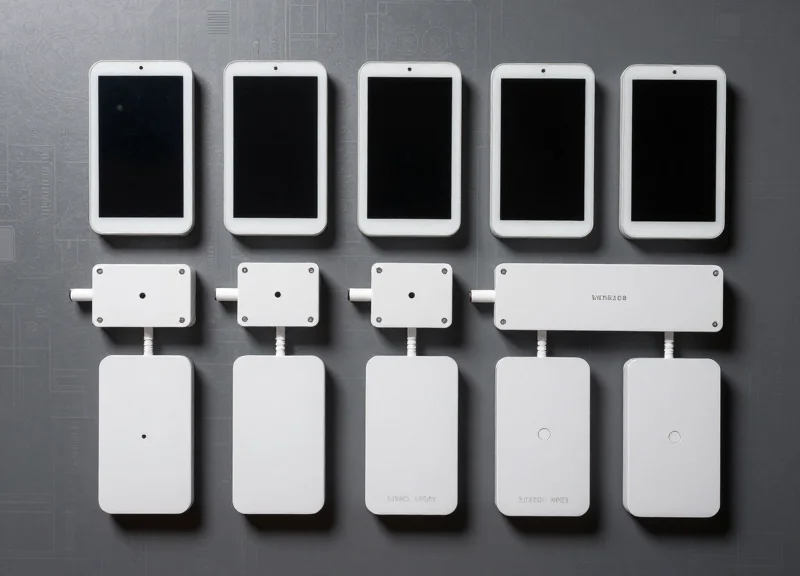
Synergy in the airport retail environment involves transforming the Electronic Shelf Label (ESL) from a static price display into an active node of a broader IoT ecosystem. By bridging ESL APIs with RFID (Radio Frequency Identification) for granular inventory tracking and EAS (Electronic Article Surveillance) for loss prevention, retailers can achieve a 'closed-loop' retail management system. This integration allows the digital price tag to serve as the visual interface for backend security and stock data, ensuring that what the customer sees on the shelf is a perfect reflection of what the RFID sensors detect in the stockroom and what the EAS gates protect at the exit.
| Component | Primary Function | ESL API Integration Role |
|---|---|---|
| RFID (Radio Frequency ID) | Item-level tracking and stock accuracy | Triggers automated ESL stock level updates and 'low stock' visual alerts. |
| EAS (Electronic Article Surveillance) | Theft prevention and security | Syncs with ESL to verify if an item's security tag has been deactivated upon sale. |
| ESL (Electronic Shelf Label) | Dynamic pricing and info display | Acts as the communication hub for staff notifications and customer data. |
Expert Tip: To maximize efficiency in high-traffic airport zones, implement 'Visual Queueing.' When an RFID sensor detects that a high-value item has been removed but not processed at a POS within a specific timeframe, the ESL's onboard LED can be programmed via API to flash a specific color. This provides a non-intrusive visual cue for floor staff to perform a 'service check' on the customer, effectively combining customer service with loss prevention.
- Data Aggregation via Middleware: The central retail API pulls real-time location data from RFID readers and security status from EAS controllers.
- Logic Processing and Thresholds: The system determines if the movement constitutes a sale, a restock event, or a potential security risk based on pre-defined business logic.
- ESL State Change Execution: The API sends a command to the ESL gateway to update the label display or activate a LED beacon to notify the nearest staff member.
Does RFID interference impact ESL wireless signals?
Modern ESL systems like those from DragonGuardGroup operate on sub-GHz or 2.4GHz frequencies with frequency-hopping technology. By coordinating the channel map of your RFID readers and ESL access points, you can eliminate signal collision even in dense airport RF environments.
How does this synergy improve the 'Click and Collect' experience?
By using RFID to pinpoint the exact location of an item and flashing the ESL's LED via API, staff can fulfill duty-free online orders 40 percent faster than using paper-based picking lists.
Can EAS systems trigger ESL price changes?
While not standard, advanced integrations allow EAS 'alarm events' to be logged. If an item is frequently targeted for theft, the API can trigger a 'high-value' notice on the ESL or suggest a promotion to move inventory more quickly.
{
  "action": "trigger_led_alert",
  "target_sku": "AP-RF-9982",
  "event_source": "RFID_SENSOR_04",
  "led_pattern": "FLASH_BLUE",
  "duration_seconds": 30,
  "priority": 1
}
Monitoring and Logging: Maintaining System Health at Scale
In the high-stakes environment of airport retail, monitoring and logging represent the telemetry backbone that ensures thousands of Electronic Shelf Labels (ESL) reflect accurate, multi-lingual promotional data. System health at scale is maintained by tracking API performance metrics in real-time and utilizing centralized logging to proactively identify synchronization failures, latency spikes, or localized network drops before they result in pricing discrepancies for international passengers.
| Key Performance Indicator (KPI) | Target Threshold | Business Impact |
|---|---|---|
| API Sync Success Rate | > 99.95% | Prevents legal and reputational risks from incorrect pricing. |
| Mean Time to Detect (MTTD) | < 5 Minutes | Ensures rapid response to localized gateway outages in terminals. |
| Data Freshness (TTL) | < 30 Seconds | Critical for flash promotions and duty-free currency fluctuations. |
| ACK Latency | < 200ms | Reduces congestion on airport-wide Wi-Fi/Zigbee subnets. |
To troubleshoot effectively, we recommend implementing a structured logging framework using the ELK Stack (Elasticsearch, Logstash, Kibana) or Prometheus/Grafana. Every API request should carry a unique correlation ID, allowing engineers to trace a promotion update from the central ERP through the API layer, down to the specific wireless access point (AP) and the individual ESL tag.
{
  "timestamp": "2023-10-27T14:22:01Z",
  "correlation_id": "esl-promo-778x-u2",
  "event": "API_UPDATE_PUSH",
  "status": "failure",
  "error_code": "GATEWAY_TIMEOUT",
  "terminal": "T3",
  "store_id": "DUTY_FREE_04",
  "label_count": 450,
  "retry_attempt": 2
}
Expert Insight: The 'Ghost Update' Detection. A unique challenge in airport infrastructure is the 'Ghost Update'—where the API reports a success (200 OK), but the physical label fails to update due to RF interference from airport radar or heavy passenger traffic. We implement a 'Visual Verification Loop' by cross-referencing the ESL's internal hardware return-state with the API's reported state. If a mismatch persists for more than two polling cycles, a 'Display Divergence' alert is triggered, prompting an immediate local gateway reboot.
How do we handle logging during peak airport traffic?
We utilize log sampling and aggregation at the edge. Instead of sending every 'Heartbeat' to the cloud, we aggregate status codes locally and only push detailed error traces to the central server to conserve terminal bandwidth.
What is the best way to monitor multi-lingual rendering failures?
Implement a specialized 'Character Rendering Watchdog' within your logging pipeline. This script scans outgoing API payloads for unsupported Unicode characters or 'Mojibake' (corrupted text) and flags them before they reach the display buffer.
Can we automate recovery for failed API pushes?
Yes, by integrating an automated 'Circuit Breaker' pattern. If the error rate for a specific terminal zone exceeds 5%, the system automatically halts updates to that zone and switches to an offline-cached pricing mode until connectivity stabilizes.
Future-Proofing Your Retail Infrastructure
Future-proofing airport retail infrastructure means moving beyond rigid, request-response API architectures toward an 'Elastic Retail' model that leverages AI-driven automation and low-latency connectivity. In the context of Electronic Shelf Labels (ESL), this involves building a stack capable of processing high-velocity traveler data—such as flight delays or currency fluctuations—and reflecting those changes across thousands of multilingual displays in sub-second intervals using 5G and Edge Computing.
As we look toward the next decade of airport commerce, the integration of Artificial Intelligence (AI) will shift ESL systems from reactive tools to proactive profit engines. AI-driven dynamic pricing models can now ingest external variables—ranging from real-time passenger flow metrics to weather-impacted inventory levels—to optimize margins on a per-gate basis. To support this, your API infrastructure must move from REST to event-driven architectures (like WebSockets or gRPC) to handle the stream of predictive updates without saturating the airport's internal network bandwidth.
| Feature | Legacy Infrastructure (4G/Wi-Fi 4) | Next-Gen Infrastructure (5G/Wi-Fi 6/Edge) |
|---|---|---|
| Latency | 50ms - 100ms (High jitter) | <10ms (Ultra-reliable low latency) |
| Device Density | ~2,000 devices per km2 | Up to 1,000,000 devices per km2 |
| Update Logic | Centralized Cloud (High Bandwidth) | Edge-Native (Localized processing) |
| Pricing Model | Static/Scheduled updates | Real-time AI-triggered dynamism |
Expert Tip: The most overlooked aspect of future-proofing is the 'Sustainability of Logic.' As you scale, do not bake your business logic into the API endpoint itself. Instead, utilize an abstraction layer or 'Middleware Gateway' that can swap out AI vendors or language translation engines without requiring a complete firmware overhaul of the ESL tags. This modularity ensures that when a superior LLM or pricing algorithm emerges, your airport infrastructure remains compatible.
How does 5G impact ESL deployment in airports?
5G enables 'Massive Machine Type Communications' (mMTC), allowing retailers to manage millions of ESL tags per airport terminal without interference from public Wi-Fi. It provides the backbone for instantaneous, airport-wide price synchronizations during peak travel hours.
Can AI-driven pricing work with multi-lingual requirements?
Absolutely. Modern AI engines can simultaneously adjust the price based on demand and update the localized text based on the predominant nationality of passengers currently at a specific gate or terminal area.
What is the role of Edge Computing in future ESL systems?
Edge computing moves the data processing closer to the retail shop. This ensures that even if the primary airport link to the cloud is interrupted, the ESL system can continue to operate and execute dynamic pricing locally.
{
  "future_stack": {
    "connectivity": "5G-SA (Standalone)",
    "protocol": "MQTT over TLS 1.3",
    "logic_engine": "Edge-AI-Sidecar",
    "resiliency": "N+1 Redundancy with Local Cache"
  }
}