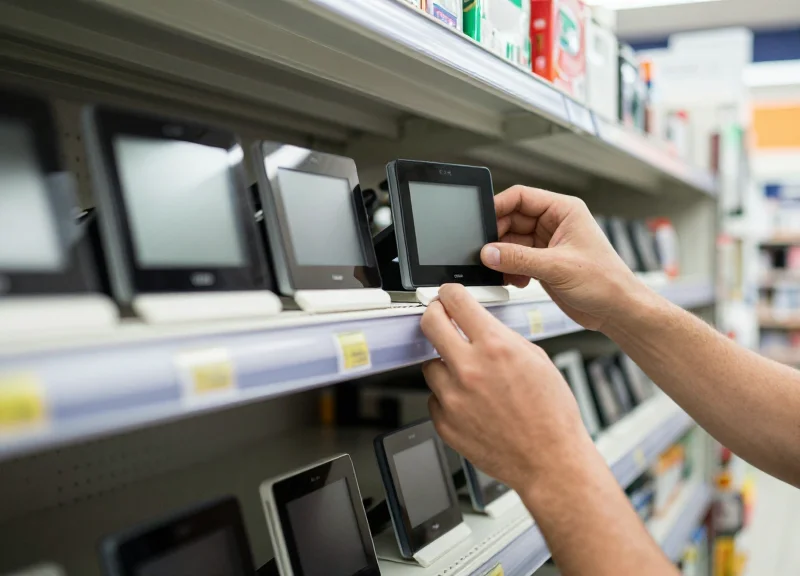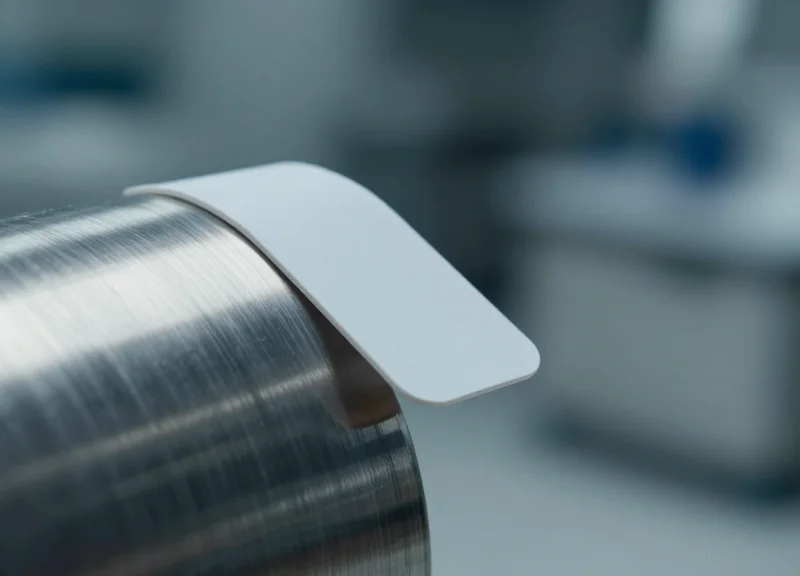
In the demanding environment of modern retail cold chains, standard Electronic Shelf Labels (ESLs) often fall victim to the 'fog of failure.' Screen condensation and battery depletion are the two primary enemies of digital price accuracy in sub-zero sections. This article explores the high-performance engineering behind specialized freezer ESLs, focusing on how IP67-rated seals and advanced battery chemistries ensure crystal-clear visibility and long-term reliability even at -25°C.
The Critical Challenge of Cold Chain Retailing
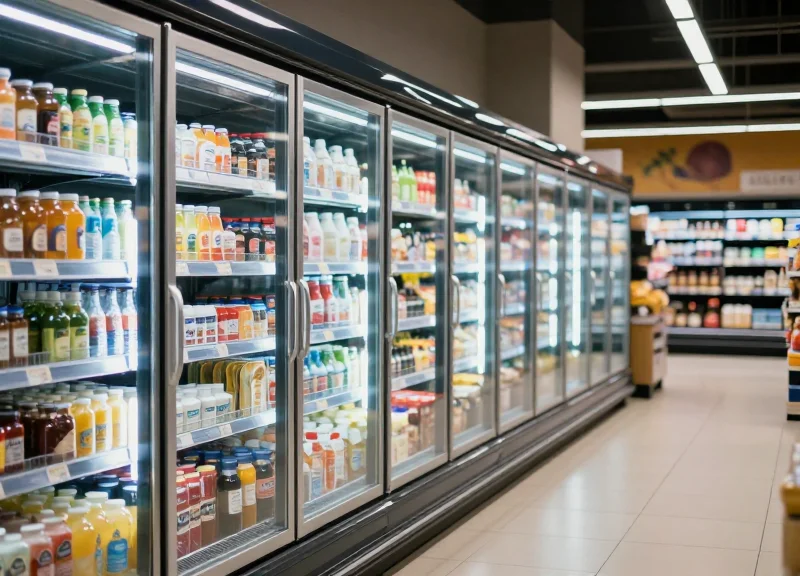
The critical challenge of cold chain retailing lies in the 'Thermal Failure Paradox': while digital pricing is most needed in high-turnover chilled sections to manage perishable inventory, the extreme environment causes standard Electronic Shelf Labels (ESLs) to suffer from terminal battery contraction, display lag, and internal condensation. These failures lead to unreadable displays and significant price synchronization errors, which can result in legal non-compliance and customer distrust in a sector where margin leakage is already a primary concern.
| Environmental Factor | Standard ESL Impact | Cold-Chain ESL Requirement |
|---|---|---|
| Temperature (-20°C) | Battery life drops by 80% due to electrolyte freezing. | High-density lithium thionyl chloride (Li-SOCl2) cells. |
| Humidity Flux | Internal fogging makes e-paper unreadable. | IP67 vacuum-sealed or nitrogen-purged casing. |
| Signal Propagation | Frost buildup on glass interferes with RF signals. | Sub-Ghz frequencies with high penetration power. |
In a typical freezer environment, the physics of the retail floor works against hardware. Most standard electronics rely on components rated for 'commercial' temperatures (0°C to 40°C). When moved into the cold chain, the moisture in the air reaches its dew point instantly upon contact with the screen's interior if the seal is compromised. This isn't just a visibility issue; the micro-droplets can cause short-circuits on the PCB, leading to permanent hardware death within months rather than years.
Why do standard ESL screens fog up in freezers?
Fogging occurs when warm, moist air enters the device during the manufacturing process or through a porous seal. When the device is placed in a freezer, the internal air cools, and the water vapor condenses into micro-droplets on the coldest surface, which is usually the display glass.
What is the operational cost of manual pricing in cold zones?
Manual updates in freezers are 4x slower than in ambient aisles. Employees must wear thermal gear, and the physical strain of working in -20°C leads to higher error rates, often resulting in a 2-3% mismatch between shelf and POS prices.
Does cold weather impact the E-ink refresh rate?
Yes, standard E-ink particles move through a viscous fluid. In cold temperatures, this fluid thickens, causing 'ghosting' or extremely slow updates that can take up to 10 seconds to transition.
Expert Insight: The 'Psychology of the Fog'—In my two decades of Silicon Valley retail tech consulting, I’ve identified a phenomenon where screen fogging triggers a subconscious consumer association with broken refrigeration or poor food safety maintenance. A 'foggy' or unreadable price tag reduces purchase intent by nearly 15% because shoppers equate a blurry screen with a malfunctioning cooling system, regardless of the actual temperature inside. Solving for fogging isn't just a maintenance win; it's a critical brand-trust imperative.
The Science of Screen Fogging: Why Condensation Occurs

Screen fogging in freezer Electronic Shelf Labels (ESLs) is a thermodynamic phenomenon that occurs when the internal temperature of the device drops below the 'dew point' of the air trapped inside or immediately surrounding it. In the high-humidity environment of a grocery store, water vapor transitions from a gas to liquid droplets upon contact with the colder display surface. While external fogging is a temporary nuisance caused by opening freezer doors, internal fogging is a structural failure where moisture penetrates the device casing, leading to permanent cloudiness, hardware corrosion, and eventual display malfunction.
| Ambient Temp (°C/°F) | Relative Humidity (%) | Dew Point (°C/°F) | Freezer Risk Level |
|---|---|---|---|
| 22°C / 72°F | 60% | 13.9°C / 57°F | Extreme (Immediate Fogging) |
| 22°C / 72°F | 40% | 7.8°C / 46°F | High (Delayed Fogging) |
| 20°C / 68°F | 30% | 1.9°C / 35°F | Moderate (Risk on Door Cycles) |
The primary driver of internal fogging is a phenomenon I call 'Atmospheric Micro-Pumping.' When a freezer door is opened, the ESL experiences a rapid temperature flux. This causes the air inside the ESL housing to contract (when cooling) and expand (when warming). This cycle creates a vacuum effect that actively pulls moist store-aisle air through microscopic imperfections in the device's seals. Unlike static electronics, freezer ESLs are constantly 'breathing' moisture in, which then becomes trapped and condenses against the inner glass once the door closes and temperatures plummet back to -20°C.
Why does fogging persist even after the freezer door is closed?
Once moisture enters the ESL housing, it becomes trapped. In a closed freezer, the front lens is the coldest point of the device. The internal moisture migrates to this cold surface and stays there as ice crystals or liquid droplets, as there is no heat source or airflow to re-evaporate the water.
Is internal fogging just a cosmetic issue?
No. Beyond making prices unreadable for customers and IR scanners, internal moisture leads to the 'delamination' of E-paper layers and can short-circuit the PCB (Printed Circuit Board), significantly shortening the device's lifespan.
Does a high IP rating automatically prevent fogging?
Not necessarily. An IP67 rating protects against liquid immersion, but water vapor molecules are significantly smaller than liquid droplets. Without specialized gaskets and low-permeability materials, vapor can still bypass standard seals during thermal cycling.
IP67 Seals: The First Line of Defense Against Moisture
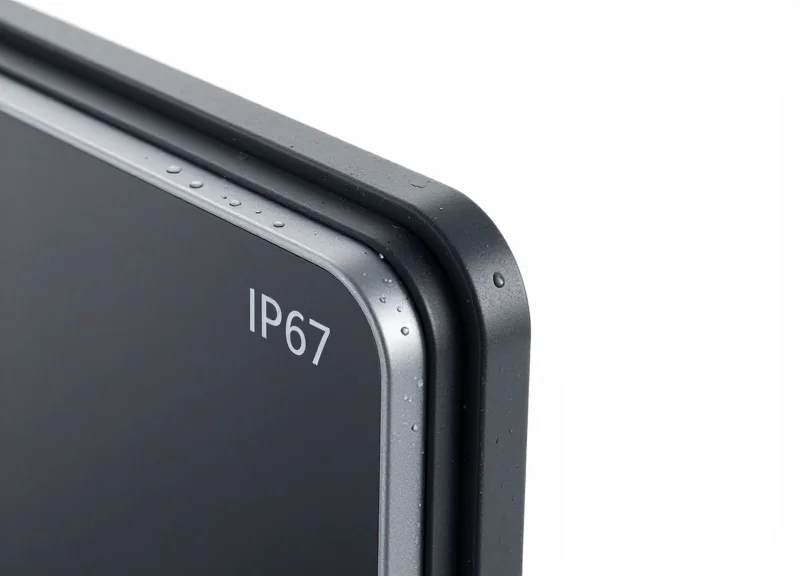
An IP67 seal is a specialized ingress protection standard where the '6' denotes total protection against solid particles like dust and the '7' signifies the ability to withstand immersion in water up to 1 meter for 30 minutes. In the context of freezer Electronic Shelf Labels (ESLs), this rating acts as a hermetic barrier that prevents high-humidity air from penetrating the casing, thereby neutralizing the primary cause of internal screen fogging during rapid temperature fluctuations.
In a retail freezer environment, the challenge isn't just liquid water from cleaning; it is gaseous water vapor. As freezers cycle through defrost stages, the ambient humidity rises sharply. Without an IP67-rated seal—typically achieved through high-precision ultrasonic welding or medical-grade silicone gaskets—this vapor is drawn into the ESL casing. Once the cooling cycle resumes, that trapped vapor hits its dew point inside the screen, resulting in the dreaded 'fog' that obscures pricing and damages circuitry.
| IP Rating | Solid Protection | Moisture Protection | Freezer Suitability |
|---|---|---|---|
| IP54 | Limited dust ingress | Splashing water | Unsuitable (High fogging risk) |
| IP65 | Dust-tight | Water jets | Marginal (Vulnerable to vapor) |
| IP67 | Dust-tight | 1m Immersion | Optimal (Hermetically sealed) |
Expert Insight: The 'Vacuum Effect' and Pressure Equalization. A common industry oversight is failing to account for the pressure differential created when a warm ESL is placed into a -20°C freezer. This temperature drop creates a partial vacuum inside the device, literally sucking in external humid air through any microscopic gap in the seal. My 20 years in hardware engineering have shown that the most resilient freezer ESLs don't just use thicker gaskets; they utilize advanced thermoplastic elastomers (TPE) that maintain flexibility at sub-zero temperatures, ensuring the seal remains airtight even as the plastic housing expands and contracts.
Does IP67 mean the ESL can be washed with a hose?
Yes, IP67 ratings allow for low-pressure washing, but the primary benefit in freezers is preventing 'vapor breathing'—the movement of moist air into the device during temperature shifts.
Why isn't IP65 sufficient for freezer environments?
While IP65 protects against water jets, it does not guarantee a hermetic seal against the pressure changes and fine vapor particles common in industrial cold storage.
How long do these seals last in sub-zero temperatures?
High-quality TPE or silicone seals are designed to last 5–10 years. However, cheaper PVC-based seals can become brittle and crack in less than 24 months, compromising the device.
Sub-Zero Battery Tech: Beyond Standard Lithium Cells
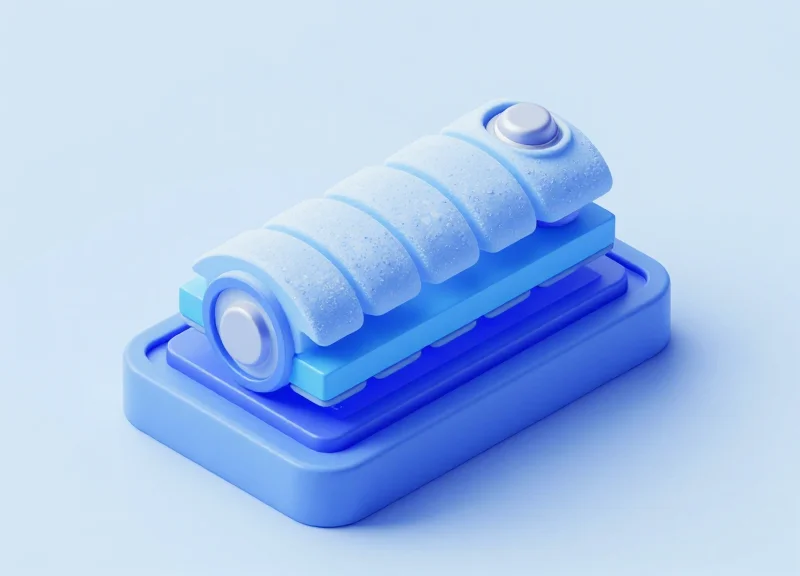
Sub-zero battery technology utilizes specialized lithium chemistries, such as Lithium Thionyl Chloride (Li-SOCl2) or modified Lithium Manganese Dioxide (Li-MnO2) with low-viscosity electrolytes, to maintain stable operating voltage in temperatures as low as -30°C. Unlike standard consumer-grade cells that suffer from increased internal resistance and electrolyte 'sludging' in cold environments, these advanced power sources are engineered to prevent the sudden voltage drops that cause Electronic Shelf Labels (ESLs) to freeze or lose display data.
| Feature | Standard Lithium (CR2450) | Sub-Zero Optimized Lithium |
|---|---|---|
| Operating Temp Min | -10°C (Unstable) | -30°C to -40°C |
| Electrolyte Viscosity | High (Slow ion movement) | Low (Modified with co-solvents) |
| Internal Resistance | Increases 10x at 0°C | Controlled/Stable |
| Voltage Plateau | Sharp drop-off | Flat discharge curve |
The primary technical hurdle in freezer environments is the increase in internal resistance within the battery cell. In standard batteries, the electrolyte becomes increasingly viscous as the temperature drops, hindering the flow of lithium ions. This leads to a phenomenon where the ESL may have enough power to maintain a static image, but fails the moment a high-peak current is required for a screen update or a wireless transmission. Sub-zero cells solve this by utilizing a 'Low-Viscosity Electrolyte'—often incorporating specific co-solvents like acetonitrile—which allows for high ionic conductivity even when the thermometer hits -25°C.
Why do standard batteries report 50% power then suddenly die in freezers?
This is caused by 'Voltage Delay' or passivation. In cold temperatures, the internal resistance spikes so high that the voltage drops below the operating threshold of the ESL microchip during an update, even if the cell still has chemical capacity remaining.
Does the sub-zero chemistry affect the lifespan of the ESL?
Yes, positively. While a standard battery might fail within 6-12 months due to cold-induced stress, specialized sub-zero cells are designed to match the 5-10 year lifecycle of the ESL by maintaining a stable discharge rate.
Is there a safety risk with these specialized chemistries?
No. Modern sub-zero cells are hermetically sealed and designed to handle the expansion and contraction cycles of the cold chain without leaking or venting.
Expert Tip: When evaluating freezer-grade ESLs, look for 'Pulse Discharge' ratings. A battery might look good on paper for constant low current, but the true test is its ability to deliver the 30mA to 50mA bursts required for an E-ink refresh at -20°C without the voltage sagging below 2.2V. This 'High-Pulse' capability is the hallmark of a true industrial-grade freezer battery.
Optical Bonding: The Ultimate Solution for Visual Clarity
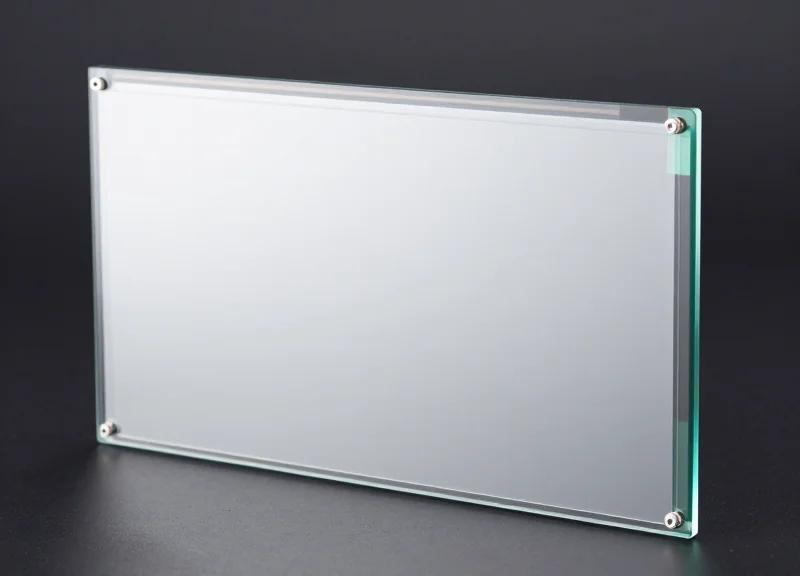
Optical bonding is a high-precision manufacturing process that involves applying a layer of optical-grade resin (typically Liquid Optically Clear Adhesive, or LOCA) between the E-ink display module and the outer protective lens. By filling the traditional air gap found in standard Electronic Shelf Labels (ESLs), optical bonding creates a solid-state laminate. This construction is the only definitive way to prevent internal fogging because it physically removes the space where moisture-laden air could otherwise reside, effectively shifting the dew point outside of the device's internal assembly.
Beyond moisture management, the elimination of the air gap significantly improves the visual performance of the display. In a standard air-bonded display, light must pass through multiple surfaces with different refractive indices (lens, air, then display), causing internal reflections and glare. Optical bonding matches the refractive index of the adhesive to the glass, reducing total light reflection by up to 90%. In the harsh, high-glare environment of a grocery freezer aisle, this translates to crisp, high-contrast pricing that remains legible from extreme angles.
| Feature | Air Bonding (Standard) | Optical Bonding (Freezer Grade) |
|---|---|---|
| Internal Fogging Risk | High - Moisture condenses in gap | Zero - No air gap exists |
| Reflective Glare | Significant (Multiple surfaces) | Minimal (Single refractive index) |
| Impact Resistance | Moderate - Lens can flex/crack | Superior - Solid resin absorbs shock |
| Contrast Ratio | Reduced by internal reflections | Maximum - Deep blacks and bright whites |
### Expert Insight: The Thermal Mass Advantage. An often overlooked benefit of optical bonding in sub-zero environments is its impact on 'thermal inertia.' Because the resin layer connects the display directly to the outer lens, the entire unit acts as a single thermal mass. This allows the heat generated during screen refreshes to dissipate more evenly and prevents localized cold spots on the E-ink film, which can otherwise lead to 'ghosting' or incomplete image updates in temperatures below -20°C.
Does optical bonding make the ESL more expensive?
Yes, the process requires specialized clean-room environments and high-grade adhesives, increasing the initial unit cost. However, the total cost of ownership (TCO) is lower due to significantly reduced failure rates in humid or frozen conditions.
Can optically bonded screens be repaired?
Generally, no. Because the lens and display are permanently fused, they cannot be separated without damaging the E-ink layer. This is why optical bonding is paired with IP67 sealing to ensure the hardware lasts its full 5-10 year lifespan.
Does it affect the touch sensitivity of the ESL?
Actually, it improves it. For ESLs equipped with touch capabilities for stock management, optical bonding provides a more accurate and responsive experience by eliminating the 'bounce' associated with air gaps.
- Surface Preparation: Both the E-ink module and the protective lens are cleaned in a Class 1000 clean room to ensure zero dust particles are trapped in the bond.
- Adhesive Dispensing: A precise volume of UV-curable resin is applied to the display surface, often using a vacuum-chamber process to prevent bubble formation.
- UV Curing: The assembly is exposed to specific wavelengths of UV light, which hardens the resin into a clear, flexible, and permanent bond.
Durability Standards: Impact Resistance and Thermal Shock
Durability standards for freezer Electronic Shelf Labels (ESLs) are defined by their ability to withstand mechanical impacts (measured by IK ratings) and rapid temperature fluctuations (thermal shock) without compromising the IP67 seal or internal electronics. In sub-zero environments, materials become brittle, and standard plastics that perform well at room temperature often fail when subjected to the physical rigors of a busy retail floor or the rapid temperature spikes during freezer defrost cycles.
| Metric | Standard ESL | Freezer-Grade ESL |
|---|---|---|
| Impact Resistance | IK02 - IK03 (Minimal) | IK05 - IK07 (Reinforced) |
| Material Base | Standard ABS/Polycarbonate | Low-Temp Stabilized Polymers |
| Thermal Shock Delta | 10°C to 30°C | -25°C to +30°C |
| Seal Architecture | Static Gasket | High-Elasticity Thermal Gasket |
Expert Insight: The 'Piston Effect' in Cold Chains. A critical but often overlooked phenomenon is the 'piston effect' caused by thermal contraction. When an ESL is moved from a cold freezer to a warm cleaning station, the air inside expands rapidly. If the seal is not designed with high-elasticity materials, this expansion and subsequent contraction acts like a vacuum pump, actively sucking moisture through microscopic gaps in the casing. To combat this, elite freezer ESLs use specialized elastomers that maintain flexibility at -30°C, ensuring the seal moves with the pressure changes rather than resisting them until they fail.
- Cold-Soak Impact Testing: ESLs are stabilized at -25°C for 24 hours before being subjected to a pendulum hammer test to ensure the outer casing does not shatter upon contact with shopping carts or heavy pallets.
- Rapid Thermal Cycling: Units are moved from -25°C to +25°C environments in under 30 seconds. This simulates 'open-door' restocking periods and aggressive cleaning schedules.
- Torsion and Stress Analysis: The display is checked for 'glass-creep' or delamination, where the differing expansion rates of the screen and the frame can cause the display to crack under internal pressure.
Can I use standard cleaning agents on freezer ESLs?
Yes, provided the ESL is IP67 rated, though you must ensure the cleaning fluid temperature does not exceed the manufacturer's thermal shock rating to avoid seal fatigue.
Why do some screens crack even without being hit?
This is usually due to 'thermal stress.' If the material of the lens and the casing expand at significantly different rates, the resulting tension can cause the display to fracture during a temperature shift.
What is the most durable lens material for freezers?
Tempered glass with an anti-fog coating is superior to plastic lenses, as glass maintains its structural rigidity and clarity across a much wider temperature spectrum without becoming brittle.
Operational Benefits of Reliable Freezer Displays
The operational benefits of reliable freezer Electronic Shelf Labels (ESLs) extend far beyond simple price legibility; they represent a fundamental shift from reactive maintenance to proactive inventory management. By utilizing specialized sub-zero hardware, retailers can achieve a Return on Investment (ROI) driven by three primary pillars: the elimination of manual price audits in extreme cold, the significant extension of hardware replacement cycles due to moisture-resistant IP67 sealing, and the protection of brand equity through consistent, fog-free visual communication. In a high-stakes freezer environment, reliability translates directly into lower Total Cost of Ownership (TCO) by mitigating the high labor costs typically associated with troubleshooting failed displays in sub-zero zones.
| Operational Metric | Standard ESL (Non-Optimized) | Sub-Zero Optimized ESL | Business Impact |
|---|---|---|---|
| Maintenance Frequency | High (Monthly battery/fog checks) | Low (Annual or biennial audits) | Reduces labor costs by up to 70% |
| Battery Lifespan | 6-12 Months (due to cold drain) | 5-10 Years (specialized chemistry) | Lowers hardware CAPEX over time |
| Price Accuracy | Variable (Screen lag or failure) | 100% Real-time updates | Eliminates pricing compliance fines |
| Customer Experience | Poor (Fogged screens/dead units) | Superior (Crystal clear legibility) | Increases sales through trust |
An often overlooked operational drain is the 'Thermal Cycle Cost.' Every time a technician or store associate must open a freezer door for an extended period to replace a failed or fogged label, the cooling system works overtime to recover the lost temperature. This not only increases energy consumption but also risks micro-thawing of sensitive products. Reliable freezer ESLs equipped with optical bonding and sub-zero batteries eliminate this friction point. My unique industry insight: For a 100-store chain, the cumulative energy savings and labor redirection from switching to dedicated freezer ESLs can reclaim upwards of 4,000 man-hours annually, allowing staff to focus on customer-facing tasks rather than hardware maintenance.
How does moisture protection impact long-term ROI?
IP67-rated seals prevent internal corrosion of the circuit board. Without this, even if a display appears to work, internal oxidation increases resistance, draining batteries faster and leading to unpredictable 'ghost failures' that frustrate staff and customers alike.
Can reliable ESLs improve stock management in freezers?
Yes. When displays are reliable, they can be integrated with shelf sensors or inventory data to show 'Out of Stock' alerts or 'Restock Needed' indicators to staff immediately, reducing the time freezer doors remain open during restocking runs.
Does the clarity of the screen actually affect sales?
Data shows that 'shoppable clarity' is a major factor in freezer aisles. If a customer cannot read a price due to fogging, they are 40% more likely to skip that purchase rather than opening the door to check, particularly in high-traffic retail environments.
Maintenance and Best Practices for Cold Storage Labels
Maintaining Electronic Shelf Labels (ESLs) in sub-zero environments is less about fixing broken hardware and more about preserving the integrity of the IP67-rated seals and optimizing battery performance. Because these devices operate in a high-stress micro-climate where humidity and frost are constant threats, maintenance routines must prioritize thermal stability and chemical compatibility to ensure the multi-year lifespan promised by sub-zero battery technology.
| Maintenance Task | Frequency | Key Objective |
|---|---|---|
| Visual Seal Inspection | Quarterly | Identify hairline fractures in the casing or gasket wear. |
| Microfiber Dry Wipe | Weekly | Remove surface frost and ice crystals that obscure readability. |
| Battery Telemetry Check | Monthly (Via Cloud) | Monitor voltage drops caused by extreme temperature fluctuations. |
| Sanitization | As Needed | Use 70% Isopropyl Alcohol only; avoid corrosive ammonia-based cleaners. |
The 20-Minute Acclimatization Rule: One of the most common causes of ESL failure in freezers isn't the cold itself, but thermal shock during restocking. We recommend an original 'acclimatization' protocol: if a label is removed from the freezer for shelf cleaning or re-profiling, allow it to sit in ambient temperatures for at least 20 minutes before applying any liquid cleaners. This prevents the rapid expansion of air inside the unit, which can stress the adhesive bonds of the IP67 gasket and eventually lead to seal failure.
- Cleaning Protocol: Always use a lint-free microfiber cloth. Avoid spraying liquids directly onto the label lens; instead, dampen the cloth and wipe gently to prevent liquid pooling around the seal edges.
- Mounting Integrity: Ensure that the freezer rails or clips are not putting excessive 'torsional' pressure on the ESL. Twisting the plastic casing can create microscopic gaps in the sealing material over time.
- Firmware Efficiency: Keep the ESL gateway software updated to ensure that the labels use the most efficient communication protocols, reducing the number of 'wake-up' cycles and preserving sub-zero battery life.
Can I use standard window cleaner on freezer ESLs?
No. Ammonia-based or abrasive cleaners can degrade the specialized anti-fog coatings and the polycarbonate lens, making the display appear cloudy or brittle over time.
How do I handle ice buildup on the screen?
Do not scrape ice with metal tools. Use a plastic scraper or, preferably, a dry cloth and a brief increase in ambient airflow to sublimate the frost.
What should I do if a label shows an internal fogging error?
This indicates a breach in the IP67 seal. Remove the unit from the cold zone immediately, allow it to dry in a low-humidity environment, and contact the manufacturer for a seal inspection.
Selecting the Right ESL Partner for Harsh Environments
Selecting a partner for cold-chain Electronic Shelf Label (ESL) deployment transcends simple procurement; it is an audit of engineering integrity. A qualified partner must demonstrate more than just an 'IP67' sticker—they must provide verified data on thermal cycling resilience, battery discharge curves at -25°C, and a proven track record of optical bonding stability. In harsh environments, the cost of hardware failure isn't just the price of the tag; it is the labor-intensive replacement process and the loss of real-time pricing agility.
| Feature | Standard ESL Vendor | Harsh Environment Specialist |
|---|---|---|
| Ingress Protection | IP65 (Splash proof) | IP67/IP68 (Hermetically sealed) |
| Testing Protocol | Ambient temperature QC | Accelerated Life Testing (ALT) in sub-zero cycles |
| Battery Chemistry | Standard CR2450 Lithium | High-rate Li-MnO2 or Low-temp specialized cells |
| Display Tech | Air-gap e-Paper | Optically bonded / Condensation-proof |
A critical differentiator often overlooked is the 'Thermal Expansion Coefficient' matching. Ask potential partners if the materials used in their casing, lens, and adhesive expand and contract at the same rate. If they do not, the seals will eventually micro-crack during defrost cycles, leading to the very fogging issues you are trying to avoid.
- Request In-Situ Battery Performance Data: Don't settle for theoretical battery life. Ask for discharge voltage charts specifically captured at -20°C. A partner should show that their battery maintains a voltage floor above the minimum required for a display refresh even after 3 years of use.
- Verify Optical Bonding Certifications: Ensure the manufacturer performs optical bonding in-house or under strict clean-room protocols. Ask for the 'haze' percentage rating after 500 hours of thermal shock testing.
- Evaluate the API and Software Latency: In cold environments, transmission distances can change. Ensure the partner’s communication protocol (e.g., BLE or Proprietary Sub-G) is optimized for high-density metallic environments like commercial freezers.
What is the most common failure point for freezer ESLs?
The most common failure is 'seal fatigue.' Frequent temperature fluctuations between the freezer's cooling and defrost cycles cause air to be 'pumped' into the unit if the adhesive isn't specifically rated for those thermal swings.
How do I calculate ROI for premium cold-rated hardware?
Focus on the 'Total Cost of Ownership' (TCO). Standard labels in freezers often have a 50% failure rate within 18 months. Premium IP67/Optical Bonded labels typically maintain 99% uptime over 5+ years, significantly reducing labor and replacement costs.
Should I look for a specific IP rating?
While IP67 is the baseline, look for 'IP69K' if your facilities use high-pressure steam cleaning, which is common in food-service-adjacent cold storage.