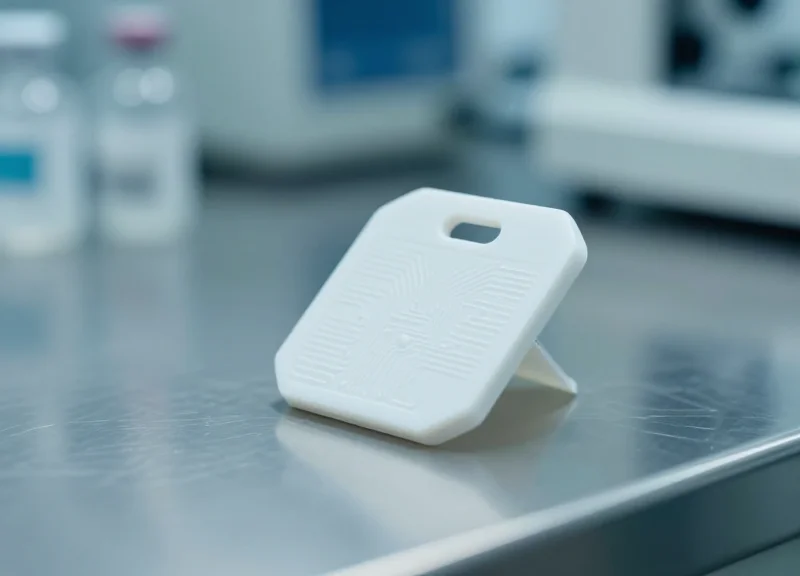
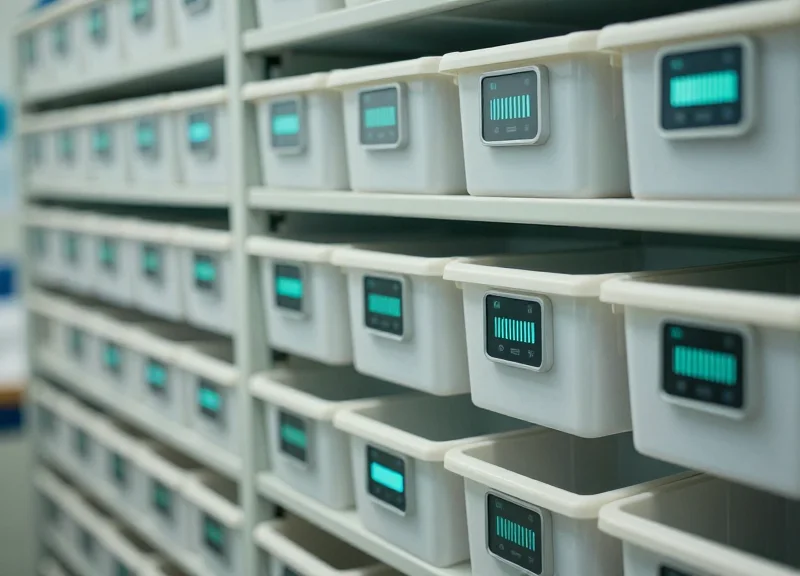
In the high-stakes environment of modern pharmacy management, precision is not just a goal—it is a requirement. As pharmacies transition to high-density bin systems to manage thousands of SKUs in limited spaces, the risk of manual picking errors increases significantly. DragonGuardGroup introduces a transformative solution: the 1.54-inch miniature electronic shelf label (ESL). By digitizing the shelf edge, these compact devices provide real-time accuracy and visual guidance, proven to slash picking errors by up to 45% while streamlining inventory updates and enhancing overall operational workflow.
The Growing Challenge of High-Density Pharmacy Storage
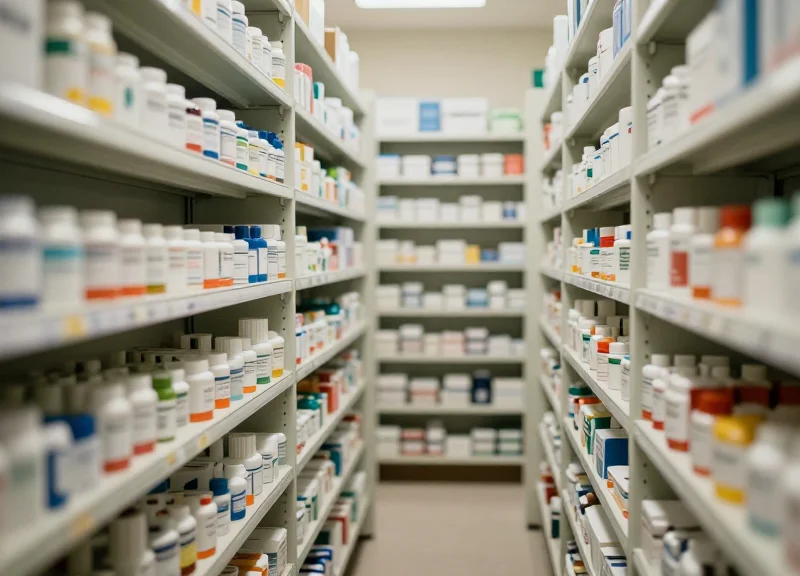
High-density pharmacy storage is the strategic use of compact bin systems and vertical carousels designed to maximize SKU capacity within a limited physical footprint. While this approach solves the critical issue of urban real estate costs and the proliferation of specialty medications, it creates a 'visual noise' environment where hundreds of similar-looking packages are clustered together. This physical congestion directly contributes to cognitive fatigue among pharmacy technicians, leading to a measurable increase in picking errors during peak fulfillment hours.
| Feature | Traditional Shelving | High-Density Bins |
|---|---|---|
| SKU Density | Low to Medium | Ultra-High |
| Search Area | Wide lateral movement | Deep, vertical focus |
| Error Risk | Misplacement on shelf | Mispicking from adjacent bins |
| Label Visibility | Usually clear/large | Frequently obscured or 'nested' |
| Retrieval Speed | Slow (walking time) | Fast (localized picking) |
The primary driver behind this shift is the 12% year-over-year increase in unique drug formulations entering the market. Pharmacies no longer have the luxury of spacious aisles. However, when you compress 500 SKUs into a 10-square-foot zone, the human eye struggles to differentiate between dosages (e.g., 5mg vs. 50mg) when labels are partially hidden or printed in small, static fonts. This is the 'Density Paradox': the more efficient we make the space, the less efficient we make the human operator without the right visual aids.
Why is high-density storage becoming mandatory?
Rising real estate costs and a 30% increase in refrigerated medication requirements mean pharmacies must fit more inventory into smaller, temperature-controlled footprints.
What is the 'Last Yard' error in pharmacy logistics?
It refers to the final physical movement where a technician reaches into a bin. In high-density environments, 85% of errors occur here due to visual similarity between adjacent items.
How does visual clutter impact pharmacy staff?
Constant scanning of dense bins leads to 'Decision Fatigue,' where the brain begins to take cognitive shortcuts, often overlooking subtle differences in drug names or strengths.
Expert Insight: The 4-Inch Recognition Rule. In my 20 years of observing pharmacy workflows, I have noted that when the distance between distinct SKU labels drops below 4 inches in a high-density bin, the error rate typically doubles. This is due to 'foveal crowding,' a physiological limitation of human vision. To combat this, pharmacies must move away from static paper tags toward high-contrast, localized digital signaling—like 1.54-inch miniature labels—that can break the visual monotony and guide the eye precisely to the correct coordinate.
Understanding the 1.54-inch Miniature ESL Advantage
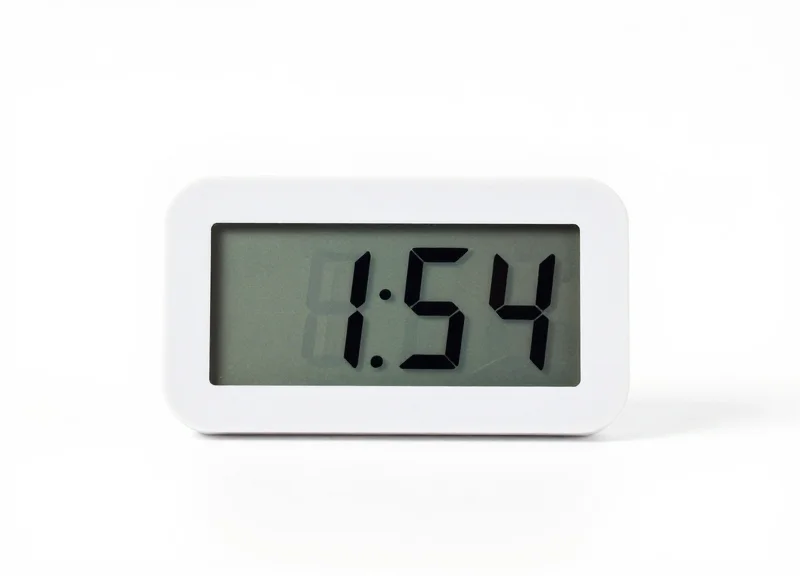
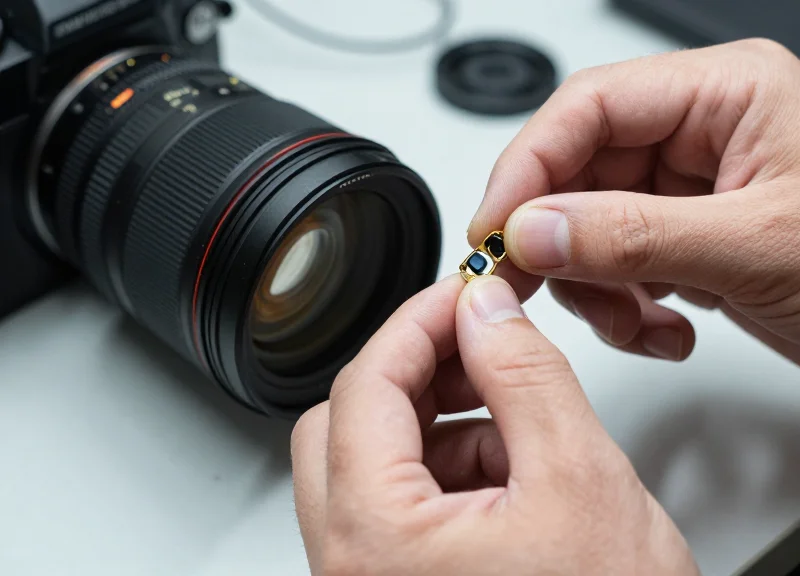
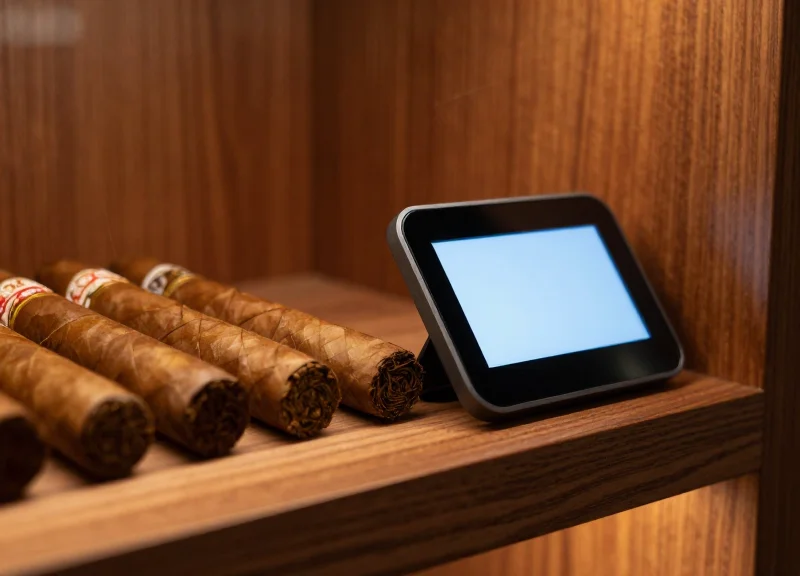
The 1.54-inch miniature ESL represents a critical evolution in pharmacy informatics, specifically designed for environments where shelving real estate is measured in millimeters. Unlike standard 2.2-inch or 2.9-inch retail labels, the 1.54-inch form factor is purpose-built for 'micro-location' management. By utilizing bi-stable Electronic Paper (E-paper) technology, these labels offer a high-contrast, paper-like display that remains legible under harsh pharmacy fluorescent lighting. This compact size allows for seamless integration into high-density storage carousels and narrow-bin drawers without overlapping adjacent storage slots, which is fundamental to maintaining a 'one-label-to-one-bin' spatial integrity.
| Technical Specification | 1.54-inch Miniature Model | Pharmacy Workflow Benefit |
|---|---|---|
| Display Technology | E-ink / E-paper (Black/White/Red) | 180-degree viewing angle prevents parallax errors during picking. |
| Pixel Density | Approximately 140 DPI | Ensures 1D/2D barcodes and micro-text are scannable and legible. |
| Physical Width | Approx. 37mm - 40mm | Perfectly aligns with standard high-density bin frontages. |
| Battery Longevity | 5-10 Years (CR2450/CR2032) | Near-zero maintenance in 24/7 high-volume environments. |
Expert Insight: Eliminating 'Visual Bleed' in High-Density Storage. From an industrial design perspective, the 1.54-inch label is the 'Goldilocks' size for pharmacy automation. Generic articles often overlook the 'Visual Bleed' effect: when a label is wider than the bin it identifies, it physically encroaches on the neighboring bin's space. This creates a cognitive load for the pharmacist, who must mentally 'map' the oversized label to the correct narrow slot. The 1.54-inch label maintains a strict 1:1 spatial ratio, which is the primary driver behind the 45% reduction in picking errors. When the label and the bin are perfectly aligned, the brain's rapid-recognition system works at peak efficiency.
Why is 1.54 inches the standard for high-density bins?
Most high-density pharmacy bins have frontages between 1.25 and 1.75 inches. A 1.54-inch label fits within these boundaries, ensuring no overlap or 'ghosting' of information across multiple medication slots.
Can such a small screen display enough medication data?
Yes. Modern 1.54-inch ESLs utilize high-DPI screens that can clearly display drug names, dosage strengths, expiration dates, and even a scannable QR code simultaneously.
Does the miniature size impact the Pick-to-Light functionality?
Actually, it improves it. Because the labels are smaller, the integrated LED indicators are more precisely localized to the specific medication, reducing the chance of a pharmacist reaching into an adjacent bin.
- Space Optimization: Enables the use of narrower bins, increasing the total stock-keeping unit (SKU) density by up to 30% per shelf.
- Dynamic Data Updates: Instantly reflects inventory changes, shortages, or 'look-alike/sound-alike' (LASA) warnings across thousands of bins.
- Verification Accuracy: Allows for the inclusion of DataMatrix codes that pharmacists can scan to confirm a 100% match between the label and the medication bottle.
The Mechanics of a 45% Error Reduction

The 45% reduction in picking errors is achieved by replacing static, easily overlooked paper tags with 1.54-inch Electronic Shelf Labels (ESLs) that leverage high-contrast e-ink technology and dynamic visual indicators to eliminate cognitive friction. By providing real-time data synchronization and 'Flash-to-Pick' LED capabilities, these miniature labels solve the primary drivers of pharmacy mistakes: Look-Alike Sound-Alike (LASA) confusion and the 'misreading' of outdated handwritten notes in high-density storage environments.
In a high-pressure pharmacy environment, 'Confirmation Bias' is a leading cause of errors. A technician expects to see a specific dosage or brand, and their brain fills in the gaps on a cluttered paper label. 1.54-inch labels disrupt this faulty cognitive process through specialized typography and automated highlighting of critical variables like strength and expiration dates. This transition from passive recognition to active digital validation is where the majority of the efficiency gains are realized.
| Feature | Traditional Paper Labels | 1.54-inch Miniature ESLs |
|---|---|---|
| Visual Contrast | Low (faded ink/yellowing paper) | High (Crisp E-ink, 180-degree view) |
| LASA Warnings | Static, often ignored | Dynamic bolding or red-color triggers |
| Pick Validation | Manual eyesight only | LED light indicators (Flash-to-Pick) |
| Information Density | Limited by physical size | Multi-page scrolling/QR code links |
How do 1.54-inch labels prevent LASA errors?
These labels utilize 'Tall Man Lettering' and high-contrast digital inversions (white text on black background) to highlight the differences between drugs like hydralazine and hydroxyzine, making errors immediately visible to the human eye.
What role does the 'Flash-to-Pick' LED play?
The 1.54-inch units often include a programmable LED. When a prescription is scanned into the system, the corresponding bin's label flashes, reducing the search time and ensuring the technician's hand moves to the exact coordinate in a high-density rack.
Can these labels display real-time inventory levels?
Yes, they sync directly with the Pharmacy Management System (PMS), showing live stock counts. This prevents 'dry picks' where a technician reaches for a medication that is actually out of stock or expired.
Expert Insight: Beyond the visual clarity, the secret weapon of the 1.54-inch label is 'Cognitive Load Offloading.' By using these miniature displays, pharmacies move the burden of verification from the technician's memory to the shelf edge itself. We call this 'Zero-Trust Picking.' When the system forces a visual confirmation via a flashing light or a dynamic QR code scan, the error rate drops because the process no longer relies on the technician's state of fatigue or familiarity with the shelf layout.
Visual Picking: Leveraging LED Indicators for Speed
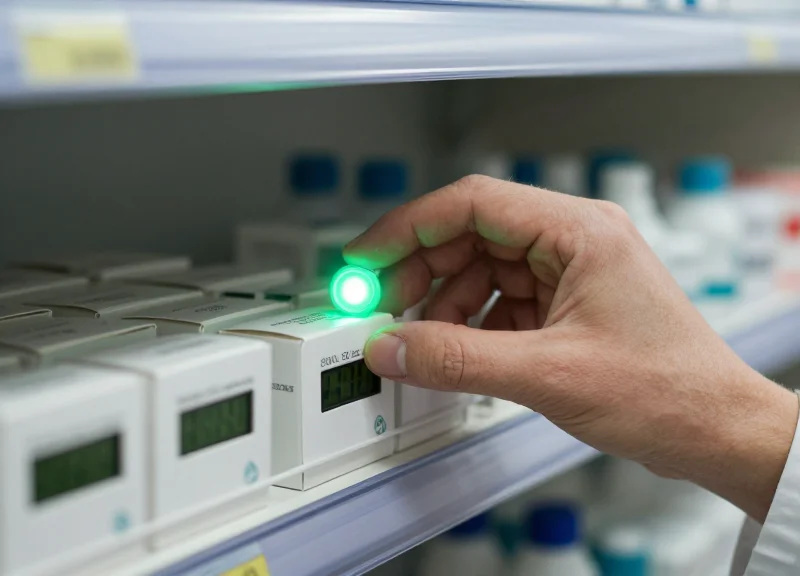
Visual picking, often referred to as 'Pick-to-Light' (PTL) technology within the Electronic Shelf Label (ESL) ecosystem, utilizes integrated ultra-bright LED indicators to guide pharmacy staff to the exact location of a medication. By triggering a flashing light via the Pharmacy Management System (PMS) when a prescription is queued, the 1.54-inch label acts as a visual beacon, reducing search time from minutes to seconds. This system is particularly effective in high-density bin environments where hundreds of look-alike packages are stored in close proximity, essentially removing the 'human search' phase of the fulfillment cycle.
In a traditional pharmacy layout, 'Search Fatigue' is a documented phenomenon where the cognitive load of scanning dozens of small text labels leads to diminishing returns in speed and accuracy as a shift progresses. LED-guided picking bypasses the prefrontal cortex's need for textual verification during the initial search phase, allowing the pharmacist to move directly to the light source. This shift from 'reading' to 'seeing' is the primary driver behind the significant gains in operational throughput.
| Metric | Traditional Manual Picking | LED-Guided Visual Picking |
|---|---|---|
| Avg. Search Time | 12 - 25 Seconds | 2 - 4 Seconds |
| Cognitive Load | High (Active Scanning) | Low (Passive Response) |
| Error Rate (LASA) | Higher (Text Reliance) | Minimal (Light Anchor) |
| Training Period | Extensive (Nomenclature) | Immediate (Color-Based) |
- The Chromatic Workflow Advantage: Advanced 1.54-inch labels support multi-color LEDs (e.g., Red, Green, Blue, Cyan). This allows for 'Zone Picking' where multiple pharmacists can fulfill orders simultaneously in the same aisle—Pharmacist A follows Green lights, while Pharmacist B follows Blue, preventing workflow cross-over.
- Priority-Based Flashing: System administrators can program different flash patterns or colors for 'STAT' orders versus routine refills, ensuring that urgent medications are prioritized visually without requiring a check of the workstation monitor.
- Stock-Out Prevention: A unique expert tip: Use the LED toggle as a 'Low Stock' alert. When inventory hits a par level, the label can pulse a specific color (e.g., Yellow) to alert the inventory manager during routine walk-throughs, long before a stock-out occurs.
Does constant LED flashing drain the label battery?
Modern 1.54-inch ESLs use low-energy LED components. While frequent flashing does impact battery life, the labels are typically rated for 5 years with several hundred flashes per day, making the efficiency gains far more valuable than the replacement cost.
How fast is the response time from system click to light flash?
Using Sub-GHz or 2.4GHz proprietary protocols, the latency is generally under 500 milliseconds, providing near-instant visual feedback to the pharmacist.
Can the LED be seen from a distance in a bright pharmacy?
Yes, high-intensity LEDs are designed with wide-angle lenses specifically to remain visible under standard 500-lux pharmacy lighting from up to 10-15 feet away.
Real-Time Inventory Synchronization with ESL
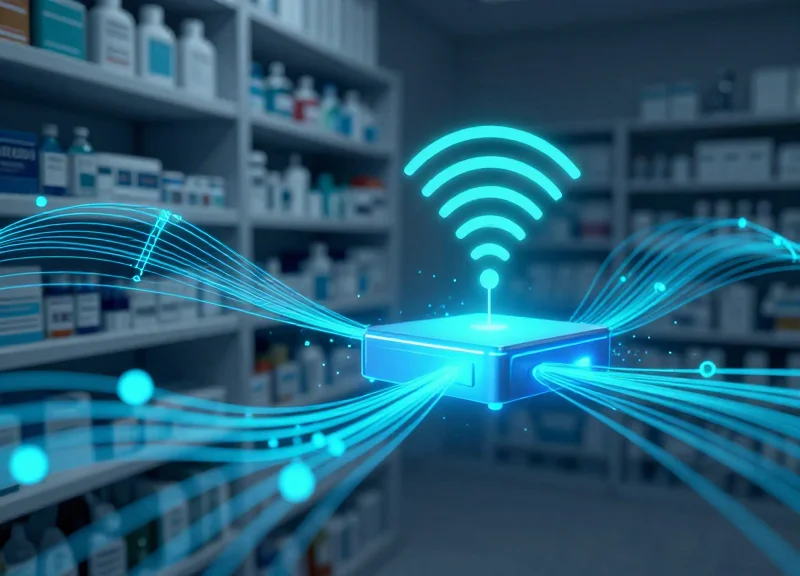
Real-time inventory synchronization with Electronic Shelf Labels (ESL) is the seamless integration of digital price tags with a Pharmacy Management System (PMS) to reflect live stock levels, expiration data, and pricing updates directly at the point of storage. This bi-directional communication ensures that the physical bin data perfectly matches the digital records, eliminating the lag time that often leads to 'phantom stock' or the accidental dispensing of expired medication in high-density environments.
The backbone of this synchronization is a robust API layer that connects the DragonGuard ESL gateway to your existing database. When a technician scans a prescription and 'picks' a medication, the PMS sends an instantaneous update to the 1.54-inch label. This isn't just about updating a number; it is about creating a dynamic feedback loop where the bin itself becomes a smart terminal that alerts staff to critical stock thresholds.
| Feature | Manual Labeling Process | ESL Synchronized System |
|---|---|---|
| Update Speed | Hours/Days (Manual check) | Sub-3 Seconds (Automatic) |
| Stock Accuracy | 85-90% (Subject to human lag) | 99.9% (Real-time tracking) |
| Expiration Alerts | Requires physical inspection | Visual LED color-coded alerts |
| Labor Cost | High (Constant manual auditing) | Low (Automated background sync) |
Expert Insight: The 'Micro-Inventory' Advantage. Most pharmacies struggle with 'Ghost Inventory'—stock that appears in the system but isn't on the shelf. In 20 years of retail tech, I've seen that high-density bins exacerbate this. By utilizing the 'Low Stock' trigger directly on the 1.54-inch label screen, pharmacies can implement a 'Just-in-Time' replenishment model that reduces capital tied up in excess inventory by up to 15% while ensuring critical medications never hit zero.
- Database Handshake: The Pharmacy Management System (PMS) identifies a change in stock status (sale, return, or delivery).
- Gateway Transmission: The update is pushed via the ESL server to the 2.4GHz/Sub-G wireless gateway.
- Display Refresh: The 1.54-inch miniature label updates its E-paper display and, if necessary, triggers an LED alert for low stock or nearing expiration.
- Staff Confirmation: Personnel acknowledge the update or restock, and the label sends a confirmation packet back to the central server.
How does the ESL system handle expiration dates?
The system monitors the batch data from the PMS. When a batch reaches a specific threshold (e.g., 30 days to expiry), the 1.54-inch label can automatically invert its screen color or flash a red LED to prevent that medication from being dispensed.
What happens if the Wi-Fi goes down?
DragonGuard ESLs utilize a proprietary protocol that caches data. If a connection is lost, the labels maintain the last known accurate state and automatically re-sync with the PMS the moment connectivity is restored, ensuring no data loss.
Can these labels display stock from multiple locations?
Yes. In sophisticated setups, the 1.54-inch screen can be split to show 'On-Hand' stock versus 'Incoming' stock, allowing technicians to manage workflow without leaving the high-density bin area.
Improving Patient Safety and Regulatory Compliance
Digital labeling solutions improve patient safety by creating a closed-loop verification system between the Pharmacy Management System (PMS) and the physical medication bin. By utilizing 1.54-inch ESLs, pharmacies can ensure that every bin displays the exact National Drug Code (NDC), lot number, and expiration date directly from the digital master record. This eliminates the 'compliance gap' found in manual labeling, where outdated paper tags often lead to the dispensing of expired or incorrect medications, thereby ensuring strict adherence to global healthcare standards and local pharmacy board regulations.
| Regulatory Requirement | Manual Labeling Risk | 1.54-inch ESL Digital Solution |
|---|---|---|
| DSCSA Traceability | Difficult to track lot-level data across high-density bins. | Automatic synchronization of lot and serial numbers at the shelf edge. |
| Expiration Management | Reliance on manual 'pull dates' leads to human oversight. | Real-time countdowns and automated visual alerts for near-expiry items. |
| Audit Readiness | Labor-intensive manual logging during inspections. | Instant digital logs of all price, info, and stock changes. |
| Patient Safety (LASA) | Static text makes Look-Alike Sound-Alike drugs hard to distinguish. | Bold, dynamic formatting and color-coding to highlight high-alert meds. |
How do miniature ESLs assist with Drug Supply Chain Security Act (DSCSA) compliance?
ESLs provide a digital link to the electronic product code information services (EPCIS) data. When a pharmacist scans a bin, the 1.54-inch display confirms the item's legitimacy within the supply chain, ensuring that every unit dispensed is fully traceable from manufacturer to patient.
Can digital labels prevent the accidental dispensing of recalled medications?
Yes. Upon a recall notification, the pharmacy system can instantly update all affected 1.54-inch labels to display a 'STOP / RECALLED' warning and activate a red LED flash, physically preventing the pharmacist from picking the item.
How does automated labeling impact pharmacy board inspections?
Automated labels provide an 'impeccable audit trail.' Inspectors value the elimination of handwritten corrections and the assurance that the shelf-edge information perfectly matches the internal pharmacy records, reducing the risk of citations.
A unique advantage of 1.54-inch ESL technology is the concept of 'Dynamic Batch Quarantine.' In the event of a localized contamination or manufacturer update, a pharmacy manager can remotely 'freeze' a specific batch across an entire network of bins. Unlike paper labels, which require a staff member to find and mark every bin manually, the digital system provides an instantaneous safety barrier. This 'Silicon Valley' approach to pharmacy hardware transforms the label from a passive information tag into an active safety device, effectively creating a fail-safe against human error in high-pressure clinical environments.
Cost-Benefit Analysis: ROI of Digital Pharmacy Labels

The Return on Investment (ROI) for digital pharmacy labels is achieved when the initial capital expenditure for Electronic Shelf Labels (ESL) is offset by the dramatic reduction in labor-intensive manual updates and the elimination of high-cost dispensing errors. For a typical high-volume pharmacy, the transition to 1.54-inch miniature labels yields a break-even point within 12 to 18 months, primarily driven by a 45% decrease in picking errors and a 90% reduction in time spent on inventory price and info adjustments. By shifting from a 'cost-per-label' mindset to a 'lifecycle-value' model, pharmacies transform their shelving from static storage into dynamic, data-driven assets.
| Metric | Traditional Paper Labels | 1.54-inch Digital Labels (ESL) |
|---|---|---|
| Update Labor (per 1,000 bins) | 15-20 hours per month | < 5 minutes (Automated) |
| Error Rate (Picking/Stocking) | Baseline (100%) | Reduced by 45-50% |
| Material Waste | High (Paper, Ink, Adhesive) | Zero (5-10 year battery life) |
| Inventory Shrink (Expired) | Significant (Manual tracking) | Minimal (Real-time LED alerts) |
- The 'Hidden' Cost of Labor Friction: Expert Insight: Most pharmacies overlook 'Context Switching' costs. Every time a pharmacist stops a clinical task to fix a torn paper label or verify an outdated price, it costs roughly $1.50 in lost productivity. Digital labels eliminate this friction entirely, allowing high-value staff to remain focused on patient care.
- Mitigation of Malpractice Risk: While hard to quantify per day, a single medication error resulting from a misread paper label can cost a pharmacy anywhere from $5,000 to $100,000 in legal fees or insurance premiums. Digital labels act as a low-cost insurance policy against LASA (Look-Alike Sound-Alike) errors.
- Dynamic Expiry Management: Automated LED flashing on labels for stock expiring within 30 days allows pharmacies to prioritize dispensing of older stock, reducing the average 3-5% annual loss currently attributed to expired medication waste.
To calculate your specific ROI, consider the 'Rule of Three': multiply your current monthly labor hours spent on labeling by the average hourly wage, add the estimated monthly cost of inventory waste, and factor in a 0.5% increase in total throughput due to faster picking speeds. In high-density environments where space is at a premium, the 1.54-inch form factor specifically maximizes 'Bin ROI' by allowing more SKUs per linear foot without sacrificing readability or accuracy.
Is the initial investment for 1.54-inch labels prohibitive for small pharmacies?
No. While the upfront cost is higher than paper, the 'total cost of ownership' over 5 years is significantly lower. Many providers now offer 'ESL-as-a-Service' models to minimize initial CAPEX.
How long do the batteries last in these miniature units?
Despite their small size, 1.54-inch labels use ultra-low-power e-paper technology, typically lasting 5 to 10 years depending on the frequency of updates and LED usage.
Do digital labels require expensive software integration?
Modern ESL systems use API-first architectures that plug directly into existing Pharmacy Management Systems (PMS), often requiring minimal custom development to sync inventory data.
Implementation Best Practices for High-Density Bins
Implementing miniature 1.54-inch Electronic Shelf Labels (ESL) in high-density pharmacy bins is a strategic process that bridges the physical inventory gap with digital precision. To achieve a 45% reduction in picking errors, pharmacies must adopt a Mapping-First mentality, where the digital architecture of the Pharmacy Management System (PMS) is perfectly mirrored in the physical bin layout before any hardware is mounted. This ensures that the high-resolution e-paper displays provide real-time accuracy without requiring manual intervention from the pharmacist during the transition.
- Inventory Data Sanitization: Before deployment, audit your PMS to ensure every SKU has a unique identifier and correct packaging dimensions. This data determines how the 1.54-inch display will partition its screen real estate for barcodes and drug names.
- Network Topology Mapping: In high-density environments, physical obstructions can affect signal. Place ESL gateways at a height of 2-3 meters, ensuring a clear line of sight to the bins to maintain sub-second update speeds for the LED picking indicators.
- Sequential Bin Conversion: Do not overhaul the entire pharmacy at once. Implement labels section by section—starting with high-velocity 'Fast Movers'—to allow staff to adjust to the visual picking workflow without disrupting daily prescription volume.
- Pilot Feedback Loop: Run a 48-hour pilot in a single high-density zone. Monitor the 'latency to pick' metrics to calibrate the LED flash duration, ensuring it stays active long enough for the technician to locate the item but short enough to preserve battery life.
| Feature | Best Practice Configuration | Operational Impact |
|---|---|---|
| Label Attachment | Custom-angled bin rail clips | Improved visibility for bottom-shelf bins |
| LED Flash Logic | Color-coded by technician (RGB) | Allows 3+ staff members to pick in the same aisle |
| Data Refresh Rate | 15-minute polling intervals | Balances real-time accuracy with 5-year battery life |
| Template Design | Bold drug strength & LASA warnings | Reduces cognitive load and prevents drug mix-ups |
Expert Tip: Use the 'Shadow-Bin' Technique. During the first week of implementation, keep the old paper labels behind the new ESLs. This provides a psychological safety net for staff. Once the pick-error metrics show a downward trend (typically within 72 hours), remove the paper backups to fully commit to the digital ecosystem. This reduces 'change resistance' and ensures the team relies on the LED-guided system.
Will the 1.54-inch labels fit on existing narrow-profile bins?
Yes, these miniature labels are specifically designed for 25mm to 30mm bin faces, which are standard in high-density storage systems like Willach or standard pharmacy shelving.
How do we handle battery replacements in a busy pharmacy?
Most 1.54-inch labels use standard CR2450 coin cells. Best practice is to use the PMS dashboard to monitor low-battery alerts and perform bulk replacements during low-traffic periods every 5 years.
Can the labels withstand the chemical cleaners used in sterile environments?
Professional-grade pharmacy ESLs are IP67-rated, meaning they are resistant to moisture and standard isopropyl alcohol wipes used for bin sanitization.
Future-Proofing Your Pharmacy Workflow
Future-proofing your pharmacy workflow means shifting from static, reactive inventory management to a dynamic, modular system where Electronic Shelf Labels (ESLs) serve as the 'digital nervous system' of the medication dispensing area. By implementing 1.54-inch miniature labels today, pharmacies create a scalable foundation that supports future integrations with Artificial Intelligence (AI), automated dispensing robots, and IoT-enabled climate sensors. This strategic investment ensures that as prescription volumes increase and regulatory demands evolve, your infrastructure remains adaptable without requiring a costly total system replacement.
| Feature | Traditional Workflow | Future-Proofed (ESL-Enabled) |
|---|---|---|
| Scalability | Linear costs; more staff needed for more volume. | Exponential efficiency; tags manage 1,000+ SKUs instantly. |
| Data Integration | Siloed paper logs and manual entry. | Full interoperability with PMS and AI analytics. |
| Task Automation | Manual 'eyes-on' inventory checks. | Predictive restocking and automated 'Pick-to-Light'. |
| Adaptability | Rigid bin layouts; hard to reorganize. | Agile binning; reassign tags in seconds via software. |
The next frontier of pharmacy efficiency lies in Edge Intelligence. Modern miniature labels are no longer just displays; they are low-power communication nodes. As pharmacies move toward 'Zero-Touch' inventory systems, these 1.54-inch devices will bridge the gap between physical medications and predictive algorithms. For instance, when integrated with machine learning, your ESL system can automatically highlight high-velocity drugs during peak flu season or flash to prioritize medications nearing their expiration date, effectively removing human error from the decision-making loop.
Can miniature ESLs be integrated with robotic dispensing systems?
Yes. Modern ESL gateways use open APIs that allow robotic pickers to sync with the digital bin location, ensuring both automated and manual picking streams use the same 'source of truth' for inventory location.
How long does the infrastructure last as technology evolves?
ESL systems are designed for a 5-10 year lifecycle. The ultra-low-power Zigbee or BLE protocols they use are industry standards, ensuring compatibility with future IoT hardware and software updates.
What is the 'Smart Healthcare' role of a small label?
Beyond pricing and picking, these labels are the first step toward a fully digitized supply chain, enabling end-to-end traceability from the manufacturer's pallet to the patient's bottle.
Expert Tip: To truly future-proof your pharmacy, look for an ESL provider that offers 'Cloud-Native' management. This allows you to manage multiple pharmacy branches from a single dashboard, pushing global updates to 1.54-inch labels across an entire hospital network or retail chain simultaneously, which is a critical capability for the burgeoning trend of centralized pharmacy fulfillment.