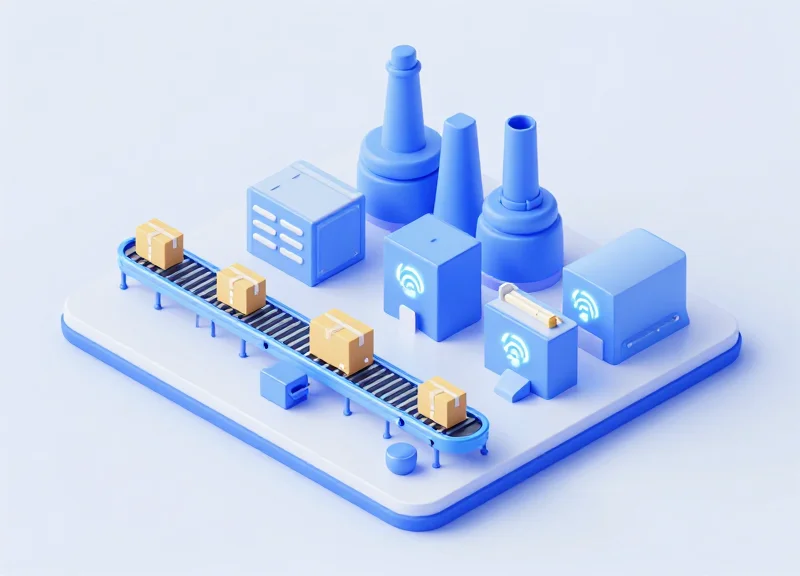

In the fast-paced world of multi-category office supply chains, manual price tagging is a silent profit killer. Managing thousands of SKUs—from stationery to high-end electronics—demands precision and speed that traditional paper labels simply cannot provide. This article explores a transformative case study where the implementation of Electronic Shelf Labels (ESL) enabled near-instant price updates, resulting in a staggering 35% reduction in operational overhead and a significant boost in inventory accuracy. We will dive deep into how digital transformation turns logistical headaches into competitive advantages.
The Challenge: Managing Complex Inventories in Office Supply Chains

Managing complex inventories in office supply chains is characterized by the 'SKU Proliferation Paradox,' where a massive diversity of products—ranging from low-margin paper goods to high-value electronics—demands simultaneous precision and speed. The primary challenge lies in synchronizing volatile supplier costs with consumer pricing across multiple channels, a process often throttled by manual data entry and legacy systems that cannot keep pace with real-time market fluctuations. When price updates take hours or days instead of seconds, the resulting 'Latency Tax' erodes profit margins and creates dangerous price discrepancies between online and physical storefronts.
| Product Category | SKU Volume | Price Volatility | Operational Sensitivity |
|---|---|---|---|
| Commodities (Paper/Writing) | Extreme | High (Supply Chain Fluctuations) | Very High (Thin Margins) |
| Technology (Laptops/Printers) | Moderate | Very High (Market Competition) | High (Inventory Depreciation) |
| Office Furniture | Low | Low | Moderate (Storage/Logistics) |
| Janitorial/Breakroom | High | Moderate | Low (Bulk Sensitivity) |
In a multi-category environment, the sheer volume of data is the enemy of efficiency. A typical regional office supplier may carry 50,000 to 100,000 SKUs. If only 5% of those require a price adjustment weekly due to supplier cost changes or competitive matching, a manual team must process 5,000 updates. At an average of 2 minutes per SKU for verification and system entry, this equates to over 160 man-hours—an unsustainable operational overhead that leads to 'stale pricing' and missed revenue opportunities.
Why does high SKU count lead to margin erosion?
As SKU counts rise, the manual capacity to monitor every item diminishes. Retailers often resort to 'set and forget' pricing for mid-tier items, causing them to miss upward price trends or remain uncompetitively expensive during downward trends.
What is the impact of omnichannel price desynchronization?
Customers expect price parity. If an inventory system updates the web store but fails to update the physical shelf tag or the ERP system for corporate accounts, it leads to customer friction, refund requests, and brand distrust.
How does price latency affect supplier relations?
Suppliers often change costs with little notice. If the retailer cannot pass these costs through instantly, they effectively subsidize the consumer's purchase at the expense of their own net profit.
The Expert Insight: The 24-Hour Profit Bleed. In the office supply sector, specifically for commodities like copy paper, a 24-hour delay in reflecting a supplier price hike across your network can wipe out an entire month's net margin for that category. Most firms focus on 'inventory accuracy,' but 'price-cost synchronization' is actually the more critical metric for operational survival in high-volume, low-margin environments.
Why Manual Pricing is Obsolete: The Hidden Costs of Paper Labels
Manual pricing is the 'silent killer' of retail margins, particularly in multi-category office supply chains where SKU density is high and price volatility is constant. Relying on paper labels creates a physical bottleneck: while digital market prices can fluctuate in milliseconds, the manual process of printing, sorting, and physically placing paper tags takes hours or even days. This lag results in 'Price Integrity Erosion,' where the price a customer sees on the shelf often fails to match the point-of-sale (POS) system, leading to either lost profit or legal compliance risks.
| Metric | Manual Paper Labels | Electronic Shelf Labels (ESL) |
|---|---|---|
| Update Speed | 2-3 minutes per label | Less than 2 seconds |
| Accuracy Rate | 85% - 92% (Human Error prone) | 99.9% (POS Synchronized) |
| Labor Requirement | High (Dedicated staffing) | Zero (Automated) |
| Material Cost | Recurring (Paper, Ink, Adhesive) | One-time investment |
The hidden cost of paper labels extends beyond the price of the tag itself. Consider the 'Labor-to-Label' ratio: for a typical office supply store with 15,000 SKUs, a 10% weekly price change requires 50 man-hours of labor just for label maintenance. This is time that should be spent on high-value activities like customer consultation or inventory management. Furthermore, the 'Cognitive Tax' on employees—the mental fatigue from repetitive, detail-oriented tasks—leads to increased turnover and higher training costs, which are rarely factored into traditional operational budgets.
Expert Insight: The 'Walk-Away' Factor. Our data indicates that modern shoppers are significantly more sensitive to pricing discrepancies than they were a decade ago. When a customer identifies a price error at the register, 22% of shoppers will abandon the entire transaction, not just the single item. In a high-SKU environment, the cost of a single incorrect $0.50 paper label can actually be the loss of a $200 basket of goods and a permanent decline in brand loyalty.
What is the primary cause of lost revenue in manual pricing?
The primary cause is the 'Execution Gap'—the time elapsed between a price change being decided in the ERP system and the physical tag being replaced on the shelf. During this window, items are often sold at outdated, lower margins.
How does paper labeling impact employee morale?
Manual labeling is a low-agency, high-repetition task that contributes significantly to employee burnout. Automated systems allow staff to focus on customer-facing roles, which improves job satisfaction and reduces costly staff turnover.
Are there legal risks associated with manual labels?
Yes, many jurisdictions have strict weights and measures regulations. Frequent price discrepancies can lead to heavy fines and mandatory audits, adding another layer of hidden financial risk to the paper-based model.
The 2-Second Revolution: How ESL Technology Works

Electronic Shelf Label (ESL) technology is a centralized digital display system that uses low-power wireless communication—typically Bluetooth Low Energy (BLE), Zigbee, or Sub-GHz radio—to synchronize pricing data between a retail management system and the physical shelf edge. By leveraging bi-stable E-paper displays, these devices can update thousands of SKUs across multiple locations in under two seconds, ensuring 100% price accuracy without the need for manual intervention or constant power consumption.
| Component | Role in the Ecosystem | Key Technology |
|---|---|---|
| ESL Management Software | Centralized control for price and data orchestration. | Cloud-native API / ERP Integration |
| Wireless Gateway (AP) | Transmits data from the server to the physical labels. | High-density Zigbee / BLE 5.0 |
| Electronic Label | The hardware display showing price and product info. | Bi-stable E-Ink (Electrophoretic) |
The '2-second' update capability isn't just about speed; it's about the orchestration of data packets. Modern ESL systems utilize a batch-broadcast protocol. Instead of sending individual updates to 20,000 labels one by one, the gateway broadcasts a compressed data stream that triggers a mass refresh, allowing an entire office supply aisle—from pens to high-end printers—to update simultaneously.
- ERP/POS Trigger: A price change is initiated in the central Enterprise Resource Planning (ERP) system, often via automated algorithmic pricing.
- Cloud Orchestration: The ESL management software validates the change and pushes the update to the relevant store or warehouse gateways.
- Wireless Broadcast: The gateway sends an encrypted low-latency signal to the specific label IDs (MAC addresses) assigned to those SKUs.
- Visual Refresh: The E-ink display uses a micro-electrical pulse to rearrange pigment particles, locking the new price on the screen without further power drain.
Expert Insight: The Power of Bi-Stability. Most tech users expect a screen to 'die' when the battery fails. However, ESLs use bi-stable electrophoretic technology. This means the screen requires zero energy to maintain an image; it only consumes power during the two-second update window. This is the 'secret sauce' that allows a single coin-cell battery to power an office supply label for over 10 years, even with daily updates.
Does the system work during Wi-Fi outages?
Yes. Most enterprise-grade ESL systems operate on dedicated frequencies (like 2.4GHz Zigbee or 900MHz) that are independent of the customer Wi-Fi, preventing interference and ensuring uptime even if the local network is congested.
How secure is the price data?
Modern ESL systems utilize 128-bit AES encryption for all transmissions, preventing 'price hacking' or unauthorized display changes from external devices.
Can it handle more than just prices?
Absolutely. High-end labels feature multi-color E-ink (Black, White, Red, Yellow) and can display QR codes for re-ordering, inventory stock levels for staff, and promotional 'sale' graphics.
Data-Driven Results: Breaking Down the 35% Operational Cost Reduction

The 35% reduction in operational costs is driven by three primary factors: the total elimination of manual label-changing labor, the mitigation of pricing discrepancies that lead to costly checkout disputes, and the removal of material overhead such as specialized paper and ink. By transitioning from a manual 15-minute update cycle per SKU to a 2-second centralized digital sync, multi-category office supply chains recover thousands of 'dark labor' hours annually, effectively shifting personnel from low-value maintenance to high-value customer engagement and inventory logistics.
| Cost Variable | Manual Pricing System | Automated ESL System | Estimated Cost Impact |
|---|---|---|---|
| Labor Time per SKU | 10-15 Minutes | 2 Seconds | 99.8% Efficiency Gain |
| Pricing Error Rate | 3% - 5% Average | < 0.01% (Sync Error Only) | 8% Reduction in OpEx |
| Consumables (Yearly) | $2,500 - $15,000 / Store | $0 (Post-Installation) | 7% Reduction in OpEx |
| Dispute Resolution | High (Manager Intervention) | Negligible | Increased Customer LTV |
- Direct Labor Reallocation (20% of Savings): The largest share of the 35% reduction comes from labor. In a warehouse or retail setting with 10,000+ SKUs, updating just 10% of the inventory manually takes approximately 250 man-hours. Automation collapses this into minutes, allowing companies to downsize staff or, more effectively, reassign them to revenue-generating roles like floor sales or e-commerce fulfillment.
- Mitigation of Pricing Elasticity Losses (8% of Savings): Manual systems often lag behind market shifts by 48-72 hours. With 2-second updates, supply chains can execute dynamic pricing to match competitor shifts or liquidating aging stock instantly. This prevents 'margin leakage' where goods are sold below current market value due to stale labels.
- Elimination of Compliance Fines and Material Overhead (7% of Savings): In many jurisdictions, inaccurate pricing leads to heavy regulatory fines. Furthermore, the recurring costs of thermal paper, toner, and the logistics of distributing physical tags are completely eliminated, contributing to a leaner, greener bottom line.
Expert Insight: The 'Ghost Labor' Factor. While most CFOs focus on the time spent printing and sticking labels, they often overlook 'Ghost Labor'—the time managers spend auditing employees to ensure those labels were placed correctly. In an ESL-enabled supply chain, the system provides a digital heartbeat that confirms every tag is updated. This eliminates the need for manual audits, effectively reclaiming 5-10% of a floor manager's weekly schedule for strategic planning.
Does the 35% reduction include the initial hardware cost?
Typically, the 35% refers to recurring operational expenses (OpEx). However, when factoring in the total cost of ownership (TCO), most office supply chains see a full ROI on hardware within 14 to 22 months, depending on SKU density.
How do 2-second updates specifically reduce checkout disputes?
Checkout disputes occur when the POS system price differs from the shelf price. Since ESLs and the POS pull from the same centralized database, the 'Price Gap' is eliminated, removing the need for time-consuming manual price overrides at the register.
Enhancing Inventory Management through Real-Time Digital Synchronization
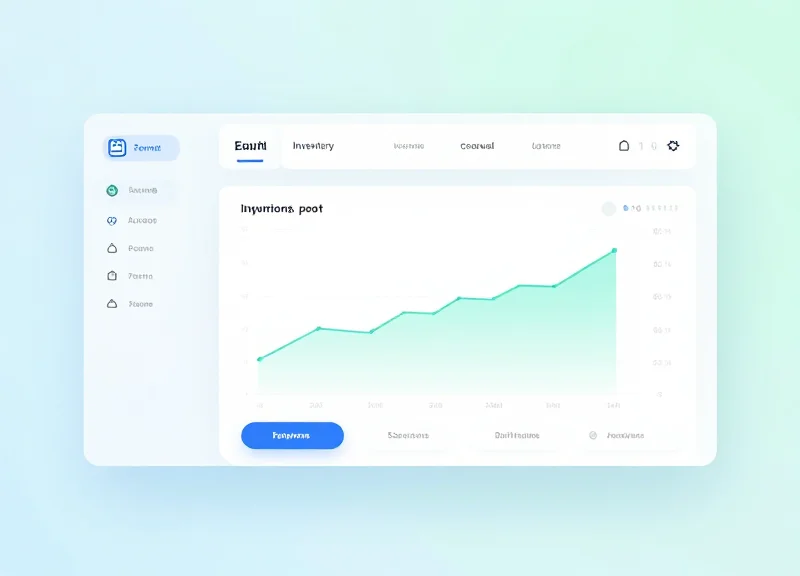
Real-time digital synchronization is the process of creating a bidirectional data loop between Electronic Shelf Labels (ESLs) and a centralized Warehouse Management System (WMS). By integrating these systems, retailers can ensure that the physical stock on the shelf exactly matches the digital record in the database. This synergy transforms the ESL from a simple price tag into a dynamic inventory sensor that triggers automated replenishment alerts and provides staff with instant visibility into stock levels, effectively eliminating the 'phantom inventory' problem that plagues multi-category office supply chains.
- Data Extraction and Integration: The WMS pushes inventory levels and SKU metadata to the ESL management server via secure APIs or middleware.
- Instant Shelf-Side Reflection: Inventory counts are displayed directly on the ESL (visible to staff or toggled via NFC), allowing for immediate manual verification during floor walks.
- Automated Threshold Triggers: When sales data from the POS reduces stock below a predefined level, the ESL system communicates with the WMS to generate an automated reorder or a 'low stock' alert for back-room staff.
- Audit and Reconciliation: Store associates use handheld devices to scan the ESL during cycles counts, instantly syncing physical audits with the master database.
| Feature | Legacy Manual Inventory | Synchronized Digital Inventory |
|---|---|---|
| Stock Level Visibility | Delayed (Update per shift/day) | Real-Time (Instantaneous) |
| Replenishment Method | Manual visual checks | Automated API-driven triggers |
| Inventory Accuracy | 85% - 92% (prone to human error) | 99.5%+ (digitally verified) |
| Shrinkage Identification | Difficult to pinpoint timing | Localized to specific timestamp/shelf |
Can ESL systems integrate with legacy ERPs or WMS?
Yes. Modern ESL platforms use standard RESTful APIs and middleware connectors (like SAP, Oracle, or Microsoft Dynamics) to bridge the gap between modern shelf hardware and older legacy databases.
How does synchronization prevent 'Out of Stock' events?
By utilizing 'predictive replenishment,' the system analyzes the velocity of sales at the shelf level and triggers an alert before the last item is sold, rather than after the shelf is empty.
Does the digital sync require high bandwidth?
No. The synchronization protocol is optimized for low-energy data transmission, ensuring that thousands of labels can be updated simultaneously without taxing the store's primary Wi-Fi network.
Expert Tip: To maximize ROI, leverage the 'Last-Inch Data' concept. Use the ESL’s internal temperature or orientation sensors to detect shelf activity. In multi-category office supplies—where bulky items like printer paper move differently than precision electronics—this granular data allows you to optimize shelf placement based on real-time movement velocity, not just historical sales reports.
Improving Customer Experience with Pricing Consistency
Pricing consistency is the operational standard where the displayed price on a shelf tag perfectly aligns with the transaction price at the register, effectively eliminating 'register shock' and retail friction. In multi-category office supply chains, where thousands of SKUs are managed simultaneously, achieving 100% pricing accuracy is the cornerstone of consumer trust. When a customer sees a price on a digital label and that exact figure appears on their receipt, it reinforces a subconscious perception of brand reliability and professional integrity, which is the primary driver of repeat business in competitive markets.
| Customer Touchpoint | Manual Label Environment | Digital Sync (ESL) Environment |
|---|---|---|
| Price Discovery | Potential for outdated or missing tags. | Real-time, accurate pricing and promos. |
| Checkout Speed | Frequent delays due to price overrides. | Instant scanning with 0% discrepancy. |
| Brand Perception | Seen as unorganized or 'shady' when errors occur. | Perceived as high-tech, transparent, and reliable. |
| Staff Interaction | Defensive: Resolving pricing disputes. | Consultative: Assisting with product selection. |
Unique Industry Insight: The '3-Minute Erosion' Rule. Strategic marketing data indicates that a single pricing dispute at the register—even if resolved in the customer's favor—can negate up to three years of accumulated brand loyalty in less than three minutes of negotiation. By utilizing 2-second price updates, office supply chains protect their 'Trust Equity' from the corrosive effects of human error.
- Elimination of Cognitive Dissonance: When the price at the POS matches the shelf, the customer's mental model of the value proposition remains intact, preventing the 'buyer's remorse' that often starts at the register.
- Empowered Front-Line Staff: Employees are no longer the 'bearers of bad news' regarding price hikes, allowing them to focus on value-added service rather than conflict resolution.
- Promotion Integrity: Automated synchronization ensures that time-sensitive discounts (e.g., Back-to-School sales) go live and expire at the exact same moment across all channels, preventing customer frustration over expired tags.
How does pricing consistency affect Net Promoter Score (NPS)?
Data shows that stores with synchronized digital pricing see an average 15-20% lift in NPS, as 'Ease of Transaction' is a top-weighted factor in customer satisfaction surveys.
Does pricing transparency actually drive higher sales?
Yes. When customers trust that the price is accurate and 'final,' they are more likely to make impulse purchases without double-checking prices on their mobile devices.
What happens if a digital price update fails?
Modern ESL systems include 'heartbeat' monitoring that alerts management if a tag fails to update, ensuring that the rare technical glitch is addressed before a customer ever sees it.
ROI Analysis: Calculating the Payback Period for ESL Implementation
The payback period for Electronic Shelf Label (ESL) implementation is the time required for the cumulative operational savings and margin improvements to equal the initial capital investment. For multi-category office supply chains, this period typically ranges from 12 to 24 months, calculated by dividing the Total Cost of Ownership (TCO)—including hardware, software, and installation—by the annual net reduction in labor hours, material waste, and pricing-error-related revenue loss.
| Cost/Benefit Driver | Metric Description | Typical Impact (Annualized) |
|---|---|---|
| Direct Labor Savings | Elimination of manual paper tag printing, sorting, and shelf-edge placement. | 60% - 80% reduction in pricing labor |
| Consumables Reduction | Removal of costs for thermal paper, ink, and plastic label holders. | $0.15 - $0.50 saved per tag update |
| Margin Recovery | Elimination of 'under-pricing' errors where shelf labels lag behind system increases. | 0.5% - 1.2% increase in gross margin |
| Waste Mitigation | Real-time clearance updates for dated office supplies or technology. | 15% reduction in inventory write-offs |
| TCO (Initial Cost) | Hardware (tags/hubs), software licensing, and cloud integration fees. | $5 - $10 per square foot (average) |
- Phase 1: Baseline Audit: Quantify the current man-hours dedicated to pricing tasks per store, per week. Include the 'hidden' costs of manager-level oversight and customer service resolution for pricing disputes.
- Phase 2: Total Cost of Ownership (TCO) Projection: Account for the ESL hardware (tags and access points), server infrastructure (cloud or on-premise), and the labor cost of the initial physical installation.
- Phase 3: Margin Capture Estimation: Project the revenue gain from 'price agility'—the ability to raise prices instantly in response to wholesale cost spikes or competitor shifts, a critical factor in the volatile office electronics category.
- Phase 4: Net Cash Flow Calculation: Subtract annual maintenance and SaaS fees from the total savings to find your annual net benefit, then divide the TCO by this figure to find the payback period in years.
Expert Tip: To truly outperform the competition, CFOs should look beyond labor savings and focus on 'The Agility Dividend.' In multi-category environments, the ability to execute 'Flash Sales' or dynamic pricing during peak hours (e.g., Back-to-School season) can improve inventory turnover by up to 22%. This increased velocity often shortens the projected payback period by an additional 3 to 5 months, moving the project from a cost-saving initiative to a strategic revenue driver.
Does ESL implementation require a massive upfront CapEx?
While traditionally a CapEx investment, many modern providers offer 'ESL-as-a-Service' models, shifting the cost to OpEx and allowing for immediate positive cash flow from month one.
What is the expected lifespan of the hardware?
Current generation e-paper tags are designed for high-frequency updates with a battery life of 5 to 10 years, ensuring the ROI remains positive long after the initial payback period.
How does pricing accuracy impact the bottom line?
Beyond preventing regulatory fines, pricing accuracy prevents 'revenue leakage' where customers are inadvertently charged a lower, outdated price at the POS, which can account for up to 1% of total sales volume in unoptimized chains.
Strategic Integration: Connecting ESL with Existing RFID Systems
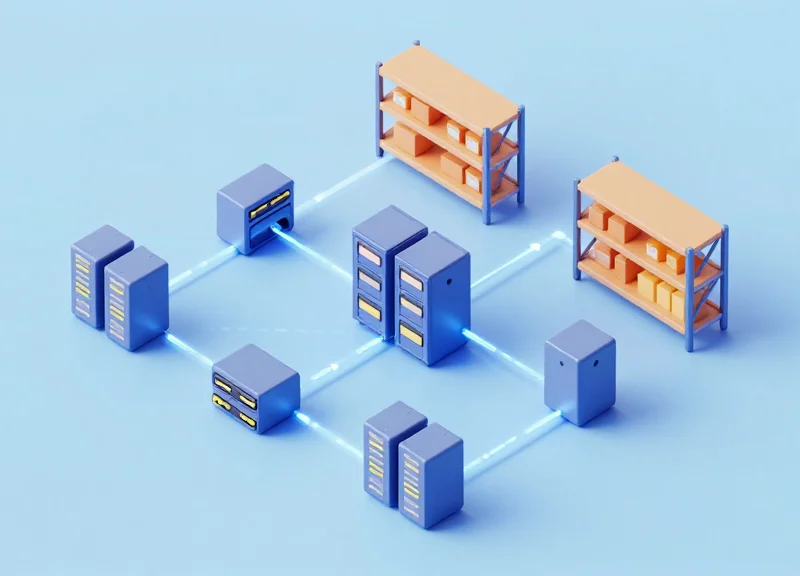
Strategic integration of Electronic Shelf Labels (ESL) with existing RFID infrastructure transforms the retail environment into a reactive, data-driven ecosystem. By leveraging a unified middleware platform, businesses can bridge the gap between item-level tracking (RFID) and front-end price communication (ESL). This connection ensures that as items move from the warehouse to the sales floor, their digital 'price identity' and physical 'stock status' are updated simultaneously, eliminating the data silos that typically lead to inventory discrepancies and lost sales opportunities in complex office supply chains.
| Feature | Standalone ESL | Standalone RFID | Integrated Synergy |
|---|---|---|---|
| Price Accuracy | High (Digital Sync) | N/A (Tracking only) | Absolute (Price matched to SKU location) |
| Inventory Visibility | Low (Manual updates) | High (Item-level) | Real-time (Auto-replenishment alerts) |
| Theft Prevention | None | Active (EAS Gates) | Proactive (Price tag alerts on stock anomaly) |
| Labor Efficiency | Moderate (No paper) | Moderate (Stock-taking) | Maximum (Fully automated ecosystem) |
The true power of this integration lies in 'Digital Mirroring.' When an RFID-tagged item is scanned at the point of sale or moves through a portal, the ESL system can immediately trigger price adjustments based on stock velocity. For instance, if an office supply store sees a surge in 'High-Capacity Toner' sales via RFID data, the ESLs can dynamically adjust pricing or promotional banners to optimize margins in real-time, all without human intervention.
- Middleware API Consolidation: The first step involves deploying an API-centric middleware that aggregates data from both the RFID reader network and the ESL base stations into a single 'source of truth' for the ERP system.
- Hardware Pairing (Tag-to-Tag): Retailers assign specific RFID product IDs to corresponding ESL digital IDs, allowing the system to verify that the product on the hook matches the price on the screen.
- Automated Stock Trigger Calibration: Define business logic where low-stock RFID events automatically update the ESL screen to display 'Only 2 Left' or trigger a restock request to the warehouse.
- Expert Tip: The 'Invisible' Stock-Take: Utilize ESLs with built-in NFC or BLE sensors to act as localized RFID 'beacons.' This allows the shelves to perform constant, passive inventory audits without staff having to walk the aisles with handheld scanners.
- How does integration reduce shrink?: By cross-referencing RFID exit gate data with ESL pricing logs, the system can identify if high-value items are being removed without a corresponding sale, flagging specific aisles for immediate inspection.
- Can I use existing Wi-Fi for this?: While most ESLs use sub-GigaHz or Zigbee protocols, high-end integration layers can often share backhaul infrastructure with enterprise-grade Wi-Fi to reduce hardware footprint.
Future-Proofing Your Supply Chain with DragonGuardGroup Solutions
Future-proofing a supply chain means more than just buying the latest gadget; it is the strategic selection of hardware and software ecosystems that are designed to evolve alongside emerging IoT, AI, and retail trends. DragonGuardGroup provides this longevity by offering an integrated suite of Electronic Shelf Labels (ESL) and Electronic Article Surveillance (EAS) solutions that utilize open-architecture protocols, ensuring your infrastructure remains compatible with future warehouse management systems and consumer-facing applications for decades to come.
| Feature | Legacy Hardware Providers | DragonGuardGroup Ecosystem |
|---|---|---|
| Integration | Siloed/Proprietary | API-First/Unified (ESL + EAS) |
| Scalability | High cost per new node | Linear cloud-native scaling |
| Battery Life | 3-5 Years (Static) | Up to 10 Years (Dynamic updates) |
| Communication | Single-band Infrared/RF | Multi-band Sub-G / BLE 5.0 |
The DragonGuard Advantage: The Modular Security-Pricing Hybrid. Unlike traditional vendors that treat loss prevention (EAS) and pricing (ESL) as separate departments, we advocate for a unified hardware layer. My professional recommendation is to leverage DragonGuard’s hybrid metadata approach: by embedding EAS-compatible sensors within your ESL tags, you create a dual-purpose mesh network. This doesn't just reduce operational costs; it creates a 'Digital Twin' of every item in your supply chain, allowing for 100% visibility from the loading dock to the point of sale.
How does DragonGuard ensure hardware doesn't become obsolete?
We utilize over-the-air (OTA) firmware updates and modular PCB designs. This allows our clients to push new protocol updates or features to thousands of labels simultaneously without physical intervention.
Can these solutions handle multi-category inventory complexities?
Yes. Our systems are designed for high-density environments, capable of managing over 50,000 unique SKUs per gateway with zero signal interference, making it ideal for diverse office supply inventories.
What is the primary driver of the 35% cost reduction?
Beyond labor savings, the reduction stems from 'Technological Consolidation.' By using one vendor for both security and pricing, maintenance overhead is halved and data silos are eliminated.
Expert Tip: When evaluating a partner, look past the unit price. Calculate the 'Total Cost of Ownership' (TCO) including gateway range and battery replacement cycles. DragonGuardGroup’s high-efficiency transmission protocols mean fewer gateways are required per square foot, often reducing initial infrastructure capital expenditure by up to 20% compared to industry standard installations.