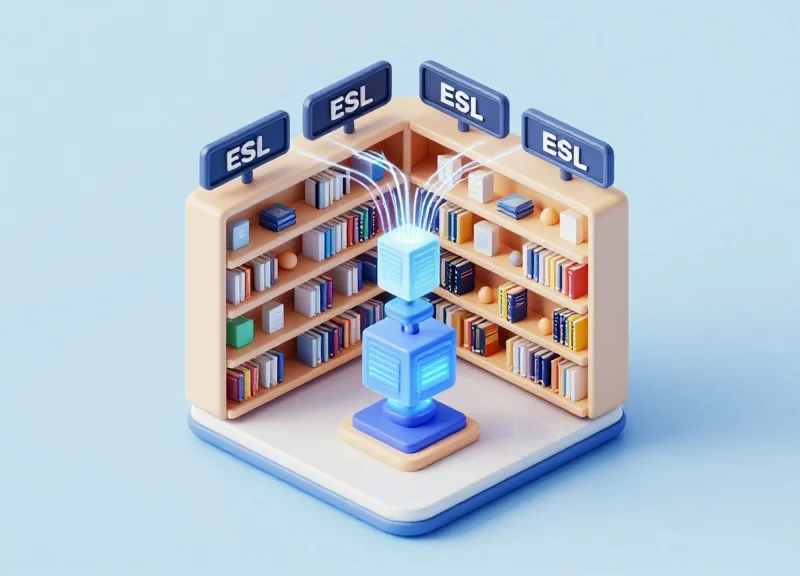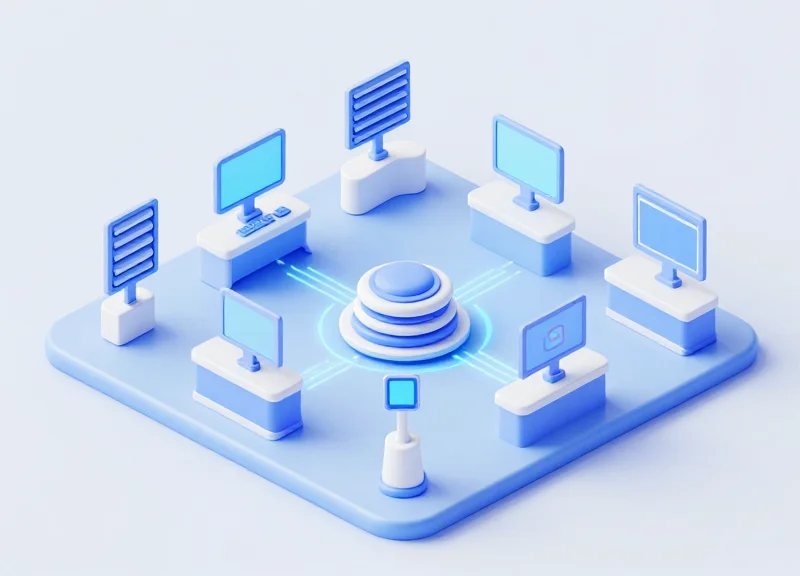

The retail landscape is undergoing a massive shift from simple price automation to fully integrated ecosystem management. By 2026, the traditional Electronic Shelf Label (ESL) gateway will no longer be a single-purpose communication bridge. Instead, it is evolving into a Unified IoT Edge Controller—a central nervous system for the smart store. This transition addresses the growing complexity of retail environments, where the need for real-time data processing, multi-protocol support, and reduced hardware footprint is becoming critical for operational excellence.
The Evolution of the ESL Gateway: From Communication Bridge to Edge Powerhouse

The evolution of the ESL (Electronic Shelf Label) gateway represents a fundamental shift from a simple communication bridge—responsible solely for pushing price updates via proprietary protocols—to a high-performance Unified IoT Edge Controller. Historically, these devices acted as 'dumb pipes' that translated server data into radio signals. However, as we approach 2026, the gateway has transformed into the central nervous system of the store, capable of local data processing, multi-protocol orchestration (Bluetooth, Zigbee, Wi-Fi 6/7, and Matter), and real-time decision-making at the edge.
| Feature | Legacy Gateway (2015-2020) | Next-Gen Edge Hub (2026+) |
|---|---|---|
| Primary Role | Unidirectional price updates | Bi-directional IoT orchestration |
| Compute Power | Minimal (MCU-based) | High (Multi-core SoC with NPU) |
| Connectivity | Proprietary Sub-GHz / Zigbee | Unified (BLE, Wi-Fi, Matter, Thread) |
| Data Handling | Pass-through to Cloud | Edge Analytics & Local Filtering |
| Node Capacity | ~500 - 1,000 labels | 10,000+ mixed IoT sensors/labels |
The transition was driven by the 'Latency Wall.' As retailers added thousands of IoT sensors—including temperature monitors, foot-traffic cameras, and vibration sensors—the traditional model of sending every bit of raw data to the cloud for processing became unsustainable. Today's edge controllers solve this by utilizing 'Sensor Fusion,' where the gateway aggregates data from various sources locally, providing an immediate response to store conditions, such as triggering a restock alert or adjusting dynamic pricing based on real-time shelf inventory levels.
Why is the move to unified protocols critical for 2026?
Retailers are moving away from 'vendor lock-in.' A unified gateway allows a single piece of hardware to manage labels from one vendor, humidity sensors from another, and lighting from a third, all via standardized protocols like Matter and BLE 5.4.
What role does AI play at the gateway level?
Modern gateways now include Neural Processing Units (NPUs) that can perform localized AI tasks, such as identifying shelf gaps from camera feeds or predicting battery failure in ESLs across the fleet before they happen.
How does this improve store uptime?
By acting as a local controller, the gateway can maintain store operations, including price updates and sensor monitoring, even if the primary internet connection to the cloud is lost.
Expert Insight: From my two decades in Silicon Valley, the most significant change I see is the 'Silicon Consolidation' occurring within these hubs. We are no longer seeing generic chips; we are seeing custom ASICs designed specifically to handle the high-concurrency demands of 50,000+ concurrent pings in a dense retail environment. This isn't just a hardware upgrade; it's a fundamental move toward the 'Autonomous Store' where the gateway is the local supervisor.
Defining the 2026 Unified IoT Edge Controller

By 2026, the 'Unified IoT Edge Controller' represents the convergence of retail connectivity and on-site intelligence. Unlike traditional ESL gateways that functioned as simple signal translators, this next-gen hardware serves as a protocol-agnostic hub capable of managing disparate wireless standards—including Bluetooth 5.4, Zigbee, Thread, and Wi-Fi 6E/7—simultaneously. It acts as the local 'brain' of the store, executing complex logic and data filtering at the edge to reduce cloud dependency and ensure that critical retail operations, like dynamic pricing and inventory tracking, remain functional even during network outages.
| Feature | Legacy ESL Gateway (Pre-2023) | Unified IoT Edge Controller (2026+) |
|---|---|---|
| Primary Protocol | Proprietary Sub-G or Zigbee | Multi-radio (BLE, Matter, Thread, Sub-G) |
| Processing Capability | Minimal (Data Pass-through) | High (Edge AI & Containerized Apps) |
| Device Capacity | 5,000 - 10,000 ESLs | 50,000+ Multi-device Nodes |
| System Openness | Closed Ecosystem | Open APIs & SDKs for Third-party Integration |
| Update Frequency | Batch-based updates | Real-time, Event-driven Orchestration |
A defining characteristic of these controllers is their modular software architecture. Leveraging containerization (such as Docker or micro-K8s), retailers can now deploy custom microservices directly onto the controller hardware. This allows the same device that updates a price tag to also run a computer vision model for shelf-gap detection or manage smart lighting schedules based on real-time foot traffic.
What does 'Unified' actually mean in this context?
It refers to the consolidation of three layers: Physical Connectivity (multi-radio support), Data Orchestration (standardizing data from different sensors), and Application Execution (running software locally).
Is this just a more powerful router?
No. While a router moves packets, the Edge Controller interprets data. It can recognize an 'out-of-stock' event from a weight sensor and autonomously trigger a notification to a floor associate's handheld device without ever hitting the cloud.
Does it support older ESL models?
Yes, most 2026-spec controllers are designed with backward compatibility for legacy 2.4GHz and Sub-G protocols, allowing for a phased infrastructure upgrade rather than a total rip-and-replace.
Expert Insight: The Silicon Consolidation. In my 20 years in Silicon Valley, the biggest shift I've seen is the move toward specialized Retail SoCs (System on Chips). The 2026 controllers are no longer built with general-purpose processors; they use dedicated hardware accelerators for Bluetooth Mesh and AI inference. This 'Silicon Consolidation' is what allows a single hub to manage 50,000 electronic tags while simultaneously processing 4K video streams for security analytics—a feat that required five different pieces of hardware just three years ago.
The Convergence of RFID, ESL, and Sensors

The convergence of RFID, Electronic Shelf Labels (ESL), and IoT sensors represents the shift from disparate 'islands of automation' to a singular, cohesive retail nervous system. By 2026, the unified gateway acts as a multi-protocol hub that simultaneously manages inventory accuracy via RFID, dynamic pricing via ESL, and ambient conditions via sensors (temperature, humidity, and motion), eliminating the need for redundant hardware and overlapping wireless infrastructures.
In the traditional retail model, an IT manager had to maintain three separate networks: a 13.56MHz/UHF system for RFID, a proprietary 2.4GHz or Sub-GHz network for ESLs, and often a Wi-Fi or Bluetooth mesh for environmental sensors. This created 'Infrastructure Debt'—a tangle of power-over-ethernet (PoE) drops and interference management. The 2026 Unified Edge Controller resolves this by utilizing software-defined radio (SDR) and multi-radio chips to orchestrate these protocols within a single device.
| Feature | Siloed Legacy Systems | Unified Edge Convergence |
|---|---|---|
| Infrastructure | Multiple gateways, high cabling costs | Single multi-protocol gateway |
| Data Latency | Cloud-dependent, high lag | Real-time edge processing |
| Network Interference | High (overlapping 2.4GHz signals) | Managed (centralized channel hopping) |
| Inventory Visibility | Periodic manual scans | Continuous automated tracking |
The true value of convergence is not just the reduction in hardware—it is the functional synergy. When an RFID reader detects that a high-value item (like a designer handbag) has been moved from the shelf to the fitting room, the Unified Controller can instantly update the nearby ESL to display a 'Last One in Stock' badge or trigger a sensor-driven digital display to show matching accessories. This creates a hyper-responsive environment where the store reacts to physical events in milliseconds.
How does convergence improve battery life for ESLs and sensors?
By centralizing the communication schedule, the unified controller reduces 'packet collisions' and wake-up cycles. Devices only transmit when necessary, extending battery life by up to 30% compared to uncoordinated siloed networks.
Can existing RFID tags work with these new gateways?
Yes. The 2026 gateways are designed with backward compatibility for standard RAIN RFID (UHF) and NFC tags, allowing retailers to upgrade their infrastructure without replacing their entire inventory tagging system.
Does this convergence increase the risk of a single point of failure?
Modern unified controllers utilize edge-mesh failover. If one hub fails, adjacent controllers automatically increase their radio power to cover the dead zone, ensuring the network remains resilient.
Expert Insight: The Rise of 'Cross-Protocol Triggering'. A unique advantage of the 2026 unified hub is the ability to execute local logic without cloud intervention. For example, if a BLE temperature sensor detects a freezer failure, the hub can automatically change all ESLs on that aisle to 'Not For Sale' and alert staff via RFID-enabled handhelds immediately. This localized orchestration transforms the gateway from a simple router into an autonomous store manager.
Why Edge Computing is the New Standard for Retail Hubs

Edge computing has emerged as the definitive standard for modern retail because it relocates data processing from centralized cloud servers directly to the local store environment, enabling sub-millisecond response times and 99.99% operational reliability. By serving as a localized 'command center,' the 2026 IoT Edge Controller eliminates the dependency on external bandwidth for mission-critical tasks, ensuring that electronic shelf label (ESL) updates, inventory scans, and sensor alerts occur instantaneously even during network outages.
| Feature | Traditional Cloud-Only Model | Next-Gen Edge-Centric Hub |
|---|---|---|
| Latency | High (200ms - 2s+) | Ultra-Low (<10ms) |
| Offline Functionality | None; Store operations stall | Full local autonomy and 24/7 uptime |
| Security | Data vulnerable during transit | Local data processing and encryption |
| Bandwidth Costs | Expensive; Continuous high-volume upload | Optimized; Only essential data synced |
Why is latency reduction critical for 2026 retail?
As stores adopt interactive features like 'pick-to-light' and real-time dynamic pricing, any delay between a system trigger and a physical response (like an ESL LED flashing) ruins the user experience. Edge computing ensures these interactions feel organic and immediate.
How does the Edge Controller improve data security?
By processing sensitive customer and inventory data locally at the 'edge,' retailers minimize the 'attack surface.' Sensitive information is analyzed and anonymized on-site before any summarized metadata is ever sent to the cloud, significantly reducing the risk of data breaches during transit.
Can the store operate during a total internet outage?
Yes. The primary advantage of a Unified IoT Edge Controller is 'Local Survivability.' It continues to manage ESL updates, RFID stock counts, and environmental sensors autonomously, syncing back to the central cloud only when the connection is restored.
Expert Insight: The 'Local AI' Advantage. A unique differentiator for 2026 hubs is the integration of local AI inference. Instead of sending raw video or sensor feeds to the cloud for analysis—which is bandwidth-heavy and slow—the Edge Controller uses local compute power to detect shelf gaps or security anomalies in real-time. This 'Intelligence at the Source' approach transforms the gateway from a passive pipe into an active, autonomous store manager that makes decisions in the blink of an eye.
Hardware Consolidation: Reducing TCO Through Infrastructure Optimization
Hardware consolidation in the retail environment is the strategic replacement of multiple, proprietary IoT gateways—such as dedicated ESL base stations, RFID readers, and BLE beacons—with a single, high-performance Unified Edge Controller. By 2026, this architectural shift is projected to reduce Total Cost of Ownership (TCO) by 30% to 45% for enterprise retailers by eliminating redundant power-over-ethernet (PoE) ports, reducing cabling complexity, and centralizing device management into a single hardware footprint.
| Cost Factor | Legacy Siloed Infrastructure | 2026 Unified Edge Hub |
|---|---|---|
| CapEx (Initial Hardware) | High: 3-5 separate devices per zone | Low: 1 multipurpose controller |
| Installation Labor | High: Multiple cable pulls and mounting | Low: Single-pass installation |
| Energy Consumption | 15W - 25W per zone (cumulative) | 4W - 7W per zone (optimized) |
| Maintenance Overhead | Complex: Multiple firmware update cycles | Simple: Unified OTA updates |
| Network Security | Fragmented: Multiple attack surfaces | Hardened: Single point of entry |
Beyond the immediate reduction in hardware units, the move to a unified edge controller addresses the 'Phantom Labor' costs that plague retail IT departments. When a store has three different gateways for three different functions, a single network outage requires three separate troubleshooting workflows. A unified controller provides a 'single pane of glass' view, allowing IT teams to diagnose connectivity issues across the entire IoT stack simultaneously, which slashes Mean Time to Repair (MTTR) and minimizes store downtime.
- The 'One-Port' Rule: Expert Tip: The greatest hidden cost in retail IoT isn't the device; it's the switch port. A unified controller requires only one PoE port per coverage area, freeing up network capacity for high-bandwidth needs like AI-driven computer vision or customer Wi-Fi without requiring expensive core switch upgrades.
- Reduced E-Waste and Sustainability: Consolidation aligns with ESG (Environmental, Social, and Governance) goals. By reducing the number of plastic enclosures, circuit boards, and power adapters by up to 60%, retailers significantly lower their carbon footprint and future e-waste liabilities.
- Simplified Lifecycle Management: Unified hardware allows for synchronized upgrade cycles. Instead of tracking the end-of-life dates for five different manufacturers, procurement teams manage a single asset lifecycle, improving predictability in capital planning.
Can a unified controller handle the traffic of multiple systems without lag?
Yes. 2026-gen controllers utilize multi-core ARM processors and hardware-accelerated packet inspection to ensure that low-latency RFID data doesn't conflict with high-volume ESL price updates.
Does this create a single point of failure?
While it is a single physical unit, modern edge hubs use containerized microservices (like Docker). If the RFID service fails, the ESL and sensor services continue to run independently, providing better resilience than integrated legacy firmware.
Will I need to rewire my entire store?
In most cases, no. Unified controllers are designed to drop into existing PoE positions used by older Wi-Fi or ESL access points, making the transition a 'plug-and-play' upgrade rather than a full construction project.
Interoperability and Open Standards: The Backbone of 2026 Tech
Interoperability in 2026 retail tech is defined as the move from proprietary 'walled gardens' to a universal communication framework where ESLs, RFID readers, and environmental sensors coexist on a single network. This shift is driven by the adoption of open standards like Matter and Thread, alongside multi-radio hardware that supports Bluetooth 6.0, Zigbee, and WiFi 7. By decoupling hardware from software via standardized APIs, retailers can finally mix-and-match best-in-class devices from different vendors without the need for redundant infrastructure or complex middleware translations.
| Protocol | 2026 Role in Retail | Key Benefit | Open Standard Status |
|---|---|---|---|
| Bluetooth 6.0 (BLE) | High-density ESL & Beaconing | Channel Sounding for cm-level tracking | Public/Open |
| WiFi 7 (802.11be) | High-bandwidth Edge Backhaul | Ultra-low latency for vision systems | Public/Open |
| Matter / Thread | Cross-vendor Sensor Mesh | Instant device discovery and security | Industry-backed Open |
| Zigbee 3.0 | Legacy Sensor Integration | Low-power consumption for long-life tags | Public/Open |
The true value of these open standards lies in the elimination of 'Technical Debt.' Historically, replacing an ESL provider meant ripping out every gateway in the ceiling. In the 2026 unified controller model, the hardware is 'Protocol Agnostic.' This means the edge controller uses Software-Defined Radio (SDR) technology to adapt to new communication standards via firmware updates, ensuring the infrastructure you install today is still relevant in 2030.
Does interoperability compromise network security?
No. In fact, standards like Matter and WiFi 7 introduce mandatory WPA3-level encryption and hardware-root-of-trust requirements, making open systems more secure than many older proprietary protocols.
Can I use my existing 2.4GHz sensors with a 2026 Unified Hub?
Yes. The latest edge controllers feature multi-radio concurrency, allowing them to manage legacy Zigbee or BLE 4.2 devices alongside modern high-speed WiFi 7 traffic without interference.
How does open standard tech reduce long-term costs?
It prevents vendor lock-in, allowing retailers to bid out device upgrades to multiple suppliers, driving down hardware costs while maintaining a single management interface.
Expert Insight: In the 2026 landscape, the 'Kill-Switch' for retail innovation is proprietary firmware. We are seeing a massive trend toward 'White-Box' gateway hardware where the value lies in the orchestration software, not the radio silicon. For the first time, the retail floor is being treated like a data center—modular, standardized, and infinitely scalable.
Real-Time Insights and AI Integration at the Store Edge

Real-time insights at the store edge refer to the ability of a unified IoT controller to process high-velocity data—including Electronic Shelf Label (ESL) feedback, computer vision streams, and sensor telemetry—locally at the retail site. By hosting AI models directly on the edge hardware, retailers can achieve sub-second decision-making for inventory replenishment, dynamic pricing, and customer flow management, effectively eliminating the latency and bandwidth costs associated with traditional cloud-only processing.
| Capability | Cloud-Dependent Retail | Edge-Integrated AI (2026) |
|---|---|---|
| Latency | 2-10 Seconds (Network Dependent) | <100 Milliseconds (Local) |
| Stock Alerts | Reactive (Daily/Hourly Batches) | Predictive (Instant via Sensor Fusion) |
| Privacy | Video/Data Streamed to External Cloud | On-Device Anonymization & Processing |
| Operational Uptime | Fails if Internet Connection Drops | Fully Autonomous Local Intelligence |
The true power of the 2026 ESL Gateway-turned-Edge-Controller lies in its ability to facilitate 'Closed-Loop Intelligence.' Instead of simply displaying a price, the hub correlates the price point with real-time stock levels and customer dwell time detected by nearby sensors. If a high-margin item shows high engagement but low sales, the edge-hosted AI can autonomously trigger a temporary promotional price update on the ESL or alert staff to a potential merchandising issue, all without human intervention.
- Data Aggregation: The controller ingests data from ESL feedback loops, BLE beacons, and shelf sensors simultaneously.
- Local Inference: Lightweight AI models (such as TinyML) analyze the data to identify anomalies like out-of-stock events or floor congestion.
- Automated Response: The hub triggers an action, such as updating a price, sending a task to a handheld device, or adjusting HVAC for high-traffic zones.
Expert Insight: The Shift to Hyper-Local Behavior Models. While current retail AI focuses on chain-wide trends, 2026 tech will allow 'Micro-Clustering.' Because the edge controller processes data locally, it can build a unique behavior profile for its specific store location. This means a store in a commuter hub might evolve different autonomous pricing and stocking logic than a suburban flagship, optimized entirely by the local hub's processing of unique foot-traffic patterns.
Does edge AI require specialized hardware in 2026?
Yes, next-gen controllers utilize NPUs (Neural Processing Units) alongside standard CPUs to handle machine learning workloads efficiently without affecting the primary ESL management functions.
How does this impact store labor?
AI integration reduces 'search and find' labor by up to 40% by providing staff with precise, real-time locations of inventory gaps and high-priority customer service needs.
Can these controllers support computer vision?
Absolutely. Modern edge controllers act as the compute node for ceiling-mounted cameras, allowing for real-time shelf monitoring and heatmapping without sending video feeds to the cloud.
{
  "edge_event": "out_of_stock_detected",
  "sku": "BTL-WATER-001",
  "confidence_score": 0.98,
  "local_action": "trigger_staff_alert",
  "timestamp": "2026-05-12T14:30:05Z"
}
Security in the Age of Connected Retail
Security in the age of connected retail is defined by the move toward a Zero Trust architecture, where a unified IoT Edge Controller replaces the 'security through obscurity' model of fragmented legacy systems. By centralizing disparate ESL, sensor, and Wi-Fi networks into a single, hardened gateway, retailers can enforce uniform encryption standards, automate real-time threat detection, and significantly reduce the 'shadow IoT' attack surface. This consolidation ensures that every connected device, from a digital price tag to a smart shelf sensor, is authenticated and monitored through a single point of truth, preventing lateral movement by malicious actors within the store network.
| Security Dimension | Legacy Fragmented Gateways | 2026 Unified Edge Controller |
|---|---|---|
| Attack Surface | Multiple unmanaged entry points via various vendor bridges. | Single, audited, and hardened entry point for all IoT protocols. |
| Data Privacy | Data often transmitted to multiple third-party clouds. | Local edge processing keeps sensitive data within the store firewall. |
| Update Lifecycle | Manual, inconsistent firmware updates across devices. | Automated, over-the-air (OTA) unified security patching. |
| Trust Model | Implicit trust for devices on the local network. | Zero Trust: Continuous authentication of every device identity. |
A critical advancement in 2026 retail hubs is the integration of a 'Hardware Root of Trust' (RoT). Unlike previous generations that relied on software-level security, next-gen controllers utilize dedicated Secure Elements (SE) and Trusted Execution Environments (TEE) at the silicon level. This prevents physical tampering and ensures that the boot process remains uncompromised. From a marketing perspective, this isn't just about risk mitigation; it is about brand integrity. By adopting 'Security-as-a-Code'—where security policies are automatically deployed and audited across 1,000+ locations simultaneously—retailers can provide verifiable proof of data sovereignty, a key requirement for GDPR and CCPA compliance in an era of hyper-personalized shopping.
Does a unified hub create a single point of failure?
While it centralizes control, it actually eliminates the 'weakest link' problem found in fragmented systems. Redundancy is handled through high-availability (HA) clustering of controllers, ensuring that security protocols remain active even if one unit fails, which is far more robust than dozens of unmanaged, standalone bridges.
How does edge processing improve data privacy?
By processing PII (Personally Identifiable Information) and sensor data locally on the controller, the data is anonymized before any metadata is sent to the cloud. This 'Privacy-by-Design' approach ensures that even if a cloud-level breach occurs, store-level customer movements and habits remain encrypted and inaccessible.
What is Dynamic Micro-Segmentation?
This is a unique feature of 2026 hubs where the controller uses AI to identify anomalous behavior in a specific device—like a rogue temperature sensor—and automatically isolates it into a 'quarantine' VLAN. This prevents a compromised IoT device from accessing the Point of Sale (POS) or primary customer Wi-Fi networks.
Strategic Steps for Retailers Transitioning to Unified Hubs

Transitioning from traditional Electronic Shelf Label (ESL) gateways to unified IoT edge controllers is a strategic shift toward an integrated store intelligence platform. By 2026, the industry standard will move away from siloed proprietary systems to a 'single-pane-of-glass' management architecture that handles ESL, environmental sensors, and real-time inventory tracking through a centralized hub. This evolution requires a deliberate migration path to minimize downtime and maximize hardware longevity.
- Infrastructure & Spectrum Audit: Analyze existing network topology and RF environments. Identify current frequency overlaps between legacy ESL systems, Wi-Fi 6, and existing Bluetooth sensors to ensure the new hub can manage spectrum contention.
- Phase in Hybrid Coexistence: Deploy unified hubs that support both legacy protocols and modern standards. This allows for a 'rip-and-replace' approach at the controller level while keeping existing tags in service until their battery life expires.
- API-First Integration: Connect the unified hub to your ERP and inventory management systems via standardized APIs. This ensures that the data collected at the edge translates immediately into actionable stock and pricing insights.
- Implementation of Edge Security (Zero Trust): As hubs become more powerful, they become higher-value targets. Deploy Zero Trust architecture where each IoT device connected to the hub is individually authenticated and micro-segmented.
| Transition Phase | Primary Goal | Expected Outcome |
|---|---|---|
| Audit & Discovery | Identify bottlenecks | Validated RF map and hardware inventory |
| Pilot Integration | Validate interoperability | Successful data flow between multi-vendor IoT devices |
| Fleet Expansion | Standardize operations | Lower TCO through reduced hardware footprint |
| Edge Intelligence Deployment | Enable AI automation | Autonomous pricing and shelf-replenishment alerts |
Expert Insight: Prioritize 'Spectrum-Aware Planning' during your migration. A common pitfall in retail tech is the 'noisy' floor—where Bluetooth, Zigbee, and Wi-Fi 6E signals compete for airtime. Modern unified controllers utilize cognitive radio technology to dynamically adjust channels, reducing interference by up to 40% compared to legacy ESL gateways. Treating your retail airwaves as a finite resource is the key to 99.9% ESL update success rates.
Can I keep my existing ESL tags during the transition?
Yes, provided the unified controller supports the frequency and protocol (e.g., proprietary 2.4GHz or Sub-Ghz) used by your legacy tags. This is a core benefit of the hub evolution.
What is the biggest risk in the transition?
The biggest risk is vendor lock-in. Avoid proprietary controllers that do not support Matter or Zigbee standards, as they will limit your ability to add future IoT sensors.
How long does a typical store rollout take?
With pre-configured 'Infrastructure-as-Code' profiles, physical hub installation and software commissioning can be completed in under 4 hours per store.