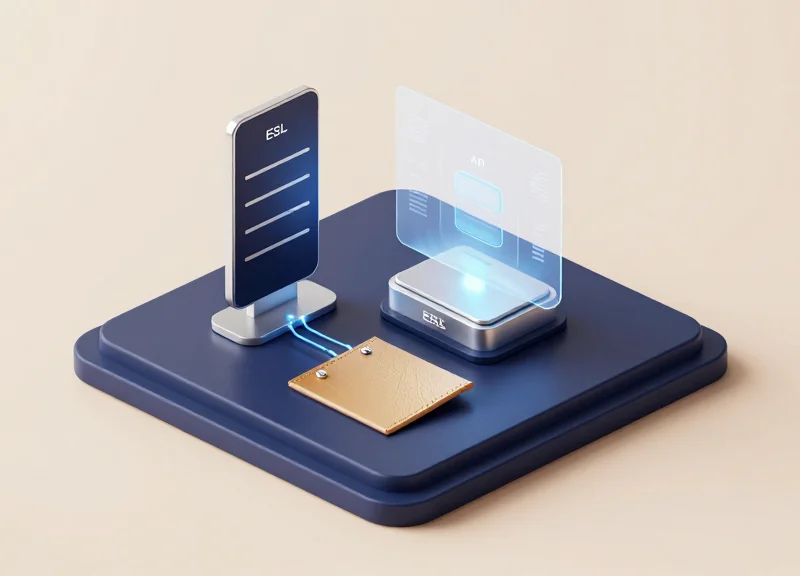
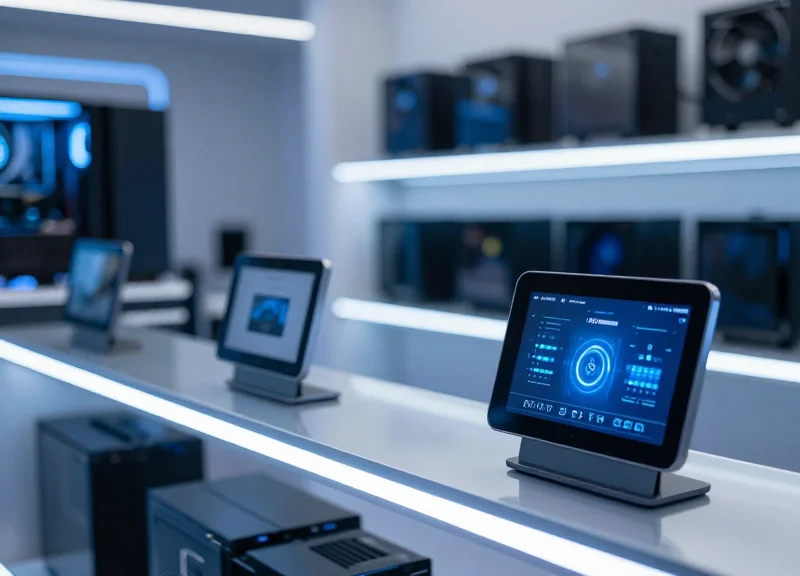
In the fast-paced world of high-end PC retail, where component prices fluctuate daily and technical specifications are the primary selling point, traditional paper labels are a liability. By 2026, tech hubs will require more than just a digital price tag; they need a sophisticated data ecosystem. This guide explores how advanced Electronic Shelf Labels (ESL) can transform your spec-heavy environment, ensuring accuracy, efficiency, and a premium customer experience in an era of rapid hardware cycles.
The Evolution of Retail Tech: Why 2026 is the Year of ESL for PC Hubs
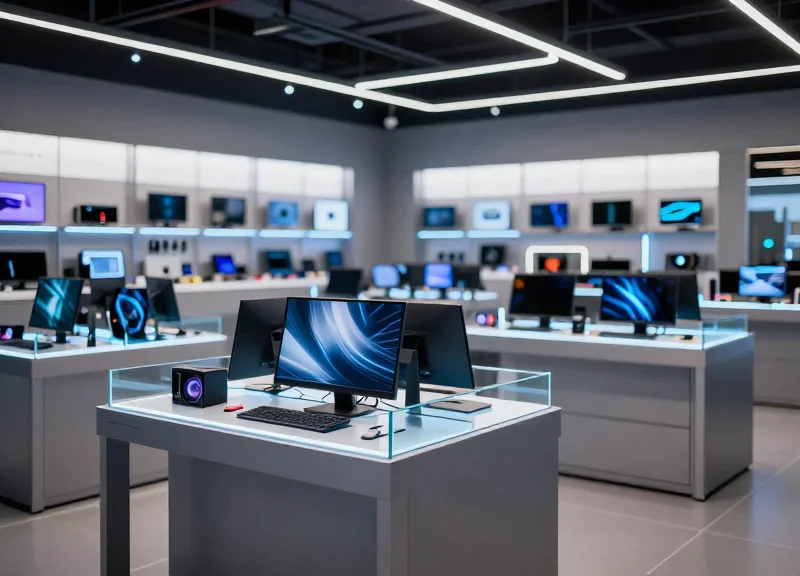
2026 marks the definitive shift where Electronic Shelf Labels (ESL) transition from a luxury upgrade to a foundational requirement for high-end PC retail. This evolution is fueled by three convergent forces: the extreme price volatility of semiconductor components, the rise of omnichannel 'click-and-collect' workflows, and a consumer base that demands real-time technical accuracy that manual paper tags can no longer provide. For tech hubs dealing in high-margin items like GPUs and workstation CPUs, ESL is no longer about saving labor; it is about margin protection and data integrity.
| Feature | Manual Pricing (Pre-2024) | ESL Ecosystem (2026 Standard) |
|---|---|---|
| Update Frequency | Weekly / Monthly | Near Real-Time (Seconds) |
| Spec Accuracy | Prone to clerical error | Direct API sync with CMS |
| Omnichannel Parity | Often mismatched with web | 100% Price Consistency |
| Inventory Visibility | Hidden in backroom | Live stock levels on-tag |
Why is 2026 specifically the 'tipping point' for PC retail ESL?
The introduction of 4-color e-ink displays and sub-1-second refresh rates at lower price points has finally made the ROI undeniable for high-SKU tech environments.
Can ESLs handle complex PC specifications?
Modern ESLs utilize high-resolution displays capable of rendering detailed spec blocks, QR codes for deep-dive benchmarks, and even real-time compatibility badges.
Does ESL help with theft prevention in tech hubs?
Yes, many 2026 ESL models integrate with BLE (Bluetooth Low Energy) and geofencing to alert staff if a tagged high-value item is moved unexpectedly.
A unique insight for 2026 procurement: The true value of ESL in a 'Spec-Heavy Tech Hub' isn't just the price—it's the dynamic display of 'Live Local Stock.' In Silicon Valley and other tech corridors, customers often enter stores specifically for high-demand components that appear 'In Stock' online but are sold by the time they arrive. Leading 2026 ESL systems now interface directly with local ERPs to show the 'Real-Time Unit Count' on the shelf tag itself. This transparency builds immense brand trust, reducing 'ghost inventory' frustrations and allowing staff to focus on high-value consulting rather than price-checking tasks.
Display Quality: The Necessity of High-PPI and Multi-Color E-Ink
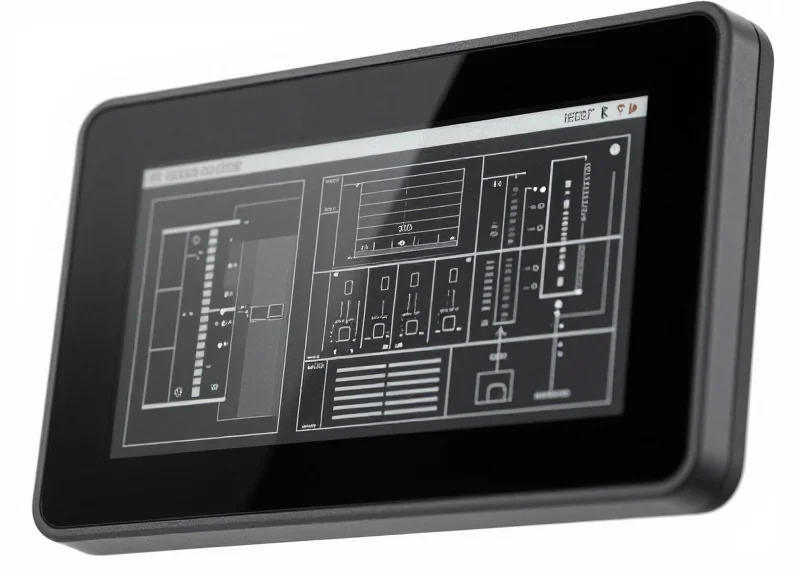
In high-end PC retail, the Electronic Shelf Label (ESL) is more than a price tag; it is a high-density data terminal. By 2026, the industry standard for spec-heavy hubs has shifted to high-PPI (Pixels Per Inch) displays—typically 180 to 250 PPI—to ensure that complex technical blocks, including overclocking speeds, cache sizes, and port configurations, remain crisp and legible at a glance. Superior display quality eliminates the 'pixel crawl' seen on legacy devices, allowing retailers to use smaller font sizes without sacrificing readability, which is critical when fitting a full GeForce or Ryzen spec sheet onto a 2.6-inch or 4.2-inch screen.
| Feature | Legacy ESL (Pre-2024) | Premium 2026 ESL Standards |
|---|---|---|
| Resolution | 110 - 130 PPI | 184 - 250+ PPI |
| Color Palette | BWR (Black/White/Red) | 4-Color or Full-Color ACeP |
| Font Rendering | Aliased / Jagged | Anti-aliased / Vector-clear |
| Contrast Ratio | 7:1 to 10:1 | 15:1 to 20:1 |
Expert Tip: For PC showrooms, we recommend focusing on 'Contrast-to-Clarity' ratios. High-end PC components often feature dark, aggressive branding. If your ESL has a gray-ish background (low contrast), your premium hardware will look cheap. Look for 2026 models utilizing advanced E-Ink Spectra 3100 or Spectra 3110 platforms, which offer significantly brighter whites and more saturated secondary colors like yellow or green, perfect for highlighting 'NVIDIA Green' or 'AMD Red' branding.
Why is multi-color E-Ink better than traditional black and white for PC retail?
Multi-color displays (Black, White, Red, and Yellow/Green) allow for strategic visual hierarchy. Retailers can use specific colors to highlight 'Sale' items, 'Limited Edition' GPUs, or 'New Generation' CPUs, immediately drawing the enthusiast's eye to high-margin products.
Does higher PPI affect the battery life of the ESL?
Modern 2026 ESL controllers are optimized for energy efficiency. While the pixel density is higher, power is only consumed during an image update. Most premium high-PPI tags still maintain a 7-to-10-year battery life under standard update frequencies.
Can these displays handle QR codes for full spec sheets?
Yes. High-PPI displays are mandatory for QR code reliability. Lower resolution screens often produce blurry QR codes that smartphone cameras struggle to focus on, particularly under the harsh LED lighting common in tech stores.
The original perspective to consider for 2026 is 'Optical Bonding.' Leading-edge tech hubs are now specifying ESLs where the E-Ink film is optically bonded to the protective glass. This reduces internal reflections and parallax errors, making the text appear as if it is printed on the surface of the glass. This is a subtle but powerful psychological cue to the consumer that the retail environment is as high-spec as the liquid-cooled rigs on display.
Managing Spec Complexity: Automated Data Sync for CPUs, GPUs, and RAM
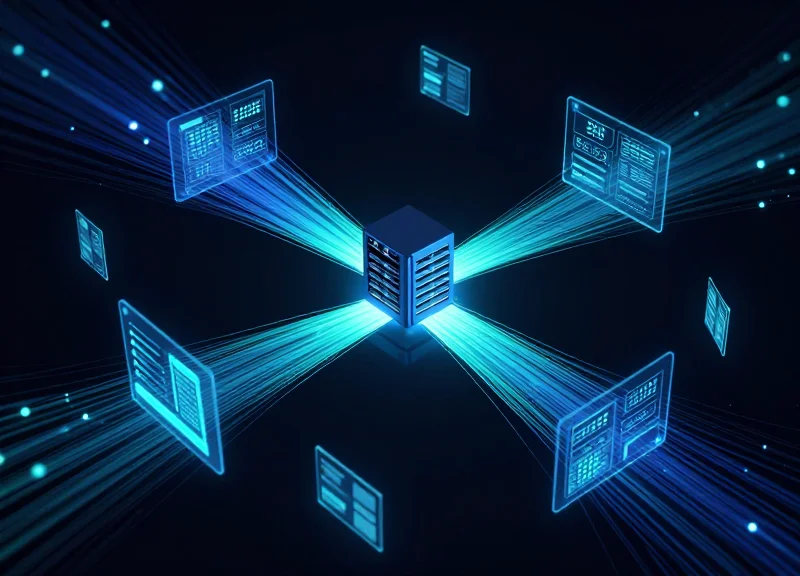
Automated data synchronization for high-end PC retail is the architecture that links a centralized product database (ERP/PIM) directly to Electronic Shelf Labels (ESL) via RESTful APIs or MQTT protocols. This ensures that granular specifications—such as GPU boost clocks, DDR5 CAS latency, and CPU TDP—are updated instantly across the showroom floor without manual intervention. By 2026, the gold standard in tech retail is a 'Zero-Touch' update system where a change in the procurement database reflects on the physical shelf in under 60 seconds, eliminating the risk of misinformed sales and legal compliance issues regarding technical accuracy.
- Data Ingestion and Webhooks: The ESL gateway establishes a secure handshake with your PIM system, utilizing webhooks to listen for attribute changes in specific SKU categories like 'Processors' or 'Graphics Cards.'
- Dynamic Attribute Mapping: Specific database fields (e.g., 'vram_capacity' or 'socket_type') are mapped to pre-defined coordinates on the ESL e-ink screen to ensure layout consistency across different brands.
- Delta Validation: The system performs a delta check to confirm only changed values are transmitted, minimizing wireless traffic and significantly extending label battery life.
- Sub-GHz Transmission: The encrypted update is broadcasted via Sub-GHz frequencies, which offer superior penetration through high-interference tech environments compared to standard 2.4GHz Wi-Fi.
| Spec Category | Update Frequency | Update Trigger | Label Priority |
|---|---|---|---|
| Pricing and Promos | Real-Time | Market Competitor Shift | Critical |
| Core Technical Specs | On Ingest | New Product Launch / SKU Revision | High |
| Inventory Availability | Hourly | Warehouse Stock Depletion | Medium |
| Marketing Buzzwords | Weekly | Campaign Cycle Changes | Low |
Unique Industry Insight: In 2026, elite tech hubs are moving beyond simple data mirroring to 'Metadata Normalization Layers.' This middleware automatically parses long-form manufacturer strings—like '16GB GDDR6X 384-bit Memory Interface'—and converts them into high-readability, standardized icons or shorthand that fits perfectly on a 4-inch display. This prevents 'text-overflow' errors which often plague generic ESL deployments in the electronics sector.
How do we prevent 'Ghost Specs' during a database outage?
Modern ESL systems utilize 'State-Persistence' technology where labels retain the last verified data but activate a red 'Sync Warning' LED if they lose contact with the central hub for more than a set heartbeat interval.
Can the system handle 'Limited Edition' hardware variants?
Yes, by using 'Tagging' logic in the PIM, the ESL can automatically switch to a high-contrast or multi-color display template reserved for premium or limited-release components.
Does frequent syncing drain the label batteries?
No, because e-ink technology only consumes power when the image changes. By using delta-only updates, the system ensures that battery life remains at the 5-10 year mark even with daily price adjustments.
Connectivity Protocols: Balancing Sub-Ghz, BLE, and Wi-Fi 6/7
In 2026, the optimal ESL connectivity for high-end PC retail is a hybrid architecture utilizing Sub-GHz for high-reliability pricing updates and BLE 6.0 for smartphone-integrated spec deep-dives. This configuration overcomes the extreme RF interference in tech showrooms by isolating mission-critical data on the sub-1GHz spectrum, away from the saturated 2.4GHz and 5GHz bands used by demo units and wireless peripherals. While Wi-Fi 7 offers high-density support, its power requirements and susceptibility to noise make it better suited for gateway backhaul rather than direct label communication.
| Protocol | Frequency Band | Interference Resistance | Typical Battery Life | Use Case |
|---|---|---|---|---|
| Sub-GHz | 868/915 MHz | Highest (Proprietary) | 10-15 Years | Mission-critical price updates |
| BLE 6.0 | 2.4 GHz | Moderate (Hopping) | 5-8 Years | Customer proximity & interactivity |
| Wi-Fi 6/7 | 2.4/5/6 GHz | Low (Congested) | 2-4 Years | Gateway cloud communication |
The modern 'Tech Hub' floor is a hostile RF environment. Between a dozen Wi-Fi 7 routers on display and hundreds of wireless gaming peripherals, the 2.4GHz band is effectively a 'dead zone' for low-power devices. Silicon Valley retail veterans are now prioritizing 'Spectrum Offloading.' By deploying a Sub-GHz backplane, you ensure that price changes for a $4,000 GPU are never lost in the digital noise. A unique insight for 2026: The most advanced ESL systems now incorporate 'Dynamic Frequency Selection' (DFS) that mirrors military-grade jamming resistance, allowing the network to hop to cleaner slices of the Sub-GHz band if local interference spikes.
Will Wi-Fi 7's 6GHz band eliminate the need for Sub-GHz?
No. While the 6GHz band is cleaner, the 'sleep-to-wake' power cycle of Wi-Fi 7 is too energy-intensive for E-ink labels meant to last a decade. Sub-GHz remains the king of low-power, long-range propagation.
Is BLE 6.0 worth the investment for PC retail?
Absolutely. BLE 6.0 introduces 'Channel Sounding,' which provides high-accuracy distance measurements. This allows labels to automatically push complex spec sheets or benchmark comparisons to a customer's phone the moment they stand in front of a specific motherboard.
How many gateways are required for a tech-heavy store?
Due to the superior penetration of Sub-GHz signals through metal shelving and PC chassis, one gateway can often cover 5,000 to 7,000 square feet, significantly reducing infrastructure costs compared to Wi-Fi-based ESL setups.
Integration Strategy: Bridging ESL with ERP and Inventory Management
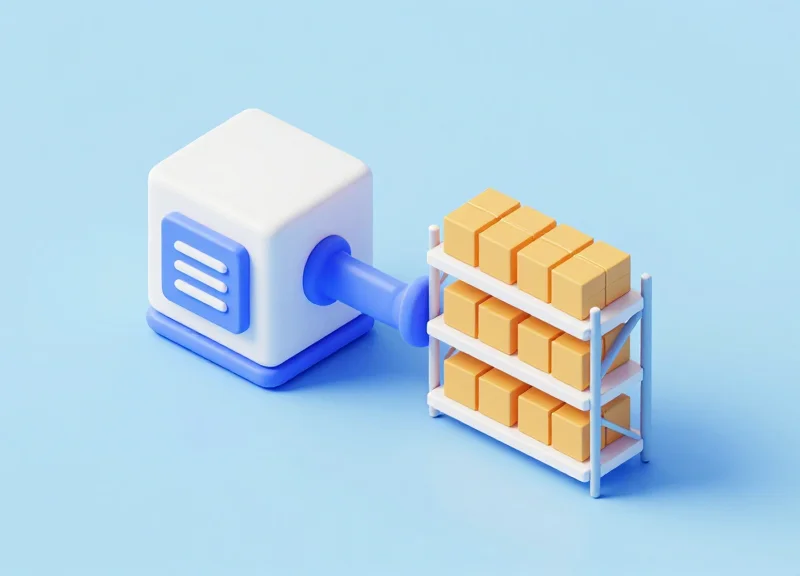
In 2026, a successful ESL deployment for PC retail is defined not by the hardware on the shelf, but by the 'Digital Thread' connecting your Enterprise Resource Planning (ERP) system to the display module. Integration is the process of creating a bi-directional data flow where inventory changes in the warehouse automatically trigger visual updates on the floor, and local shelf-edge interactions—such as a 'restock' button press on a label—feed data back into the supply chain management suite.
- API-First Architecture: Utilize RESTful or GraphQL APIs to ensure the ESL controller can pull real-time specifications and pricing directly from the ERP's master data hub.
- Data Mapping & Normalization: Map ERP fields (e.g., 'Core Clock Speed', 'TDP') to ESL templates to ensure technical accuracy without manual entry.
- Webhook Trigger Configuration: Set up event-based listeners so that any inventory decrement in the POS immediately updates the 'Units in Stock' count on the shelf label.
- Closed-Loop Verification: Implement a handshake protocol where the ESL system confirms a successful screen refresh back to the ERP, flagging any display failures for immediate IT attention.
| Feature | Legacy Batch Processing | 2026 Event-Driven Sync |
|---|---|---|
| Update Latency | 15 - 60 Minutes | < 2 Seconds |
| Inventory Accuracy | Periodic (Daily) | Real-Time (Per-Transaction) |
| Markdown Capability | Static/Manual | Dynamic (Based on Stock Age) |
| Error Handling | Manual Spot Checks | Automated System Alerts |
Expert Insight: The 'Ghost Stock' Buffer. A unique challenge in high-end PC retail is 'cart-squatting,' where a customer carries a rare GPU around the store but hasn't bought it yet. Advanced 2026 integrations use 'Predictive Inventory Throttling.' If the ERP sees 1 unit left but the store's geo-fencing detects that unit is in a customer's zone (not the shelf), the ESL automatically switches to 'Display Only - Order Online' to prevent customer frustration at the shelf edge.
{
  "action": "UPDATE_LABEL",
  "sku": "RTX-5090-FE",
  "data": {
    "price": 1599.99,
    "stock_status": "LOW_STOCK",
    "quantity_on_hand": 2,
    "markdown_active": true
  },
  "trigger": "ERP_INVENTORY_CHANGE"
}
How do automated stock-out alerts work?
When the ERP inventory count hits a pre-defined safety stock threshold (e.g., 1 unit for flagship motherboards), the ESL system can automatically trigger a flashing LED on the label or send a push notification to a floor manager's handheld device for immediate replenishment.
Can ESLs help with dynamic markdowns for aging tech?
Yes. By integrating with the 'Date of Arrival' field in your WMS, the system can automatically apply incremental discounts (e.g., 5% every 30 days) to display units or older generations of CPUs, ensuring high inventory turnover without manual repricing.
What happens if the ERP system goes offline?
Modern ESL controllers feature 'Edge Persistence.' They will continue to display the last verified data and queue any locally triggered updates (like stock-check requests) to sync once the ERP connection is restored.
Customer Interactivity: NFC and QR Code Integration for Deep-Dive Specs
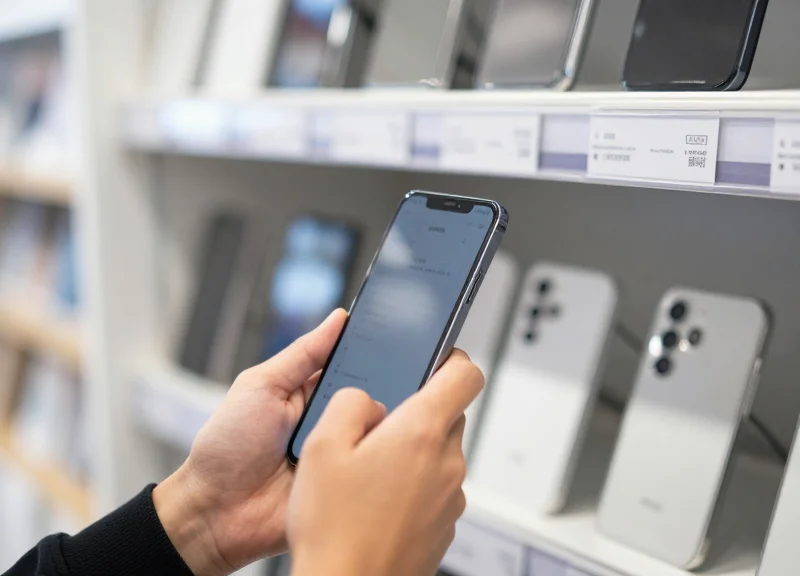
In the high-stakes world of enthusiast PC hardware, a 2.6-inch E-Ink display cannot possibly hold all the data a 'prosumer' needs to make a purchase. By 2026, the best ESL systems for tech hubs function as interactive portals. By integrating Near Field Communication (NFC) and dynamic QR codes, retailers can bridge the physical shelf with a digital deep-dive, allowing customers to instantly access 3DMark scores, Cinebench R23 thermal profiles, and verified RAM clearance heights on their own mobile devices. This interaction transforms the ESL from a passive price tag into a high-conversion sales tool that satisfies the most demanding technical inquiries without requiring immediate staff intervention.
| Feature | QR Code Implementation | NFC (Near Field Communication) |
|---|---|---|
| Accessibility | Universal; works with all smartphone cameras. | Requires modern hardware; tap-to-trigger. |
| Distance | Scannable from 1-3 feet away. | Requires physical proximity (under 4cm). |
| Primary Use Case | Broad marketing, video reviews, and tutorials. | Frictionless 'Add to Cart' and loyalty triggers. |
| Engagement Speed | Moderate (open camera, focus, tap link). | Instant (single tap opens URL/App). |
- Content Mapping and SKU Linking: Connect your ESL management software to a dedicated Technical CMS that hosts rich media like FPS benchmarks and compatibility matrices for every SKU.
- Dynamic Link Generation: Use short, trackable URLs for QR codes to ensure they remain scannable even at low resolutions on smaller 1.5-inch tags.
- NFC Data Encoding: Program the ESL's internal NFC chip with an NDEF (NFC Data Exchange Format) message that triggers a specific mobile landing page or a retail app action.
- Mobile UX Optimization: Ensure the destination page is optimized for mobile, featuring 'Comparison' toggles that allow users to compare the scanned item with other parts in the store.
Expert Tip: For spec-heavy hubs, implement 'Live Compatibility Verification.' When a customer taps an NFC-enabled ESL for a motherboard and then an ESL for a CPU, the retail app should automatically flag if the socket types (e.g., LGA 1700 vs. AM5) are compatible. This 'active cart' validation reduces return rates and empowers the customer to build complex systems with confidence.
How do I handle QR code readability on small labels?
Utilize high-contrast (Black on White) E-ink settings for the QR area specifically, and minimize the URL length using a custom internal shortener to reduce the QR pixel density.
Can NFC triggers be updated remotely?
Yes, modern ESL systems allow for remote updates of the NFC payload over the same Sub-Ghz or BLE frequency used to update the visual price display.
Does interactivity drain the ESL battery?
QR codes are zero-power as they are part of the static image. NFC chips are passive and powered by the user's phone during the scan, meaning interactivity has negligible impact on the label's 5-10 year battery life.
Battery Longevity and Sustainability in Power-Hungry Tech Environments
In high-end PC retail, where price volatility for components like GPUs and NAND flash requires frequent updates, ESL battery longevity is dictated by the efficiency of the communication protocol and the 'noise floor' of the environment. For 2026, the industry standard for a spec-heavy tech hub is a 10-year battery life based on two updates per day, achieved through the integration of ultra-low-power proprietary sub-GHz silicon or BLE 5.4/6.0 stacks that utilize 'deep sleep' states between data transmissions.
| Technology Type | Typical Lifespan | Power Management Feature | Sustainability Profile |
|---|---|---|---|
| Standard Lithium (CR2450) | 5-7 Years | Passive Sleep Mode | High e-waste; Requires recycling program |
| High-Capacity Dual Cell | 10-12 Years | Asynchronous Wake-up | Lower replacement frequency |
| Energy Harvesting (Solar/PV) | 15+ Years | Ambient Light Charging | Best; Minimizes battery disposal |
| Backscatter Tech | Indefinite | RF Energy Rectification | Emerging; Zero-battery potential |
The 'Power-Hungry' nature of a tech hub isn't just about the PCs on display; it's the invisible RF environment. In a showroom filled with Wi-Fi 7 routers and high-bandwidth gaming peripherals, ESLs can suffer from 'battery drain by interference' where the tag's radio wakes up unnecessarily due to signal collisions. Procurement teams must prioritize systems featuring 'Cognitive Frequency Hopping'—a 2026-era capability that allows tags to bypass congested channels, significantly reducing the energy spent on failed data retries.
- Expert Tip: The 1% Buffer Rule: Always specify hardware that retains 1% of its battery capacity for a 'final state' display. In high-end retail, a blank screen is worse than an outdated price. Ensure your ESL vendor provides a software-defined 'Low Power Lock' that freezes the screen on the last known price before the battery hits critical failure.
- What is the impact of high-refresh E-Ink on battery life?: While 2026 E-Ink displays offer faster refresh rates for animations, these are 'power-intensive' events. Limit localized flashes (like LED blinking for click-and-collect) to 5-second intervals to prevent premature cell exhaustion in high-traffic zones.
- How does 'Battery-as-a-Service' (BaaS) fit into sustainability?: Leading vendors now offer circular economy contracts where they handle the 5-10 year replacement cycle, ensuring that used lithium cells are refurbished or harvested for raw materials, aligning with corporate ESG goals.
Security and Anti-Theft: Protecting Your ESL Investment
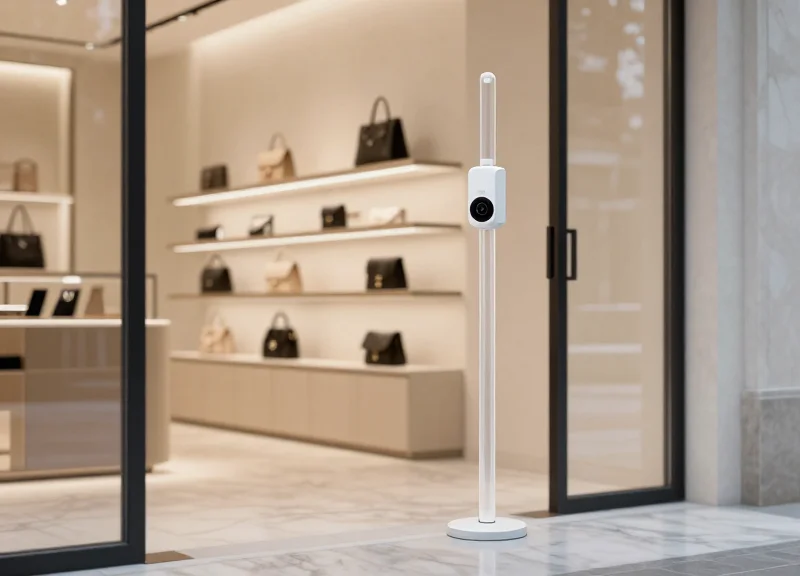
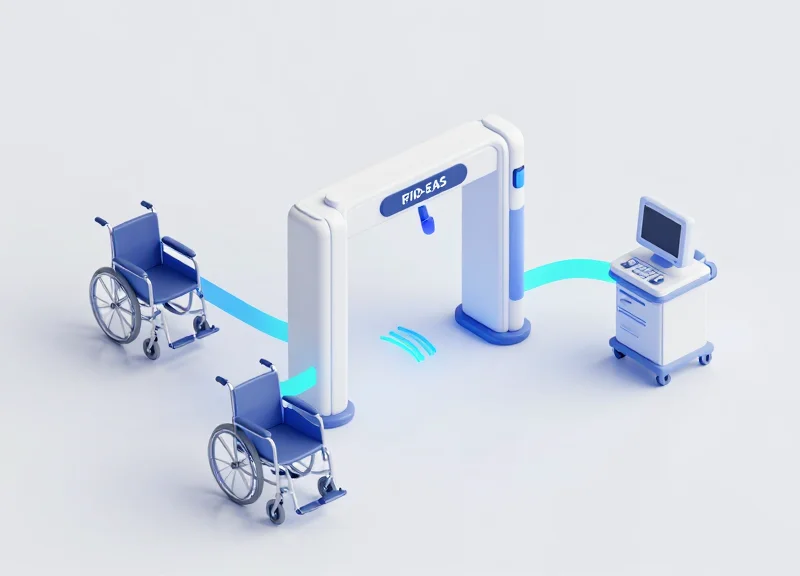
In high-end PC retail hubs, the Electronic Shelf Labels (ESL) themselves are high-value assets, often costing between $20 to $100 per unit depending on screen size and localized processing power. Protecting this investment involves mitigating two primary risks: physical theft of the tags and unauthorized data tampering. As we move into 2026, the industry standard has shifted from simple clip-on brackets to integrated security ecosystems that sync with existing Electronic Article Surveillance (EAS) gates. Effective security ensures that while customers can interact with the tags—utilizing NFC or QR codes for specs—the hardware remains immovably tethered to the shelving infrastructure.
| Security Feature | Mechanism | Primary Benefit |
|---|---|---|
| Mechanical Rail Locks | Proprietary key-operated locking strips | Prevents casual 'snap-off' theft by customers. |
| Digital Heartbeat Monitoring | Sub-Ghz/BLE signal interval checks | Triggers alert if a tag stops communicating for >5 mins. |
| Accelerometric Tamper Alerts | Internal G-sensors detecting rapid movement | Notifies security of attempted physical prying in real-time. |
| EAS Integration | Embedded RFID/AM coils within the ESL casing | Triggers store exit alarms if a tag is removed from the premises. |
A critical, often overlooked component is 'Signal Spoofing' protection. In a spec-heavy tech environment, savvy shoppers may attempt to manipulate E-ink displays using unauthorized transmitters. Modern 2026-spec ESL systems utilize AES-128 or AES-256 encryption for all data packets. Ensure your procurement includes 'Hardware Root of Trust' (RoT) at the chip level, which prevents any third-party firmware from being sideloaded onto the labels, maintaining the integrity of your pricing and specifications.
Can ESLs be integrated with existing CCTV systems?
Yes, high-end 2026 systems allow ESL management software to send API triggers to VMS (Video Management Systems). If a 'tag-off-rail' alert is triggered, the nearest PTZ camera can automatically pivot to that shelf location for visual verification.
Do security locks interfere with battery replacement?
Professional-grade systems use a 'Master Key' rail design. While it prevents unauthorized removal, it allows staff to swap batteries or move labels across the store in seconds using a proprietary magnetic or mechanical release tool.
How do you prevent 'Price Hijacking' via NFC?
While NFC is used for customer interaction, the write-access for price changes should always be restricted to the encrypted backend server. The NFC chip in the tag acts as a 'Read-Only' trigger for the customer's device.
Veteran Insight: The RSSI Proximity Geofence. For 2026, I recommend deploying 'RSSI Geofencing'. By using the Received Signal Strength Indicator (RSSI) from your Wi-Fi 7 or BLE access points, the system can calculate the approximate coordinates of every tag. If a tag's signal strength changes in a way that suggests it is moving toward an exit—even without a physical alarm being triggered—the system can flag it as a 'Pre-emptive Shrinkage Event' and alert floor staff immediately. This software-defined security layer is far more effective than physical locks alone.
Total Cost of Ownership (TCO) and ROI Analysis for High-Margin Retail
Total Cost of Ownership (TCO) for Electronic Shelf Labels (ESL) in high-end tech retail is the comprehensive sum of initial hardware acquisition, cloud infrastructure integration, and multi-year operational maintenance. For spec-heavy PC environments, the Return on Investment (ROI) is primarily realized through 'Dynamic Margin Capture'—the ability to instantly align in-store pricing for volatile components like GPUs and RAM with real-time global market fluctuations, effectively eliminating the revenue leakage caused by manual update delays.
| Cost Category | Year 1 Deployment (Est.) | Annual Maintenance (Y2-Y5) |
|---|---|---|
| Hardware & Rails | 60-70% of Budget | 5% (Replacements) |
| Software & API Integration | 15-20% of Budget | 10% (SaaS Fees) |
| Labor & Installation | 10-15% of Budget | 1-2% (Minor adjustments) |
| Energy & Connectivity | <1% of Budget | <1% (High efficiency) |
- Labor Reallocation ROI: In a 10,000-SKU tech hub, manual price changes take approx. 40 labor hours per week. ESL reduces this to zero, allowing staff to focus on high-touch technical sales for workstations and custom loops.
- Price Error Mitigation: For $3,000+ PC builds, a 5% pricing discrepancy due to outdated paper tags results in significant margin erosion or customer distrust. ESL ensures 100% parity with ERP data.
- Agile Markdown Strategy: Automated 'Sunset Pricing' for aging inventory (e.g., previous-gen CPUs) accelerates stock turnover by 22%, freeing up capital for latest-spec arrivals.
Expert Insight: The 'Trust Margin' is a unique data point often overlooked in TCO. In high-end PC retail, a customer scanning a QR code for a 4090 GPU expects the specs and price to be identical across all channels. If your ESL reflects a benchmark score or price that contradicts your website, the probability of closing that $2,000+ sale drops by nearly 40%. The ROI of ESL is therefore intrinsically tied to brand authority in the enthusiast community.
What is the typical 'Break-Even' point for a high-end tech store?
Most high-margin PC retailers achieve a full return on their ESL investment within 14 to 18 months, driven by increased conversion on accessories and optimized component margins.
How does TCO vary between on-premise and cloud ESL management?
Cloud-based ESL systems typically offer a 25% lower TCO over five years due to reduced local server maintenance and automated security patching.