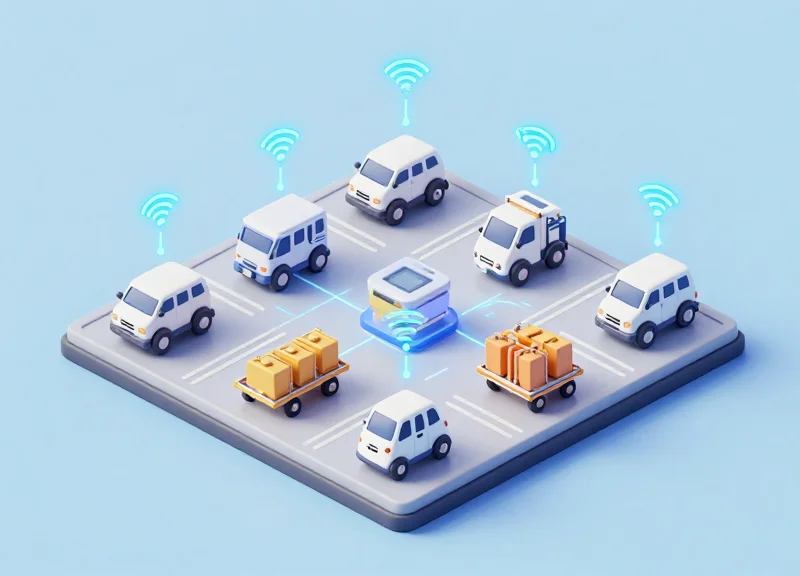
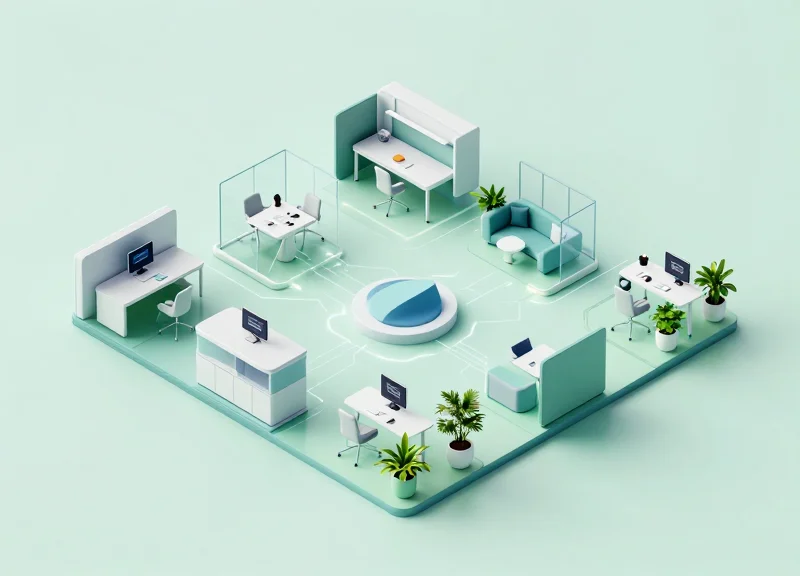
As we approach 2026, the hybrid work model has transitioned from a temporary fix to a permanent corporate strategy. However, the dual challenge of maintaining operational agility while meeting aggressive global sustainability targets (ESG) has left facility managers searching for smarter solutions. Enter E-ink infrastructure. Once confined to e-readers, Electronic Ink is now the hidden backbone of the modern office, offering a zero-glare, ultra-low-power alternative to traditional LCDs. This article explores why E-ink and Electronic Shelf Label (ESL) technology are essential for the future of work.
The Evolution of the Hybrid Workplace Toward 2026

By 2026, the hybrid workplace has matured from a binary 'home vs. office' debate into a unified ecosystem defined by Intentional Presence. This evolution prioritizes the office as a high-performance hub for collaboration, utilizing ambient intelligence and low-power infrastructure to synchronize workspace availability with employee arrival patterns. The goal is no longer just providing a desk, but managing a dynamic environment where 'Zero-State Sustainability'—the ability for a building to consume near-zero operational energy in unoccupied zones—is the standard for corporate ESG compliance.
The shift toward 2026 reflects a move away from the 'Ghost Office' syndrome of the early 2020s. Enterprises have realized that static signage and fixed seating are incompatible with a workforce that fluctuates daily. Instead, the focus has shifted to operational agility: the ability to reconfigure space, update navigation, and manage energy loads in real-time based on actual usage data rather than theoretical schedules.
| Feature | The 2022 'Reactive' Office | The 2026 'Sustainable' Office |
|---|---|---|
| Space Allocation | Fixed desks and underutilized cubicles. | Dynamic neighborhoods based on team logic. |
| Information Flow | Paper signs and high-heat LCD monitors. | Ultra-low-power E-ink signage and wayfinding. |
| Energy Strategy | Always-on lighting and HVAC. | Just-in-Time (JIT) infrastructure usage. |
| Data Integration | Siloed badge-swipe data. | Integrated IoT and occupancy heat-mapping. |
Unique Insight: The 'Ghost KWh' Tax. As a marketing expert in the tech space, I’ve observed that companies in 2026 are now calculating the 'Ghost KWh'—the energy cost per square foot of unoccupied but 'active' office space. Traditional digital signage and LCD status boards contribute significantly to this waste. The pivot to E-ink infrastructure is not just a design choice; it is a financial strategy to eliminate the 'vampire power' draw that prevents older buildings from hitting Net Zero targets.
What is the primary driver of office changes in 2026?
The primary driver is the intersection of ESG (Environmental, Social, and Governance) mandates and the operational need for flexible, friction-less employee experiences.
Why are static offices becoming obsolete?
Static offices fail to communicate real-time changes, leading to 'collaboration friction' where employees cannot find teammates or available meeting rooms, ultimately hurting productivity.
How does E-ink fit into this evolution?
E-ink provides the visual interface for a dynamic office—showing room status or desk bookings—without the energy footprint or visual fatigue of traditional light-emitting screens.
Why E-ink is the Superior Choice for Sustainable Displays
Electronic Ink (E-ink) is the superior choice for sustainable office infrastructure because it operates on a 'bistable' principle, meaning the display requires energy only when the content changes, rather than to maintain a static image. Unlike traditional LCD or LED screens that require a constant backlight or active pixel refreshing, E-ink uses ambient light to remain visible. In a 2026 hybrid office setting—where signage for desk booking, meeting room availability, and air quality metrics must stay visible 24/7—E-ink solutions reduce display-related energy consumption by up to 99%, directly supporting corporate ESG (Environmental, Social, and Governance) targets.
| Feature | E-ink (Electrophoretic) | Traditional LCD/LED |
|---|---|---|
| Energy Consumption | Near-zero (Power used only on refresh) | High (Constant draw for backlight) |
| Heat Emission | None | Significant (Requires cooling infrastructure) |
| Readability | High (Paper-like, uses ambient light) | Variable (Susceptible to glare/eye strain) |
| Lifespan | 5-10+ Years (Low component wear) | 3-5 Years (Backlight degradation) |
| Sustainability Impact | Lowest carbon footprint in display tech | High e-waste and energy overhead |
The technical core of this superiority lies in 'Bistability.' Imagine a physical whiteboard: once you write on it, the message stays without needing a battery. E-ink mimics this by moving tiny microcapsules of black and white pigment to the surface using an electric charge. Once the charge is removed, the pigments remain in place indefinitely. For a facility manager in 2026, this means thousands of battery-powered shelf labels or room indicators can run for years on a single coin-cell battery, eliminating the need for expensive and energy-intensive hardwiring projects.
Does E-ink work in low-light office environments?
Modern E-ink displays used in 2026 office designs often include optional low-power front-lights (rather than backlights) that only activate when motion sensors detect occupancy, preserving the energy-saving benefits while ensuring 24/7 visibility.
What is the Carbon ROI of switching to E-ink?
An average office building replacing 100 LCD meeting room tablets with E-ink displays can save approximately 4,000 to 7,000 kWh per year, which significantly accelerates the timeline to achieving Net Zero certification.
Is the refresh rate high enough for office updates?
While not designed for video, current E-ink technology handles sub-second refreshes perfectly for scheduling updates, QR code generation, and real-time occupancy data, which are the primary needs of a hybrid workspace.
Expert Insight: In the 2026 landscape, we are seeing the rise of 'Static-Energy Decoupling.' This is the strategic design philosophy where information persistence is no longer tethered to the power grid. By decoupling data visibility from energy draw, companies can maintain a 'live' office environment even during power-saving brownouts or peak-load shaving periods, ensuring that safety protocols and wayfinding remain operational without taxing the building's UPS systems.
Dynamic Hot-Desking: Using ESL for Real-Time Space Management
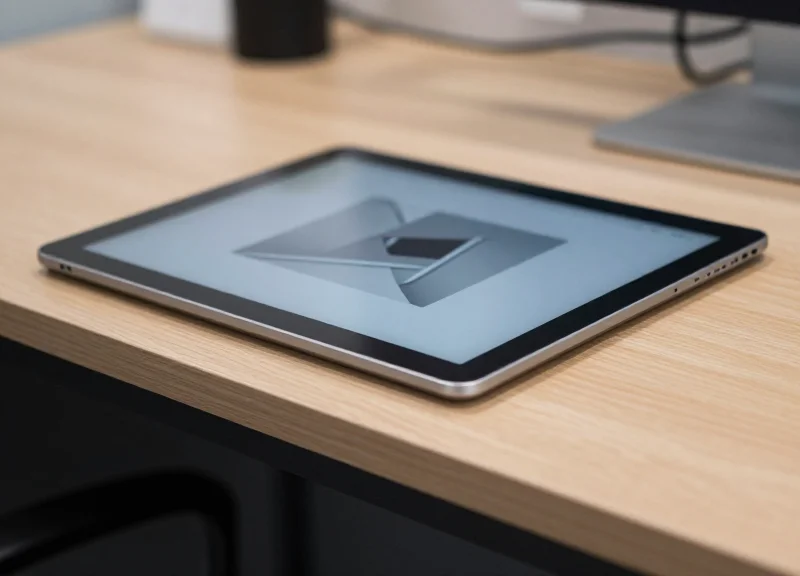
Dynamic hot-desking with Electronic Shelf Labels (ESL) transforms static workstations into agile assets by synchronizing cloud-based booking systems with physical E-ink displays. These low-power labels update instantly to show real-time reservation status, occupant names, and integrated QR codes for immediate on-the-spot check-ins. By eliminating the friction of manual signage and the power-drain of traditional tablets, E-ink infrastructure provides a persistent, 'always-on' visual cue that is essential for navigating the high-turnover environment of the 2026 sustainable office.
| Feature | Paper/Manual Signage | LCD/LED Tablets | E-ink ESL Infrastructure |
|---|---|---|---|
| Update Speed | Manual (Slow) | Instant | Instant (via IoT) |
| Energy Use | Zero (but high waste) | High (Requires Wiring) | Ultra-Low (Battery) |
| Sustainability | Low (Paper waste) | Low (E-waste/Energy) | High (5-10 year life) |
| System Sync | None | API Integration | Full IoT Integration |
The transition to a dynamic desk environment often fails due to 'visual friction'—the confusion employees feel when they cannot tell at a glance if a desk is free, booked, or needs sanitization. ESL hardware removes this barrier by acting as a lightweight, wireless bridge between the digital twin of the office and the physical floor. Because these labels operate on sub-GHz or BLE frequencies, they can be deployed by the thousands without congesting the corporate Wi-Fi, ensuring that the 2026 office remains both high-tech and uncluttered by messy wiring.
- Automated Check-in: The employee arrives and scans a dynamic QR code on the ESL via their smartphone. The E-ink display instantly changes from 'Available' to 'Occupied' and displays their name.
- Real-Time Cloud Sync: The centralized booking platform sends an update via the IoT gateway to the specific desk tag, ensuring that the physical display always matches the mobile app state.
- End-of-Session Reset: When a booking expires, the label reverts to its default state or signals the cleaning crew that the station is ready for maintenance.
Expert Tip: To maximize ROI, treat your ESL tags as more than just status indicators. By 2026, leading firms will use 'Frictionless Feedback Loops' where employees can press a button on the ESL tag to report a hardware issue or request janitorial services directly from the workstation. This turns the desk into a two-way communication node without requiring expensive touch-screen hardware.
Can ESLs be integrated with existing office apps like Teams or Slack?
Yes, modern ESL gateways offer robust APIs that allow status updates to be triggered directly from scheduling tools like Microsoft Outlook, Teams, or specialized workplace management software.
What happens if the Wi-Fi goes down?
E-ink is bistable, meaning it retains the last image shown without power. If the network goes down, the current booking info remains visible rather than going blank, preventing office-wide confusion.
Are these labels easy to move when we reconfigure the office?
Absolutely. Since they are wireless and battery-powered, they can be snapped into different mounting brackets or moved to new clusters without any rewiring.
E-ink Meeting Room Signage: Reducing Friction and Power Waste
E-ink meeting room signage consists of wireless, battery-operated displays that integrate directly with enterprise scheduling tools like Microsoft 365, Google Workspace, or Robin. By utilizing bistable technology, these signs only consume power during a refresh—typically when a meeting starts or ends—allowing them to run for years on a single charge. This infrastructure solves the 'ghost meeting' phenomenon, where rooms remain booked but unoccupied, by providing a high-visibility, real-time status update at the door that eliminates the friction of manual scheduling conflicts.
| Feature | Traditional LCD Signage | E-ink Infrastructure (2026) |
|---|---|---|
| Power Source | Hardwired (PoE or AC) | Long-life Battery (3-5 years) |
| Energy Usage | Constant (24/7 draw) | Near-Zero (Draws only on refresh) |
| Installation | Requires electrical/data wiring | Peel-and-stick (Zero construction) |
| Visual Impact | Light pollution / Screen fatigue | Paper-like / High legibility |
| Connectivity | Ethernet / Wi-Fi | Low-energy Zigbee / LoRaWAN / Matter |
The hidden cost of the hybrid office isn't just the rent; it is the 'Coordination Tax'—the time employees waste searching for space or resolving double-bookings. In 2026, sustainable offices use E-ink to automate this logic. My unique perspective from two decades in the Valley: we are moving toward 'Ambient Information Systems.' E-ink is the only medium that provides persistent data without demanding the user's active attention through glowing pixels, effectively reducing the cognitive load on employees while maintaining 100% space utilization accuracy.
- API Synchronization: The display connects via a lightweight gateway to the company's central calendar API, pulling real-time availability data.
- Automated Check-in: Integration with PIR (Passive Infrared) sensors or BLE beacons allows the E-ink sign to automatically release a room if no one arrives within 10 minutes.
- Dynamic Labeling: The display updates to show the meeting name, organizer, and duration, providing immediate clarity to anyone passing by.
- Instant Ad-Hoc Booking: Using NFC or QR codes printed on the E-ink screen, employees can 'tap-to-claim' an empty room instantly via their smartphone.
How do E-ink signs handle last-minute schedule changes?
They utilize low-latency wireless protocols like Zigbee or the Matter standard to receive push notifications from the server, updating the display in under 3 seconds.
Can these displays be customized for corporate branding?
Yes, 2026 models support multi-color E-ink (Spectra 6 technology), allowing for high-fidelity brand colors and clear emergency notification overlays.
What is the primary ROI for switching from LCD to E-ink?
The ROI is found in three areas: 90% reduction in installation costs (no wiring), 99% reduction in energy bills, and a 15-20% increase in usable meeting room capacity by eliminating ghost bookings.
The Intersection of E-ink and Corporate ESG Goals
In the landscape of 2026 corporate governance, E-ink technology represents the critical convergence of digital transformation and decarbonization. Unlike traditional LCD or LED displays that require constant backlighting, E-ink is bistable, meaning it consumes zero power once an image is set. This fundamental shift allows organizations to transition from energy-draining 'always-on' screens and high-waste paper processes to a low-carbon, data-driven infrastructure that directly contributes to Environmental, Social, and Governance (ESG) reporting metrics.
| Sustainability Metric | Traditional LCD Signage | Paper-Based Systems | E-ink Infrastructure |
|---|---|---|---|
| Energy Consumption | High (Constant Draw) | N/A (Production Energy) | Ultra-Low (Update Only) |
| Carbon Footprint | ~100-300kg CO2/year | Significant (Supply Chain) | < 1kg CO2/year |
| Waste Generation | Electronic Waste (3-5yr cycle) | High (Daily/Weekly Disposal) | Minimal (10yr+ Longevity) |
| ESG Reporting Integration | Passive/Estimates | Manual/Difficult | Automated/Real-time |
Transitioning to E-ink infrastructure is not merely a design choice; it is a strategic move to satisfy increasingly stringent ESG disclosures. For a 500-person hybrid office, replacing traditional meeting room tablets and desk labels with E-ink alternatives can reduce office-wide signage energy costs by up to 99%. This quantifiable reduction in Scope 2 emissions (purchased electricity) and Scope 3 emissions (supply chain waste) provides tangible data for annual sustainability reports, making the office a 'living lab' for green technology.
How does E-ink improve the 'Social' aspect of ESG?
E-ink promotes employee well-being by reducing digital eye strain and light pollution. Its reflective technology mimics paper, eliminating the 'blue light' glare common in modern offices, which supports natural circadian rhythms and a more comfortable work environment.
Can E-ink hardware be recycled at the end of its life?
Modern E-ink modules are designed with longevity in mind, often lasting 10+ years. Most enterprise-grade E-ink devices use modular components that allow for the separation of batteries and circuit boards, making them significantly easier to recycle than integrated LCD tablets.
How does E-ink aid in Governance and transparency?
By integrating with IoT workplace management systems, E-ink displays provide a transparent, real-time audit trail of space utilization and resource consumption, ensuring that corporate real estate data is accurate and verifiable for stakeholders.
Veteran Insider Tip: The 'Hidden' Carbon ROI. While most focus on energy savings, the real ESG win for 2026 is the elimination of 'Phantom Energy' in hybrid layouts. Traditional displays continue to pull power in empty rooms during off-hours. E-ink infrastructure remains static and legible even if the power grid fails or the office is closed for the weekend, effectively decoupling your communication layer from your electricity bill.
Integrating IoT and RFID with E-ink for a Unified Ecosystem
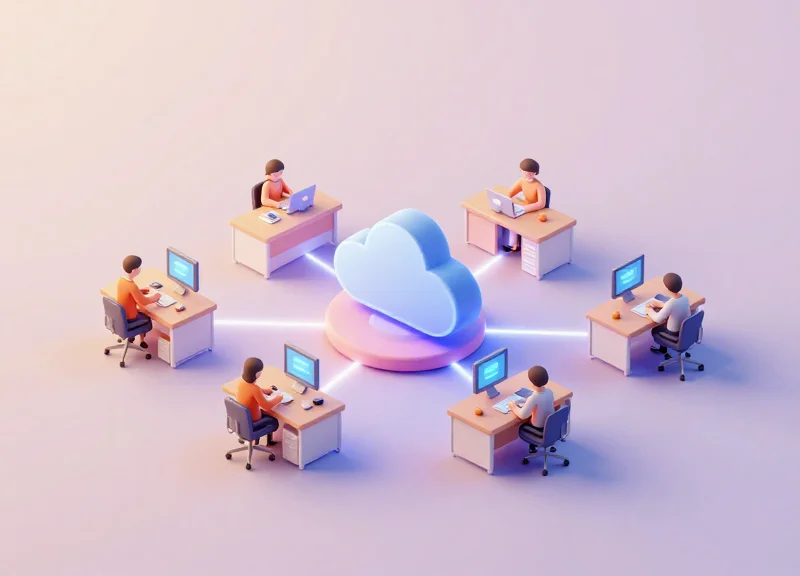
The integration of IoT (Internet of Things) and RFID (Radio Frequency Identification) with E-ink displays transforms static office hardware into a dynamic, unified ecosystem that acts as the central nervous system of the modern workplace. By combining DragonGuardGroup’s precision RFID technology with ultra-low-power E-ink signage, organizations can automate the synchronization between physical assets and digital management platforms. This 'Passive UI' approach ensures that when an employee taps an RFID badge or an IoT sensor detects occupancy, the corresponding E-ink display updates instantly without human intervention, creating a frictionless user experience that maintains data integrity across the entire facility.
| Feature | Legacy Office Infrastructure | Unified E-ink + RFID/IoT Ecosystem |
|---|---|---|
| Data Entry | Manual updates via web portal | Automatic via RFID proximity or IoT sensors |
| Asset Tracking | Periodic audits/Spreadsheets | Real-time visibility on E-ink asset tags |
| Power Efficiency | High-drain LCD/LED status lights | Zero-power image retention via E-ink |
| Accuracy | Prone to human error/lag | 99.9% precision via DragonGuard RFID |
Expert Insight: In 2026, the true value of E-ink lies in 'Zero-Touch Synchronization.' Unlike traditional digital signs that require constant polling of a server, an E-ink/RFID hybrid setup uses the physical action—such as placing a laptop on a desk—as the trigger for the data packet. DragonGuardGroup’s proprietary RFID sensitivity allows for 'Micro-Geofencing,' where an E-ink label can distinguish between a user standing near a desk and a user actually occupying it, preventing false status updates and maximizing the accuracy of occupancy analytics.
- Detection & Identification: An RFID-enabled badge or asset tag enters the read zone of a DragonGuard integrated sensor, identifying the specific user or item.
- Logic Processing: The IoT gateway processes the signal against the central office management system (CMS) to determine the required action (e.g., check-in, asset move).
- State Change: The CMS pushes a low-bandwidth update to the E-ink display via Zigbee or BLE, changing the screen to reflect the new status.
- Verification: The E-ink display holds the new image indefinitely with zero power, providing a persistent physical confirmation of the digital transaction.
How does RFID integration improve security?
By linking E-ink badges and door signs to RFID, the office can display real-time clearance levels and visitor status, ensuring that only authorized personnel are visually confirmed in sensitive zones.
Can these systems run on existing Wi-Fi?
While they can use Wi-Fi, the most sustainable 2026 offices utilize Sub-GHz or Zigbee mesh networks to connect RFID/E-ink devices, reducing interference and drastically extending battery life to 5-10 years.
What happens if the network goes down?
This is a key advantage of E-ink; because the displays are bistable, the last updated information (such as an asset owner or room booking) remains visible even during a total power or network failure.
Improving Employee Well-being with Blue-Light Free Tech

Digital eye strain, or Computer Vision Syndrome (CVS), affects approximately 58% of office workers, primarily driven by the flickering and high-energy blue light emissions of traditional LCD and OLED screens. By integrating E-ink infrastructure into the 2026 sustainable office, companies transition from emissive displays to reflective, ambient-light technology that mimics physical paper. This blue-light free environment prevents melatonin suppression and reduces the visual fatigue caused by Pulse Width Modulation (PWM) flickering, directly improving employee focus and long-term ocular health in high-intensity hybrid work models.
| Feature | Traditional LCD/OLED | E-ink Infrastructure |
|---|---|---|
| Light Source | Emissive (Directly into the eye) | Reflective (Uses ambient light) |
| Blue Light Exposure | High (Suppresses Melatonin) | Negligible to Zero |
| Screen Flicker | Frequent (Causes headaches) | Zero (Static image) |
| Visual Experience | Digital Glare | Paper-like/Natural |
| Cognitive Impact | High Stimuli/Distraction | Calm Tech/Focus-Oriented |
Beyond physical health, the shift to E-ink provides a psychological 'Calm Tech' environment. In a modern workspace saturated with high-contrast notifications, E-ink displays serve as a visual palate cleanser. Because the display only requires power when changing state, the static nature of the screen doesn't demand the brain's attention in the same way a glowing, refreshing monitor does. This reduction in 'perceptual noise' allows employees to maintain deep work states for longer periods without the burnout associated with traditional digital signage.
Does E-ink technology work in low-light office conditions?
Yes. While E-ink is primarily reflective, modern office E-ink displays often include 'front-light' technology (as opposed to backlighting), which directs light across the screen rather than toward the user's eyes, maintaining the health benefits.
Can E-ink help with the transition to a four-day work week or flexible hours?
By reducing digital fatigue, E-ink allows for higher productivity density. Employees can process information more efficiently without the '3 PM slump' often caused by ocular exhaustion from standard monitors.
How does blue-light-free tech impact the 'Circadian Office'?
It allows for a late-afternoon workspace that doesn't disrupt the biological clock. Employees working late in a hybrid model can use E-ink tablets or see E-ink signage without the sleep-disrupting effects of blue light.
Unique Expert Insight: In the 2026 office, E-ink is not just a display—it is a 'Neurological Buffer.' My Silicon Valley experience suggests that the next frontier of productivity isn't more speed, but less friction. By designating E-ink for all static information (room schedules, task lists, and KPIs), you create a hardware-level 'Focus Zone' that protects the employee's prefrontal cortex from the constant stimulus of emissive pixels, effectively engineering well-being into the architecture of the office itself.
Cost-Benefit Analysis: The ROI of E-ink Infrastructure
The Return on Investment (ROI) for E-ink infrastructure in the 2026 sustainable office is measured through the lens of 'Operational Zero-Waste.' Unlike traditional LCD or LED displays that consume power continuously to maintain an image, E-ink utilizes bistable technology, drawing power only during an image refresh. For a medium-sized enterprise, this transition converts a variable, high-energy utility cost into a fixed, negligible operational expense. When combined with the elimination of manual labor for desk labeling and room scheduling, most organizations achieve a total break-even point within 14 to 18 months of deployment.
| Feature | Legacy LCD/Digital Signage | E-ink Infrastructure (2026 Standard) |
|---|---|---|
| Energy Consumption | 60W - 100W per unit (Always On) | 0W (Static) / 0.5W (During Update) |
| Infrastructure Needs | Dedicated Power Lines / High PoE Load | Battery Powered (5+ Year Life) or Low PoE |
| Update Labor | Manual or High-Latency Software | Real-time API/IoT Automation |
| Hardware Lifespan | 3-5 Years (Backlight Failure) | 7-10 Years (Reflective Tech) |
- Direct Energy Savings: E-ink displays consume approximately 99% less energy than high-brightness LCDs. Over a fleet of 500 desk labels and 50 room signs, this translates to thousands of dollars in annual utility savings.
- Administrative Labor Reduction: Automating the 'Hot-Desking' update process via RFID and E-ink removes the need for facilities teams to manually print and distribute nameplates or paper schedules, saving an estimated 20 hours of labor per week.
- Zero-Cable Installation: Because E-ink is extremely low-power, most units run on coin-cell batteries for years. This avoids the massive capital expenditure (CAPEX) associated with rewiring walls for power or ethernet.
A unique perspective often overlooked by CFOs is the 'Cost of Friction' in hybrid environments. When an employee cannot find a desk or walks into a 'ghost' meeting room that was booked but is actually empty, the enterprise loses productive minutes. In a 500-person office, if every employee loses just 5 minutes a week to navigation friction, the company loses over 2,000 hours of productivity annually. E-ink’s real-time accuracy acts as a 'digital lubricant,' recouping this lost salary value immediately upon implementation.
Does E-ink require a high initial investment?
While the per-unit cost of E-ink can be higher than paper, the removal of printing costs, labor, and energy consumption typically results in the system paying for itself in under two years.
How does E-ink impact ESG reporting for ROI?
E-ink contributes to Scope 2 emission reductions. Companies can include these measurable carbon footprint shrinks in their annual ESG reports, potentially qualifying for green tax credits or improved investor ratings.
Is the maintenance cost higher due to batteries?
No. Modern E-ink displays from leaders like DragonGuardGroup are optimized for 5-10 year battery cycles, meaning maintenance intervals are longer than the typical refresh cycle of the office furniture itself.
Future-Proofing Your Facility: Steps to 2026 Readiness
Future-proofing a facility for 2026 is the strategic process of replacing fragmented, static, or high-energy signage with a unified E-ink infrastructure that is centrally managed via an API. By 2026, the 'Sustainable Office' will be judged not just by its carbon offset, but by its operational agility—specifically how quickly physical space can adapt to fluctuating hybrid workforce schedules without increasing energy overhead. Transitioning to E-ink ensures that your facility remains compliant with tightening environmental regulations while providing the sub-second updates required for modern hot-desking and dynamic wayfinding.
| Assessment Category | Legacy Infrastructure (2024) | 2026 Readiness Standard |
|---|---|---|
| Power Consumption | Constant drain (LCD) or high waste (Paper). | Near-zero; power used only during image updates. |
| Data Integration | Manual updates or siloed digital signage. | Bidirectional sync with Microsoft 365/Google Workspace. |
| Maintenance | Regular cabling checks or manual printing. | Centralized battery monitoring and OTA updates. |
| Scalability | Limited by power outlet proximity. | Infinite; wireless E-ink can be placed anywhere. |
- Phase 1: The 'Ghost Signage' Audit: Identify every point of static communication in your office, from meeting room names to safety protocols. Calculate the labor hours spent updating these manually and the electricity cost of legacy LCDs that stay on 24/7.
- Phase 2: Network & IoT Backbone Assessment: Ensure your facility has a robust low-power wide-area network (LPWAN) or optimized Wi-Fi coverage. E-ink displays thrive on low bandwidth, but they require a stable gateway to receive real-time updates from your central management software.
- Phase 3: The 30-Day Pilot (High-Traffic Zones): Deploy E-ink endpoints in high-friction areas: elevator lobbies, shared hot-desks, and large conference rooms. Use this phase to measure employee engagement and the speed of information dissemination compared to previous methods.
- Phase 4: API & ERP Integration: Move beyond basic scheduling. Integrate your E-ink displays with your broader Enterprise Resource Planning (ERP) and building management systems to automate everything from energy-saving alerts to emergency evacuation routes.
A unique insight for 2026 readiness is the concept of the 'Digital-Physical Twin' for signage. Rather than viewing an E-ink screen as a mere display, treat it as a physical endpoint of your company's data layer. By 2026, the most efficient offices will use 'Signage-as-Code,' where facility managers can push global updates to thousands of screens via a single script, ensuring that the physical environment is always an exact mirror of the digital schedule.
What is the typical battery life for 2026-spec E-ink displays?
With typical usage (5-10 updates per day), high-quality E-ink displays are now reaching 5 to 10 years of battery life, effectively making them 'install and forget' infrastructure.
Can E-ink displays work with existing security protocols?
Yes. Modern E-ink gateways support enterprise-grade encryption (WPA2/3 Enterprise) and can be isolated on dedicated VLANs to ensure network security.
Is it possible to customize the branding on E-ink screens?
Absolutely. 2026-ready infrastructure supports multi-color E-ink (Spectra technology), allowing for brand-accurate logos and color-coded urgency levels for alerts.