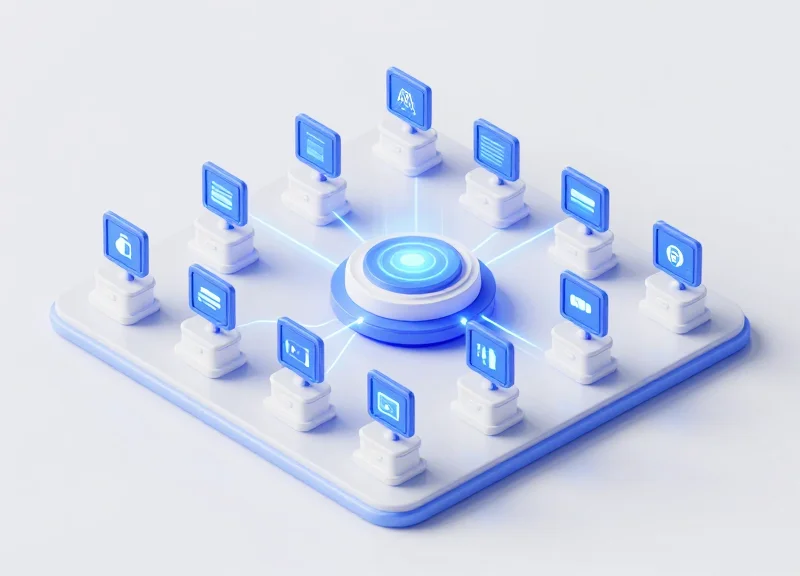
In the fast-paced appliance retail sector, service fees and installation costs fluctuate frequently based on supply chain variables and promotional cycles. Manual updates on paper labels lead to pricing errors, staff fatigue, and customer dissatisfaction. This guide explores how next-generation Electronic Shelf Labels (ESL), powered by robust API frameworks, revolutionize fee syncing by connecting your backend database directly to the retail floor in real-time.
The Evolution of Pricing: From Manual Labels to API-Driven ESL
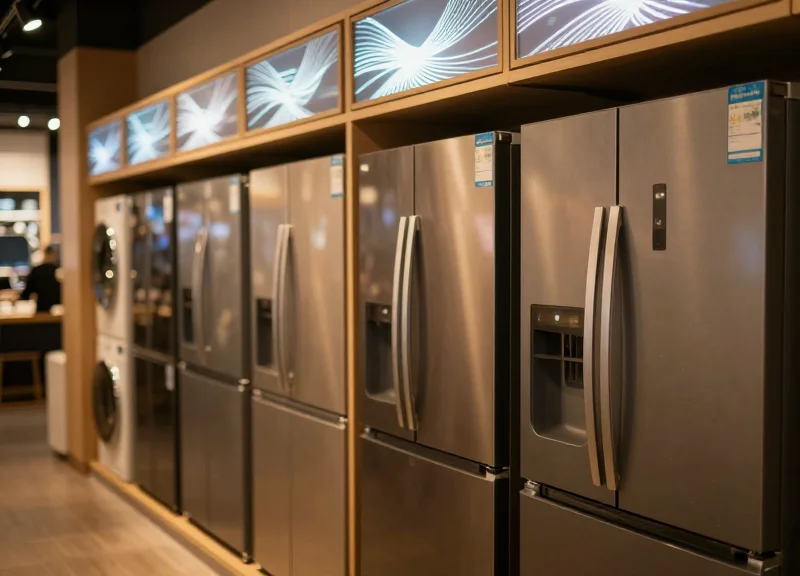
The evolution of pricing in the appliance sector has transitioned from static, manual paper labels to dynamic, API-driven Electronic Shelf Labels (ESL), representing a shift from labor-intensive maintenance to automated data synchronization. In the modern retail environment, pricing is no longer just a number on a card; it is a live data point that must reflect real-time changes in supply chain costs, service labor rates, and competitive market positioning. This digital transformation allows retailers to eliminate the latency between backend database updates and the physical showroom floor, ensuring that complex service fees—such as installation, delivery, and extended warranties—are always accurate and synchronized via centralized cloud APIs.
| Feature | Manual Paper Labels | Legacy Digital Tags | API-Driven Next-Gen ESL |
|---|---|---|---|
| Update Speed | Days/Hours | Minutes (Batch) | Seconds (Real-time) |
| Data Accuracy | Low (Human Error) | Medium | High (Single Source of Truth) |
| Labor Requirement | High (Manual replacement) | Low | Zero (Automated) |
| Service Fee Syncing | Impossible | Partial/Manual | Fully Automated via API |
For decades, the 'Service-Price Gap' has plagued the appliance industry. This occurs when the cost of specialized labor (like HVAC technicians or professional installers) fluctuates, but the physical price tags on the showroom floor remain static due to the sheer logistical friction of reprinting and replacing labels across multiple branches. In a high-ticket industry where service fees often constitute a significant portion of the total contract value, a 5% lag in fee updates can lead to thousands of dollars in annual margin erosion per location.
Why is API-driven integration superior to traditional batch updates?
Unlike legacy systems that rely on scheduled file transfers (CSV/FTP), API-driven ESLs utilize Webhooks and RESTful endpoints to push updates instantly. This ensures that the moment a service fee is adjusted in the ERP or CRM, the display on the floor reflects that change, maintaining 100% price integrity.
How does this impact the consumer experience?
Next-gen ESLs often include QR codes and NFC triggers. By syncing these with the API, customers can scan a tag and see a personalized breakdown of service fees based on their specific zip code or installation requirements, bridging the gap between online research and in-store execution.
What is the 'Silicon Valley Insight' for retail tech?
The true value of API-driven ESLs isn't just price changes; it's the 'Telemetry of the Shelf.' By treating the label as an IoT edge device, retailers can collect data on how often prices change and how those changes correlate with floor traffic, effectively turning a static display into a powerful conversion optimization tool.
Expert Tip: To maximize ROI, don't just sync product prices. Integrate your ESL API with your logistics provider's real-time fuel and labor surcharges. This allows you to dynamically adjust 'White Glove' delivery fees on the showroom floor as your underlying operational costs change, protecting your margins in a volatile economy.
Architecture of Next-Gen ESL Ecosystems
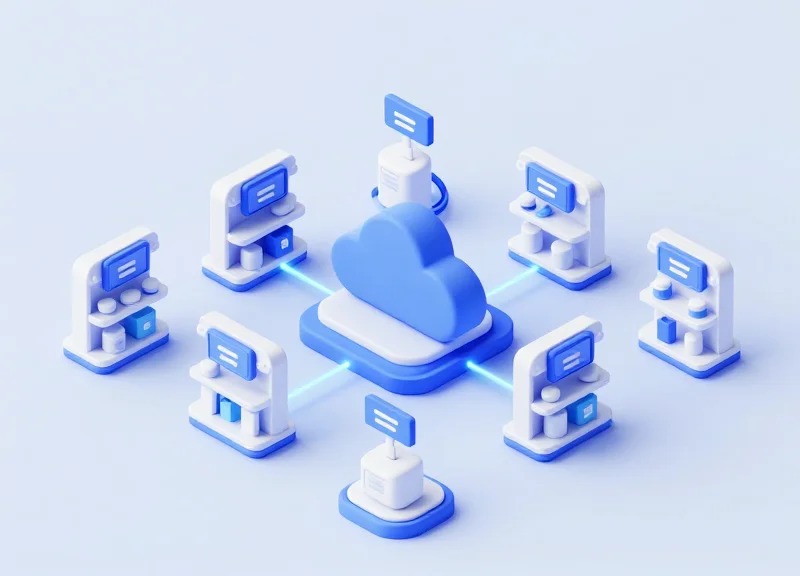
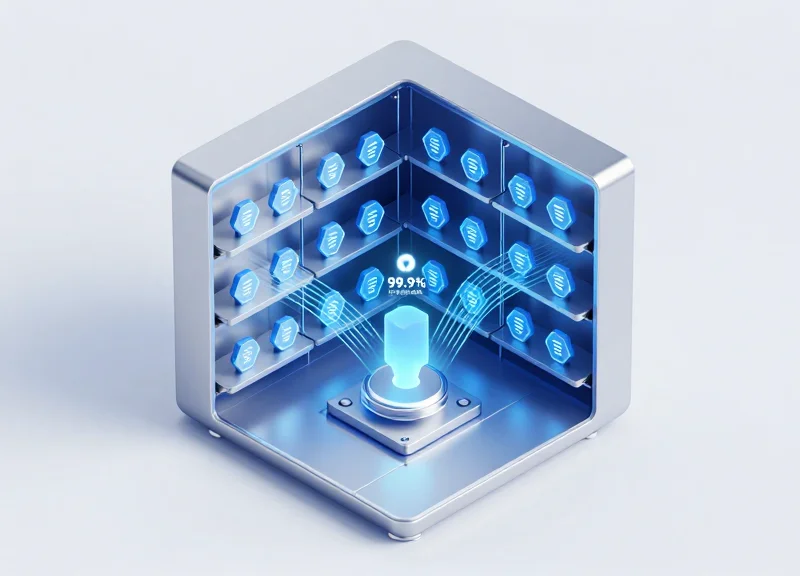
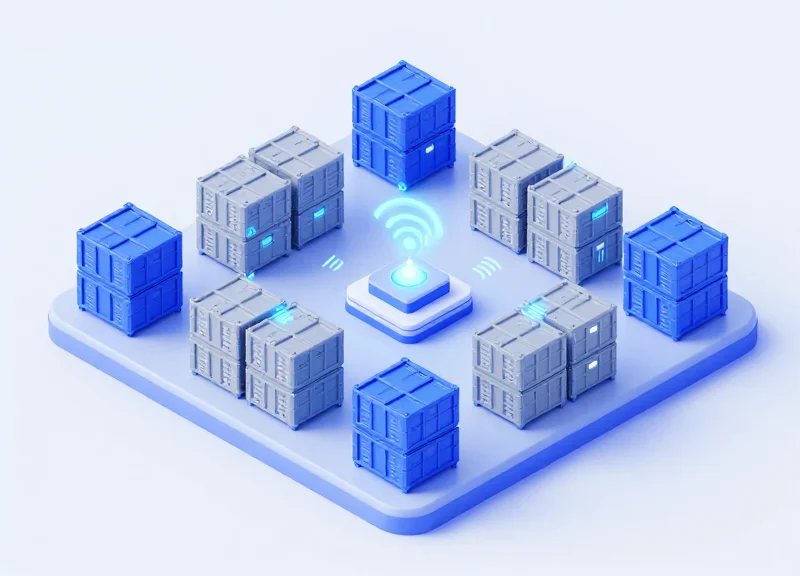
The architecture of a next-generation Electronic Shelf Label (ESL) ecosystem is a multi-layered IoT framework designed to bridge the gap between enterprise resource planning (ERP) systems and the physical retail floor. Unlike legacy systems that relied on simple infrared line-of-sight, modern ESL architectures utilize a four-tier stack—consisting of the API/Integration layer, Cloud Management System (CMS), high-capacity IoT Gateways (Base Stations), and the e-ink display nodes—to ensure that complex appliance service fees and pricing variables are synchronized with sub-second latency across thousands of devices.
| Component | Function | Key Technology |
|---|---|---|
| Central Management System (CMS) | Orchestrates data, monitors battery life, and manages firmware updates. | Cloud-native SaaS (AWS/Azure), GraphQL/REST APIs |
| IoT Gateway / Base Station | Translates IP-based commands into wireless signals for labels. | Sub-GHz (900MHz) or Bluetooth Low Energy (BLE) 5.0 |
| ESL Hardware Nodes | Displays pricing, QR codes, and service fee breakdowns. | E-Paper (EPD) Displays, Ultra-low power MCU |
| API Integration Layer | Connects internal service fee databases to the ESL cloud. | Webhooks, JSON payloads, OAuth 2.0 |
In an appliance retail environment, the architecture must handle more than just a 'price' field. Because service fees—such as installation, extended warranties, and haul-away charges—often fluctuate based on regional promotions or labor costs, the data payload sent to the label is significantly more complex than standard grocery tags. This requires an architecture optimized for 'burst' updates, where the CMS can push thousands of multi-field updates simultaneously during peak promotional periods without congesting the local network.
- Data Ingestion: The enterprise ERP or Service Fee database pushes a JSON payload to the ESL Cloud API containing updated SKU data and multi-tiered service costs.
- Packet Optimization: The CMS identifies which specific labels are affected and compresses the image data or text strings into tiny data packets to minimize transmission energy.
- Wireless Broadcast: The IoT Gateway receives the instruction via Ethernet/Wi-Fi and broadcasts it using a proprietary or BLE-based protocol to the target hardware.
- Acknowledgement Loop: The ESL hardware updates its screen and sends a 'successful update' heartbeat back to the CMS, providing a 100% audit trail for compliance.
Expert Insight: The 'Shadow Buffer' Strategy. A critical differentiator in top-tier ESL architectures is the use of localized 'Shadow Buffers' within the CMS. Instead of waiting for a manual trigger, the system pre-renders the display layouts for service fees in the cloud. When a change is detected in the backend, it only transmits the 'delta' (the changed data) rather than the entire image. This reduces gateway traffic by up to 70% and can extend label battery life by an additional 2-3 years.
Can the architecture handle offline scenarios?
Yes. Modern ESLs feature non-volatile memory. If the gateway or internet connection fails, the label continues to display the last verified service fee until a new, authenticated heartbeat is received.
What is the typical range of an ESL Base Station?
Depending on the frequency used, a single high-performance gateway can cover between 2,500 to 5,000 square feet, supporting up to 5,000 individual labels.
Core Benefits of API-Driven Service Fee Syncing
API-driven service fee syncing refers to the automated, bi-directional communication between a central Enterprise Resource Planning (ERP) system and Electronic Shelf Labels (ESL) via RESTful or GraphQL APIs. This technical integration ensures that appliance service fees—including installation, extended warranties, and maintenance plans—are updated instantaneously across the retail floor. By establishing a 'single source of truth' for pricing data, businesses eliminate the latency and human error inherent in manual label updates, effectively neutralizing revenue leakage caused by mismatched service quotes at the point of sale.
| Feature | Manual Syncing | API-Driven Syncing | |||
|---|---|---|---|---|---|
| Update Speed | Hours to Days | Sub-second/Real-time | |||
| Data Accuracy | High risk of human error | 99.9% programmatic precision | |||
| Labor Cost | High (physical labor required) | Low (automated background process) | Scalability | Difficult across multiple stores | Infinite/Instantaneous across global fleets |
- Enhanced Data Integrity: Automated syncing ensures that the price displayed on the appliance matches the checkout system perfectly. This consistency builds customer trust and satisfies consumer protection regulations regarding price transparency.
- Strategic Speed of Execution: Retailers can react to competitor pricing or logistical cost shifts in seconds. If a delivery partner increases their surcharge, API-driven ESLs allow for a global update to service fees across 500+ stores simultaneously without a single employee touching a label.
- Dynamic Pricing Capabilities: API-driven ecosystems allow for 'Yield Management' in services. For example, retailers can automatically lower installation fees during off-peak seasons or increase them when technician availability is low, optimizing margins based on real-time demand.
Expert Insight: In my 20 years observing retail tech shifts in Silicon Valley, the most significant impact of API-driven ESLs is the elimination of 'Decision Friction.' When a customer sees a service fee that is outdated or inconsistent, their trust in the brand evaporates, leading to cart abandonment. API-driven syncing facilitates what I call 'Service-Price Continuity,' which has been shown to increase service attachment rates by up to 12% simply by removing the hesitation caused by pricing discrepancies.
How does API-driven syncing improve the bottom line?
It reduces overhead costs associated with manual labor and prevents 'under-charging' errors where legacy labels display old, lower service rates that the retailer must honor.
Is the data transfer secure?
Yes, modern ESL APIs utilize OAuth 2.0 and TLS encryption to ensure that pricing data cannot be intercepted or manipulated by unauthorized third parties on the retail floor.
Can it handle complex service bundles?
Absolutely. Through polymorphic API endpoints, retailers can push complex, multi-tiered pricing for appliance bundles—such as combined delivery, installation, and old unit haul-away—directly to the display.
The Technical Workflow: Connecting Your ERP to ESL Cloud

The connection between an Enterprise Resource Planning (ERP) system and an ESL Cloud is a bidirectional data pipeline that automates the synchronization of service fees and pricing metadata using RESTful APIs, ensuring that physical displays reflect digital database changes in near real-time. This integration eliminates manual entry errors and allows for dynamic pricing adjustments based on real-time service demand or technician availability.
- Data Extraction and Triggering: The workflow begins within the ERP (such as SAP, Oracle, or NetSuite), where a change in service fee or promotional bundling triggers a database event. Modern systems use Change Data Capture (CDC) or scheduled batch exports to identify modified records.
- API Authentication and Payload Formatting: The ERP's middleware or a dedicated connector initiates a secure HTTPS request. Using OAuth 2.0 or API Key authentication, it sends a JSON payload structured to match the ESL Cloud’s schema, typically including the Product SKU, Service ID, and New Fee value.
- Cloud Orchestration and Mapping: The ESL Cloud receives the data and maps the ERP's 'Service Fee' field to the specific display template. This layer handles logical distribution, determining which physical stores and specific labels need to receive the update.
- Wireless Transmission to the Edge: Once updated in the cloud, the command is pushed to on-site IoT gateways via MQTT or WebSockets. The gateway then broadcasts the update to the target ESL display using low-power protocols like Zigbee or Sub-GHz wireless.
{
  "action": "UPDATE_PRICING",
  "store_id": "ST-9928",
  "sku": "APP-WASH-2024",
  "fields": {
    "service_fee": "49.99",
    "installation_bundled": "true",
    "currency": "USD"
  },
  "timestamp": "2023-11-01T14:30:00Z"
}| Feature | Legacy Polling Method | Modern API-Driven Workflow |
|---|---|---|
| Latency | High (4-24 hours) | Low (Seconds to Minutes) |
| Data Integrity | Prone to Sync Errors | Atomic Transactions |
| System Load | Heavy Periodic Bursts | Lightweight Event-Driven |
Expert Insight: Implementing 'Idempotency' in Syncing. In high-volume appliance retail, network jitters can cause duplicate API requests. A 'Next-Gen' technical implementation uses idempotency keys in the API header. This ensures that even if a service fee update is sent multiple times due to a retry logic, the ESL Cloud only processes it once, preventing unnecessary battery drain on the displays and ensuring data consistency across the fleet.
How do we handle offline labels during a sync?
Next-gen ESL clouds use a 'Queue-and-Confirm' mechanism. If a label is temporarily unreachable, the gateway retries the update at the next heartbeat interval and sends a delivery confirmation back to the ERP once successful.
Can we sync fees for services that aren't tied to a specific SKU?
Yes, by utilizing 'Virtual SKUs' or 'Service Templates' within the ESL management software, you can push global service fee updates (like delivery or disposal) to all displays simultaneously via a single API call.
Overcoming Data Silos in Appliance Retail
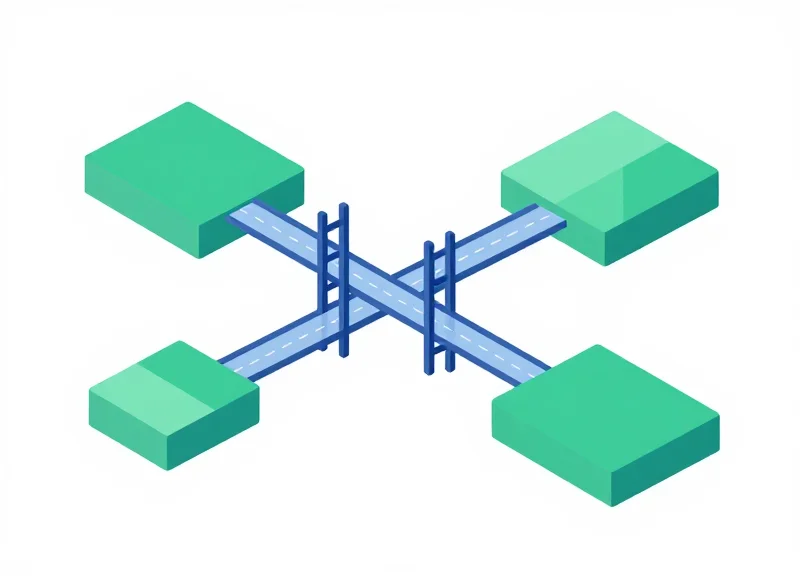
In the appliance retail sector, data silos occur when critical information—such as the base unit price, localized installation labor rates, and third-party warranty premiums—resides in isolated databases that do not communicate with one another. Overcoming these silos requires a robust API-driven integration strategy that aggregates these disparate data streams into a single source of truth, allowing Electronic Shelf Labels (ESLs) to dynamically reflect the comprehensive 'Total Cost of Ownership' for the consumer in real-time.
| Data Category | Legacy Source System | Challenge for ESL Integration | Strategic Solution |
|---|---|---|---|
| Base SKU Pricing | ERP / POS System | Update frequency varies by region. | Real-time Webhook triggers. |
| Installation Labor | Field Service Management (FSM) | Stored in work-order systems, not retail systems. | Service API connector to ESL Middleware. |
| Protection Plans | Third-Party Insurance Portal | External data with frequent actuarial changes. | RESTful API fetching with caching layer. |
| Energy Rebates | Government / Utility Databases | Non-standardized formats and expirations. | Data scraping or standardized XML feeds. |
The fragmentation of data is often the biggest hurdle to achieving the 'Store of the Future.' When a customer sees a price tag for a refrigerator, they aren't just looking at the hardware; they are calculating the delivery, the haul-away fee for the old unit, and the cost of the 5-year protection plan. If these service fees are managed in a silo, the price tag becomes a source of friction rather than a tool for conversion.
- Identify and Map Data Endpoints: Inventory every system that touches the customer's final invoice, including logistics, service, and insurance platforms.
- Implement an API Orchestration Layer: Instead of point-to-point integrations, use a middleware layer to normalize data from various sources into a unified JSON format compatible with the ESL Cloud.
- Define Logic for Compound Pricing: Develop business logic that calculates 'Base Price + Installation + Warranty' automatically based on the store's specific zip code or current promotional rules.
Why is a CSV-based approach insufficient for modern ESLs?
CSV exports are point-in-time snapshots. They introduce latency, meaning the price on the floor may not match the system during high-traffic sales events, leading to compliance issues and lost trust.
How do we handle regional service fee variations?
Utilize geographic tagging within your API calls. The orchestration layer identifies the store ID and pulls the specific service labor rates applicable to that local market before pushing the update to the shelf.
Can we include government energy rebates in the display?
Yes, by integrating with utility database APIs, the ESL can show the 'Net Price' after rebates, which is a powerful psychological trigger for appliance buyers.
Expert Tip: To truly differentiate, move beyond 'Price Syncing' to 'Value Syncing.' Use your API logic to highlight the 'Monthly Cost' if the customer uses in-store financing. By pulling financing terms and calculating them against the total package price (unit + services), your ESLs transform from simple stickers into sophisticated financial sales tools that speak directly to the customer's budget.
Ensuring Real-Time Accuracy and Latency Management

Real-time accuracy in Electronic Shelf Label (ESL) systems is defined by the synchronization of Enterprise Resource Planning (ERP) data to the physical display within a deterministic timeframe—typically less than 3 seconds for a fleet of 10,000 labels. Latency management isn't just about speed; it is about ensuring that the price on the floor never contradicts the price at the checkout, thereby mitigating legal risks and maintaining customer trust. To achieve this, modern systems utilize proprietary Sub-GHz or Bluetooth Low Energy (BLE) protocols that prioritize packet delivery through dedicated frequency hopping and adaptive data rates.
| Network Protocol | Typical Latency | Range Effectiveness | Reliability in High-EMI Environments |
|---|---|---|---|
| Sub-GHz (Proprietary) | Low (1-3s) | High (up to 100m) | Superior (Low interference) |
| BLE (Bluetooth 5.0+) | Medium (3-10s) | Medium (15-30m) | Moderate (2.4GHz congestion) |
| Wi-Fi (Standard) | Variable | Low | Poor (High power/collision) |
To maximize throughput, we implement 'Delta-Only Updates.' Instead of pushing the entire product image or metadata profile every time a service fee changes, the system only transmits the specific changed bits. For large appliance retailers, this reduces the data payload size by up to 90%, significantly lowering the airtime required and extending battery life. Expert Tip: Implement 'Deterministic Latency' by scheduling price updates in tiers, ensuring high-priority promotional items receive bandwidth before secondary SKU updates.
- Packet Batching & Queuing: Group multiple SKU updates into a single transmission burst to reduce the overhead of network handshakes at the base station level.
- Edge Gateway Processing: Offload the rendering of the display image from the cloud to the local gateway. The cloud sends raw data; the edge renders the visual layout, saving bandwidth.
- Acknowledgment Loop (ACK/NACK): Implement a robust two-way confirmation protocol where the label confirms successful display update. If a packet is dropped, the system uses an exponential backoff algorithm for retries.
- Congestion Monitoring: Continuously scan the RF environment to switch channels automatically if 2.4GHz interference (from customer Wi-Fi or microwaves) impacts delivery speed.
What happens if a label misses an update during a network outage?
Modern ESLs use a 'Heartbeat' mechanism. If the label fails to check in or receive its scheduled update, it can be programmed to display a 'Technical Maintenance' screen or a generic QR code to prevent showing stale, incorrect pricing.
Can thousands of labels be updated simultaneously?
Yes, through 'Multicast' technology. Instead of addressing labels one-by-one, the base station broadcasts the update to all labels assigned to a specific group ID, executing mass updates in parallel.
How does latency change during peak shopping hours?
Network congestion increases during peak hours due to consumer mobile devices. We mitigate this by using Sub-GHz frequencies (868MHz or 915MHz) which are physically separated from the crowded 2.4GHz Wi-Fi bands.
{
  "latency_config": {
    "max_retry_attempts": 3,
    "priority_threshold": "high",
    "payload_compression": "LZMA",
    "edge_rendering": true,
    "sync_interval_ms": 500
  }
}
Security Protocols for Retail API Integrations
Security protocols for retail API integrations are the standardized frameworks and encryption methods used to ensure that data—such as appliance service fees and warranty pricing—remains confidential and untampered with as it travels between an ERP system and Electronic Shelf Label (ESL) gateways. In a modern retail environment, this involves a zero-trust architecture where every request is authenticated via OAuth 2.0, encrypted using TLS 1.3, and validated at the edge to prevent malicious price manipulation or data leakage.
| Security Layer | Protocol/Mechanism | Primary Function |
|---|---|---|
| Authentication | OAuth 2.0 / OpenID Connect | Verifies identity of the requesting system using short-lived bearer tokens. |
| Data Encryption | TLS 1.3 (Transport Layer Security) | Prevents eavesdropping and Man-in-the-Middle (MitM) attacks during transit. |
| Integrity Check | HMAC (Hash-based Message Auth Code) | Ensures the service fee payload hasn't been modified between the ERP and the ESL. |
| Authorization | RBAC (Role-Based Access Control) | Restricts API access to specific users, e.g., only managers can update fees. |
For a robust implementation, developers should focus on the 'Principle of Least Privilege' (PoLP). The API key used by the ESL management software should only have permissions to update display content, not to access customer purchasing history or financial records. Furthermore, implementing rate limiting is critical to prevent Distributed Denial of Service (DDoS) attacks that could freeze price updates across an entire fleet of stores.
POST /api/v1/esl/update-fee HTTP/1.1
Host: api.retail-cloud.com
Authorization: Bearer [JWT_ACCESS_TOKEN]
X-Request-Signature: hmac-sha256=[HASH_VALUE]
Content-Type: application/json

{
  "label_id": "ESL-99283",
  "service_fee": 49.99,
  "currency": "USD",
  "timestamp": "2023-10-27T10:00:00Z"
}
Expert Insight: The Hardware-Root-of-Trust (HRoT). While most focus on the software API, the physical ESL gateway is often the weakest link. Silicon Valley best practices now involve using gateways with Hardware Security Modules (HSM) that store cryptographic keys in a tamper-proof physical chip. This ensures that even if a gateway is physically stolen from a store, the API credentials cannot be extracted and reused to compromise the broader retail network.
Why is OAuth 2.0 preferred over simple API keys?
OAuth 2.0 provides 'scoped' access and utilizes short-lived tokens. Unlike static API keys, which are valid indefinitely until revoked, OAuth tokens expire and require a refresh, significantly reducing the window of opportunity for an attacker if a credential is leaked.
How does end-to-end encryption work with ESL gateways?
Data is encrypted at the ERP level and decrypted only within the secure enclave of the ESL management system or the label itself. This ensures that even if the store's local Wi-Fi or Zigbee network is intercepted, the underlying service fee data remains unreadable.
What is the role of IP Whitelisting in retail security?
IP Whitelisting acts as a secondary firewall, ensuring that the central management API only accepts requests coming from known, authorized static IP addresses of the retailer’s corporate offices or specific cloud VPCs.
Operational ROI: Quantifying the Impact of Automated Syncing

Quantifying the return on investment (ROI) for API-driven Electronic Shelf Label (ESL) integration moves beyond simple hardware costs into the realm of operational excellence. For appliance retailers, where service fees for installation, haul-away, and extended warranties are high-margin components, the ROI is driven by three primary levers: the total elimination of manual label updates, the prevention of 'revenue leakage' caused by pricing lags, and the mitigation of legal compliance risks associated with inaccurate onsite disclosures. In a high-volume retail environment, transitioning to automated syncing typically results in a full payback period of 14 to 18 months, primarily through labor reallocation and increased capture of secondary service revenue.
| Metric | Manual Label Process | API-Driven ESL Syncing | Operational Impact |
|---|---|---|---|
| Labor Time | 8-12 hours/week per store | < 5 minutes (Automated) | 98% reduction in labor overhead |
| Update Latency | 24-48 hours | Near Real-Time (< 60s) | Instant margin adjustment |
| Error Rate | 3% - 5% (Human error) | < 0.01% (Systemic) | Eliminates price disputes |
| Compliance | Reactive/Audit-prone | Proactive/Self-auditing | Zero regulatory fines |
Expert Insight: The Silent Margin Drain. In my 20 years in the Valley, I've seen that the most significant 'hidden' ROI factor is the prevention of Revenue Leakage. When backend service fees (e.g., a sudden $20 surge in third-party installation costs) are updated in the ERP but not reflected on the floor for 48 hours, the retailer eats that cost for every unit sold. For a mid-sized chain, this 'latency gap' can drain 1.5% of annual gross margin—a loss that automated API syncing eliminates instantly.
How does automated syncing improve customer trust scores?
Customers in the high-ticket appliance sector are hyper-sensitive to 'hidden' costs. When the price on the ESL exactly matches the checkout total, including complex service fees, it removes friction and perceived bait-and-switch tactics, leading to higher NPS and repeat business.
What is the primary driver of labor cost savings?
It is not just the printing and clipping of paper tags; it is the audit trail. Staff no longer need to walk the floor with spreadsheets to verify accuracy, allowing them to pivot from administrative tasks to high-value consultative selling.
Can API-driven ESLs handle dynamic promotional periods?
Yes. During peak events like Black Friday, the API allows for 'flash syncing' where service bundles (e.g., Free Installation with Purchase) can be deployed across an entire national fleet in seconds, capturing market demand without the need for overnight staffing.
To calculate your specific ROI, retailers should utilize the 'Efficiency Ratio': (Manual Labor Hours saved + Recovered Latency Revenue) / Total Cost of Ownership (TCO). In most enterprise deployments, the delta between these figures represents a significant competitive advantage that allows for more aggressive pricing strategies in the front end while protecting the bottom line.
Future-Proofing Your Retail Infrastructure
To future-proof retail infrastructure, organizations must move beyond simple price automation toward a unified IoT ecosystem. This involves treating every Electronic Shelf Label (ESL) as an intelligent edge-computing node capable of interacting with RFID tags and multi-sensor arrays. By leveraging a microservices architecture and robust APIs, retailers can ensure that their hardware investments remain compatible with upcoming innovations in computer vision, real-time inventory tracking, and hyper-personalized customer engagement models.
| Capability | Current API-Driven ESL | Future-Proofed IoT Node |
|---|---|---|
| Primary Function | Price and Fee Display | Real-time Edge Analytics |
| Inventory Tracking | Manual/System-Sync Only | Integrated RFID/BLE Triangulation |
| Sensor Integration | None/Limited | Temperature, Humidity, and Motion |
| Update Frequency | On-demand/Batch | Sub-second Event-Driven updates |
| Customer Interaction | Static QR Codes | NFC and Proximity-based Content |
One unique insight often overlooked by hardware vendors is the 'Digital Twin of the Store Floor' concept. By integrating IoT sensors directly into the ESL backplane, the display doesn't just receive data—it generates it. These labels can monitor ambient conditions around sensitive appliances or detect shelf-outage patterns in real-time, sending telemetry back to the ERP via the same API gateway used for fee syncing. This bidirectional data flow transforms the ESL from a passive cost-center into a proactive diagnostic tool.
- Decouple Hardware from Logic: Utilize a hardware-agnostic API layer to ensure that changing display vendors in the future does not require a complete rewrite of your service fee syncing logic.
- Implement Sub-GHz Communication: Adopt communication protocols that offer high penetration and low interference, ensuring that as you add more IoT sensors, the network remains stable.
- Enable Edge Processing: Move basic logic—such as calculating local tax or currency conversion for service fees—to the edge to reduce latency and server load.
How does RFID interact with API-driven ESLs?
RFID tags on appliance boxes can trigger the ESL to update status to 'In Stock' or 'Last Item' automatically through a synchronized API call when the item passes a gateway.
Can IoT sensors adjust service fees dynamically?
Yes, sensors monitoring installation team availability or local traffic can feed data into the pricing engine, which then pushes updated 'Express Installation' fees to the ESL via API.
What is the role of 5G in future-proofing?
5G provides the high-bandwidth, low-latency backhaul necessary to manage tens of thousands of IoT-enabled ESLs and sensors across a large-scale retail environment.