The traditional toy store is evolving into a high-stakes, interactive playground. For high-end collectible boutiques, the challenge isn't just selling a product; it's about curating an experience. As we look toward 2026, Electronic Shelf Label (ESL) technology is no longer just about price updates—it's the backbone of a gamified retail ecosystem that bridges the gap between digital scarcity and physical presence. In this era, the phygital experience is king, and retailers who fail to gamify their floor space risk falling behind a more tech-savvy, demanding collector base.
The Evolution of Collectible Retail: From Static Shelves to Dynamic Experiences
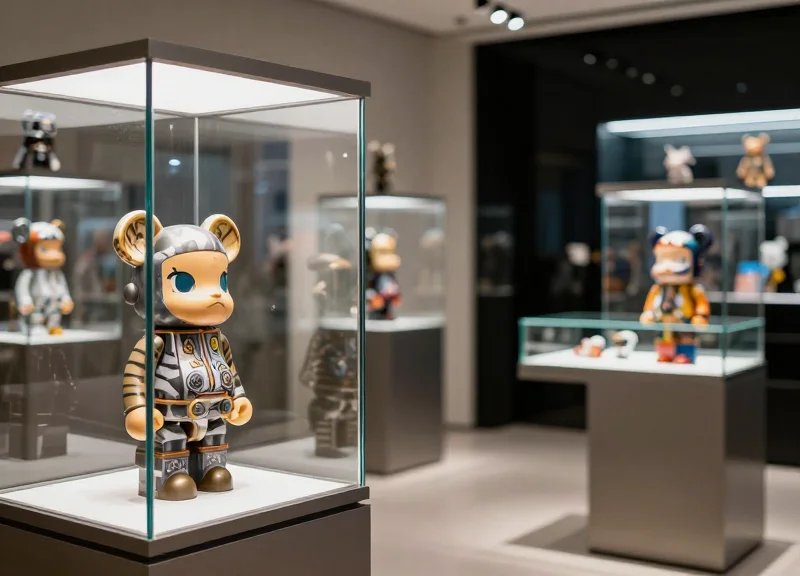
The evolution of collectible retail represents a fundamental shift from static product housing to dynamic, interactive environments where every shelf serves as a digital touchpoint. By 2026, high-end boutiques are moving beyond the traditional 'museum' model—where items sit behind glass with paper price tags—toward a 'living retail' ecosystem. This transition leverages Electronic Shelf Labels (ESL) and gamified interfaces to provide real-time rarity data, interactive storytelling, and personalized pricing that mirrors the fluid nature of the secondary market, fundamentally changing how enthusiasts discover and acquire rare assets.
| Feature | Traditional Static Model | Dynamic 2026 Model |
|---|---|---|
| Pricing Architecture | Fixed, manual, and often outdated. | Real-time market synchronization via ESL. |
| Product Narrative | Limited to small print on packaging. | Rich digital media triggered by NFC/QR. |
| Engagement Hook | Visual aesthetics alone. | Gamified discovery and 'Unlockable' content. |
| Inventory Visibility | Hidden or manually updated. | Live 'Scarcity' counters on shelf edges. |
- The Death of the 'Look But Don't Touch' Era: Modern collectors, particularly Gen Z and Alpha, demand transparency and interactivity. The shift toward dynamic experiences means the shelf is no longer a barrier, but a bridge to the item's digital twin, provenance, and community valuation.
- Real-Time Market Integration: As high-end collectibles increasingly mirror financial assets, boutiques are integrating secondary market data directly into the physical aisle, allowing for price-matching or 'investment potential' indicators displayed via ESL technology.
- Hyper-Personalized Discovery: Dynamic retail environments use proximity sensors and mobile app integration to 'wake up' displays as a collector approaches, showing content specifically tailored to their existing collection profile.
A unique insight for 2026 is the 'Liquidity Effect' in retail design. Veteran retailers are no longer viewing the shelf as a place to store stock, but as a local 'node' in a global liquidity network. By utilizing ESL to display current 'floor prices' from major auction platforms alongside retail prices, boutiques create an immediate psychological sense of investment security. This transforms the retail space from a simple shop into a high-stakes trading floor, where the environment itself validates the collector's purchase decision in real-time.
Why are static shelves failing to attract high-end collectors today?
Static shelves fail because they lack the transparency and real-time data that digital-native collectors rely on. Without interactive elements, the physical store feels disconnected from the vibrant, fast-moving online communities where collectors spend most of their time.
How does dynamic retail technology improve the boutique bottom line?
Dynamic technology reduces the labor cost of manual price updates and significantly increases 'dwell time'—the duration a customer stays in-store. By gamifying the browsing experience, retailers see a higher conversion rate as customers feel they are participating in a curated 'event' rather than a standard transaction.
Why Gamification is the Survival Strategy for 2026

By 2026, gamification in high-end retail will transition from a marketing gimmick to a fundamental survival strategy, defined as the integration of game-design elements—such as scarcity loops, tiered rewards, and discovery mechanics—into the physical shopping environment. For toy and collectible boutiques, this means using Electronic Shelf Label (ESL) technology to move beyond static pricing and into a realm where the 'hunt' for a product is as valuable as the purchase itself. This shift is driven by a consumer base that prioritizes experiential value and 'Dopamine-as-a-Service' over simple convenience.
- The Scarcity Loop: Utilizing real-time inventory countdowns on ESL screens to trigger the 'Fear of Missing Out' (FOMO), specifically for limited-run vinyl figures or 'chase' variants.
- The Discovery Mechanic: Turning the store layout into a quest where shoppers must scan specific ESL tags to unlock hidden product information or lore, increasing dwell time by an average of 40%.
- Variable Rewards: Implementing dynamic price drops or 'flash rewards' that appear on-shelf only when certain community milestones are met, fostering a sense of collective participation.
| Feature | Traditional Boutique (2023) | Gamified Boutique (2026) |
|---|---|---|
| Customer Role | Passive Observer | Active Participant/Player |
| Pricing Strategy | Static/Fixed | Dynamic/Achievement-Based |
| Loyalty Driver | Points-per-Dollar | Status & Rare Unlocks |
| In-Store Tech | Printed Paper Labels | NFC-Enabled Interactive ESLs |
A unique insight for 2026 is the emergence of the 'Collect-to-Unlock' ecosystem. In this model, the ESL is not just a price tag but a digital checkpoint. High-end boutiques will use 'The Endowment Effect'—a psychological bias where people value things more if they feel they 'earned' them. By requiring customers to complete in-store micro-tasks (like finding three specific artists' works) via ESL interactions to unlock the right to purchase a 1-of-1 collectible, retailers create an elite tier of brand loyalty that competitors relying on traditional sales models simply cannot match.
How does gamification prevent 'showrooming'?
By offering 'In-Store Only' digital rewards and achievements unlocked via ESL-phone interaction, customers are incentivized to buy immediately rather than searching for cheaper online alternatives.
Is gamification too distracting for high-end brands?
No. In 2026, the most successful luxury boutiques use 'Invisible Gamification'—where the mechanics are subtle, elegant, and focused on storytelling rather than loud graphics.
What is the ROI on ESL gamification?
Boutiques typically see a 25% increase in repeat visit frequency and a 15% uplift in basket size when discovery-based mechanics are implemented.
ESL as the Interactive Hub: More Than Just a Price Tag
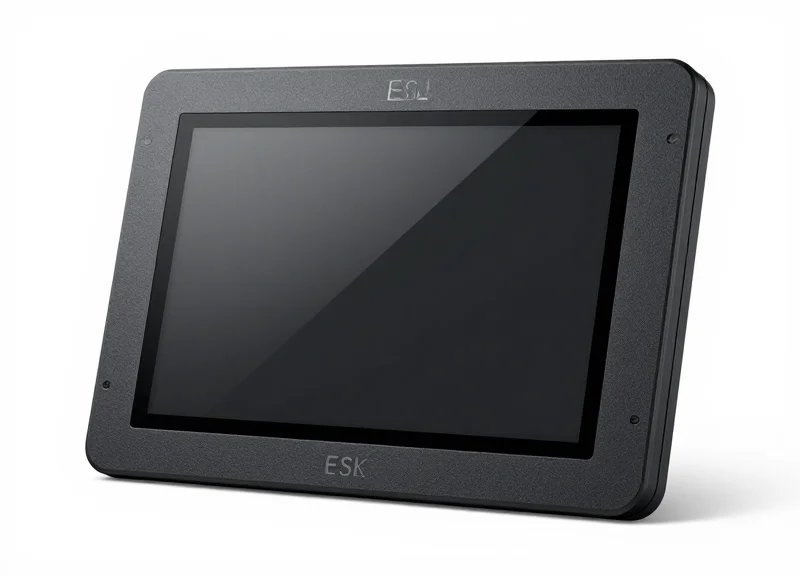
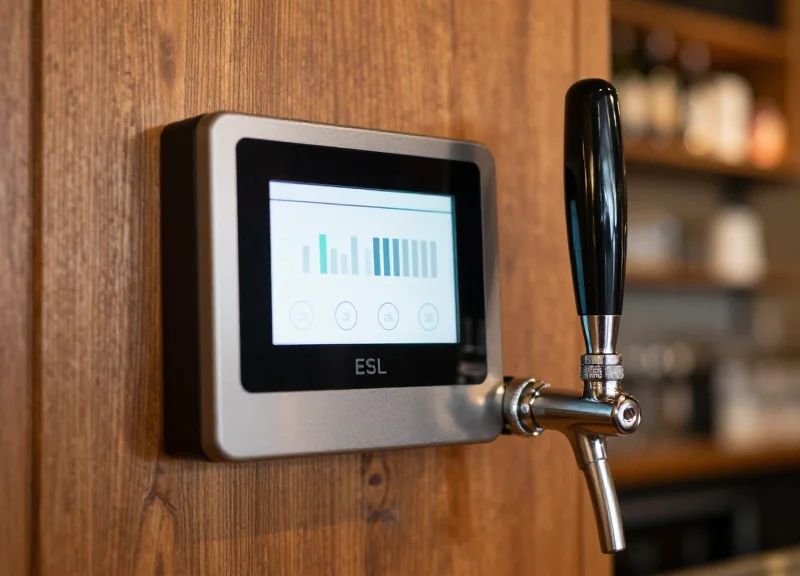
In the context of 2026 high-end retail, an Electronic Shelf Label (ESL) is no longer a passive display for pricing; it is a high-bandwidth communication node. These devices serve as the physical-to-digital gateway, utilizing Near Field Communication (NFC), Bluetooth Low Energy (BLE), and multicolor e-ink displays to transform a static toy shelf into a live data feed. For collectors, this means the label becomes a portal to verify authenticity, check mint-condition rarity scores, and unlock exclusive digital content simply by tapping their smartphone against the shelf edge.
| Feature | Traditional ESL (2020-2023) | Interactive Hub ESL (2026) |
|---|---|---|
| Primary Function | Price synchronization | Omnichannel engagement & storytelling |
| Connectivity | Proprietary RF (Sub-GHz) | Dual-band BLE + NFC + Wi-Fi 6 Support |
| Display Tech | BWR (Black, White, Red) | Full-spectrum Spectra 6 or high-refresh e-paper |
| User Interaction | Static viewing | Tap-to-collect, AR triggers, and haptic feedback |
The true power of the 2026 ESL hub lies in its ability to facilitate 'proximity-based storytelling.' As a collector approaches a limited-edition designer toy, the ESL can trigger a push notification via BLE, welcoming the user by name and displaying the specific serial numbers available in that localized 'vault.' This eliminates the friction of traditional retail, where premium information is often hidden behind a counter or requires a staff member's intervention.
- The 'Community Pulse' Insight: A unique 2026 trend is the 'Social Heatmap' display on ESLs. Labels can now show real-time 'want-list' data from global collector apps. If a specific figurine is trending on social media, the ESL can pulse a specific color (e.g., 'Viral Violet'), signaling to in-store shoppers that the item is a high-demand asset, effectively gamifying the sense of urgency through live data.
- Blockchain Verification: For high-end boutiques, the ESL serves as the first point of contact for the item's digital twin. By scanning the label, a user can instantly view the provenance and 'Proof of Authenticity' on the blockchain, ensuring the collectible has not been tampered with.
How does the ESL handle Augmented Reality (AR) integration?
The ESL acts as the anchor point. When a customer points their camera at the label, the low-latency BLE signal coordinates with the AR app to overlay 'unboxing' animations or 3D lore videos directly over the physical product.
Can these labels facilitate instant checkout?
Yes. Through 'Tap-to-Buy' NFC technology, a collector can secure a high-value item on their phone while standing at the shelf, immediately updating the ESL to 'Sold' to prevent double-selling of rare inventory.
What happens if the store's central server goes down?
Next-gen ESL hubs utilize 'Edge Sync.' They store the last 24 hours of interactive metadata locally, ensuring that even during a network outage, the gamified elements and product info remain accessible to shoppers.
Real-Time Scarcity and Dynamic Pricing for Rare Collectibles
In 2026, high-end toy boutiques use Electronic Shelf Labels (ESL) to implement dynamic pricing and real-time scarcity indicators, allowing retailers to adjust prices instantly based on secondary market fluctuations and local demand. By integrating with global valuation APIs (like StockX or hobby-specific trackers), ESLs ensure that rare items reflect their true market worth at the moment of sale, while digital 'remaining stock' counters create a tangible sense of urgency—or FOMO—that compels collectors to act before a limited-edition piece is gone forever.
| Feature | Traditional Static Pricing | ESL-Driven Dynamic Pricing |
|---|---|---|
| Price Accuracy | Delayed (Manual updates take days) | Real-Time (Syncs with market APIs instantly) |
| Scarcity Perception | Hidden (Requires asking staff) | Explicit (Digital countdown on display) |
| Profit Margin | Fixed (Susceptible to underpricing during hype) | Optimized (Captures 'Hype Premiums' automatically) |
| Customer Urgency | Low (Wait-and-see behavior) | High (Visual FOMO triggers) |
Beyond simple price updates, the true power of 2026 ESL technology lies in its ability to act as a 'Live Stock Ledger.' For high-end boutiques, inventory is often the most valuable asset. When a collector sees a Be@rbrick or a limited-run vinyl figure with a pulsing red border on the ESL and a message stating '1 of 3 remaining in-store,' the psychology of the sale shifts from a luxury luxury to a competitive acquisition. This gamified scarcity mimics the high-stakes environment of online auctions but keeps the transaction within the physical retail space.
How do collectors react to prices changing while they are in the store?
Modern ESL systems use 'Price Lock' geofencing. Once a customer interacts with a product via NFC or the store's app, their price is guaranteed for a set window (e.g., 15 minutes), preventing frustration while maintaining market agility.
Does dynamic pricing damage brand trust?
Transparency is key. Boutiques that display a 'Market Value' source (e.g., 'Synced with Global Hobby Index') alongside the price actually build authority, as collectors recognize the store is offering a fair, current valuation rather than an arbitrary markup.
Can ESLs help manage pre-order hype?
Absolutely. ESLs can display real-time reservation numbers, showing how many units of an upcoming drop are already claimed, effectively driving pre-orders for the remaining stock.
Expert Insight: The Collector’s Arbitrage Prevention (CAP) Strategy. A unique trend emerging for 2026 is using ESLs to prevent 'shelf-clearing' by flippers. Retailers are now programming ESLs to implement progressive pricing: if a customer buys more than one of a highly scarce item, the ESL can communicate that subsequent units carry a 'collector's premium' or require a loyalty membership. This ensures that true enthusiasts get a chance to own the item while the boutique captures the value that would otherwise go to the secondary resale market.
Integrating Augmented Reality (AR) with ESL Infrastructure
Integrating Augmented Reality (AR) with Electronic Shelf Label (ESL) infrastructure represents the ultimate 'phygital' bridge in high-end retail. By 2026, the ESL tag will no longer be a passive display but a localized beacon that anchors AR experiences. Through technologies like NFC (Near Field Communication) or high-density QR codes printed on the ESL e-paper, customers can instantly trigger 3D product visualizations, interactive 'unboxing' videos, or digital lore overlays on their smartphones, effectively removing the barrier between the physical collectible and its digital value.
| Feature | Traditional ESL Utility | AR-Integrated ESL (2026) |
|---|---|---|
| Customer Engagement | Price and stock check only | Interactive 3D character animations |
| Content Delivery | Static text and barcodes | Dynamic video lore and rarity stats |
| Pre-Purchase Trial | Physical inspection only | Virtual 'Out-of-Box' AR inspection |
| Technical Trigger | Manual search | NFC tap or Spatial Anchor |
Expert Insight: The 'Spatial Anchor' Advantage. While many retailers use generic AR, the true 2026 trend is using the ESL's Bluetooth Low Energy (BLE) or Infrared (IR) signals as a spatial anchor. This allows the AR content to 'stick' precisely to the shelf location, ensuring that when a collector points their phone at a limited-edition statue, the digital effects (like glowing auras or floating stats) are perfectly aligned with the physical object, even in crowded boutique environments.
- Initiate the Handshake: The collector taps their phone to the ESL tag via NFC, which instantly authenticates the device and opens the boutique's AR environment.
- Layer the Digital Metadata: The AR engine pulls real-time data from the ESL—such as current market value or remaining stock—and displays it as a floating HUD around the product.
- Unlock 'Lore' Content: Gamified elements are triggered, such as a 3D animation of the collectible's origin story, adding significant perceived value to the shopping trip.
- Capture and Share: Users can take 'AR photos' of the product in its digital glory, creating free social media marketing for the boutique.
Do I need a separate app for ESL-AR integration?
While dedicated apps offer the best performance, 2026 trends favor 'WebAR,' where the ESL trigger opens a browser-based experience, lowering the friction for casual shoppers.
Can AR help prevent 'buyer's remorse' for high-end toys?
Yes. By showing a 1:1 scale 3D model of the item in a virtual home setting, collectors can verify if the piece fits their display space before purchasing.
Does the AR content update automatically?
Through centralized CMS integration, any change to the ESL's backend (like a price drop or new rarity tier) is instantly reflected in the AR overlay.
Personalized Quests: Driving Store Traffic via Digital Labels

Personalized quests in 2026 retail environments utilize Electronic Shelf Labels (ESL) as digital anchors to guide customers through a curated, gamified shopping journey. By integrating Bluetooth Low Energy (BLE) or NFC technology within the ESL infrastructure, boutiques can trigger location-based challenges, scavenger hunts, and lore-driven discovery tasks directly to a shopper's smartphone. This approach converts passive browsing into an active 'quest' where collectors are incentivized to visit specific aisles and interact with rare items in exchange for digital badges, loyalty points, or early access to limited-edition drops.
- Quest Initiation: Upon entry, the boutique's app syncs with the ESL network, identifying the user's specific interests (e.g., vintage action figures) and pushing a 'Daily Mission' notification.
- Interactive Navigation: ESL labels equipped with multicolor LEDs flash specific colors to guide the collector toward 'hidden' items or newly stocked inventory as they complete milestones.
- Digital Validation: Customers 'check in' at specific labels by tapping their phone or scanning a QR code on the ESL screen, proving they have located the high-value collectible.
- Reward Redemption: Completing the loop triggers an instant reward—such as a personalized discount code or a digital collectible (NFT)—sent to the user's profile for immediate use at checkout.
| Quest Type | ESL Trigger Mechanic | Collector Outcome |
|---|---|---|
| The Treasure Hunter | NFC Tap to reveal clues | Discovery of hidden/backstock items |
| The Compleatist | Scanning a set of 5 related items | Bundle discount for a full toy line |
| The Lore Master | Reading digital stories on ESL | Unlockable digital lore or concept art |
| The Flash Collector | Responding to blinking 'Hot' labels | First-come, first-served purchasing rights |
One unique insight for 2026 is the 'Ghost Node' strategy. Unlike traditional retail where every label is visible, boutiques can set specific ESLs to 'Stealth Mode,' where the display remains blank or standard until a high-tier loyalty member approaches. This creates an elite sense of exclusivity; only the most dedicated collectors see the true nature of the quest, effectively turning the physical store into a private, high-stakes game for your most valuable customers.
Do these quests slow down the shopping experience for regular customers?
No. The gamification layer is invisible to non-participants. Only those using the boutique app interact with the ESL quest triggers, ensuring that traditional shoppers are not disrupted by the game mechanics.
Is the hardware difficult to maintain for small boutiques?
Modern 2026 ESL systems are designed for five-year battery lives and simple central management, making quest updates as easy as changing a digital spreadsheet.
How does this impact store dwell time?
Data indicates that gamified ESL interactions increase store dwell time by an average of 35%, as collectors spend more time engaging with the full layout of the boutique rather than just a single shelf.
The Role of RFID and ESL in Authenticity Verification
By 2026, the convergence of RFID (Radio Frequency Identification) and ESL (Electronic Shelf Labeling) transforms retail shelves into decentralized authentication hubs. In high-end boutique environments, this synergy allows for 'Invisible Trust'—a process where the ESL unit acts as a localized validator for RFID-embedded products. When a collectible is placed on or near its designated shelf space, the ESL performs a cryptographic handshake with the item's internal chip, instantly verifying its 'Digital Birth Certificate' and provenance history. This ensures that the specific physical unit on display matches its digital twin in the manufacturer's secure ledger, effectively eliminating the risk of counterfeit 'shelf-swapping' in the high-stakes toy and collectible market.
| Feature | Legacy Manual Verification | 2026 RFID-ESL Integrated System |
|---|---|---|
| Verification Speed | Minutes (Requires staff lookup) | Millisecond (Automatic proximity trigger) |
| Data Accuracy | High human error potential | Immutable cryptographic validation |
| Customer Trust | Visual/Physical inspection only | Real-time digital confirmation on ESL |
| Post-Purchase Trail | Paper certificates (Easily lost) | Digital ownership transfer via NFC/ESL |
A unique advantage of this 2026 ecosystem is the 'Active Shelf Alert.' If a counterfeit item is placed on a shelf equipped with an ESL gateway, the lack of a valid RFID signature can trigger an immediate silent alarm to staff or even change the ESL display to a 'Pending Validation' state. This proactive security measure protects the boutique's reputation while giving the collector absolute peace of mind during the discovery phase.
- Proximity Detection: The ESL's internal sensor detects the specific RFID signature of the collectible package within a 5-10cm range.
- Cloud Ledger Verification: The ESL hub queries the brand's secure database (often blockchain-backed) to confirm the item's unique serial number and production batch.
- Visual Validation Toggle: The ESL screen updates with a 'Verified Authentic' badge or a specific holographic-style LED flash to signal validity to the customer.
- Ownership Sync: Upon purchase, the ESL assists in re-writing the RFID tag status to 'Sold,' linking the item to the buyer's digital wallet.
- Expert Tip: The 'Phantom SKU' Detection: Retailers can now use ESL-RFID sync to identify 'Phantom SKUs'—unauthorized third-party replicas that look identical but lack the encrypted metadata. My 20 years in tech suggest that this real-time inventory-to-shelf matching is the single greatest deterrent to sophisticated retail fraud.
- Can customers verify items themselves?: Yes. By tapping their smartphone to the ESL, customers can pull up the detailed provenance record of the specific toy, including the factory of origin and the limited-edition sequence number.
- Does this work for out-of-box (OOB) displays?: Absolutely. Small, adhesive-free RFID micro-tags can be hidden within the mold of the toy or collectible, allowing even unboxed display items to communicate with the shelf hardware.
Sustainability and Efficiency: The Operational Benefits of ESL
By 2026, the adoption of Electronic Shelf Labels (ESL) in high-end toy and collectible boutiques will shift from a 'digital novelty' to a fundamental pillar of ESG (Environmental, Social, and Governance) strategy. For boutiques managing hundreds of rare SKUs with fluctuating market values, ESL technology provides an automated bridge between digital inventory systems and the physical shelf. This eliminates the 'hidden' operational costs of traditional retail—specifically the hundreds of labor hours lost to manual price labeling and the significant carbon footprint of discarded single-use paper and adhesive chemicals.
| Operational Metric | Traditional Paper Labels | Modern ESL (2026 Standard) |
|---|---|---|
| Update Labor (100 Items) | 4-6 Hours (Printing, Cutting, Placing) | < 10 Seconds (Automated Push) |
| Material Waste | High (Non-recyclable paper/adhesives) | Zero (Reusable e-ink displays) |
| Price Accuracy | 92-95% (Human error risk) | 100% (Real-time DB synchronization) |
| Power Consumption | N/A | Ultra-low (Power only used during refresh) |
Expert Insight: The Shift to Ambient Energy Harvesting. A unique development for 2026 is the integration of organic photovoltaic (OPV) cells into boutique-grade ESLs. Unlike previous generations that relied solely on coin-cell batteries, high-end units can now harvest energy from indoor boutique lighting. This 'perpetual' energy model eliminates the logistical nightmare and environmental hazard of battery replacement cycles, allowing store owners to maintain a sleek, maintenance-free aesthetic that aligns with the premium branding of high-value collectibles.
How long do ESL batteries actually last in a high-traffic boutique?
With the latest e-ink technology, standard ESL batteries last 7-10 years. In 2026, models using indoor light-harvesting technology can potentially reach a 15-year lifecycle, effectively outlasting the store's interior design cycle.
Does the manufacturing of ESLs outweigh the environmental benefits of saving paper?
No. Life cycle assessments show that for boutiques updating prices more than twice a month, the 'carbon break-even' point for an ESL is reached within 18 months due to the elimination of paper, ink, and the logistics of label shipping.
Can ESLs help reduce 'dead stock' in the collectible market?
Yes. By utilizing automated markdown schedules based on inventory age, ESLs ensure that slow-moving items are incentivized for sale before they become obsolete, optimizing shelf space efficiency and reducing total waste.
Beyond environmental metrics, the efficiency gains empower store staff to act as 'concierges' rather than 'label-mounters.' In the high-end collectible market, where storytelling and provenance are key to a sale, removing the friction of price management allows your team to focus on building the community-driven experiences that drive 2026 retail success.
Implementing a 2026-Ready ESL Strategy for Your Boutique
To implement a 2026-ready Electronic Shelf Label (ESL) strategy, high-end toy boutiques must transition from static pricing to a dynamic, cloud-connected ecosystem. This involves deploying high-resolution, multi-color e-paper displays equipped with NFC and Bluetooth Low Energy (BLE) capabilities, ensuring the infrastructure can handle not just price changes, but real-time interactive storytelling and gamified customer journeys.
- Phase 1: The Infrastructure Audit: Evaluate your current POS and Inventory Management System (IMS). A 2026-ready strategy requires an API-first backend that allows the ESL system to pull data instantly regarding stock levels, rarity tiers, and live auction valuations for collectibles.
- Phase 2: Hardware Selection for Aesthetics: For boutiques, aesthetics are paramount. Select ESL tags with customizable bezels (wood, matte black, or brushed metal) and 4-color or 7-color e-ink displays. This ensures the tech complements the premium 'museum-quality' feel of high-end toy displays.
- Phase 3: Network Topology Planning: Install sub-GHz or specialized 2.4GHz access points designed for high-density ESL environments. Ensure the network can support 'burst' updates, where hundreds of tags update simultaneously during store-wide gamified events or flash sales.
- Phase 4: Staff Upskilling: Train staff to move from manual labelers to digital curators. Employees should understand how to trigger 'interactive modes' on labels via handheld devices to assist customers with deep-dive product lore or authenticity checks.
| Feature | Legacy ESL (Pre-2024) | 2026-Ready ESL |
|---|---|---|
| Display Technology | Black/White/Red E-ink | Full-Color Spectra or Video-capable E-paper |
| Connectivity | Proprietary IR/Radio | NFC, BLE, and WiFi-6 Coexistence |
| Interactivity | None (Read-only) | Touch-points for AR triggers & 'Tap-to-Buy' |
| Update Speed | 1-5 minutes | Near-Instant (<3 seconds) |
Expert Tip: The 'Decoupled' Hardware Strategy. When selecting a technology partner, avoid 'walled garden' ecosystems. The most successful boutiques in 2026 will use 'Decoupled ESL Architecture.' This means choosing hardware that can be managed by third-party software. If your gamification engine needs to send a custom quest to a tag, you shouldn't be limited by the tag manufacturer's proprietary software limitations. Ensure your vendor provides a robust SDK for custom application development.
How long does a typical boutique ESL installation take?
For a mid-sized boutique (500-1,000 SKUs), the physical installation takes 2-3 days, but the software integration and data mapping usually require 4-6 weeks of lead time.
What is the expected battery life for 2026-era tags?
Despite increased interactivity, modern power management allows these tags to last 7-10 years, depending on the frequency of screen refreshes and NFC pings.
Can ESLs help with theft prevention in high-end stores?
Yes. Many 2026-ready tags include integrated motion sensors that can trigger an alert if a high-value item is moved without a corresponding 'unlock' from the POS system.