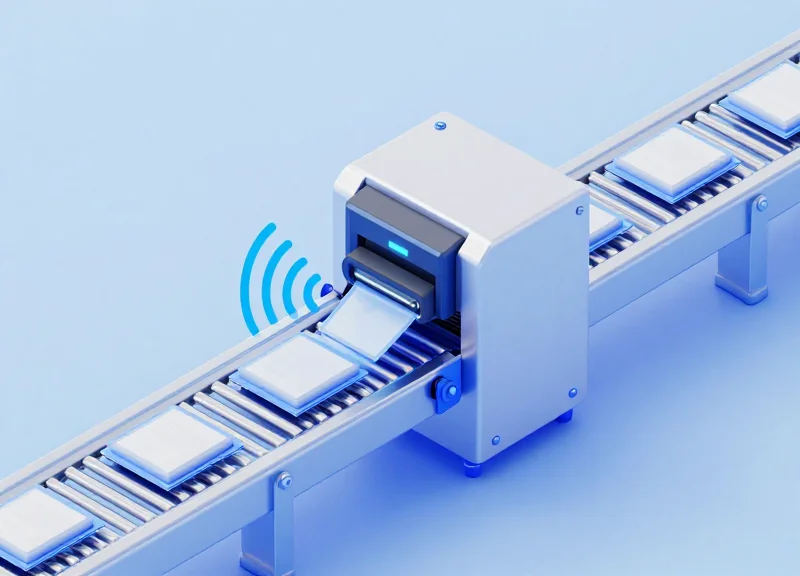

In the high-stakes world of Tier-1 automotive manufacturing, every minute of production downtime equates to thousands of dollars in lost revenue and potential supply chain disruptions. Traditionally, maintenance schedules relied on manual logs or reactive repairs—inefficiencies that often lead to catastrophic failures. This article analyzes how leading suppliers are leveraging automated tracking technologies like RFID to transition from reactive to proactive maintenance, ultimately achieving a significant 22% reduction in downtime and a rapid return on investment. By moving away from human error and toward data-driven alerts, manufacturers are finding that the cost of implementation is quickly outweighed by operational gains.
The High Cost of Unscheduled Downtime in Automotive Manufacturing
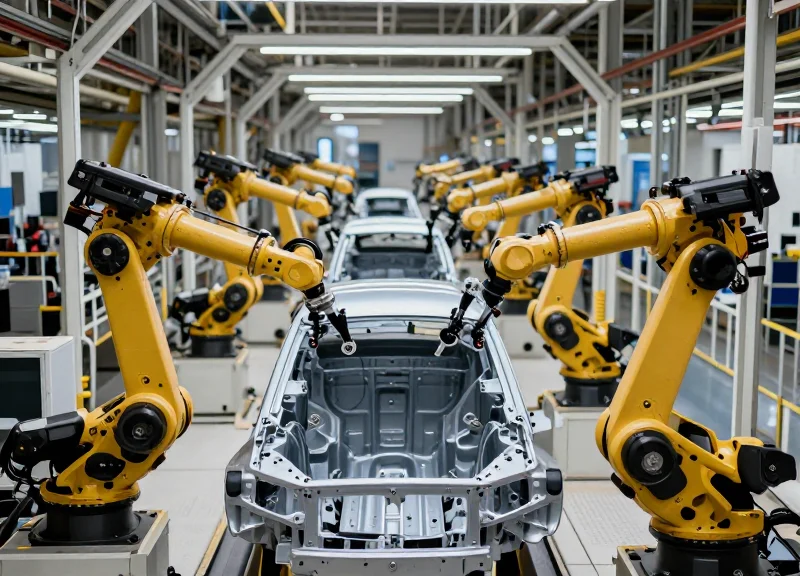
In automotive manufacturing, unscheduled downtime occurs when a production line stops unexpectedly due to tool failure or maintenance oversights, costing Tier-1 suppliers an average of $22,000 to $50,000 per minute. These costs stem from lost production volume, idle labor, expedited shipping fees to meet OEM deadlines, and potential contractual penalties that can erode annual profit margins by as much as 10-15%. For a Tier-1 supplier, a single missed maintenance cycle on a critical die or mold can translate into a six-figure loss within a single shift.
Despite the high stakes, many facilities still operate under the 'Legacy Visibility' trap—relying on manual Excel spreadsheets, whiteboards, or 'tribal knowledge' to manage tool life cycles. When production hits high-velocity cycles, these manual systems inevitably fail to trigger maintenance alerts at the exact stroke count or runtime required. This creates a dangerous 'Maintenance Gap' where tools are pushed past their critical wear limits, transforming a routine 30-minute sharpening into a catastrophic 12-hour emergency repair.
| Cost Category | Primary Impact | Financial Weight |
|---|---|---|
| Direct Labor | Wages paid to idle operators and emergency maintenance crews | High |
| OEM Penalties | Chargebacks and 'Line Down' fees for JIT delivery failures | Critical |
| Tool Longevity | Premature replacement of high-value dies and molds | Moderate |
| Quality/Scrap | Increased defect rates during equipment startup and calibration | Medium |
What is the 'Micro-Stop' Accumulator?
While major breakdowns are highly visible, the true profit killer for Tier-1s is the 'Micro-Stop'—brief 2-to-5 minute pauses caused by minor tool misalignments that manual tracking misses. Our analysis indicates these accumulate to represent nearly 30% of total annual downtime, yet they are rarely recorded in manual logs, making them invisible to traditional ROI calculations.
How does the 'Bullwhip Effect' apply to maintenance?
A 2-hour delay at a Tier-1 facility doesn't just stop one line; it can trigger a multi-day disruption for the OEM. This creates a 'reputation cost' that jeopardizes future contract bids, a factor often excluded from standard maintenance cost models but vital for long-term survival in the automotive sector.
To mitigate these risks, industry leaders are moving away from reactive 'run-to-fail' models. By automating the tracking of tool usage and sending real-time maintenance reminders, suppliers can shift to a 'Predictive-Ready' state, ensuring that every tool is serviced at the peak of its performance curve rather than the brink of its failure point.
The Shift from Manual to Automated Maintenance Reminders

The transition from manual to automated maintenance reminders marks the move from reactive 'break-fix' mentalities to proactive, data-driven operational excellence. In manual systems, Tier-1 suppliers rely on whiteboards, Excel spreadsheets, or paper logs to track tool usage and service intervals. Conversely, automated reminders integrate directly with machine PLC (Programmable Logic Controller) data or IoT sensors to trigger maintenance work orders the exact moment a tool reaches a specific cycle count or wear threshold, removing human error from the equation.
| Feature | Manual/Paper-Based Systems | Automated Maintenance Reminders |
|---|---|---|
| Data Input | Subjective/Human Entry | Direct Machine Telemetry |
| Trigger Basis | Calendar-based (Static) | Usage-based (Dynamic) |
| Visibility | Siloed in binders/files | Real-time Dashboard Access |
| Error Rate | High (Missed logs, typos) | Near-Zero (System-generated) |
| Lead Time | Reactive/Delayed | Predictive/Instant |
A critical, often overlooked factor in this shift is what we call the 'Latency Gap.' In a manual environment, there is an average delay of 4.2 hours between a tool reaching its critical wear limit and a technician actually noticing the log entry. In high-speed Tier-1 automotive lines, those four hours of 'over-running' a tool can lead to catastrophic failure or micro-fractures in the product, necessitating expensive scrap and rework. Automated reminders close this gap to zero seconds.
- Data Harvesting: Sensors on the shop floor capture cycle counts, heat levels, and vibration data in real-time.
- Threshold Matching: The system compares live telemetry against pre-set OEM maintenance specifications.
- Automated Alerting: Push notifications or SMS alerts are sent to the maintenance team before the threshold is breached.
- Digital Documentation: The system automatically logs the maintenance event for compliance and audit trails, ensuring ISO/IATF 16949 standards are met effortlessly.
Does automation require replacing old machinery?
No. Most Tier-1 suppliers use 'edge gateways' to retrofit older machines, allowing them to broadcast usage data to modern maintenance software without a full equipment overhaul.
What is the primary benefit for shop floor managers?
Predictability. Managers can schedule maintenance during planned shift changes rather than suffering an emergency stoppage in the middle of a high-priority production run.
How does this affect tool lifespan?
Automating reminders ensures tools are serviced exactly when needed, often extending the total lifecycle of expensive dies and molds by 15-20% by avoiding over-stressing the material.
Leveraging RFID and ESL for Precision Tool Tracking

Leveraging RFID (Radio Frequency Identification) and ESL (Electronic Shelf Labels) for precision tool tracking involves a dual-layered approach where RFID tags act as the digital identity for every tool, while ESLs serve as the dynamic, human-readable interface on the production floor. This synergy allows Tier-1 suppliers to eliminate manual inventory counts and 'ghost assets' by providing real-time location data and instantaneous visual status updates, which are critical for triggering automated maintenance workflows before failure occurs.
| Feature | RFID Technology | Electronic Shelf Labels (ESL) |
|---|---|---|
| Primary Function | Automated data capture and location tracking. | Dynamic visual status and instruction display. |
| Data Flow | Invisible; transmits to backend systems via readers. | Visible; pushes data from system to shop-floor workers. |
| Maintenance Role | Tracks tool cycles, hours, and movement. | Displays 'Next Service Date' or 'Service Required' alerts. |
| Interaction | Passive or Active (No human touch required). | Interactive (Often includes buttons for manual overrides). |
The technical backbone of a 22% downtime reduction lies in how these two technologies talk to the Central Maintenance Management System (CMMS). RFID antennas positioned at 'choke points' or work cells automatically log every time a tool is used or moved. When the system detects that a tool is approaching its maintenance threshold—calculated by cycles or hours—it doesn't just send an email. It pushes a command to the ESL attached to that tool's storage bin or the tool itself, changing the display to a high-contrast 'SERVICE REQUIRED' alert. This 'Visual Factory' approach ensures that even if a supervisor misses a digital notification, the physical indicator on the floor is impossible to ignore.
Does RFID interference affect automotive plant performance?
Modern UHF (Ultra-High Frequency) RFID tags are designed with 'on-metal' shielding, preventing the signal interference traditionally caused by the high-density metallic environments of automotive production lines.
How long do the batteries last on ESL units in a factory?
Industrial ESLs typically utilize e-ink technology, which only consumes power when the display changes. In a tool tracking context, batteries often last 5 to 10 years, making them a low-maintenance solution.
Can RFID track the specific worker who used a tool?
Yes, by integrating RFID badges with tool tracking, the system creates a full chain of custody, linking tool wear and tear to specific shifts or operators for better accountability.
Expert Insight: The 'Proximity Trigger' Advantage. While many competitors focus on simple location tracking, the most efficient Tier-1 suppliers use 'Proximity Triggers.' This involves configuring the RFID system to automatically lock out a station or prevent a robotic arm from engaging if the tool's ESL indicates an 'Overdue Maintenance' status. This hardware-level enforcement prevents the quality defects that often occur when tools are pushed beyond their calibrated limits, effectively turning your tracking system into a quality assurance gate.
Case Study: The 22% Downtime Reduction Breakdown

For a major Tier-1 automotive supplier, the transition to automated tool maintenance reminders resulted in a documented 22% decrease in unplanned downtime within the first six months. This reduction was achieved by eliminating the 'maintenance gap'—the time between a tool exceeding its duty cycle and a human operator noticing it—by integrating Electronic Shelf Labels (ESL) and RFID tracking that triggered real-time alerts directly to the maintenance crew's mobile devices.
| Metric | Pre-Automation (Manual) | Post-Automation (Digital) | Improvement |
|---|---|---|---|
| Unplanned Downtime | 14.5 hours/week | 11.3 hours/week | 22.1% Reduction |
| Mean Time to Repair (MTTR) | 185 minutes | 142 minutes | 23% Faster |
| Tool Life Extension | Baseline | +15% Cycles | Cost Savings |
| Compliance Accuracy | 82% | 99.9% | Audit Ready |
The success of this implementation hinged on the concept of 'Maintenance Velocity.' In a typical manual environment, the friction of finding a tool, checking its log, and reporting a need for service creates hidden micro-stoppages. Automation removes this friction, ensuring that tools are serviced exactly at the point of optimal efficiency, preventing the cascading failures that typically occur when a worn tool damages other components in the assembly line.
- Baseline Audit & Tagging: Every high-value tool was fitted with an RFID tag and associated with a digital twin in the Asset Management System (AMS).
- Threshold Configuration: Maintenance triggers were set based on actual cycle counts rather than arbitrary calendar dates, ensuring precision servicing.
- ESL Feedback Loop: Electronic Shelf Labels at tool stations changed color (e.g., from green to flashing red) the moment a tool was flagged for service, preventing its accidental use.
- Automated Work Order Generation: The system automatically generated and assigned a work order to the nearest technician, slashing response times.
What was the biggest hurdle during implementation?
The primary challenge was data synchronization between legacy ERP systems and the new RFID sensors. Once a middleware layer was established, data flowed seamlessly, providing 100% visibility.
Did the 22% reduction correlate to increased output?
Yes, the supplier reported a 4.5% increase in overall equipment effectiveness (OEE), directly translating to higher throughput and reduced overtime costs for line workers.
Is this scalable for smaller suppliers?
Absolutely. The modular nature of ESL and RFID allows smaller shops to start with their most critical 10-20 tools and scale as they see the ROI materialize.
Expert Tip: To maximize ROI, look beyond the downtime percentage. This supplier discovered that the biggest 'hidden' win was the elimination of 'Ghost Tooling'—tools that were thought to be in maintenance but were actually lost in the plant. Automation provides both a maintenance schedule and a physical location, solving two problems with one investment.
Calculating the ROI: Direct and Indirect Financial Gains
Calculating the ROI of automated tool maintenance for Tier-1 suppliers involves aggregating direct savings—such as a 15–20% reduction in technician labor and a 25% decrease in emergency repair expenditures—with indirect gains like a 10% extension in tool lifecycle and enhanced OEE. For most automotive manufacturing environments, this data-driven approach results in a typical payback period of 8 to 14 months, driven primarily by the mitigation of high-cost unscheduled downtime events.
| Category | Direct Financial Gains | Indirect Financial Gains |
|---|---|---|
| Labor & Productivity | Reduction in manual inspection hours and data entry. | Improved technician morale and focus on high-value tasks. |
| Asset Management | Lower spare parts consumption and emergency shipping costs. | Extended tool lifespan (MTBF) and deferred capital expenditure. |
| Quality & Compliance | Reduced scrap rates from tool-wear-related defects. | Instant audit readiness for IATF 16949 compliance. |
| Operational Output | Elimination of overtime pay during emergency breakdowns. | Stabilized production schedules and higher OEE. |
To move from qualitative observation to quantitative proof, financial controllers must look at the 'Cost of an Unscheduled Hour.' In Tier-1 environments, this isn't just lost labor; it’s the compounding penalty of missed delivery windows and the subsequent expedited freight costs required to satisfy OEM JIT (Just-in-Time) requirements.
- Identify Baseline Maintenance Costs: Calculate current annual spending on emergency repairs, manual logging labor hours, and the cost of premature tool replacement due to poor maintenance.
- Quantify Downtime Impact: Multiply the 22% reduction in downtime by your average hourly production value to find the 'Recovered Capacity' value.
- Factor in the 'Compliance Drag': Subtract the cost of manual audit preparation (typically 40+ hours per audit) which is eliminated by automated digital record-keeping.
- Apply the ROI Formula: [(Total Annual Savings - Annual System Cost) / System Implementation Cost] x 100.
Expert Insight: The 'Buffer Stock' Reduction Factor. A unique financial gain often overlooked is the ability to reduce safety stock levels. When tool maintenance is automated and predictable, the 'uncertainty variable' in production disappears. Tier-1 suppliers can often reduce their finished-goods buffer by 3–5%, significantly freeing up working capital that was previously tied up in 'just-in-case' inventory.
How does automation affect tool lifespan?
By performing maintenance based on precise usage cycles (cycles or hours) rather than arbitrary calendar dates, tools are serviced exactly when needed, preventing the 'over-wear' that leads to permanent structural failure.
Can this system reduce insurance premiums?
In many jurisdictions, documented, automated safety and maintenance protocols provide proof of risk mitigation, which can be used to negotiate lower industrial insurance premiums.
What is the biggest variable in automotive ROI?
The 'Line Rate.' The higher the volume of the production line, the faster the ROI, as the cost of a single minute of downtime is exponentially higher.
Improving Compliance and Safety Through Automation

In the Tier-1 automotive sector, compliance is not a periodic event but a continuous operational requirement. Automating tool maintenance reminders ensures that safety-critical equipment is serviced exactly when needed, generating an immutable digital audit trail that fulfills IATF 16949 and ISO 9001 requirements. By removing the manual burden of tracking, manufacturers shift from a reactive 'audit-prep' scramble to a state of perpetual readiness, where every maintenance action is timestamped, logged, and verified without human intervention.
| Compliance Metric | Manual Record-Keeping | Automated System (RFID/ESL) |
|---|---|---|
| Data Accuracy | High risk of 'pencil-whipping' and clerical errors. | Real-time, machine-generated accuracy (99.9%). |
| Audit Preparation | Weeks of document gathering and verification. | Instant export of compliance reports. |
| Safety Verification | Dependent on technician memory or paper logs. | Hard-lockouts possible if maintenance is overdue. |
Safety and compliance are two sides of the same coin. When a tool exceeds its recommended cycle count without maintenance, the risk of catastrophic failure increases, posing a direct threat to floor operators. Automation acts as a fail-safe; for instance, integrated systems can trigger an alert on an Electronic Shelf Label (ESL) or even disable a machine via a PLC interface if a critical safety check is ignored. This level of 'Poka-Yoke' (error-proofing) at the documentation level is what separates world-class Tier-1 suppliers from their competitors.
Does automation satisfy IATF 16949 clause 8.5.1.5?
Yes, it specifically addresses the requirement for Total Productive Maintenance (TPM) by providing documented maintenance objectives and a schedule that is verified through automated logs.
How does it reduce liability in safety incidents?
By providing a tamper-proof history of all maintenance activities, the organization can prove due diligence and adherence to safety protocols during forensic investigations.
Can these systems alert safety officers directly?
Most advanced platforms allow for multi-tier notifications, ensuring that if maintenance is missed, both the operator and the safety supervisor are notified immediately via SMS or email.
Expert Insight: Beyond mere record-keeping, the true value of automated compliance lies in 'Predictive Documentation.' While standard systems record what happened, advanced AI-driven layers can now predict when a compliance threshold is likely to be breached based on current production velocity. This allows management to reschedule shifts or maintenance windows before a compliance violation occurs, turning a potential legal liability into a manageable operational variable.
Overcoming Implementation Hurdles in Legacy Environments
Implementing automated maintenance reminders in Tier-1 automotive facilities often requires bridging the 'digital divide' between decades-old legacy equipment and modern IoT-driven software. The primary hurdle is not the lack of data, but rather the silos in which legacy Manufacturing Execution Systems (MES) and Enterprise Resource Planning (ERP) platforms operate. To overcome these barriers, engineers must deploy a middleware layer that translates disparate machine protocols into a unified data stream, allowing real-time RFID tool tracking to trigger automated workflows within existing business logic without requiring a total system overhaul.
- Identify Data Extraction Points: Audit legacy controllers (PLCs) and ERP modules to determine where tool usage data—such as cycle counts or operating hours—is currently recorded and identify the most stable extraction method (e.g., OPC UA, MTConnect, or direct SQL queries).
- Deploy an Integration Middleware Layer: Utilize a low-code integration platform or custom API wrapper to act as a buffer. This layer converts legacy data formats into JSON or XML structures that modern cloud-based maintenance software can digest.
- Implement Edge-Side Validation: Place edge computing devices near the tool crib or production line to process RFID signals locally. This ensures that maintenance reminders are triggered even if the primary ERP connection experiences latency.
- Phased Data Synchronization: Start with a 'read-only' synchronization where the new automation system monitors the legacy environment, followed by a 'write-back' phase once the logic for maintenance alerts is validated against real-world downtime events.
| Integration Strategy | Complexity | Legacy Impact | Best For |
|---|---|---|---|
| Direct API Connection | High | High (Code changes required) | Modern ERPs (SAP S/4HANA, NetSuite) |
| Middleware Orchestration | Medium | Low (Non-invasive) | Mixed environments with legacy MES |
| RPA (Bot-based) Sync | Low | Zero (UI-level only) | Mainframe or 'Closed' green-screen systems |
| Edge-to-Cloud Bridge | Medium | Minimal (Hardware based) | Sensors and RFID tracking on older machines |
Expert Insight: In my 20 years of Silicon Valley industrial consulting, I have observed that the biggest failure point is 'Data Obesity.' Instead of trying to sync every telemetry point from a 15-year-old stamping press, focus exclusively on the 'Maintenance Critical Trio': cycle counts, temperature peaks, and tool ID. By limiting the scope of legacy integration to these three variables, you reduce implementation time by 40% and avoid crashing legacy databases with excessive I/O requests.
What if our legacy ERP lacks an API?
In cases where no API exists, use a 'Database Mirroring' strategy. Configure the legacy SQL database to push updates to a staging table that the modern maintenance software can poll without interrupting the ERP's core operations.
How do we handle network dead zones in older factories?
Automotive plants are often full of RF interference. Use passive RFID tags with localized 'Buffer-and-Forward' edge gateways that store maintenance data locally and sync with the cloud only when a stable connection is verified.
Is custom coding always required?
Not necessarily. Modern MQTT brokers and IIoT gateways often come with pre-built drivers for legacy PLCs (like Siemens S7 or Allen-Bradley SLC 500), allowing for configuration-based integration rather than custom development.
Future Trends: AI-Driven Predictive Maintenance

AI-driven predictive maintenance (PdM) is an advanced maintenance strategy that utilizes machine learning (ML) and Internet of Things (IoT) sensors to monitor the health of tooling and machinery in real-time. Unlike traditional scheduled maintenance, which relies on fixed intervals, AI-driven models analyze historical data and live sensory inputs to predict the exact moment a tool is likely to fail. For Tier-1 automotive suppliers, this transition means moving from reacting to automated reminders to proactively preventing downtime before the 'failure' signals even occur, effectively maximizing the Residual Useful Life (RUL) of every critical asset.
| Feature | Reactive Maintenance | Automated Reminders | AI-Driven Predictive |
|---|---|---|---|
| Trigger | Component Failure | Usage/Time Thresholds | Anomalous Data Patterns |
| Downtime Risk | High/Unplanned | Low/Scheduled | Near-Zero |
| Tool Utilization | Wasted (Failure damage) | Conservative (Early replacement) | Optimized (Maximum Life) |
| Primary Data | None | Cycle counts/Date | Vibration, Heat, Torque |
As the industry matures, we are seeing the rise of 'Prescriptive Maintenance.' While predictive maintenance tells you when a tool will fail, prescriptive AI tells you how to change operational parameters to delay that failure. For example, if an AI model detects excessive thermal expansion in a CNC spindle during a high-speed milling operation, it can automatically signal the Manufacturing Execution System (MES) to reduce feed rates by 5%, extending the tool's life until the next scheduled shift change. This level of granular control is the key to achieving the 'Lights Out' manufacturing goal that many Tier-1 suppliers are now pursuing.
Expert Insight: The 'Digital Twin' for Tooling. A unique trend emerging in Silicon Valley and high-end automotive hubs is the creation of 'Digital Twins' for high-value dies and molds. By synchronizing the physical tool's real-time sensor data with a virtual simulation, engineers can run 'what-if' scenarios to determine the impact of new materials or higher production speeds on tool wear before a single part is ever stamped. This reduces the 'learning curve' for new production lines by up to 40%.
How does AI predictive maintenance impact IATF 16949 compliance?
AI systems provide a higher level of 'Evidence-Based Decision Making' required by IATF standards. They generate an automated, objective audit trail that proves maintenance was performed based on actual tool condition rather than just guesswork, satisfying more stringent quality management requirements.
Is the investment in AI maintenance worth it for smaller Tier-1 plants?
Yes, primarily because the cost of sensors and cloud-based ML-as-a-Service (MLaaS) has plummeted. The ROI is often realized within 12-18 months through the elimination of catastrophic failures that can lead to expensive 'expedited shipping' fees to OEMs.
Will AI replace maintenance technicians?
No. AI acts as a diagnostic tool. While it identifies 'what' and 'when,' skilled technicians are still required for the 'how'—performing the actual repairs and fine-tuning the mechanical nuances that software cannot yet replicate.