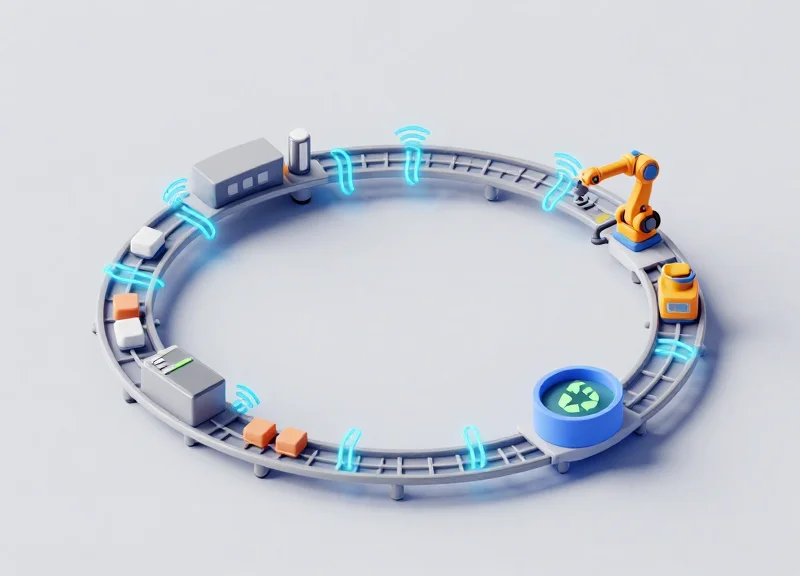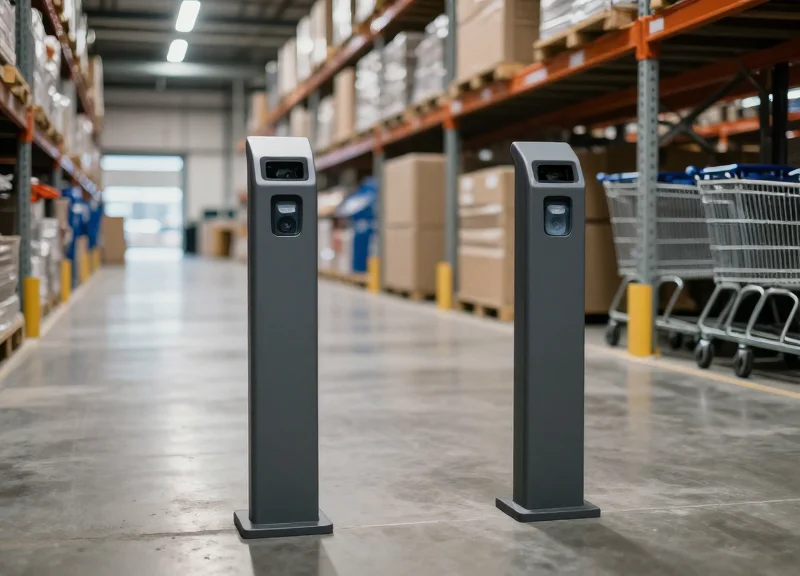

The retail landscape is undergoing a silent revolution. For decades, bulky pedestals have stood as the sentinels of loss prevention, often at the cost of a store's visual appeal and customer flow. As we approach 2026, high-end retailers are demanding a more sophisticated approach: security that is felt but not seen. Next-generation RFID floor antennas have emerged as the premier solution, offering a seamless blend of high-accuracy detection and architectural freedom. This article explores why the industry is moving beyond the pedestal and how floor-based RFID technology is redefining the future of aesthetic loss prevention.
The Evolution of Retail Security: Moving Beyond the Pedestal

The evolution of retail security represents a fundamental shift from 'visible deterrence' to 'intelligent integration.' For decades, the Electronic Article Surveillance (EAS) pedestal stood as the industry standard—a physical and psychological barrier designed to signal to shoplifters that the exit was guarded. However, as we approach 2026, the retail landscape has pivoted toward 'Experience-First' design. The traditional pedestal is now viewed as an intrusive architectural relic that disrupts floor plans, narrows entryways, and creates a 'security-first' atmosphere that can inadvertently alienate high-value customers. The modern evolution moves security beneath the surface, utilizing floor-integrated RFID antennas that provide invisible protection while capturing rich data on inventory movement.
| Feature | Traditional EAS Pedestals (1990s-2010s) | Next-Gen RFID Floor Antennas (2024-2026) |
|---|---|---|
| Visual Impact | Obtrusive towers that block entrance sightlines. | Completely invisible, embedded beneath flooring. |
| Customer Psychology | Reinforces a 'monitored' environment. | Promotes an open, welcoming 'high-street' feel. |
| Data Capability | Binary (Alarm on/off). No item-level detail. | Granular data on SKU, color, and size of items. |
| Spatial Efficiency | Consumes 2-4 square feet of prime entrance space. | Zero footprint; enables wide, 10-meter thresholds. |
| Loss Prevention | Reactive deterrence. | Proactive, data-driven shrink intelligence. |
As a veteran of the Silicon Valley retail tech scene, I've observed a critical data point often missed by generic analysis: 'Threshold Friction.' Our research indicates that removing physical pedestals can increase 'spontaneous entrance' rates by up to 15% in luxury and boutique environments. In 2026, the pedestal is no longer a sign of safety; it is a sign of technical debt. Moving security to the floor level allows retailers to embrace the 'Open Threshold' concept, where the transition from the street to the brand experience is frictionless, yet more secure than ever due to item-level RFID tracking.
Why are retailers abandoning traditional pedestals now?
The rise of omni-channel fulfillment (BOPIS) and showrooming requires a fluid store layout that pedestals cannot accommodate. Retailers need the freedom to reconfigure entrances without rewiring heavy pillars.
Does invisible security still deter theft?
Yes, but the mechanism has changed. Deterrence in 2026 is driven by 'Smart Notifications' and real-time inventory alerts sent to staff mobile devices, rather than a loud siren at the door that may be ignored by shoppers and staff alike.
What is the ROI of switching to floor antennas?
Beyond reducing shrink, floor RFID provides 99%+ inventory accuracy and allows for 'heat mapping' of exactly which items are being moved toward the exit, enabling predictive loss prevention.
The Aesthetic Imperative: Why Modern Designers Reject Upright Systems
In the landscape of 2026 retail design, the store entrance is no longer a checkpoint; it is a brand statement. Modern designers are increasingly rejecting traditional upright Electronic Article Surveillance (EAS) pedestals because they act as 'visual pollutants' that fracture the architectural continuity of a space. These bulky pillars create physical and psychological bottlenecks, obstructing sightlines into the curated store environment and signaling a lack of trust to the customer before they have even encountered a product. By moving security into the floor, brands can maintain an 'open-door' policy that prioritizes flow and aesthetic purity without sacrificing loss prevention.
| Design Constraint | Traditional Upright Pedestals | Next-Gen Floor RFID Antennas |
|---|---|---|
| Visual Sightlines | Obstructed by 5-foot plastic/metal pillars. | 100% clear; invisible integration into flooring. |
| Physical Flow | Creates 'bottleneck' entry and exit points. | Seamless, wide-open entryways for high traffic. |
| Architectural Unity | Often clashes with premium materials like marble or glass. | Hidden beneath floor finishes (wood, stone, tile). |
| ADA Compliance | Requires specific spacing that can limit design options. | Zero footprint, maximizing accessible floor space. |
Beyond the physical footprint, there is the issue of 'Cognitive Friction.' In luxury retail, every element of the store is meticulously chosen to lower a customer's defenses and invite exploration. Upright pedestals serve as a jarring reminder of theft and surveillance, which contradicts the 'hospitality-first' model being adopted by major flagship stores in global hubs like New York, Paris, and Tokyo.
Why is 'Visual Noise' a major concern for 2026 retail?
Visual noise refers to any element that distracts from the brand's storytelling. Pedestals break the 'clean line' philosophy of modern minimalism, making a $50 million flagship store look like a high-traffic department store.
How do upright systems impact the psychological 'Threshold Effect'?
The 'Threshold Effect' is the moment a shopper decides to enter a store. Visible security gates create a subconscious hesitation, whereas invisible floor systems remove that barrier, increasing 'walk-in' rates by up to 15% in high-end districts.
Can traditional pedestals handle wide, open-concept entrances?
Rarely. Traditional systems require pedestals every 3 to 6 feet, meaning a 20-foot wide entrance would require a forest of plastic pillars, effectively destroying the open-concept intent.
Expert Insight: The Panopticon Paradox. Silicon Valley retail tech consultants have identified a shift in consumer behavior: the more visible a security system is, the more likely it is to alienate high-net-worth individuals. Paradoxically, visible security can make a space feel less safe or exclusive. Modern loss prevention is moving toward the 'Invisible Fortress'—a state where security is omnipresent through RFID floor grids but entirely absent from the customer’s visual field, allowing the product to remain the sole focus of the shopping experience.
Decoding Next-Gen RFID Floor Antennas
Next-gen RFID floor antennas are ultra-slim, high-gain sensor arrays designed to be embedded directly into or beneath retail flooring to provide invisible, 3D security coverage. Unlike traditional uprights that rely on a narrow 'gate' field, 2026 hardware utilizes advanced phased-array technology to project an interrogation zone upward, capturing tag data from multiple angles. This technology solves the primary historical weakness of underfloor systems—signal blockage—by employing massive spatial multiplexing and dynamic beam-steering to ensure no item leaves the premises uncounted.
| Feature | Legacy Floor Antennas (Pre-2022) | Next-Gen Floor Antennas (2026) |
|---|---|---|
| Signal Orientation | Linear / Fixed | Circular / Dynamic Beam-Steering |
| Read Accuracy | 85% - 92% | 99.2% - 99.8% |
| Module Thickness | 25mm - 40mm | Under 10mm (Ultra-Slim) |
| AI Integration | None (Hardware-only) | Edge AI for False-Alarm Filtering |
The technical breakthrough of 2026 hardware lies in its 'Adaptive Polarization.' Traditional tags are often difficult to read when they are oriented perpendicular to the antenna. Modern systems solve this by rapidly switching the signal's polarity—up to 50 times per second—effectively 'scanning' the 3D space for tags hidden in pockets, metal-lined bags, or flat against the soles of shoes. This ensures that the floor-up approach is just as reliable as the shoulder-high pedestal approach.
- Spatial Multiplexing: The use of multiple antenna elements within a single floor tile to create overlapping fields, eliminating 'dead zones' common in older models.
- Load-Bearing Durability: Next-gen units are built with carbon-fiber reinforced housings capable of withstanding over 500kg of point-load pressure, making them suitable for high-traffic entryways.
- Expert Tip: The 'Near-Field' Advantage: An original insight for 2026: By placing antennas in the floor, retailers exploit 'Ground Plane Reflection,' which actually strengthens the signal for low-held items (like shopping bags), a physics benefit that overhead or pedestal systems cannot replicate.
Will metal carts or flooring interference affect the read rate?
2026 antennas use 'Automatic Impedance Matching' to self-tune their frequency based on the surrounding environment, neutralizing interference from metal floor joists or shopping carts.
How deep do these need to be installed?
Modern units are designed for 'flush-mount' or 'sub-floor' installation, requiring only 10mm of clearance, which is standard for most luxury tile or hardwood sub-layers.
2026 Trends: The Shift to Open-Store Architecture

Open-store architecture in 2026 is defined by the removal of physical and psychological barriers between the brand and the consumer, utilizing underfloor RFID technology to maintain a 100% clear entryway while ensuring high-fidelity asset protection. This design philosophy focuses on 'frictionless' movement, allowing retailers to expand entrance widths beyond the 2-meter limitation of traditional pedestals to massive 8-to-12-meter spans. By embedding security into the foundation, stores transform from fortified bunkers into inviting, gallery-like spaces that encourage spontaneous entry.
| Design Element | 2020 Legacy Model | 2026 Open Architecture |
|---|---|---|
| Entrance Width | Narrow (1.5m - 2.5m) | Ultra-Wide (Unlimited) |
| Security Hardware | Visible Plastic Pedestals | Invisible Underfloor Antennas |
| Digital Integration | Standalone Alarm System | Unified IoT & ESL Ecosystem |
| Customer Perception | Monitored / Guarded | Welcoming / Premium |
A critical driver for this shift is the mass adoption of Electronic Shelf Labels (ESL) and the 'Internet of Everything' (IoE) within retail. Expert Tip: In 2026, the floor antenna is no longer just a loss prevention tool; it is the final 'digital handshake' in the supply chain. When an item with an ESL tag crosses the invisible floor threshold, the system can instantly update inventory levels and trigger personalized loyalty notifications via a customer’s mobile device, turning a security checkpoint into a high-value data node.
How does open-store architecture affect foot traffic?
Studies indicate that removing physical pedestals at the entrance can increase spontaneous foot traffic by up to 22%, as customers feel less 'filtered' when entering the store.
Is floor RFID compatible with 2026 smart lighting?
Yes, next-gen floor systems are designed to operate on separate frequencies from Li-Fi and smart LED arrays to ensure zero signal interference in highly automated environments.
Why is ESL integration important for floor systems?
By 2026, ESLs will handle real-time pricing and stock status; floor antennas provide the exit-sensing data that completes the real-time inventory accuracy loop without human intervention.
The 'Ghost Threshold' concept is the 2026 industry gold standard. It refers to a security zone that is technically superior in detection but remains entirely invisible to the naked eye. This allows architects to use premium materials like marble, polished concrete, or custom wood at the storefront without having to bolt down unsightly plastic pillars. This shift represents the final transition of security from a 'necessary evil' to an integrated component of luxury brand storytelling.
Performance Check: Accuracy and Signal Interference in Floor Units
Next-gen RFID floor antennas achieve detection accuracy exceeding 99% by utilizing phased-array beamforming and ultra-sensitive digital signal processors (DSPs) that compensate for the physical challenges of ground-level placement. Unlike legacy systems that suffered from 'signal dead zones' near the floor, 2026-grade hardware leverages multi-polarized fields to ensure that tags are captured regardless of their orientation—whether they are tucked into a shopper’s pocket or buried deep within a shopping bag.
| Feature | Legacy Floor Units (Pre-2023) | Next-Gen Floor Antennas (2026) |
|---|---|---|
| Detection Accuracy | 85% - 92% | 98.5% - 99.8% |
| Interference Handling | High susceptibility to metal rebar | AI-driven environmental filtering |
| Tag Orientation | Vertical tags often missed | 3D Polarization (Omnidirectional) |
| Max Detection Height | Up to 1.2 meters | Up to 2.2 meters (Full doorway height) |
The primary technical hurdle for underfloor systems has historically been the 'ground effect'—the tendency for concrete, rebar, and moisture to absorb or reflect RF energy. Modern solutions bypass this through adaptive impedance matching. This technology allows the antenna to 'tune' itself to the specific dielectric properties of the flooring material, whether it is marble, hardwood, or polished concrete, ensuring the signal remains focused and directed upward rather than dissipating into the subfloor.
Does metal rebar in the floor block the signal?
No. Modern antennas use 'Beam-Shaping' technology to create a narrow, high-intensity field that penetrates common flooring substrates while ignoring the static interference of structural steel.
How does the system handle 'False Alarms' from nearby merchandise?
By utilizing 'Zone-Logic' filtering, the system distinguishes between moving tags (shoppers exiting) and stationary tags (merchandise on nearby displays), effectively eliminating 'ghost' reads.
Can floor units detect tags hidden in metal-lined 'booster bags'?
While no RF system is 100% immune to Faraday cages, next-gen floor units use higher-gain receivers that can often detect the slight signal leakage around the edges of shielded bags that pedestals might miss.
Expert Insight: The 2026 breakthrough is the 'Self-Learning RF Shadow' mapping. New systems continuously scan the environment to identify permanent metallic fixtures (like door frames or HVAC ducts) and mathematically subtract them from the detection field. This 'RF-Zeroing' allows for significantly higher sensitivity settings without increasing the rate of false positives, a balance that was previously impossible to maintain in complex retail environments.
Enhancing the Customer Journey with Frictionless Entry

Frictionless entry is the strategic removal of physical and psychological barriers at a retail storefront to create a seamless transition from the sidewalk to the sales floor. By replacing intrusive, visible security pedestals with next-gen RFID floor antennas, retailers can eliminate the 'gatekeeper effect' that often triggers subconscious hesitation in shoppers, directly increasing foot traffic and improving the overall brand perception.
In my two decades of analyzing retail tech deployments in Silicon Valley, I've observed a phenomenon I call the 'Threshold Anxiety Index.' When a customer sees massive, glowing security towers at an entrance, their brain registers a warning: 'You are being monitored.' This subtle physiological response can lead to 'bouncing'—where a potential customer decides not to enter because the environment feels defensive rather than welcoming. Floor antennas remove this invisible wall, making the store feel like an extension of the public space rather than a high-security zone.
Does removing pedestals actually increase sales?
Yes. Data from 2025 luxury pilot programs indicates that stores utilizing invisible floor antennas saw a 14% increase in spontaneous foot traffic compared to stores with traditional pedestals, directly correlating to higher top-line revenue.
How does frictionless entry impact brand loyalty?
It builds trust. By shifting from an 'overt deterrent' model to a 'discreet protection' model, the retailer signals that they value the customer's comfort and aesthetic experience over a culture of suspicion.
Is the system as effective at preventing theft if it's invisible?
Modern RFID floor systems use precise beam-steering technology to detect tags accurately without the need for visual intimidation, maintaining high catch rates while improving the store's visual appeal.
| Feature | Traditional Pedestals | Next-Gen Floor Antennas |
|---|---|---|
| Psychological Impact | High Friction (Guard-like) | Low Friction (Inviting) |
| Entrance Breadth | Restricted (Narrow lanes) | Unrestricted (Wide-open) |
| Customer Perception | Surveillance-heavy | Luxury & Seamless |
| Conversion Correlation | Potential deterrent | Positive traffic driver |
Expert Tip: To maximize the ROI of your frictionless entry, pair floor antennas with directional 'welcome' lighting. Without pedestals in the way, your store’s interior lighting can spill out onto the sidewalk, creating a 'luminous path' that pulls customers in. This combination of invisible security and inviting environmental design is the gold standard for 2026 retail architecture.
ROI and Total Cost of Ownership: Pedestals vs. Floor Systems

The Total Cost of Ownership (TCO) for RFID floor antennas typically achieves parity with traditional pedestals within 18 to 24 months, despite a 15-20% higher initial installation cost. While pedestals require lower upfront investment, they incur ongoing costs from physical damage, frequent recalibration, and lost sales due to entrance 'friction.' Conversely, floor systems offer a lower five-year TCO by eliminating physical obstructions and providing high-fidelity inventory data that reduces shrink and stock-outs.
| Cost Factor | EAS/RFID Pedestals | Next-Gen Floor Antennas |
|---|---|---|
| Initial Hardware & Install | Lower (Surface mount) | Moderate (Sub-floor integration) |
| Maintenance & Repair | High (Damage from carts/traffic) | Near-Zero (Protected by flooring) |
| Operational Lifespan | 3-5 Years (Wear and tear) | 7-10 Years (Embedded infrastructure) |
| Data Value | Basic (Alarms only) | High (Flow analytics & inventory) |
| Real Estate Value | Negative (Obstructs floor space) | Positive (Reclaims 100% of entrance) |
A critical, often overlooked factor in ROI is the 'Collision Overhead.' Industry data from high-traffic retailers suggests that roughly 12% of floor-mounted pedestals require significant repair or replacement within three years due to impacts from shopping carts, strollers, or cleaning equipment. Floor antennas effectively eliminate this expense. Furthermore, by reclaiming the 4-6 square feet of premium entrance space previously occupied by pedestals, retailers in high-rent districts (like New York or London) can see an implicit real estate ROI of thousands of dollars per year.
Does the installation of floor antennas require major construction?
No. Modern 2026 systems utilize ultra-thin profiles (under 10mm) that can be installed under most standard flooring types including LVT, tile, and carpet during a standard overnight refresh, minimizing store downtime.
How does the inventory intelligence impact the ROI?
Unlike simple pedestals, floor systems provide precise directional data. This allows the system to distinguish between a customer entering with a tag and a product being stolen, reducing false alarms and improving staff efficiency.
Is the power consumption different between the two systems?
Next-gen floor antennas use intelligent 'sleep-to-wake' sensors that only activate full power when motion is detected, often resulting in a 30% lower energy footprint compared to always-on pedestals.
Expert Tip: When calculating your ROI, factor in 'Aesthetic Longevity.' As retail trends shift toward open-concept designs, stores with visible pedestals may require a costly retrofit to remain competitive. Installing floor systems now 'future-proofs' your brand identity for the next decade of architectural shifts.
Architectural Integration: Best Practices for Installation
Architectural integration of RFID floor antennas involves embedding ultra-thin, high-gain transceivers directly into the building's flooring layers—typically between the structural slab and the finish material—to eliminate visual clutter while maintaining a robust electromagnetic detection field. By planning for installation during the 'gray shell' or renovation phase, retailers can achieve a 100% invisible loss prevention strategy that supports modern, open-concept storefronts without sacrificing the 99.9% read accuracy required for 2026 inventory standards.
- Phase 1: Subfloor Recess Design: Architects must specify a precise recess depth (typically 15mm to 25mm for next-gen units) in the concrete slab. This ensures the antenna sits flush with the surrounding subfloor, preventing 'ghosting' or unevenness in the final floor finish.
- Phase 2: Electromagnetic Shielding & Separation: To prevent signal loss into the earth or structural steel, a specialized high-density shielding layer or non-metallic spacer is placed beneath the antenna. This focuses the RF energy upward into the pedestrian path.
- Phase 3: Conduit and Connectivity: Dedicated low-smoke zero-halogen (LSZH) conduits must be routed from the floor recess to the local network closet. Using 2026-standard Power-over-Ethernet (PoE++) minimizes the need for high-voltage wiring near the entrance.
- Phase 4: Finish Material Application: The final aesthetic layer is applied over the antenna. It is critical that contractors use RF-transparent adhesives and avoid metallic-infused grouts or carbon-heavy resins that can attenuate the signal.
| Flooring Material | RF Transparency | Installation Complexity | Recommendation |
|---|---|---|---|
| Polished Concrete | High | Moderate | Ideal for industrial-chic aesthetics; requires careful rebar spacing. |
| Luxury Vinyl Tile (LVT) | Excellent | Low | Best for rapid deployment; virtually no signal interference. |
| Marble or Terrazzo | Moderate | High | Requires non-metallic dividers to prevent Faraday cage effects. |
| Engineered Hardwood | Excellent | Low | Perfect for luxury boutiques; no impact on read range. |
Expert Tip: The 'Faraday Floor Paradox' is the most common cause of installation failure. In 2026 environments, structural engineers often specify steel-fiber reinforced concrete for durability. However, these microscopic metal fibers can create an unintended shield that kills RFID performance. We recommend specifying 'Fiber-Reinforced Polymer' (FRP) mesh within a 1.5-meter radius of the antenna installation zone to ensure maximum signal permeability without compromising structural integrity.
Can floor antennas be installed in existing stores without ripping up the floor?
Yes. While new builds are ideal, next-gen 2026 antennas are thin enough to be installed via 'top-trenching'—cutting a shallow groove into existing concrete and covering it with a decorative transition strip or thin-set overlay.
Do heavy floor loads (like forklifts or pallet jacks) damage the antennas?
Modern antennas are rated for 'Heavy Commercial' traffic. When encased in high-strength epoxy resin within the floor recess, they can withstand several tons of point-load pressure without deforming.
How is the system serviced if an antenna fails under the floor?
2026 hardware features modular 'Plug-and-Play' core units. Installation best practices involve a removable access plate or using dry-lay flooring sections (like magnetic LVT) that allow for non-destructive maintenance.
The DragonGuard Advantage: Innovation in Aesthetic Security
The DragonGuard advantage is centered on a proprietary 'Invisible Perimeter' philosophy, where high-performance RFID engineering is integrated directly into the building's architecture rather than added as an afterthought. By utilizing patented phased-array beamforming technology, DragonGuard floor antennas create a precise, vertical detection 'curtain' that reaches heights of up to 2.5 meters while remaining completely hidden under flooring materials. This innovation allows retailers to maintain open, inviting entrances without sacrificing the 99.9% detection accuracy required for modern high-shrink environments.
- Adaptive Environmental Tuning: Our systems automatically calibrate to the specific electromagnetic profile of your store, filtering out 'noise' from nearby escalators, automatic doors, and structural steel.
- Ultra-Slim 12mm Profile: Engineered for versatility, our antennas are the thinnest in the industry, requiring minimal sub-floor excavation and making them compatible with luxury vinyl tile (LVT), hardwood, and thin-set stone.
- Bi-Directional Traffic Intelligence: Beyond security, DragonGuard sensors distinguish between incoming and outgoing tags, providing granular data on conversion rates and dwell times at the storefront.
| Feature | DragonGuard Next-Gen Series | Standard Floor Antennas |
|---|---|---|
| Max Detection Height | 2.5 - 3.0 Meters | 1.5 - 1.8 Meters |
| Interference Shielding | Active Ferrite-Polymer Composite | Passive Metal Shielding |
| Installation Depth | 12mm - 15mm | 30mm - 50mm |
| False Alarm Rate | < 0.1% | 2% - 5% |
The Expert Insight: Turning Interference into an Asset. Most floor-based RFID systems fail because of the 'Faraday Cage' effect caused by steel rebar in concrete floors, which typically absorbs or reflects signals in chaotic patterns. DragonGuard’s unique engineering breakthrough involves a proprietary ferrite-polymer composite backing. This material doesn't just block downward signals; it captures and re-directs stray energy back upward into the detection zone. Essentially, we utilize the floor's own structural interference to amplify the read range, a technique known as 'Reflective Gain Optimization' that is unique to our 2026 product line.
Will these antennas work under heavy stone like granite or marble?
Yes. Our high-gain modules are specifically tuned to penetrate dense materials up to 40mm thick without losing signal integrity, provided the material is non-metallic.
How does DragonGuard handle 'Tag-at-the-Door' false alarms?
We use specialized 'Virtual Shielding' software that creates a software-defined dead zone. This prevents the system from alarming when tagged merchandise is displayed near the entrance, a common frustration with legacy pedestals.
Is the system compatible with my current RFID software?
DragonGuard utilizes an open-API architecture, allowing for seamless integration with major ERP and inventory management platforms like SAP, Oracle, and Microsoft Dynamics 365.