As government agencies face an explosion of physical records and the demand for rapid digitization, traditional filing systems are no longer sufficient. By 2026, the integration of RFID technology into archival infrastructure will be a mandate rather than an option. Selecting high-performance RFID smart shelves requires a sophisticated understanding of read accuracy, system interoperability, and long-term durability. This guide provides a strategic decision matrix to help archive managers navigate the complex procurement landscape, ensuring security and efficiency for sensitive public records.
The Evolution of Government Archives: Why 2026 is a Turning Point

2026 marks the definitive turning point for government archives as it represents the convergence of stringent 'Electronic Records Only' mandates and the global standardization of Ultra-High Frequency (UHF) Gen2v3 RFID protocols. This evolution signifies a shift from the 'Dark Archive' model—where records are buried in warehouses with limited visibility—to 'Living Archives,' where every physical asset is a real-time data point in a broader digital ecosystem. Organizations that fail to integrate smart shelf technology by this juncture will face significant operational bottlenecks and audit risks as legacy manual tracking systems become incompatible with modern federal efficiency standards.
| Feature | Legacy Archives (Pre-2020) | Hybrid Transition (2020-2024) | Intelligent Archives (2026+) |
|---|---|---|---|
| Inventory Method | Manual barcodes / Paper logs | Handheld RFID scanning | Autonomous Smart Shelf Sensing |
| Data Accuracy | 60-75% (Human error prone) | 85-95% (Periodic updates) | 99.9% (Real-time synchronization) |
| Retrieval Time | Hours to Days | Minutes to Hours | Seconds (Guided picking) |
| Security | Physical locks / Logbooks | Zone-based RFID gates | Item-level 24/7 shelf-life monitoring |
The strategic driver for 2026 is the 'Latency of Loss' concept. In the past, a misfiled government document might not be discovered for years. In the 2026 landscape, the expectation is immediate digital verification. High-performance RFID smart shelves eliminate the gap between the physical location of a file and its digital twin in the Record Management System (RMS). This is no longer just about convenience; it is about meeting the 'Duty of Care' for public records that are increasingly subject to rapid FOIA requests and high-stakes legal discovery.
Why is 2026 specifically cited as the deadline for this technology?
2026 aligns with the full implementation of many international 'Digital First' policies, such as the tail-end of the US OMB M-19-21 directive, which pushed agencies to eliminate paper-based workflows. By this time, the infrastructure for 5G and IoT will be mature enough to support the massive data throughput required by thousands of simultaneous RFID pings.
What makes smart shelves different from standard RFID portals?
Standard portals only track movement through a doorway. Smart shelves provide continuous inventory. If a file is moved from Shelf A to Shelf B, the system updates automatically without a human ever pulling a trigger, ensuring 100% chain-of-custody accuracy.
Is the investment in smart shelves justifiable for smaller municipal archives?
Yes, because the 'Cost of Misplacement'—the labor hours spent searching for lost documents and the legal liabilities involved—often exceeds the CAPEX of RFID implementation within 18 to 24 months.
Expert Insight: For the 2026 cycle, look beyond basic tracking. The most successful government implementations are utilizing 'Environmental Intelligence'—RFID tags that not only report location but also detect moisture or temperature fluctuations on the shelf, protecting sensitive historical parchment from degradation before it occurs.
Core Components of High-Performance RFID Smart Shelves
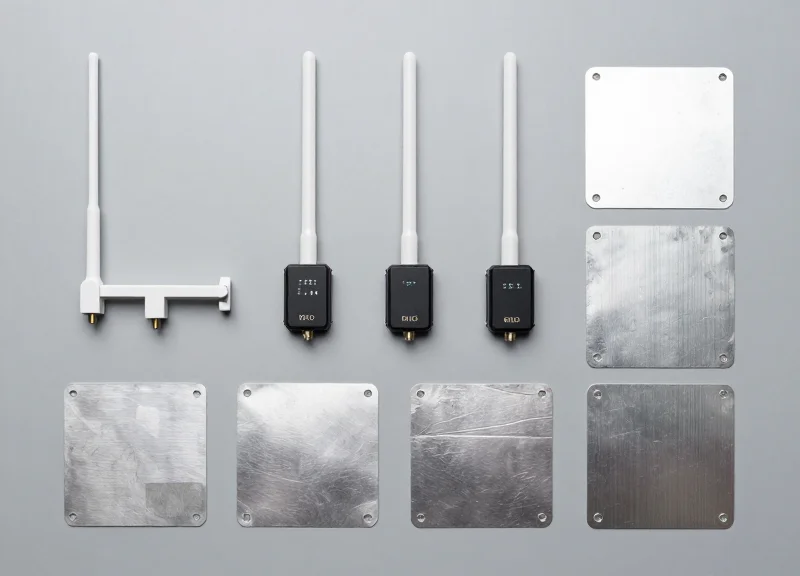
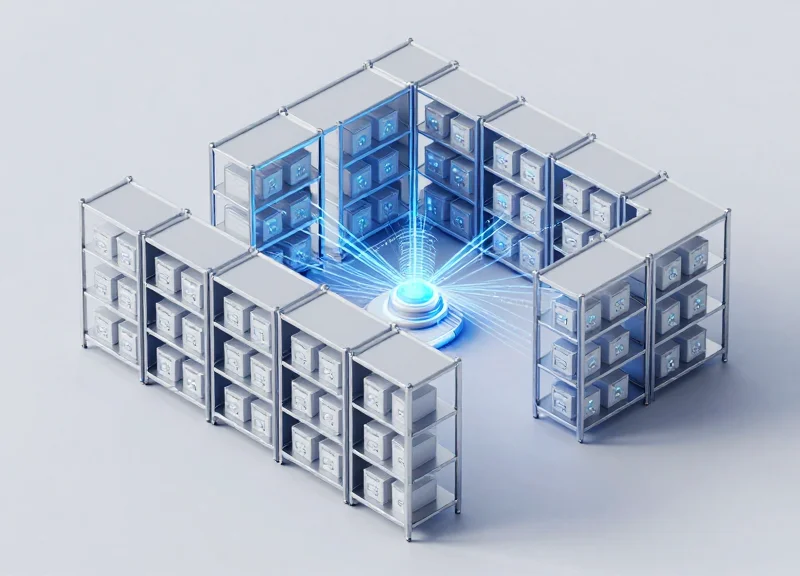
A high-performance RFID smart shelf is not merely a storage unit but a precision-engineered IoT device. In the 2026 archival landscape, 'performance' is measured by the system's ability to maintain 100% inventory visibility in real-time, regardless of document density or atmospheric humidity. The hardware stack is defined by four non-negotiable pillars: Ultra-High Frequency (UHF) near-field antenna arrays, high-throughput readers with integrated anti-collision algorithms, edge-AI controllers for localized data processing, and electromagnetic-interference (EMI) optimized shelving materials.
| Component | Legacy Standard (Pre-2023) | 2026 High-Performance Standard | |||||||||
|---|---|---|---|---|---|---|---|---|---|---|---|
| Antenna Type | General-purpose Far-field | Hybrid Near-Field/Localized Beam | Reader Sensitivity | > -70 dBm | < -85 dBm (High-Resolution) | Controller Logic | Cloud-dependent processing | Edge-AI Autonomous Processing | Material Science | Standard Powder-Coated Steel | RF-Transparent/Absorptive Alloys |
- High-Gain UHF Antennas: Modern antennas utilize 'micro-zoning' to prevent signal leakage between shelves. This ensures that a file on Shelf A is never mistakenly recorded on Shelf B, a common flaw in older far-field systems.
- Multi-Channel RFID Readers: 2026 readers must support high-speed polling—scanning thousands of tags per second—while implementing 'Dense Reader Mode' (DRM) to prevent interference with neighboring smart units.
- Edge-AI Integrated Controllers: These localized processors filter 'noise' and handle data deduplication at the shelf level, reducing the bandwidth load on government networks and ensuring the system functions during cloud outages.
- RF-Shielded Construction: High-performance units use specialized metal alloys or carbon-fiber composites that act as a Faraday cage, containing the radio waves within the storage cavity to eliminate false positives from passing personnel.
Expert Insight: The 'Signal-to-Material' Matching. In 2026, the secret to peak performance is 'frequency-tuned coating.' Generic steel shelves reflect RF signals, creating multi-path interference and 'dead zones.' Leading manufacturers now use proprietary non-conductive coatings that allow for controlled signal bounce, effectively 'illuminating' every corner of the shelf and ensuring that even a single thin sheet of paper with a low-profile tag is captured with 100% certainty.
Can these shelves handle metal-fastened folders?
Yes. 2026 high-performance systems use circular polarization and high-sensitivity readers specifically tuned to overcome the RF-shielding effects of metal paperclips and binders.
What is the power requirement for these smart units?
Most modern units utilize Power over Ethernet (PoE++), allowing for a single cable to handle both high-speed data transfer and the electricity needed for the readers and onboard AI controllers.
How do these components handle environmental fluctuations?
High-performance archival shelves are now built with industrial-grade oscillators that prevent 'frequency drift' caused by the temperature and humidity controlled environments typical of government vaults.
The 2026 Decision Matrix: Key Evaluation Criteria

The 2026 Decision Matrix for RFID smart shelves is a strategic framework designed to move beyond simple tag detection toward high-fidelity data integrity. To meet the rigorous demands of modern government archives, a high-performance system must achieve a minimum 99.99% read accuracy, maintain real-time inventory latency of under 60 seconds, and provide active signal isolation to prevent 'cross-talk' between adjacent shelves. This matrix prioritizes hardware that can handle high-density metal-rich environments while ensuring that sensitive records are tracked with zero margin for error.
| Evaluation Metric | Minimum Requirement | 2026 High-Performance Target |
|---|---|---|
| Read Accuracy Rate | 98.5% | 99.99% (Verified Zero-Loss) |
| Inventory Scan Frequency | Hourly | Real-time (Continuous or <30s Latency) |
| Signal Interference | Passive Shielding | Active Beamforming & Signal Isolation |
| System Scalability | Fixed Units | Modular Plug-and-Play Expansion |
| Data Integration | Batch CSV Export | Real-time RESTful API / GraphQL |
- Spatial Read Precision (Signal Isolation): In high-density archives, antennas must be tuned to read only the specific shelf level they are assigned to. 2026 standards require active signal containment to ensure a file on Shelf A isn't mistakenly recorded as being on Shelf B due to signal leakage.
- Dynamic Load Capacity and Antenna Gain: Archives often contain varying materials (paper, microfiche, magnetic media). High-performance shelves must utilize adaptive antenna gain to penetrate thick document bundles without damaging sensitive magnetic storage.
- Edge Computing & Local Intelligence: Rather than sending raw data to a central server, 2026 systems should process inventory movements at the 'edge' (on the shelf controller). This reduces network congestion and ensures inventory data is available even during server outages.
Expert Insight: The 'Ghost Tag' Dilemma. A common failure in older RFID systems is the 'Ghost Tag'—where a shelf reports a file present that was actually moved minutes ago. In a 2026 high-performance matrix, you must evaluate 'True Occupancy' sensors. These combine RFID with infrared or weight sensors to verify that a physical object is actually occupying the space, providing a dual-layer verification protocol that is essential for high-security government document chains of custody.
How does storage density affect RFID read rates?
Higher density increases the risk of 'tag shadowing,' where one file blocks the signal of another. High-performance shelves solve this using multi-static antenna arrays that approach the tags from multiple angles within the shelf structure.
Is real-time monitoring necessary for archival storage?
While archival items move less frequently, real-time monitoring is critical for security. Any unauthorized removal of a government record must trigger an alert within seconds, not during the next scheduled batch scan.
What is the importance of 'Electromagnetic Hygiene' in 2026?
As government facilities become more crowded with wireless signals (Wi-Fi 7, 5G, IoT), smart shelves must have superior electromagnetic interference (EMI) filtering to ensure RFID performance doesn't degrade in noisy environments.
Technical Specifications: Frequency, Read Rates, and Shielding

For 2026 government archival standards, the technical baseline for RFID smart shelves centers on three critical pillars: the use of Ultra-High Frequency (UHF) bands (860–960 MHz) for long-range penetration, high-density read rates exceeding 700 items per second, and physical electromagnetic shielding. These specifications ensure that dense collections of paper-based records, often containing metallic fasteners or sensitive chips, are cataloged with 99.99% accuracy. Without the proper synergy between these specs, systems suffer from 'spectral bleed,' where a shelf accidentally reads a document located in an entirely different aisle, compromising the legal chain of custody.
| Feature | 2026 Minimum Requirement | Legacy System Standard | Impact on Archives |
|---|---|---|---|
| Frequency Range | 860-960 MHz (UHF EPC Gen2v2) | 13.56 MHz (HF) | Enables bulk scanning of 500+ files simultaneously. |
| Anti-collision Rate | >750 tags per second | 100-200 tags per second | Reduces inventory audit time from hours to seconds. |
| Shielding Material | Mu-metal or Galvanized Carbon Steel | Standard Aluminum / None | Prevents 'ghost reads' from adjacent storage units. |
| Signal Accuracy | 99.99% (RSSI Filtered) | 95.0% - 98.0% | Eliminates manual verification of missing documents. |
A high-performance system is defined by its ability to handle 'The Dense Tag Environment.' In government archives, files are packed with millimeter-level spacing. Standard RFID readers struggle with signal collision—where multiple tags reflect signals at once, causing data loss. The 2026 decision matrix requires readers equipped with advanced adaptive anti-collision algorithms (like Dynamic Slot Aloha) that can prioritize tag responses based on signal strength and phase angle, ensuring every single folder is accounted for in real-time.
Why is electromagnetic shielding necessary for archive shelves?
Shielding acts as a Faraday cage, containing the RF energy within the specific shelf unit. Without it, the powerful UHF signal would pass through wooden or thin metal shelves, reading files on the other side of the wall or the shelf above, leading to false inventory data.
What role does RSSI filtering play in 2026 systems?
Received Signal Strength Indicator (RSSI) filtering allows the software to ignore 'weak' signals. This ensures that even if a signal leaks through shielding, the system recognizes it as 'out of zone' and excludes it from the shelf's inventory count.
How does moisture content in paper affect frequency requirements?
Paper is hygroscopic; it absorbs moisture which can attenuate RFID signals. 2026-spec UHF readers use auto-tuning impedance matching to adjust the power output dynamically based on the humidity-driven resistance of the archived materials.
Expert Tip: When evaluating 2026 hardware, look for 'Directional Beamforming Antennas' rather than omnidirectional ones. Directional antennas allow the system to 'shape' the radio waves to the exact dimensions of the shelf. This reduces the power required to read tags by 40%, which significantly lowers the risk of interference with other digital government infrastructure, such as Wi-Fi 7 networks or secure communications arrays.
Integration with Archive Management Systems (AMS)

In 2026, the success of a government RFID deployment is measured not by the hardware alone, but by the fluidity of the 'Data Handshake' between physical shelves and the Archive Management System (AMS). Integration refers to the bidirectional communication channel where smart shelf sensors push real-time location data to the AMS, while the AMS pushes pick-lists and security permissions back to the shelf's visual indicators. This ecosystem relies on standardized protocols like LLRP (Low-Level Reader Protocol) and RESTful APIs to transform raw radio waves into actionable archival intelligence, ensuring that the 'digital twin' of the archive is always a 100% accurate reflection of the physical stacks.
| Integration Type | Architecture | Best Use Case | 2026 Readiness |
|---|---|---|---|
| Middleware-Centric | Proprietary software layer between shelf and AMS. | Legacy AMS systems lacking native API support. | Moderate - Declining due to latency issues. |
| API-First (REST/JSON) | Direct HTTPS communication via webhooks. | Modern cloud-native or hybrid government archives. | High - Standard for interoperability. |
| Edge Computing | Processing logic resides on the shelf controller. | High-security vaults with limited external connectivity. | Extreme - Ideal for air-gapped environments. |
### The Shift to Event-Driven Archiving Traditional integration relied on 'polling'—where the software periodically asks the hardware for an update. By 2026, high-performance government systems have shifted to an event-driven architecture. In this model, the smart shelf acts as an active participant, pushing 'events' (e.g., File_Removed, File_Misplaced, Access_Unauthorized) to the AMS the millisecond they occur. This reduces network overhead and ensures that audit trails are timestamped with forensic precision.
- Protocol Validation: Ensure the hardware supports LLRP 1.1 or higher to allow the AMS to control reader parameters without proprietary vendor drivers.
- Schema Mapping: Align the RFID EPC (Electronic Product Code) data format with the archival metadata standards (e.g., Dublin Core or EAD) used in your AMS.
- Webhook Configuration: Set up automated triggers so that the shelf can alert the AMS to inventory discrepancies immediately.
- Security Handshake: Implement OAuth2 or mTLS (Mutual TLS) to encrypt the data stream between the smart shelf and the government database.
Expert Tip: To future-proof your 2026 investment, look for 'Middleware-less' hardware. Modern smart shelves now feature built-in Linux controllers capable of running containerized microservices (like Docker). This allows you to deploy your integration logic directly on the shelf, significantly reducing the cost of third-party software licenses and eliminating a single point of failure in your archival workflow.
Can RFID shelves integrate with 20-year-old legacy AMS software?
Yes, but it typically requires a 'Universal Translator' middleware that converts modern JSON/REST signals into the CSV or SQL-injection formats required by older databases.
What is the typical latency for a shelf-to-software update?
In a high-performance 2026 configuration, the latency should be sub-500 milliseconds, allowing for near-instant visual feedback on the shelf LEDs when a file is scanned.
Do we need to modify our existing archival database?
Generally, no. You only need to add a unique field for the RFID Tag ID (EPC) to link the physical asset to the existing digital record.
Security and Compliance: Protecting Classified Data

For government agencies in 2026, security and compliance for RFID smart shelves are no longer optional add-ons but foundational requirements. High-performance shelves must implement a 'Security-by-Design' architecture that encompasses end-to-end encryption for data in transit and at rest, physical tamper-proofing, and rigorous audit logging. This ensures that sensitive documents—ranging from personnel files to classified defense records—are monitored in real-time while remaining invisible to unauthorized actors both within the digital network and the physical facility.
| Security Tier | Encryption Standard | Access Control Requirement | Recommended Usage |
|---|---|---|---|
| Tier 1: General | AES-128 | RFID Badge / PIN | Public Records & General Archives |
| Tier 2: Controlled | AES-256 | Biometric + MFA | PII & Sensitive Internal Data |
| Tier 3: Classified | Quantum-Resistant (PQC) | SCIF Integration + 2FA | National Security & Top Secret Assets |
A critical 2026 differentiator is the move toward Zero Trust Architecture (ZTA) for physical hardware. In this model, the RFID shelf is treated as a potential entry point. Every data packet sent from the shelf's integrated controller to the Archive Management System (AMS) must be authenticated and encrypted. Furthermore, physical shielding is essential; high-performance shelves utilize 'Signal Containment' technology—essentially a localized Faraday effect—to prevent signal leakage (sniffing) beyond the immediate vicinity of the shelf, a common vulnerability in older RFID deployments.
- Implement NIST 800-53 Controls: Ensure the hardware and software stack complies with the latest revision of NIST Special Publication 800-53, focusing on Access Control (AC) and Audit and Accountability (AU) families.
- Deploy Hardware Security Modules (HSM): Use integrated HSMs within the shelf controllers to manage cryptographic keys securely, preventing the extraction of sensitive keys even if the physical controller is compromised.
- Enable Real-time Tamper Alerts: Configure the system to trigger immediate silent alarms and lockdown procedures if the shelf's physical shielding or sensors detect unauthorized structural interference.
How does RFID shielding prevent data theft?
Advanced smart shelves use electromagnetic interference (EMI) gaskets and specialized metallic coatings. This ensures that the RFID signal stays contained within the shelving unit, making it impossible for someone with a mobile reader to 'skim' data from outside the room.
Is the system compliant with CMMC 2.0?
Yes, high-performance 2026 models are designed to meet Cybersecurity Maturity Model Certification (CMMC) Level 2 and Level 3 requirements, specifically addressing the protection of Controlled Unclassified Information (CUI).
What happens during a network outage?
The system should transition to an 'Offline Secure' mode where access is granted only via local physical overrides, and all transaction logs are buffered on encrypted internal storage until connectivity is restored.
Expert Tip: When evaluating vendors, ask for their 'Post-Quantum Cryptography (PQC) Readiness' roadmap. By 2026, any archival system intended to store data for 10+ years must be prepared for the transition to NIST-standardized quantum-resistant algorithms to protect today's encrypted data from future 'harvest now, decrypt later' attacks.
Cost-Benefit Analysis and ROI for Government Agencies
For government agencies, the return on investment (ROI) for RFID smart shelves is not merely a measure of capital recovery, but a comprehensive shift in operational efficiency and risk mitigation. By 2026, the 'Total Cost of Ownership' (TCO) model for archive management includes the direct reduction of manual labor hours, the elimination of 'ghost assets' (misplaced files), and the avoidance of legal or compliance penalties. When high-performance RFID systems are deployed, the primary financial driver is the radical compression of inventory audit cycles, which traditionally consume hundreds of man-hours annually, into a real-time, zero-touch automated process.
| Metric | Manual Archiving Process | RFID Smart Shelf System (2026 Standard) |
|---|---|---|
| Inventory Cycle Time | 40-80 Hours (Quarterly) | < 5 Minutes (Real-time) |
| Search Time per Document | 15-30 Minutes | Instant Location/Near-Zero |
| Data Accuracy Rate | Approx. 72% - 85% | 99.9% Integrated Accuracy |
| Loss Rate (Annual) | 1% - 3% of Total Volume | Zero (Real-time Alarms) |
Unique Insight: The 'Information Friction' Index. In the 2026 fiscal landscape, we define ROI through the reduction of information friction. For every hour a critical government file is missing or in transit without tracking, the agency incurs an average 'Productivity Tax' of $450 in cross-departmental delays and administrative overhead. High-performance RFID shelves effectively eliminate this hidden tax by ensuring document availability matches the speed of digital workflows.
- Phase 1: CAPEX Evaluation: Analyze initial procurement costs including UHF antennas, integrated controllers, and specialized shielding against long-term durability of the hardware (10-year lifespan).
- Phase 2: Operational Savings Assessment: Calculate the reduction in Full-Time Equivalent (FTE) hours previously dedicated to 'walking the aisles' for inventory checks and misplaced file recovery.
- Phase 3: Risk and Compliance Valuation: Quantify the cost of potential security breaches or failed audits that are mitigated by 24/7 automated monitoring and encrypted access logs.
What is the typical break-even timeline for government RFID deployments?
Most agencies reach a break-even point within 18 to 24 months, primarily driven by a 90% reduction in inventory-related labor costs.
Can RFID shelves reduce insurance or liability premiums?
Yes, by providing a verifiable chain of custody and real-time security alerts, agencies can often negotiate lower risk-related internal assessments or external premiums.
How does the ROI account for software integration?
Modern ROI models include the 'data synergy' value—where RFID data enriches the existing Archive Management System (AMS), leading to better resource planning and space utilization.
Future-Proofing Your Investment: Scalability and AI Readiness

In the 2026 landscape, future-proofing a government archive investment means moving beyond simple radio-frequency detection toward 'Predictive Document Governance.' A future-proof RFID smart shelf system must be built on an extensible architecture that supports vertical and horizontal scaling without requiring a rip-and-replace of the core middleware. By integrating AI-readiness at the hardware level—specifically through sensor fusion and edge computing—agencies can transition from reactive tracking to proactive lifecycle management, where the system anticipates retrieval needs and identifies anomalies in document health before they become systemic failures.
| Feature Capability | Legacy RFID (Pre-2024) | 2026 Future-Proof Standard |
|---|---|---|
| Data Processing | Cloud-reliant / Latency-prone | Edge-AI / Local Neural Processing |
| Scalability | Fixed rack configurations | Hot-swappable modular arrays |
| Analytics | Post-event reporting | Real-time predictive heatmapping |
| Interoperability | Proprietary silos | Open-API / Matter-standard compatible |
Unique Insight: The 'Shadow Inventory Trap' occurs when archives scale physically but lack the algorithmic depth to manage data density. To avoid this, 2026-ready systems utilize 'Shelf-Edge Computing.' By processing tag data directly on the shelf controller before it hits the central database, the system can detect 'document drift'—subtle changes in tag signal strength that indicate physical deterioration or unauthorized tampering—allowing for autonomous security audits without human intervention.
- Assess Hardware Modularity: Ensure the physical chassis allows for the addition of more shelf units to a single controller, reducing the cost-per-volume as the archive grows.
- Verify Neural Engine Integration: The shelf controllers should feature NPUs (Neural Processing Units) capable of running local machine learning models for pattern recognition and anomaly detection.
- Evaluate API Extensibility: Select systems that offer robust, documented RESTful or GraphQL APIs to ensure compatibility with future AI-driven government governance tools.
How does AI help with archive space optimization?
AI analyzes retrieval frequency patterns to suggest 'tiering' strategies, moving high-demand records to more accessible zones and compacting rarely accessed files to maximize physical density.
Can smart shelves detect environmental risks to documents?
Next-generation shelves use sensor fusion (RFID + Humidity/Temp sensors) processed by AI to predict mold growth or degradation risks based on micro-climates within specific shelf bays.
What is the lifespan of a future-proofed RFID system?
By prioritizing software-defined hardware and modular components, agencies should expect a 10-15 year operational lifecycle with periodic firmware-based AI updates.
Selecting the Right Vendor: Essential Questions to Ask
Selecting a high-performance RFID smart shelf vendor for government archives is no longer just about hardware acquisition; it is a 15-year strategic partnership. In the 2026 landscape, procurement officers must prioritize vendors who demonstrate 'Interoperability Sovereignty'—the ability to function within a multi-vendor ecosystem without proprietary lock-in. A vendor's value is defined by their public sector track record, their commitment to open-source API standards, and their ability to provide local, high-security clearance field support.
| Evaluation Category | Critical Question | Why It Matters for 2026 |
|---|---|---|
| Technical Longevity | Does your firmware support over-the-air (OTA) updates for future security protocols? | Prevents physical hardware obsolescence as encryption standards evolve. |
| Supply Chain | Can you provide a full Bill of Materials (BOM) including chip provenance? | Essential for meeting modern government 'Clean Network' and cybersecurity mandates. |
| Interoperability | Is your software layer built on RESTful APIs or proprietary middleware? | Ensures the shelves can talk to any future Archive Management System (AMS). |
Can you provide case studies specifically for high-density document storage in the public sector?
Government archives present unique challenges like acidic paper interaction and high-density metal shelving that generic retail RFID solutions cannot handle. Demand proof of performance in similar environments.
What is your Guaranteed Response Time (GRT) for on-site hardware failures in secure zones?
Remote diagnostics are often impossible in classified government archives due to air-gapped networks. Ensure the vendor has cleared personnel available for physical on-site intervention within 24-48 hours.
Do you support 'Universal Tagging' or are we locked into your proprietary RFID transponders?
Proprietary lock-in can increase long-term operational costs by 300%. A high-quality vendor will support any ISO-compliant Gen2 tag.
How is data handled during a system migration or vendor exit?
Data portability is a legal requirement in many jurisdictions. Ensure the vendor provides a clear data egress path in a non-proprietary format (like CSV or JSON).
Expert Tip: The 'Provenance Clause'. As of 2026, many government agencies are requiring a 'Software Bill of Materials' (SBOM). When vetting vendors, ask if they provide an SBOM that tracks the origin of every software component used in the shelf's management layer. This protects your archive from vulnerabilities introduced by third-party libraries or non-compliant offshore code bases.