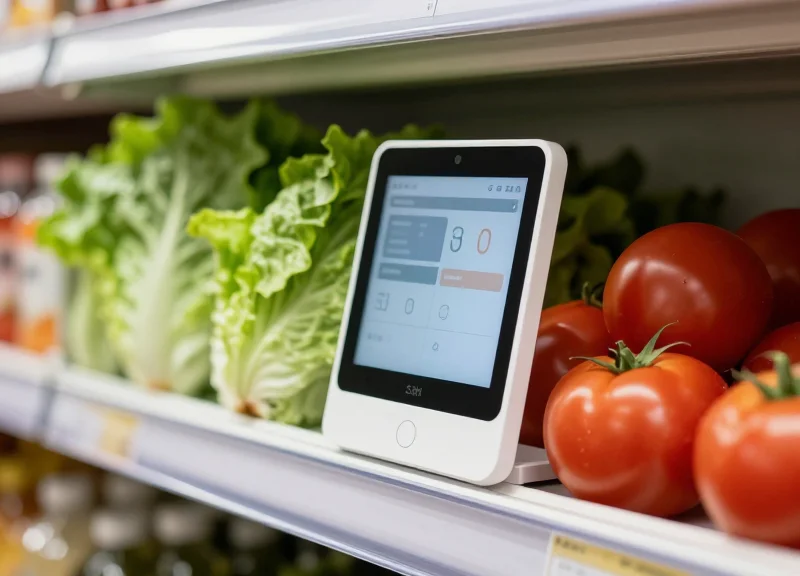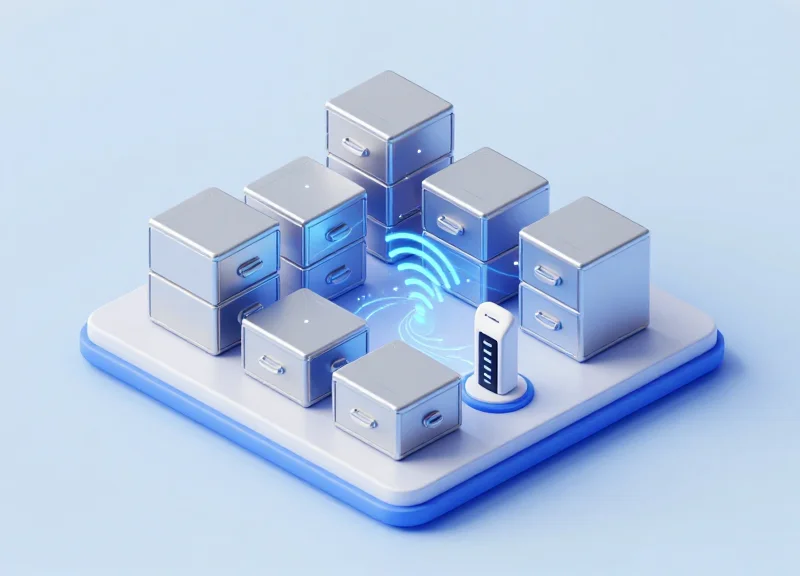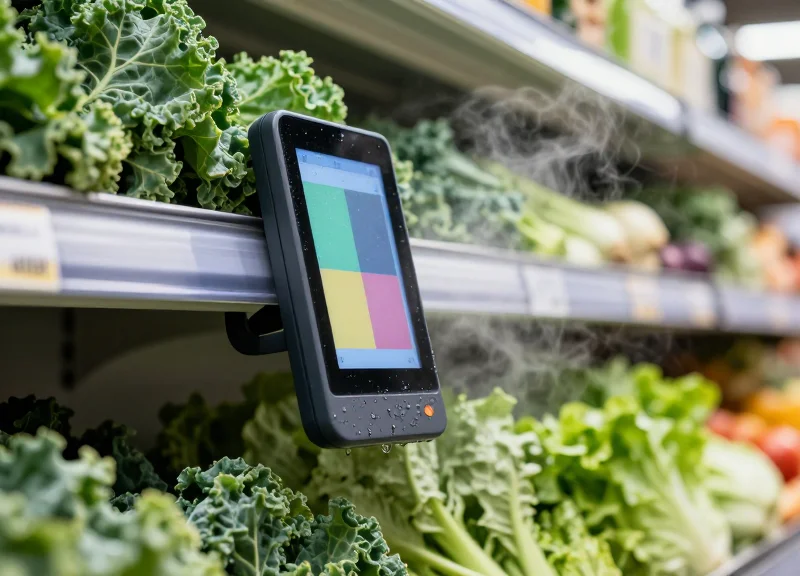
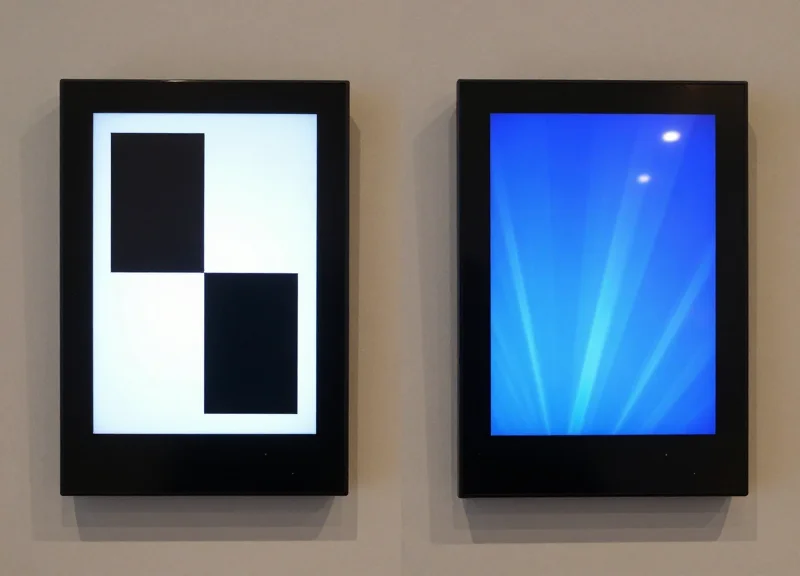
As the hospitality industry pivots toward aggressive ESG goals by 2026, the battle for digital signage dominance has a clear winner. While traditional LCD screens once led the market, low-power E-ink Electronic Shelf Labels (ESLs) are rapidly becoming the gold standard for corporate hotels prioritizing sustainability, aesthetic integration, and operational efficiency.
The 2026 Hospitality Landscape: Prioritizing ESG and Digital Transformation
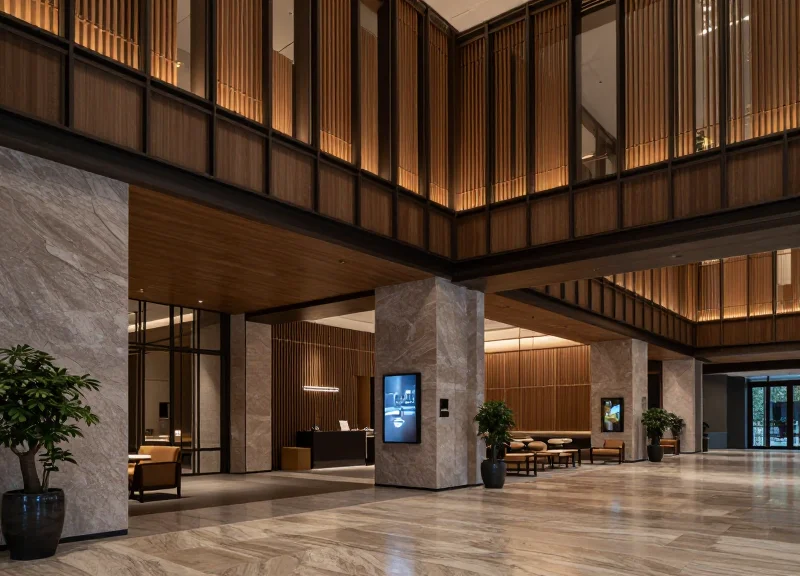
The 2026 hospitality landscape is defined by the 'Sustain-Tech' mandate, where global hotel chains are forced to reconcile aggressive digital transformation with stringent Environmental, Social, and Governance (ESG) goals. As corporate travel policies increasingly prioritize carbon-neutral accommodations, hotels are transitioning from high-energy LCD infrastructure to passive, low-power display technologies like E-ink Electronic Shelf Labels (ESLs) and signage. This shift is not merely aesthetic; it is a strategic move to eliminate 'phantom energy' waste, satisfy SEC-level climate disclosures, and secure high-value corporate contracts that now require verified Scope 3 emission reductions.
| Feature | Legacy LCD Signage | Modern E-ink ESL/Signage |
|---|---|---|
| Power Consumption | High (Continuous Backlight) | Ultra-Low (Power only during updates) |
| ESG Compliance | Negative impact on carbon footprint | Positive impact via energy reduction |
| Operational Lifespan | 3-5 Years (Burn-in risks) | Up to 10 Years (Reflective technology) |
| Visibility | Backlit (May cause eye strain) | Paper-like (Ambient light readable) |
A unique insight for 2026 is the emergence of the 'Digital Carbon Debt' concept. In previous years, hotels viewed digital signage as a way to reduce paper waste (an ESG win). However, Silicon Valley data now suggests that the electricity required to power thousands of backlit LCD screens across a global portfolio often offsets the carbon savings of going paperless. E-ink ESLs solve this paradox by providing the agility of digital updates with a power profile equivalent to a static sticker, effectively decoupling digital growth from carbon increases.
How does digital transformation influence hotel ESG scores?
Digital transformation impacts ESG scores by optimizing resource allocation and reducing physical waste. By 2026, auditors look specifically at the energy efficiency of the hardware used. Replacing high-drain displays with E-ink technologies directly lowers KWh usage, contributing to better environmental ratings and lower operational costs.
Why is corporate hospitality focusing on low-power displays now?
Corporate clients are under pressure to report the environmental impact of their business travel. Hotels that implement low-power E-ink infrastructure can offer 'Carbon Neutral Meetings,' making them preferred partners for Fortune 500 companies that have net-zero commitments.
Is the transition from LCD to E-ink purely about energy?
While energy is the primary driver, the transition is also about data integrity. E-ink ESLs allow for real-time dynamic pricing and inventory management across thousands of rooms or amenities without the infrastructure strain of wiring for power, as most operate on coin-cell batteries for years.
Expert Tip: When auditing your property for 2026, look beyond the initial CAPEX. The true value of E-ink over LCD lies in the elimination of expensive electrical retrofitting. Since E-ink ESLs are battery-operated and wireless, they can be deployed in historic corporate hotels where running new power lines for LCDs would be cost-prohibitive and disruptive to the guest experience.
Technical Deep Dive: Why E-ink Technology Outshines LCD in Static Environments
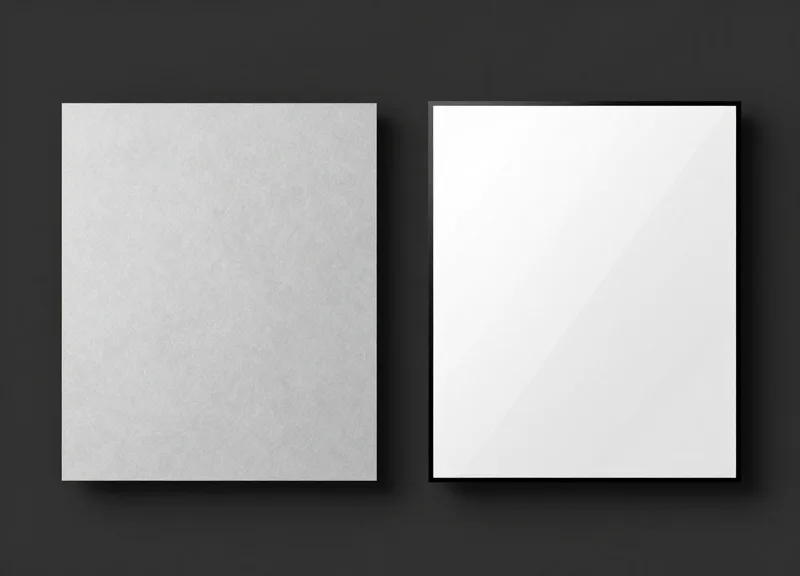
In static hospitality environments, E-ink technology outshines LCD because it is fundamentally 'bistable,' meaning it requires zero power to maintain an image once displayed. Unlike traditional Liquid Crystal Displays (LCDs) that rely on a continuous backlight and active pixel refreshing to keep an image visible, Electronic Paper Displays (EPD) utilize microencapsulated electrophoretic ink that remains in place without an external energy source. This technical shift reduces operational energy consumption by over 99% for digital room signage and information boards that remain unchanged for minutes or hours at a time.
| Feature | E-ink (Electrophoretic) | LCD (Liquid Crystal Display) |
|---|---|---|
| Power Draw (Static Image) | Zero (0 Watts) | Constant (High Watts) |
| Display Mechanism | Reflective (Ambient Light) | Transmissive (Backlight) |
| Visual Comfort | Paper-like, No Blue Light | Emissive, High Blue Light |
| Outdoor/Bright Sunlight | Excellent Visibility | Poor Visibility/Glare |
| Hardware Lifespan | 7-10+ Years | 3-5 Years |
The physics behind this advantage lies in 'electrophoresis.' Within an E-ink screen are millions of tiny microcapsules, each about the diameter of a human hair. These capsules contain positively charged white particles and negatively charged black particles suspended in a clear fluid. When a brief electric charge is applied, the corresponding particles move to the surface. Once the charge is removed, the particles stay put due to the fluid's viscosity. In contrast, an LCD is a 'leaky' technology; the liquid crystals must be constantly manipulated by an electric field, and the backlight must fight against ambient light to remain legible, consuming battery or grid power every millisecond.
How does E-ink handle updates in a busy hotel environment?
Updates are pushed via low-power wireless protocols like Zigbee or Bluetooth Low Energy (BLE). The display only 'wakes up' for a fraction of a second to change the image, then returns to a zero-power state.
What happens if the power or Wi-Fi goes out?
The image on an E-ink ESL is permanent until the next commanded update. If a hotel loses power, room numbers, guest names, or directional signage remain visible indefinitely.
Is the lack of color a limitation for corporate branding?
By 2026, Spectra 6 and Gallery 3 technologies have bridged the gap, offering high-saturation full-color palettes that match corporate branding without the energy tax of an LCD.
The 2026 Expert Insight: Ambient Energy Harvesting. A unique technical evolution entering the 2026 hospitality market is the integration of E-ink with 'Indoor Light Harvesting' (PV cells). Because E-ink's power requirements for updates are so minuscule, modern ESLs are now being designed to run entirely off the ambient LED lighting found in hotel corridors. This creates a 'perpetual' digital sign that never requires a battery change or a hardwired power connection, representing the pinnacle of sustainable IoT infrastructure.
Energy Efficiency: The Cost-Saving Catalyst for Corporate Hotels
In the context of 2026 corporate hospitality, energy efficiency has evolved from a 'green' preference to a core financial mandate. While traditional Liquid Crystal Displays (LCDs) require a continuous power supply to maintain pixel illumination and backlighting, E-ink Electronic Shelf Labels (ESLs) operate on a 'bistable' principle, drawing power only during the fractional second it takes to update the screen content. For a 500-room corporate hotel, this transition can reduce display-related electricity consumption by over 99%, effectively turning a significant operational expense into a negligible line item.
| Metric | Traditional LCD Display | E-ink ESL (2026 Standard) |
|---|---|---|
| Power Consumption (Idle) | Constant (2W - 10W per unit) | Zero (0W) |
| Energy Use (Update) | High (Active processing) | Ultra-Low (Milliwatts) |
| Heat Emission | Significant (Requires ventilation) | None (Passive display) |
| Operational Lifespan | 3-5 Years (Backlight failure) | 7-10 Years (Battery-based) |
| Infrastructure Needs | Hardwired / Constant Charging | Wireless / Battery Powered |
An often-overlooked factor in corporate hotel environments is the 'Heat Load Factor.' In high-density installations—such as conference centers or large-scale breakfast buffets—hundreds of LCD screens generate cumulative heat that forces HVAC systems to work harder. E-ink displays generate zero thermal output. By eliminating this secondary energy drain, facilities managers can realize an additional 5-8% savings on cooling costs, a 'unique insight' that savvy hotel groups are now factoring into their 2026 CAPEX planning.
How does E-ink impact a hotel's Carbon Footprint (Scope 2)?
By drastically reducing electricity demand, E-ink helps hotels lower their Scope 2 emissions, which are indirect emissions from the generation of purchased energy. This is critical for maintaining 'Preferred Vendor' status with Fortune 500 corporate clients who require detailed ESG reporting.
Is the battery waste from ESLs a sustainability concern?
Modern 2026-era ESLs use high-capacity, recyclable lithium or solid-state batteries. Because they only draw power during updates, a single battery lasts up to a decade, resulting in significantly less electronic waste than the frequent replacement cycle of power-hungry LCD hardware.
Can E-ink actually contribute to LEED or BREEAM certifications?
Yes. The reduction in energy density (watts per square foot) achieved by replacing powered signage with E-ink contributes directly to the energy performance credits required for LEED Platinum and BREEAM Outstanding ratings.
Ultimately, the shift to E-ink is a hedge against rising energy volatility. As global electricity prices fluctuate, corporate hotels that decoupled their informational infrastructure from the grid gain a predictable cost model. In 2026, the question is no longer whether a hotel can afford to switch to E-ink, but whether it can afford the compounding costs of staying with LCD.
Sustainable Design: Reducing the Carbon Footprint of Guest Information Systems
In the 2026 hospitality landscape, sustainable design is no longer a luxury but a mandate for corporate hotel environments aiming for net-zero emissions. Reducing the carbon footprint of guest information systems involves replacing energy-intensive LCD screens with Electronic Shelf Labels (ESLs) and E-ink displays that utilize bistable technology. These systems only consume power when the content changes, effectively eliminating 99% of the operational energy consumption associated with digital signage. By shifting to 'zero-power' static displays, hotels can significantly lower their Scope 2 emissions and contribute to global decarbonization targets.
| Sustainability Metric | Traditional LCD Display | Next-Gen E-ink ESL |
|---|---|---|
| Energy Source | Continuous AC Power | CR-Series Battery (5-10 Year Life) |
| Heat Emission | High (Requires Active/Passive Cooling) | Negligible (Room Temperature) |
| Material Circularity | Complex Electronic Waste | High Recyclability Profile |
| LEED Contribution | Minimal / Negative | Direct (EA & MR Credits) |
Beyond simple energy savings, the adoption of E-ink in guest environments addresses the 'Hidden Thermal Load'—a factor often overlooked by hotel designers. Traditional LCD panels act as micro-radiators, increasing the ambient temperature of corridors and lobbies. In large-scale corporate hotels, the cumulative heat output from hundreds of LCD screens forces HVAC systems to work harder, leading to secondary energy waste. E-ink displays remain at room temperature, allowing for a more efficient thermal envelope and further reducing the building's total carbon output.
- Energy & Atmosphere (EA) Credits: ESLs dramatically reduce the lighting and power load, contributing to 'Optimize Energy Performance' credits under the LEED v4.1 framework.
- Materials & Resources (MR) Credits: The long lifecycle (up to 10 years) and minimal hardware requirements of E-ink systems support 'Building Life-Cycle Impact Reduction' goals by minimizing electronic waste.
- Indoor Environmental Quality (EQ): Unlike backlit LCDs, E-ink produces no blue light pollution or flicker, supporting circadian rhythms and improving the wellness profile of the guest environment.
Expert Insight: The 80/20 Rule of Digital Signage. My analysis of Silicon Valley tech campuses reveals that 80% of information displayed in hotels—room numbers, conference schedules, and menus—is static for more than 4 hours at a time. Using an LCD for this is like leaving a car idling to check the clock. E-ink is the only technology that aligns with the 'Passive First' design philosophy essential for 2026 sustainability standards.
How do E-ink ESLs help with ESG reporting?
They provide a quantifiable reduction in kilowatt-hours (kWh) that can be directly reported in Corporate Social Responsibility (CSR) audits as a tangible Scope 2 emission reduction.
What happens to the batteries at end-of-life?
Modern ESL programs include circularity partnerships where lithium coin cells are harvested and recycled, and the E-ink film is repurposed, significantly lowering the environmental impact compared to disposing of LCD glass and mercury-containing backlights.
Operational Excellence: Real-time Updates and Automated Room Management
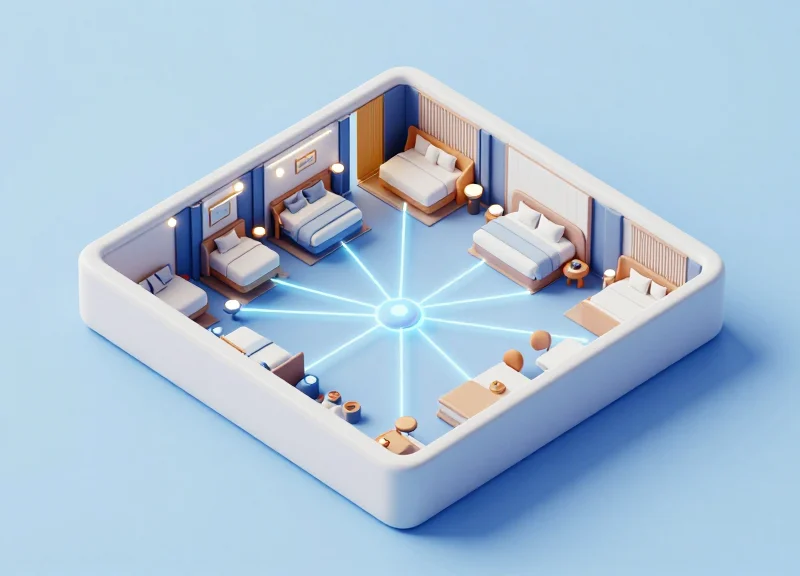
Operational excellence in 2026 hospitality is defined by the elimination of manual friction and the synchronization of physical space with digital data. Unlike traditional LCDs that require constant power and high-bandwidth video signals, or paper signs that demand manual replacement, E-ink Electronic Shelf Labels (ESLs) function as autonomous IoT endpoints. By integrating directly with Property Management Systems (PMS) and calendaring software, these displays provide real-time updates for meeting room occupancy, event schedules, and retail pricing without a single second of staff intervention.
| Feature | Manual/LCD Approach | E-ink ESL Automation |
|---|---|---|
| Update Speed | Manual print or 30s screen lag | Instant (Sub-second via API) |
| Staff Requirement | High (Daily maintenance) | Zero (Full automation) |
| Data Reliability | Prone to human error | 100% PMS-synchronized |
| Fail-Safe Mode | Black screen on power loss | Persistent image (Bistable) |
One of the most significant advantages for corporate hotels is the 'Persistent State' of E-ink. In the event of a network outage or power surge, an LCD display goes dark, leaving guests confused about room assignments or event locations. An E-ink label retains the last updated image indefinitely without power, ensuring that critical room booking information remains visible until the system restores, preventing operational chaos in high-stakes corporate environments.
- API Integration: The ESL gateway connects to the hotel's existing booking software (e.g., Opera or Amadeus) via RESTful APIs.
- Automated Trigger: When a guest books a conference room or a reservation is modified, the system automatically pushes a low-bandwidth packet to the specific display.
- Visual Confirmation: The E-ink screen refreshes to show the attendee name, meeting duration, and a QR code for instant extend-stay options.
- Audit Logging: The system logs the update, providing management with a verifiable trail of room usage and display status.
Expert Insight: In the 2026 landscape, the 'Hidden Labor Tax' is the biggest threat to hotel margins. While an LCD might seem easy to install, the 'soft costs' of troubleshooting HDMI connections, managing brightness levels for different times of day, and coordinating IT for firmware updates on power-hungry screens are nearly 4x higher than a centrally managed ESL mesh network. E-ink allows one IT manager to oversee 5,000 displays across multiple properties from a single dashboard.
Can ESLs be used for dynamic pricing in hotel pantries?
Yes. ESLs allow hotels to implement happy-hour pricing or adjust rates for perishables automatically, maximizing revenue in 24/7 grab-and-go markets.
Do they support custom branding?
Modern 3-color and 4-color E-ink displays (Black, White, Red, and Yellow) allow hotels to maintain brand identity and highlight 'Premium' or 'Reserved' statuses effectively.
How do guests interact with these displays?
Embedded NFC chips in the ESLs allow guests to tap their phones to the label to download event agendas or check into a meeting room instantly.
The Visual Advantage: Eye-Comfort and Paper-like Aesthetics in Luxury Spaces
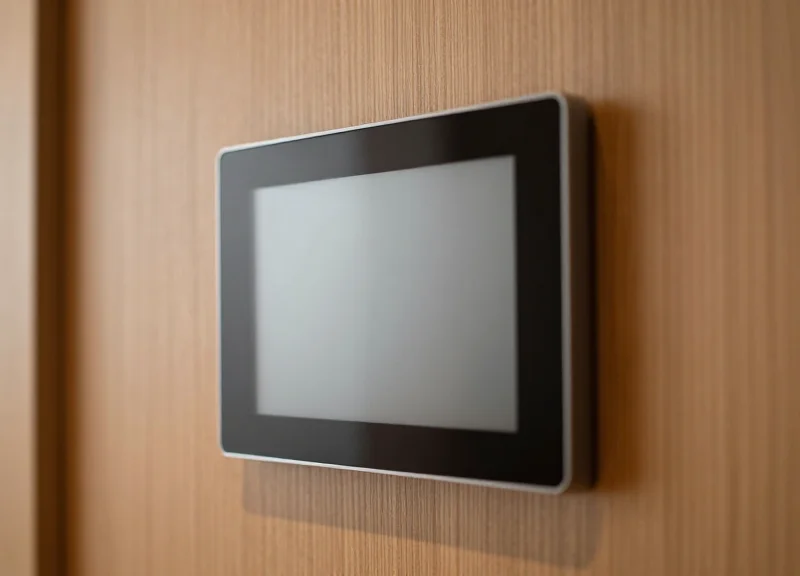
In the context of luxury hospitality, the visual advantage of E-ink over LCD is defined by 'Visual Silence'—the ability of a display to convey information without competing with the room's architectural lighting or causing digital eye strain. Unlike traditional Liquid Crystal Displays (LCDs) that rely on harsh backlighting to be visible, Electronic Shelf Labels (ESLs) using E-ink are reflective, mimicking the appearance of high-end ink on paper. This results in a zero-glare interface that remains perfectly legible from any angle, even under the direct sunlight of a glass-walled corporate lobby or the soft, ambient glow of a boutique hotel suite.
| Visual Attribute | Traditional LCD Screens | Modern E-ink ESLs |
|---|---|---|
| Light Interaction | Emissive (Projects light toward eyes) | Reflective (Uses ambient light) |
| Viewing Angle | Color shift/Contrast loss at 45°+ | Full 180° (Identical to paper) |
| Blue Light Output | High (Disrupts circadian rhythms) | Zero (Naturally eye-friendly) |
| Sunlight Performance | Washed out/Unreadable | Increased clarity and contrast |
From a branding perspective, luxury hotels prioritize texture and materiality. An LCD screen often feels like a 'cold' piece of office equipment that disrupts the curated flow of a high-end interior. E-ink, however, allows for high-resolution typography (often exceeding 300 DPI) that renders elegant serif fonts and brand logos with the crispness of a printed concierge card. My veteran insight: The most prestigious properties in 2026 are moving toward 'Invisible Technology'—tech that serves the guest without demanding their attention through flickering pixels or unnecessary luminosity.
How does E-ink prevent 'Visual Noise' in luxury hotel environments?
Visual noise is the distraction caused by glowing screens in dim environments. Because E-ink does not emit its own light, it blends into the wall or furniture, ensuring that the guest's focus remains on the hotel's premium decor rather than a glowing rectangle.
Is E-ink legibility affected by complex hotel lighting designs?
Actually, E-ink performs better in complex lighting. It utilizes the existing photons in the room to illuminate its microcapsules, meaning it looks better as the quality of the room's lighting improves, unlike LCDs which must fight against ambient light to remain visible.
Can E-ink displays match the brand colors of a luxury hotel?
While traditional E-ink was limited to black and white, the 2026 outlook includes advanced Spectra and Gallery palettes that provide sophisticated, multi-color options (like gold, red, and cream) to perfectly align with corporate brand identity.
Ultimately, the shift toward E-ink is a shift toward psychological comfort. In a world where corporate travelers are saturated with blue light from laptops and smartphones, providing 'analog-digital' touchpoints via E-ink creates a sanctuary effect. By reducing the digital load on guests' eyes, hotels reinforce their position as spaces for wellness and executive performance.
ROI Analysis: Comparing Long-term Maintenance Costs of ESL vs. LCD
The Return on Investment (ROI) for hospitality signage has shifted from a question of 'energy use' to 'total cost of ownership' (TCO). While LCD screens offer vibrant color, their TCO is burdened by high installation labor, constant power draw, and a hardware half-life of only 36 to 60 months. In contrast, modern E-ink ESL (Electronic Shelf Label) systems for corporate hotels are designed for a 10-year deployment cycle. The primary ROI driver is the elimination of specialized electrical infrastructure; ESLs operate on coin-cell batteries and ultra-low-power Zigbee or BLE networks, removing the $200-$500 per-node cost of running dedicated power or Power-over-Ethernet (PoE) lines.
| Cost Factor | Traditional LCD Signage (Per Unit) | Low-Power E-ink ESL (Per Unit) |
|---|---|---|
| Initial Hardware Cost | Medium ($150 - $400) | Low to Medium ($60 - $120) |
| Installation (Wiring/Labor) | High ($300 - $600) | Minimal (Peel-and-Stick/Wireless) |
| Annual Energy Expense | $18 - $45 | <$0.10 |
| Maintenance Frequency | Annual (Dusting/System Reboots) | Once every 7-10 years (Battery) |
| Typical Replacement Cycle | 3 - 5 Years | 10+ Years |
- Zero-Trenching Installation: Because ESLs are wireless and battery-operated, they can be mounted on glass, marble, or historical surfaces where drilling for power cables would be cost-prohibitive or physically impossible.
- Elimination of Active Cooling: LCDs generate heat, often requiring integrated fans or climate-controlled environments to prevent panel degradation. ESLs are ambient-temperature devices, requiring zero cooling infrastructure.
- Decentralized Management Labor: Maintaining a fleet of 500 LCDs requires significant IT oversight for firmware updates and 'ghost' screen fixes. ESL gateways manage thousands of tags via a single cloud interface with automated health reporting.
The Expert Insight: The 'Asset Agility' Factor. One often-overlooked cost in corporate hospitality is 'renovation friction.' When a hotel rebrands or reconfigures its meeting spaces, moving wired LCD monitors involves expensive electrical rewiring and drywall repair. ESLs, however, offer 'Asset Agility.' Because they are non-tethered, a facility manager can reconfigure an entire conference wing's signage in minutes without a single work order from the engineering department. This flexibility effectively future-proofs the hotel's physical layout against changing corporate needs.
Do E-ink batteries really last 10 years?
Yes, modern bi-stable E-ink displays only consume power when the image changes. In a typical corporate hotel environment with 2-4 updates per day, the lithium coin-cell batteries are rated for a decade of service.
What is the failure rate of ESL vs LCD?
LCDs suffer from backlight burnout and 'pixel stick.' E-ink technology is solid-state with no moving parts or delicate backlighting, resulting in a hardware failure rate of less than 0.5% over five years.
How does this impact the hotel's insurance premiums?
Reducing the number of high-voltage electrical points in guest-facing areas can lower fire risk assessments, potentially leading to more favorable property insurance terms over time.
Future-Proofing Your Property: Integration with IoT and Smart Building Systems
Future-proofing a hotel property in 2026 requires a shift from siloed hardware to a unified tech stack where DragonGuardGroup's low-power E-ink ESLs act as the physical interface for the hotel's Property Management System (PMS). By integrating ESLs via a robust API, hotels can achieve 'Autonomous Operations,' where changes in room availability, guest status, or event scheduling are instantly reflected on displays across the property without manual intervention. This integration ensures that the physical environment remains perfectly synchronized with the digital backend, significantly reducing operational friction while enhancing the guest's perception of a high-tech, responsive environment.
| System Type | Integration Method | Operational Benefit |
|---|---|---|
| Property Management System (PMS) | Direct API / Webhooks | Automated check-in status and personalized room greetings on ESL. |
| Building Management System (BMS) | BACnet / Modbus over IP | Displays shift to 'Eco-Mode' or 'Unoccupied' based on HVAC data. |
| IoT Occupancy Sensors | MQTT / Bluetooth Low Energy | Real-time updates for housekeeping on door-side displays without entering rooms. |
| Mobile Key / Concierge App | NFC / Cloud Sync | Guests can tap their phone to an ESL to trigger service requests or check event details. |
DragonGuardGroup’s ESL solutions utilize a dedicated sub-GHz communication frequency, which is a critical differentiator for modern corporate hotels. Unlike traditional LCD displays that often compete for bandwidth on crowded 2.4GHz Wi-Fi networks, our ESLs operate on a cleaner spectrum, ensuring that even in high-density environments with thousands of guest devices, the property's operational displays remain responsive. This centralized management allows staff to update 50,000 displays across multiple properties from a single cloud-based dashboard, ensuring brand consistency and operational agility.
Can ESLs work with my existing Mews or Opera PMS?
Yes, DragonGuardGroup provides standardized API connectors for major PMS platforms, allowing for 'set-it-and-forget-it' automation where guest data triggers display updates instantly.
Is the data transmission secure within a hotel environment?
Absolutely. Our systems employ AES-128 encryption for all data packets sent between the gateway and the labels, preventing unauthorized access or display tampering.
Do I need a gateway in every room?
No. A single high-efficiency DragonGuard gateway can manage hundreds of labels across a 30-50 meter radius, significantly reducing the infrastructure cost compared to hard-wired LCD panels.
Unique Silicon Valley Insight: In the 2026 outlook, the most innovative hotels are using ESLs as 'Reverse Data Nodes.' DragonGuardGroup labels equipped with NFC can log guest engagement—tracking which promotional displays guests tap with their phones—to provide real-time heatmaps of guest interest. This turns a passive display into a sophisticated data collection tool, allowing hotel marketers to optimize lobby layouts and retail offerings based on empirical behavior data rather than guesswork, effectively doubling the ROI of the hardware.