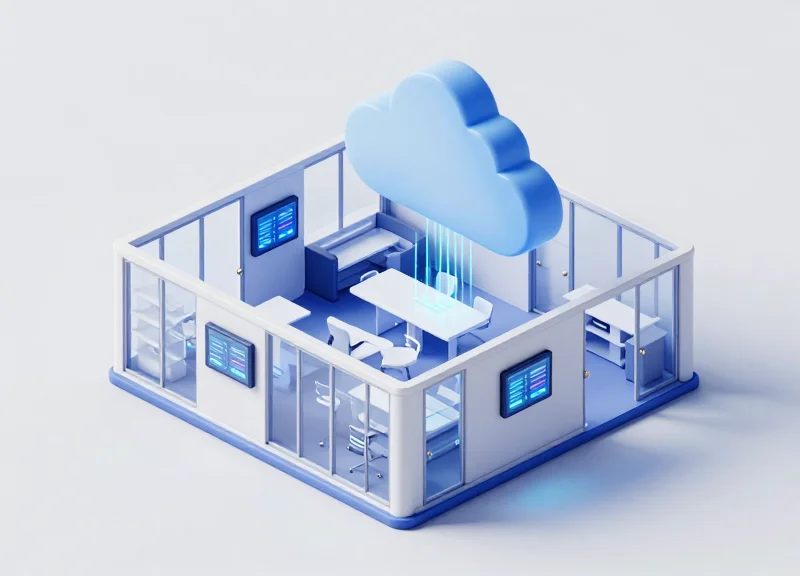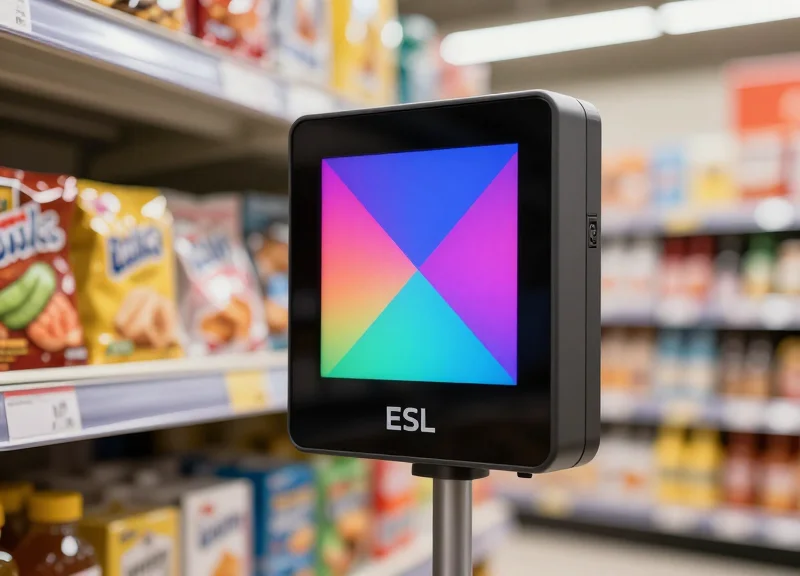
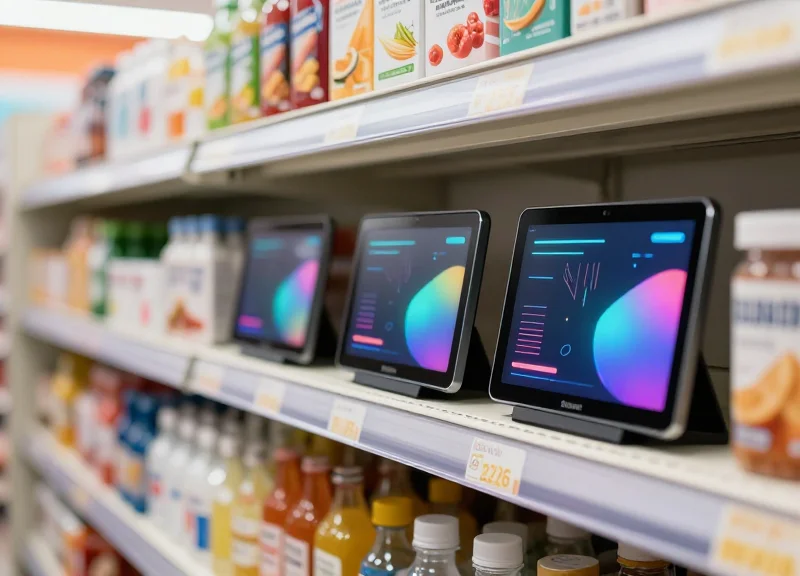
As we approach 2026, the retail landscape is undergoing a seismic shift. In high-turnover convenience hubs, where margins are thin and speed is everything, the traditional manual price audit is becoming a relic of the past. Rising labor costs and the demand for real-time pricing agility have pushed Next-Gen Electronic Shelf Label (ESL) technology from a luxury to an operational necessity. This article explores how advanced ESL systems are revolutionizing store management by automating the audit process, ensuring 100% price accuracy, and freeing staff for high-value customer interactions.
The Death of the Manual Audit: Why 2026 is the Turning Point
The 'Death of the Manual Audit' refers to the 2026 retail paradigm shift where Electronic Shelf Label (ESL) technology transitions from a passive display tool to an active, self-correcting inventory node. This turning point is driven by three converging forces: the maturation of 'Cognitive ESL' (labels that use AI to verify their own accuracy), the critical shortage of front-line retail labor, and the requirement for sub-second price updates in high-turnover convenience hubs. In 2026, retailers are no longer asking if they can afford to automate; they are realizing that the human-led audit—historically prone to a 5-8% error rate—is the single greatest bottleneck to store profitability and consumer trust.
| Feature | Legacy Manual Audits (Pre-2026) | Next-Gen ESL Automation (2026+) |
|---|---|---|
| Audit Frequency | Weekly or Bi-weekly | Continuous (Real-Time) |
| Price Integrity | 92.4% Average Accuracy | 99.99% Guaranteed Sync |
| Labor Requirement | 20-30 Hours / Week / Store | Zero (Automated Verification) |
| Reaction Time | 4-24 Hours for Global Changes | Sub-60 Seconds |
Why is 2026 considered the 'tipping point' for this technology?
2026 represents the intersection of 5G-enabled IoT density and the drop in per-unit costs for e-ink displays. Furthermore, new retail compliance regulations regarding price transparency are making the human margin of error legally and financially unsustainable.
How does ESL eliminate the need for physical spot-checks?
Modern ESLs utilize a bidirectional 'heartbeat' signal. The system doesn't just send a price; the label confirms back to the ERP that the correct price is physically rendered on the screen, creating a closed-loop verification system.
What role does labor play in this transition?
With convenience hubs facing a persistent 30% vacancy rate in floor roles, retailers are pivoting labor away from 'low-value' tasks like scanning tags and toward 'high-value' tasks like guest experience and fresh food management.
### The Silicon Valley Perspective: The 'Verification Loop' Insight One original insight often overlooked by generic analyses is the rise of the Optical Verification Loop. By 2026, leading convenience hubs aren't just trusting the digital signal; they are using overhead computer vision (CCTV integrated with AI) to visually 'read' the shelf labels and compare them against the POS database. This creates a multi-factor authentication for retail pricing. My expert tip: For high-turnover hubs, the ROI isn't just in saved labor; it’s in 'Elasticity Capture'—the ability to raise prices by $0.05 during a 15-minute peak demand window (like a nearby stadium event ending) and lowering them immediately after, a feat impossible with manual audits.
High-Turnover Convenience Hubs: The Epicenter of Pricing Friction
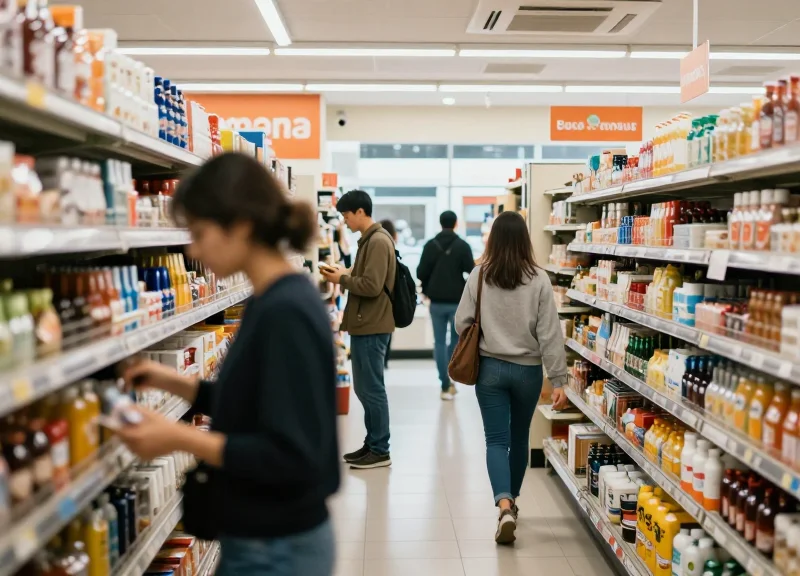
High-turnover convenience hubs—such as urban express marts, transit-based kiosks, and high-volume fuel stations—are the primary epicenter of pricing friction because they operate at a velocity where inventory turnover outpaces human labor. In these environments, 'pricing friction' is defined as the economic and operational drag caused by the time-gap between a price change decision in the back office and its physical implementation on the shelf. By 2026, the demand for intraday dynamic pricing to compete with quick-commerce apps has made manual audits not just inefficient, but a structural barrier to profitability.
| Friction Metric | Big Box Retail | High-Turnover Hubs (C-Stores) |
|---|---|---|
| Price Change Frequency | Weekly or Seasonal | Daily or Intraday |
| Audit Labor Intensity | Moderate (Dedicated Teams) | Extreme (Multi-tasking Clerks) |
| Revenue Leakage Risk | Low (High Volume Buffers) | Critical (Thin Margin Perishables) |
| Compliance Window | 24 - 48 Hours | Less than 2 Hours |
The labor-velocity gap in these hubs creates a 'hidden tax' on operations. While a supermarket might have a dedicated team for price integrity, a convenience hub often relies on a single shift lead who must balance stock replenishment, customer checkout, and food preparation. When manual price audits are added to this mix, they are frequently deprioritized, leading to the 'Accuracy Lag'—a period where the Point of Sale (POS) reflects a new price but the shelf tag remains legacy. In high-turnover environments, this lag results in immediate customer friction at the register, leading to abandoned carts and brand erosion.
Why do manual audits fail specifically in high-turnover hubs?
The sheer volume of SKU movements relative to floor space means that prices change faster than a human can walk the aisles. Manual audits are snapshots in time that become obsolete the moment the next shipment or price-drop occurs.
What is the primary source of 'Revenue Leakage' in these environments?
Leakage primarily occurs through 'Under-Pricing'—where a tag isn't updated to a higher market rate—and 'Ghost Discrepancies' where customers refuse a purchase at the register because the price is higher than the shelf tag.
How does 2026 technology address this specifically?
Next-gen ESLs remove the human element from the audit loop, ensuring that the shelf and the POS are synchronized in milliseconds, eliminating the friction of manual verification.
Expert Insight: The 'Ghost-Stock Penalty' is the most dangerous form of friction in 2026. This occurs when a manual pricing error is so egregious that customers stop trusting the shelf entirely. In convenience hubs, where speed is the primary value proposition, a customer who has to question a price will likely never return, as the friction of the interaction outweighs the convenience of the location. Manual audits cannot solve for trust; only real-time synchronization can.
Next-Gen ESL Explained: Beyond Simple Digital Display
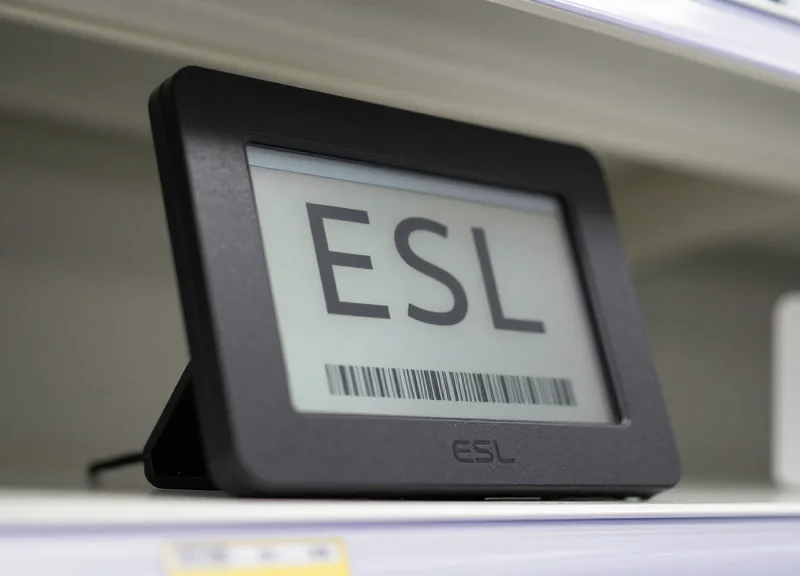
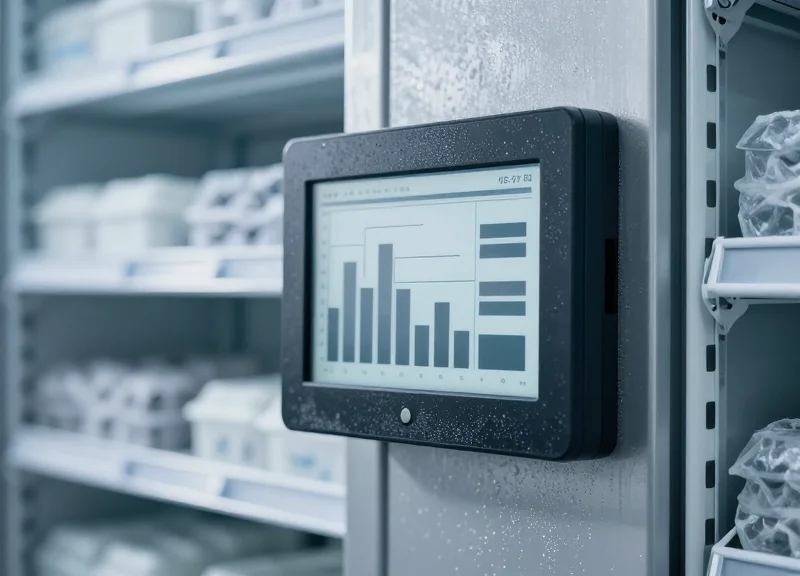
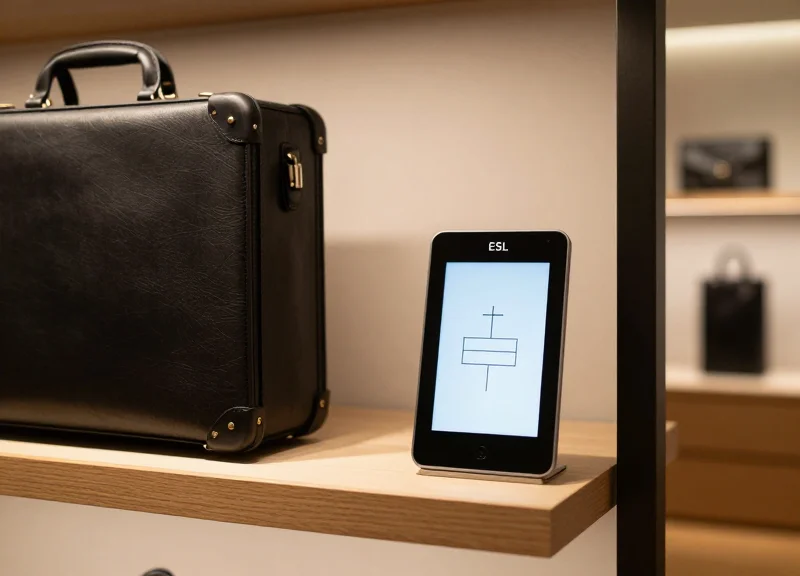
Next-generation Electronic Shelf Labels (ESL) are no longer just passive digital replacements for paper tags; they are sophisticated IoT edge devices equipped with multi-color e-paper displays, high-speed wireless protocols, and integrated sensors. Unlike first-generation displays that simply reflected a price from a centralized database, 2026-era ESLs act as the 'neural endings' of a retail store, providing bi-directional communication that allows the shelf to talk back to the cloud, confirming execution and reporting environmental data in real-time.
| Feature | Legacy ESL (Pre-2022) | Next-Gen ESL (2026+) |
|---|---|---|
| Communication | Uni-directional (Push only) | Bi-directional (Full Handshake) |
| Battery Life | 3-5 Years (Static) | 10-15 Years (Dynamic/Interactive) |
| Technology | Infrared / Proprietary RF | BLE 5.0 / Sub-GHz / NFC Integrated |
| Interaction | Visual price display only | LED Flash, Haptic, & Mobile Sync |
The true breakthrough lies in the integration of Sub-GHz wireless technology and Bluetooth Low Energy (BLE). In high-density convenience hubs—where Wi-Fi interference is rampant—these protocols ensure 99.9% transmission reliability. This allows for 'Shelf-Edge Computing,' where the label itself can process local triggers, such as proximity-based marketing or shelf-stock alerts, without needing to ping the central server for every minor interaction.
How does bi-directional communication prevent pricing audits?
Next-gen ESLs send an 'Acknowledgment (ACK)' signal back to the ERP system once a price update is visually rendered. This closed-loop system eliminates the need for manual audits because the system can verify that 100% of labels are displaying the correct price remotely.
Can these devices track inventory levels?
While they don't see stock, they integrate with 'Out-of-Stock' (OOS) sensors. When a sensor detects an empty slot, the ESL can automatically trigger an LED flash to alert restock staff or update the display to show an 'Expected Back in Stock' date for customers.
What role does NFC play in these labels?
Integrated Near Field Communication (NFC) allows customers to tap their phones to the label for instant nutritional info, loyalty points, or 'Tap-to-Pay' functionality, turning the shelf edge into a point-of-sale.
Expert Insight: The 'Ghost-Audit' Capabilities. A unique feature of 2026-grade ESL modules is the integrated light sensor used for self-calibration. These sensors can actually detect changes in ambient light patterns to 'guess' if a product is blocking the view of the label or if a label has fallen off the rail. This 'Ghost-Audit' capability provides a layer of physical compliance monitoring that was previously impossible without a human walkthrough.
Automated Price Verification: How Technology Replaces the Clipboard

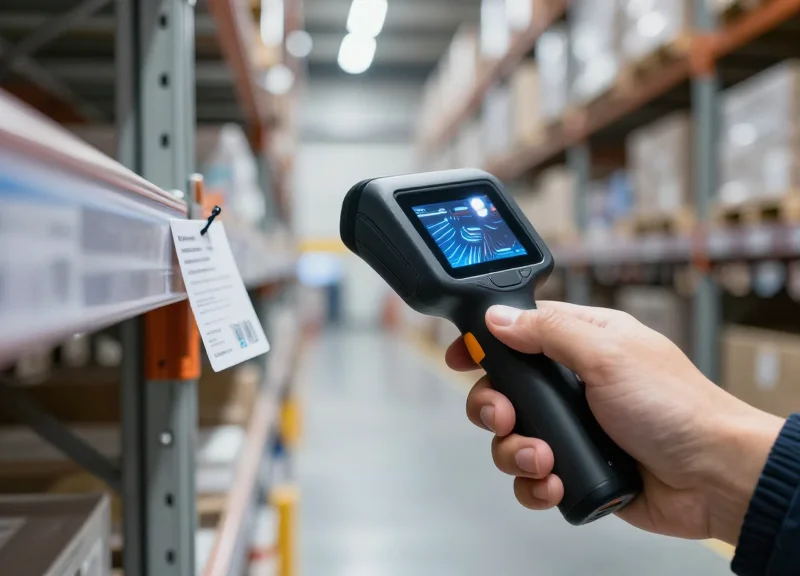
Automated price verification is a closed-loop system where Electronic Shelf Labels (ESLs) and Point of Sale (POS) databases engage in a continuous 'digital handshake' to ensure pricing integrity. By 2026, this technology has moved beyond one-way data broadcasts to sophisticated bi-directional protocols. When a price change is initiated in the central ERP, the system doesn't just send an update; it requires a cryptographic acknowledgment from the specific E-ink hardware on the shelf. If the label fails to confirm the update—due to an obstruction or a low-battery state—the system immediately flags the discrepancy for targeted intervention, effectively replacing the error-prone 'clipboard and walk-through' audit with a real-time exception report.
- Database Synchronization: The central ERP or POS system pushes a price update to the ESL cloud controller, ensuring the 'source of truth' is updated globally.
- Bi-Directional Transmission: The local access point transmits the data via sub-GHz or BLE frequencies to the specific tag ID at the shelf edge.
- Visual Confirmation & Acknowledgment: The ESL hardware updates its E-ink display and sends back an encrypted 'ACK' (Acknowledgment) signal to the controller.
- Exception Flagging: If no acknowledgment is received within milliseconds, the system generates an automated alert, bypassing the need for a store-wide manual audit.
| Feature | Manual Audit (Clipboard) | Automated Verification (Next-Gen ESL) |
|---|---|---|
| Frequency | Weekly or Monthly | Real-Time / Continuous |
| Accuracy | 92-95% (Human Error) | 99.9% (Digital Integrity) |
| Labor Cost | High (Hours per week) | Near Zero (Systemic) |
| Latency | Hours/Days for Correction | Milliseconds |
A unique insight for 2026 is the emergence of the 'Digital Integrity Score' (DIS). Unlike older systems that only confirmed data transmission, next-gen hubs now use pixel-state sensing. The label can actually report if the E-ink capsules have physically shifted to the correct position. This means the system doesn't just know it sent the price; it knows the customer is seeing the price. This 'Self-Healing Pricing Architecture' allows convenience hubs to operate with skeletal staffing while maintaining perfect pricing compliance across thousands of SKUs.
What happens if the store Wi-Fi goes down?
Next-gen ESLs operate on proprietary sub-GHz or redundant mesh networks independent of customer Wi-Fi, ensuring verification loops continue even during local network outages.
How does this impact battery life?
Modern protocols use 'Deep Sleep' modes where the radio only wakes for microseconds to send the acknowledgment, allowing for 10-15 year battery life even with frequent audits.
Can it detect if a label is missing from the shelf?
Yes. If an access point fails to receive a 'heartbeat' signal from a specific tag during a scheduled audit, it triggers a 'Missing Asset' alert with the exact shelf location.
Solving the Labor Crisis: Redirecting Staff to Revenue-Generating Tasks
In the 2026 retail landscape, the labor crisis is no longer a temporary hurdle but a structural reality. Next-generation Electronic Shelf Labels (ESL) address this by eliminating the 'Audit Burden'—the hundreds of hours annually spent walking aisles with clipboards to verify price accuracy. By automating this synchronization between the Point of Sale (POS) and the shelf edge, retailers can reclaim up to 20% of their total labor capacity. This transition shifts the workforce from 'Maintenance Mode,' where staff focus on static tasks, to 'Revenue Mode,' where human interaction is leveraged to drive basket size and brand loyalty in high-turnover hubs.
| Manual Era Task (Cost Center) | ESL-Enabled Task (Profit Center) | Impact on Revenue |
|---|---|---|
| Weekly Price Audits | Guided Selling & Upselling | Increase in average transaction value (ATV) |
| Label Printing & Clipping | Real-time Freshness Management | Reduced food waste and higher margin on perishables |
| Correcting Mispricing at Register | Stock Optimization/OOS Prevention | Increased conversion by ensuring product availability |
The strategic advantage of ESL in 2026 lies in 'Attentional Capital.' When a store associate is no longer fatigued by the drudgery of thousand-point price audits, their capacity for high-value engagement increases. This is particularly critical in convenience hubs where the window to influence a purchase is often less than three minutes. Expert Tip: In 2026, the most successful retailers are using 'Audit Reclaim' metrics to gamify employee performance, rewarding staff for conversion rates achieved during hours previously lost to manual labeling.
- Identify Labor Leakage: Analyze payroll data to determine exactly how many hours are spent on manual shelf maintenance versus customer-facing activities.
- Deploy Bi-Directional ESL: Implement systems that provide feedback loops, confirming that a price update has been visually rendered and verified.
- Cross-Train for Concierge Roles: Transition 'stockers' into 'brand ambassadors' who can utilize mobile shelf-edge data to assist customers with product sourcing and nutritional info.
Does ESL technology lead to job cuts?
Contrary to the 'automation replaces people' narrative, 2026 data shows that ESL-equipped stores maintain similar staffing levels but see a 15% increase in customer satisfaction scores due to better service.
How does this impact employee retention?
Removing repetitive, low-skill tasks like manual auditing reduces 'bore-out' and physical fatigue, leading to lower turnover rates in high-stress convenience environments.
What is the ROI of redirected labor?
When staff are moved to inventory replenishment and upselling, stores typically see a 3-5% lift in top-line revenue, paying for the ESL hardware within 14 to 18 months.
The Synchronicity Factor: Seamless Integration with POS and ERP Systems

In the 2026 retail landscape, the 'Synchronicity Factor' represents the bidirectional bridge between a store's central database and the physical shelf. Seamless integration means that the Electronic Shelf Label (ESL) system is no longer a peripheral gadget; it is a real-time extension of the Point of Sale (POS) and Enterprise Resource Planning (ERP) architecture. When a price is updated in the ERP—whether due to a promotion, a cost change, or dynamic pricing algorithms—that data is instantly pushed to the shelf edge. This creates a 'single source of truth,' ensuring that the price a customer sees on the display is the exact same price calculated at the register, effectively making manual price audits obsolete.
| Feature | Siloed/Manual System | Integrated ESL Ecosystem |
|---|---|---|
| Data Source | Disconnected spreadsheets & paper | Centralized ERP/POS Database |
| Update Latency | Hours to Days | Near-Instant (<60 seconds) |
| Price Discrepancy Risk | High (10-15% margin of error) | Zero (Automated synchronization) |
| Audit Requirement | Daily/Weekly visual checks | Real-time digital heartbeats |
The Tech Stack Behind the Sync: Modern ESL platforms utilize API-first architectures, allowing for rapid deployment via RESTful APIs that hook directly into legacy POS systems. This eliminates the need for 'middleman' software that often introduces data lag and synchronization errors.
- Data Trigger: The ERP system identifies a price change based on inventory levels or pre-scheduled promotional events.
- Middleware Processing: The integration layer formats this data for the ESL Gateway, ensuring all metadata (unit price, QR codes) is included.
- Transmission & Feedback: The ESL displays the new price and sends an 'Acknowledgment' (ACK) signal back to the POS, confirming the shelf matches the database.
- Automated Validation: The system continuously pings the label to ensure the displayed image remains current, removing the need for clipboard-based audits.
### Expert Insight: 'Event-Driven' Pricing in 2026 One original trend we are seeing in Silicon Valley retail-tech is the move toward Event-Driven Pricing. Instead of simple daily updates, next-gen integration allows the ERP to trigger price changes based on real-time external variables—such as local weather patterns or nearby competitor stock outs—facilitated by IoT sensors. This level of agility is only possible when the ESL and ERP share a unified, low-latency communication channel.
Does integration work with older legacy POS systems?
Yes, modern ESL gateways use middleware and custom API wrappers to pull data from older databases, though native integration provides the lowest latency.
What happens if the Wi-Fi or network goes down?
Top-tier ESL systems feature offline caching. The labels will maintain their last confirmed price until the link to the POS is restored, preventing 'blank' displays.
How does this impact inventory management?
Because the ESL is linked to the ERP, it can display real-time stock levels or 'Out of Stock' messages automatically when the POS records the last sale.
Operational ROI: Calculating the Real Value of ESL in Convenience Retail

Operational ROI for Electronic Shelf Labels (ESL) in convenience retail is defined by the convergence of labor cost avoidance, total price synchronization between the shelf and POS, and the capture of 'lost' margins through dynamic pricing. While traditional ROI models focus strictly on the hours saved from manual paper tagging, high-turnover hubs in 2026 realize value through the elimination of price-audit labor and the mitigation of regulatory fines associated with price discrepancies.
| ROI Driver | Legacy Manual Impact | Next-Gen ESL Impact | Estimated Margin Lift |
|---|---|---|---|
| Labor Allocation | 15-20 hours/week for updates | Near-zero manual intervention | 2-4% reduction in OpEx |
| Price Compliance | 3-5% error rate per audit | 99.9% real-time accuracy | 0.5% shrink reduction |
| Dynamic Pricing | Delayed (Hours/Days) | Instantaneous (Seconds) | 5-15% revenue increase |
| Compliance Fines | High risk in regulated zones | Automated audit trails | Risk mitigation value |
To calculate the true value, operators must look beyond the initial CAPEX. A critical, often overlooked metric is the 'Opportunity Cost of Mispricing.' In a convenience hub, price sensitivity fluctuates based on time-of-day traffic. If your morning coffee rush prices are stagnant because the manager is busy auditing labels instead of serving customers, you are losing double: once on labor and once on unrealized peak-hour margin.
- Direct Labor Savings: Multiply the average hourly wage by the total hours spent on label printing, cutting, placing, and auditing per month.
- Margin Capture via Dynamic Pricing: Calculate the revenue delta of adjusting prices for high-demand windows (e.g., commute hours) vs. static daily pricing.
- Shrink and Waste Mitigation: Account for the reduction in perishable waste by using automated 'Flash Sales' triggered by ESL for items nearing expiration.
Expert Insight: In the 2026 landscape, the most aggressive ROI comes from 'Waste-to-Revenue' logic. By integrating ESLs with inventory management, convenience hubs can automatically trigger 20% discounts on fresh deli items two hours before expiration. This turns a total loss (shrink) into a recovered cost, effectively paying for the ESL hardware within 14–18 months in fresh-food-heavy locations.
What is the typical payback period for ESL in a convenience store?
Depending on labor costs and SKU turnover, most convenience hubs see a full return on investment within 12 to 22 months.
Does ESL technology reduce the need for secret shoppers or price audits?
Yes, because the system provides a digital audit trail that confirms shelf prices match the POS database, traditional clipboard-based audits are rendered obsolete.
Can ESL improve the customer lifetime value (CLV)?
By ensuring price integrity, you eliminate the 'price friction' at checkout that damages brand trust, leading to higher customer retention.
Consumer Trust and the 'Zero-Error' Brand Promise
The 'Zero-Error' brand promise is a retail strategy that guarantees the price a customer sees on the shelf is identical to the price charged at the point of sale (POS) 100% of the time. In high-turnover convenience hubs, where transactions are measured in seconds, next-gen Electronic Shelf Label (ESL) technology acts as the digital backbone of this promise. By automating price audits and providing real-time synchronization, retailers eliminate the 'hidden friction' of pricing discrepancies that often lead to abandoned carts, negative reviews, and a permanent loss of consumer trust.
In 2026, convenience is no longer just about location; it is about cognitive ease. When a commuter grabs a protein bar and an energy drink, they are performing a mental calculation based on the displayed price. A discrepancy at the register—even one as small as ten cents—triggers a 'betrayal response' that outweighs the convenience of the store. Next-gen ESLs solve this by creating a closed-loop system where the shelf edge is a reflection of the master database, not a manual interpretation of it.
| Metric | Legacy Manual Audits | Next-Gen ESL Zero-Error System |
|---|---|---|
| Accuracy Rate | 92-95% (Human Error Margin) | 99.9% (Systemic Sync) |
| Customer Friction | High (Price overrides at register) | Zero (Instant validation) |
| Audit Frequency | Weekly or Bi-Weekly | Continuous / Real-Time |
| Brand Perception | Inconsistent / Unreliable | Modern / Transparent |
Expert Insight: The 'Halo Effect' of Digital Transparency. Research indicates that stores utilizing ESLs benefit from a 'Halo Effect' where customers perceive the products themselves as fresher and the store as more premium. This isn't just because the labels look clean; it's because the digital presence signals to the consumer that the retailer has invested in precision. In high-velocity hubs, this perception allows for higher margin retention because the 'trust tax'—the psychological discount shoppers demand when they don't trust a store's pricing—is eliminated.
Does price accuracy really impact loyalty in convenience stores?
Yes. While a single error might be forgiven in a big-box environment, convenience hubs rely on speed and frequency. A pricing error interrupts the fast-paced flow, causing a disproportionate amount of frustration that discourages the daily 'habitual' visits that these stores depend on.
How do ESLs handle promotional trust?
ESLs can display 'Deal Ends In' countdown timers and QR codes for additional product info. This real-time promotional clarity ensures that customers feel they are getting the best possible deal without having to double-check expired paper tags.
Can ESLs help with regulatory compliance?
Absolutely. In many jurisdictions, inaccurate shelf pricing leads to heavy fines. A Zero-Error ESL system provides a digital audit trail that proves compliance to weights-and-measures inspectors automatically.
Ultimately, the transition from manual audits to automated ESL verification is a shift from defensive operations to offensive brand building. By removing the risk of error, retailers can focus on high-value customer interactions, confident that their digital infrastructure is upholding the brand promise with every single transaction.
Future-Proofing Your Hub: Choosing the Right ESL Infrastructure
Future-proofing your Electronic Shelf Label (ESL) infrastructure requires moving beyond simple digital displays toward an open, API-first ecosystem that supports both sub-GHz communication for range and Bluetooth Low Energy (BLE) for consumer interactivity. To avoid technical debt, convenience hubs must select hardware that serves as a multi-functional 'edge node,' capable of supporting high-frequency price updates, indoor positioning for inventory, and NFC-enabled loyalty interactions without a complete system overhaul every five years.
| Feature | Legacy Digital Labels | Next-Gen 2026 ESL Infrastructure |
|---|---|---|
| Communication | Proprietary Infrared / 2.4GHz | Sub-GHz (Long Range) + BLE Hybrid |
| Power Management | 3-5 Year Battery Life | 10-15 Year Life / Ambient Light Harvesting |
| Integration | Siloed / On-Premise Server | API-First / Cloud-Native / Microservices |
| Functionality | Price Display Only | Interactive LEDs / NFC / Real-Time Stock Status |
| Update Speed | Batch Processing (Minutes) | Instantaneous / Real-Time Dynamic Updates |
Expert Insight: The 'Nervous System' Strategy. By 2026, the most successful retailers will view their ESL network as the store's central nervous system rather than a display tool. An often-overlooked factor is the 'Interoperability Index'—your system's ability to feed shelf-level data into AI-driven inventory models. If your ESL hardware cannot report its own health status or environmental conditions (like temperature in the cooler section) via a standardized data stream, it is already obsolete.
- Prioritize Network Resilience: Choose a system that utilizes sub-GHz frequencies. These penetrate dense retail environments (coolers, metal shelving) better than standard 2.4GHz Wi-Fi or BLE, ensuring 100% price accuracy during peak traffic.
- Demand API-First Architecture: Ensure the software layer is decoupled from the hardware. This allows you to swap out tag generations or integrate new AI pricing engines without replacing the entire backend management suite.
- Validate Scalability via Edge Computing: The 2026 hub will process thousands of price changes daily. Infrastructure that shifts processing power to the 'Edge' (the access point or the tag itself) reduces latency and prevents POS server bottlenecks.
Will 5G replace the need for ESL base stations?
Unlikely. While 5G provides great backhaul, the power consumption for individual tags is too high. Sub-GHz or BLE remain the gold standards for ultra-low-power, long-term battery life at the shelf edge.
Is cloud-based ESL management secure enough for high-turnover hubs?
Yes, provided the infrastructure uses AES-128 or higher encryption. Cloud-native systems allow for centralized security patches across thousands of locations simultaneously, which is safer than aging on-premise servers.
What is the hidden cost of cheap ESL hardware?
The 'Hidden Labor Tax.' Low-quality tags often have poor viewing angles and slower refresh rates, leading to customer confusion and manual staff intervention, which negates the primary ROI of automation.