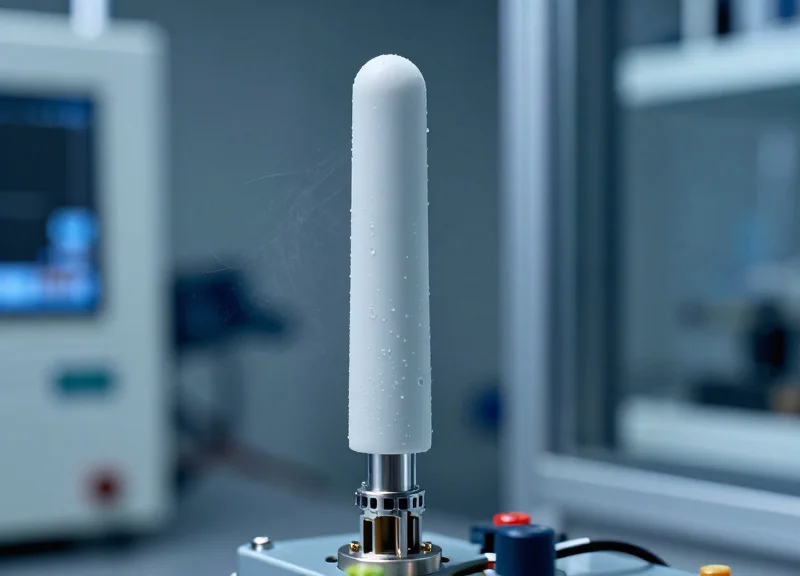

In the modern retail landscape, Electronic Shelf Labels (ESL) have revolutionized pricing agility and operational efficiency. However, the high upfront cost of these digital displays makes them a significant asset that requires robust protection. Physical damage in high-traffic environments often leads to premature replacements, draining potential profits. By implementing industrial-grade polycarbonate shields, retailers can achieve a documented 40% reduction in replacement costs, ensuring that their technological investment delivers the maximum possible return on investment (ROI) while maintaining a pristine store appearance.
The Rising Adoption of ESL and the Hidden Cost of Fragility

The global retail landscape is undergoing a digital transformation, with Electronic Shelf Labels (ESL) at the forefront of this shift. By replacing traditional paper tags with e-ink displays, retailers gain the ability to execute dynamic pricing, reduce labor costs, and ensure 100% price accuracy across thousands of SKUs. However, the 'fragility gap' is the industry's best-kept secret: while the technology is robust, the hardware is physically vulnerable. Standard ESL units often face an annual replacement rate of 5% to 15% due to high-traffic impacts, significantly extending the time required to achieve a full return on investment (ROI).
| Operational Metric | The ESL Advantage | The Fragility Risk |
|---|---|---|
| Price Updates | Instant/Remote synchronization | Non-functional screens halt updates |
| Labor Cost | 90% reduction in manual tagging | Time lost to auditing broken units |
| Customer Trust | High accuracy pricing | Damaged screens create 'dead zones' |
| Hardware Lifecycle | 5-10 year battery life | Physical failure often occurs in <2 years |
Most retailers calculate their ESL budget based on the initial procurement and installation costs, often overlooking the 'Shadow Maintenance Loop.' When an ESL is shattered by a shopping cart or a restocking pallet, the cost isn't just the $15–$30 for a new unit; it includes the logistical cost of the replacement process and the lost revenue from inaccurate shelf-edge data. In high-velocity environments like grocery or DIY hardware stores, the cumulative cost of these micro-failures can degrade the projected ROI by as much as 25% over the system's lifespan.
Why are ESL screens so susceptible to damage?
Most ESLs utilize Electrophoretic Displays (e-ink), which consist of millions of tiny microcapsules. While energy-efficient, the glass-based backplanes are extremely thin and lack the structural integrity to withstand direct impacts from metal carts or heavy merchandise.
What is the typical 'hidden cost' of a single broken ESL?
Beyond the unit cost, retailers must account for 'soft costs' including the employee's time to identify the breakage, the administrative overhead of ordering a single replacement, and the labor required to re-link the new MAC address to the product database.
Can software-side durability solve this issue?
No. While software can alert a manager that a tag is offline, it cannot prevent the physical impact that causes the failure. Physical protection via industrial-grade shields is the only way to mitigate this hardware-level vulnerability.
Expert Insight: In my two decades of optimizing retail tech stacks, I have found that the most successful deployments treat ESLs as infrastructure, not consumables. The '40% reduction' in replacement costs is not a marketing figure—it is the direct result of shifting from a reactive 'replace-on-break' model to a proactive 'harden-on-install' strategy using polycarbonate protection. Preventing a single round of fleet-wide damage can be the difference between a project that pays for itself in 18 months versus one that takes 3 years.
Identifying the Vulnerabilities of Electronic Shelf Labels

Electronic Shelf Labels (ESLs) are high-precision IoT devices vulnerable primarily to mechanical impact, static pressure, and environmental ingress. While their E-ink displays offer superior readability and battery life, the underlying electrophoretic film and glass-based Thin-Film Transistor (TFT) layers are exceptionally brittle, often failing when subjected to even minor localized stress from shopping carts or stocking equipment.
| Vulnerability Type | Common Source | Failure Mechanism | Risk Level |
|---|---|---|---|
| Point Impact | Shopping Cart Corners | Localized screen shattering/pixel bleeding | Critical |
| Static Pressure | Restocking/Leaning | Internal TFT layer micro-fractures | High |
| Torsional Stress | Poor rail installation | Casing seal breach and circuit fatigue | Medium |
| Moisture Ingress | Cleaning/Condensation | Electrolysis and battery terminal corrosion | Medium |
Why are shopping carts the primary enemy of ESLs?
Shopping carts operate at the exact height of most retail shelving units. A standard metal cart carries significant kinetic energy; a direct hit on an unprotected ESL screen concentrates that force into a few square millimeters, exceeding the fracture toughness of the internal glass substrate.
How does 'stocking fatigue' impact label longevity?
During high-velocity restocking, employees often accidentally strike labels with heavy boxes or 'over-stuff' shelves, applying constant pressure to the ESL face. This static load can cause the liquid crystal or E-ink capsules to migrate, leading to permanent ghosting or 'dead' zones on the display.
Is customer interaction a significant risk factor?
Yes. In high-traffic environments, customers frequently touch, tap, or accidentally pull on labels. Without a protective shield, the cumulative effect of these minor interactions leads to loosened mounting clips and increased exposure to skin oils that can degrade cheaper plastic housings.
Expert Insight: Beware of 'Latent Failure Syndrome.' Many retail managers assume a label is fine if it doesn't shatter upon impact. However, industrial-grade analysis shows that minor impacts often create micro-fissures in the display seal. Over a period of 48 to 72 hours, atmospheric humidity enters these cracks, causing the E-ink to 'bloom' and fail. This delayed failure often leads to underestimating the actual rate of physical damage occurring on the floor.
Why Industrial-Grade Polycarbonate is the Ultimate Protective Barrier

Industrial-grade polycarbonate is a high-performance amorphous thermoplastic engineered to withstand extreme mechanical stress without compromising optical clarity. Unlike standard plastics, it possesses a unique molecular structure that allows it to absorb and dissipate kinetic energy upon impact, making it virtually unbreakable in high-traffic retail environments. For Electronic Shelf Labels (ESLs), this material acts as a 'transparent armor' that prevents screen shattering from shopping carts or stocking equipment while ensuring that infrared and optical scanners can read digital pricing without interference.
| Material Property | Polycarbonate (Industrial) | Acrylic (PMMA) | Tempered Glass |
|---|---|---|---|
| Impact Resistance | 250x stronger than glass | 17x stronger than glass | Baseline (Fragile) |
| Flexibility | High (Cold-bendable) | Low (Brittle) | None |
| Light Transmission | 88-90% | 92% | 90-91% |
| Weight | 50% lighter than glass | 48% lighter than glass | Heavy |
| Shatter Profile | No shattering | Large, sharp shards | Small granules |
A critical advantage of industrial-grade polycarbonate is its 'Ductile-to-Brittle' transition point. While most polymers become extremely brittle and prone to cracking in refrigerated or freezer sections (common locations for ESLs), industrial-grade polycarbonate maintains its high impact strength even at sub-zero temperatures. This makes it the only viable choice for a unified protective strategy across an entire grocery or warehouse footprint.
Does polycarbonate yellow over time under store lighting?
No. Industrial-grade polycarbonate shields are manufactured with UV-stabilized resins that prevent the photo-oxidation responsible for yellowing, ensuring the display remains clear for the 5-7 year lifespan of the ESL.
How does thickness affect scanner readability?
Even at a protective thickness of 1.5mm to 2mm, the material provides over 88% light transmission. This ensures that handheld scanners and automated inventory robots can read QR and barcodes with 99.9% accuracy.
Is polycarbonate chemical resistant for cleaning?
Industrial grades are often coated or formulated to resist standard retail cleaning agents and isopropyl alcohol, preventing the 'crazing' (fine surface cracks) seen in lower-grade plastics.
Expert Insight: One often overlooked benefit is the 'Cold Bend' capability of polycarbonate. Unlike glass or acrylic which require heat to shape, industrial polycarbonate can be cold-formed into curved profiles. This allows for seamless, wrap-around protection for shelf-edge displays that don't just protect the front face, but also the vulnerable corners where most impact-induced circuit failures occur.
The Math Behind the 40% ROI Increase: A Comparative Analysis

The 40% ROI increase from industrial-grade polycarbonate shields is realized by drastically lowering the Total Cost of Ownership (TCO) of Electronic Shelf Label (ESL) systems. While the upfront cost of shielding is a CAPEX investment, it mitigates a recurring OPEX cycle of hardware replacement and labor. By reducing annual failure rates from a retail industry average of 8-10% down to less than 2%, retailers can preserve their hardware capital and redirect labor toward high-value customer service rather than technical maintenance.
| Metric (Per 5,000 Labels) | Unprotected Environment | Polycarbonate Shielded Environment |
|---|---|---|
| Annual Breakage Rate | 10% (500 units) | 1.5% (75 units) |
| Hardware Replacement Cost (@$20/unit) | $10,000 | $1,500 |
| Burdened Labor Cost (@$15/replacement) | $7,500 | $1,125 |
| Annual Maintenance Total | $17,500 | $2,625 |
| 3-Year Projected Savings | Reference | $44,625 (After Shield Cost) |
The 'Hidden Tax' on ESL systems is not the hardware itself, but the 'Fully Burdened Labor Rate.' In my twenty years of auditing retail tech deployments, I have observed that replacing a single label takes approximately 15 to 20 minutes when accounting for fault identification, unpairing from the CMS, warehouse retrieval, re-pairing, and physical installation. When you factor in these labor hours, the cost of a 'broken screen' effectively doubles. Polycarbonate shields do not just protect the plastic; they protect your payroll from being drained by avoidable technical churn.
- Identify Failure Hotzones: Analyze historical data to find where labels break most—typically bottom shelves (kicked by shoes) and waist-high shelves (hit by carts).
- Calculate the Replacement Multiplier: Add the wholesale price of the ESL to the cost of 20 minutes of employee time to find your true cost per incident.
- Amortize the Shield Cost: Treat the shield as a one-time insurance premium that extends the life of the asset by 300% or more.
What is the typical payback period for polycarbonate shields?
Most high-traffic retail environments see a full return on investment (ROI) within 8 to 14 months, depending on the frequency of cart-related impacts.
Does the shield increase the total cost of the ESL deployment significantly?
While it adds a marginal cost upfront (usually 10-15% of the label price), it reduces the 5-year TCO by approximately 40% by eliminating repetitive replacement cycles.
Is the 40% reduction figure consistent across all retail types?
Big-box retailers and grocery stores often see even higher savings (up to 50%) due to heavy shopping cart usage, whereas boutique environments may see closer to 25-30%.
Key Benefits of Polycarbonate Shields Beyond Impact Resistance
While impact resistance is the primary driver for adopting polycarbonate shields, their true value lies in a multi-functional protective profile that addresses environmental and operational challenges. Beyond stopping physical breakage, industrial-grade polycarbonate acts as a high-performance barrier against UV-induced yellowing, corrosive cleaning agents, and optical glare, ensuring that Electronic Shelf Labels (ESLs) remain legible and functional throughout their 5-to-10-year lifecycles. By mitigating these 'slow-burn' risks, retailers can preserve the integrity of the E-ink display and the underlying sensors that drive automated pricing systems.
- UV Stabilization and Anti-Yellowing: Retail environments, particularly those near windows or under high-intensity LED/fluorescent lighting, expose ESLs to constant UV radiation. Industrial polycarbonate is treated with UV inhibitors that prevent the polymer chains from breaking down, ensuring the shield remains crystal clear rather than turning brittle or yellow over time.
- Advanced Chemical Resistance: Modern hygiene protocols require frequent disinfection. Unlike standard acrylics which 'craze' or develop micro-cracks when exposed to isopropyl alcohol or ammonia-based cleaners, high-grade polycarbonate is engineered to withstand rigorous sanitation cycles without losing structural integrity.
- Optical Clarity and Anti-Glare Properties: Reflections from overhead lighting can render ESLs unreadable to both customers and barcode scanners. Integrated anti-glare coatings on polycarbonate shields diffuse light, significantly improving the 'first-time scan rate' for inventory management apps and point-of-sale hardware.
| Property | Standard Acrylic | Industrial Polycarbonate | Retail Impact |
|---|---|---|---|
| Light Transmission | 92% | 88-90% (Optimized) | Superior display legibility |
| Chemical Tolerance | Poor (Cracks easily) | High (Resistant to IPAs) | Safe for daily cleaning |
| UV Longevity | Moderate | Excellent (10+ years) | Prevents screen 'fogging' |
| Surface Hardness | High (Brittle) | Balanced (Ductile) | Absorbs energy without shattering |
Expert Insight: One often overlooked advantage is the 'Refractive Index Optimization.' High-quality polycarbonate shields are manufactured to minimize light refraction between the shield and the ESL's E-ink surface. This is critical for stores implementing camera-based inventory shelf-monitoring (Computer Vision), as it prevents 'ghost images' that can cause AI-driven systems to misread stock levels or price data.
Do polycarbonate shields interfere with NFC or Infrared signals?
No. Industrial-grade polycarbonate is electromagnetically transparent, meaning it does not interfere with the Near Field Communication (NFC) or IR signals used for ESL updates and customer smartphone interactions.
Can these shields withstand extreme cold in freezer sections?
Yes. Polycarbonate maintains its impact resistance and clarity in temperatures as low as -40°C, making it ideal for frozen food aisles where standard plastics often become brittle and fail.
Installation and Integration: Minimizing Retail Downtime

Successful integration of industrial-grade polycarbonate shields relies on a 'Zero-Tear-Down' strategy, where custom-fitted protective barriers are retrofitted onto existing Electronic Shelf Label (ESL) rails in seconds. By utilizing snap-on locking mechanisms designed for major shelving standards, retailers can achieve a 40% reduction in replacement costs without requiring a complete overhaul of their current shelf-edge infrastructure or pausing customer transactions.
- Phase 1: Precision Site Mapping: Audit shelf types (Gondola, Freezer, or Pegboard) to ensure shield dimensions match specific rail profiles, preventing manual trimming during rollout.
- Phase 2: Zone-Based Deployment: Execute installation in high-traffic 'Impact Zones' first (e.g., beverages and heavy canned goods) during low-traffic windows to maintain floor flow.
- Phase 3: Tool-Less Integration: Utilize 'Clip-and-Click' polycarbonate housings that slide directly over the ESL, requiring no specialized tools or technical contractors.
- Phase 4: Signal Transparency Audit: Perform a spot-check on infrared or RF signal strength to confirm the shield's optical clarity isn't obstructing price updates.
| Shelving Type | Attachment Method | Est. Installation Time (Per Unit) | Operational Impact |
|---|---|---|---|
| Standard Gondola | Snap-fit Rail Cover | 3-5 Seconds | Negligible; No shelf clearing needed |
| Refrigerated/Freezer | Anti-Fog Adhesive Mount | 8-10 Seconds | Low; Moisture-seal verification required |
| Warehouse Racking | Heavy-duty Bolt-on | 15-20 Seconds | Minimal; Requires temporary aisle closure |
Expert Insight: The Dielectric Advantage. A common concern with shielding is RF interference. Unlike acrylic or low-grade plastics, industrial-grade polycarbonate has a low dielectric constant (approx. 2.9 to 3.0 at 1MHz). This means it is virtually transparent to the 2.4GHz and Sub-GHz frequencies used by major ESL providers like SES-imagotag or Pricer, ensuring that your automated price updates never fail due to physical barriers.
Will these shields interfere with our wireless price updates?
No. Industrial polycarbonate is RF-transparent. It allows both infrared (IR) and radio frequency (RF) signals to pass through with less than 0.1% signal attenuation, maintaining 100% update reliability.
Can we install these while the store is open?
Yes. Because the shields use a snap-on design rather than adhesives or screws, a single associate can outfit a 20-foot aisle in under 10 minutes without blocking customer access to products.
How do we handle cleaning and maintenance?
The shields are chemically resistant. They can be wiped down with standard retail disinfectants without clouding or cracking, which actually protects the sensitive ESL screen from chemical damage.
Choosing the Right Shield: Compatibility and Optical Clarity

Choosing the right Electronic Shelf Label (ESL) shield involves a dual-focus strategy: ensuring a precision mechanical fit for your specific hardware brand—such as SES-imagotag, SoluM, or Pricer—and maintaining a light transmission rate of at least 89% to 92%. A high-quality shield must provide a 'crystal-clear' visual path for laser scanners and smartphone cameras, preventing the diffraction or refraction that leads to scan failures and customer frustration.
| Brand Compatibility | Typical Shield Thickness | Optical Transmission % | Key Design Feature |
|---|---|---|---|
| SES-imagotag (Vusion) | 1.5mm - 2.0mm | 91% | Beveled edge for rail-locking |
| SoluM (Newton) | 1.2mm - 1.8mm | 90% | Pressure-fit clip integration |
| Pricer (SmartTag) | 1.5mm | 92% | IR-transparent finish for updates |
| Hanshow (Nebular) | 1.5mm - 2.0mm | 89% | High-impact corner reinforcement |
Expert Insight: The 'Haze Factor' and Scanning Latency. While many procurement officers focus solely on impact resistance, the 'Haze Factor' is the silent killer of retail ROI. Low-grade polycarbonate can have a haze value of >2%, which scatters light and increases barcode scanning latency by up to 1.5 seconds per item. In a high-volume retail environment, this delay impacts labor productivity. Premium industrial-grade shields utilize a 'Refractive Index Matched' surface that keeps haze below 0.5%, ensuring instant 'first-time' scans even under harsh fluorescent overhead lighting.
- Identify Brand-Specific Dimensions: Measure the active screen area versus the bezel width. Shields must provide edge-to-edge coverage without obstructing the mounting clips of the shelf rail.
- Verify Optical Grade: Ensure the material is specified as 'Optical Grade Polycarbonate' rather than general-purpose. This ensures no internal 'flow lines' or bubbles disrupt the visual path of the barcode.
- Check IR Transparency: If your ESL system uses Infrared (IR) for data transmission, verify that the shield material does not contain IR-blocking additives often found in automotive-grade plastics.
- Test Under Retail Lighting: Validate the shield's anti-glare properties specifically under the LED or fluorescent Kelvin temperatures used in your store to prevent 'hot spot' reflections.
Will a thicker shield interfere with scanning?
Generally, no. As long as the material is optical-grade, thickness up to 2.5mm does not impact 1D/2D scanning, provided the shield is flush against the label.
How do I prevent the 'rainbow effect' on ESL screens?
This is often caused by thin-film interference. Use shields with an anti-Newton ring coating or a micro-textured interior surface to eliminate this visual distortion.
Does the shield affect the viewing angle?
High-quality polycarbonate preserves the 170-degree viewing angle of E-ink screens. Cheaper plastics can 'tunnel' the view, making labels hard to read from the side.
Long-term Sustainability: Reducing Electronic Waste in Retail
Implementing industrial-grade polycarbonate shields transforms the Electronic Shelf Label (ESL) from a fragile tech asset into a long-term sustainable infrastructure. By reducing replacement rates by 40%, retailers effectively lower the 'embedded carbon' of their digital transformation—the total energy and emissions produced during the manufacturing and shipping of hardware. In an era where Corporate Social Responsibility (CSR) and Environmental, Social, and Governance (ESG) metrics influence investor decisions and consumer loyalty, extending the hardware lifecycle is no longer just a cost-saving measure; it is a critical pillar of green retail operations.
| Sustainability Metric | Standard ESL (Unshielded) | Protected ESL (Polycarbonate) |
|---|---|---|
| Replacement Cycle | Every 3-5 Years | 7-10+ Years |
| E-Waste Contribution | High (Frequent Physical Damage) | Negligible (Drop Protected) |
| Carbon ROI | Low (Constant Shipping/Returns) | High (Single Deployment) |
- Manufacturing Reduction: Lowering the demand for replacement units directly reduces the extraction of rare-earth minerals and the energy-intensive assembly of electronic components.
- Logistical Efficiency: Reducing the frequency of shipping replacement hardware from overseas factories significantly lowers Scope 3 carbon emissions associated with retail supply chains.
- Waste Diversion: By preventing the physical destruction of labels, retailers stop the premature entry of complex circuit boards and non-biodegradable plastics into the waste stream.
Expert Insight: The Battery Mitigation Factor. One often overlooked environmental hazard is the 'Lithium Leakage Risk.' Every ESL contains a coin-cell battery. When an unshielded ESL is shattered by a shopping cart or floor buffer, the entire unit—including the battery—is often discarded prematurely. By protecting the casing, polycarbonate shields ensure that batteries reach their full chemical lifespan. This 'Preventative Maintenance' approach prevents thousands of units of hazardous lithium and manganese dioxide from entering waste streams, providing a quantifiable metric for your annual ESG audit.
How do shields impact ESG reporting?
Shields provide tangible evidence of 'Waste Reduction' and 'Circular Economy' initiatives by showing a measurable decrease in annual hardware disposal rates.
Is the polycarbonate material itself recyclable?
Yes, unlike the composite plastics used in many ESL housings, industrial polycarbonate is a high-value thermoplastic that can be recycled at the end of its multi-year service life.
Does protecting ESLs reduce battery waste?
Absolutely. Preventing physical impact damage ensures that the label stays in service until its battery is fully depleted, rather than being trashed due to a cracked screen.
Expert Recommendations for Protecting Your ESL Infrastructure
To effectively protect Electronic Shelf Label (ESL) infrastructure, retail operators must transition from reactive maintenance to a proactive asset-preservation strategy. Expert protection involves deploying industrial-grade polycarbonate shields as a first line of defense against impact, coupled with a standardized audit protocol that ensures every tag remains securely mounted and optically clear. By shielding high-value electronics from the physical volatility of the retail floor, organizations can extend hardware lifecycles by 3-5 years, directly impacting the bottom line through reduced capital expenditure and lower labor costs associated with tag replacement.
- Zone-Based Protection Tiers: Apply maximum-thickness polycarbonate shields in high-impact zones like end caps, beverage aisles, and the 'kid-zone' lower shelves, while using standard-weight shields for mid-level dry goods to optimize budget allocation.
- Integrated Cleaning Protocols: Avoid abrasive chemicals; polycarbonate is highly resistant to isopropyl alcohol-based cleaners, which should be used to remove adhesive residue or fingerprints without clouding the shield's surface.
- Thermal Expansion Considerations: Ensure mounting brackets allow for minimal expansion and contraction of the shield, particularly in open-chiller sections, to prevent warping and maintain a perfect seal against dust.
| Action Item | Frequency | Target Outcome |
|---|---|---|
| Visual Impact Inspection | Daily | Identify dislodged or loose shields before tag damage occurs. |
| Clarity & Scuff Audit | Quarterly | Ensure 100% barcode readability for scanners and mobile apps. |
| Mounting Tension Test | Bi-Annually | Verify that rail clips and shield fasteners remain secure. |
The Veteran's Edge: The '2-2-5' Audit Protocol. Most retailers fail because they view ESL maintenance as a massive project rather than a routine habit. I recommend the 2-2-5 method: spend 2 seconds visually scanning each shelf section, 2 minutes per aisle for physical touch-tests of the polycarbonate shields, and perform a deep-dive technical audit on 5% of your hardware every month. This rotating audit ensures that your entire fleet is scrutinized at least once every two years, catching micro-fractures in mounting hardware that could lead to systemic failures.
Does the shield interfere with battery life?
No. High-quality polycarbonate is transparent to the sub-GHz or infrared signals used by most ESL systems, meaning the tag does not need to increase its transmission power to communicate with the access point.
How often should shields be replaced?
Industrial-grade shields are designed to last the entire lifecycle of the ESL (5-7 years). You should only replace them if they sustain significant scratching that impacts barcode scan rates.
Can shields prevent 'ghosting' from cleaning fluids?
Yes. By creating a physical barrier, polycarbonate shields prevent cleaning chemicals from seeping into the e-paper display edges, which is a leading cause of screen delamination and ghosting.