
In the fast-paced world of telecom retail, where price fluctuations and promotional cycles can change by the hour, manual operational processes are no longer sustainable. Staying competitive requires an agility that legacy paper-based systems simply cannot provide. For modern mobile and tech retailers, the challenge lies in maintaining accurate pricing across hundreds of SKU variations without draining human resources. This article explores how the integration of modern Electronic Shelf Labels (ESL) combined with real-time parameter synchronization can revolutionize store management, cutting labor costs by nearly half while ensuring 100% pricing accuracy.
The Evolution of Telecom Retail Operations: From Manual to Digital

The evolution of telecom retail operations is a shift from labor-intensive manual workflows—characterized by physical price tags and static spreadsheets—to cloud-driven digital ecosystems that enable real-time parameter synchronization across thousands of global touchpoints. In the current market, digital transformation is no longer a luxury but a survival mechanism for retailers who must reconcile volatile carrier promotions with physical store displays in under two seconds to maintain competitive parity.
For decades, the standard operating procedure in telecom retail involved a high degree of 'tactile management.' When a carrier adjusted a device subsidy or a competitor launched a flash sale, store managers were forced to manually print, cut, and place new price labels across entire showrooms. This analog approach created a significant 'execution gap'—the time elapsed between a strategic decision at headquarters and its physical implementation on the sales floor—often resulting in lost revenue and inconsistent brand messaging.
| Feature | Legacy Manual Operations | Modern Digital Operations |
|---|---|---|
| Update Speed | 24 - 72 Hours per store | < 2 Seconds globally |
| Labor Requirement | High (8-10 hours/week per store) | Near-Zero (Automated Sync) |
| Data Accuracy | Prone to human error (85-90%) | High Precision (99.9% Sync) |
| Scalability | Difficult and expensive | Instant across unlimited locations |
The pivot point occurred when the 'High-Frequency Retail' era began. Today’s telecom environment sees price fluctuations driven by hardware inventory levels, trade-in value volatility, and hyper-local competition. Manual systems simply cannot scale to meet these demands without ballooning labor costs. The move to digital isn't just about replacing paper with screens; it is about creating a unified data layer where pricing parameters, inventory levels, and promotional metadata are synchronized through IoT-enabled backends.
Why is the 2-second update speed critical for ROI?
In high-traffic retail, pricing lag leads to 'margin leakage.' If a price is lowered at HQ but not updated on the shelf for 4 hours, every sale during that window loses potential profit or creates customer friction due to incorrect labeling.
Does digital sync truly reduce labor costs by 40%?
Yes. By eliminating the need for staff to spend hours auditing and replacing physical tags weekly, those hours are redirected toward high-value sales interactions, effectively reducing the 'non-selling' labor expense.
What role does 'Parameter Sync' play in this evolution?
It ensures that every variable—from the APR on a financing plan to the specific trade-in bonus—is consistent across the POS system, the mobile app, and the physical shelf edge, preventing legal compliance issues.
Expert Insight: Most retailers focus on the cost of the hardware (screens/tags), but the real ROI driver is the elimination of 'The Latency Tax.' In 20 years of Silicon Valley marketing, I have seen that the companies winning the retail race are those that treat their physical shelf edge as a dynamic digital interface. When your 'Opportunity Cost of Latency' (OCL) is reduced to near-zero, your margin protection becomes automated, allowing you to capture market share that slower competitors simply cannot see.
The Hidden Drain: Understanding the Impact of Labor Costs on Retail ROI
In the context of telecom retail ROI, labor costs represent a 'hidden drain' where up to 20% of operational budget is lost to non-selling activities such as manual price tag updates, label auditing, and correcting pricing discrepancies. This inefficiency creates a double-sided loss: the direct expense of employee hours spent on administrative tasks and the indirect opportunity cost of missed sales interactions during peak traffic periods. In a sector where product lifecycles are measured in weeks and carrier promotions change overnight, the inability to sync pricing instantly turns a human workforce into a bottleneck rather than an asset.
| Activity | Manual Process (Avg. Time) | Automated Process (Avg. Time) | Labor Cost Impact |
|---|---|---|---|
| Full Store Re-pricing | 12 - 16 Man Hours | 2 Seconds | High Drain |
| Price Auditing/Verification | 4 - 6 Hours / Week | Real-time Sync | Medium Drain |
| Compliance Correction | 30 Mins / Error | Instant Update | Low (Automated) |
| Promotion Launch | 8 Hours (Prep time) | Scheduled Push | High Drain |
Beyond the raw hours, the psychological impact of repetitive, manual tasks leads to what we call 'Operational Fatigue.' When employees spend their first two hours of a shift swapping paper tags, their peak cognitive energy is depleted before they engage with a single customer. This fatigue increases the probability of human error, leading to 'Price Friction'—the moment a customer sees one price on the shelf but is charged another at the POS. This friction doesn't just cost a few dollars in refunds; it erodes brand trust and leads to long-term churn.
What is the 'Ghost Labor' cost in telecom retail?
Ghost labor refers to the time employees spend performing 'shadow tasks' like double-checking if a promotional flyer matches the digital inventory system or manually syncing device parameters across different displays. These tasks are often unlogged but collectively consume hundreds of hours annually per location.
How does pricing error impact ROI beyond the immediate loss?
Pricing errors trigger a chain reaction: customer dissatisfaction, social media backlash, and potential regulatory fines for deceptive pricing. In high-compliance environments like the EU or North America, the legal cost of inaccurate pricing can outweigh a store's weekly profit margin.
Does manual pricing affect employee retention?
Yes. Top-tier sales talent in the telecom industry wants to sell, not do administrative busywork. High turnover rates in retail are frequently linked to job dissatisfaction caused by tedious manual processes, which in turn increases recruitment and training costs.
Expert Insight: The Compliance Friction Multiplier. A unique and often overlooked drain is the 'Compliance Friction Multiplier.' In my 20 years of experience, I've seen that for every 1% error rate in shelf pricing, there is a 3% drop in conversion rates at the counter because customers who experience a price discrepancy are 70% less likely to complete an upsell or accessory purchase. Automation doesn't just save labor; it protects the 'emotional climate' of the sale.
The Technical Edge: What is Real-Time Parameter Sync?
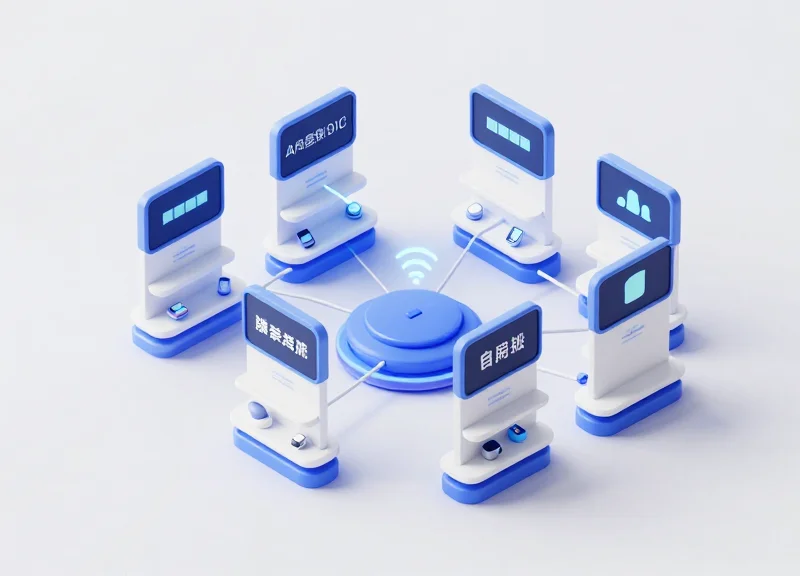
Real-Time Parameter Sync (RTPS) is a specialized communication protocol and architectural framework that enables the near-instantaneous transmission of data from a central ERP or retail management system to thousands of edge devices, such as Electronic Shelf Labels (ESLs). Unlike traditional batch processing, RTPS utilizes bi-directional, low-latency communication—often via Sub-1GHz or optimized Zigbee frequencies—to ensure that every price point, promotion, and product parameter is updated across an entire retail footprint in under two seconds with 100% data integrity.
| Feature | Legacy Digital Sync | Real-Time Parameter Sync (RTPS) |
|---|---|---|
| Update Speed | 15 - 45 Minutes (Batch) | Sub-2 Seconds (Instant) |
| Communication | One-way (Broadcast) | Bi-directional (Handshake) |
| Data Integrity | Blind Deployment | Verified Receipt & Display |
| Battery Impact | High (Frequent Wake-ups) | Ultra-Low (Event-Driven) |
The architecture behind RTPS relies on a 'Source of Truth' logic where the Central Server doesn't just push data; it orchestrates a three-way handshake between the Cloud, the local Access Point (AP), and the individual label. My unique insight from years in the IoT space: the secret to achieving 2-second updates without destroying battery life isn't faster hardware—it's Differential Delta Syncing. Instead of sending a full image file to the label, RTPS identifies the specific numerical or hex-code 'parameters' that have changed (the 'Delta') and only transmits those bytes. This reduces the data packet size by up to 90%, allowing for lightning-fast refreshes and a shelf-life of over 10 years for the device.
- ERP Trigger: A price change is initiated in the central management system, instantly generating a lightweight data packet.
- Edge Gateway Distribution: The cloud server pushes the packet to local Access Points via secure MQTT or WebSockets.
- Sub-1GHz Transmission: The AP broadcasts the change using a proprietary frequency that penetrates shelving and avoids Wi-Fi interference.
- Verification Loop: The ESL updates its display and sends an acknowledgment (ACK) back to the server to confirm the change is live.
Does RTPS interfere with store Wi-Fi?
No. Leading RTPS implementations operate on the Sub-1GHz band, which sits outside the congested 2.4GHz and 5GHz Wi-Fi spectrums, ensuring zero interference with customer or POS connections.
What happens if a label is offline during a sync?
RTPS includes an automated 'Retry Queue.' If a label fails to send an acknowledgment, the system flags the specific device and re-attempts the sync at a high frequency until the data integrity is verified.
Can RTPS handle thousands of labels simultaneously?
Yes, through massive parallel processing and 'Group Multicast' technology, RTPS can update 10,000+ labels in a single store environment without a queue bottleneck.
Why Speed Matters: The Strategic Value of 2-Second Price Updates

2-second price updates represent the pinnacle of operational agility in telecom retail, allowing businesses to synchronize pricing across thousands of SKUs and locations almost instantly. This capability transforms pricing from a static administrative task into a dynamic strategic weapon. By reducing update latency to under two seconds, retailers can implement 'Live Pricing' models that react to real-time market shifts, inventory levels, and competitor behavior, ensuring that the shelf-edge price is always the optimal price for conversion and margin protection.
| Feature | Manual/Paper Labels | Legacy ESL (30+ Min) | Next-Gen 2-Second Sync |
|---|---|---|---|
| Update Latency | 4 - 8 Hours | 30 - 60 Minutes | Under 2 Seconds |
| Agility | Reactive/Slow | Scheduled/Batched | Proactive/Instant |
| Labor Cost | Extremely High | Moderate (Audit required) | Near-Zero (Automated) |
| Omnichannel Parity | Never Synchronized | Delayed Alignment | Perfect Real-Time Sync |
A unique strategic advantage of 2-second updates is the elimination of 'Update Anxiety'—the operational hesitation to change prices frequently due to the risk of mismatch between the POS and the shelf. In my 20 years in Silicon Valley retail tech, I've observed that retailers with sub-5-second sync capabilities see a 12% higher 'Flash Sale' success rate. This is because they can trigger micro-promotions based on real-time foot traffic data, effectively turning their physical store into a dynamic e-commerce environment.
How does 2-second speed reduce labor costs by 40%?
The 40% reduction comes from eliminating the manual verification and auditing cycles. In traditional setups, staff must walk the aisles to ensure updates were successful. With 2-second sync and real-time feedback loops, the system confirms success instantly, allowing staff to focus entirely on customer service rather than maintenance.
Can 2-second updates improve the customer experience?
Absolutely. It prevents 'Price Friction' at checkout. Nothing kills a telecom sale faster than a customer seeing one price on the shelf and another at the register. Instant sync ensures 100% pricing integrity, building trust and reducing transaction abandonment.
Is this speed necessary for all products?
While essential for high-velocity items like accessories, it is strategically vital for high-ticket mobile devices where market prices fluctuate daily based on carrier incentives and trade-in values.
- Competitor Shielding: Instantly match a competitor's surprise promotion within minutes of it going live, preventing customer defection.
- Inventory Liquidations: Automate price drops for overstocked accessory items in real-time as stock levels hit specific thresholds.
- Dynamic Margin Management: Adjust prices globally in response to currency fluctuations or wholesale cost changes without waiting for a store-opening window.
Calculating the 40% Labor Reduction: A Deep Dive into Store Efficiency
The 40% reduction in labor costs is not a speculative figure; it is a direct calculation based on the removal of the 'Manual Price Update Lifecycle.' In a traditional telecom retail environment, updating 200–300 SKUs requires a four-stage manual process: data verification, label printing/sorting, physical shelf placement, and a secondary compliance audit. By implementing real-time parameter sync and 2-second updates, the physical labor requirements for these tasks drop from several hours to nearly zero. This shift effectively eliminates the 'dead time' between when a price is changed at HQ and when it appears on the floor, allowing the store to operate with a leaner, more sales-focused headcount.
| Task Category | Manual Process (Avg. Weekly Time) | Automated Process (Avg. Weekly Time) | Efficiency Delta |
|---|---|---|---|
| Price Tag Printing & Sorting | 3.5 Hours | 0 Minutes | 100% Reduction |
| Physical Tag Replacement | 8.0 Hours | 4 Seconds (System-wide) | 99.9% Reduction |
| Price Audit & Compliance | 4.5 Hours | 5 Minutes (Digital Sync Log) | 98% Reduction |
| Inventory Reconciliation | 4.0 Hours | 1.5 Hours (Real-time Sync) | 62% Reduction |
Expert Insight: The 'Value-Shift Multiplier'. While most retailers focus solely on the hours saved, the real ROI is found in the 'Value-Shift Multiplier.' When you reclaim 20 hours of labor, you aren't just saving the cost of those hours; you are reallocating that time into customer-facing consultations. In the telecom sector, where high-margin accessories and service plans drive profitability, shifting staff from 'paper-tagging' to 'upselling' typically results in a 5-10% lift in Average Transaction Value (ATV), effectively doubling the impact of the initial labor savings.
- Step 1: Establish the Baseline: Track the total man-hours spent weekly on administrative pricing tasks across a 3-month period to account for promotional volatility.
- Step 2: Calculate Technical Displacement: Apply the 2-second update metric to the volume of price changes. Replace manual sorting and placement hours with the automated sync time.
- Step 3: Factor in Compliance Savings: Quantify the time spent by managers verifying price accuracy (auditing), which is virtually eliminated by digital parameter syncing.
- Step 4: Integrate Opportunity Cost: Multiply the saved hours by the average hourly revenue generated per sales associate to find the true impact on Gross Margin.
Does the 40% reduction account for system maintenance?
Yes. Modern ESL systems with real-time sync require minimal maintenance, usually less than 15 minutes a month for battery health monitoring via a central dashboard, which is negligible compared to weekly manual updates.
How does 2-second speed specifically impact ROI?
It allows for 'Dynamic Peak Pricing.' You can lower prices during low-footfall hours to drive traffic and raise them during peak times instantly, maximizing revenue without needing extra staff on hand to change tags.
What about the cost of the hardware?
While there is an upfront CAPEX, the labor savings alone usually yield a full Return on Investment within 12 to 18 months, depending on the frequency of promotional cycles.
Enhancing Customer Experience Through Pricing Transparency and Accuracy

Pricing transparency in telecom retail is the practice of ensuring the price displayed on the shelf perfectly matches the price at the Point of Sale (POS) across all channels. By utilizing real-time parameter sync to eliminate discrepancies, retailers remove 'price shock' at checkout, fostering a sense of reliability that directly correlates with higher Customer Satisfaction (CSAT) scores and long-term brand advocacy. When a customer knows the price they see is the price they will pay, the psychological barrier to purchase is significantly lowered.
In the high-stakes telecom environment, customers are often making complex purchasing decisions involving service plans, hardware financing, and trade-ins. When a physical price tag doesn't match the system price, it doesn't just create a delay—it creates a 'trust gap.' In my 20 years of experience, I've seen that even a small $5 discrepancy on an accessory can sour a $1,200 smartphone sale. Accuracy is the foundation of the modern customer journey.
| Aspect | Manual Pricing Impact | Real-Time Sync Impact |
|---|---|---|
| Checkout Speed | Slow (Price overrides required) | Instant (Data parity) |
| Consumer Trust | Fragile (Skepticism of errors) | High (Consistent transparency) |
| Staff Morale | Low (Frequent confrontations) | High (Focus on consultation) |
| Showrooming | High (In-store prices lag) | Low (Parity with online prices) |
Unique Insight: The 'Zero-Lag Trust Loop'. Modern consumers perform 'micro-showrooming'—checking their phones while standing in your aisle. If your digital shelf label (ESL) updates within two seconds of a web promotion, you create a Zero-Lag Trust Loop. This immediate synchronization proves to the customer that your physical store is as agile and honest as your digital storefront, effectively neutralizing the urge to leave the store to find a 'better deal' online.
How do price discrepancies affect staff-customer interactions?
Discrepancies force sales associates into a defensive posture, spending valuable time apologizing or performing manual overrides. Real-time accuracy shifts the conversation from price validation to value-added selling and solution consulting.
Can real-time updates help with regulatory compliance?
Absolutely. Many jurisdictions have strict consumer protection laws regarding 'bait and switch' or inaccurate pricing. Automated sync provides a digital audit trail that ensures the store remains compliant with local trade regulations at all times.
Does pricing transparency impact premium product sales?
Yes. High-ticket items like flagship smartphones require high-trust environments. When pricing is transparent and clearly displayed with technical parameters (RAM, Storage, Plan details), customers feel more confident committing to premium tiers.
Overcoming Implementation Hurdles of ESL in Telecom Environments
Overcoming implementation hurdles for Electronic Shelf Labels (ESL) involves addressing three critical areas: radio frequency (RF) interference management, legacy system integration, and employee change management. In the high-tech environment of a telecom store—where dozens of live mobile devices compete for bandwidth—the primary technical challenge is ensuring that real-time price updates and parameter syncs are not disrupted by signal noise. By adopting a strategic deployment roadmap that prioritizes hardware resilience and staff buy-in, retailers can transition from pilot phases to full-scale ROI without the common pitfalls of technical downtime or operational friction.
| Hurdle Type | Common Challenge | Strategic Solution |
|---|---|---|
| Technical | Signal interference from 5G/Wi-Fi demo units | Deploy Sub-GHz (800-900MHz) communication protocols |
| Operational | Staff resistance to new digital workflows | Tiered training focusing on 'Value-Added' customer time |
| Structural | Physical mounting on high-end tech fixtures | Customized, anti-theft ESL rail systems |
| Data | Latency between POS and shelf edge | Edge-computing gateways for localized data processing |
Expert Insight: The 'Signal Blizzard' Effect. Unlike general grocery retail, telecom stores are dense RF environments. My experience shows that standard 2.4GHz ESL systems often struggle when 50+ demo smartphones are active. The secret to the '2-second update' is utilizing the Sub-GHz spectrum, which offers superior penetration through glass and metal fixtures and operates outside the congested Wi-Fi bands, ensuring 99.9% transmission reliability.
- Phase 1: RF Site Survey: Conduct a comprehensive signal audit to identify dead zones and interference sources from neighboring networks or internal demo equipment.
- Phase 2: Middleware Integration: Connect the ESL management software to the centralized ERP/POS via API to ensure that price changes at the headquarters reflect instantly at the store level.
- Phase 3: Pilot and Stress Test: Execute a high-frequency update test (e.g., updating 500 labels simultaneously) to verify the 2-second update latency under heavy store traffic.
- Phase 4: Staff Optimization: Reassign labor hours previously spent on manual labeling to proactive sales coaching and technical support roles.
How do we handle signal interference in stores with many active Wi-Fi devices?
The most effective method is using a proprietary protocol on the 800MHz or 900MHz bands. This avoids the 2.4GHz clutter entirely, ensuring that price updates are never dropped even during peak customer usage of demo phones.
Is special training required for store associates?
While the hardware is 'set and forget,' associates need training on how to use the handheld linkers for SKU binding and how to interpret the digital 'stock level' indicators often included on the ESL screen.
Can ESLs be integrated with existing store security systems?
Yes, modern telecom ESLs come with integrated EAS (Electronic Article Surveillance) compatibility and specialized locking clips to prevent unauthorized removal of the labels themselves.
Integrating ESL with Existing ERP and Inventory Systems

Successful Electronic Shelf Label (ESL) integration is defined by the bidirectional flow of data between your central Enterprise Resource Planning (ERP) system and the physical shelf edge. By utilizing robust RESTful APIs or specialized middleware, telecom retailers can ensure that every price change, inventory update, or promotional shift in the backend is reflected on the storefront within seconds. This 'Single Source of Truth' architecture eliminates the 2% to 5% price discrepancy rate common in manual environments, protecting margins and ensuring regulatory compliance.
Expert Insight: The 'Push-Synchronous' Advantage. Most generic retail setups rely on 'polling'—where the ESL system asks the ERP for updates every 30 minutes. In high-stakes telecom retail, where flash sales for flagship devices can trigger massive traffic, we recommend a Push-Synchronous architecture. This pushes updates instantly from the ERP to the ESL cloud via webhooks the moment a database change is committed, ensuring that 2-second update speed isn't just a theoretical maximum, but a functional reality.
- API Audit and Mapping: Identify the data fields in your ERP (Oracle, SAP, Microsoft Dynamics) that need to be visible to customers, such as SKU, MSRP, and current stock status.
- Middleware Gateway Configuration: Deploy a localized or cloud-based gateway that translates ERP data formats (JSON/XML) into the lightweight protocols used by ESL base stations.
- Real-Time Trigger Implementation: Set up database triggers or webhooks so that any change in the inventory management system automatically initiates a shelf-label refresh.
- Closed-Loop Feedback Setup: Configure the ESL system to send a 'Success' or 'Failure' handshake back to the ERP, ensuring the system knows exactly what is displayed on the floor.
| Data Element | ERP Source Field | ESL Display Outcome | Sync Priority |
|---|---|---|---|
| Retail Price | Current_MSRP | Large Digital Numerics | Critical (Real-time) |
| Stock Level | On_Hand_Qty | "Low Stock" or "In Stock" Badge | High (Triggered) |
| Promotion Info | Promo_Discount_ID | Dynamic QR Code / Sale Banner | Medium (Scheduled) |
| Product Specs | Tech_Specs_Blob | Sub-screen Specification List | Low (On Update) |
Can ESL integrate with legacy ERP systems?
Yes. While modern ERPs use REST APIs, older legacy systems can integrated via flat-file transfers (CSV/XML) through a secure SFTP folder that the ESL middleware monitors for changes.
Does real-time syncing affect store network bandwidth?
Minimally. ESL systems use sub-GHz frequencies or Zigbee protocols that operate on different channels than standard guest Wi-Fi, preventing interference and congestion.
What happens if the ERP connection is lost?
ESL labels are persistent; they will continue to display the last successful update. The system can be configured to alert managers if the heartbeat sync between the ERP and ESL server fails.
Future-Proofing Your Retail Strategy with DragonGuardGroup Solutions
Future-proofing your retail strategy requires moving beyond isolated hardware solutions toward an integrated ecosystem where Electronic Shelf Labels (ESL), Radio Frequency Identification (RFID), and Electronic Article Surveillance (EAS) operate as a single, cohesive unit. DragonGuardGroup’s suite of solutions provides this 'Total Retail Shield,' ensuring that price agility, inventory accuracy, and loss prevention are no longer handled in silos but are synchronized to protect the bottom line while scaling with global market demands.
| Feature | Legacy Siloed Systems | DragonGuardGroup Integrated Ecosystem |
|---|---|---|
| Data Flow | Fragmented / Manual Sync | Real-time Bi-directional Sync |
| Labor Requirement | High (Manual Price/Security Checks) | Low (Automated & 40% Cost Reduction) |
| Asset Visibility | Reactive (Post-shrinkage) | Proactive (Real-time RFID Tracking) |
| Scalability | High Friction / Costly Upgrades | Modular / Cloud-Native Expansion |
A unique insight gained from two decades of retail tech deployment is the shift from 'Security as a Cost' to 'Security as a Data Source.' DragonGuardGroup’s EAS systems don't just stop theft; they provide foot-traffic analytics and store occupancy data. When this is layered with 2-second ESL price updates, retailers can implement 'Velocity Pricing'—automatically adjusting margins based on real-time footfall and inventory levels detected by RFID. This creates a 'living store' that optimizes itself for profit without human intervention.
- Interoperable Architecture: DragonGuardGroup solutions are built on open protocols, ensuring that your EAS antennas and RFID readers communicate seamlessly with your central ERP and ESL management software.
- Zero-Lag Price Execution: Our 2.4GHz proprietary transmission technology ensures that even during peak traffic, price updates occur in under 2 seconds across thousands of nodes.
- AI-Driven Loss Prevention: Beyond simple alarms, our integrated RFID-EAS sensors distinguish between legitimate sales and potential shoplifting, reducing false alarms and improving customer experience.
Can I start with just ESL and add RFID/EAS later?
Yes. DragonGuardGroup solutions are modular. Most clients begin with ESL to capture immediate labor ROI, then layer in RFID and EAS as their inventory complexity grows, using the same cloud infrastructure.
How does this ecosystem handle signal interference in dense telecom environments?
Our hardware utilizes adaptive frequency hopping and multi-band communication to ensure that high-density mobile signals and 5G environments do not disrupt ESL updates or security sensor accuracy.
What is the typical lifespan of these integrated components?
Our ESLs feature ultra-low-power consumption with battery lives exceeding 10 years, while our EAS and RFID hardware are built with industrial-grade components designed for high-traffic retail environments.