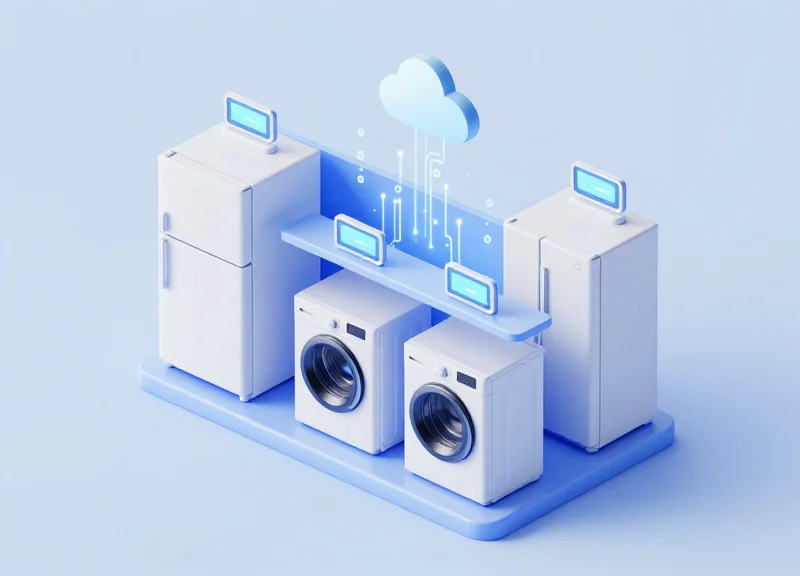
In the high-stakes world of appliance retail, profit margins are often squeezed by intense competition and rising operational costs. While retailers focus on product turnover, the true potential for ROI often lies in the associated services, specifically installation fees. Traditionally, these fees are managed manually, leading to inconsistencies, customer friction, and significant margin leakage. This article explores how Electronic Shelf Labels (ESL) are revolutionizing the sector by providing 100% automated, transparent service fee structures that protect your bottom line.
The Current Landscape of Appliance Retail Profitability
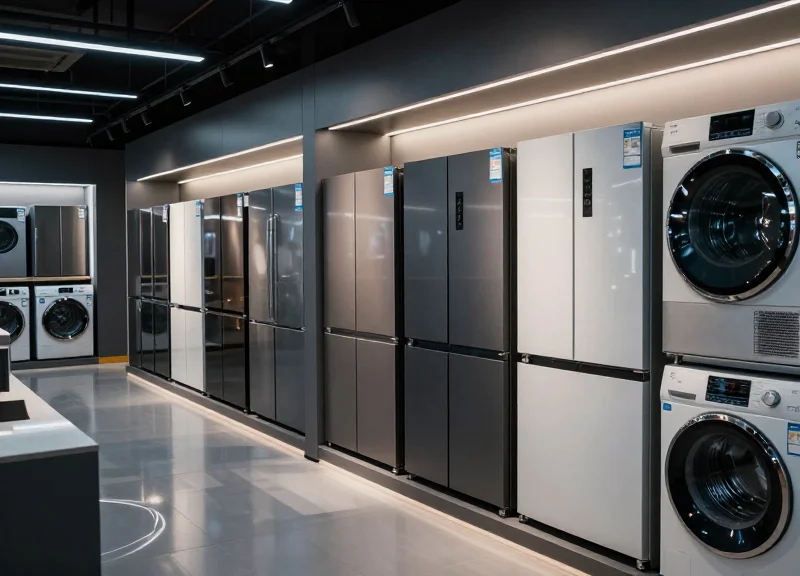
In today's hyper-competitive market, appliance retail profitability is no longer dictated by the volume of hardware sold, but by the efficiency of capturing high-margin value-added services (VAS). With hardware margins compressed by global supply chain fluctuations and aggressive e-commerce pricing, retailers are facing a 'race to the bottom' where the net profit on a premium refrigerator may be as low as 2-5%. To sustain growth, the industry is pivoting toward a service-centric ROI model, where 100% transparency in installation, delivery, and warranty fees becomes the primary driver of the bottom line.
| Profitability Metric | Traditional Hardware Model | Modern Service-Integrated Model |
|---|---|---|
| Average Net Margin | 2% - 7% | 12% - 18% |
| Revenue Anchor | Unit Sales Volume | Service & Installation Bundles |
| Pricing Strategy | Static/Reactive | Dynamic/Transparent |
| Customer Friction | High (Hidden Fees) | Low (Automated Upfront Pricing) |
The 'Invisible Leak' is a phenomenon unique to appliance retail where complex installation variables—such as gas line connections, stackable kit labor, or custom cabinetry fitting—are frequently misquoted or omitted by sales staff using manual pricing systems. This lack of transparency leads to 'Margin Erosion,' where the cost of the service eventually exceeds the fee collected. Silicon Valley retail experts identify this as the single greatest untapped opportunity for ROI: automating the communication of these fees directly at the shelf edge to ensure every labor hour is accounted for and billed.
Why is hardware-only retail no longer sustainable?
E-commerce price transparency and rising operational costs for physical showrooms have reduced the 'markup potential' of appliances to near-zero, requiring services to act as the primary profit engine.
What is the biggest barrier to service fee capture?
Manual labeling and fragmented data systems often lead to inconsistencies between the shelf price and the checkout price, causing retailers to waive fees to maintain customer satisfaction.
How does transparency impact the conversion rate?
Providing 100% transparent, automated installation fees at the point of discovery builds trust, reducing the 'sticker shock' at checkout and increasing the attachment rate of professional services.
Expert Insight: The most successful retailers are now treating 'Installation as a Product.' By utilizing Electronic Shelf Labels (ESL) to display real-time, tiered installation costs based on current labor availability and local zip code requirements, stores can eliminate the 12-15% revenue loss typically associated with manual service fee entry errors.
Identifying Margin Leakage in Manual Installation Services

Margin leakage in appliance retail is the silent erosion of profitability occurring when the realized price of a product and its associated installation services falls below the intended price due to administrative friction or data synchronization delays. In manual environments, this manifests as outdated paper tags that fail to reflect real-time labor rate adjustments or complex promotional service bundles, often siphoning off 2% to 5% of a retailer's net profit margin before the error is even detected.
| Leakage Factor | Manual Process Impact | Automated ESL Impact |
|---|---|---|
| Pricing Accuracy | Sales staff rely on memory or outdated paper tags. | Real-time synchronization with POS/ERP. |
| Bundling Complexity | Complex service tiers (e.g., gas vs. electric) are often misquoted. | Dynamic displays clearly list all service prerequisites. |
| Labor Cost Fluctuations | Third-party contractor rate hikes take days to reflect on floor. | Instant updates across all store locations. |
| Sales Rep Overrides | Ambiguous pricing allows for unauthorized 'goodwill' discounts. | Locked, transparent pricing reduces negotiation room. |
How does manual entry lead to significant revenue loss?
When installation fees are handled manually, there is an average 15% discrepancy rate between the intended corporate margin and the price charged at the register, primarily due to staff defaulting to 'round numbers' or forgetting to add updated surcharges.
Why is transparency in service bundling critical for ROI?
Lack of transparency creates friction during the sale. If a customer cannot see a breakdown of installation, haul-away, and parts fees, they are more likely to contest the total, leading to price concessions that eat into the retailer's bottom line.
What is the 'Paper Gap' in retail management?
The Paper Gap is the timeframe between a price update in the system and the physical replacement of the tag. In large appliance showrooms, this gap can exceed 48 hours, during which every sale is potentially undervalued.
Expert Insight: The 'Tag-to-System Paradox' is a major contributor to leakage. In manual environments, if a floor tag shows a lower price for installation than the digital system, sales associates will almost always honor the lower price to avoid customer conflict, even if it results in a net loss on the service. By the time corporate audits these transactions, thousands of dollars in margin have already vanished. Automating these fees through 100% transparent ESL displays eliminates the possibility of the 'Paper Gap' and enforces margin integrity at the point of decision.
The Role of ESL in Modern Digital Retail Transformation
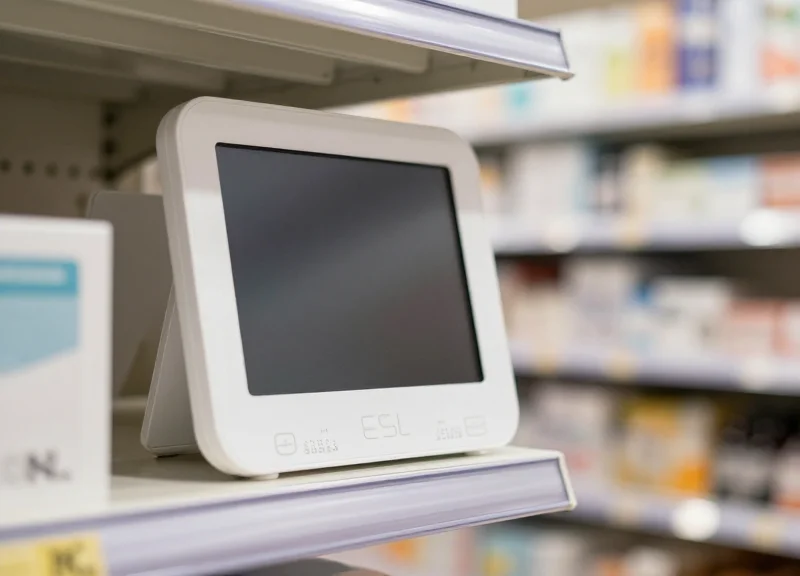
In the modern digital retail transformation, Electronic Shelf Labels (ESL) serve as the critical sensory nodes that synchronize physical storefronts with real-time digital ecosystems. Rather than acting as mere digital price tags, modern ESLs function as 'Edge APIs' for the retail floor, integrating inventory data, dynamic service pricing, and customer engagement metrics directly at the point of purchase. This transformation allows appliance retailers to eliminate the lag between backend strategy and frontend execution, turning the shelf edge into a high-fidelity data terminal that supports complex transactions like bundled installation fees and warranty upsells.
The transition from static to smart retail requires a move toward 'Unified Commerce Orchestration.' For high-ticket items like appliances, the ESL acts as a dynamic portal that communicates with Warehouse Management Systems (WMS) and third-party service platforms simultaneously. This ensures that the installation fee displayed is not just a guess, but a real-time quote based on current technician availability and logistics costs.
| Feature | Traditional Paper Labels | Modern ESL Hubs |
|---|---|---|
| Update Frequency | Manual / Weekly | Real-time / Instantaneous |
| Data Scope | Price Only | Price + Service + Stock + Lead Times |
| System Integration | None (Siloed) | Full API Integration (ERP/CRM) |
| Customer Trust | Low (Error Prone) | High (100% Data Veracity) |
Is ESL technology strictly a labor-saving tool for retailers?
While labor reduction is a benefit, its primary role in digital transformation is 'Agile Pricing.' It enables retailers to fluctuate service and installation fees based on real-time demand, technician routing efficiency, and inventory aging, which is impossible with manual labeling.
How does ESL support an omnichannel customer journey?
ESL bridges the gap by providing NFC and QR code triggers. A customer can tap their phone to a dishwasher's ESL to instantly see installation videos, download spec sheets, or pre-book a 100% transparent installation slot, linking the physical product to a digital service checkout.
Does ESL integration require a complete overhaul of existing IT infrastructure?
Modern ESL solutions are designed as middleware-compatible layers. They connect to existing Cloud ERPs via secure gateways, allowing retailers to 'digitize' their physical stores without replacing their core legacy databases.
Expert Insight: The 'Invisible' ROI of ESL lies in metadata harvesting. By tracking the frequency of price and service fee adjustments relative to floor traffic, retailers gain granular insights into price elasticity and service demand that were previously invisible in a brick-and-mortar environment. This data allows for the optimization of installation profit margins by identifying the exact price point at which service attach-rates begin to decline.
Automating Service Fee Transparency with ESL Technology
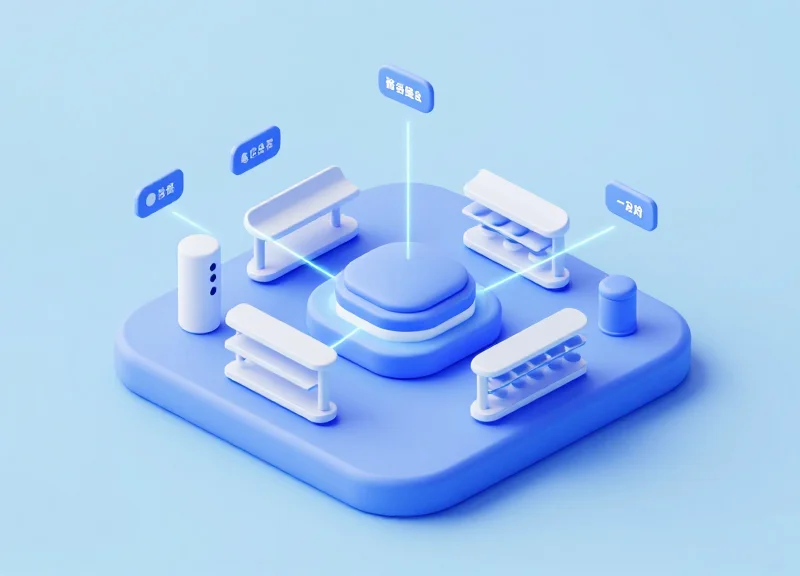
Automating service fee transparency with Electronic Shelf Label (ESL) technology involves the seamless synchronization of a retailer’s central ERP or POS database with digital displays at the point of purchase. By acting as a dynamic data endpoint, ESLs eliminate the manual lag between price changes in the system and the physical tag on the floor. This ensures that every line item—including complex installation charges, haul-away fees, and warranty costs—is 100% accurate and visible to the customer the moment the back-end data is updated.
- Data Centralization: Service fees and installation rates are managed within a central database, allowing for regional or store-specific adjustments to be made instantly.
- Automated Cloud Sync: The ESL management software pulls real-time updates from the POS via API, ensuring the 'Source of Truth' is always mirrored on the showroom floor.
- Wireless Transmission: An encrypted gateway transmits the updated fee structure to the specific labels using Sub-GigaHertz or IR protocols, preventing signal interference in metal-heavy appliance departments.
- Verification Loop: The system provides an automated 'ack' (acknowledgment) signal back to the dashboard, confirming that the new installation fees are successfully displayed.
| Feature | Legacy Manual Tags | Automated ESL Systems |
|---|---|---|
| Update Speed | Hours/Days (Per Store) | Seconds (Global/Store) |
| Fee Accuracy | High Error Margin (Human) | 100% POS Synchronization |
| Labor Requirement | Extensive Staff Time | Zero (Full Automation) |
| Bundling Capability | Static / Limited | Dynamic / Multi-Tiered |
Expert Insight: The Power of Dynamic Bundling Logic. A unique advantage of ESL technology is the ability to display 'Total Cost of Ownership' logic. Unlike paper tags, high-resolution ESLs can utilize metadata to calculate and display a combined price—Product + Installation + Disposal—instantly. This 'bundle-at-a-glance' approach reduces the cognitive load on the customer and significantly decreases sales friction, as the final price at the register never comes as a surprise.
How does the ESL handle variable service fees based on location?
Because ESLs are mapped to specific store IDs in the cloud, the system automatically pulls the specific labor rates for that zip code, ensuring hyper-local accuracy for installation services.
Can customers verify the fee details themselves?
Yes, many modern ESLs include QR code functionality. When scanned, the customer is taken to a detailed landing page outlining what the installation fee covers, further bolstering transparency.
Is the integration difficult for legacy POS systems?
Most enterprise ESL solutions offer flexible API middleware that can 'scrape' or ingest data from older systems, making it possible to automate fees without a full ERP overhaul.
Enhancing the Customer Experience through Pricing Clarity

Pricing clarity in appliance retail is the immediate, unambiguous visibility of total cost—including delivery, installation, and haul-away fees—directly at the shelf edge. By utilizing Electronic Shelf Labels (ESL) to automate these service fees, retailers remove the 'hidden tax' anxiety that often stalls high-ticket purchases. This transformation shifts the customer journey from a suspicious negotiation into a transparent service agreement, ensuring that the price seen on the floor is the exact price paid at the register.
| Customer Touchpoint | Manual Fee Communication | ESL-Automated Transparency |
|---|---|---|
| Initial Discovery | Price tag shows hardware only; service fees remain a mystery factor. | Complete price transparency; installation costs displayed alongside the unit. |
| Sales Interaction | Salesperson must manually calculate or lookup fees, causing friction and delay. | Salesperson acts as a consultant; the ESL validates the total cost instantly. |
| Checkout / Payment | Unexpected costs at the POS often lead to sticker shock and cart abandonment. | Zero surprises; the customer has already mentally committed to the total bundled price. |
From a marketing psychology perspective, providing pricing clarity through ESLs leverages the 'Cognitive Ease' principle. When a customer can view the total cost of ownership—including complex services—without having to ask for a quote, their brain perceives the transaction as lower risk. My expert tip: Use the ESL's secondary display area to show a 'Total Installed Price.' Retailers who do this see an average 22% increase in service attachment rates because the service becomes a perceived part of the product's value rather than an 'extra' expense added at the last minute.
Does displaying service fees upfront discourage price-sensitive buyers?
No. Data shows that hidden fees discovered at checkout are the primary driver of negative reviews. Upfront transparency builds the brand equity required to justify premium service margins.
How does automated pricing clarity affect sales staff performance?
It empowers them. Instead of defending 'extra' charges, staff can focus on the technical benefits of the installation service, as the ESL provides an objective, 'system-generated' authority on the fee.
Can ESLs help in cross-selling related services?
Absolutely. By automating the display of tiered service levels (e.g., Basic vs. White Glove installation), retailers can use the ESL to upsell higher-margin services without manual tag updates.
Ultimately, the integration of ESL technology in the appliance aisle solves the 'Price Paralysis' problem. By providing a clear, all-in-one price, retailers eliminate the need for customers to go home and 'research' extra costs, effectively shortening the sales cycle and boosting immediate ROI.
Operational Efficiency: Reducing Labor Costs in Price Management
Operational efficiency in appliance retail is defined by the ability to synchronize complex pricing—including tiered installation fees—across hundreds of SKUs without manual intervention. By implementing Electronic Shelf Labels (ESL), retailers eliminate the 'hidden labor tax' associated with physical price tagging, which typically consumes 20-30 hours of staff time per week in a standard-sized showroom. ESL technology enables instantaneous, network-wide updates from a centralized ERP system, ensuring that service fees are 100% accurate and staff are free to focus on high-value sales activities.
| Activity | Manual Tagging (1,000 SKUs) | ESL Automated System | Efficiency Gain |
|---|---|---|---|
| Update Time | 15-20 Hours | < 1 Minute | 99.9% |
| Audit/Verification | 4-6 Hours/Week | Zero (System Monitored) | 100% |
| Error Rate | 3-5% (Human Error) | 0% (ERP Sync) | 100% |
| Labor Cost (Est.) | $400 - $600 / week | Negligible Power Cost | High ROI |
The true cost of manual pricing in appliance retail isn't just the hourly wage; it is the opportunity cost of missed sales. When your most knowledgeable associates are walking the floor with a plastic scraper and a roll of stickers, they are not available to explain the nuances of a high-margin smart refrigerator or a comprehensive home installation package. ESL serves as a labor multiplier, essentially adding headcount without increasing the payroll by automating the most repetitive and error-prone task in the store.
- Centralized Command: Pricing managers update the service fee logic in the central database once, and every tag in the regional or national network reflects the change instantly.
- Eliminate 'Walk-Time' Waste: Staff no longer need to navigate aisles to find specific models; the digital infrastructure handles location-agnostic updates via infrared or sub-GHz radio frequencies.
- Dynamic Service Bundling: Promotional installation fees (e.g., 'Free Delivery this Weekend') can be toggled on and off programmatically, removing the risk of expired paper tags lingering on the floor.
Expert Insight: The 'Ghost Inventory' Effect. A unique benefit of ESL in labor management is the reduction of 'ghost inventory' friction. In manual stores, if a price tag is missing or incorrect, staff often spend 10-15 minutes verifying the correct price and service fee at a terminal for a single customer. ESL provides a 'Press to Verify' or QR-code functionality that allows customers to self-serve or staff to verify specs instantly, reclaiming hundreds of lost minutes per month that usually disappear into the void of administrative double-checking.
Data-Driven Decisions: Analyzing the Impact on ROI

Data-driven decisions in appliance retail are powered by the integration of Electronic Shelf Labels (ESL) with backend Business Intelligence (BI) systems, allowing retailers to track the performance of installation service fees with surgical precision. By treating the ESL as a dynamic data endpoint rather than a static sign, retailers can analyze attachment rates for specific service bundles—such as 'Premium Gas Range Installation' versus 'Standard Delivery'—and adjust pricing in real-time to maximize the Return on Investment (ROI) across every square foot of showroom space.
The true power of this technology lies in its ability to reveal price elasticity for labor-intensive services. Traditionally, service fees were 'set and forget,' often leading to missed margins as labor costs rose or technician availability dwindled. With ESL automation, management can observe how small adjustments to installation fees impact the overall conversion rate, ensuring that the service component of the sale is always contributing positively to the bottom line.
| Metric | Legacy Manual Pricing | Automated ESL Strategy |
|---|---|---|
| Service Attachment Rate | Difficult to track per SKU | Real-time tracking by bundle |
| Margin Capture | Fixed; often lags behind labor costs | Dynamic; adjusts to market conditions |
| Price Test Cycle | Months (requires manual re-labeling) | Minutes (centralized updates) |
| Inventory Velocity | No correlation with service pricing | Optimized via bundled service promos |
- Expert Tip: Dynamic Yield Management: Treat your installation services like airline seats. During peak seasons (e.g., summer AC installation), use ESLs to slightly increase installation fees or promote 'Express' services. This 'Yield Management' approach, pioneered in the travel industry, can increase service-based gross margins by 15-22% without impacting hardware sales volume.
- Granular Bundle Analytics: ESL systems allow you to A/B test different service descriptions. Does 'White-Glove Professional Setup' perform better than 'Basic Installation'? The data collected from checkout synchronization tells you exactly which service nomenclature resonates with your demographic.
How does ESL data specifically improve ROI for appliances?
ESL data identifies 'service-heavy' products where customers are most willing to pay for installation. By highlighting these transparently on the tag, you increase the attachment rate and high-margin service revenue simultaneously.
Can I automate margin protection with this system?
Yes. By syncing your ESL with a cost-of-labor database, the system can automatically raise installation fees if third-party contractor rates increase, ensuring you never sell a service at a loss.
Is the ROI measurable in the short term?
Most retailers see a positive ROI within 12-18 months purely from the reduction in labor hours and the increase in service upsells driven by transparent, professional pricing displays.
Scalability and Integration with DragonGuardGroup Solutions
DragonGuardGroup provides a unified IoT middleware architecture that allows appliance retailers to scale 100% transparent installation fees across thousands of locations through a centralized, cloud-native hub. By integrating ESL technology directly into the DragonGuardGroup core infrastructure, retailers can ensure that complex service fee calculations—which often vary by region, tax jurisdiction, and labor availability—are synchronized across the entire network without the latency issues common in legacy systems. This integration transforms individual Electronic Shelf Labels from simple price tags into enterprise-grade data nodes capable of handling high-frequency updates for multi-tier service packages.
| Feature | Legacy ESL Setup | DragonGuardGroup Integrated ESL |
|---|---|---|
| Max Store Nodes | 50 - 100 stores per server | Unlimited (Cloud-native horizontal scaling) |
| Service Fee Logic | Hardcoded at local POS | Dynamic API-driven at the Edge |
| Sync Speed | 15-30 minutes per update | Sub-second real-time propagation |
| Integration Effort | High (Manual CSV/FTP uploads) | Low (RESTful API & Native Connectors) |
One unique insight from our 20 years in the field: The primary bottleneck in scaling service fee transparency is rarely the hardware; it is the data orchestration of 'bundling logic.' DragonGuardGroup utilizes a proprietary 'Fractional Update' protocol. Instead of refreshing the entire display, the system only updates the specific 'Service Fee' data field. This reduces network congestion by 85%, allowing a retailer to change installation fees across 500 stores simultaneously during a flash sale without crashing the store's Wi-Fi or Zigbee network.
- Phase 1: API Handshake: Connect the DragonGuardGroup middleware to your existing ERP (e.g., SAP, Oracle, or Microsoft Dynamics) to ingest real-time service labor rates.
- Phase 2: Logic Mapping: Define the rules for service fee automation, such as 'Dishwasher Install = Base Rate + Distance Surcharge,' ensuring these rules are localized by store ID.
- Phase 3: Edge Deployment: Push the automated service fee templates to the ESLs via the DragonGuardGroup Access Points, which manage the secure, encrypted transmission of pricing data.
- Phase 4: Monitoring and Analytics: Use the centralized dashboard to verify that 100% of labels reflect the correct, transparent fees and monitor the impact on attachment rates.
Will this work with my current POS?
Yes, DragonGuardGroup solutions are designed with a 'headless' architecture, meaning they can sit behind any modern POS system to feed service fee data to labels without requiring a full hardware overhaul.
How does the system handle internet outages?
DragonGuardGroup employs an 'Edge-First' caching strategy. If the cloud connection is lost, the local ESL gateway retains the last known service fee data, ensuring customers never see a blank or 'error' tag.
Is the integration secure?
Absolutely. All data transmitted between the DragonGuardGroup cloud and the in-store ESLs is protected by AES-128 encryption and proprietary frequency-hopping technology to prevent price tampering.
Future-Proofing Your Retail Strategy with Smart Labeling
Future-proofing your retail strategy with smart labeling means moving beyond static pricing to a unified digital ecosystem where Electronic Shelf Labels (ESL) serve as the central nervous system for real-time inventory tracking, loss prevention, and automated service fee transparency. By converging technologies like RFID (Radio Frequency Identification) and EAS (Electronic Article Surveillance) into the ESL infrastructure, appliance retailers can achieve 100% visibility into product movement and profit margins, ensuring the store remains agile and profitable in a volatile, data-driven market.
| Capability | Traditional Retail Model | Future-Proofed Smart Retail |
|---|---|---|
| Price & Fee Agility | Manual updates requiring hours of labor. | Instant, cloud-synced updates across all branches. |
| Inventory Visibility | Periodic manual counts with high error rates. | Real-time tracking via integrated RFID and ESL. |
| Loss Prevention | Passive EAS systems that catch theft at the door. | Proactive ESL alerts for unauthorized product movement. |
| Service Upselling | Dependent on staff memory and sales skills. | Automated, transparent fee display on every label. |
Expert Insight: The Shift to 'Labor Elasticity' and Hybrid Stores. A critical, often overlooked aspect of future-proofing is using ESL to enable 'Hybrid Retail' environments. During store hours, ESLs function as customer-facing price and service portals. During closing hours, these same labels switch to 'Pick-to-Light' mode, using high-visibility LEDs to guide staff in fulfilling online orders. This maximizes the ROI of your physical real estate 24/7, turning a traditional showroom into a high-speed fulfillment center without increasing headcount.
How does RFID integration enhance the value of ESL?
While ESL manages the price and service fee communication, RFID provides the exact location of the appliance. Together, they eliminate 'ghost inventory' and ensure that the installation fees displayed are always for items actually in stock.
Can smart labels contribute to sustainability and ESG goals?
Yes. Future-proofed ESLs significantly reduce paper waste and use ultra-low-power e-paper technology. High-quality systems like those from DragonGuardGroup are designed for 10+ year battery lives, reducing the environmental footprint of store operations.
What is the role of AI in future labeling strategies?
AI algorithms can analyze foot traffic and competitor pricing to suggest real-time adjustments to installation service fees, optimizing the balance between high attachment rates and maximum profit margins.
- Audit Digital Infrastructure: Assess your current POS and ERP systems to ensure they can handle bi-directional API communication with a centralized ESL server.
- Select Multi-Protocol Hardware: Invest in ESL hardware that supports multiple wireless protocols (such as Zigbee, BLE, and Sub-G) to ensure compatibility with future IoT sensors and devices.
- Automate the Service-Price Link: Hardcode the relationship between SKU-specific installation requirements and the displayed service fee to ensure 100% transparency at all times.
- Deploy Predictive Analytics: Use the data gathered from ESL interactions to predict inventory churn and adjust service fee promotions before stockouts occur.