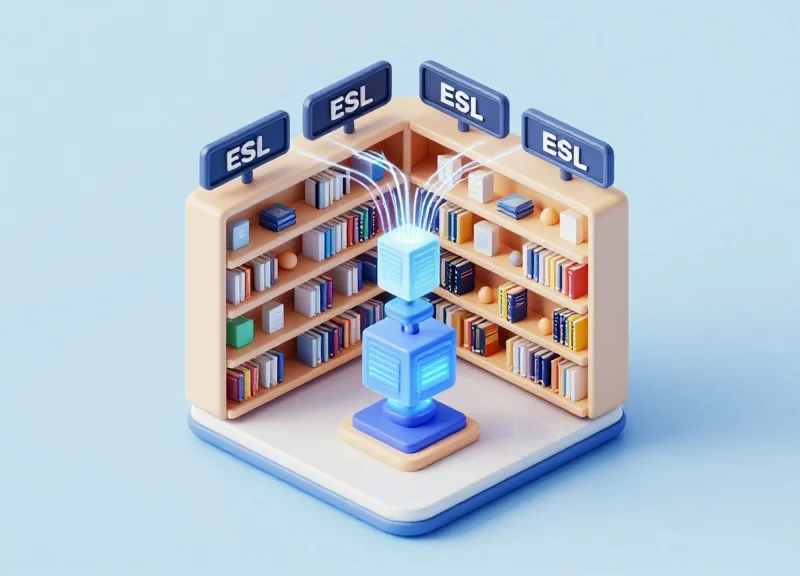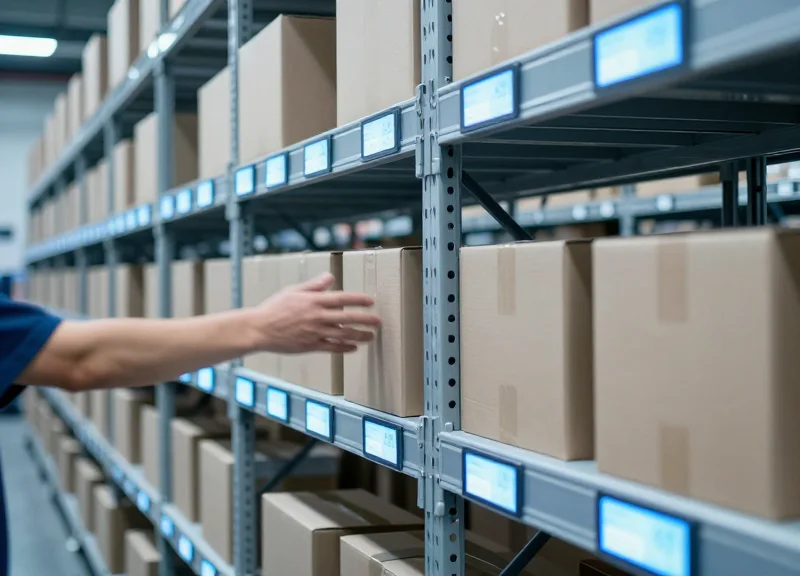
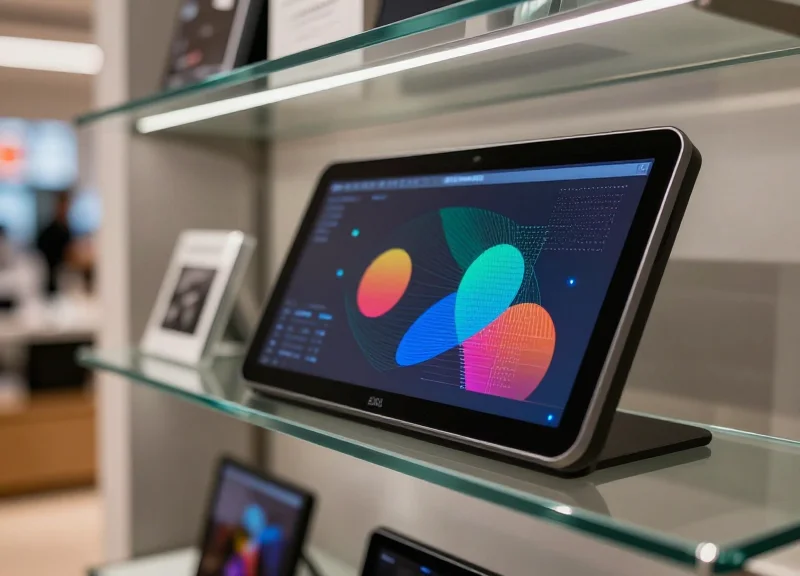
As retail aesthetics evolve in 2026, the demand for curved displays and organic shelf designs has skyrocketed. Traditional, rigid Electronic Shelf Labels (ESL) often fail to meet these modern architectural demands, leading to visibility issues and breakage. Flexible ESLs, featuring bendable e-ink technology, have emerged as the definitive solution. This guide explores how to navigate the complex market of bendable labels, ensuring your investment enhances both store design and operational efficiency.
The Evolution of Modern Retail: Why Flexibility Matters in 2026
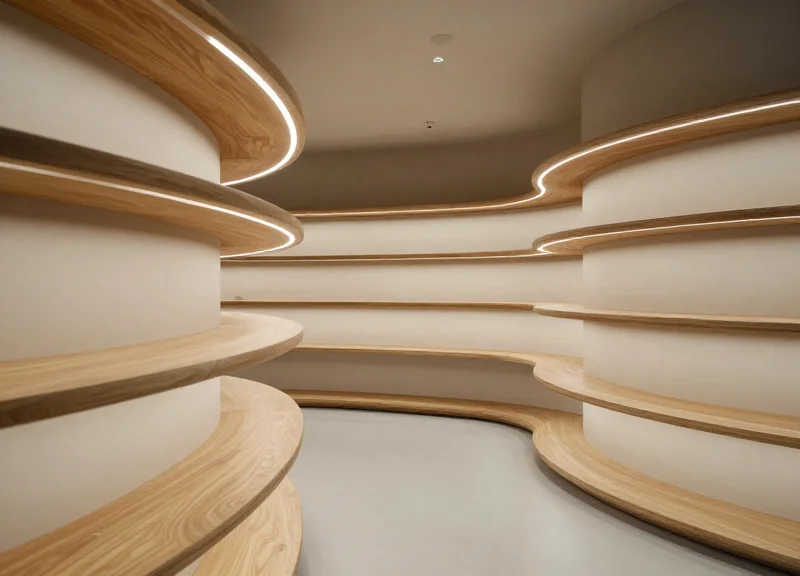
In 2026, the evolution of modern retail is defined by a shift from rigid, industrial shelving to 'organic architecture'—a design philosophy centered on curved fixtures, circular kiosks, and ergonomic displays that mimic natural flow. Flexible Electronic Shelf Labels (ESLs) are the technological backbone of this shift, utilizing bendable e-ink backplanes that allow digital pricing to wrap around non-linear surfaces. Unlike traditional rigid labels that protrude or fail on contoured shelving, flexible ESLs maintain structural integrity and visual clarity on radii as tight as 30mm, ensuring that digital transformation does not compromise aesthetic store design.
- The Rise of Experiential Geometry: Retailers are moving away from the 'grid' layout to create immersive environments. Flexible ESLs allow for seamless integration on pillars, curved end-caps, and rounded apparel racks.
- Durability in High-Traffic Zones: Bendable substrates are inherently more shatter-resistant than glass-based rigid screens, making them ideal for bottom-shelf placements or interactive displays where physical contact is frequent.
- Maximized Real Estate: Curved surfaces often provide 15-20% more display area than flat ones. Flexible labels ensure every inch of that space is actionable and price-accurate.
| Feature | Traditional Rigid ESL | 2026 Flexible ESL |
|---|---|---|
| Mounting Surface | Flat only | Curved, Concave, Convex, or Flat |
| Substrate Material | Glass-based (Fragile) | Polymer-based (Shatterproof) |
| Visual Integration | Protrudes from curved edges | Flush-mount, seamless wrap |
| Weight | Standard | Ultra-lightweight (up to 40% lighter) |
Expert Insight: From a marketing perspective, the move to flexible ESLs isn't just about aesthetics; it is about eliminating 'Visual Friction.' In my 20 years in Silicon Valley tech-retail, we’ve observed that when a digital price tag looks like an 'afterthought'—stuck awkwardly onto a designer curved shelf—customer trust in the brand’s premium positioning drops. By 2026, the 'Surface-First Design' mandate requires technology to disappear into the furniture. Flexible ESLs achieve this by becoming part of the fixture itself, rather than a bulky peripheral, driving higher conversion rates through a more cohesive brand story.
Decoding Flexible ESL Technology: How It Works
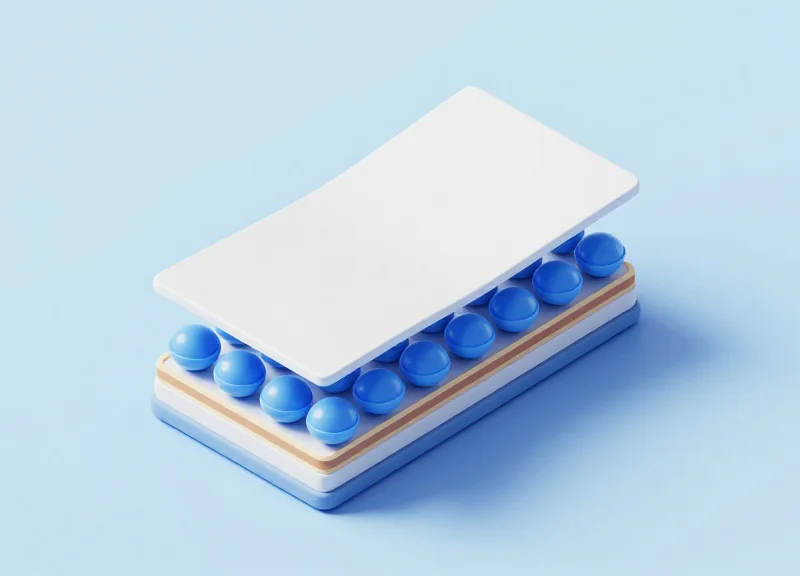
Flexible Electronic Shelf Labels (ESLs) function by replacing the traditional rigid glass backplane with an ultra-thin plastic substrate, such as Polyimide (PI) or PET. These devices utilize Electrophoretic Display (EPD) technology, where millions of tiny microcapsules containing charged pigment particles migrate to the surface when an electric field is applied. Unlike standard displays, flexible versions employ a 'Plastic-Logic' architecture, allowing the entire stack—from the thin-film transistor (TFT) layer to the protective top film—to bend without cracking or losing pixel alignment.
| Component | Rigid ESL (Standard) | Flexible ESL (2026 Spec) |
|---|---|---|
| Substrate Material | Borosilicate Glass | High-Performance Polyimide (PI) |
| Impact Resistance | Low (Brittle) | High (Shatterproof) |
| Weight | 10g - 25g | 3g - 8g |
| Minimum Bend Radius | N/A (0mm) | 15mm - 30mm (Convex/Concave) |
The breakthrough in 2026-grade flexible ESLs lies in the 'neutral axis' engineering. By precisely balancing the thickness of the encapsulation layers, engineers ensure that the delicate E-ink layer sits exactly in the middle of the bend's stress zone. This prevents the 'micro-cracking' that plagued earlier versions, ensuring that prices remain legible even when the label is wrapped around a tight 20mm radius cylinder, such as a high-end cosmetics bottle or a curved deli case shelf.
- TFT Backplane Deposition: A specialized organic or metal-oxide thin-film transistor layer is printed or deposited onto a flexible plastic film at low temperatures to avoid warping.
- Electrophoretic Film Lamination: The E-ink film, containing the white and black (or multicolor) pigments, is laminated onto the flexible backplane using a pressure-sensitive conductive adhesive.
- Bistable Circuitry Integration: The driver IC is bonded using Anisotropic Conductive Film (ACF), designed to maintain a connection even under mechanical tension.
Expert Insight: The 'Memory' of Plastic. While these displays are bendable, 2026 industry standards emphasize 'Static Flexibility' over 'Dynamic Flexibility.' In a retail environment, the labels are typically bent once during installation to fit a fixture. Attempting to use a standard flexible ESL for a 'dynamic' application (constant bending) will lead to delamination. Always check the 'Cycle Life' rating if you plan to move labels between fixtures with different curvatures.
Do flexible ESLs consume more power?
No. They retain the same bistable properties as rigid E-ink, meaning they only consume energy when the price or image is being updated.
Can they be cut to custom shapes?
Generally, no. While the substrate is plastic, the internal circuitry is pre-defined. Custom shapes require custom-manufactured TFT arrays.
How do they handle high-glare retail lighting?
Most 2026 models feature an integrated anti-reflective (AR) coating on the plastic top-sheet to prevent the 'shimmer' effect common on curved surfaces.
Core Advantages Over Traditional Rigid Labels
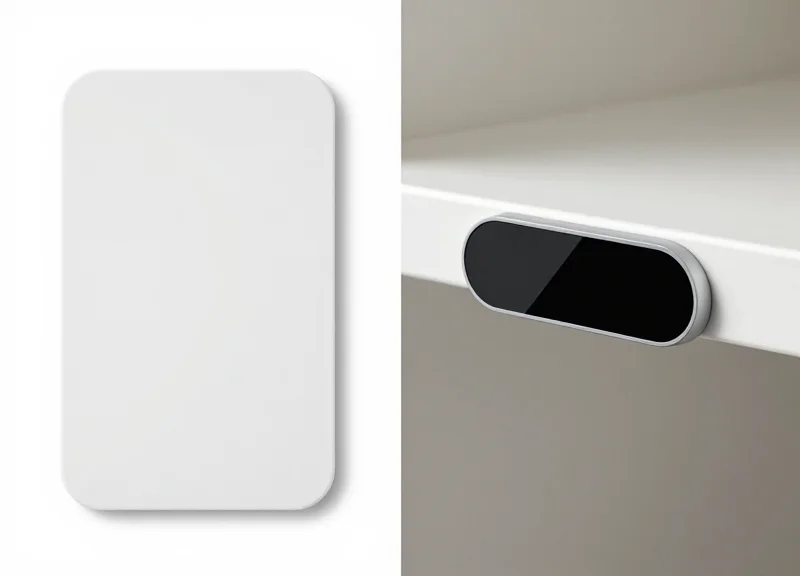
Flexible ESLs solve the primary limitation of traditional rigid labels—structural fragility on curved surfaces—by utilizing plastic-based substrates that offer near-zero fracture risk and 180-degree readability. Unlike rigid glass displays that create visual gaps and mechanical tension when mounted to non-linear fixtures, bendable e-ink technology conforms to the architecture of the shelf, eliminating the 'shadow-gap' effect and significantly reducing replacement costs due to accidental impact.
| Feature | Traditional Rigid ESL | Advanced Flexible ESL (2026) |
|---|---|---|
| Durability | Glass-based; prone to shattering on impact. | Plastic-based; virtually shatterproof. |
| Surface Fit | Flat only; leaves gaps on curved fixtures. | Conformal; fits cylinders and waves. |
| Viewing Angle | Limited (~120°) on curved surfaces. | Ultra-wide (~180°) without distortion. |
| Weight | Heavier due to glass and casing. | Ultra-lightweight polymer construction. |
| Failure Rate | High mechanical stress at mounting points. | Stress-distributed across the substrate. |
One of the most significant advantages is the shift from glass to polymer substrates. In a high-traffic retail environment, shopping carts and restocking pallets frequently collide with shelf edges. While a rigid label's glass backplane will micro-fracture under such stress—rendering the display useless—a flexible ESL absorbs and distributes the kinetic energy. This 'bounce-back' capability extends the hardware lifecycle by an estimated 40% in high-impact zones like beverage or hardware aisles.
### The Expert Insight: Eliminating the 'Shadow Gap' and Hygiene Risk A unique advantage often overlooked by procurement teams is the hygiene and maintenance factor. When a rigid label is forced onto a curved surface, it creates a wedge-shaped 'shadow gap' behind the device. This space becomes a magnet for dust, debris, and in grocery environments, potential pathogens. Flexible ESLs provide a flush, hermetic-like seal against the fixture. This not only improves the aesthetic flow of the store but also simplifies cleaning protocols and maintains a higher standard of retail food safety.
Why do flexible ESLs have better viewing angles?
Because the display conforms to the curve of the shelf, the pixels remain equidistant to the viewer's eye across the arc, eliminating the glare and parallax distortion found when flat glass is viewed at an angle.
Are flexible labels more expensive to maintain?
No. While the initial CapEx may be slightly higher, the Total Cost of Ownership (TCO) is lower due to a drastic reduction in 'impact-related shrink'—the industry term for broken labels that must be replaced.
Do they offer the same battery life as rigid labels?
Yes. 2026 models utilize the same low-power electrophoretic technology, often achieving 7–10 years of battery life because the power draw is independent of the substrate's flexibility.
Key Selection Criteria: What to Look for in a 2026 Flexible ESL
When evaluating flexible Electronic Shelf Labels (ESL) in 2026, the primary selection criteria have shifted from simple 'bendability' to long-term structural integrity and high-speed data responsiveness. A premium flexible label must maintain a consistent bending radius—typically between 15mm and 30mm—without compromising the electrophoretic layer, while simultaneously housing a power source capable of driving multi-color updates for over five years in an ultra-thin form factor that resists material fatigue.
| Feature | Standard Grade (2026) | Premium / Industrial Grade |
|---|---|---|
| Minimum Bending Radius | 35mm - 40mm | 15mm - 25mm |
| Battery Technology | Lithium Coin (Slim) | Solid-State Thin-Film / Printed |
| Refresh Rate (4-Color) | 2.5 - 3.5 Seconds | 1.2 - 1.8 Seconds |
| Operating Temp | 0°C to 40°C | -15°C to 50°C |
| Torsional Cycles | 1,000 bends | 5,000+ bends |
- Bending Radius and Substrate Elasticity: Look for a bending radius of at least 25mm for standard shelf edges and 15mm for high-profile cylindrical displays. Ensure the substrate is 'stress-neutral,' meaning it does not develop a permanent 'set' or crease after being unmounted.
- Advanced Thin-Film Battery Density: 2026 models should utilize solid-state or high-density printed batteries. These allow the label to remain under 3mm thick while providing enough peak current for frequent BLE 5.4 or Sub-GHz communication cycles.
- Optical Clarity on Curvature: The display must feature anti-glare, anti-Newton-ring coatings designed specifically for non-flat surfaces. This prevents 'rainbowing' effects caused by the internal layers compressing at different rates during a bend.
- Refresh Speed and Ghosting Management: Verify the refresh latency for 4-color or 7-color e-ink. Flexible substrates can sometimes exhibit increased 'ghosting' (remnant images) if the drive voltage is not perfectly calibrated for the curved state.
Expert Insight: The 'Micro-Migration' Challenge. A unique technical challenge in 2026 is 'electrophoretic drift' under tension. Over months of being held in a curved position, some lower-quality plastic substrates can allow microcapsules to migrate unevenly due to localized pressure points. Always request 'accelerated aging test' data specifically conducted on curved fixtures to ensure the image contrast remains uniform across the entire radius after 24 months of continuous tension.
Does the bending radius affect the battery life?
Indirectly, yes. Extreme bending can increase internal resistance in some flexible battery types. High-end labels use segmented battery cells or printed electrolytes to mitigate this risk and ensure power delivery remains constant.
Are flexible ESLs as durable as rigid ones?
In most cases, they are more durable. Because they utilize plastic rather than glass substrates, they are virtually shatterproof and can absorb significant impacts from shopping carts or restocking activities that would crack a traditional rigid ESL.
How do I mount these on varying curves?
Modern 2026 flexible ESLs use magnetic snap-on systems or high-bond elastic adhesives that expand and contract with the fixture, preventing the label from popping off due to temperature-induced material expansion.
Compatibility and Connectivity: Bluetooth, Zigbee, and Beyond
In 2026, the connectivity of flexible Electronic Shelf Labels (ESLs) is defined by interoperability and low-latency synchronization. Modern bendable e-ink labels must integrate into a broader retail IoT mesh, utilizing low-power wireless protocols like Bluetooth 6.0, Zigbee 3.0, or emerging Matter-over-Thread standards to receive real-time pricing updates and sensor data. Choosing the right connectivity architecture is no longer just about range; it is about ensuring that the label's flexible antenna design can maintain a robust signal even when contoured around high-interference metal fixtures or tucked inside curved acrylic displays.
| Protocol | Best Use Case | Power Efficiency | Curvature Resilience |
|---|---|---|---|
| Bluetooth LE (BLE) | Customer engagement and proximity marketing | High | Excellent (Omnidirectional) |
| Zigbee 3.0 | Massive-scale deployments (>5k labels) | Very High | Good (Mesh stability) |
| Sub-GHz (Proprietary) | Large warehouses and deep-penetration needs | Highest | Moderate |
| Matter over Thread | Future-proof cross-brand interoperability | High | High (Self-healing mesh) |
A critical, often overlooked factor in 2026 is the software bridge. While the physical label bends, the digital data flow must remain rigid. Your flexible ESL provider should offer a cloud-native management platform with RESTful APIs that connect directly to your ERP or PIM system. This ensures that a price change at the corporate level is reflected on the curved shelf edge in seconds. We are also seeing a shift toward 'Edge-Orchestration,' where gateways do more than just pass data; they optimize the transmission schedule to maximize the battery life of the thin, flexible power cells used in bendable labels.
Does bending the label affect its wireless signal strength?
Yes, extreme curvature can slightly shift the resonance of internal antennas. High-end flexible labels in 2026 utilize 'Adaptive Impedance Matching' to ensure the wireless performance remains consistent whether the label is flat or wrapped around a 40mm radius cylinder.
Can these labels integrate with existing Wi-Fi networks?
Most flexible ESLs do not connect directly to Wi-Fi due to high power consumption. Instead, they use an IoT Gateway that bridges the ESL protocol (like Zigbee) to your store's Wi-Fi or Ethernet backbone.
What is the 'Beyond' in 2026 connectivity?
We are seeing the rise of Ambient Backscatter technology and NFC-Passive updates, allowing labels to receive data using the energy harvested from existing ambient radio waves, further extending the life of flexible substrates.
Expert Tip: When evaluating 2026 flexible labels, prioritize 'Multi-Protocol' chips. The most resilient retailers are choosing hardware that supports both BLE and Zigbee/Thread simultaneously. This allows the label to handle bulk pricing updates via the mesh network while providing high-speed 'tap-to-pay' or personalized discount beams to a customer’s smartphone via Bluetooth. This dual-path connectivity is the secret to a truly interactive curved display.
Industry-Specific Applications: Fresh Food, Cosmetics, and Luxury Goods

In 2026, the adoption of flexible ESL technology is driven by the need for 'seamless retail'—where technology disappears into the store architecture. While rigid labels struggle with the organic shapes of modern merchandising, bendable e-ink displays provide a 1:1 fit for curved shelving, circular display towers, and cylindrical product pedestals. This adaptability is particularly transformative for fresh food, cosmetics, and luxury sectors where presentation and space optimization directly correlate with conversion rates.
| Sector | Primary Constraint | Ideal Flexible Feature | Value Proposition |
|---|---|---|---|
| Fresh Food | Irregular display surfaces | Food-safe plastic substrate | 30% better space utilization in deli/produce |
| Cosmetics | Limited shelf depth | Ultra-thin (1.2mm) profile | Increases brand 'real estate' on curved fixtures |
| Luxury Goods | High aesthetic standards | Sub-millimeter edge bezel | Maintains premium brand integrity |
Fresh Food: Beyond the Flat Shelf. For fresh produce and deli counters, flexible ESLs allow retailers to wrap pricing information around curved baskets and cooling tubs. The latest 2026 models feature IP68-rated waterproof flexible casings that can withstand humidity and frequent cleaning. Cosmetics: Precision in Narrow Spaces. In the beauty aisle, where shelving is often tiered and rounded to highlight small items, flexible ESLs can follow the contour of the shelf lip. This allows for high-DPI displays that show ingredient lists or QR codes for virtual try-ons without protruding into the customer's line of sight. Luxury Goods: Invisible Technology. For high-end boutiques, the flex factor allows labels to be embedded directly into leather or fabric-lined display stands. By eliminating the 'box' look of traditional electronics, luxury brands can implement dynamic pricing while maintaining an artisanal atmosphere.
Expert Tip: The 'Curvature-Readability' Calibration. A unique 2026 advancement to look for is 'Dynamic Kerning.' Since bending an e-ink display can slightly distort pixel pitch at the apex of the curve, leading manufacturers now provide software that automatically adjusts font spacing (kerning) based on the label’s reported bend radius, ensuring 100% legibility from every angle.
Why are flexible ESLs better for fresh food than rigid ones?
Rigid labels create 'snag points' and gaps on curved produce bins; flexible labels wrap flush against the surface, reducing the risk of being knocked off and improving the overall aesthetic of organic food presentation.
Can flexible ESLs handle the small radii of cosmetic display units?
Yes, 2026-spec flexible ESLs can typically handle a bending radius as tight as 30mm, making them ideal for the narrow, circular tiers commonly found in makeup and skincare displays.
How do luxury brands benefit from flexible labels?
They allow for 'stealth integration.' Brands can mount labels on curved pedestals or around jewelry busts, providing price transparency without the visual clutter of a rectangular plastic tag.
Durability Standards: Protection Ratings for Retail Environments
Durability for flexible ESLs is defined by three primary metrics: the Ingress Protection (IP) rating for moisture and dust, the IK rating for physical impact resistance, and the 2026-standard Flex-Cycle Fatigue test. Unlike traditional rigid labels, a bendable e-ink display must maintain its hermetic seal while under mechanical stress, making high-tier protection ratings (such as IP67 and IK07) essential for environments like fresh produce, seafood, or high-traffic cosmetic aisles where exposure to liquids and physical bumps is frequent.
| Rating Tier | Environment Compatibility | Protection Level |
|---|---|---|
| IP54 | General Grocery & Apparel | Protects against dust and light splashes; standard for dry shelving. |
| IP67 | Fresh Produce & Seafood | Full immersion protection; withstands high-humidity misters and daily washdowns. |
| IK07 | High-Traffic Retail | Resists impacts up to 2 Joules; protects against shopping cart collisions and accidental drops. |
| IK09 | Industrial / Warehouse | Heavy-duty protection for extreme environments or floor-level curved displays. |
In 2026, the industry has pivoted toward plastic-based substrates (PI or PET) for flexible displays. These materials are inherently more durable than the glass used in traditional ESLs because they do not shatter. However, the 'flex-fatigue' of the conductive traces inside the label is the new durability frontier. When selecting a label, look for a 'Radius Stress Guarantee,' which ensures the label can maintain its IP rating even when held at its minimum rated bend radius for the duration of its 5-to-10-year battery life.
- Expert Tip: The 'Resting Bend' Factor: Always choose a label with a maximum flexibility rating at least 20% higher than your tightest shelf curve. Constant operation at the absolute limit of a label's bend radius can cause micro-fissures in the moisture barrier, leading to 'ghosting' or display bleed over time, even if the IP rating is high.
- Why IK ratings matter more for curved displays?: Curved displays often protrude slightly more from the shelf edge than flat ones. This makes them 'catch points' for shopping carts and baskets. An IK07 rating ensures that the flexible substrate can absorb the kinetic energy of an impact without deforming the internal EPD (Electronic Paper Display) layer.
Can flexible ESLs be used in freezers?
Yes, but you must look for an 'IP68-F' rating. Cold-chain environments require seals that can handle the expansion and contraction of air inside the unit without sucking in moisture during defrost cycles.
Do flexible labels lose their IP rating if they are bent too often?
High-quality labels are tested for 1,000+ flex cycles. For static retail displays, the label is usually bent once and stays in its holder, so the IP rating remains intact. Problems only arise if the label is frequently re-shaped or moved.
What is the impact of UV exposure on durability?
For window displays or outdoor-facing curves, ensure the label has a UV-stabilized top film. Without this, the flexible plastic can become brittle and crack, compromising its water resistance.
The Total Cost of Ownership (TCO) Analysis
The Total Cost of Ownership (TCO) for flexible ESLs is a comprehensive financial metric that accounts for the initial hardware procurement, installation complexity on curved surfaces, and the ongoing software and maintenance fees over a 5-to-7-year lifecycle. While the 'bendable' form factor carries a higher upfront premium compared to rigid displays, the TCO is ultimately lower for high-end retailers due to the drastic reduction in manual labor required to update complex, curved shelf-edge displays and the elimination of physical waste.
| Cost Category | Primary Components | Impact on 5-Year TCO |
|---|---|---|
| CapEx (Initial) | Flexible E-ink panels, custom mounting brackets, IoT gateways. | High: 45-55% of total budget. |
| OpEx (Maintenance) | Battery replacements, cloud management subscriptions, API updates. | Low: 10-15% of total budget. |
| Installation | Surface preparation, adhesive specialized for curvature, RF mapping. | Moderate: 15-20% of total budget. |
| Reclaimed Value | Labor hours saved, reduced shrink/pricing errors, brand lift. | High: Significant ROI offset. |
Expert Insight: The 'Curvature Premium' Paradox. In 2026, the market is seeing a shift where the cost of manual updates for curved displays is roughly 40% higher than flat displays because paper labels often peel or align poorly on non-linear surfaces, requiring frequent re-application. Flexible ESLs solve this 'adhesion fatigue' cost, which is a hidden drain on labor budgets in luxury and cosmetics sectors.
- Baseline Labor Assessment: Calculate the total employee hours spent printing, sorting, and manually attaching paper labels to curved shelves per month.
- Infrastructure Scalability Check: Evaluate if current Wi-Fi or Zigbee networks can handle the density of flexible labels or if additional 'micro-gateways' are required for curved aisles.
- Energy Harvesting Integration: Determine if 2026-gen flexible labels with ambient light harvesting can extend battery life from 5 years to 10 years, effectively halving maintenance OpEx.
Do flexible ESLs require more expensive mounting hardware?
Yes, usually. Because they are designed for curved surfaces, they require specialized magnetic or high-bond adhesive strips that maintain the label's radius, adding roughly 5-8% to the initial hardware cost.
What is the typical 'break-even' point for flexible ESLs?
Most retailers reach a break-even point within 14 to 22 months, depending on the frequency of price changes and the local cost of labor.
Are software licenses different for flexible models?
No, most Tier-1 providers charge per device regardless of form factor, but ensure your CMS supports 'curved viewport' rendering for accurate previewing of promotional graphics.
Avoiding Common Implementation Pitfalls
Implementing flexible Electronic Shelf Labels (ESL) involves navigating unique mechanical and technical challenges that differ significantly from standard rigid displays. The most common pitfalls include improper mounting techniques that lead to substrate delamination, neglecting the 'Signal Shadowing' effect of dense curved metal shelving, and failing to account for the increased data overhead required for robust firmware orchestration across thousands of bendable nodes. To ensure a high ROI, retailers must transition from a 'plug-and-play' mindset to a 'structural integration' approach.
| Mounting Strategy | Common Implementation Risk | Expert Recommendation |
|---|---|---|
| High-Bond Adhesive | Edge lifting due to 'Memory Effect' of the label substrate. | Use industrial-grade 3M VHB tape with a 24-hour cure time before display activation. |
| Snap-in Rail Systems | Compression stress causing 'ghosting' on the E-ink layer. | Ensure rail tolerances allow for 0.2mm of thermal expansion. |
| Magnetic Backing | Labels shifting or falling during high-traffic cleaning cycles. | Utilize neodymium-infused magnetic strips for curved ferrous surfaces. |
How do I prevent wireless signal dead zones in curved environments?
Avoid placing Access Points (APs) parallel to metal shelving. Because curved displays often reflect signals in unpredictable patterns, overhead mounting of APs is essential to maintain a line-of-sight connection and prevent 'Signal Shadowing' where the curve itself blocks the transmission.
Why do firmware updates fail more often on flexible ESLs?
Flexible labels often utilize thinner, high-impedance traces that are more sensitive to voltage drops. Attempting a full-fleet firmware update during peak retail hours can lead to packet loss; always schedule updates in 'waves' during off-peak hours to manage network congestion.
Can I swap flexible labels between different display curvatures?
Generally, no. Moving a label from a tight radius to a flat surface frequently can cause 'Backplane Fatigue.' Assign specific labels to specific shelf types and avoid re-bending once the initial adhesive set is complete.
Expert Insight: The Micro-Fracture Margin. A common mistake is choosing a label size that perfectly matches the shelf height. In flexible applications, you must account for 'Micro-Fracture Margins.' Always specify labels where the active E-ink area has at least a 0.5mm buffer from the physical edge of the casing. This prevents the mechanical stress of the curve from cracking the Thin-Film Transistor (TFT) backplane over time, a leading cause of 'dead pixels' in bendable retail tech.