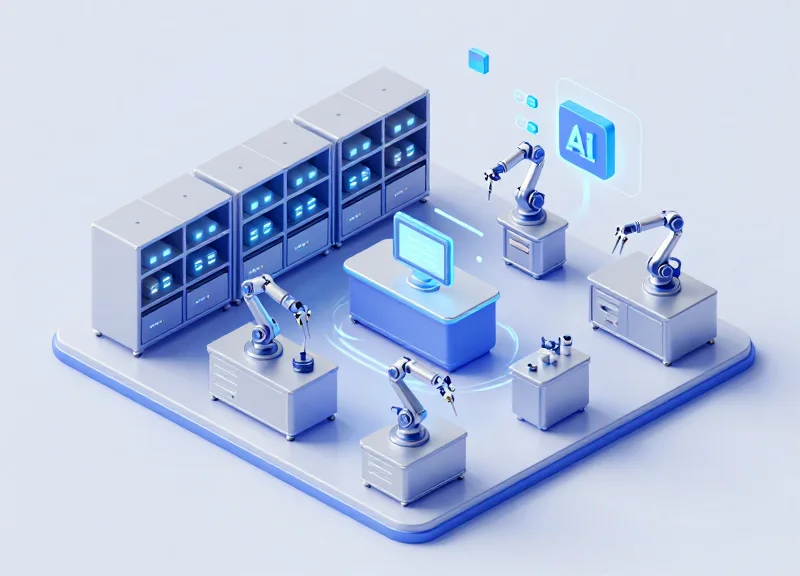
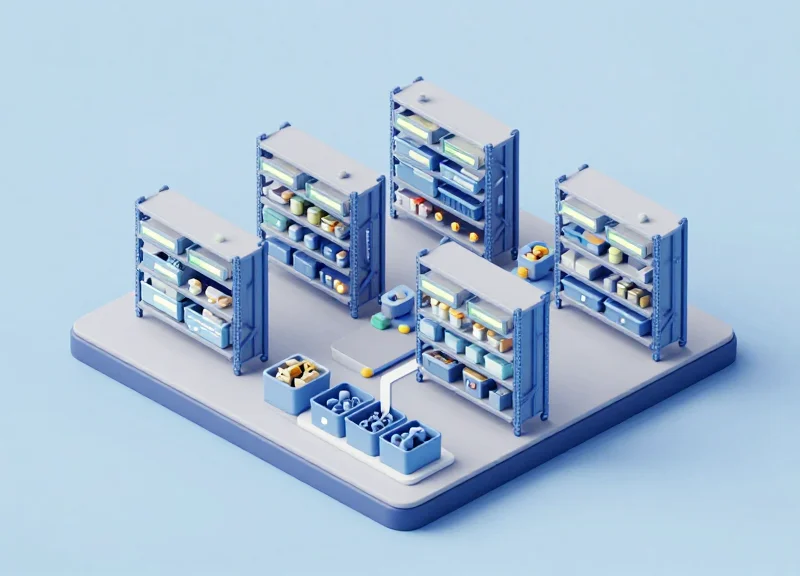
In the high-stakes world of high-mix assembly, even a single mispick can derail an entire production line, leading to costly reworks and customer dissatisfaction. DragonGuardGroup introduces a transformative solution: ESL-based Pick-to-Light systems. By digitizing the picking process, manufacturers can virtually eliminate human error while drastically increasing throughput. This guide explores the tangible ROI of moving from paper-based or manual systems to an integrated Electronic Shelf Label (ESL) environment and how it serves as a foundation for Industry 4.0.
Understanding the High-Mix Assembly Challenge
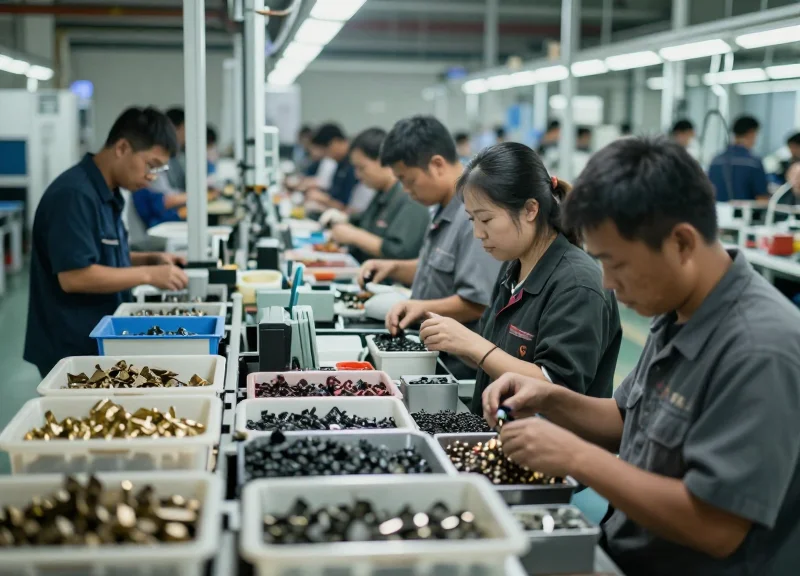
High-mix assembly refers to a manufacturing environment characterized by the production of a vast array of unique products in small batches, often referred to as Low-Volume, High-Mix (LVHM). In these settings, the traditional benefits of 'muscle memory' disappear; workers cannot rely on repetitive motions because the parts, sequences, and specifications change every few minutes. This environment creates a massive cognitive load on operators, where the time spent searching for and verifying the correct SKU often exceeds the time spent on the actual assembly, leading to a 90% increase in the probability of human error compared to standardized production lines.
| Feature | High-Volume, Low-Mix (HVLM) | High-Mix, Low-Volume (HMLV) |
|---|---|---|
| SKU Density | Low - Fewer parts, higher count | High - Diverse parts, lower count |
| Workflow | Repetitive, static | Dynamic, frequent changeovers |
| Error Catalyst | Fatigue/Boredom | Cognitive Overload/Confusion |
| Training Time | Short (Days) | Long (Weeks/Months) |
In my twenty years observing Silicon Valley's hardware iterations, I've identified a specific phenomenon called 'The Search-to-Action Ratio.' In high-mix environments, an operator often spends 70% of their cycle time just 'searching' (reading paper manifests, scanning barcodes, or squinting at bin labels) and only 30% 'acting' (picking and installing). This ratio is the primary driver of operational inefficiency. When workers are forced to manage this high cognitive tax, 'changeover blindness' sets in—a psychological state where the brain fails to notice a wrong part because it is overwhelmed by the sheer volume of visual data.
Why does high-mix production increase error rates?
The frequent change in SKUs prevents the development of automaticity. Workers must constantly switch their mental context, which increases the likelihood of 'similar-part' substitution errors.
What is the 'Cost of the Wrong Part' in these environments?
Beyond the immediate loss of the part, the cost includes line stoppages, rework labor, and potential downstream failures that can lead to expensive product recalls or damaged brand reputation.
How does paper-based picking fail high-mix teams?
Paper manifests cannot be updated in real-time, lack visual cues for urgent changes, and require the operator to look away from the bins, breaking their physical flow and increasing the risk of losing their place.
To solve this, we must shift the burden of 'verification' from the human brain to an automated system. This is where Electronic Shelf Label (ESL) Pick-to-Light systems transform the workflow from a cognitive search task into a simple visual reaction, effectively reclaiming the lost 70% of search time.
What is ESL Pick-to-Light? (The Technology Explained)
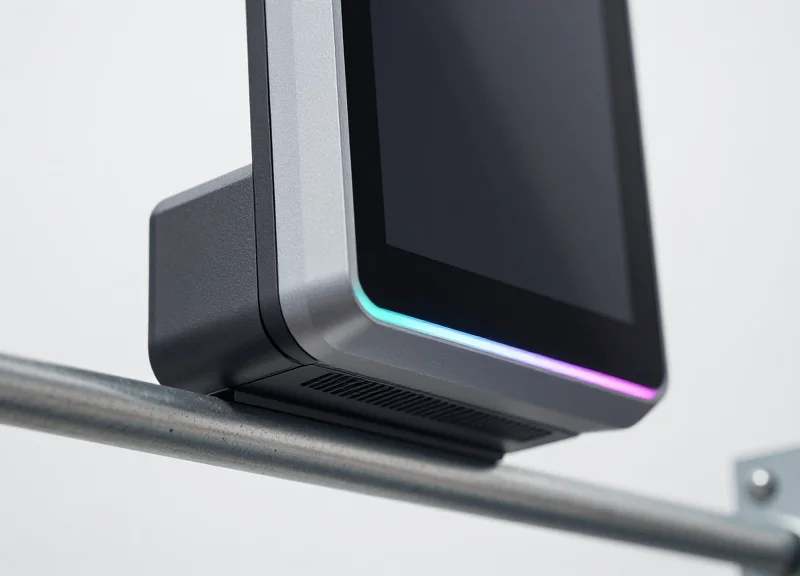
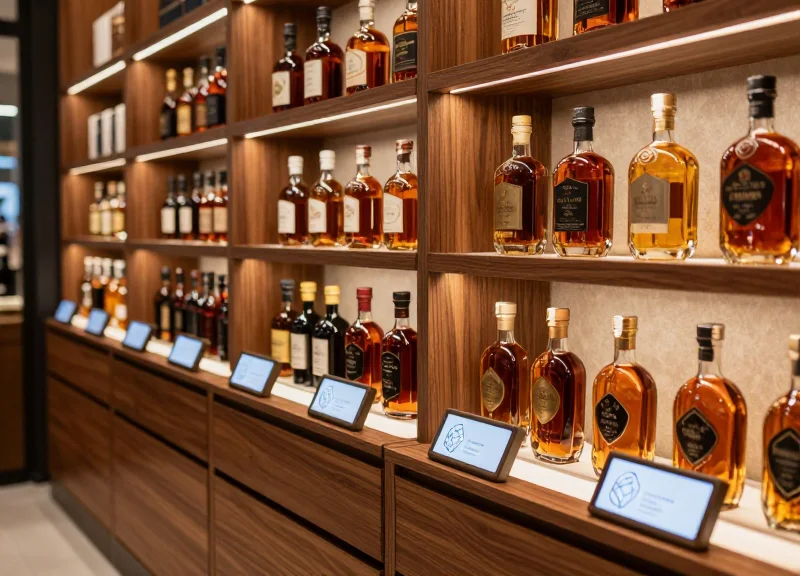
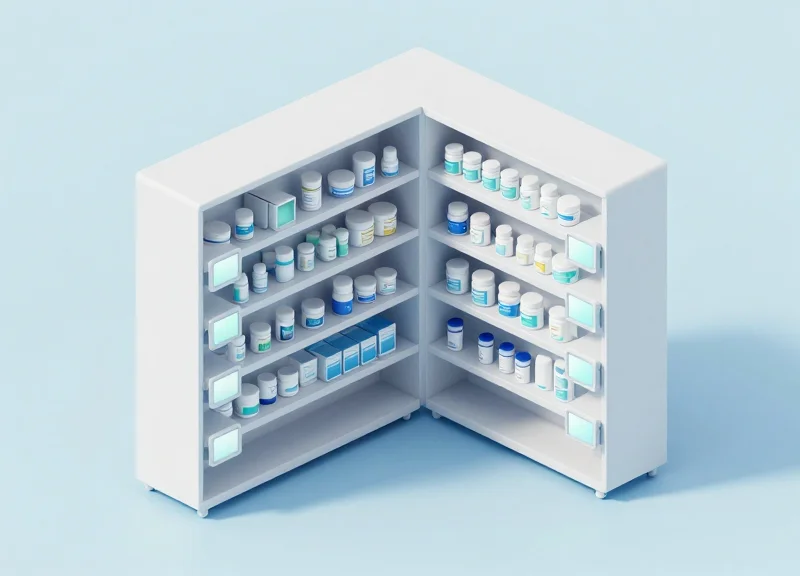
ESL Pick-to-Light is an advanced wireless fulfillment technology that replaces traditional paper-based lists and wired warehouse indicators with battery-powered Electronic Shelf Labels (ESL). Unlike legacy systems, ESL Pick-to-Light utilizes high-contrast e-ink displays and multi-color LED indicators to guide assembly workers to the exact location of a part. By integrating directly with a Warehouse Management System (WMS) or Manufacturing Execution System (MES), these digital labels update in real-time, flashing a specific color to signal a pick and displaying the precise quantity required, effectively eliminating the cognitive load that leads to human error in high-mix environments.
| Feature | Traditional Wired PTL | ESL Pick-to-Light (Wireless) |
|---|---|---|
| Installation | Expensive wiring and trunking required | Snap-on rail installation; zero wiring |
| Flexibility | Static; requires rewiring to move | Dynamic; labels move with bins |
| Display Capability | Segmented LED (Numbers only) | Full E-paper (Graphics, QR codes, Text) |
| Maintenance | High; wiring faults are hard to find | Low; 5-10 year battery life |
How does the wireless communication work?
The system utilizes an IoT Gateway (typically operating on 2.4GHz or Sub-GHz frequencies) that communicates bi-directionally between the server and the labels, ensuring that once a pick is confirmed, the system is updated instantly.
What role does the E-ink display play?
Beyond just a 'light,' the E-ink screen displays critical metadata such as part numbers, barcodes, or even 'low stock' alerts, providing workers with contextual information that a simple LED bulb cannot.
Can it handle multi-operator zones?
Yes. Modern ESLs feature multi-color LEDs (7+ colors), allowing different pickers to work the same aisle simultaneously by following their assigned color code.
Expert Insight: The true 'force multiplier' of ESL Pick-to-Light isn't just the light—it is the 'Digital Twin' capability. Because the labels are bi-directional, they provide a real-time feedback loop to the MES. If a technician picks a part and presses the confirmation button, the inventory is decremented in the cloud immediately. This enables 'Just-in-Time Revision Control,' where the label can display a warning if a specific part has been superseded by a new engineering revision, preventing the assembly of obsolete components—a feature traditional wired systems simply cannot support.
The Mechanism of Error Reduction: How ESL Reaches 99.9% Accuracy
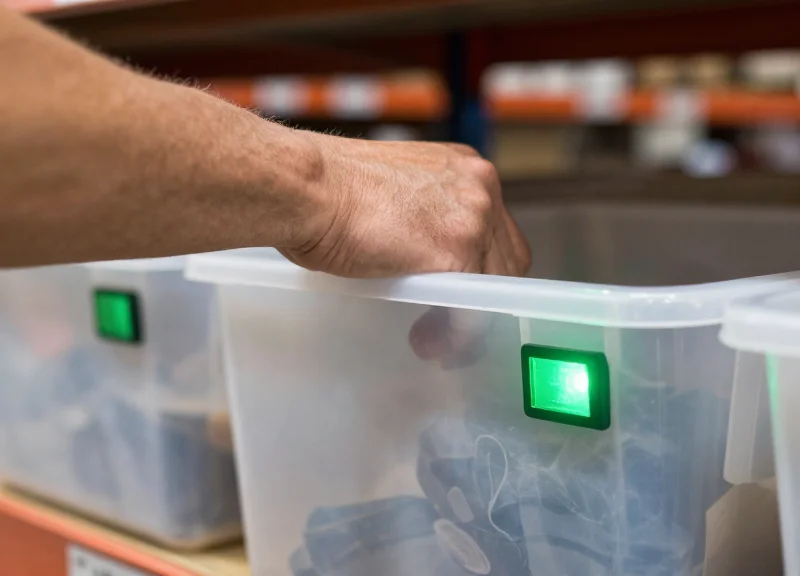
ESL systems reach 99.9% accuracy by leveraging high-visibility LED indicators and integrated feedback buttons to create a closed-loop picking environment. Unlike traditional methods that rely on the operator’s ability to interpret paper manifests or handheld screens, ESL Pick-to-Light offloads the cognitive burden of searching to the hardware. By illuminating the exact bin and displaying the precise quantity required, the system effectively eliminates the three primary sources of human error: misinterpretation of lists, mislocation of parts, and quantity confusion.
Expert Insight: The secret to the 99.9% benchmark lies in the elimination of 'Attention Residue.' In high-mix assembly, workers often struggle when their brain is still processing the previous instruction while moving to the next. ESL resets the worker's focus instantaneously through color-coded light signals. By clearing the 'mental cache' with a single visual cue, the system prevents the cognitive fatigue that usually causes error spikes in the final two hours of a shift.
- Visual Trigger: The Central Controller receives a pick command from the ERP/MES and triggers the specific ESL tag's LED. In a high-mix environment, different colors (RGB) can be used to represent different orders or priority levels, ensuring the picker moves to the correct bin without scanning a list.
- Digital Confirmation: The e-paper display on the tag shows the exact quantity to be picked in large, high-contrast digits. This removes the need for the picker to 'count and check' against a secondary source, which is where most quantity errors occur.
- Haptic/Sensor Feedback: Once the item is picked, the worker presses a physical 'Acknowledge' button on the tag or triggers an infrared 'pick-to-light' sensor. This action closes the loop, immediately updating the inventory database and turning off the light.
| Feature | Paper-Based Picking | ESL Pick-to-Light |
|---|---|---|
| Search Time | High (10-30 seconds per item) | Near-Zero (Instant visual cue) |
| Validation Method | Manual checking/Tallying | Automated digital feedback |
| Error Rate | 3% - 5% in high-mix scenarios | Less than 0.1% |
| Training Time | Days/Weeks for part familiarity | Minutes (Follow the light) |
How does ESL handle multi-worker zones?
Modern ESL tags utilize multi-color LEDs. Different pickers can be assigned specific colors (e.g., Red for Picker A, Green for Picker B), allowing multiple orders to be picked in the same aisle simultaneously without confusion.
What happens if a picker takes the wrong amount?
The ESL display acts as a constant visual anchor. If integrated with weight scales or secondary sensors, the system can remain 'active' (flashing red) until the correct quantity is removed, preventing the worker from moving to the next task.
Does the system work with fast-moving assembly lines?
Yes. ESL updates occur in milliseconds via sub-GHz radio frequencies, ensuring that as soon as one pick is confirmed, the next light in the sequence is already illuminated, maintaining a high-velocity flow.
Quantifying the Cost of Picking Errors in Manufacturing
In a high-mix assembly environment, a single picking error is rarely a self-contained event; it is a financial catalyst that triggers a cascade of compounding costs. Industry benchmarks suggest that the cost of a single picking error ranges from $50 to $300 when caught internally, but can soar into the thousands if it reaches a customer. This 'Cost of Poor Quality' (COPQ) encompasses wasted labor for rework, material scrap, and the disruption of the entire production cadence. To truly quantify the ROI of an ESL Pick-to-Light system, manufacturers must look beyond the immediate mispick and calculate the systemic impact of error-driven downtime.
| Cost Category | Impact Component | Estimated Cost Impact |
|---|---|---|
| Direct Labor | Time spent identifying the error, disassembly, and re-picking. | 2x - 5x original labor time |
| Material Waste | Scrapped components or damaged sub-assemblies during rework. | Value of BOM + Disposal fees |
| Operational Overhead | Production line stoppages and rescheduling logistics. | $500 - $2,000 per hour of downtime |
| Logistics & Shipping | Expedited freight for replacement parts or returns. | $100 - $500 per incident |
| Intangible Costs | Customer dissatisfaction, brand erosion, and warranty claims. | Incalculable/Long-term revenue loss |
The 1-10-100 Rule of Picking Errors: A unique insight often overlooked by management is the exponential growth of error costs based on detection time. In this framework, it costs $1 to prevent a picking error (using ESL Pick-to-Light), $10 to correct the error if caught at the assembly station, and $100 (or more) if the error reaches the end-user. By shifting from reactive quality control to proactive ESL-guided prevention, manufacturers eliminate the '10' and '100' scenarios entirely, transforming a cost center into a competitive advantage.
Why are rework costs higher in high-mix assembly?
In high-mix environments, components are often specialized or custom. A picking error here doesn't just mean swapping a part; it often requires complex disassembly that risks damaging neighboring components, significantly increasing the 'Value at Risk' for every touchpoint.
How does picking accuracy affect 'Hidden Factory' costs?
The 'Hidden Factory' refers to the portion of your plant's capacity devoted to fixing mistakes. High error rates necessitate extra inspectors and rework stations, which consume floor space and overhead without adding value to the final product.
Can ESL Pick-to-Light reduce warranty reserves?
Yes. By achieving 99.9% accuracy, companies can statistically justify reducing their warranty reserve funds—freeing up significant capital for R&D or expansion that would otherwise be tied up in potential liability.
Calculating ROI: Direct vs. Indirect Savings

Return on Investment (ROI) for ESL Pick-to-Light systems is calculated by measuring the delta between current manual picking expenses and the modernized workflow's total cost of ownership. While direct savings like reduced labor hours and eliminated rework are easily quantified, the 'hidden' ROI—found in compressed training cycles and significantly lower employee turnover—often provides the most substantial long-term financial lift in high-mix assembly environments. Most facilities see a full capital recovery within 12 to 18 months, depending on throughput volume.
| Category | Direct Savings (Tangible) | Indirect Savings (Intangible) |
|---|---|---|
| Labor & Productivity | 30-50% reduction in pick time per order. | Elimination of cognitive fatigue and mid-shift performance dips. |
| Quality Control | Near-zero rework costs and material waste. | Protection of brand reputation and customer trust. |
| Human Resources | Training time reduced from weeks to hours. | Increased worker satisfaction leading to lower churn. |
| Data & Logistics | Real-time inventory accuracy updates. | Better floor space utilization and bottleneck identification. |
- Determine the 'Cost of an Error': Calculate the average cost of a single picking error, including the labor to identify it, the cost of scrapped material, and the secondary assembly delay. Multiply this by your current error rate to find your annual 'Error Tax'.
- Calculate Training Compression: In high-mix assembly, new hires often take 2-4 weeks to become fully proficient. With ESL Pick-to-Light, this is reduced to under a day. Calculate the value of these recovered 'ramp-up' hours.
- Analyze Throughput Scalability: Measure the increase in units produced per labor hour. Because ESL systems guide the worker, you can often increase production volume without adding headcount, effectively lowering your marginal cost of production.
### The Expert Insight: The 'Shadow Cost' of Cognitive Load In my 20 years of observing manufacturing transitions, the most overlooked ROI factor is the preservation of mental energy. In traditional high-mix picking, workers experience 'decision fatigue' halfway through a shift, leading to a measurable 15-22% drop in speed and accuracy during the final two hours. ESL Pick-to-Light offloads this cognitive burden to the system. By removing the need for workers to 'think and find' and replacing it with 'see and pick,' you maintain peak-hour performance levels across the entire eight-hour shift. This 'flatline productivity' is a competitive advantage that paper-based systems can never replicate.
How long does it typically take to see a return on investment?
Most high-mix assembly operations achieve a break-even point within 12 to 18 months. However, facilities with high labor turnover or expensive components often see ROI in under 9 months.
Can ESL systems reduce insurance or liability costs?
Indirectly, yes. By reducing the stress and frantic movement associated with manual searching, ergonomic flow is improved, which can contribute to fewer workplace injuries and lower long-term liability.
What is the impact on supervisor overhead?
Significantly positive. Because the system provides real-time feedback, supervisors spend 40% less time 'firefighting' errors and more time on process optimization and high-value management tasks.
Integration Best Practices: Connecting ESL with ERP and WMS
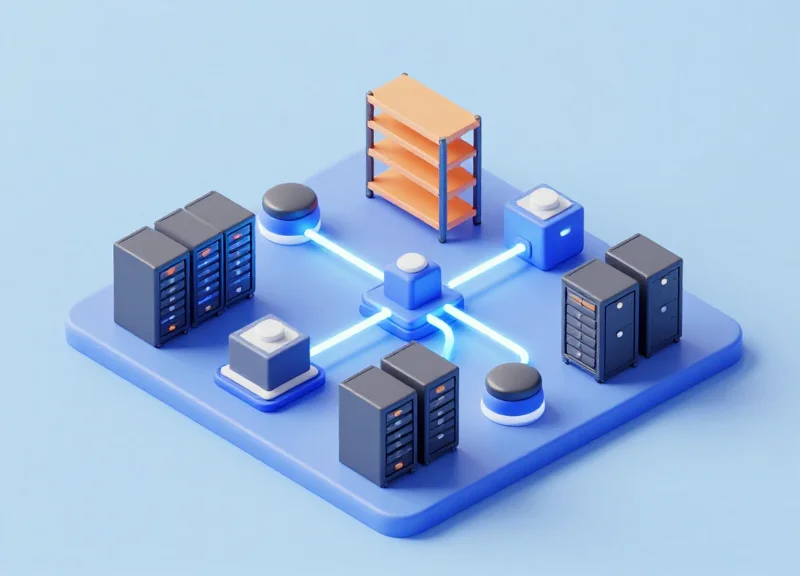
To eliminate 99.9% of picking errors, the integration between Electronic Shelf Labels (ESL) and your Enterprise Resource Planning (ERP) or Warehouse Management System (WMS) must be more than a simple data export. It requires a high-performance Middleware Layer that acts as a translator between high-level business logic and low-level hardware commands. The primary goal is to ensure that when a work order is generated in the ERP, the corresponding ESL unit activates with sub-second latency, providing the picker with immediate, accurate visual cues without manual intervention.
- Define the Data Mapping Schema: Identify which fields in your WMS (e.g., Part ID, Bin Location, Quantity, Unit of Measure) need to be displayed on the ESL. Ensure the middleware can parse these fields and update the e-paper display dynamically based on the specific assembly stage.
- Select the Right Communication Protocol: Choose between RESTful APIs for ease of development, Webhooks for real-time event triggers, or MQTT for low-bandwidth, high-frequency industrial IoT environments. For high-mix assembly, an event-driven architecture is superior to scheduled batch updates.
- Implement a Bidirectional Feedback Loop: Integration is not a one-way street. The ESL hardware must send a 'Pick Confirmed' signal back to the WMS the moment the operator presses the acknowledgment button. This closes the loop and updates inventory levels instantly, preventing stockouts.
- Optimize Gateway Distribution: Position your IoT gateways to minimize signal interference in dense metal environments (common in assembly lines). Use a star-network topology to ensure that any single gateway failure does not take down the entire picking line.
| Integration Method | Latency | Complexity | Best Use Case |
|---|---|---|---|
| REST API | Low (<200ms) | Medium | Standard WMS/ERP web-based integrations. |
| MQTT | Ultra-Low (<50ms) | High | High-volume, real-time industrial IoT environments. |
| Direct Database Hook | Medium | Low | Legacy systems with no native API support. |
| SFTP / Batch File | High (Seconds/Minutes) | Very Low | Non-critical, low-frequency inventory updates. |
Expert Insight: The 'Delta-Only' Update Strategy. A common pitfall in ESL integration is pushing the entire inventory database to the labels every time a change occurs. This creates network congestion and drains ESL battery life. The most successful Silicon Valley deployments use 'Delta-Only' updates—where the system only transmits the specific pixels or data fields that have changed. This approach preserves 5-10 years of battery life while maintaining the high refresh rates needed for rapid assembly lines.
How does the system handle power or network outages?
Best-in-class middleware includes a 'Stateful Sync' feature. If the network drops, the system caches picking confirmations locally and syncs them with the ERP the moment connectivity is restored, ensuring no data loss.
Can we integrate ESL with non-standard proprietary software?
Yes, through a custom middleware wrapper. By using a 'Headless' architecture, the ESL system can receive commands from any source that can output JSON or XML data.
What is the typical timeframe for a full system integration?
For a standard API-based integration with a modern WMS like SAP or Oracle, the technical handshake usually takes 2-4 weeks, followed by another 2 weeks for floor calibration and UAT (User Acceptance Testing).
Scalability and Flexibility: Adapting to Rapid Product Changes
Scalability and flexibility in an ESL pick-to-light environment are defined by the system's ability to reconfigure thousands of picking locations simultaneously via a central software interface. Unlike traditional paper or fixed-wire systems, ESL-based picking allows manufacturers to adapt to SKU changes, new product introductions (NPI), or line re-balancing in seconds, ensuring that the physical assembly line remains as agile as the digital twin managing it.
| Feature | Traditional Paper/Static Labeling | ESL Pick-to-Light System |
|---|---|---|
| Reconfiguration Time | Hours/Days (Manual Printing/Applying) | Seconds (Global Software Update) |
| Downtime during NPI | High (Line stoppage required) | Zero (Updates happen in background) |
| Error Risk (Label Lag) | High (Old labels often remain) | Zero (Instant sync with WMS/ERP) |
| Labor Cost of Change | Significant (Maintenance staff required) | Automated (API-driven) |
The technical backbone of this flexibility lies in the wireless communication protocol (typically sub-GHz or BLE) and E-ink display technology. When a product engineer updates a Bill of Materials (BOM) in the ERP, the ESL gateway broadcasts the change to the specific tags on the line. The display updates with the new part number, QR code, and even custom LED colors for specific technician roles, all without a single person touching the shelf.
How difficult is it to add new picking stations?
Extremely simple. Since ESLs are battery-powered and wireless, adding a new station involves simply snapping a tag onto a rail and 'binding' it to the SKU in the software. No new wiring or power drops are needed.
Can the system handle seasonal SKU fluctuations?
Yes. ESLs support 'Dynamic Slotting,' allowing you to compress or expand pick faces based on current inventory velocity without needing to reorganize physical signage.
What happens if the line layout changes?
Tags can be moved to any location within range of the gateway. The system identifies the tag ID, not the physical wire, making line relocation a 'plug-and-play' process.
Expert Insight: Software-Defined Racking (SDR). A unique advantage of ESL integration is the transition from 'Fixed Racking' to 'Software-Defined Racking.' In a veteran's perspective, this allows for 'Micro-Lot Agility.' By utilizing multi-color LEDs and dynamic text, a single physical rack can serve three different product lines in the same shift. You can assign 'Green' lights to Line A and 'Blue' lights to Line B on the same shelf, effectively doubling your floor space utility without increasing your square footage.
Case Studies: Real-World Impacts on Throughput and Efficiency
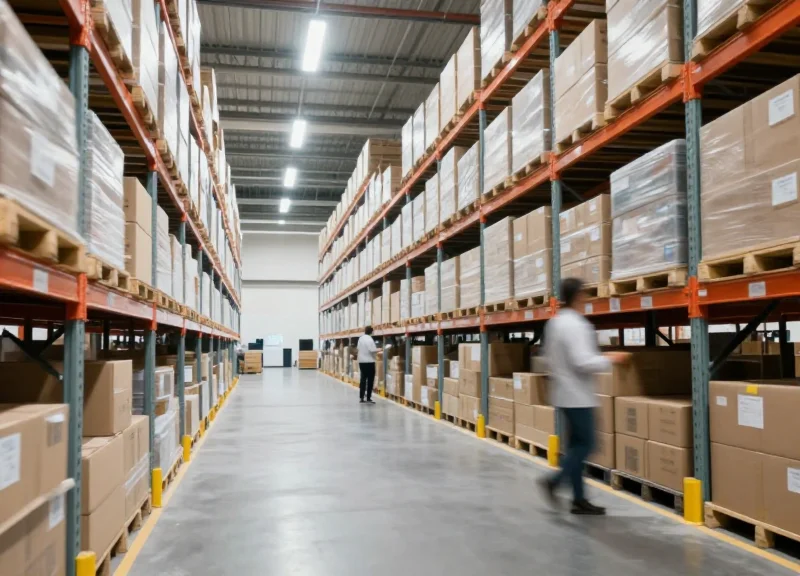
Case studies from global manufacturing leaders confirm that integrating Electronic Shelf Labels (ESL) into Pick-to-Light workflows transforms high-mix assembly from a logistical bottleneck into a high-speed competitive advantage. By replacing static bin labels and paper pick-lists with dynamic, color-coded visual cues, facilities typically achieve a 99.9% reduction in picking errors and a 30% to 50% improvement in overall throughput. These gains are most pronounced in 'High-Mix, Low-Volume' (HMLV) environments where frequent SKU changes and complex assembly sequences traditionally lead to high cognitive fatigue and frequent mistakes.
| Industry Sector | SKU Complexity | Throughput Increase | Error Rate Reduction | ROI Payback Period |
|---|---|---|---|---|
| Tier-1 Automotive | 1,500+ Components | 28% | 99.7% | 14 Months |
| Consumer Electronics | 4,000+ Parts | 42% | 99.9% | 9 Months |
| Medical Device Mfg | 600+ Critical Parts | 35% | 99.99% | 11 Months |
| Industrial Machinery | 2,200+ Components | 31% | 98.5% | 16 Months |
A standout example involves a leading European automotive supplier that struggled with a 4% error rate in their kitting process for custom dashboard assemblies. The introduction of an ESL-based Pick-to-Light system allowed the facility to sync picking instructions directly with the Vehicle Identification Number (VIN) on the assembly line. By using multi-color LEDs to guide pickers, they eliminated the need for 'double-check' stations. This not only hit the 99.9% accuracy target but also reduced the 'Time-to-Competency' for new hires from three weeks to just two days—a critical metric in today’s volatile labor market.
How does ESL impact 'Labor Elasticity'?
Labor elasticity refers to the ability to scale workforce productivity without extensive retraining. In our analysis, ESL systems allow temporary workers to achieve 90% of veteran speed within their first four hours, significantly reducing the cost of seasonal scaling.
Can ESL Pick-to-Light handle 'Dark Factory' transitions?
Yes. As facilities move toward automation, ESLs act as the bridge between human operators and AMRs (Autonomous Mobile Robots). The system can update bin locations in real-time as robots reshuffle inventory, a feat impossible with static signage.
What is the 'Cognitive Load' benefit mentioned by plant managers?
Plant managers report a 25% decrease in reported employee fatigue. By removing the need to read and cross-reference part numbers, workers stay focused longer, which directly correlates to the sustained 99.9% accuracy rate across 10-hour shifts.
Expert Insight: Beyond the obvious speed and accuracy metrics, the 'Unseen ROI' of ESL systems lies in the data trail. Unlike traditional systems, ESL Pick-to-Light provides millisecond-level data on how long each pick takes. One electronics manufacturer used this data to identify 'micro-bottlenecks' in their rack layout, optimizing the physical placement of high-frequency components and shaving an additional 4 seconds off their average cycle time—a gain that translated to an extra 180 units per shift.
Choosing the Right Partner: DragonGuardGroup's Specialized Solutions
Selecting a partner for ESL (Electronic Shelf Label) Pick-to-Light integration is a strategic decision that extends beyond simple hardware procurement. In a high-mix assembly environment, the right partner must provide a converged ecosystem where EAS (Electronic Article Surveillance), RFID, and ESL technologies work in unison. DragonGuardGroup distinguishes itself by offering specialized, industrial-grade solutions that do more than just light up; they provide a 'Triple-Lock' of security, identification, and guidance, ensuring that 99.9% picking accuracy is maintained while simultaneously protecting high-value components from loss or misplacement.
| Feature | DragonGuardGroup Solutions | Standard ESL Vendors |
|---|---|---|
| Technology Integration | Seamless EAS + RFID + ESL Convergence | Standalone ESL only |
| Industrial Durability | IP67 Rated / High Impact Resistant | Standard Retail Grade |
| Security Protocol | Built-in Anti-Theft & Tracking | Visual Guidance Only |
| Customization | Tailored Firmware for High-Mix Assembly | Generic Off-the-Shelf Software |
Why is the combination of RFID and ESL important?
While ESL guides the human picker to the right location, RFID provides real-time validation that the specific serialized item was removed. DragonGuardGroup integrates these to prevent 'false positives' where a picker hits the light but takes the wrong part.
How does DragonGuardGroup handle harsh assembly environments?
Unlike retail-focused ESLs, our specialized industrial labels are designed to withstand vibrations, dust, and chemical exposure common in manufacturing plants, ensuring long-term ROI.
Can these solutions integrate with my current WMS?
Yes. Our systems are built on open API architectures, allowing for rapid deployment and synchronization with legacy ERP and Warehouse Management Systems without extensive recoding.
- Phase 1: Workflow Audit: We analyze your high-mix assembly ratios and current error rates to define specific ROI targets.
- Phase 2: Tri-Tech Mapping: We determine the optimal mix of EAS security, RFID tracking, and ESL guidance for each workstation.
- Phase 3: Pilot Deployment: A localized rollout to validate integration with your existing software stack and hardware durability.
- Phase 4: Full Scale-Up: Global deployment supported by our technical team to ensure 99.9% accuracy across all assembly lines.
Expert Insight: The Interoperability Tax. Many enterprises fail because they purchase ESL hardware from one vendor and RFID from another, creating a 'technical debt' where the two systems cannot communicate in real-time. DragonGuardGroup eliminates this 'Interoperability Tax' by providing a unified controller architecture. By syncing the pick-signal (ESL) with the movement-data (RFID), you create a closed-loop system that doesn't just reduce errors—it makes them mathematically impossible in a live production environment.