As we approach 2026, specialized retail is undergoing a seismic shift. The traditional paper tag, once a cornerstone of commerce, is rapidly becoming a liability in a hyper-competitive market. In an era defined by dynamic pricing, omnichannel complexity, and rising labor costs, retailers require the agility that only performance-driven digital displays can provide. This article explores why the transition to Electronic Shelf Labels (ESL) is no longer a luxury, but a strategic necessity for those aiming to survive and thrive in the next evolution of retail.
The Retail Paradigm Shift: Heading Toward 2026
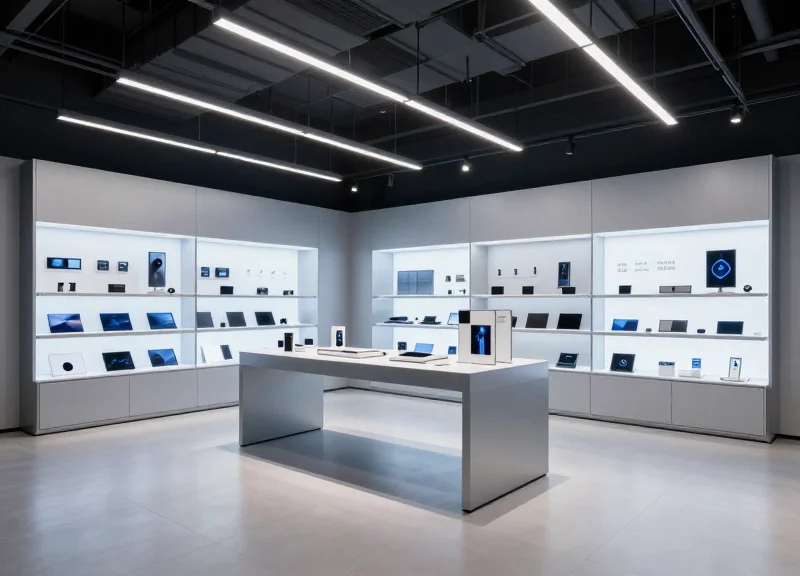
The 2026 retail paradigm shift is defined by the total convergence of digital agility and physical sensory experiences, moving away from static merchandising toward dynamic, data-responsive environments. In this new landscape, 'Specialized Retail' no longer relies on proximity, but on 'Performance-Driven' engagement where pricing, inventory, and product narratives are synchronized across all channels in real-time. This shift makes traditional paper tags a structural liability, as they cannot support the hyper-personalization and millisecond-accurate data updates required by the modern consumer.
As we approach 2026, the 'Velocity Gap'—the time elapsed between a market change and the physical store's response—has become the primary metric of retail health. Specialized retailers, such as those in high-end electronics, luxury goods, or bespoke health products, are finding that the manual labor involved in updating paper tags is not just a cost center, but a barrier to entry for AI-driven pricing strategies. Today's shoppers expect the same fluidity in-store that they experience on mobile apps; if the price on the shelf doesn't match the live website data, the trust equity built by the brand evaporates instantly.
| Feature | Legacy Retail (2016-2022) | 2026 Performance-Driven Retail |
|---|---|---|
| Pricing Strategy | Fixed/Weekly updates | Dynamic/Real-time AI adjustments |
| Consumer Interaction | Passive/Observational | Interactive/Hyper-personalized |
| Data Synchronization | Manual/Batch processing | Instantaneous Cloud-to-Shelf |
| Merchandising Focus | Product availability | Customer experience & transparency |
What is the primary driver of the 2026 retail shift?
The demand for 'Omnichannel Truth.' Customers now treat the store as a physical extension of their digital research, requiring that every piece of information on a display be as current as a search engine result.
Why can't paper tags compete in a hyper-personalized market?
Paper tags are static. Digital displays can integrate with store apps to show personalized discounts or loyalty-tier pricing directly to the consumer at the point of decision, a feat impossible for printed media.
What role does data synchronization play in specialized retail?
It eliminates the 'Trust Gap.' In specialized sectors where technical specs and fluctuating market values are critical, real-time synchronization ensures the retailer never loses margin or customer confidence due to outdated information.
Expert Insight: The Cognitive Friction Theory. In my two decades observing Silicon Valley's impact on commerce, I have identified a growing phenomenon called 'Cognitive Friction' in retail. By 2026, Gen Alpha and Gen Z shoppers will view static paper tags not just as old-fashioned, but as 'unverified.' They subconsciously associate digital displays with 'live' data and paper with 'stale' data. If your high-performance specialized store still uses paper, you are creating a psychological barrier that suggests your products might be as outdated as your pricing method.
The Hidden Costs of Static Paper Labels
The hidden costs of static paper labels represent a 'Lag Tax' on specialized retail—a cumulative financial burden resulting from the disconnect between real-time market data and physical shelf-edge pricing. Beyond the obvious expenses of paper, ink, and printers, the true cost lies in the massive allocation of manual labor for updates, the legal liabilities of mispricing, and the lost revenue from being unable to respond instantly to competitor shifts or inventory fluctuations.
| Cost Dimension | Manual Paper System | Performance-Driven Digital |
|---|---|---|
| Labor Allocation | High: 20-40 hours/week per store | Negligible: Updates in seconds |
| Error Frequency | 3% - 7% Average Mispricing Rate | Zero: Centralized Sync |
| Material Overhead | Consumable: Continuous replacement | Asset: Capex with 5-7 year life |
| Agility | Delayed: Hours or days to sync | Instant: Real-time response |
In the specialized retail sector—where technical specifications and premium branding are paramount—human error is particularly costly. A misplaced decimal or an outdated promotion on a high-ticket item doesn't just erode margins; it destroys consumer trust. By 2026, the 'walking price check'—staff spending hours walking aisles to verify tags—will be viewed as an archaic operational failure rather than a standard task.
How much does manual label maintenance actually cost?
Calculations for a mid-sized specialized retailer often reveal that labor costs for printing, sorting, and manual replacement exceed $25,000 per store annually, a cost that provides zero ROI compared to digital automation.
What is the 'compliance penalty' of paper tags?
Regulatory bodies are increasingly stringent regarding shelf-to-register accuracy. Paper tags often lag behind the Point-of-Sale (POS) system, leading to heavy fines and consumer protection lawsuits.
How does paper labeling impact staff retention?
Repetitive, low-value tasks like tag switching are leading drivers of employee burnout. Transitioning to digital allows staff to focus on high-touch customer service, which is essential for specialized retail survival.
Expert Insight: The Opportunity Cost of Data Latency. The most overlooked cost is not what you spend, but what you lose. In a specialized market, prices fluctuate based on raw material costs and global demand. A paper-based store operates on a 'batch processing' mindset, often trailing the market by 48-72 hours. This latency prevents retailers from implementing dynamic surge pricing or happy-hour discounts that can clear aging inventory, effectively leaving 2-5% of potential gross margin on the table every single quarter.
Performance-Driven Digital Displays: Beyond Just Price
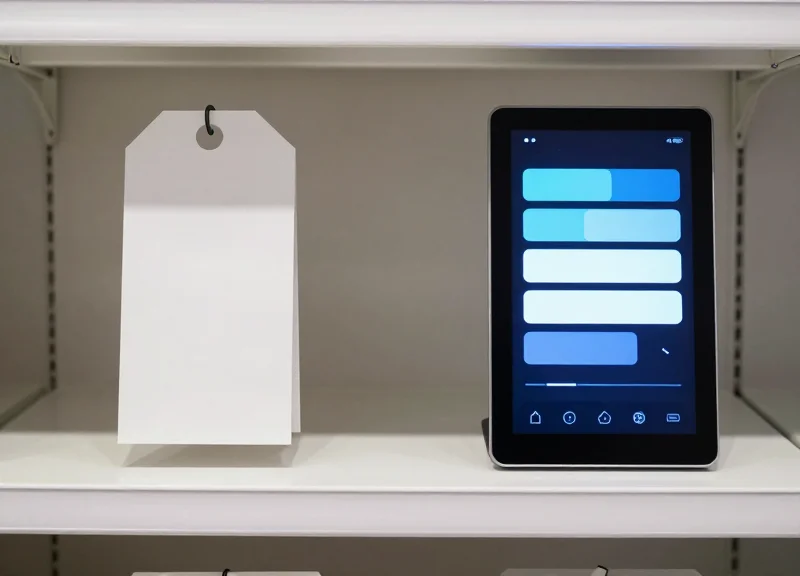
Performance-driven digital displays represent the evolution of the retail shelf-edge from a static cost center into a dynamic IoT ecosystem. Unlike basic electronic shelf labels (ESLs) that merely replicate price tags digitally, these advanced displays serve as intelligent endpoints that synchronize real-time inventory data, automate promotional workflows, and bridge the gap between physical products and digital information through low-latency connectivity.
By 2026, specialized retail will rely on these devices to solve the 'visibility gap'—the information disconnect that occurs when stock levels on the floor do not match the digital warehouse record. Performance displays act as sensors, reporting their own status and the status of the product they represent back to a centralized management system, enabling a level of operational agility that paper-based systems cannot replicate.
| Feature | Traditional Paper Labels | Basic ESL (2020 Standard) | Performance Displays (2026 Tech) |
|---|---|---|---|
| Update Velocity | Days/Weeks | Minutes | Sub-Second Real-Time |
| Inventory Integration | None (Manual check) | Visual stock count only | Bidirectional IoT telemetry |
| Customer Interaction | Passive | Static QR Codes | NFC & Dynamic AR Triggers |
| Promotional Logic | Fixed | Scheduled | Algorithmic & Contextual |
- Automated Stock Threshold Alerts: Displays can change color or flash specifically for staff when inventory falls below a certain threshold, enabling 'just-in-time' shelf replenishment without manual scanning.
- Dynamic Promotional Cycles: Retailers can execute 'Happy Hour' flash sales or weather-dependent pricing across thousands of SKUs instantly, maximizing margin during peak demand periods.
- Product Lifecycle Management: Displays automatically transition from 'New Arrival' to 'Clearance' status based on stock age, ensuring floor space is always optimized for high-velocity items.
- Rich Technical Specifications: In specialized retail like electronics or luxury goods, displays provide interactive deep-dives into specs via NFC, reducing the 'information burden' on floor staff.
Expert Insight: The 'Margin Leakage' Prevention. In my twenty years in Silicon Valley retail tech, the biggest breakthrough isn't the display itself, but 'Shelf-Edge Velocity Analytics.' By 2026, performance displays will include embedded micro-sensors that detect customer dwell time in front of specific SKUs. If a product has high dwell time but zero conversion, the display can autonomously trigger a temporary 5% discount or update the 'Comparison Guide' on the screen to address common customer hesitations in real-time.
Real-Time Pricing Agility: The Competitive Edge

Real-time pricing agility is the ability of a retailer to execute store-wide price adjustments across thousands of SKUs in seconds, rather than days. By leveraging performance-driven digital displays, retailers can eliminate the 'execution gap' that currently exists between digital strategy and physical shelf reality. In the specialized retail environment of 2026, this agility is the primary mechanism for protecting profit margins against inflation, responding to hyper-local competitor promotions, and maintaining absolute price parity with e-commerce platforms.
In a high-velocity market, the friction of manual paper updates acts as a tax on your revenue. If your online store lowers a price to match a flash sale but your physical shelf remains at the higher price for four hours while staff print and swap tags, you face two risks: losing the sale to a showrooming customer or damaging brand trust when the price at the register doesn't match the tag. Digital displays solve this by turning the shelf edge into a live endpoint of your digital ecosystem.
| Metric | Legacy Paper Tags | Performance Digital Displays |
|---|---|---|
| Update Execution Time | 2-4 Hours per Aisle | Sub-15 Seconds (Global) |
| Price Parity Accuracy | ~92% (Human Error Risk) | 100% (System Synchronized) |
| Competitor Response | Reactive (Next-Day) | Proactive (Instantaneous) |
| Margin Optimization | Static / Fixed | Dynamic / Algorithmic |
Unique Industry Insight: The 'Velocity of Margin' Strategy. While most retailers view digital tags as a labor-saving tool, the true 2026 advantage lies in 'Velocity of Margin.' This involves using IoT-enabled displays to implement Scarcity-Driven Price Optimization. For example, if your backend system detects that a specialized component is low in stock across the region but high in demand locally, the system can automatically adjust the price upward by 5% to capture additional margin from immediate-need buyers. This algorithmic responsiveness turns the shelf edge into a profit-generating asset rather than a cost center.
- Identify Trigger Events: Define the external data points (competitor price drops, weather shifts, or inventory levels) that should mandate a price change.
- Automate the API Handshake: Ensure your Price Optimization Engine (POE) communicates directly with the Digital Display Gateway to bypass manual approvals for minor fluctuations.
- Monitor Conversion Delta: Use the real-time data from the displays to track how price changes impact foot traffic and basket size within the hour.
Does real-time pricing confuse customers?
On the contrary, it builds trust. Customers in 2026 expect omnichannel consistency; seeing the same price on their mobile app and the physical shelf removes the 'price anxiety' associated with manual tagging errors.
Can these displays handle promotional complexity?
Yes. Modern performance displays can toggle between 'Standard Price,' 'Loyalty Member Price,' and 'Bundle Savings' layouts instantly, allowing for sophisticated marketing that paper cannot support.
What is the typical latency for a store-wide update?
Using sub-GigaHertz wireless protocols, a specialized store can update over 10,000 tags in less than 60 seconds with 99.9% transmission reliability.
Synergy with EAS and RFID: A Unified Ecosystem

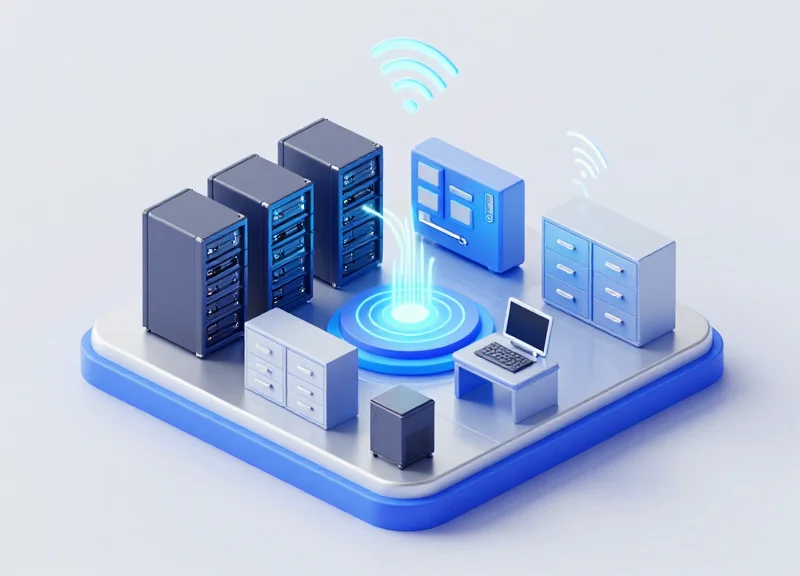
The synergy between Electronic Shelf Labels (ESL), Electronic Article Surveillance (EAS), and Radio Frequency Identification (RFID) represents the transition from siloed hardware to a unified IoT ecosystem. In this environment, ESLs act as the visual interface of a 'Digital Twin' of the store, where RFID provides granular inventory visibility and EAS ensures asset protection. This integration allows specialized retailers to achieve 99% inventory accuracy while simultaneously reducing shrink and labor costs by consolidating three traditionally separate infrastructures into a single, data-driven network.
| Feature | Siloed Legacy Systems | Unified 2026 Ecosystem |
|---|---|---|
| Data Communication | Proprietary, disconnected signals. | Multiprotocol gateways (BLE, Zigbee, RFID). |
| Inventory Updates | Manual cycle counts (weekly/monthly). | Real-time RFID-to-ESL synchronization. |
| Security Action | Simple alarm at the door. | Context-aware alerts (Item X moved from Shelf Y). |
| Labor Requirement | High: Staff manages 3 different systems. | Low: Single dashboard for all floor operations. |
Expert Insight: The End of 'Phantom Inventory'. A unique advantage of this synergy is the elimination of 'phantom inventory'—items showing as 'in-stock' in the system but missing from the shelf. In a unified ecosystem, if an RFID-tagged item passes an EAS gate without a transaction, the ESL can automatically trigger a 'Restock Needed' alert or update the digital display to reflect the actual remaining floor stock, preventing lost sales from frustrated customers.
Does RFID interference affect ESL performance?
Modern 2026-standard gateways utilize frequency hopping and cognitive radio techniques to ensure that RFID (UHF) and ESL (typically 2.4GHz or Sub-GHz) operate on non-overlapping channels, eliminating signal collision.
Can EAS sensors be integrated directly into ESL tags?
Yes, next-generation ESL hardware often includes built-in EAS coils or semi-active RFID chips, allowing the label itself to serve as the security trigger and the inventory tracker.
How does this synergy improve the customer experience?
By ensuring the price on the tag always matches the inventory level and the security status, retailers can implement 'Scan & Go' features with higher confidence and lower friction.
Ultimately, the 2026 retail landscape views the shelf edge not as a static border, but as a dynamic data point. When ESLs are powered by the same backend as RFID and EAS, the retail floor becomes a responsive software environment. This unified approach moves beyond simple price automation into the realm of prescriptive retail, where the system identifies a problem (e.g., high-value item removed but not sold) and suggests a solution (e.g., immediate staff intervention) in real-time.
Enhancing Customer Experience Through Interactive Features

In the specialized retail landscape of 2026, the digital display is no longer a passive signpost but a high-performance interactive portal. By integrating technologies like QR codes and Near Field Communication (NFC), performance-driven displays bridge the gap between physical browsing and digital deep-dives. This connectivity allows retailers to provide 'zero-friction micro-interactions' that empower customers with real-time product reviews, comprehensive ingredient lists, and hyper-localized loyalty incentives directly at the point of decision, a feat impossible for static paper alternatives.
| Feature | Traditional Paper Tags | Performance Digital Displays |
|---|---|---|
| Product Transparency | Limited to 2-3 lines of text | Infinite depth via QR/NFC links |
| Social Proof | None (Static) | Real-time star ratings and top reviews |
| Loyalty Integration | Requires physical card/app search | Instant 'Tap-to-Join' or 'Tap-to-Apply' NFC |
| Sustainability Info | Generic icons | Dynamic supply chain and carbon footprint data |
- Instant Reviews and Social Validation: Displays can pull live data from e-commerce platforms, showing shoppers how many items were sold this week or displaying the latest 5-star review, significantly reducing purchase hesitation.
- Comprehensive Ingredient and Origin Mapping: For specialty food or beauty retail, a simple tap via NFC can reveal the entire journey of a product from farm to shelf, including allergy warnings and sustainability certifications.
- Contextual Loyalty Rewards: Retailers can push 'limited-time-remaining' discounts to customers who interact with a tag, creating a sense of urgency that drives immediate conversion.
The Expert Perspective: The 'Dynamic Trust Score'. A unique advantage for 2026 retailers is the implementation of 'Dynamic Trust Scores' on digital tags. Unlike a static sticker, these displays can show a weighted score based on real-time inventory turnover and recent return rates. High-performance retailers use this to prove product quality; if a specialized tool has zero returns over 100 sales this month, the tag proudly displays that data point, building an level of algorithmic trust that paper can never replicate.
How do QR codes on tags improve store operations?
Beyond customer use, employees can scan these codes to access internal stock data, planogram instructions, or reorder schedules, merging CX and OX (Operational Experience).
Do customers actually use NFC at the shelf?
By 2026, 'tap-to-info' behavior will be second nature due to the ubiquity of mobile payments. NFC offers a more secure and faster handoff than QR codes, making it the preferred choice for premium retail segments.
Can these displays help with dietary restrictions?
Yes. Interactive displays can be programmed to flash or highlight specific products when a customer’s digital profile (linked via NFC) matches specific dietary needs like 'Gluten-Free' or 'Vegan'.
Sustainability and the Green Retail Mandate
The Green Retail Mandate is the strategic alignment of store operations with global ESG (Environmental, Social, and Governance) standards, where performance-driven digital displays serve as the primary vehicle for eliminating the high carbon cost of paper production, chemical printing, and logistical waste. By 2026, specialized retailers will be evaluated by consumers and regulators alike on their 'Zero-Waste Store' architectures. This shift transforms Electronic Shelf Labels (ESLs) from simple pricing tools into the backbone of a sustainable retail ecosystem, replacing thousands of tons of annual paper waste with long-life, ultra-low-power technology.
| Environmental Factor | Traditional Paper Tags | Performance Digital Displays |
|---|---|---|
| Material Lifecycle | Single-use (Print, Use, Toss) | 10+ Year Multi-use Lifecycle |
| Carbon Footprint | High (Continuous Manufacturing/Transport) | Low (One-time Install, Minimal Energy) |
| Chemical Impact | Bleaches, Inks, and Adhesives | RoHS Compliant Recyclable Components |
| Waste Stream | Landfill-heavy (Non-recyclable thermal paper) | Circular Economy (Refurbishment/E-cycling) |
A critical, often overlooked component of retail sustainability is the 'Logistical Carbon' associated with manual price updates. Every paper tag update represents a chain of carbon-intensive events: harvesting timber, chemical processing at mills, long-haul transportation to warehouses, and final-mile delivery to the storefront. Performance-driven digital displays decouple store operations from this supply chain. Once installed, a digital display can update 10,000 times over a decade with zero additional physical inputs, effectively 'freezing' the operational carbon footprint of the store's pricing infrastructure.
Expert Insight: The Shift to Ambient Energy Harvesting. A unique development for 2026 is the integration of photovoltaic cells within the display bezel. Leading specialized retailers are no longer just looking for 'low power'—they are moving toward 'zero-power' displays that harvest energy from existing store lighting. This eliminates the need for battery replacements and ensures that the device's Total Cost of Carbon (TCO2) remains negative when compared to the equivalent mass of paper and ink used over the same period.
Does replacing paper with electronics actually reduce E-waste?
Yes. While electronics require minerals, a single digital display replaces approximately 50 to 100 paper tags per year. Over its 10-year lifespan, one device prevents the waste of nearly 1,000 tags, many of which contain thermal chemicals (BPA/BPS) that prevent standard paper recycling.
How do digital displays help with food waste in specialized grocery?
Digital displays enable 'Dynamic Sustainability' by automatically lowering prices on perishables as they approach their expiration date. This targeted discounting significantly reduces the volume of organic waste sent to landfills.
Will carbon reporting be mandatory for retailers by 2026?
Current trajectories in the EU and North America suggest that Scope 3 emissions reporting will become standard. Eliminating paper-based supply chains in-store is one of the most visible and measurable ways for retailers to demonstrate compliance.
Calculating ROI: The Long-Term Financial Impact
Calculating the Return on Investment (ROI) for performance-driven digital displays in 2026 requires moving beyond simple paper-cost comparisons to a Total Cost of Ownership (TCO) model. While the initial capital expenditure for Electronic Shelf Labels (ESL) is higher than traditional paper, the typical specialized retail environment sees a full payback within 14 to 22 months. This is driven by three primary financial levers: the total elimination of manual labor hours dedicated to tag updates, a 3-5% lift in gross margins through real-time dynamic pricing, and a significant reduction in legal liabilities and lost revenue caused by pricing discrepancies between the shelf and the Point of Sale (POS).
| Cost/Benefit Factor | Traditional Paper Tags (5-Year) | ESL Digital Displays (5-Year) |
|---|---|---|
| Initial Hardware/Installation | $1,500 (Printers/Supplies) | $45,000 - $80,000 (Varies by SKU count) |
| Annual Labor Cost | $12,000 - $18,000 (Weekly updates) | <$500 (System monitoring) |
| Material Waste | $2,500 (Paper, Ink, Adhesives) | $0 (Reusable hardware) |
| Margin Capture (Dynamic) | 0% (Static pricing) | +3% to +7% Revenue Lift |
| Audit/Compliance Fines | High Risk (Human error) | Near Zero (Automated sync) |
A unique financial metric often overlooked by CFOs is 'Pricing Lag Opportunity Cost.' In a high-inflation or high-volatility market, paper-based retailers often wait 3-7 days to implement price increases across thousands of SKUs. By contrast, digital displays allow for 'Margin Preservation'—the ability to pass through wholesale cost increases or capitalize on peak-demand windows instantly. In specialized retail, where high-value items often have fluctuating supplier costs, being 'lag-free' can add up to 2% to the bottom line annually, effectively paying for the infrastructure upgrades on its own.
- Baseline Labor Assessment: Audit the total staff hours spent printing, sorting, and physically placing tags. Multiply by the fully burdened labor rate (including benefits) to find your annual 'hidden' cost.
- Margin Opportunity Mapping: Identify high-velocity items where intraday price adjustments (e.g., happy hour specials or surge pricing) could drive incremental revenue.
- Calculate Shrinkage and Compliance Costs: Factor in the cost of 'price-matching' at the register when a tag is wrong, and the potential cost of regulatory fines for inaccurate shelf pricing.
- Projected TCO and Payback Period: Compare the depreciated cost of the ESL hardware and software against the cumulative savings in labor and materials over a 60-month period.
Does the ROI account for battery replacements?
Modern 2026-era ESLs use ultra-low-power e-ink and high-density batteries that last 7-10 years. Because the battery life exceeds the standard 5-year hardware refresh cycle, battery replacement is rarely a factor in initial ROI calculations.
Is there a recurring software cost?
Most enterprise ESL solutions involve a SaaS fee for the cloud-based management platform. This is usually offset by the reduction in IT overhead previously needed to manage local label-printing servers.
How does this affect store conversion rates?
Digital displays often see a 10-15% increase in conversion for promoted items because they can display real-time stock levels and social proof (reviews), which paper tags cannot.
Future-Proofing Your Store with DragonGuardGroup
Future-proofing a retail environment for 2026 requires moving beyond isolated hardware purchases to adopt a unified ecosystem where Electronic Shelf Labels (ESL), Electronic Article Surveillance (EAS), and RFID technologies are digitally synchronized. DragonGuardGroup serves as a specialized strategic partner, offering a cohesive technological backbone that eliminates data silos, reduces radio frequency (RF) interference, and ensures that hardware deployed today remains compatible with the AI-driven retail software of tomorrow.
| Feature Category | Fragmented Vendor Approach | DragonGuardGroup Unified Approach |
|---|---|---|
| System Integration | Siloed platforms; manual data syncing | Unified API for ESL, EAS, and RFID |
| Signal Interference | High risk of RF clashes (Wi-Fi/Zigbee) | Harmonized Spectrum Management |
| Technical Support | Multiple points of contact; finger-pointing | Single specialized engineering team |
| Scalability | Expensive hardware replacements | Modular, firmware-upgradeable components |
In my 20 years of observing Silicon Valley tech cycles, the most common failure in retail digital transformation is the 'Hardware Patchwork' trap. Retailers often buy the cheapest ESLs from one vendor and EAS tags from another, only to find that their 2.4GHz network is saturated and systems are crashing. DragonGuardGroup’s unique advantage is 'Harmonized Spectrum Management.' By engineering ESL and security systems to communicate on optimized frequencies with intelligent collision avoidance, we ensure that your digital displays and inventory trackers never compete for bandwidth, maintaining 99.9% uptime even in high-density urban environments.
Why is a specialized partner better than a general hardware provider?
General providers sell products, whereas specialized partners like DragonGuardGroup provide an infrastructure roadmap. We ensure that your ESL investment integrates with your EAS security gates and RFID inventory systems, preventing technical obsolescence as retail standards evolve toward 2030.
How does DragonGuardGroup support long-term scalability?
Our hardware is designed with 'Forward-Compatibility' in mind. Our digital displays and RFID sensors feature modular firmware that can be updated over-the-air (OTA) to support new data protocols or AI-driven analytics without needing to replace physical units.
What kind of technical support can I expect?
Unlike generic IT support, our team specializes in the physics of retail environments. We provide 24/7 global support that covers everything from RF environment mapping to enterprise-level API integration with your existing ERP or POS systems.
Beyond the hardware, the true value of DragonGuardGroup lies in our deep understanding of the specialized retail lifecycle. We don't just ship tags; we provide the architectural blueprints for a high-performance store. This includes consulting on optimal signal placement, battery life maximization, and the implementation of cross-functional features where an ESL can automatically trigger a security alert if it detects an unauthorized removal of high-value merchandise.