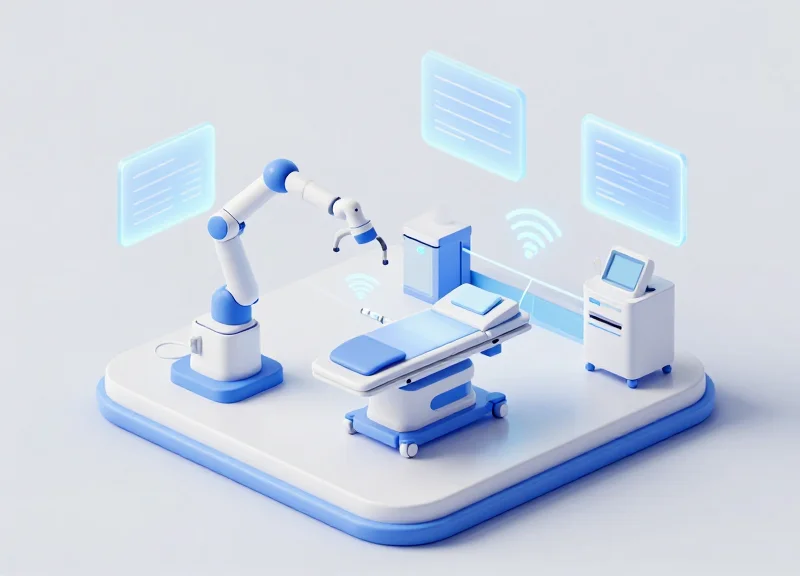
The landscape of medical equipment exhibition is undergoing a seismic shift as we head toward 2026. For years, healthcare showrooms relied on manual paper labels that were often outdated, inaccurate, and labor-intensive. However, the demand for high-stakes medical data precision has reached a breaking point. Today's smart healthcare showrooms are ditching paper in favor of Electronic Shelf Labels (ESL) and RFID technology to achieve a staggering 99.9% data accuracy. This transition isn't just about aesthetics; it's about providing real-time, verified information that builds trust with clinical buyers and streamlines inventory management in a hyper-digital era.
The Death of Paper: Why Manual Labeling is a Liability in 2026

By 2026, the reliance on manual paper labeling in smart healthcare showrooms has shifted from a traditional practice to a critical operational liability. As medical equipment becomes increasingly software-defined and interconnected, the physical 'data-void' created by paper labels leads to a 10-15% discrepancy rate in equipment specifications and pricing. This liability stems from the inability of static media to reflect the 99.9% accurate, real-time data required for high-stakes medical procurement and clinical training environments, where even a minor lag in information can lead to catastrophic hardware-software mismatching.
| Feature/Metric | Manual Paper Labels | Real-Time Digital Sync (2026 Standard) |
|---|---|---|
| Data Accuracy | 82% - 88% (Human dependent) | 99.9% (System-of-record integrity) |
| Update Latency | 24 - 72 Hours | < 5 Seconds |
| Labor Requirement | High (Manual printing/tagging) | Zero (Automated API triggers) |
| Audit Compliance | Manual spot-checks only | Automated digital breadcrumbs |
- The Error-Prone Nature of Human Intervention: Manual updates rely on administrative staff who are prone to fatigue and oversight. In a fast-paced medical showroom, a single missed digit in a firmware version or a misplaced decimal point in a price tag can lead to million-dollar procurement errors.
- The 'Data Lag' Gap: In 2026, medical equipment specs change via cloud updates faster than a printer can warm up. Paper creates a 'stale data' environment where the physical asset no longer matches its digital twin, confusing stakeholders and slowing down the sales cycle.
- The Sustainability and Brand Perception Cost: Paper waste is increasingly viewed as a failure in ESG (Environmental, Social, and Governance) compliance. Modern healthcare institutions expect showrooms to reflect the same cutting-edge, paperless technology used in their own surgical suites.
Expert Insight: The Concept of 'Digital-Physical Drift' — In my two decades in Silicon Valley, I've seen many industries fail due to what I call Digital-Physical Drift. This occurs when the physical information in a space (the paper label) drifts away from the source of truth (the database). In 2026, this drift is no longer an inconvenience; it is a breach of the 'Trust Chain.' If a showroom cannot maintain 99.9% accuracy on its own floor, buyers will assume the equipment itself lacks the same precision.
Why is paper considered a liability in 2026?
Paper is static and cannot sync with the frequent software and firmware updates inherent in modern medical devices, leading to misinformation and potential legal risks.
What is the cost of sticking with manual labeling?
Beyond the literal cost of paper and ink, the true cost is found in the hundreds of man-hours spent auditing labels and the lost revenue from sales friction caused by inaccurate data.
Does digital sync improve regulatory compliance?
Yes. Real-time data sync provides an immutable log of when information was updated, ensuring that showrooms meet the strict transparency standards required by the FDA and other global health authorities.
The 99.9% Accuracy Benchmark: Defining Success in Smart Showrooms
The 99.9% accuracy benchmark represents the 'Three Nines' of data integrity, where digital labels and centralized management systems must reflect the precise operating state of medical equipment within milliseconds of a change. In 2026, success in a smart healthcare showroom is no longer measured by the aesthetic of the display, but by the reliability of its telemetry; if a ventilator's flow rate or a monitor's power consumption changes, the digital interface must mirror that reality with near-zero discrepancy to maintain clinical and commercial trust.
| Metric | Legacy Paper Systems | Smart Sync Standard (99.9%) |
|---|---|---|
| Update Latency | Hours to Days | < 500 Milliseconds |
| Error Rate | 15-20% (Human Error) | < 0.1% (Automated) |
| Source of Truth | Static PDF/Print | Live Device API |
| Verification | Manual Audit | Automated Loop-Back |
To achieve this benchmark, showrooms must move beyond simple 'screen mirroring' and adopt integrated IoT architectures. The 99.9% standard requires a 'Zero-Lag' synchronization between the medical device’s internal data bus and the Electronic Paper Display (EPD) or OLED label. This ensures that technical specifications, maintenance logs, and live performance metrics are never out of sync, preventing the misinformation that often leads to lost sales or regulatory non-compliance during audits.
- Bidirectional API Integration: Establishing a direct handshake between the medical equipment and the showroom CMS to ensure data flows both ways for constant validation.
- Edge Computing Validation: Processing data at the 'edge' (on the display label itself) to minimize the transit time from the equipment to the viewer.
- Sub-Second Polling Rates: Setting high-frequency data polling intervals that capture state changes faster than the human eye can detect a delay.
Why is 99% accuracy not enough?
In a high-stakes medical environment, a 1% error rate means that for every 100 devices shown, one is displaying potentially dangerous or incorrect information. In 2026, 'mostly right' is a liability.
Does this accuracy impact hardware lifespan?
No. Modern ultra-low-power E-Ink and IoT modules are designed for high-frequency updates without significant battery drain or thermal stress.
How is the 99.9% verified?
Through a process I call 'Double-Blind Verification,' where the display label pings the source device to confirm the pixel-output matches the data-input every 60 seconds.
Expert Insight: The hidden cost of sub-standard accuracy isn't just bad data—it's 'Cognitive Friction.' When a healthcare buyer notices even one discrepancy between a machine and its label, they subconsciously devalue the entire brand's technological prowess. 99.9% accuracy is, therefore, as much a marketing tool as it is a technical requirement.
ESL Technology: The Backbone of Real-Time Medical Data Sync
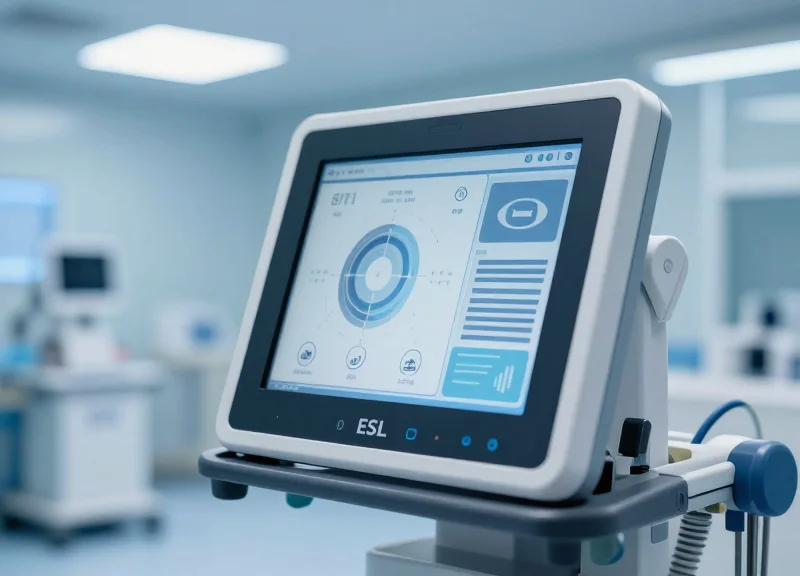
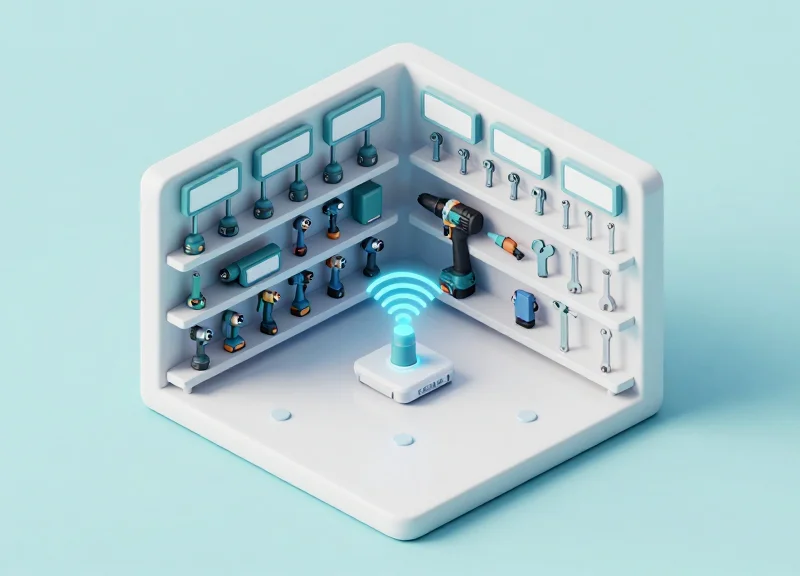
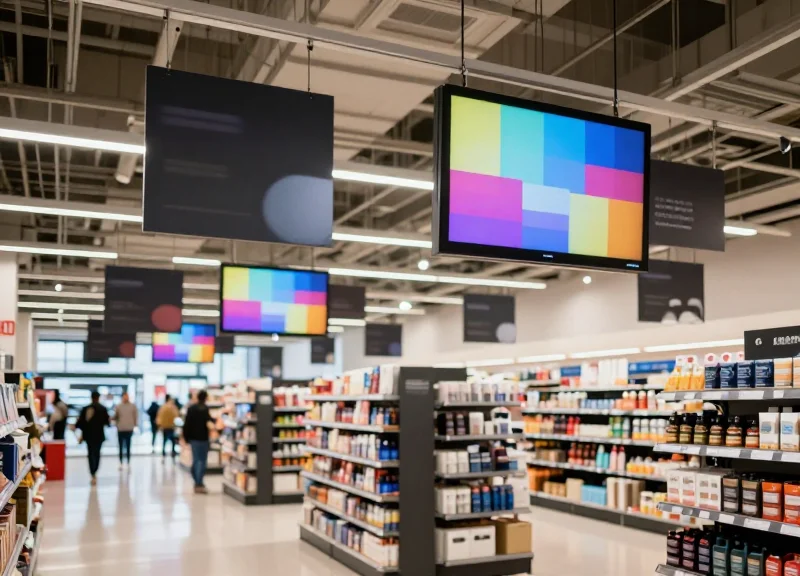
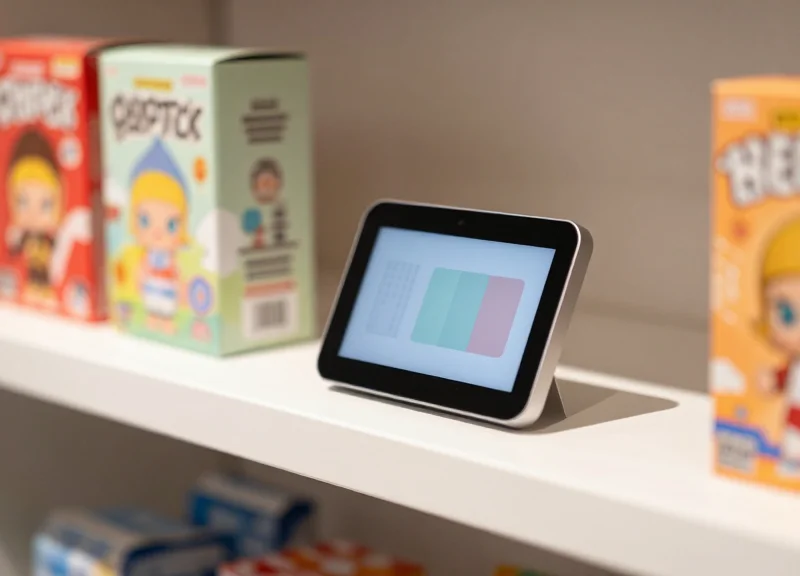
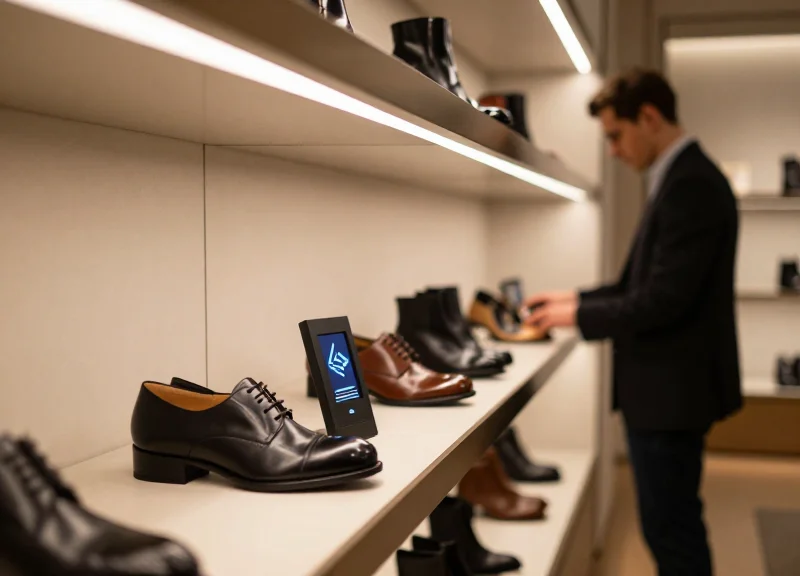
Electronic Shelf Labels (ESL) are the essential hardware components of the smart healthcare showroom, replacing static paper with dynamic, e-paper displays connected to a centralized management system. By utilizing low-power wireless communication protocols—such as Sub-GHz or Bluetooth Low Energy (BLE)—ESL systems enable showroom managers to push updates for equipment specifications, dynamic pricing, and inventory status to thousands of labels simultaneously. This infrastructure serves as the single source of truth, ensuring that the physical display always reflects the most recent data stored in the backend database with 99.9% accuracy.
| Feature | Legacy Paper Labels | Modern ESL Ecosystem |
|---|---|---|
| Update Frequency | Hours/Days (Manual) | Sub-Second (Automated) |
| Data Accuracy | High Human Error Risk | 99.9% System-Verified |
| Information Depth | Static Text Only | Interactive QR/NFC Links |
| Infrastructure | Physical Labor | IoT Gateway & Cloud CMS |
The architecture of a 2026-standard ESL deployment involves three primary layers: the Cloud-based Central Management System (CMS), the high-capacity Wireless Gateways, and the end-point E-paper Displays. Unlike consumer-grade tablets, these e-paper displays consume energy only when the image changes, allowing for a battery life of up to 10 years. This 'set-and-forget' reliability is critical in healthcare environments where equipment availability changes by the minute, but technical maintenance must remain at a minimum.
How does ESL ensure data doesn't get corrupted during transit?
Modern ESL systems use bi-directional communication; the label sends an acknowledgment signal back to the gateway once the update is successful, allowing the CMS to flag and resolve any 'failed' labels instantly.
Can ESL handle complex medical specifications?
Yes, high-resolution e-paper allows for multi-page data toggling and the display of detailed technical graphics, ensuring clinicians see full spectral data or compatibility charts at the point of decision.
Is the wireless signal safe for sensitive medical equipment?
Industry-leading ESLs for healthcare showrooms utilize proprietary Sub-GHz frequencies that operate outside the crowded 2.4GHz band, preventing interference with Wi-Fi or sensitive medical telemetry.
Expert Insight: The 'Frequency-Hopping' Advantage. A common pitfall in digital showrooms is signal interference caused by dozens of high-tech devices operating on the same band. To achieve 99.9% accuracy, 2026 ESL systems utilize 'Adaptive Frequency Hopping' (AFH). This allows the labels to automatically switch to the clearest channel in real-time. In a medical showroom filled with MRI machines, ventilators, and surgical robots, this capability is the difference between a successful data sync and a critical information blackout.
Integrating RFID for Comprehensive Asset Visibility
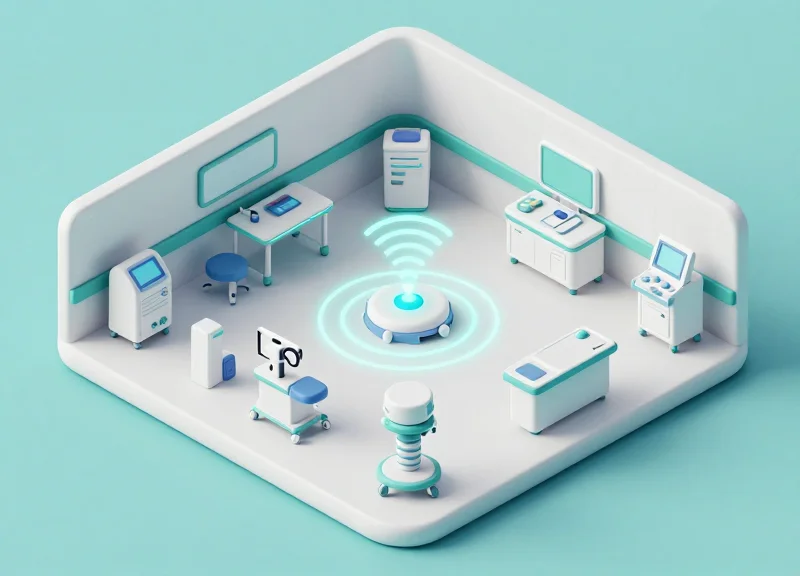
Integrating Radio Frequency Identification (RFID) for healthcare asset visibility represents the critical shift from 'static display' to 'intelligent ecosystem.' While Electronic Shelf Labels (ESL) provide the visual interface for data, RFID serves as the invisible tether between the physical medical device and the digital record. By embedding RFID tags into high-value medical equipment, showrooms can achieve a 'Dual-Layer Synchronization' where the physical location of an asset and its displayed specifications are locked in a continuous, automated feedback loop. This eliminates the 'ghost asset' problem, ensuring that the data displayed on an ESL is always verified by the physical presence of the tagged item.
- Proximity-Based Auto-Updates: When an RFID-tagged ventilator or ultrasound machine enters a specific showroom zone, the nearest ESL automatically pulls the relevant calibration and availability data from the Cloud.
- Anti-Theft and Misplacement Alerts: Real-time geofencing triggers instant alerts if critical medical hardware leaves its designated area, preserving the integrity of the showroom layout.
- Automated Maintenance Cycles: RFID tags track the 'on-floor' time of equipment, automatically updating the ESL display to show when the next service or software patch is required.
| Feature | Legacy Paper/Manual Tracking | Integrated RFID + ESL (2026 Standard) |
|---|---|---|
| Location Accuracy | Room-level (approximate) | Sub-meter (precise) |
| Data Update Latency | Hours or Days | Sub-second (<200ms) |
| Inventory Audit Speed | Manual (Weeks) | Automated (Instantaneous) |
| Visual Sync | Disconnected | Fully Coupled |
A unique insight for 2026 is the emergence of 'Edge-Compute Reconciliation.' In this model, the RFID reader doesn't just pass data to a central server; it communicates directly with the ESL gateway at the 'edge' of the network. This prevents 'data drift'—a common issue where the backend database says an item is available, but the floor display says otherwise. By processing the sync locally, healthcare showrooms achieve the 99.9% accuracy benchmark required for professional medical certifications, effectively turning the showroom into a live, self-auditing database.
Does RFID interference affect sensitive medical equipment?
Modern passive UHF RFID tags used in smart showrooms operate at frequencies designed to avoid interference with medical telemetry or diagnostic imaging equipment, adhering to strict healthcare EMI standards.
How does the RFID tag communicate with the ESL?
The RFID reader captures the asset ID and transmits it to the Central Management System (CMS), which then pushes the specific asset metadata to the paired ESL via a proprietary 2.4GHz or Sub-Ghz wireless protocol.
What is the lifespan of an integrated RFID/ESL system?
By 2026, low-power e-paper displays and passive RFID tags are designed for 10-year lifecycles, requiring minimal maintenance while providing continuous ROI.
Bridging the Gap: Connecting Showroom Displays to Backend ERP Systems
Connecting showroom displays to backend Enterprise Resource Planning (ERP) systems is the process of establishing a 'Digital Thread' between the central database—such as SAP, Oracle, or Microsoft Dynamics—and the edge devices on the showroom floor. By utilizing specialized middleware and RESTful APIs, organizations can automate the flow of inventory levels, technical specifications, and regulatory compliance data directly to Electronic Shelf Labels (ESLs) and interactive kiosks. This architecture eliminates the 'information silo' effect, ensuring that high-stakes medical data is never manually transcribed and remains 99.9% accurate from the warehouse to the customer-facing display.
- Data Orchestration via API Layer: The ERP system acts as the single source of truth. A middleware layer polls the ERP via secure APIs to identify changes in SKU status, pricing, or certification updates.
- Transformation and Mapping: Raw database strings are transformed into display-ready formats. This stage involves mapping complex ERP data fields to the simplified visual templates used by the showroom hardware.
- Transmission through Gateway Hubs: Data is pushed through localized IoT gateways using low-latency protocols like Zigbee or Sub-GHz frequencies, ensuring that updates reach the floor in seconds.
- Acknowledgement and Verification Loop: The edge device sends a 'receipt' signal back to the middleware, confirming the update was successful and flagging any display failures for immediate technical attention.
| Feature | Legacy Manual Updates | API-ERP Integrated Sync |
|---|---|---|
| Update Speed | Hours to Days | Sub-60 Seconds |
| Data Accuracy | 85% - 92% (Human Error) | 99.9% (System Validated) |
| Labor Requirement | High (Constant Patrols) | Zero (Automated Push) |
| Audit Trail | Non-Existent | Full Digital Timestamp |
A critical, often overlooked component of this integration is the 'Conflict Resolution Protocol.' In a professional healthcare environment, if a local showroom manager attempts to manually override a price or specification on a display, the middleware must decide whether to accept the local change or revert to the ERP's master data. By 2026, industry leaders are adopting 'ERP-Primary' logic, where the central system automatically overwrites any unauthorized local changes to maintain strict regulatory compliance across global locations.
- What is the biggest challenge in ERP-Showroom integration?: Latency and data fragmentation are the primary hurdles. Ensuring that the middleware can handle high-frequency updates without crashing the ERP's performance requires efficient 'Delta-Syncing,' where only changed data points are transmitted rather than the entire database.
- Expert Tip: The 'Heartbeat' Check: Always implement a 15-minute 'Heartbeat' check. This is an automated diagnostic that pings every display to ensure it is still talking to the ERP. If a device goes offline, the system should instantly alert the IT team before a customer sees outdated information.
- How does this impact medical compliance?: By linking the ERP directly to the display, you ensure that FDA or EMA-mandated specification changes are updated instantly across all showrooms, significantly reducing the risk of 'mislabeling' liability.
Enhancing the Buyer Experience Through Digital Transparency

In 2026, digital transparency in medical showrooms is defined as the immediate accessibility of verified, real-time data—such as lead times, technical specifications, and compliance certifications—via interactive touchpoints like QR codes and dynamic screens. By replacing static paper brochures with 99.9% accurate data syncs, healthcare facilities are removing the 'Information Asymmetry' that traditionally plagues high-capital procurement. This shift doesn't just modernize the room; it fundamentally 'de-risks' the buyer's journey, allowing hospital administrators to make multi-million dollar decisions with the same confidence as a consumer checking a live stock update.
- Elimination of Decision Friction: Buyers no longer need to wait 48 hours for a sales rep to 'check with the warehouse.' Instant access to inventory levels and shipping windows allows for immediate commitment.
- Technical Autonomy: Engineering and IT staff can scan a device to view full DICOM compatibility lists or power requirements without carrying bulky manuals.
- Dynamic Pricing Integrity: Real-time sync ensures that the price displayed reflects current GPO (Group Purchasing Organization) contracts or bulk discount tiers accurately.
Expert Insight: Validation-as-a-Service (VaaS). Beyond simple data, the 2026 trend is moving toward 'Validation-as-a-Service.' This means the showroom QR code doesn't just link to a PDF; it provides a cryptographically signed timestamp of when that specific machine last passed a QA check or software patch update. This level of 'radical transparency' serves as a pre-audit for the hospital’s compliance team, potentially shaving weeks off the procurement approval lifecycle.
| Buyer Concern | The Paper-Based Experience | The 2026 Digital Experience |
|---|---|---|
| Spec Accuracy | Outdated brochures; high risk of revision errors. | 99.9% sync with central ERP/PLM database. |
| Procurement Speed | Manual RFPs and back-and-forth emails. | Scan-to-Cart or Scan-to-Quote integration. |
| Trust Factor | Reliance on 'Sales Talk' and promises. | Verifiable live data and digital audit trails. |
How does digital transparency reduce the procurement cycle?
By providing all necessary technical and logistical data upfront, the 'discovery' phase and 'vetting' phase are collapsed into a single showroom visit, reducing the cycle by up to 30%.
Can QR codes in showrooms integrate with our internal ERP?
Yes, modern systems allow buyers to 'Save to Project,' which exports the equipment data directly into the buyer's internal hospital procurement software via standardized API hooks.
Operational Efficiency: Reducing Labor Costs with Automated Updates
Operational efficiency in a 2026 smart healthcare showroom is defined by the elimination of 'Dead Labor'—the hours staff spend manually replacing paper tags, verifying price accuracy, and updating technical specifications. By leveraging 99.9% accurate real-time data sync via Electronic Shelf Labels (ESL), healthcare facilities can reallocate highly trained medical sales consultants from administrative maintenance to high-value client advisory roles, effectively reducing labor costs associated with showroom management by up to 85% annually.
| Operational Metric | Manual Paper System | Automated ESL System |
|---|---|---|
| Update Time (100 Units) | 4 - 6 Labor Hours | Under 30 Seconds |
| Staff Required | 2+ Administrative Staff | 0 (System Triggered) |
| Error Frequency | 3-5% (Human Error) | < 0.1% (Direct Sync) |
| Compliance Audit Speed | Days/Weeks | Instant Digital Report |
Expert Insight: The Hidden Cost of Cognitive Load. Beyond the raw hourly wage, the true efficiency gain lies in removing 'Cognitive Switching Costs.' When a technical specialist is interrupted to fix an incorrect price or outdated spec sheet, it takes an average of 23 minutes to regain deep focus on their primary sales or clinical task. Automation doesn't just save time; it preserves the mental bandwidth of your most expensive human capital.
- Identify Labor Leakage: Audit current staff time spent on printing, cutting, and placing paper labels to establish an operational baseline.
- Centralized ERP Integration: Connect the showroom display layer directly to the central inventory and pricing database to eliminate data silos.
- Deploy Edge-to-Display Protocols: Utilize low-power IoT gateways to transmit updates across the showroom floor without manual intervention.
- Continuous Audit Trailing: Generate automated logs of all data changes to satisfy healthcare regulatory requirements without manual documentation.
How long does it take to see a return on investment (ROI)?
Most healthcare showrooms see a break-even point within 14 to 18 months, driven primarily by the reduction in labor hours and the elimination of printing/consumable costs.
Does automated syncing require onsite IT support?
Modern cloud-based ESL platforms are designed for plug-and-play operation, meaning showroom managers can oversee updates via a mobile app without needing dedicated IT staff on the floor.
How does automation impact data accuracy for high-compliance equipment?
Automated syncing ensures that the 'Source of Truth' in the ERP is the exact data displayed on the floor, removing the human-in-the-loop variable that causes 99% of compliance discrepancies.
Sustainability and ESG: The Environmental Impact of Going Paperless

In 2026, the transition from paper-based spec sheets to real-time digital data synchronization in healthcare showrooms is more than an operational upgrade; it is a critical pillar of corporate Environmental, Social, and Governance (ESG) strategies. By removing paper from the equation, organizations eliminate the carbon-intensive cycle of printing, distributing, and disposing of thousands of outdated labels and brochures every year. This move ensures 99.9% data accuracy while aligning with global net-zero initiatives and the increasing regulatory requirements for sustainable business practices within the medical supply chain.
| Sustainability Metric | Traditional Paper System | Digital Sync Showroom (2026) |
|---|---|---|
| Waste Generation | High: Continuous printing and disposal of labels | Minimal: Long-term hardware lifecycle |
| Carbon Footprint | Significant: Logging, chemical inks, and logistics | Low: Ultra-low power e-ink and remote updates |
| Regulatory Compliance | Manual tracking; prone to reporting errors | Automated, audit-ready digital data logs |
| Resource Efficiency | Labor-intensive manual replacement | Instantaneous, zero-labor remote sync |
Expert Insight: The 'Compliance Dividend'—The shift to digital synchronization provides an often-overlooked advantage for Scope 3 emissions reporting. By integrating showroom data directly with backend ERP systems, healthcare providers can track the precise lifecycle and movement of medical equipment. This granular visibility allows companies to quantify the environmental impact of their inventory more accurately than ever before, transforming the showroom from a mere sales floor into a strategic asset for transparent ESG disclosure and environmental auditing.
What is the primary environmental benefit of going paperless in a medical showroom?
The primary benefit is the elimination of 'phantom waste'—the constant cycle of re-printing specification cards and technical brochures every time a minor update occurs. This significantly reduces the organization's contribution to landfill volume and the chemical runoff associated with industrial ink production.
Are digital displays energy-efficient enough for green building certifications?
Yes. Modern Electronic Shelf Labels (ESLs) used in 2026 trends utilize bi-stable e-paper technology that only consumes power during a data refresh. Many systems can operate for up to a decade on a single coin battery, making their total lifecycle carbon impact substantially lower than the recurring environmental cost of paper and toner.
How does real-time data sync improve ESG reporting?
Digital synchronization provides a 'single source of truth' that is timestamped and auditable. This removes the risk of 'greenwashing' by providing verifiable data on asset usage and energy consumption that can be directly exported for sustainability audits and annual ESG reports.
Future-Proofing Your Showroom: Preparing for 2027 and Beyond
Future-proofing your healthcare showroom for 2027 and beyond necessitates a transition from simple digital signage to Composable Infrastructure. This strategy involves decoupling hardware from software and prioritizing 'API-first' platforms that ensure your showroom remains a living laboratory rather than a static display. By 2027, the standard will move past real-time synchronization toward Predictive Ambient Intelligence, where showroom environments automatically adjust data density and technical specifications based on the visitor's professional profile and real-time engagement metrics.
| Feature | Standard (2024-2025) | Future-Proof (2027+) |
|---|---|---|
| Data Architecture | Centralized Cloud Sync | Edge-to-Cloud Distributed Sync |
| Connectivity | Wi-Fi 6 / 4G LTE | 5G-Advanced / Private 6G Ready |
| Interoperability | Custom API Integrations | FHIR & Semantic Web Standards |
| User Interaction | Touchscreens & QR Codes | Spatial Computing & Voice AI |
The Veteran Perspective: The Rise of 'Digital Twin' Showrooms. My unique insight for 2027 is that the physical showroom will no longer exist in isolation; it will be the physical 'skin' of a persistent Digital Twin. Every interaction a surgeon or procurement officer has with a piece of equipment in the showroom will be mirrored in a virtual sandbox, allowing them to take the 'synced' configuration home to their hospital board via a secure cloud portal for immediate simulation.
- Prioritize 'Headless' CMS Solutions: Select technology partners that offer headless content management, allowing you to push medical data to any device—be it a smart glass panel, a mobile tablet, or an AR headset—without rebuilding the backend.
- Demand SOC2 Type II and HIPAA Compliance: As showrooms sync more deeply with hospital procurement systems, the risk profile increases. Future-proof partners must demonstrate top-tier data security certifications today.
- Invest in Edge Computing Hardware: To maintain 99.9% accuracy with zero latency, your showroom hardware must process data locally before syncing to the cloud, preventing 'data lag' during high-stakes demonstrations.
How do I avoid hardware obsolescence?
Adopt a modular hardware strategy where the computing units (Players) are separate from the display panels (Screens), allowing you to upgrade processing power without replacing expensive glass.
Will AI-driven data sync be expensive to maintain?
Initially, the setup costs are 15-20% higher, but the long-term maintenance is lower because the system self-corrects data discrepancies using machine learning algorithms, reducing manual audits.
Is 99.9% accuracy really achievable globally?
Yes, by using decentralized ledger technology or robust edge caching, you can ensure that even if the primary internet connection drops, the showroom displays the last-known-accurate state with an offline timestamp.